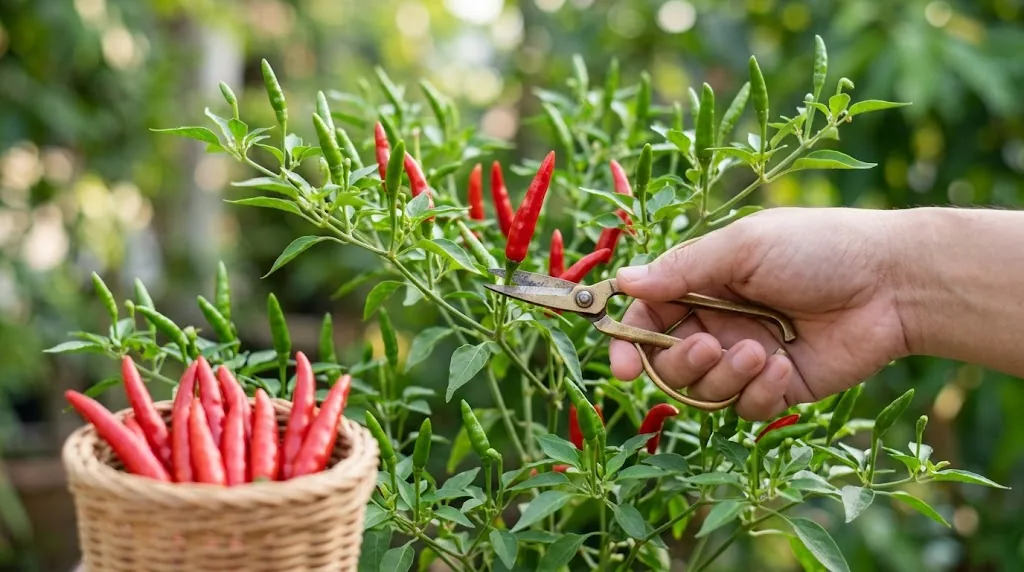
This small pod quietly runs Thai, Vietnamese, Malaysian, Filipino, and southern Chinese kitchens. Slim, glossy, ripening from green to bright red and pointing upward on the branch, it is what most cooks reach for when a curry paste, a stir fry, or a dipping sauce needs real heat with a clean, almost fruity finish. Each pod carries 50,000 to 100,000 SHU, ten to twenty times a jalapeño’s fire, and a single plant can produce hundreds of pods in a long, warm growing season.
This article uses the spelling “chili” throughout, but “chilli” is the same plant. The bird’s eye form is sometimes called Thai chili, Thai chilli, Thai pepper, or Thai hot, and the variations do not change what the pod is.
Origin and history
Bird’s eye in the broad sense is a pan-Asian food plant. It arrived centuries ago, carried along Portuguese and Spanish trade routes from the Americas after 1492, the same Columbian exchange that moved sweet peppers, tomatoes, and potatoes around the world. The species originated in Central America, where its wild relatives still grow, and only spread eastward once the exchange opened the route. Once it landed in Thailand, Vietnam, Malaysia, the Philippines, southern China, and Indonesia, growers selected the small, upright, hot-fruited forms that suited local cooking, and bird’s eye became a kitchen staple. The Portuguese ships that carried seeds around the Indian Ocean basin are why the same plant now anchors cuisines from Goa to Manila.
In Thailand the pod is called phrik kí núu, also transliterated as prik ki nu or prik kee noo (literally “mouse-dropping chili,” a vivid name for its small size). In the Philippines a closely related form called siling labuyo is the national hot pod. In Malaysian and Indonesian cooking it shows up as cili padi, which translates the same way. Vietnamese bird’s eye, often called ot hiểm or “sparrow’s eye chili,” is a longer, slightly milder form often eaten fresh in pho. The Thai, Filipino, Malaysian, Vietnamese, and Indonesian forms all share the same general plant type, even when local breeding has nudged them in slightly different directions.
The Thai form is commonly sold as an annuum pepper. Similar-looking bird’s eye types may be listed as Capsicum frutescens, especially where names such as siling labuyo or Tabasco are involved. The common names overlap, so check a seed packet or plant label when species matters for gardening or saving seed.
Upright pods and strong heat are useful visual clues, but they do not identify a species on their own. Thai bird’s eye and Tabasco are best treated as distinct pepper types in the kitchen, even though both make small, hot, upright fruits.
Chili varieties worth knowing
Bird’s eye is the most widely grown form, but it is only one entry in a much wider Thai family. Knowing the neighbors helps when shopping for seeds or picking a substitute.
Prik ki nu (bird’s eye). The small, slender, fiery-hot pod covered in this guide. The default “Thai chili” in markets and recipes.
Prik chee fah. Thai spur pepper, slightly larger and noticeably milder than bird’s eye. Often used in stir fries and as a fresh garnish on salads.
Prik yuak. A mild, sweet, light-green bell-shaped pod that does not turn red when ripe. The classic choice for stuffed peppers, prik yuak sord sai.
Prik leuang. The orange Thai chile, longer and a touch milder than bird’s eye with a fruity taste and slight sweetness. Excellent ground into paste for marinades.
Prik num. A spicier green pod that keeps its color when ripe. The star of the roasted dip nam prik num from northern Thailand.
Prik jinda. A moderately hot, grassy-flavored red pod suited to all-purpose cooking. Less intensely hot than kee noo, with a milder aroma.
Among these, prik ki nu is the hottest and the most commonly labeled simply “Thai chili pepper” in English-language recipes. When a recipe calls for a generic pod, prik ki nu is the safe choice.
Botany and technical facts
Plants commonly reach 60 to 90 cm (about 2 to 3 ft) tall in a single season. They branch freely and carry a heavy crop of pods once warm nights arrive. Leaves are smooth, ovate, and mid-green. Flowers are small and white, while the pods typically point upward. That upright habit, together with the slim red fruit, is a useful clue when you are comparing Thai bird’s eye with other peppers.
Pods are slim and tapered, usually 2 to 4 cm (roughly 1 to 1.5 in) long, with a pointed tip and a glossy skin that starts dark green and ripens to bright red. A few lines or small cracks may appear on ripe pods, similar to the corking seen on ripe jalapeños; this is normal and is not a sign of stress. The flesh is thin relative to the pod’s size, which is why it dries well and why a small handful can season a whole pot of paste. A pale rib runs down the inside of each pod where the seeds attach to the placenta.
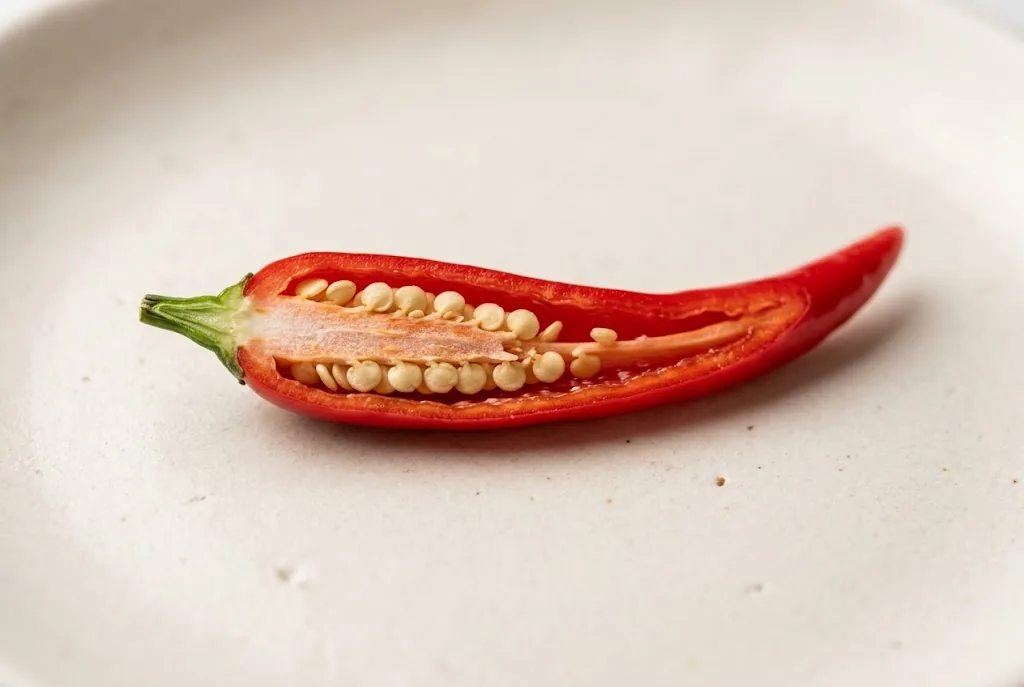
Capsaicin is concentrated in the placenta, the white tissue inside the pod where the seeds attach. Seeds can pick up capsaicin through contact with that tissue. Removing the placenta and seeds is a practical way to reduce the heat in a dish.
Heat and flavor
Bird’s eye sits well above jalapeño and well below the hottest superhots. Most published figures put fresh pods in the 50,000 to 100,000 SHU range, with some reporting values as low as 30,000 and a few laboratory measurements above 100,000. Heat is measured on the Scoville scale; the higher the number, the hotter the pod. Heat varies with the particular plant and growing conditions, so use the range as a guide rather than a promise for every pod.
The flavor is more interesting than the heat number suggests. Fresh pods add a grassy, slightly sharp note that works well with lime, fish sauce, garlic, and galangal. As they ripen to red and start to dry, the flavor deepens toward a smoky, almost raisiny sweetness that suits stir fries and pastes. Dried Thai pods toasted briefly in a dry pan release a fragrance that is closer to a chipotle than to a ground hot pepper, and that flavor carries a lot of the characteristic warmth of the surrounding regional cuisine.

Bird’s eye is noticeably hotter than serrano in side-by-side tasting, and is roughly comparable to a small fresh bird’s eye pod from a generous plant on the upper end. Compared to habanero and Scotch bonnet, it is about a tenth of the heat, but the flavor profile is brighter and less fruity. It is a popular choice for a table dip because a small slice delivers a clear punch without overpowering the dish, and the flavor carries a hint of sweetness that simpler hot peppers lack.
Germination and growing for this variety
Bird’s eye needs a long, warm growing season. In temperate climates, start seeds indoors about eight weeks before planting outside, then expect ripe pods in mid to late summer. Local weather, light, and the particular seed line all affect the timeline.
Most gardeners in temperate climates start seeds indoors 8 to 10 weeks before the last frost, then transplant out only after night temperatures are reliably above 12°C (about 54°F). Soil temperature for germination matters more than air temperature: aim for 27 to 32°C (80 to 90°F) at the seed tray. A heat mat is the single biggest help. Seeds germinate in 7 to 21 days under those conditions; below 20°C they may sit for a month or rot before sprouting.
Once true leaves appear, the seedlings want strong light, ideally 14 to 16 hours a day from a sunny window or a grow lamp. Pot them up into 10 cm (4 in) pots once the second pair of leaves is out, then into 20 to 30 cm (8 to 12 in) final containers if you are growing in pots. Bird’s eye does well in containers and is a good choice for balconies and small patios, especially in cooler climates where the soil warms slowly in spring. For a step-by-step container setup, see our guide to growing chili peppers in pots.
Plant in full sun, in soil that drains freely and contains organic matter. Keep moisture even rather than letting the pot swing from soggy to dry. In temperate climates, gardeners usually grow Thai bird’s eye as an annual.
Water consistently so the soil stays evenly moist but not soggy. Check plants regularly for aphids, whiteflies, and spider mites on the soft growing tips, then use an approach suitable for edible plants and the pest you find. A healthy plant can continue flowering and fruiting through warm weather.
Whether you are an experienced gardener or a beginner, the same basic principles apply: cultivate in well-drained soil, give the plant full sun, water steadily, and harvest ripe pods to keep production going. The reward is months of fresh pods through summer and a winter of dried fruit to cook with.
Harvest and handling
Pods are ready to pick from about 75 to 90 days after transplanting, depending on weather. Green pods are fully usable and slightly milder; red pods have a deeper flavor and more heat. Pick with scissors or snip the small stem above the pod to avoid tearing the branch. A single healthy plant in good soil can produce several hundred pods across the season.
Wear gloves when you harvest a large batch. The capsaicin is strong enough to irritate skin, and once it is on your fingers it is hard to wash off. Gloves also stop you from accidentally rubbing your eyes an hour later. Wash hands, knives, and cutting boards in hot soapy water after handling, and never touch your face mid-prep. For what to do if the burn catches you anyway, see how to handle hot chilis safely in the kitchen and garden.
In dry weather, ripe pods can begin drying on the plant. In humid conditions, pick ripe pods and dry them indoors with good airflow so they do not mold.
Storing, drying and preserving
Fresh pods keep for about a week in the refrigerator in a paper towel inside a loose plastic bag. For longer storage, three options work well.
Freezing. Whole pods freeze quickly and keep their flavor for at least a year. Spread them on a tray to freeze individually, then tip them into a bag. Use them straight from the freezer in cooked dishes; they will be soft when thawed and best added to a paste or stir fry rather than used as a garnish.
Drying. Thread pods on a string and hang them in a warm, well-ventilated spot out of direct sun, or lay them on a mesh screen. A dehydrator at 50°C (120°F) finishes them in 6 to 12 hours. Fully dried pods are brittle and store for a year or more in an airtight jar. Rehydrate by soaking in warm water for 15 minutes before blending into a paste. Dried Thai pods are the backbone of red paste and many other dishes. A small handful of dried pods soaked and pounded with garlic, shallot, lemongrass, and galangal makes a fiery marinade for grilled pork, chicken, or tofu.
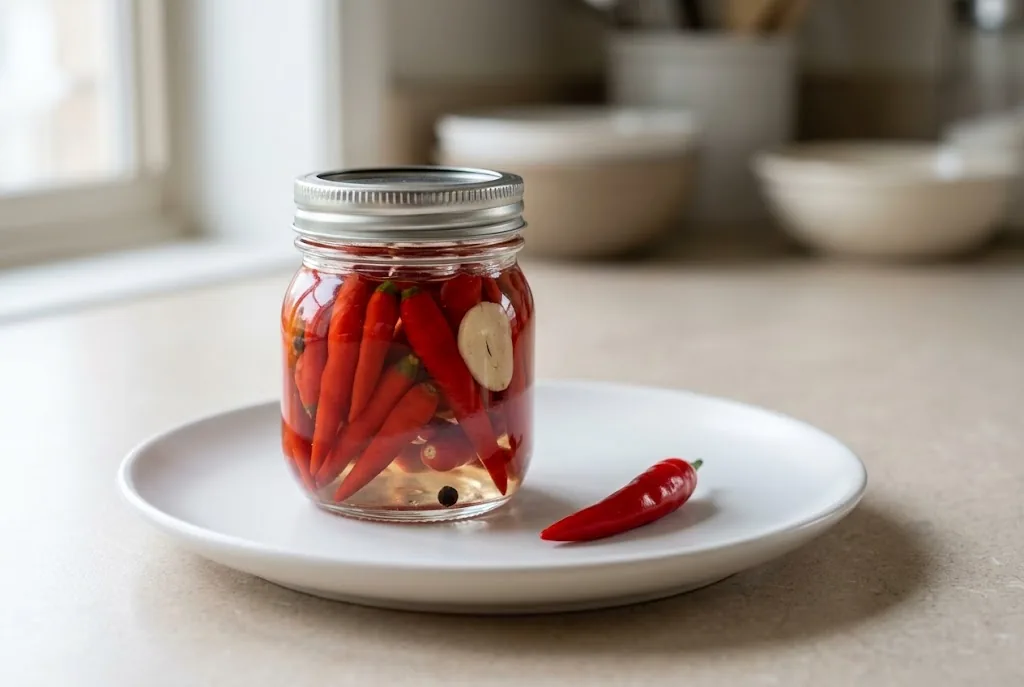
Pickling. Use a tested refrigerator-pickle recipe for the jar size and ingredients you choose, then keep the finished peppers refrigerated. Pickled bird’s eye adds bright heat to noodles, rice bowls, salads, and Vietnamese banh mi.
Culinary uses
Bird’s eye is the heat backbone of regional cooking from Thailand through Vietnam, Malaysia, the Philippines, and much of southern China. A few pods pounded with garlic, shallot, galangal, lemongrass, basil, and shrimp paste become the base of nam prik, the dipping sauce that anchors Thai meals. In tom yum and tom kha, the pod goes in early with the broth so its flavor infuses the whole pot. In Vietnamese pho, it is sliced raw into the bowl at the table, a small ritual that lets each diner choose their own heat.
Across the region, bird’s eye shows up in a long list of dishes. It seasons green paste, red paste, panang, massaman, and Thai pastes of every color. It is pounded into salads such as som tam (green papaya salad) and yum woon sen. It is sliced into Vietnamese banh mi, summer rolls, and bun cha. It is the pod of choice for Filipino sinigang, kinilaw, and sarsa. In Malaysian cooking it is the heat in sambal belacan and sambal tumis. It rounds out noodle bowls like khao soi and boat noodles. Sweet chili sauce, a thicker table dip served with spring rolls in Thai restaurants worldwide, also leans on bird’s eye for its heat even when the dominant flavor is sugar. Coconut milk is the classic balancer for bird’s eye heat in rich dishes; the fat tames the burn. For a profile of the closely related Filipino pod and how it compares, see our guide to siling labuyo.
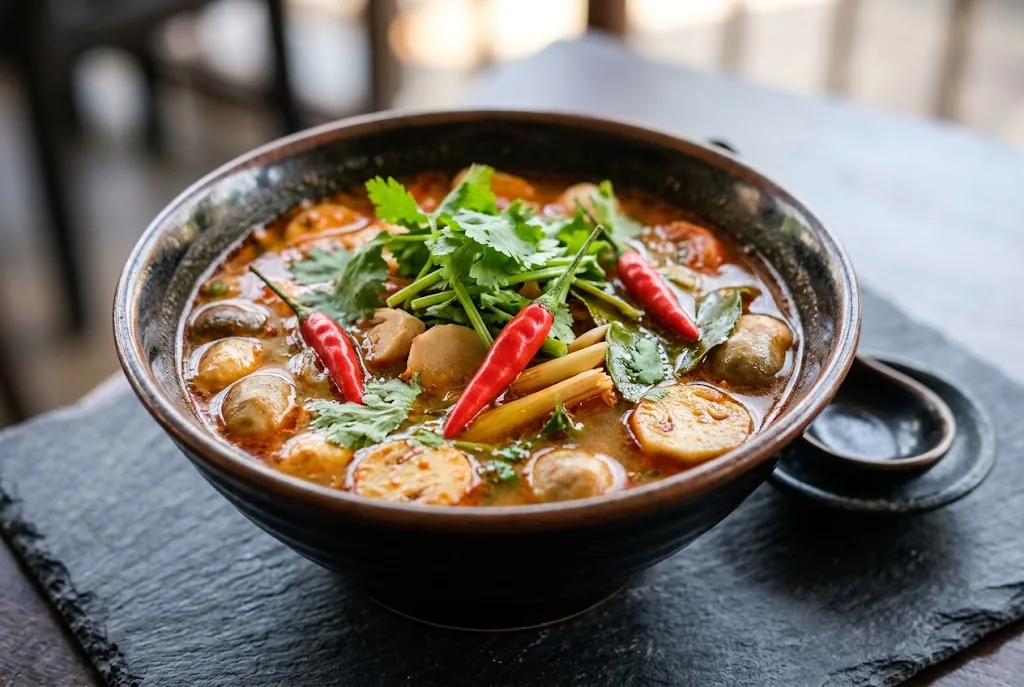
In stir fries, sliced bird’s eye adds heat quickly. Add it near the end of cooking so the fresh flavor and bright color stay intact; long cooking dulls both. In curry pastes, the pod is toasted dry first to bring out the smoky note, then pounded with the rest of the paste along with garlic, shallot, lemongrass, galangal, coriander root, and white peppercorns. A small handful goes a long way; most home recipes call for 3 to 10 pods per dish. As a table dip, sliced fresh bird’s eye in a small dish of fish sauce with a squeeze of lime is the classic accompaniment to grilled meats and sticky rice. Stewed pork trotters with bird’s eye is a beloved street-food dish, the pods giving the rich braise a clean, sharp finish.
For a wider view of how bird’s eye fits among the world’s hot peppers and milder table chilies, see our guide to types of chili peppers.
Start with one pod per person in an unfamiliar dish and adjust up. The heat builds on the palate, so the first bite is rarely the hottest. A side of plain jasmine rice or a cold glass of milk both help if the burn catches you by surprise.
Health and nutrition
This pepper is a flavorful food, not a medicine. Its heat comes from capsaicin, which can irritate skin, eyes, and the digestive tract. Use only as much as you enjoy, wear gloves for a large batch, and seek medical advice for severe or persistent symptoms after exposure.
Frequently asked questions
How hot is a Thai bird’s eye chili compared to a jalapeño?
Bird’s eye is roughly ten to twenty times hotter than an average jalapeño. Where a jalapeño runs 2,500 to 8,000 SHU, bird’s eye typically runs 50,000 to 100,000 SHU. One bird’s eye pod will season a dish that would need a dozen jalapeños to match. In home cooking, a single bird’s eye is often enough for an entire pot that serves four people.
Can I grow Thai bird’s eye in a container?
Yes. Bird’s eye is one of the best peppers for container growing because the plant stays compact and the upright pods are easy to see and pick. Use a 20 to 30 cm (8 to 12 in) pot with drainage holes, fresh potting mix, and a sunny spot. Water when the top 2 cm of soil dries out and feed lightly every two weeks once flowers appear.
What is the difference between Thai bird’s eye chili and siling labuyo?
They are closely related in kitchen use and are often substituted for one another. Siling labuyo is generally identified as Capsicum frutescens, while the Thai type is commonly sold as an annuum pepper. Both are small, hot peppers, but individual heat and flavor vary by seed line and growing conditions.
Why are the leaves curling on my bird’s eye plant?
Leaf curl has several common causes: cold nights below 12°C, aphid infestation on the undersides of leaves, calcium deficiency, or root damage from overwatering. Check the underside of the leaves first, then check soil moisture and recent weather. Most plants recover quickly once the cause is addressed. Persistent leaf curl across multiple plants in a garden bed may signal a soil pH problem or a viral infection that warrants removing the affected plant.
How long does it take from seed to harvest?
Plan on about 4 to 5 months from sowing to first ripe pods in temperate climates. Start seeds 8 to 10 weeks before the last frost, transplant out when nights are warm, and expect the first ripe red pods in mid to late summer. In tropical climates the cycle is shorter and the plant can fruit year-round.
What is the Thai name for bird’s eye?
Prik kee noo (also spelled prik ki nu or phrik kí núu) is the Thai name for bird’s eye. The literal translation is “mouse-dropping chili,” a vivid description of the small size of the pods. In Thai recipes it is the default pod called for whenever a recipe lists simply “Thai chillies,” “Thai chilis,” or “Thai pepper” without further detail.
How does bird’s eye compare to a hotter long red pepper?
Bird’s eye is generally hotter than common drying peppers and has a brighter, more fragrant flavor. Drying peppers tend toward a drier, earthier heat that suits long-cooked sauces and chili powder. Bird’s eye keeps its flavor and color in short-cooked dishes and is rarely dried into powder; drying peppers are most often used dried and ground.
Can I use bird’s eye chili as a substitute for habanero?
Not directly. Bird’s eye is roughly one tenth the heat of habanero, with a brighter, less fruity taste. If a recipe calls for one habanero, you will need about eight to ten bird’s eyes for a comparable heat level, and the finished dish will taste slightly less fruity. For habanero substitutes that keep a similar flavor profile, look at Scotch bonnet instead.
How spicy are Thai chilis compared to other hot peppers?
Thai chilis, measured in Scoville units, are noticeably hotter than serrano but only about a tenth of habanero or Scotch bonnet. The spiciness of a Thai chili hits quickly on the front of the palate, builds over the next few seconds, and fades relatively fast compared to the slow burn of a superhot. For most home kitchens, the spiciness of a single bird’s eye pod is plenty to season an entire pot of food.
Plant one in a sunny pot, harvest ripe pods regularly, and adjust each dish a little at a time. Thai bird’s eye brings focused heat to curries, dips, noodle bowls, and stir fries.
