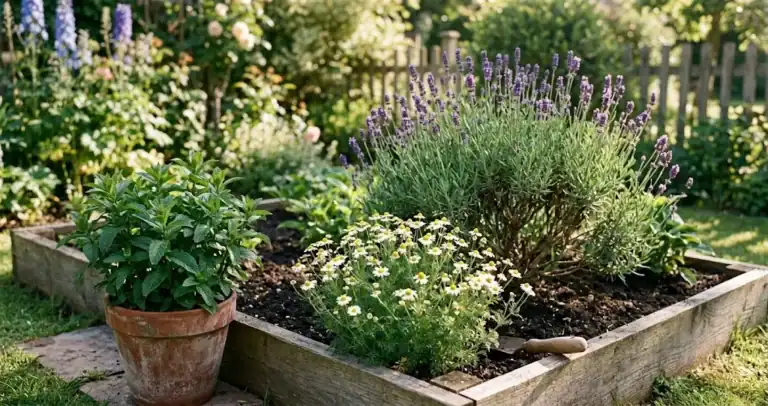
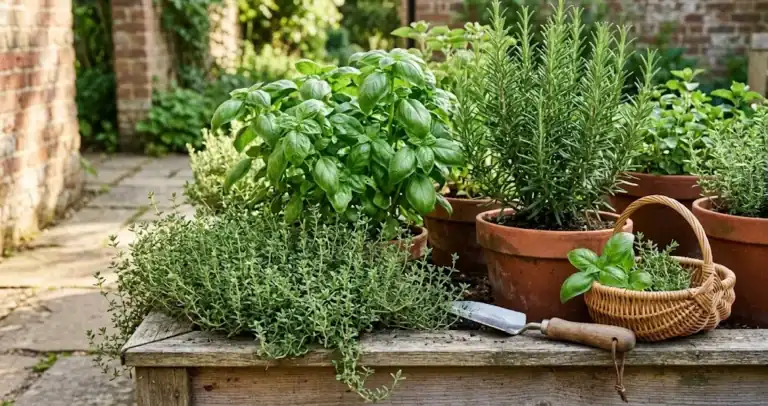
A small herb patch tucked into the corner of a vegetable garden can do more than save space. Many herbs earn their keep by drawing pollinators in, deterring insect pests, and making the vegetables around them taste a little better, and a thoughtful companion plant pairing turns a single bed into something that performs several jobs at once. Growing herbs and vegetables together is an old practice, but it only works when the pairings, the spacing, and the water needs all line up. This companion planting guide walks through which herbs actually help which vegetables, which combinations to avoid, and how to lay out a mixed bed so every plant has what it needs to thrive.
Before laying out a bed, it helps to understand the basics of growing herbs organically, because the same soil and water conditions that suit organic vegetables also suit the herbs that pair with them.
Why pairing herbs and vegetables works
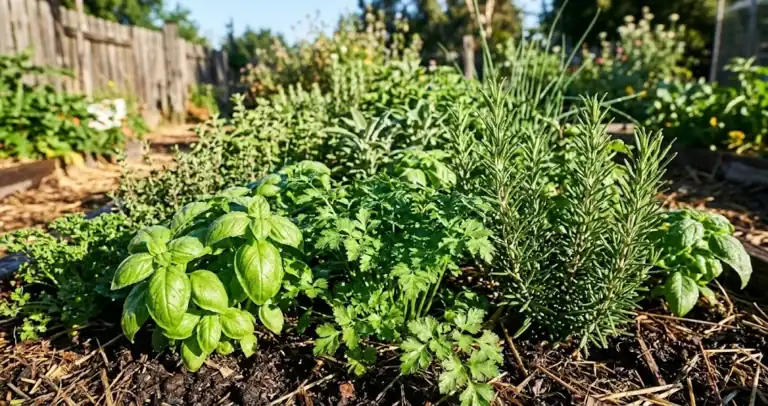
Companion planting with herbs is a practical shortcut rather than a mystical one. Some herbs release volatile oils from their foliage that mask the scent pests look for, which makes it harder for insects to find a tomato row or a row of cabbages. Other companion plants attract pollinators and parasitic wasps when they flower, and those visitors stick around long enough to handle an aphid, hornworms, and cabbage loopers in the same bed. A single parasitic wasp visiting the right flower can deter pests across a whole bed, and gardeners who leave the wasp alone tend to see fewer outbreaks. A few pairings go further still. The basil and tomato pairing has a long folk reputation for improving each other’s flavor, and while the science on that exact claim is thin, the pairing is sound because the leafy herb likes the same warm, sunny conditions tomatoes ask for, and its strong scent seems to throw off hornworms looking for a place to lay eggs.
Most of the benefits of companion planting come from practical overlap. Mediterranean herbs such as rosemary, thyme, and sage want the same full sun and well-drained soil that tomatoes, peppers, and eggplant thrive in, so they share a bed happily. Tall herbs like dill and fennel throw light shade that helps cool-weather crops such as cool-weather greens bolt more slowly in late spring. Low-growing thyme and creeping oregano knit across the front of a bed like a living mulch, shading the soil and keeping roots cool. None of this is magic. It is just good horticulture with one bed instead of two.
For gardeners putting in a first bed, the beginner’s guide to growing an herb garden lays out the planning basics that a mixed bed relies on, from sun and water to the soil conditions most herbs prefer.
Best herb and vegetable pairings
The pairings below are the ones that hold up across climates and garden styles, and they are a good place to start for a first mixed bed. Gardeners who want a quick reference will find a companion planting chart in most seed catalogs and on a few extension service websites, and the same advice keeps surfacing across all of them.
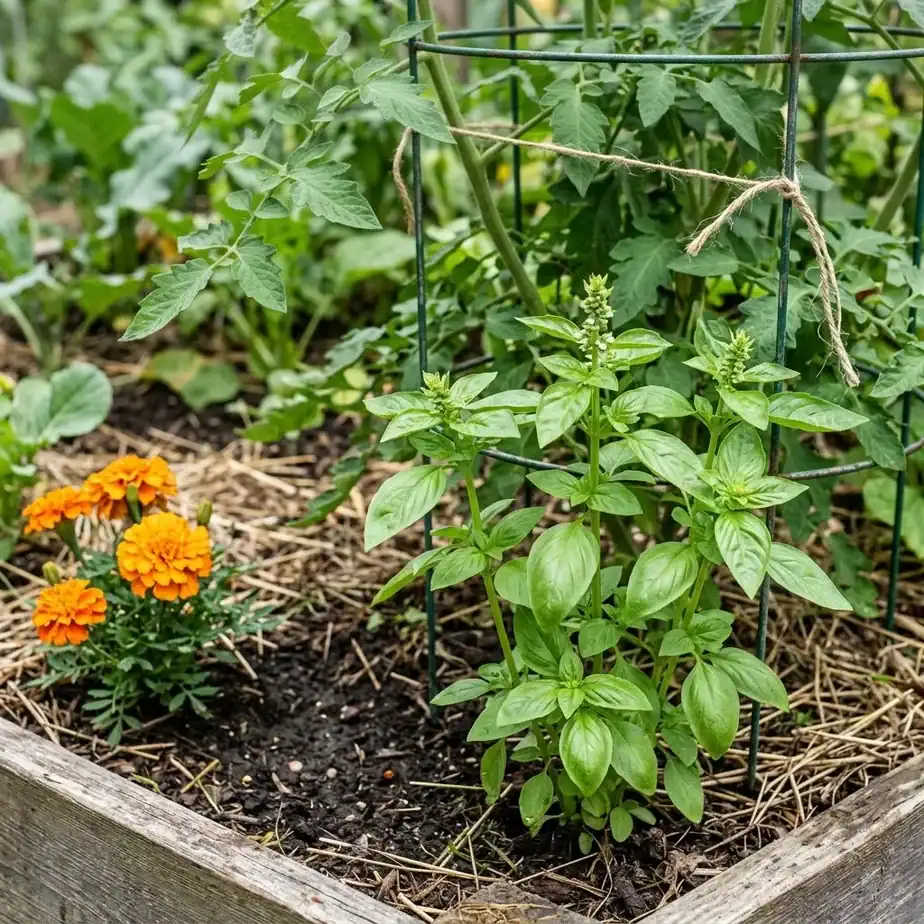
Tomatoes and basil. The herb likes the same warm, fertile soil that nightshades want, and it stays compact enough to grow at the base of a cage without crowding the fruit. Plant the basil and marigold about thirty centimeters from the main stem so air can move between them. Marigolds help repel pests like aphids and beetles, and its strong scent improves the flavor of nearby tomatoes. Both enjoy steady moisture and a deep weekly soak.
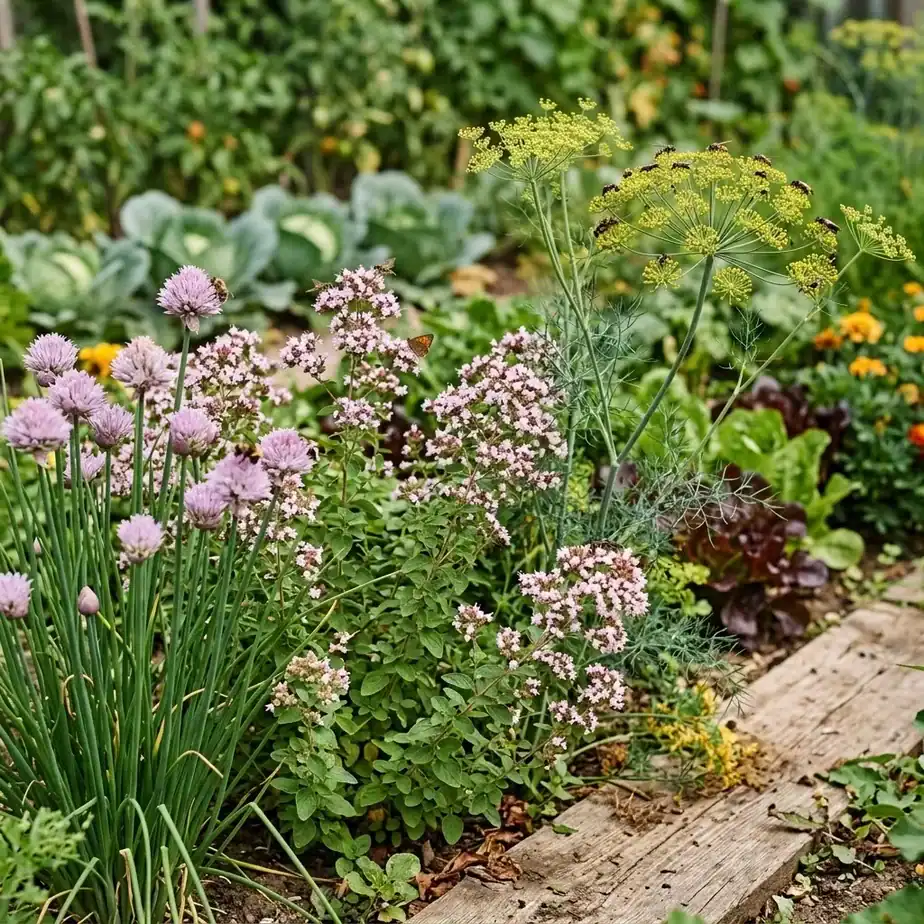
Carrots and chives. Chives share the allium family’s reputation for confusing carrot rust flies, and the soft, oniony scent carries on the breeze through a carrot row. Chives also pull in bees when they flower in late spring, which helps with any fruiting crop nearby. Allow a few chive blossoms to mature and the garden gains a wide range of pest-deterring scent throughout the season.
Cabbages and dill. Dill attracts parasitic wasps and hoverflies that lay eggs on cabbage worms, aphids, and flea beetles. Plant it at the edge of the cabbage patch so it can flower without shading the heads, and let a few plants go to seed each season. Growing dill next to brassicas such as cabbage, broccoli, and Brussels sprouts gives the cabbage family a constant stream of pest control, and its taproot also helps break up compacted soil.
Beans and summer savory. Summer savory has a long folk reputation for improving the flavor of beans and for deterring the bean beetle. It is a tidy annual that grows about thirty centimeters tall and finishes in a single season, so it can sit between bean rows without competing. Legumes such as beans and pea vines fix nitrogen in the soil, which feeds leafy crops and improves the flavor of nearby vegetables as well.
Lettuce and chervil or mint. Chervil bolts a little later than parsley and tolerates partial shade, which makes it a useful cool-season companion. Mint is best kept in a container sunk into the bed because it spreads aggressively by runners, but a single pot next to the leafy greens helps repel slugs, cabbage moths, and other pests that target leafy greens.
Peppers and oregano. Oregano sprawls across the front of a bed as a living mulch and flowers heavily in midsummer, which feeds the pollinators peppers depend on for fruit set. Trim it back if it starts climbing into the pepper canopy. Certain herbs, including this one, also deter aphids and Colorado potato beetles when their foliage is brushed against.
Herbs that do not play well together
Not every herb belongs in a vegetable bed. A few combinations create more problems than they solve, and knowing the bad pairings is just as useful as knowing the good ones.
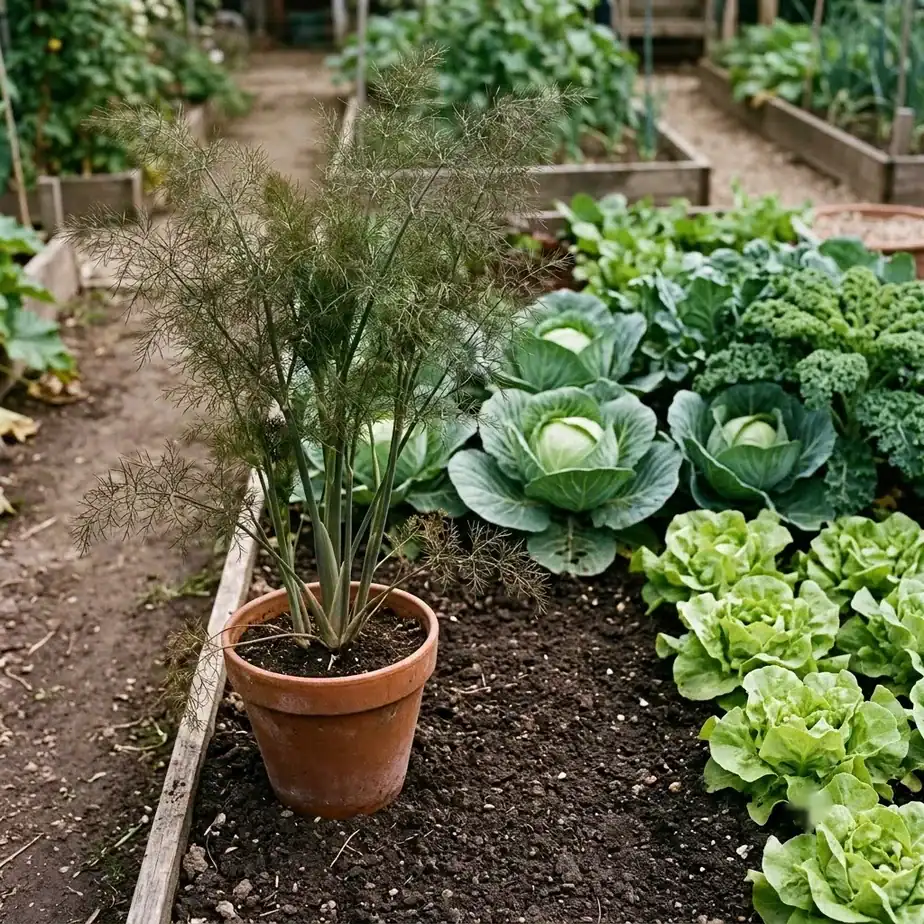
Fennel and most vegetables. Fennel releases a substance from its roots that inhibits the growth of nearby plants, including beans, tomatoes, and many other vegetables. Give fennel its own pot at the edge of the garden, well away from the vegetable bed. Fennel’s tall growth habits also crowd out low-growing vegetables planted too close.
Mint and almost anything. Mint spreads by underground runners and will quickly take over a bed. The simplest rule is to grow mint in a container, even if the container is sunk into the soil. Confined mint is a fine companion; unconfined mint is a problem.
Dill and carrots. Dill and carrots are closely related, and the same pests love both. Planting the tall annual next to carrots can concentrate carrot rust fly pressure rather than spread it out, so keep them in separate beds.
Sage and cucumbers. It prefers dry, gritty soil, and cucumbers want steady moisture. The two should not share a bed because the watering needs conflict, and its strong oils can stunt cucumber vines. Some gardeners also report that sage planted near cucumbers dulls the flavor of its leaves.
Onion family and beans. Garlic, onions, leeks, and chives inhibit the nitrogen-fixing bacteria that bean roots rely on. Plant alliums in a separate bed, or at least a meter away from any bean row. Green onions in particular seem to slow the growth of pole beans and reduce the overall yield.
Planning a layout that works
Companion planting falls apart when the bed is overcrowded or when tall plants shade out low ones. A useful starting point is to map the bed by height and water need, then place each herb where it actually fits.
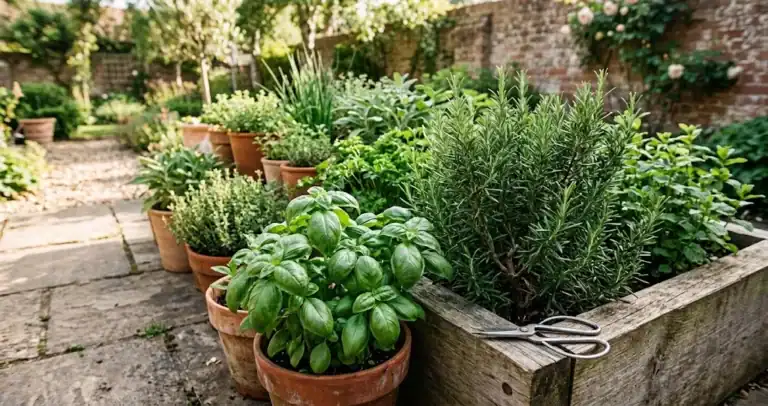
Tall herbs like fennel and lovage belong at the north end of a bed so they do not shade shorter crops. Mid-height herbs like rosemary sit in the middle, in front of the peppers and tomatoes they pair with. Low growers like thyme, chamomile, and creeping mint act as the front edge of the bed. A garden designed with three height tiers makes every plant get the sun it needs.
Water needs matter more than most gardeners expect. Mediterranean herbs prefer dry, gritty soil and a thorough soak only when the top two centimeters of soil have dried out. Most vegetables want steady moisture. If a bed mixes the two, plant the thirsty crops together on one side and the dry-soil herbs on the other, and water by zone rather than by the whole bed.
Sun exposure matters as well. Rosemary, thyme, sage, and tarragon want full sun. Parsley, chervil, mint, and chives tolerate partial shade and appreciate it during the hottest weeks of summer.
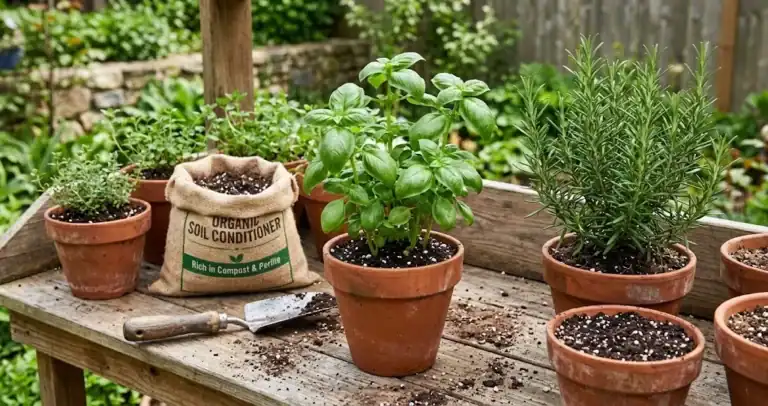
The right soil mix and drainage pulls the planning together, because herbs and vegetables that share a bed need the same baseline conditions before any pairing will pay off.
Containers and small spaces
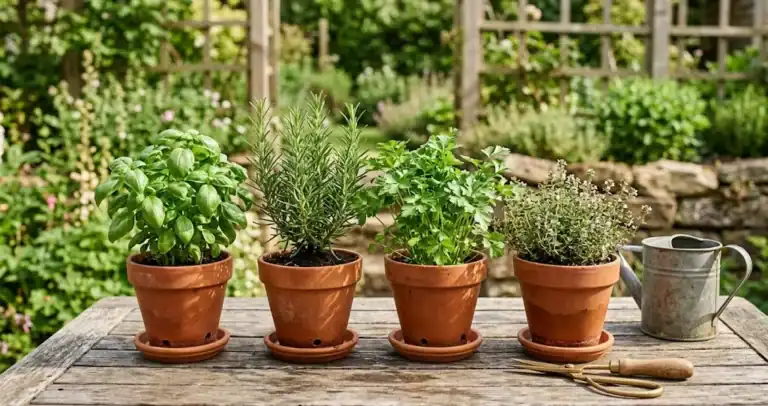
Most of these pairings work in pots as well as in beds, and a single container on a sunny patio can hold a tomato plant and a small thyme without crowding if the pot is at least forty centimeters wide. Larger fabric pots and half-barrels make container gardening with mixed herb and vegetable plantings possible on balconies and rooftops where a full bed is not an option.
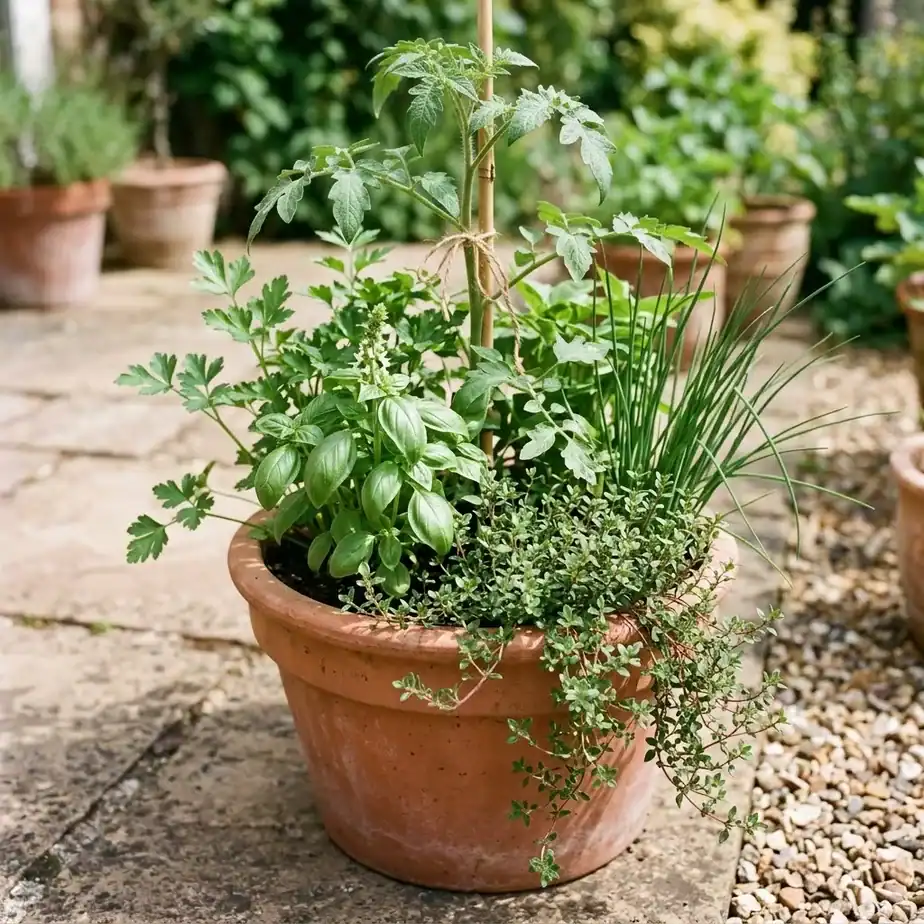
The same spacing rules apply. A pot-grown nightshade still wants a basil partner about thirty centimeters away, and thyme planted at the rim of the pot has room to trail without competing with the tomato’s roots while helping deter weeds at the soil line. Watering containers daily during summer is normal, and a single thorough soak a week with a dilute liquid feed keeps mixed plantings productive.
Raised beds bring their own advantage for companion planting. The loose, fertile soil inside one supports a denser planting than ground-level soil, and the defined edges make it easier to confine mint and other spreaders. A one-meter by two-meter elevated bed will hold two nightshade plants, a row of the leafy herb, a few leafy-green heads, a chive cluster, and a creeping thyme at the front with room to spare.
What to expect through the season
Mixed beds change as the growing season moves. In early spring, cool-season herbs such as chervil, parsley, and chives are at their best, and they pair naturally with the first leafy greens, radishes, and spinach. As the soil warms, it goes out alongside peppers and eggplant, and the Mediterranean herbs come into their own.
Mid-summer is when the pollinator payoff shows up. Dill, chives, and thyme all flower through the warmest weeks if allowed to, and a mixed bed full of flowers feeds bees, hoverflies, and parasitic wasps that keep pest pressure down. Flowering herbs also attract beneficial insects such as lacewings and ladybugs, which feed on aphids and beetles throughout the garden. The trade-off is that flowering herbs can self-seed aggressively if they go to seed in place. Pull the finished plants at the end of the season, or cut them back before the seed heads set.
By late summer, the basil and the dill start to bolt and the first annuals finish. Cut annuals back hard for a small second flush, or let them flower to feed pollinators. Perennials such as thyme and chives slow down as the days shorten, and a final trim in early autumn sets them up for the next year. Cut it back hard to deter pests and keep the plant from sprawling into its neighbors.
Common mistakes to avoid
The fastest way to break a companion planting is to crowd it. Each plant still needs the light, water, and airflow it would get on its own. Leave a tomato’s full footprint when planting basil nearby, and do not pack thyme under a squash vine just because both can fit.
The second common mistake is forgetting that an herb’s idea of well-drained soil and a tomato’s idea of the same thing are not always the same. If a bed is too wet for the herbs, mound the herb end slightly to lift the roots, or plant the herbs on a separate slope. Working with the soil at hand beats fighting it.
The third is treating companion planting as a substitute for the basics. Healthy soil, regular water, and steady sunlight matter more than any pairing chart. Basil planted next to a tomato in poor soil with no sun is still going to struggle. Get the bed right first, and the companion choices become refinements rather than rescue operations. A companion planting chart is useful for planning, but it is no substitute for observing the bed through a season.
A simple first plan
For a first mixed bed, a useful starter plan is one tomato cage with two basil plants at its base, a chive cluster at one end, a creeping thyme strip along the front, a row of cool-weather greens on the shaded side, and a small pot of mint sunk into the far corner. That combination covers most of the working pairings, fits into a one-meter by two-meter bed, and leaves room to expand in the next season once the gardener has seen how the bed actually behaves through a full year. Adding herbs is straightforward once the bed is established, and most gardens need at least one full growing season to show what works.
For gardeners who cook Mediterranean food most nights, this layout covers the herbs a kitchen uses every week. For gardeners who cook Asian food, swap them for cilantro, thai basil, and shiso, and pair those with bok choy and yard-long beans instead. The principles do not change, but the plants do, and the right pairing for one kitchen is not always the right pairing for another.
Whichever herbs a gardener chooses to grow, the same basic rules apply: match sun and water needs, give every plant its full footprint, and plan the bed by height. A few thoughtful pairings, a pinch of patience, and a willingness to observe what actually works in the local soil will build a more resilient garden than any single chart or guide. Planning the garden around what the household cooks most lets the rest of the season take care of itself.
A short history of growing plants together
Many of the pairings gardeners use today are far older than any gardening book. Indigenous growers in North America planted corn, beans, and squash together in a system called the Three Sisters. Corn provided a living trellis for the beans to climb. Beans fix nitrogen in the soil, which feeds the corn and the squash. Squash spread across the ground, shading out the weed and keeping moisture in the soil. Each plant did a job the others could not do alone, and the combination produced more food than any of the three grown separately. Modern companion planting builds on this same logic, even when the plants and the climate are different.
In cottage gardens across Europe, herbs and vegetables were planted together out of necessity, because garden space was limited and a household needed both. The traditions that survived into modern gardening books are the ones that actually worked: the basil by the tomatoes, chives at the edge of the carrot row, dill near the cabbages. Today’s vegetable gardeners are rediscovering what old gardeners knew all along: the right combination of plants makes the whole garden easier to manage, more productive, and a lot more interesting to look at through the growing season.