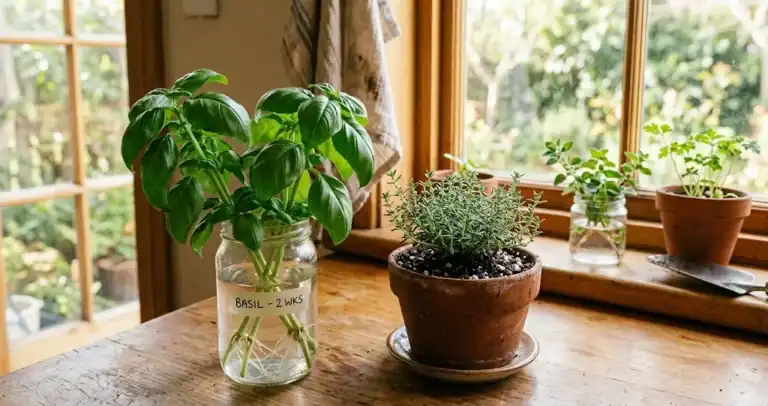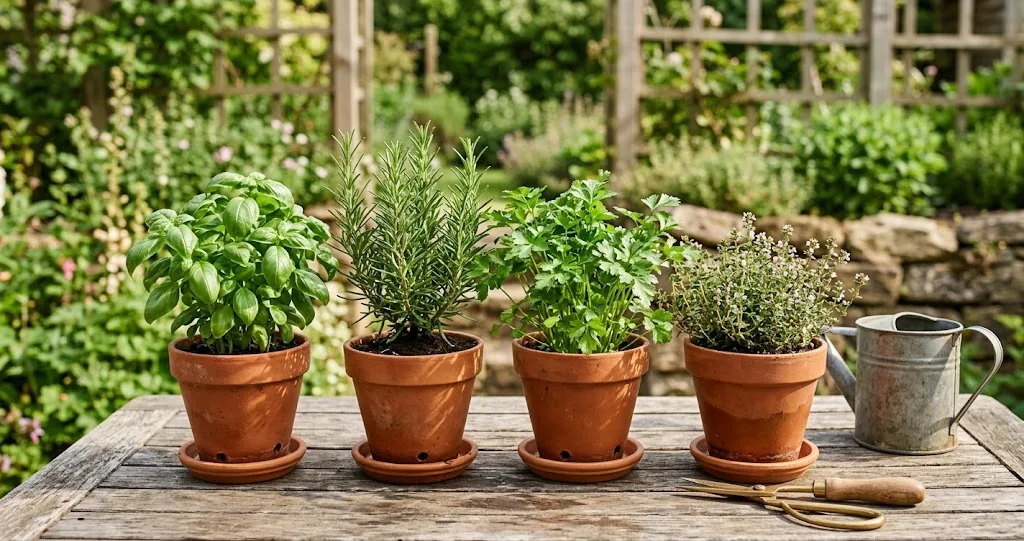
Freshly cut leaves plucked minutes before cooking deliver vibrant aroma and bright flavor that grocery store bunches simply cannot match. Growing your own herbs is one of the most rewarding projects a home gardener can take on, whether you have a sprawling vegetable garden bed or a sunny windowsill in an apartment. Because many herbs are vigorous and forgiving, anyone who wants to grow herbs can achieve an abundant harvest in their first season. Most culinary varieties are remarkably easy to grow, rewarding minimal care with generous handfuls of aromatic seasoning.
Getting dependable results comes down to understanding a few core fundamentals: matching each plant to its preferred light, providing well-drained soil, watering with care, and harvesting frequently. This guide to growing herbs brings together practical growing tips and field-tested advice so you can start growing delicious herbs with complete confidence.
Choose the right location and light for your herbs

Sunlight is the primary engine for essential oil synthesis in aromatic culinary plants. As a universal standard, most kitchen herbs perform best in full sun, requiring at least six to eight hours of direct light daily. Sun-loving species like basil, rosemary, thyme, oregano, and sage develop concentrated oils and sturdy stems when given abundant warmth and unfiltered sunshine. When planning where to grow in your garden, select a bright exposure away from dense tree canopies.
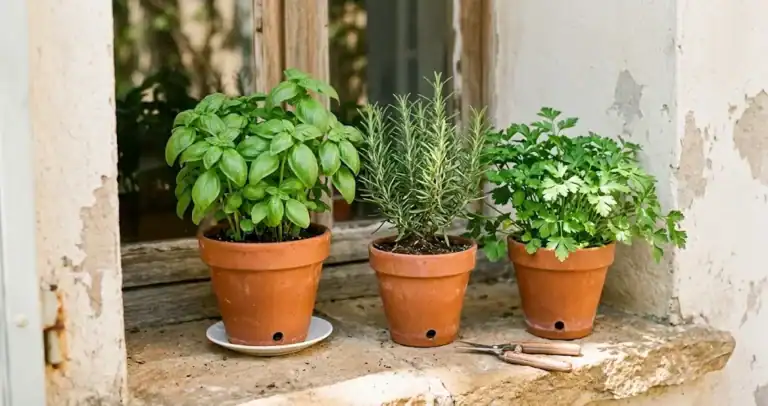
For any gardener growing herbs indoors, place your pots on an unobstructed south-facing windowsill to capture maximum daily solar exposure. During overcast winter months or in rooms with limited windows, supplemental full-spectrum LED grow lights positioned four to six inches above the foliage will keep plants from stretching into spindly growth. If you decide to plant indoors, keep each container slightly away from cold window glass during frosty nights.
Not every species demands intense heat. Leafy herbs such as parsley, cilantro, chives, and mint tolerate partial shade, particularly during the intense midday heat of a hot summer afternoon. Giving these delicate greens light afternoon shade prevents leaf scorching, maintains tender texture, and delays the onset of bolting. Selecting the best herbs for your specific microclimate ensures steady production from early spring through late autumn.
Prepare well-draining soil and containers
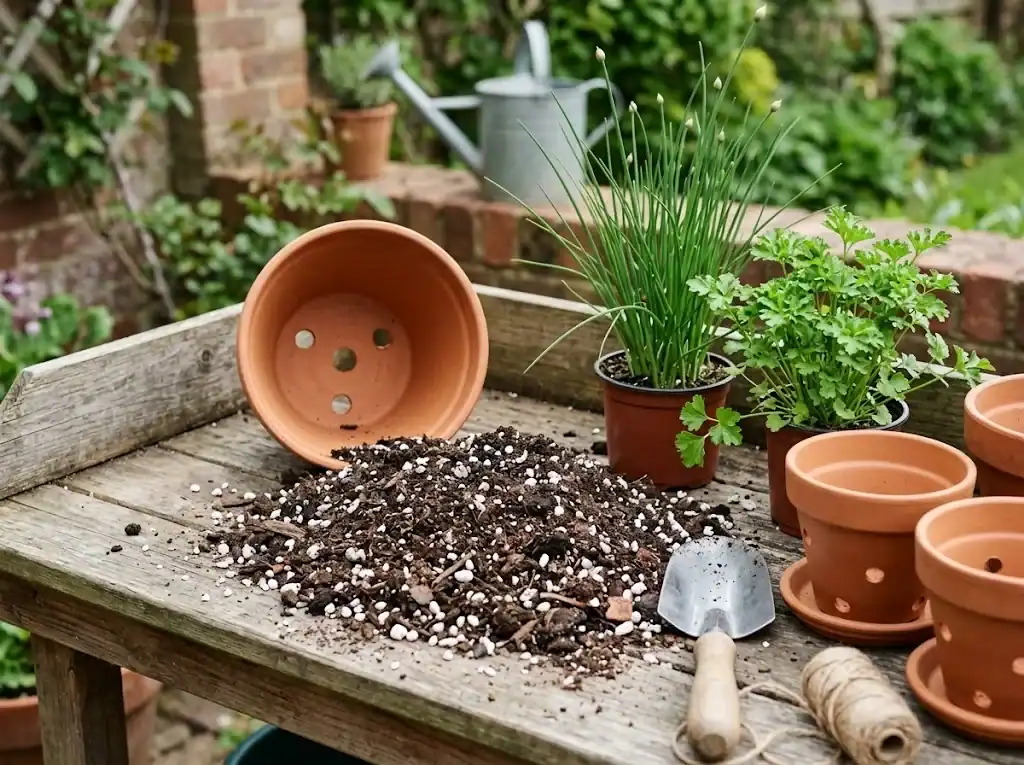
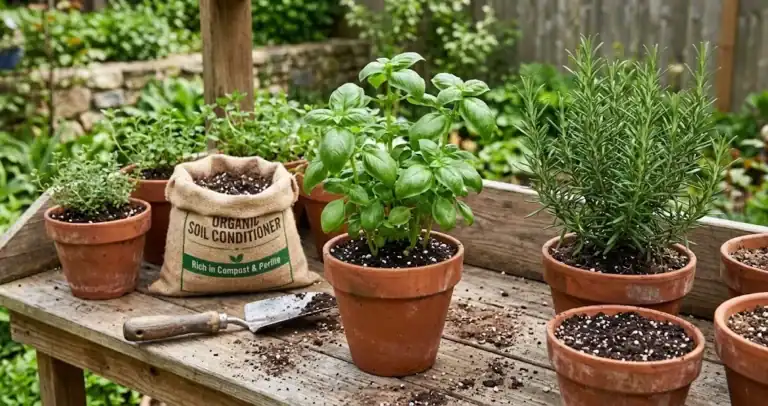
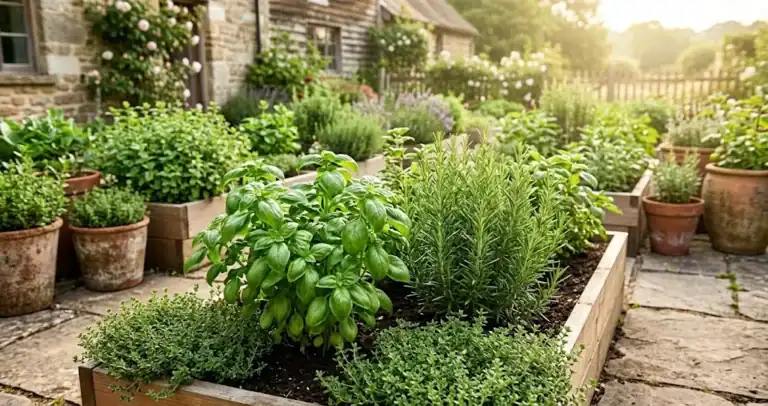
If there is one universal rule across all types of herbs, it is that roots despise waterlogged ground. Soggy conditions deprive root hairs of oxygen and invite fungal rot. When planting in outdoor ground or a raised bed, blend organic compost and coarse horticultural grit into native earth to establish a loose, aerated texture. You can explore our dedicated guide on preparing the right soil for growing herbs to tailor bed structure and fertility before planting.
When growing in containers, never use heavy garden soil dug from the yard, as it compacts rapidly inside a pot. Instead, choose a porous, high-grade potting mix amended with perlite or coarse pumice. Always select a container with drainage holes at the base so excess moisture drains freely away from root systems. Providing good drainage is the single most effective way to prevent root rot in potted plants.
Setting up a container garden gives you precise control over microclimates and moisture. Consider keeping plants in individual pots when grouping herbs with contrasting water requirements. Mediterranean herbs thrive in lean, fast-drying potting soil, whereas moisture-loving greens like sweet basil and curly parsley prefer consistent hydration. Keeping distinct varieties in separate containers prevents overwatering the drought-tolerant species.
Understand annual and perennial herbs

Organizing your herb growing space begins with recognizing the life cycle of each variety. Grouping plants to grow by seasonal longevity simplifies bed layout, companion planting, and winter care routines.
Annual herbs complete their entire life cycle within a single growing season. Classic warm weather annuals include sweet basil, summer savory, and dill, while cilantro and chervil act as cool-season annuals. These fast-maturing plants germinate rapidly, produce lush foliage for culinary use in the kitchen, set seed heads, and complete their cycle. Sowing successive small patches every three weeks guarantees a steady supply of fresh herbs throughout spring and summer.
Perennial herbs live for multiple years, developing sturdy root systems and branching frameworks over time. Robust favorites like English thyme, winter savory, common sage (Salvia officinalis), oregano, and chives return reliably each spring. In regions with freezing winters, tender perennial varieties like rosemary and lemon verbena can be grown in a container and brought inside to overwinter safely near a bright window.
Start from herb seeds or nursery transplants

Gardeners often wonder whether they should sow herb seeds directly or purchase established nursery transplants. The ideal choice depends on the plant species and your seasonal timeline.
Fast-sprouting annuals with sensitive taproots respond best to starting plants from seed directly in the garden or patio planters. Varieties like cilantro, dill, and parsley produce delicate taproots that resent root disturbance, making direct sowing superior. Take time to read our advice on choosing herb seeds to select fresh, high-viability seed stock from reputable growers.
Conversely, slow-starting perennials like rosemary and lavender (Lavandula) require months to develop from seed, while culinary French tarragon does not come true from seed and must be grown from nursery starts, stem cuttings, or root divisions. For these varieties, purchasing established nursery seedlings or rooting soft cuttings provides a major head start. When shopping for nursery starts, inspect the root ball for healthy pale root tips and reject pot-bound plants with circling roots.
If you seed indoors early in spring, maintain gentle bottom warmth and steady humidity until germination occurs. Once each young seedling forms two sets of true leaves, harden them off over a week in dappled outdoor shade before they are transplanted outdoors into garden soil or a patio planter. When it is time to transplant nursery stock into your herb patch, handle root balls gently to minimize shock.
Water and feed for strong flavor
Balancing moisture levels is crucial for developing rich flavor and healthy foliage. To check moisture accurately, press your finger an inch into the soil. If the top layer feels completely dry, irrigate thoroughly until water runs from the bottom holes. If the substrate feels cool and damp, delay watering for another day or two.
Mediterranean varieties like rosemary, thyme, and oregano are drought-adapted and grow best when the top layers of soil dry between waterings. Mild moisture stress actually concentrates aromatic terpenes and essential oils in the foliage, enhancing their culinary punch. Soft-stemmed herbs like sweet basil and spearmint, however, require steady moisture to prevent wilting during warm afternoons.
Over-fertilizing herbs produces rapid, watery growth that dilutes flavor and weakens natural pest resistance. A modest top-dressing of aged compost in early spring supplies ample nutrients for in-ground beds. For plants grown indoors or in containers, a light drench of diluted liquid kelp or organic fish emulsion once a month during the active growing season provides balanced nutrition without scorching roots.
Prune and harvest to encourage fresh growth

Frequent harvesting is the single best practice for maintaining vigorous, compact plants. Regular trimming signals dormant buds along each plant stem to break into bushy lateral branches, dramatically increasing your total leaf yield.
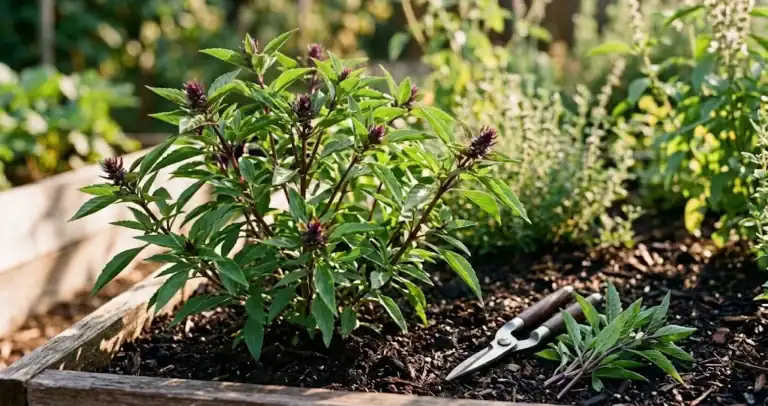
For branching herbs like a basil plant or mint, use clean shears to snip stems just above a set of leaf nodes. Always leave at least two-thirds of the plant intact so the remaining foliage can photosynthesize and generate energy for new growth. Pinching off early flower buds as soon as they appear redirects nutrients back into succulent leaf production, keeping the flavor sweet rather than bitter.
For shrubby perennial herbs such as sage, winter savory, and lavender, prune lightly in early spring to shape the plant. Avoid cutting severely into old, leafless woody branches that cannot easily push new shoots. The best time of day to harvest is mid-morning, once the early dew has dried but before the hot midday sun evaporates volatile aromatic oils.
Manage common pests and seasonal transitions
Thanks to their pungent essential oils, most garden herbs suffer few serious pest problems. However, crowded beds or indoor containers with low humidity can attract common garden pests like aphids, spider mites, or whiteflies.
Inspect the undersides of leaves regularly. If an infestation begins, wash the insects off with a brisk water spray or apply an organic insecticidal soap approved for edibles. Ensure adequate spacing between pots to facilitate air circulation, which prevents fungal problems like powdery mildew.
Take care with invasive spreaders in the Mentha genus, such as peppermint and spearmint. Their vigorous underground runners will quickly crowd out neighboring plants if left unchecked. Keep mint restricted to an individual pot or a dedicated sunken container. As autumn cools, bring frost-sensitive potted herbs inside and add a protective mulch layer around outdoor perennial crowns.
Enjoy homegrown flavor year-round
Growing culinary herbs at home is an easy, satisfying way to elevate everyday meals with exceptional fresh flavor. Whether you snip garlic chive into a stir-fry, scatter fresh chives over roasted potatoes, or simmer rosemary in a savory stew, home-harvested herbs bring vibrant character to your kitchen.
By providing ample sunlight, well-draining soil, attentive watering, and routine pruning, you can maintain a productive collection of herbs in your garden throughout the entire year. To explore complete layout ideas and planting blueprints, check out our comprehensive beginner’s guide to growing an herb garden. Select three or four of your favorite herbs to grow, prepare your containers or beds, and enjoy the unmatched pleasure of fresh harvests at your doorstep.