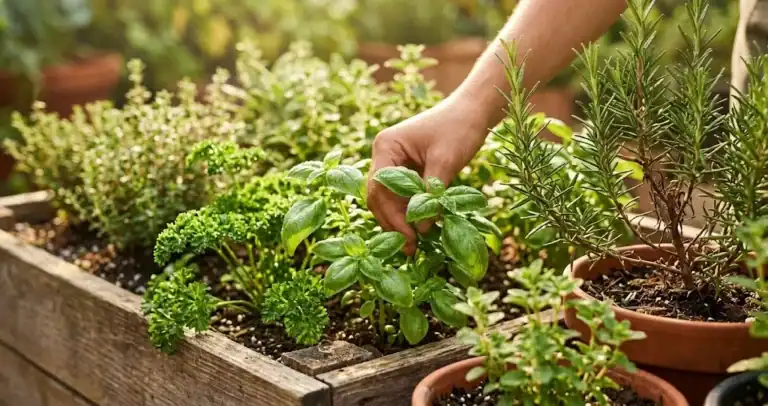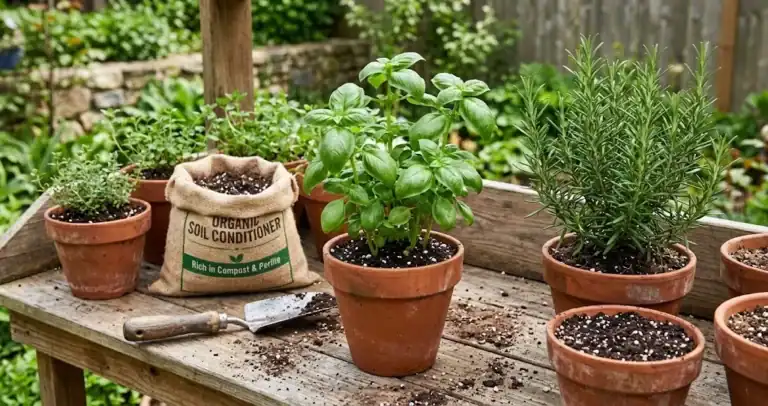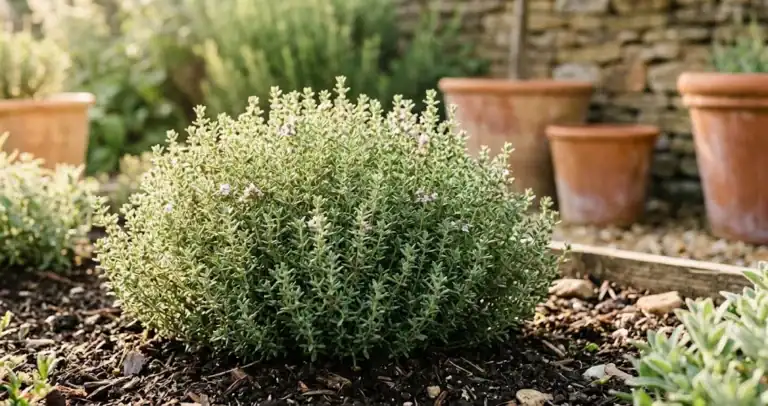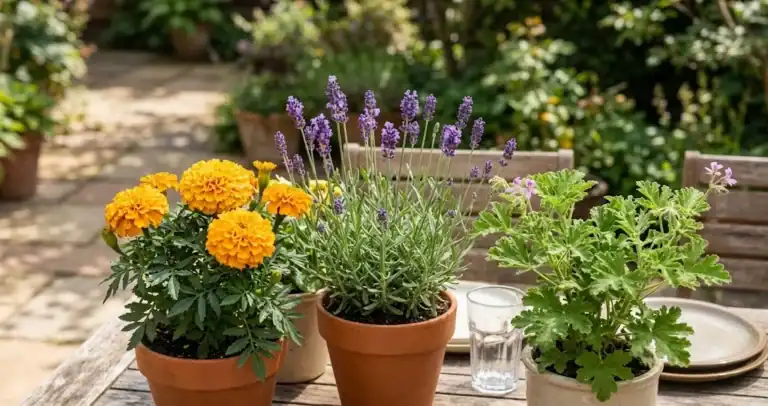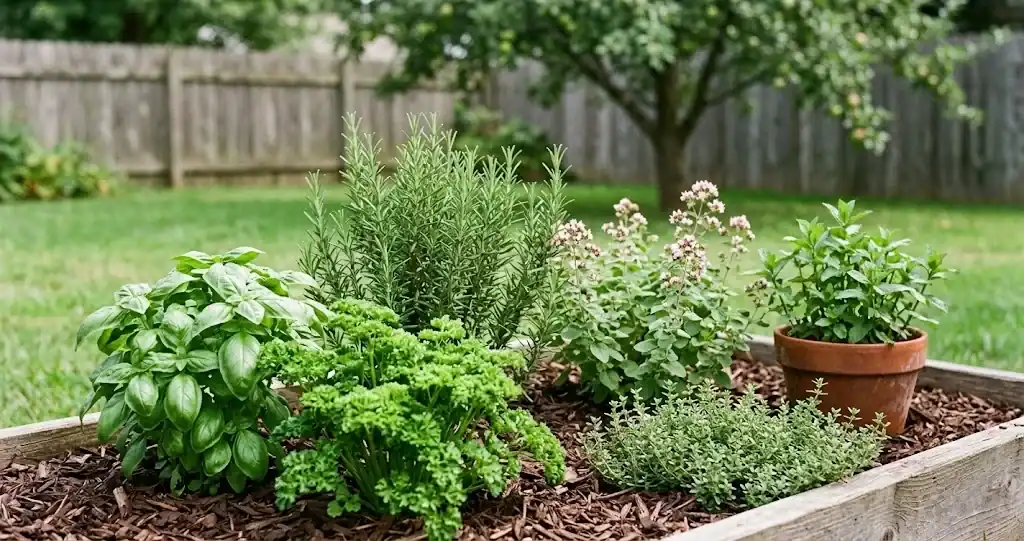
Companion planting with herbs is the practice of placing species that share the same light, water, spacing, and harvest needs in the same bed, and using flowering plants as habitat for pollinators and beneficial insects. A good companion plant shares a profile with its neighbour; a poor one fights it for water, sun, or root space. When two species want very different conditions, pairing them often does more harm than good. When they share a profile, the bed runs itself. Pressures vary by crop and by garden, so treat pairing charts as a starting point rather than a guarantee. For a wider view of how the pieces fit together, this companion planting guide for vegetables and herbs is a useful companion read.
If you have ever wondered why a leafy plant sulks next to a rue, or why your tomatoes seem to enjoy being close to a pot of chives, this guide is for you. Below is a practical map of which species grow well together, which pairs to avoid, which vegetables benefit from which neighbors, and how to lay the bed out so everyone gets what they need.
What companion planting actually does
Companion planting is older than the term for it. Gardeners have long noticed that some plants seem to do more for each other than share the same patch of soil. Three mechanisms drive most of those benefits, and understanding them helps you read a pairing chart with judgment rather than as a rule.
Why companion planting matters for a small garden bed
Companion planting shows up in three places a home gardener can actually measure. First, easier pollination, because flowering herbs pull in bees, hoverflies, and the parasitoid wasps whose larvae develop on caterpillars and other hosts. Second, easier care, because deep-rooted species break up a garden bed, and low-growing plants act as a living mulch that keeps roots cool in summer. Third, simpler watering and feeding, because species that share the same sun, water, and soil profile can be treated as one group. Common garden pests in the kitchen garden include aphids on leafy herbs, cabbage moths on brassicas, flea beetles on eggplant and potatoes, bean beetles on beans, and squash bugs on cucurbits. Flowering plants can provide food and habitat for the beneficial insects that visit the bed, but the actual effect varies by pest, by beneficial species, and by garden conditions. None of this replaces compost, sun, and water; good growing conditions do most of the work, and companion planting adds the rest.
Using herbs this way is not new. Gardeners have long used aromatic herbs to give off strong essential oils that may interfere with pest host-finding, and they have long grown flowering plants to attract beneficial insects. The revival of homegrown herbs has simply given the practice a name. If you are new to growing these plants at home, start small: a single garden bed with three to five species is easier to manage than a sprawling layout, and the lessons transfer. The best herb for a beginner bed is the one you actually cook with, since you will harvest more often and notice problems sooner. Thyme and sage are forgiving perennials; basil and a leafy annual like chervil are forgiving annuals. Choose one from each group, give them a sunny corner, and let the bed teach you what it wants.
- Compatible care profile. Species that want the same sun, water, and soil conditions can be planted, watered, and fed as one group. Mismatched microclimates are the most common reason a bed of mixed herbs underperforms.
- Pollinator and beneficial-insect habitat. Flowering plants provide nectar and pollen that support the adult bees, hoverflies, and parasitoid wasps that visit the bed; a diverse planting tends to support a more balanced community.
- Soil and microclimate support. Low-growing plants act as living mulch, shading the soil and keeping roots cool in summer. Deep-rooted species break up the bed and bring nutrients closer to the surface for their neighbors.
A useful plan leans on all three. You are not just pairing for insect control; you are building a small community that holds itself together through the season.
Which herbs grow well together
Most culinary species tolerate each other when they share the same sun, water, and soil conditions. The pairings below consistently help each other rather than just coexist. A classic moist-soil trio of basil, parsley, and chives wants the same rich, moist root zone and groups naturally as one row. A Mediterranean dry-soil group of thyme, oregano, sage, and rosemary prefers drier, leaner soil and groups naturally as a separate row, where the two groups do not have to share the same watering can. Pick the tallest dry-soil plant as the companion plant for a hot, dry corner, and the shortest for an even drier corner. Chervil belongs to the carrot family and likes cool, partly shaded spots, where it fits with the moist-soil trio rather than the Mediterranean group. Mint and lemon balm spread by runners, so keep them in pots sunk into the bed unless you want them to fill it. Chives grow as a clump that slowly expands from the base, so they stay where you put them and do not need the same containment. Cilantro bolts at similar times to dill, so planting them together makes succession planning easier, and both pull in beneficial insects when they flower.
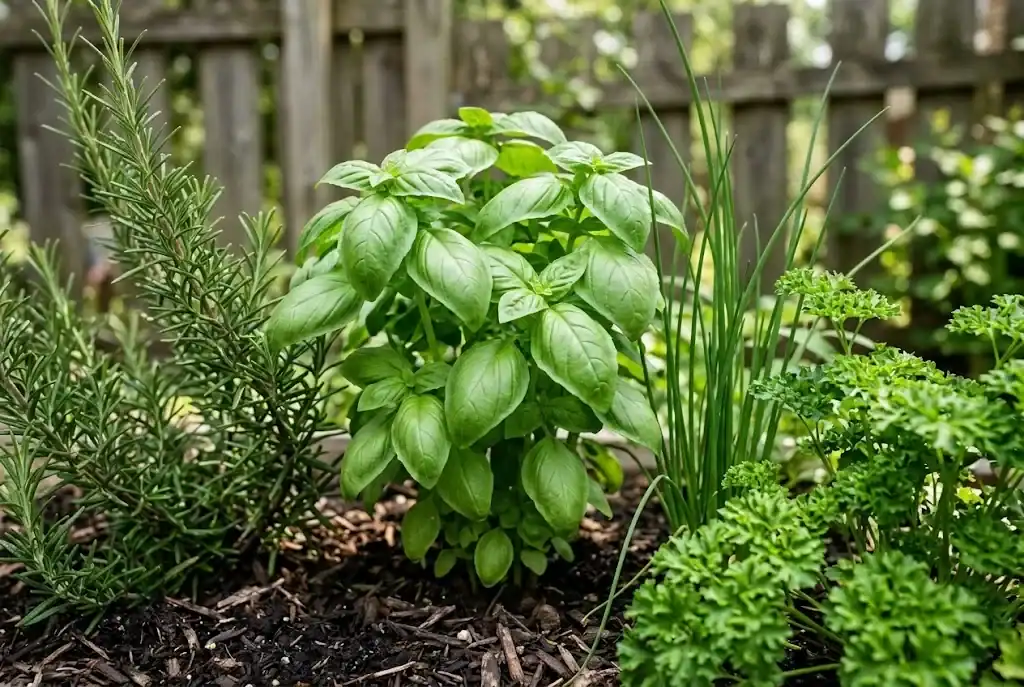
The deeper lesson is that good companion planting looks a lot like growing herbs well: plant near something that asks for the same water and sun, and stay away from something that does not. Many herbs grown together in the same bed simply tolerate each other because they happen to share a profile; only a handful of pairings rise to a real horticultural reason.
If you want a deeper dive into bed preparation and seasonal care that supports these pairings, the beginner’s guide to growing an herb garden is a useful next read.
Which herbs to keep apart
Not every pairing helps. Some combinations compete hard for the same resources, or one species crowds out another when given the same space. Rue is widely reported to interfere with the growth of nearby herbs and beans, and fennel is reported to do the same with tomatoes, peppers, and many leafy herbs. If you keep either, set it well apart from a mixed kitchen bed, ideally in its own plot, so the rest of the bed can settle in without competition. Mint’s aggressive roots will shade out parsley within a single season, so sink the mint into a container to keep the peace. The carrot family and the carrot itself share pests, the carrot rust fly, and will draw each other’s problems; keep them in different beds.
Two more habits are worth keeping. Avoid planting aromatic herbs next to a small tree’s trunk if the tree is the priority; the herb’s roots compete for moisture and the tree usually loses. And avoid planting the same Mediterranean herb in the same spot year after year; rotating the dry-soil species across the bed keeps the soil balanced and reduces the build-up of species-specific issues.
A simple rule of thumb: if two plants need very different water or sun conditions, give them their own microclimate rather than forcing a partnership.
Pairing herbs with vegetables
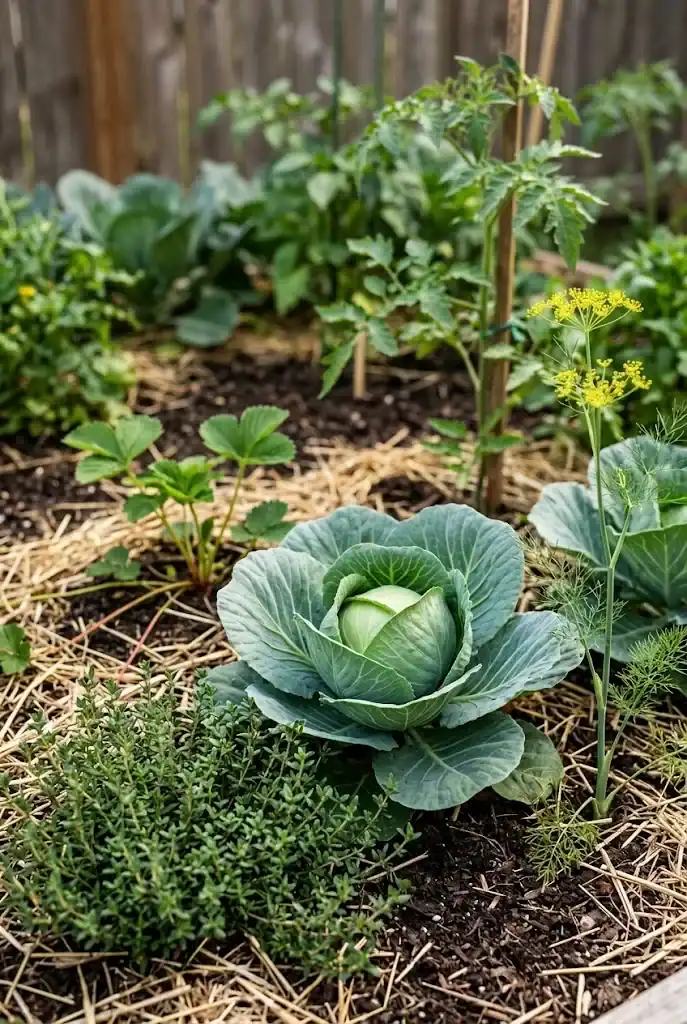
Companion planting with herbs works just as well across a vegetable garden as within a patch of just herbs. Pairing them concentrates habitat and care benefits in one place, and many kitchen gardeners find that the simplest setup is a single bed with a corner of these plants. The list below is a starting point, not a complete record of every pairing you can plant together. The right combination depends on what you grow in your garden and what pressures you actually see, so use this as a guide rather than a garden guide you have to follow exactly.
Moist-soil pairings
Where the moisture-loving herbs meet moisture-loving crops. The whole group can be watered on the same day.
- Basil with tomatoes and peppers. All three want warm soil and steady moisture, so they share the same bed profile. Basil may help draw pollinators into the wider tomato patch, an effect that varies by garden and by season.
- Chives with carrots, apples, and lettuce. All three want the same cool, moist root zone. Chive flowers draw pollinators and predatory insects into the wider bed, and a diverse planting tends to support a more balanced community.
- Dill with cabbage, cucumbers, and lettuce. Dill likes the same moist soil as these crops, and the umbel flowers provide nectar for adult parasitoid wasps; this effect is variable from garden to garden.
- Parsley with tomatoes, asparagus, and peppers. Parsley likes the same rich, moist soil as these crops. Its small flowers attract hoverflies and parasitoid wasps; plant it near the edge of the bed so its tall flower stalks do not shade smaller crops.
- Mint in pots with any of the above. Mint is one of the easiest herbs to keep alive but the hardest to keep in bounds. Sunk into a container, its strong scent is thought to interfere with some leaf-eaters’ host-finding. Do not plant mint directly in the vegetable bed; its roots will take over.
Dry-soil pairings
Where the Mediterranean herbs meet crops that tolerate drier feet. Treat this group as a separate bed or a separate row, with at least 12 inches between it and the moist-soil crops.
- Thyme, rosemary, sage, or oregano near grapes or in a Mediterranean corner of the bed. These dry-soil herbs prefer leaner soil and full sun, the same profile as a sunny grape border. Plant them at the edge of the bed nearest the dry-soil crop, with at least 12 inches between them and the moisture-loving crops, so each species stays in its own microclimate.
Border and finishing touches
- Cilantro as a border around the bed. Cilantro likes cool, moist soil and bolts into flowers that provide nectar for parasitoid wasps; plant it as a border around the bed so the flowers can host pollinators before the lettuce and brassicas take the centre.
- Companion planting for herbs and vegetables. Pairing the right plant with the right vegetable concentrates beneficial-insect habitat in one corner of the bed, which is the simplest way to add diversity to a small garden.
If your bed also includes flowers, think of them as part of the same system. Nasturtiums, marigolds, and alyssum attract pollinators and beneficial predators in their own right, and they look good next to an herb patch. Letting chives naturalize under a small tree as a long-term living mulch keeps the soil covered and the shallow roots cool through the heat of summer.
For raised beds and containers, the layout matters as much as the pairings. The importance of soil in growing herbs explains how to give Mediterranean and moisture-loving species the drainage they each need when they share a bed.
How far apart to plant companion herbs
Use these as practical guidelines rather than fixed numbers, since bed size, climate, and variety all matter.
Spacing is not just about airflow. It is about giving each plant the root room it needs and keeping aggressive spreaders from taking over. Start with 8 to 12 inches between most culinary herbs; this is enough room for airflow and for a hand to reach in for a snip without stepping on the bed. Keep the runners 2 feet or more from anything you do not want them to overrun, or better yet, keep mint in its own pot sunk into the soil. Plant tall species on the north side of the bed so they do not shade smaller plants, and put creeping or low growers along the south edge where they get the most sun. Allow at least 12 inches between the dry-soil and the moisture-loving species; the first group likes dry soil and full sun, the second likes steady moisture, and they will both do badly if forced into a single microclimate. As a rule, planting herbs together is best when they share the same water and sun profile; mismatched microclimates are the most common reason a bed of mixed herbs underperforms.
A bed laid out with these distances in mind will keep its shape through the season and give you clear paths for harvesting without compacting the soil.
Common mistakes to avoid
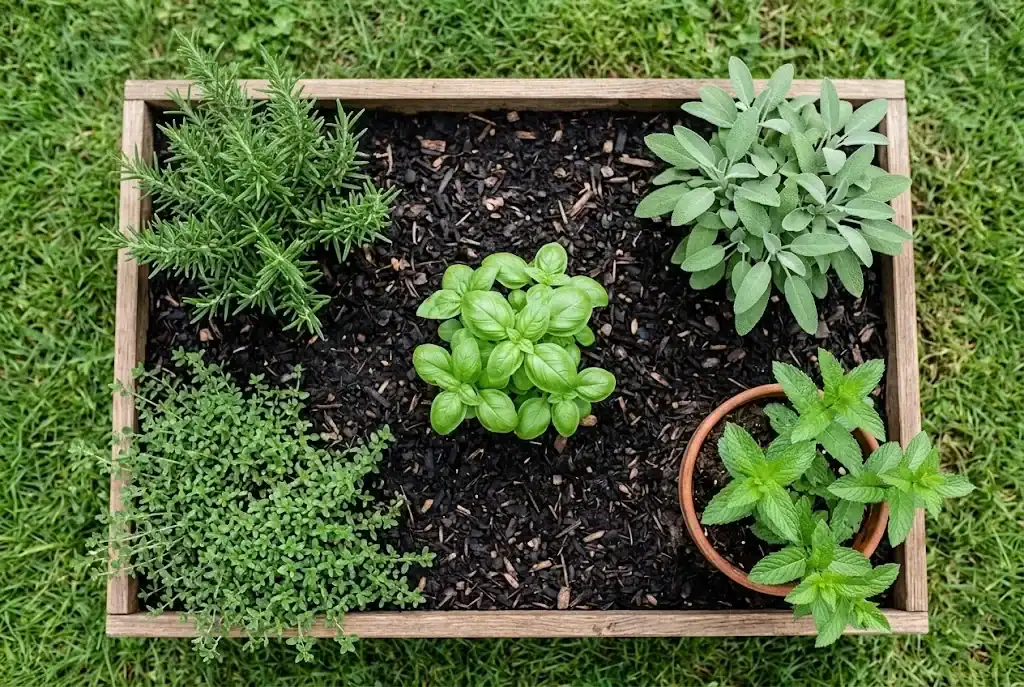
A few recurring pitfalls trip up first-time companion planters. None of them are fatal, and most are easy to fix mid-season. Many herbs recover from a small mistake in a single season; the same mistake in the wrong climate can take a year to undo. Avoid these in particular.
- Treating the chart as a rule. Companion planting is a tendency, not a guarantee. Local conditions, soil, and weather all change the outcome.
- Letting mint loose in the bed. Mint is the single most common mistake. It will quietly take over a 4 by 4 bed in a single season. Sink it in a container or give it a corner to itself.
- Pairing by smell rather than by need. Two herbs may both smell wonderful, but they want very different water conditions. Pair by sun, water, and soil first, scent second.
- Crowding the bed. Crowded herbs compete for light and airflow, and the weaker ones bolt or succumb to mildew. Give each plant its room.
- Forgetting season-end cleanup. Many pests overwinter in plant debris. Clear spent herbs at the end of the season and compost them away from the bed.
If you want a more detailed walk through the seasonal rhythm that keeps a herb patch productive year after year, helpful tips for nurturing herb gardens cover mulching, dividing, and overwintering routines that pair well with this guide.
Frequently asked questions
Can I plant multiple herbs in one container?
Yes, as long as they share water and sun needs. A Mediterranean pot of thyme and rosemary works well. A mixed pot of basil, parsley, and chives also works. Do not mix the two groups; one wants moist soil, the other wants dry feet.
Do herbs really repel garden pests?
Aromatic herbs and flowers can support a more diverse garden, and a diverse planting tends to support a more balanced community. Effects are not guaranteed, however, and they vary by crop and by season. Aromatic plants do not replace physical protection like row cover, and they will not make a serious infestation go away. Use them as one part of an integrated approach, alongside resistant varieties, good growing conditions, and physical barriers when pressure is high.
Can companion planting fix poor soil?
No. Companion planting works on top of good soil. If your bed is compacted or low in organic matter, fix that first with compost and a season of cover cropping, then add the pairings.
How long does it take to see a benefit?
You will usually see pollinator activity within a few weeks of flowering. Reduction in damage is more gradual and shows up over a season. Keep notes on what you see in your own bed; the chart is a starting point, not the answer.
A workable plan for a small home bed
If you are starting fresh, here is a layout template that holds together in most climates. Use three rows, each at a different height and water profile, with a pot of a runner sunk into one corner. The back row (north side, away from the sun): a tall (18 to 24 inches), woody, dry-soil herb that likes full sun, set about 18 inches from any neighbour. The middle row: a leafy, medium-height (12 to 18 inches), moisture-loving kitchen herb, with a clump of chives to one side at the same height. The front row (south side, sunniest): a creeping or low (under 6 inches), dry-soil Mediterranean herb along the edge, with another short, dry-soil herb at the corners. Allow at least 12 inches between the dry-soil and moisture-loving rows, and place the pot of a runner (mint or lemon balm) at a corner well away from the leafy herbs. Adjust the species to your own taste and zone, but keep the height and water grouping, and the bed will hold its shape through summer. Specific herbs you might add later include lemon verbena and summer savory along the front edge, both of which fit the same dry-soil front-row profile. Many of these species grow well with several vegetables, and all of them can be grown in containers if you have only a balcony or a small patio. Adjust for your own taste, your zone, and what you actually cook with, and you will have a planting that earns its place.
For a reader who is genuinely starting from scratch, the best herb to plant first is the one you reach for in the kitchen every week. Grow that one well, learn what it asks for in your soil and climate, then add the next one when the first has settled in. Growing herbs one at a time is slower than buying six pots at once, but it teaches you more in a season than any chart can.