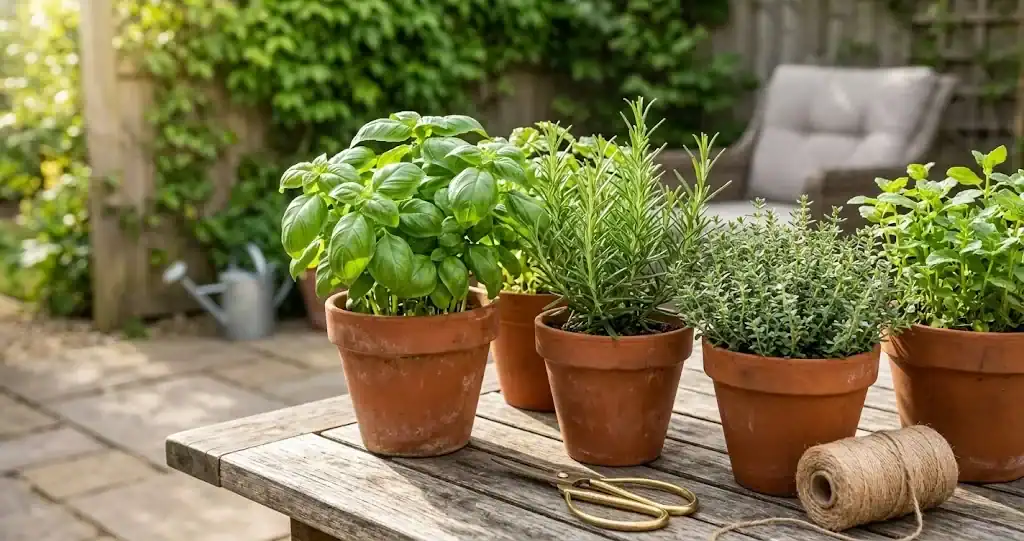
Stepping outside to snip sweet basil for dinner or clipping sprigs of thyme for roasted vegetables is one of the quiet pleasures of everyday cooking. Yet many aspiring gardeners hesitate, assuming they need acres of land, a costly raised bed, or deep horticultural training to get started. In reality, home herb gardening for beginners requires little more than a sunny corner, good soil aeration, and an understanding of what a few hardy plants need to thrive.
Herbs are among the most forgiving plants in the edible landscape. Unlike delicate heirloom tomatoes or finicky fruit trees, most common culinary varieties adapt readily to small spaces, balcony railing boxes, windowsill pots, and compact backyard plots. Whether you want to grow herbs indoors on a kitchen counter or establish an outdoor herb garden along a patio edge, practical fundamentals help every beginner gardener start growing successfully from spring through frost.
Choosing Your Location: Sunlight and Moisture Balance First
Before buying plants or potting soil, observe how sunlight moves across your living space. Light is the primary fuel for aromatic foliage; it drives the production of volatile essential oils that give every herb its characteristic aroma and culinary punch. Most popular culinary herbs hail from the sun-drenched Mediterranean basin and need full sun, which means at least six to eight hours of direct, unfiltered light daily.
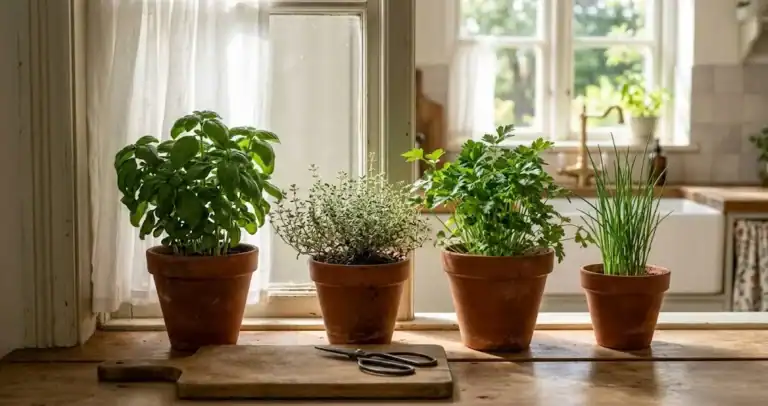
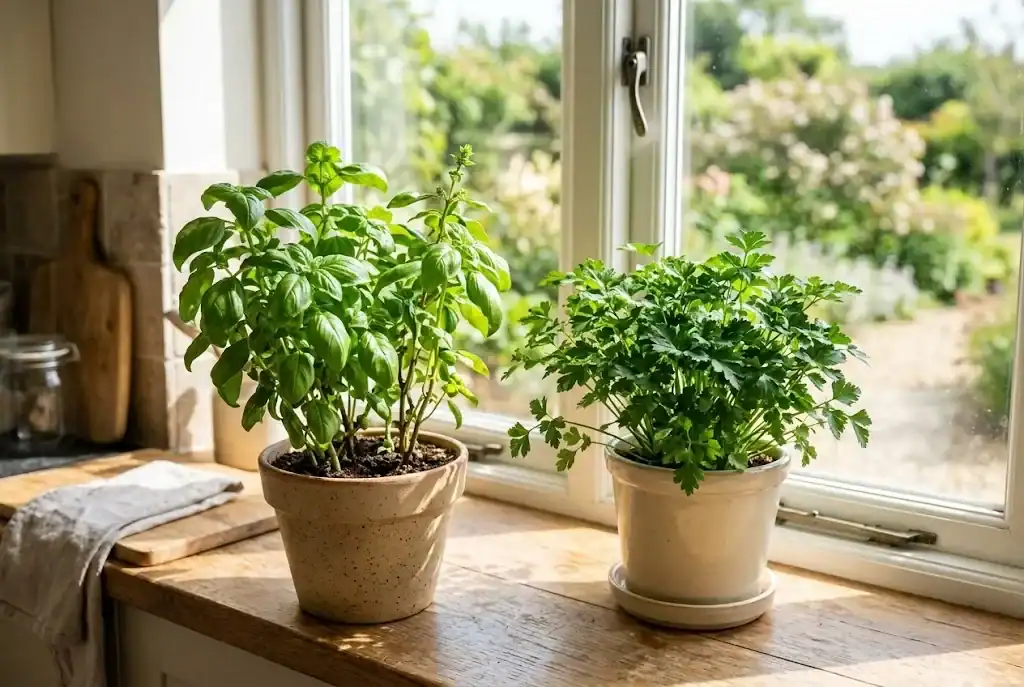
If you have an outdoor planting space or patio, look for south- or west-facing exposures that stay bright through the warmest parts of the day. A sunny doorstep or a quiet vegetable garden border provides ideal warmth for plants in the garden. For a grower working without yard space, an indoor herb garden set on an unobstructed south-facing windowsill can provide enough light for tender herbs and leafy annuals during the active growing season.
When indoor light falls short, supplemental LED grow lights running twelve to fourteen hours a day easily bridge the gap. Alongside sunlight, proper soil moisture balance determines whether your plants survive their first month. Standing water starves roots of oxygen and invites fungal root rot. Every container must feature open exit holes at the base, and garden soil must shed excess water freely rather than pooling after heavy rain.
Containers and Soil: Building the Right Foundation
Containers offer beginner growers complete control over soil texture, moisture, and placement. An individual pot gives each plant dedicated root room and lets you tailor watering to specific preferences. A terracotta pot remains a favorite choice because porous unglazed clay breathes, allowing excess soil moisture to evaporate through pot walls and protecting roots from overwatering.
Plastic and glazed ceramic containers work well too, provided they include adequate outflow openings at the bottom. When grouping plants in a larger herb planter, a multi-pocket container, or a DIY kitchen window box, ensure the container holds enough volume so soil does not dry out within hours on hot summer afternoons. A depth of eight to ten inches accommodates most shallow-rooted container herb varieties comfortably.
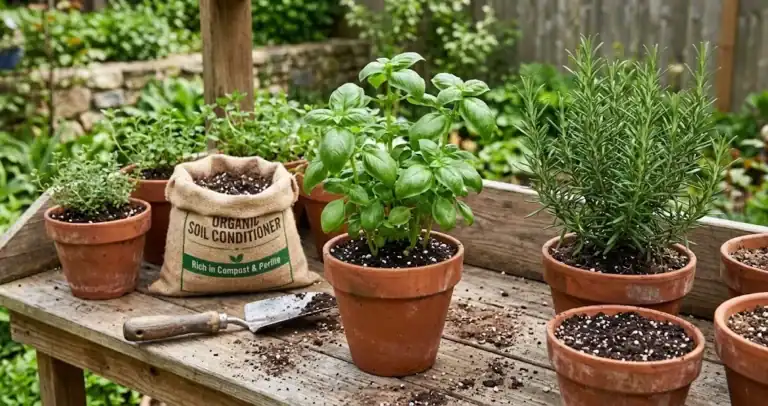
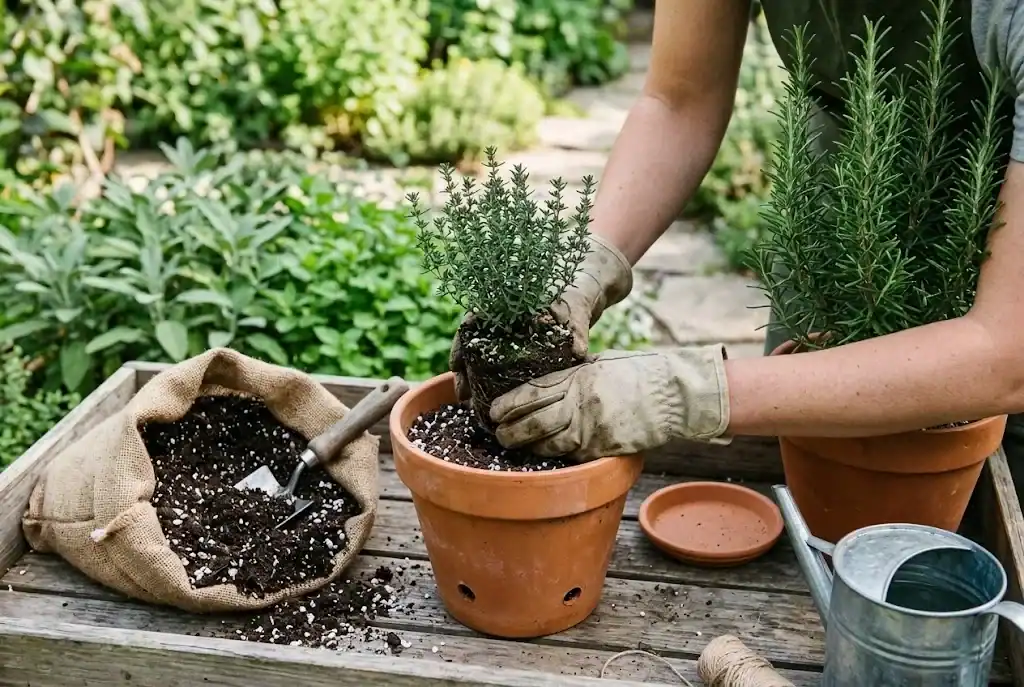
Never fill an herb pot with dense topsoil dug straight from your yard, which compacts into an unyielding block in containers. Instead, choose a high-quality potting mix enriched with aged compost and aerated with perlite or coarse horticultural sand. If you are preparing an in-ground garden bed or a raised garden bed, loosen the native earth deeply and work in organic matter to improve drainage and crumb structure. Understanding proper soil preparation for herbs helps you avoid soggy roots and nutrient deficiencies from the start.
Starting from Seed vs. Potted Transplants
Beginner gardeners often wonder whether to start from seed or purchase young transplants from a local greenhouse. Both methods have distinct advantages depending on the specific plant species and your patience. Fast-growing annual herbs with taproots or delicate root networks germinate quickly and develop strong root networks when sown directly in their final pots.
Sweet basil, cilantro, and chervil grow vigorously from seed and reach harvesting size within six to eight weeks. When you try to grow cilantro or sweet basil, starting herbs from seed is economical and gives you access to interesting botanical cultivars that local garden centers rarely stock. To ensure strong germination rates, read up on choosing reliable herb seeds from trusted suppliers.

Conversely, slow-germinating or woody perennial varieties prove far easier to establish from potted nursery starts. Rosemary, thyme, oregano, and lavender take months to produce sizable harvests from seed and can be tricky to germinate consistently on a windowsill. Buying healthy potted nursery plants gives you an immediate head start and allows you to snip usable sprigs within weeks of planting.
The Best Herbs to Grow for Beginners
When starting an herb garden, focus on a manageable selection of four to six favorite herbs that you regularly use in the kitchen. Fresh herbs are always more vibrant than dried commercial jars, and dividing your kitchen garden into annuals and perennials helps you organize care routines and seasonal maintenance.
Reliable Annual Herbs
Annual herbs complete their entire life cycle in a single growing season. They grow rapidly, produce abundant leafy foliage, flower in late summer, and decline once frost arrives:
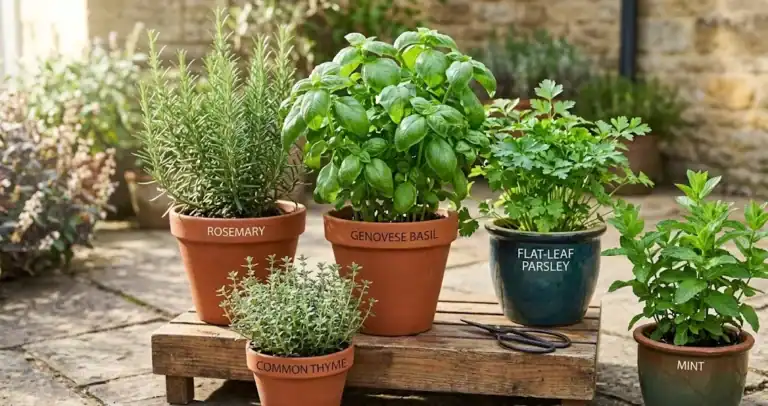
- Sweet Basil (Ocimum basilicum): The undisputed centerpiece of any culinary herb collection. Gardeners love to grow basil because it responds eagerly to heat, fertile soil, and steady moisture. Pinching off the top clusters of leaves keeps plants bushy and prevents premature flowering.
- Dill (Anethum graveolens): Featuring delicate feathery foliage, dill is easy to grow and can grow in cool weather during early spring and autumn. Sowing seeds every few weeks ensures a continuous supply of fresh sprigs for salads, dressings, and pickles.
- Parsley (Petroselinum crispum): Technically a biennial grown as an annual, flat-leaf Italian parsley offers a clean, grassy bite that brightens sauces, soups, and marinades. It tolerates cooler spring temperatures and modest shade better than Mediterranean herbs.
Hardy Perennial Herbs
Perennial herbs return year after year from established roots. Once their root systems settle, they require less frequent watering and tolerate brief dry spells with ease:
- Thyme (Thymus vulgaris): A low-growing woody perennial with tiny, aromatic leaves. Thyme thrives in lean, well-drained soil and tolerates bright all-day exposure and modest drought once established.
- Rosemary (Salvia rosmarinus): Known for needle-like foliage and intense pine-citrus aroma. Rosemary demands excellent drainage and gritty soil; avoid soggy roots at all costs.
- Spearmint and Peppermint (Mentha spp.): Enthusiastic growers love to grow mint because it is remarkably tough and thrives in partial shade. Because mint spreads aggressively through underground runners, always keep it isolated in its own container rather than planting it directly into a shared bed.
- Chives (Allium schoenoprasum): Slender green stems deliver a mild onion flavor. Snipping a fresh chive stem adds instant zest to eggs and potatoes, and the plant forms neat clumping mounds with edible lavender pom-pom blossoms each spring.
- Lemon Balm (Melissa officinalis): A gentle perennial herb with refreshing citrus scent that boasts many uses in the kitchen. Like other members of the mint family, it grows enthusiastically in pots and responds well to regular cutting.
While most home growers focus on kitchen herbs, many also plant a first medicinal herb garden featuring traditional botanicals such as chamomile, calendula, or lemon balm for calming herbal teas. Incorporating different herbs with distinct flowering habits attracts beneficial pollinators and enriches the broader garden ecosystem.

Herb Garden Layout and Companion Planting
Designing a thoughtful herb garden layout prevents vigorous varieties from crowding out delicate neighbors. Grouping herb plants with similar preferred growing conditions simplifies daily watering and feeding routines. For example, Mediterranean herbs like thyme, rosemary, and oregano share a love for gritty, quick-draining soil and dry intervals between watering. Plant them near one another or together in a shared outdoor trough.
In contrast, lush leafy varieties such as basil and cilantro require richer compost and steady soil moisture. Keeping these moisture lovers together prevents underwatering your basil or drowning your rosemary. For small yards or patios, a vertical planter or a spiral garden creates distinct microclimates in a compact garden space, placing drought-tolerant herbs at the top and moisture-tolerant varieties near the base.

Herbs also serve as wonderful companion plants in a vegetable garden. Fragrant foliage can deter garden pests, while flowering chives and coriander draw predatory insects that consume aphids. For readers seeking to expand their garden journey, exploring foundations of growing an herb garden offers a broader look at bed preparation, soil fertility, and overall garden design principles.
Watering, Feeding, and Daily Care
More home herbs perish from excessive kindness than neglect. Overwatering is the single most common mistake an eager gardener makes. Plant roots require both moisture and oxygen; soggy, saturated soil suffocates root hairs and leads to rapid root decay. As a practical rule, check soil moisture with your finger before reaching for the watering can.
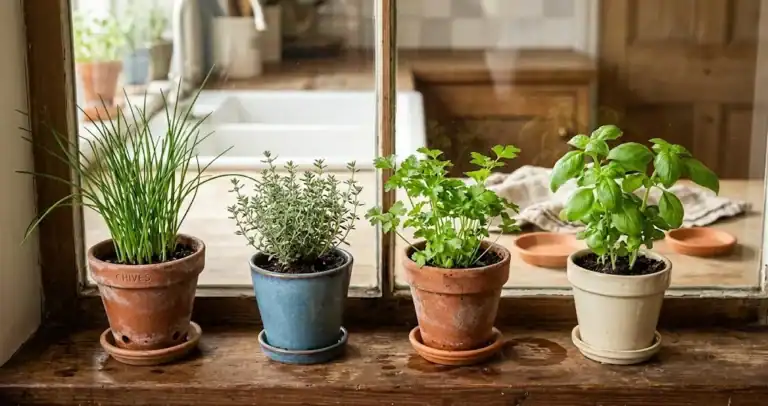
If the top inch of potting soil feels dry to the touch, water thoroughly until liquid runs freely from the base of the container, then discard any plant saucer runoff after thirty minutes. If the soil still feels cool and damp, wait another day or two. Woody perennials prefer drying out slightly between waterings, whereas leafy tender herbs like basil prefer consistent, modest dampness.
When it comes to feeding, herbs need very modest fertilization. Applying excessive nitrogen produces lush, watery foliage that lacks rich flavor and aroma because rapid cell expansion dilutes essential oils. A light top-dressing of organic compost in early spring, combined with an occasional feeding of diluted seaweed or fish emulsion once a month during peak summer growth, provides all the nourishment container herb plants require.
Pruning, Harvesting, and Kitchen Use
Regular harvesting is the best form of pruning. Snipping sprigs from your herb plants stimulates dormant buds along lower stems, encouraging bushy, compact branching rather than tall, leggy growth. Always use sharp clean kitchen shears or pruners, cutting just above a leaf node where new stems emerge.
The ideal time to harvest herbs is in the cool morning hours after morning dew has evaporated but before hot midday sun bakes the foliage. Plants concentrate their aromatic volatile oils during early morning, delivering peak flavor. Snip up to one-third of the plant’s total volume at any single harvest, allowing it sufficient leaves to photosynthesize and recover.
Enjoy your fresh harvest immediately in salads, dressings, and sautés, or preserve surplus cuttings for winter use. Sturdy woody herbs dry beautifully when tied in small bundles and hung upside down in a warm, ventilated room away from direct light. Once leaves crumble crisp, store dry herbs in airtight glass jars away from heat and light to preserve their aroma for months.
For evidence-based guidance on practical cultivation techniques and safe home garden management, cooperative extension services such as the University of Maryland Extension and Clemson Cooperative Extension provide excellent regionally tested resources.
Frequently Asked Questions
What is the easiest herb to grow for beginners?
Chives and spearmint are widely considered the easiest perennial herbs to grow because they tolerate variable watering, adapt to diverse soils, and recover quickly from heavy harvesting. Sweet basil is the easiest warm-season annual to sow directly in sunny spots, provided it receives ample warmth, sunlight, and steady moisture.
Can you grow herbs indoors year-round without grow lights?
You can maintain shade-tolerant selections including chives and mint on a bright, unobstructed south-facing windowsill, but sun-loving plants like rosemary and basil often become pale and leggy during short winter days. Installing an inexpensive full-spectrum LED grow light ensures healthy compact growth throughout winter months.
Why are the lower leaves on my potted herbs turning yellow?
Yellowing lower leaves typically signal overwatering, poor drainage, or nitrogen deficiency. Check that the pot drain holes are clear and allow the top inch of soil to dry out between waterings. If soil moisture is balanced, a gentle dose of balanced organic liquid fertilizer can restore leaf color.
How often should I harvest my home herbs?
Harvest frequently in small quantities once plants establish multiple sets of true leaves. Light harvesting every few days prevents flowering and stimulates continuous bushy branching. Never remove more than one-third of an individual plant’s foliage at a single cutting.