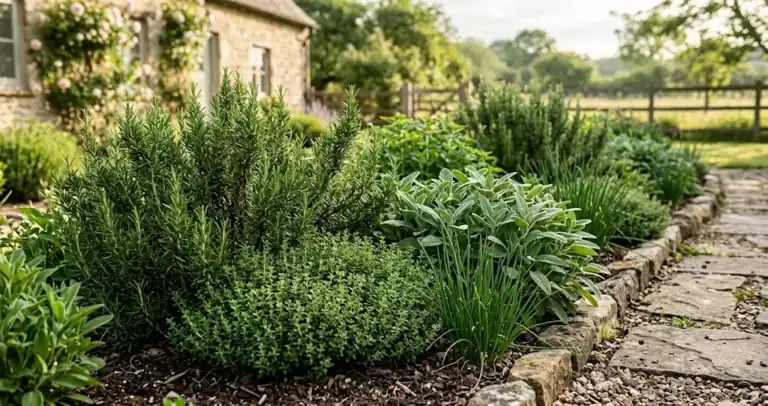
Growing culinary herbs at home starts with three honest decisions: how you will use them, where you can give them real sunlight, and which handful of plants you already cook with. Get those three right and the rest is mostly waiting, watering, and a little pinching back. This page walks through that short planning step, the planting step, and the first six weeks of care, so the bed you start in spring still earns its place by midsummer.
The beginner’s guide to growing an herb garden covers the broader cluster of decisions around garden planning and indoor versus outdoor setups. This page stays focused on the practical setup, the small set of starter herbs that actually thrive at home, and the easy first-season care that keeps a beginner plot alive. If you are working from a balcony, a windowsill, or a single raised bed, the same plan applies; only the container size changes.
If you only have a sunny kitchen window and a bag of potting mix, you can start harvesting this weekend. Skip the perfect-plot daydream, pick two or three plants you already reach for when you cook, and build around them. A small, healthy setup that you actually use is worth more than a large one that slowly dries out by August.
Decide what the plot is for
The fastest way to grow a useful kitchen garden is to anchor it to real cooking. Walk through your kitchen for a week and notice which dried jars you refill. Those are the herbs that earn space at home. Anything you do not already reach for is a future obligation, and most beginner plots fail from obligations, not from poor soil.
Most home gardeners end up with a mixed bed that does three jobs at once. Culinary herbs split into the leafy kitchen kinds (basil, cilantro, chives) and the Mediterranean woody ones (rosemary, thyme, oregano, sage, lavender). Tea herbs give you something to steep on slow mornings. Aromatic herbs fill the border and the pollinator bed. Choosing among the most popular herbs is easier once you know which group your favorites fall into.
- Culinary: basil, parsley, chives, oregano, thyme, rosemary, sage, cilantro, dill.
- Tea and drink: mint, lemon balm, chamomile, lavender (small amounts).
- Pollinator and border: oregano, thyme, chives, borage, calendula.
A short list of six to eight plants covers most home cooks and most small yards. Larger spaces can stretch that to twelve, but the rule of thumb is the same: pick what you use, then add one or two you want to learn. Trying to grow twenty different herbs in year one is the most common reason new gardeners quietly give up by July.
Pick the right spot
Most culinary plants need real sun, which means at least six hours of direct sunlight per day, and full sun is even better for the Mediterranean herbs. A south-facing window or a south-facing bed gives the strongest, steadiest light through the growing season. East- and west-facing spots work for the more forgiving leafy herbs, especially during the cooler months. Heavy shade makes a culinary setup struggle; full sun is much more reliable. If your only available spot is shady, lean into mint, chives, and lemon balm, and accept a quieter harvest.
Drainage matters as much as sunlight. Herbs hate wet feet. A container without drainage holes, or a low spot in the yard where water pools after rain, can quickly rot the roots of Mediterranean and leafy herbs. If your only outdoor spot is slow to drain, build the bed up rather than digging down: a six-inch raised bed on top of the existing soil will save more plants than any fertilizer. Mediterranean herbs prefer well-draining soil that mimics the rocky hillsides they evolved on.
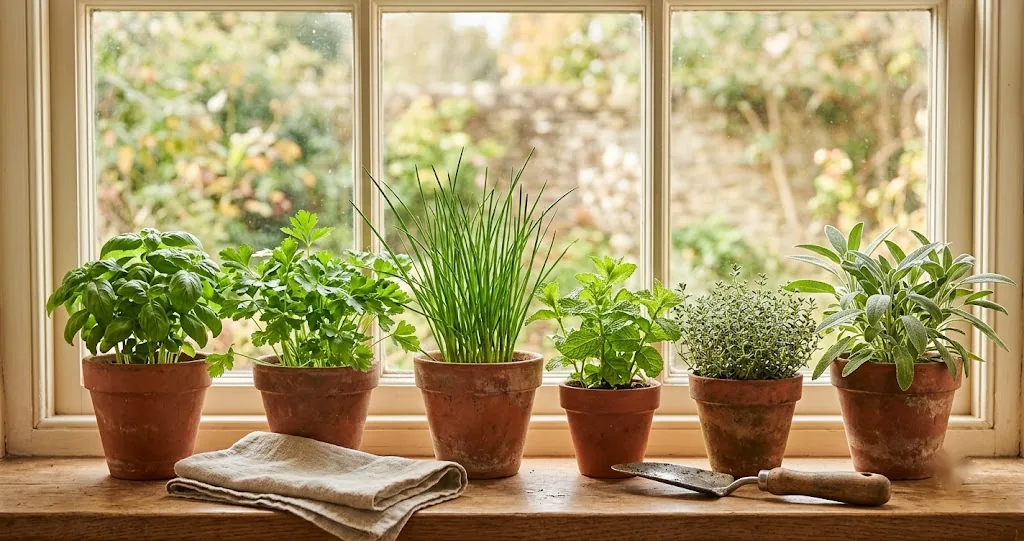
Keep the plot close to where you actually cook. A bed closer to the back door tends to be harvested more often than the same bed at the far end of the yard. Indoor setups on a kitchen window, near a sunny window, or in a sunny kitchen corner get used because they are visible. Out of sight really does mean out of mind for the herbs.

Build the bed, container, or window box
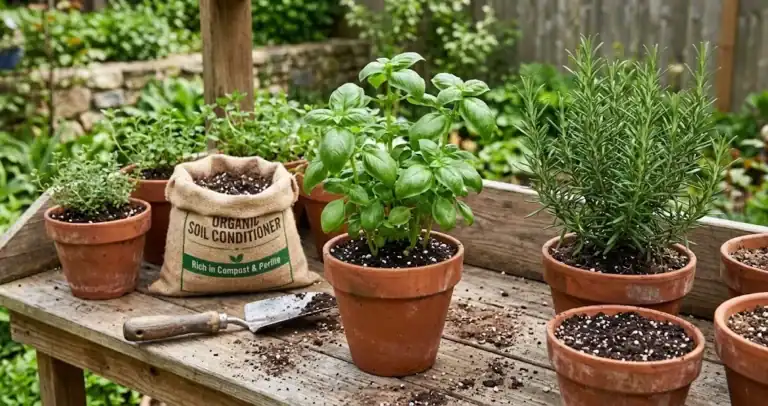
For a yard, a small raised bed of roughly 4 feet by 4 feet holds about six to eight herb plants comfortably and is easy to reach across from any side. For a patio or balcony, individual containers between 8 and 14 inches across work well, with one herb per container for the woodier plants and two or three compatible herbs per container for the leafy ones. For a kitchen window, a long window box with a hole in the bottom gives you a row of four to six small containers in a single tray.
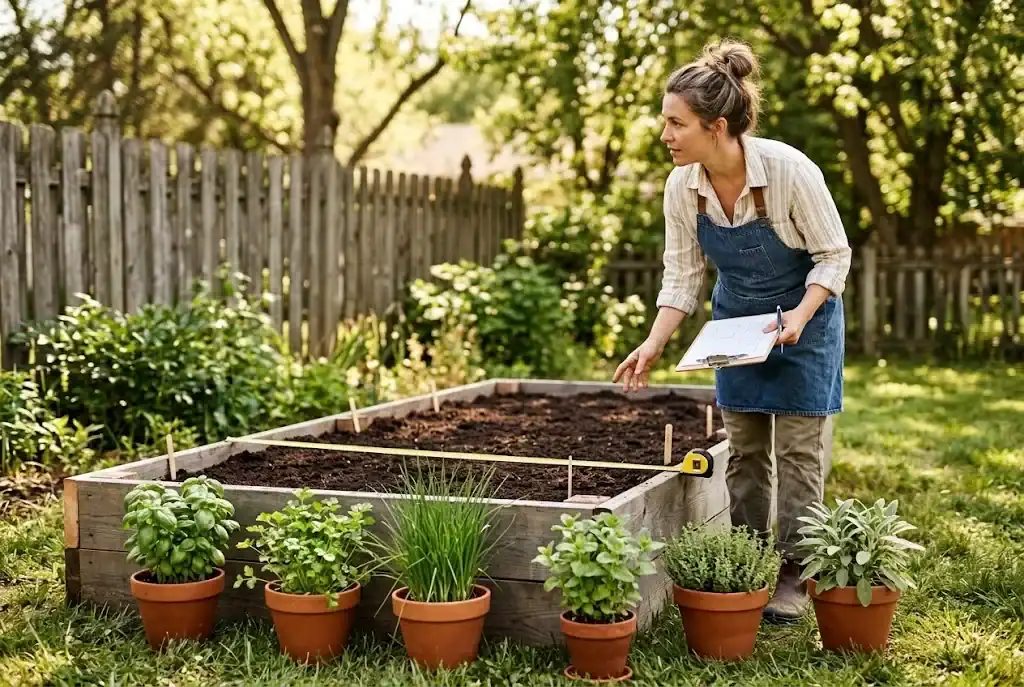
Match the soil to the herbs. Mediterranean herbs want a lean, fast-draining mix. A standard potting soil cut with about a third of coarse sand or fine gravel mimics the well-draining soil those herbs evolved for. Leafy herbs want a richer, more moisture-retentive mix; plain potting soil with a handful of compost worked through is plenty. For a primer on how soil type and organic matter actually shape herb growth, see why soil matters when you grow herbs.
A starter herb garden does not need supplemental feeding in year one if the soil already has organic matter blended in. If you want a single feeding, a light dose of balanced organic fertilizer in midseason keeps the leafy herbs producing. Heavy feeding gives you lush leaves with weak flavor, which is the opposite of what a culinary garden is for.
Choose your starter herbs
Forgiving, productive, and useful at the table: that is the only test that matters when you are choosing which plants to start with. The list below is short on purpose. Pick four to six of these for a first home herb garden, then expand once the basics feel routine.
- Basil. Easy from seed or starter plant, fast-growing, the workhorse of summer cooking. Plant after the last frost, pinch the tops weekly to keep it bushy.
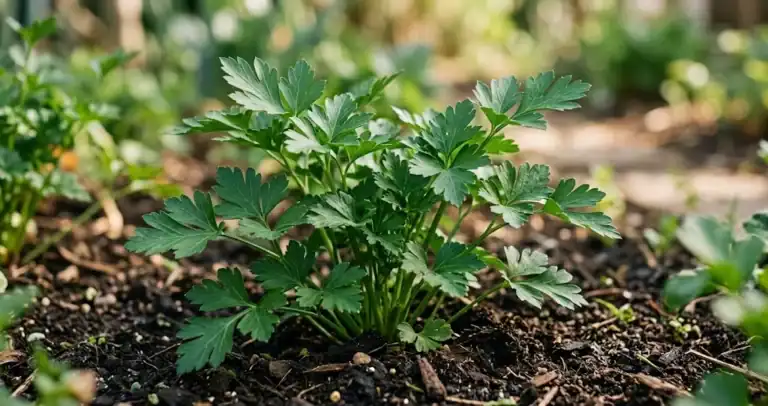
- Parsley. Both flat-leaf and curly grow well from seed; flat-leaf has the better flavor for cooking. Slow to start, then steady all season.
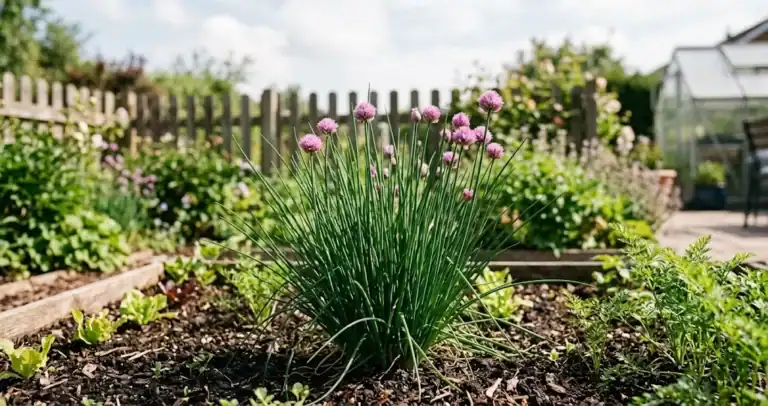
- Chives. A perennial clump that returns every year. One plant gives a household a steady supply.
- Mint. Famously easy and famously invasive in the ground; always grow mint in a container, even inside a larger bed.
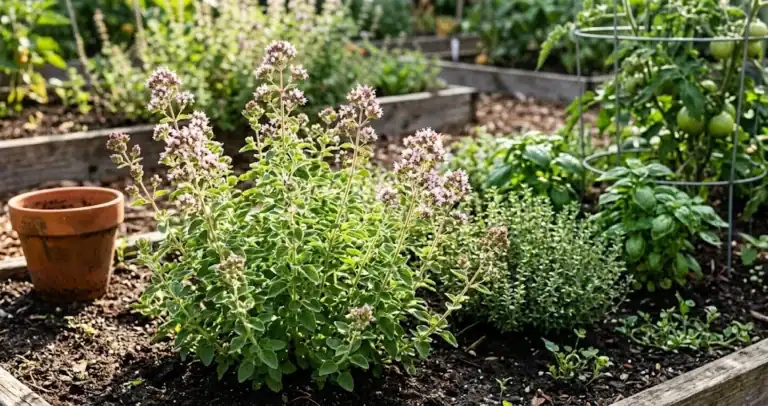
- Oregano and thyme. Mediterranean perennials that handle dry conditions and pull in pollinators. Buy small starter plants rather than seed for the best flavor.
- Rosemary and sage. Woodier perennials that anchor a bed for years. Buy starter plants; they are slow from seed.
For a first home herb garden, resist the urge to grow every plant you have ever tasted. Six well-chosen specimens in healthy soil will outperform eighteen struggling ones, and you can always add more next season. Annual herbs finish in a single season; perennials come back stronger year after year.
If you want to start from seed rather than nursery starts, the choice of seed matters as much as the choice of herb. Older seed lots germinate poorly, and bargain packets often carry weak strains of culinary herbs. For a short guide on what to look for, see choosing herb seed that actually grows.
Plant and water through the first two weeks
The first two weeks decide whether a new herb garden takes off or stalls. Water new transplants deeply the day you plant them, then keep the soil lightly moist (not soaked) until you see new growth. Most beginner gardeners lose new plants to one of two opposite mistakes: watering so lightly that only the top inch of soil gets wet, or watering so often that the roots sit in mud.
A simple rhythm works for most setups. Stick a finger an inch into the soil. If it feels dry at that depth, water thoroughly until water runs out the bottom (or, in a bed, until the top six inches are moist). If it still feels cool and damp, wait another day. Mediterranean herbs prefer to dry out a little between waterings; the leafy kitchen herbs prefer steady moisture. Direct sunlight on a hot day can dry a small container in hours, so check containers more than once on summer afternoons.

Most culinary plants prefer direct sunlight and at least six hours of light per day. If you are growing herbs indoors, a south-facing window is the easiest setup. If the available light is dim, a simple full-spectrum grow light on a 14-hour timer keeps the herbs from going leggy. Container-grown herbs that started indoors can be moved onto a patio or balcony once nights warm up, and brought back inside before the first frost.
Care through the rest of the season
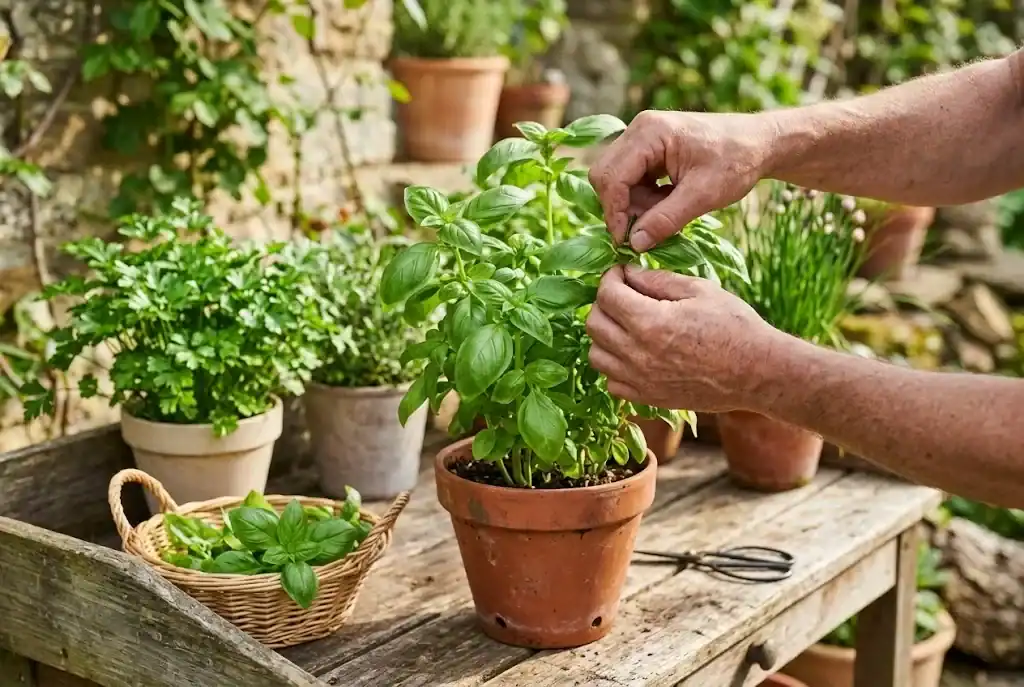
Once the plants are settled, the maintenance is light. Pinch back the growing tips of basil and mint every week or two. Cutting above a pair of leaves forces the plant to branch, which gives you a bushier specimen and more harvest. Letting leafy herbs flower is a common mistake; once they bloom, leaf production drops and the flavor turns bitter. Snap the flowers off as soon as you see them.
Fertilize lightly if at all. Too much feeding produces lush, watery growth with weak flavor. A single light dose of compost tea in midseason is plenty for an established herb garden. Potted herbs benefit from a monthly diluted feed because watering leaches nutrients out of the container.
Harvest often. The more you cut, the more most herbs grow, within reason. Take no more than a third of any plant at one time, and let annuals flower and set seed only at the end of the season. For perennials, a heavier cut just before flowering gives you the most flavorful harvest for drying or freezing. If you want fresh herbs through winter, bring the tender plants inside before the first hard frost.
Quick fixes for common beginner problems
Yellowing leaves on a culinary herb usually mean overwatering. Cut back, let the soil dry out more between waterings, and make sure the container drains freely. Pale, leggy growth on an indoor setup means not enough light; move the container closer to a south-facing window or add a grow light. Slow growth in midseason usually means the herb plant is root-bound; shift it up into a planter one size larger with fresh soil.
If your herbs are bolting (sending up flower stalks and going to seed) earlier than expected, it is usually heat or day length rather than a fault of yours. Pinch the flowers off and keep harvesting the leaves; short-lived annuals are best replanted every few weeks through the season. Woody herbs sulk in wet soil; if the spot stays wet, lift and replant into a grittier mix.
A home herb garden rarely has serious pest problems. Aphids and whiteflies show up on indoor setups; a strong spray of water or a brief treatment with insecticidal soap takes care of them. Outdoor herbs in a mixed bed usually have enough pollinator activity that aphids are kept in check without intervention. The experienced gardener’s shortcut here is to plant a few flowers nearby to keep predator insects around.
Move herbs inside for winter
Tender herbs do not survive frost. Before your first cold night, cut the healthy tops, root a few stems in water on a sunny kitchen window, and transplant the rooted cuttings in fresh soil for winter use. Mediterranean herbs in containers move inside easily to a sunny window or a cool garage where temperatures stay above freezing. Perennials in the ground handle winter on their own in most climates; a layer of straw over the root zone helps in cold regions.
Popular herbs beginners can skip the first year
A handful of popular herbs are better left for year two, after you have a year of confidence behind you. Dill and fennel both bolt quickly in heat and are short-lived annuals that need succession planting every few weeks; they suit experienced gardeners who already know the rhythm. Lavender is beautiful in a mature bed but slow to establish and particular about drainage. Perennial herbs that need a year to settle, like French tarragon and bay, are easier once you have already kept a simpler herb garden alive through a full growing season.
Save seeds for next year
At the end of the season, let one or two of your healthiest leafy herbs flower and set seed. The seeds ripen over a few weeks and can be saved in a paper envelope in a cool, dry spot through winter. The following spring, you have free herb seedlings for replanting. This is also a low-risk way to start a few new varieties, since saved seed lets you skip the seed-buying step the following year.
Frequently asked questions
How long does it take to set up your first herbs?
An hour of setup gets you a working herb garden in a single afternoon. Most culinary herbs are ready for a first light harvest within three to four weeks of transplanting, with steady production by six weeks. Seed-grown herbs take a few weeks longer than nursery starts.
Can I grow herbs inside without a grow light?
Yes, in a bright south-facing window with at least six hours of direct sunlight per day. Mint, chives, and basil handle indoor conditions well. Woody Mediterranean herbs are tougher inside without supplemental light because they want stronger sun than most windows provide.
Do herbs need full sun or partial shade?
Most culinary herbs do best in full sun, which means at least six hours of direct light. Mediterranean herbs want full sun and lean soil. Mint, chives, and cilantro tolerate partial shade, especially in hot climates where afternoon shade can prevent bolting.
What is the easiest herb to grow at home?
Mint is the easiest by a wide margin, which is also why it gets its own warning above: it spreads aggressively. Chives are the next easiest of the bunch, and they come back year after year. Basil is easy in summer but is an annual, so it finishes at the first frost.
How often should I water herbs?
When the top inch of soil feels dry. There is no schedule that fits every container, every bed, and every season, so the finger test beats the calendar. Mediterranean herbs prefer to dry out between waterings; the leafy herbs prefer steady moisture. Containers dry out faster than beds and need more frequent checks in summer.
Can I grow herbs in the same pot?
Yes, when they share the same water and sun needs. A 12-inch container holds two leafy kitchen herbs together or two Mediterranean herbs together comfortably. Pairing a Mediterranean herb with a leafy one in the same container usually means overwatering one and underwatering the other. Mint always gets its own container because its roots take over.
What are the easiest herbs to grow from seed?
Basil and chives both sprout quickly from seed and grow well in pots or beds. Rosemary and thyme are slow from seed and usually easier as starter plants. Parsley is reliable but takes two to three weeks to germinate, so do not give up on the container too early.
Match the bed to your kitchen
A useful kitchen setup is small, close to the kitchen, and built around the plants you actually cook with. Pick a sunny spot, build a bed or fill a container with well-draining soil, and plant four to six forgiving culinary herbs. Water when the top inch dries out, pinch the growing tips back weekly, and harvest often. By midsummer, your herbs pay for themselves many times over in the meals you can cook without a last-minute trip to the store.
Most home gardeners who fail at herbs do so because they tried to grow too many, in too little sun, with too much water. Stay small, give the plants the sun and dry feet they need, and harvest often. That is the whole plan.