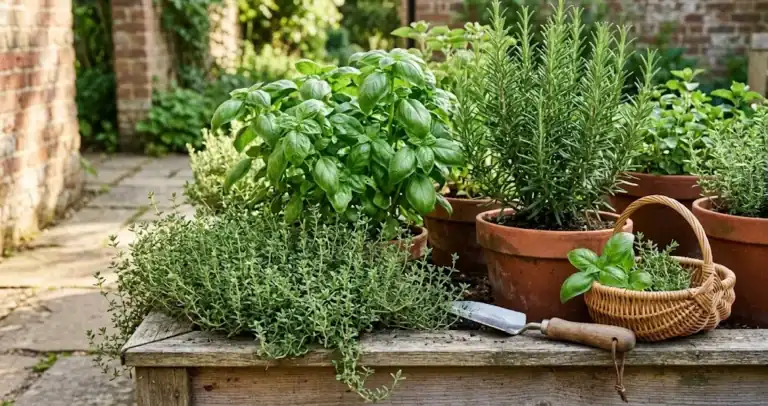
Thyme earns a permanent place in the garden because it asks for very little while offering bold flavor in the kitchen. Native to the rocky slopes of the Mediterranean basin, this hardy perennial will thrive on full sun, sharp drainage, and modest watering. Once established, a single healthy thyme plant supplies fresh sprigs for savory soups, stews, and roasted dishes throughout the entire growing season.
Whether you plant thyme in a sunny garden bed or keep a potted bush on a kitchen windowsill, success comes down to mimicking its native dry climate. Here is everything you need to know to grow thyme successfully from cuttings, nursery starts, or seeds, keep plants compact, and gather fragrant leaves year after year.
Choosing the right types of thyme and varieties
Before you plant thyme, choose a variety suited to your space and culinary goals. While the genus includes dozens of cultivars, home gardeners primarily grow two main categories: upright culinary selections and low-spreading ground covers.
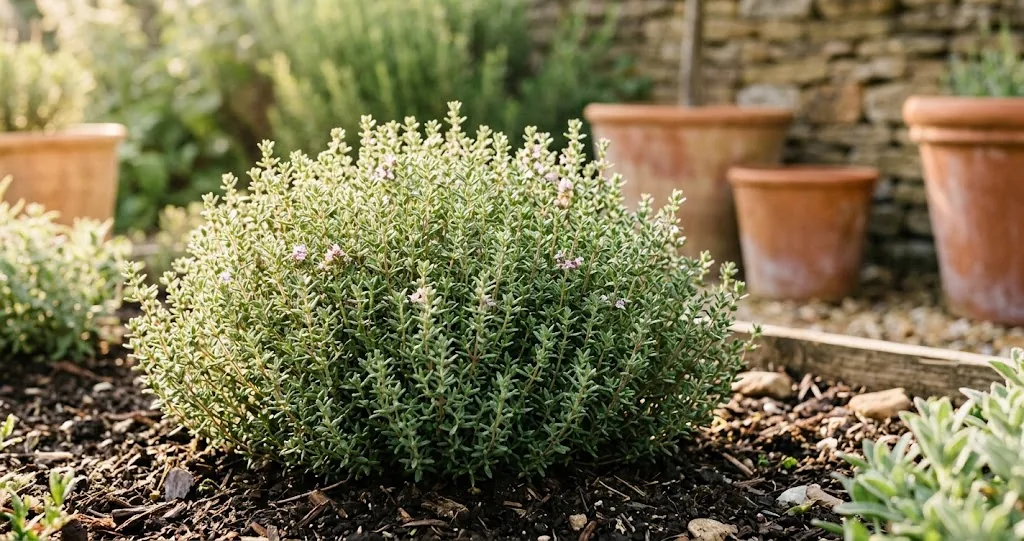
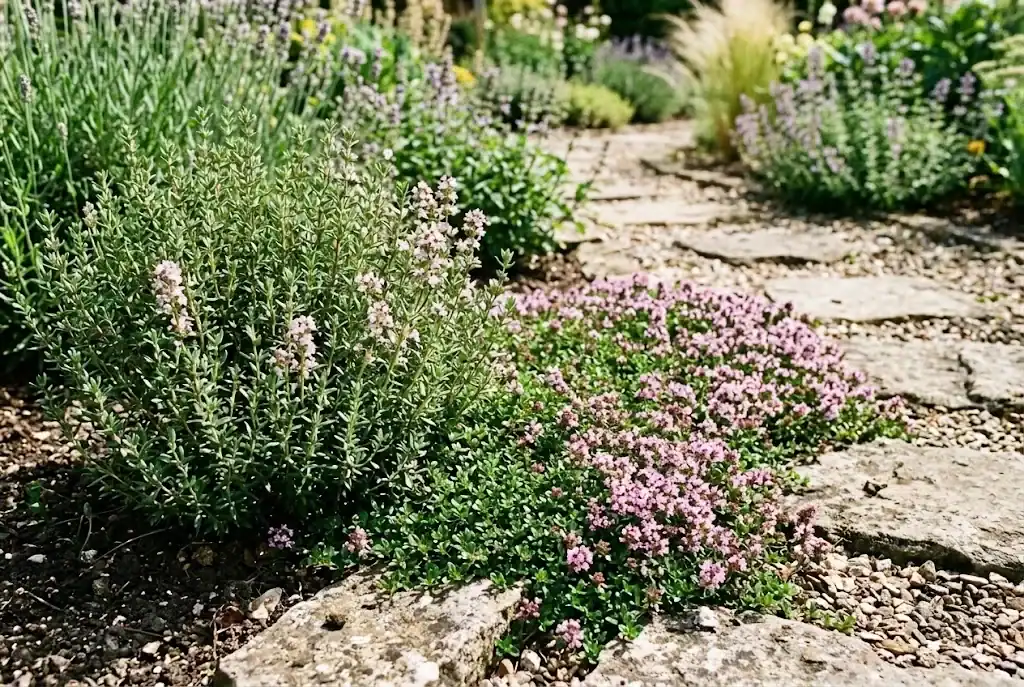
- Common thyme (Thymus vulgaris): Also known as English thyme or French thyme, this is the classic culinary thyme found in most kitchens. It forms an upright, shrubby bush reaching 8 to 12 inches tall with small gray-green leaves and a warm, earthy aroma.
- Lemon thyme (Thymus citriodorus): Prized for its distinct citrus scent, lemon thyme features bright green leaves that add zest to poultry, fish, and teas. It grows as a compact subshrub with pale purple blossoms.
- Creeping thyme (Thymus serpyllum): A vigorous, low-growing ground cover that spreads across stone pathways and rock gardens. While edible, it is grown mainly for its dense carpet of summer flowers and drought tolerance.
Ideal growing conditions: soil, sun, and drainage
Thyme thrives in conditions where many lush garden vegetables struggle. Rich, heavy soil and excess moisture quickly weaken the plant or trigger root rot.
When selecting a planting site in your herb garden, prioritize these essential factors:
- Full sun: Thyme needs at least 6 to 8 hours of direct sunlight each day to produce its aromatic essential oils. Plants grown in partial shade become leggy and lose their concentrated flavor.
- Well-drained soil: Gritty, sandy, or loamy earth with a neutral to slightly alkaline soil pH between 6.5 and 7.5 provides the perfect foundation. If your garden soil contains heavy clay, amend the bed with coarse sand or fine gravel to prevent waterlogged roots.
- Air circulation and spacing: Space young thyme plants 12 to 18 inches apart. Good air circulation prevents fungal mold from developing around dense foliage during humid summer weather.
For gardeners mapping out a new herb patch, reviewing setting up garden soil, spacing, and layout basics ensures companion plants share compatible moisture and sunlight requirements.
How to plant thyme from cuttings, nursery starts, and seeds
You can propagate thyme in several ways, though starting from a stem cutting or a nursery transplant is substantially faster and more reliable than growing from seed.
Thyme seeds are tiny, take 14 to 28 days to germinate, and often show uneven growth rates. If you choose to grow thyme from seed, sow thyme seeds inside flats 6 to 8 weeks before your last spring frost date. Scatter seeds across moist seed-starting mix, press them lightly into the surface without burying them, and keep them under bright grow lights. Transplant seedlings outdoors once the danger of frost has passed and the ground warms.
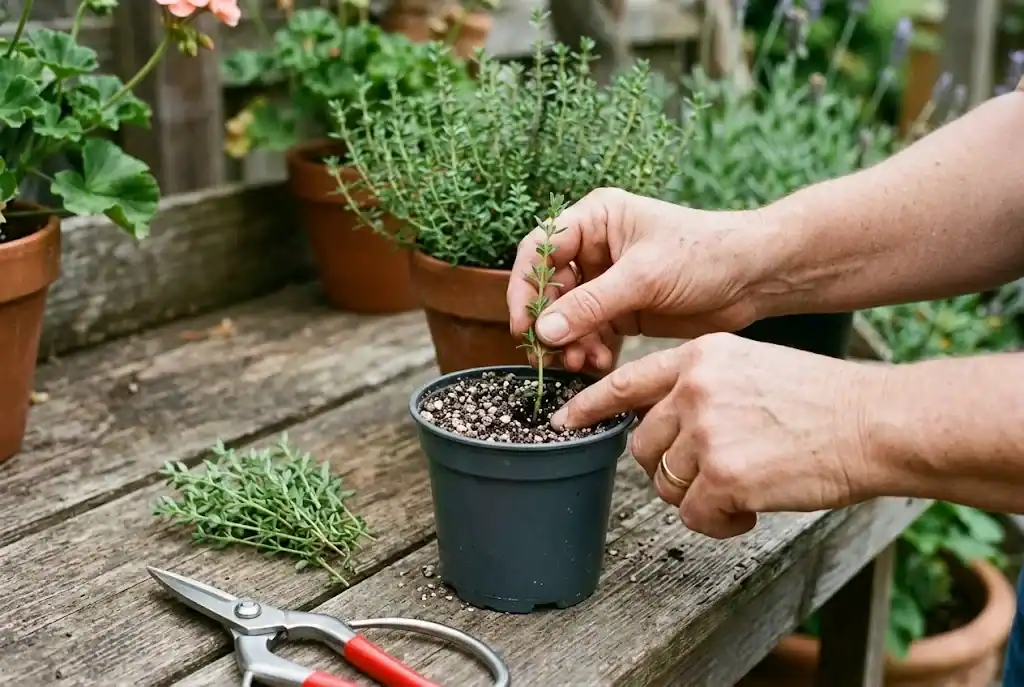
A simpler method is to propagate by stem cutting during spring or early summer. Snip a 3 to 4-inch cutting of tender new growth from an established thyme bush. Strip the lower leaves, dip the cut stem in rooting hormone or water, and place it into a small pot filled with moist perlite or potting mix. Roots typically form within three to four weeks, after which you can transplant into the garden.
Caring for thyme: watering, fertilizer, and pruning
Caring for thyme requires a light touch. Over-attentive gardeners who water daily or apply heavy synthetic fertilizer often shorten the plant’s lifespan.
Follow these routine maintenance guidelines:
- Watering: Water newly planted thyme regularly until roots establish. Once settled, let the top two inches of soil dry out completely between waterings. Thyme is drought-tolerant and handles dry spells far better than standing water.
- Feeding: The crop requires little fertilizer. A thin top-dressing of organic compost in early spring supplies all the nutrients required for the year. Excessive nitrogen causes weak, flavorless growth.
- Pruning: Regular light trimming prevents thyme from forming brittle, bare woody stems at the center. Cut back the top stems in early spring as green shoots emerge, and prune lightly again after thyme flowers fade in midsummer. Never cut into the old, woody base of the plant, as old wood rarely regenerates new shoots.
Potted herb care: growing thyme in containers and indoors
Potted herbs are an excellent option for gardeners with limited outdoor space or heavy garden soil. Containers allow soil to warm up quickly and drain efficiently.
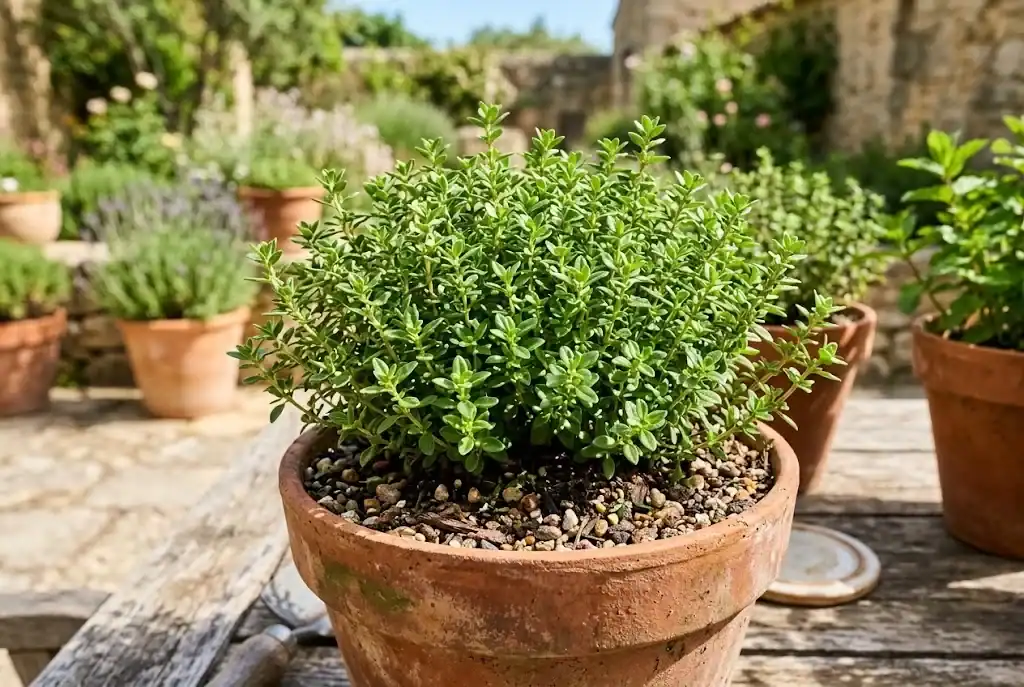
Choose an unglazed terracotta pot that is at least 10 to 12 inches in diameter, equipped with wide drainage holes. Terracotta allows moisture to evaporate through pot walls, protecting roots against saturated soil. Fill the container with a lightweight potting mix blended with perlite or vermiculite to guarantee swift water runoff.
If you want to keep thyme indoors over winter, place the pot on a south-facing windowsill where it receives maximum daylight, or supplement with an LED grow light for 10 to 12 hours daily. Water sparingly in winter, allowing the potting mix to dry thoroughly between soakings.
When and how to harvest thyme
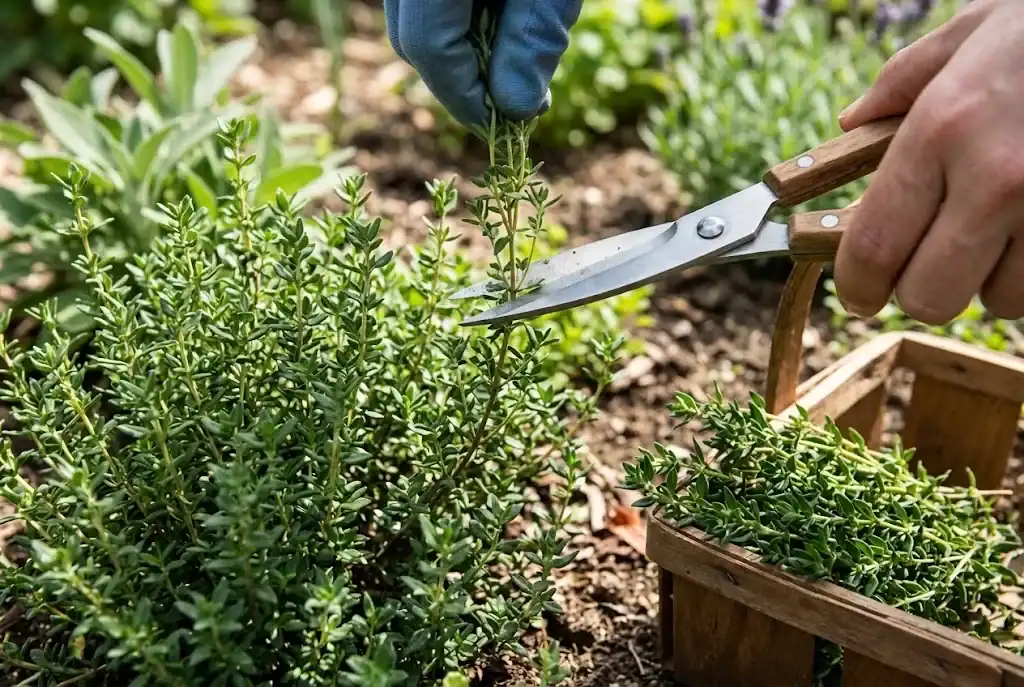
You can snip fresh thyme sprigs whenever the plant has enough foliage to support ongoing growth. The peak time to harvest thyme is on a dry morning just after dew evaporates and before midday heat sets in, which is when essential oil concentration reaches its highest level.
Use clean garden scissors to snip stems, taking no more than one-third of the plant at any single cutting. This encourages bushy branching without shocking the root system.
Once you gather your fresh sprigs, exploring step-by-step techniques for harvesting thyme sprigs helps you plan seasonal cutbacks before winter.
Preserving and storing dried thyme sprigs
Unlike tender annual herbs, thyme leaves retain their aromatic oils exceptionally well when dried or frozen. Hang small bundles upside down in a warm, dark, well-ventilated room for one to two weeks until leaves crumble easily between your fingers.
For long-term pantry storage, follow proven tips on how to store fresh thyme or dry the leaves to preserve aroma and flavor for months.
Common pests, diseases, and troubleshooting
Thyme is naturally pest-resistant thanks to its fragrant volatile oils, but environmental stress can occasionally invite trouble:
- Root rot: The most common issue with thyme plants. Leaves turn yellow, brown, and soft near the base. Prevent moisture damage by planting in gritty ground, avoiding heavy mulch around stems, and letting soil dry between waterings.
- Spider mites and aphids: In hot, dry indoor settings or crowded outdoor beds, spider mites or aphids may feed on tender stem tips. Wash them away with a steady spray of water or apply an organic insecticidal soap.
- Powdery mildew: Damp, stagnant air can cause white fungal patches on foliage. Space plants generously and avoid overhead watering in late evening.
Culinary uses and kitchen pairing ideas
Fresh thyme is a cornerstone of Mediterranean cooking and a classic ingredient in bouquet garni blends. Its warm, subtle, clove-like notes complement roasted root vegetables, poultry, lamb, slow-simmered bean dishes, tomato sauces, and rich winter broth. Unlike tender leafy herbs that lose aroma under heat, sturdy thyme leaves hold their savory depth during long braises and roasts.
Frequently asked questions about growing thyme
Is thyme a perennial plant that comes back every year?
Yes, common culinary thyme is a hardy perennial across USDA hardiness zones 5 through 9. It remains semi-evergreen in moderate climates and resumes vigorous growth every spring once soil warms.
How long does a thyme plant live in the garden?
A healthy thyme plant typically produces high-quality culinary growth for three to five years. Over time, stems become thick and aged, producing fewer leaves. Propagating new plants from stem cuttings every few seasons keeps your herb supply vigorous.
Can thyme survive cold winter frost?
Established thyme tolerates freezing temperatures well. In cold zones with harsh winters, insulate the root zone with a light layer of evergreen boughs or straw after the first hard freeze to prevent frost heaving.