Growing an indoor herb garden is one of the most rewarding ways to produce fresh culinary herbs right in your home. Having pots of fragrant green foliage on a sunny windowsill makes everyday cooking faster and more enjoyable. When you grow herbs indoors, you can snip vibrant sprigs of rosemary, thyme, or basil whenever a recipe calls for them, without paying premium prices for packaged supermarket herbs that quickly spoil.
A successful indoor herb garden does not require complex equipment or years of horticultural background. Most culinary herbs adapt remarkably well to indoor conditions when their basic needs for light, drainage, and gentle airflow are met. If you want to grow herbs at home, whether in a compact city apartment or through cold winter months, this practical guide to growing provides everything you need to grow vigorous plants. You will learn how to choose the right varieties, manage lighting and potting soil, maintain consistent watering, and harvest delicious herbs year-round.
Before selecting individual pots, it helps to understand what a new herb garden needs so you can establish a dependable foundation for long-term plant health.
Choosing the Best Herbs to Grow Indoors
When starting an indoor herb garden, plant selection makes a huge difference in your results. Different herbs have specific growth habits, root structures, and moisture preferences. Getting to know your herbs helps you pair the right plants with the microclimates in your home. The easiest herbs to grow indoors divide naturally into two main categories: hardy Mediterranean perennial herbs and tender, moisture-loving annuals or biennials.
Mediterranean Perennial Herbs
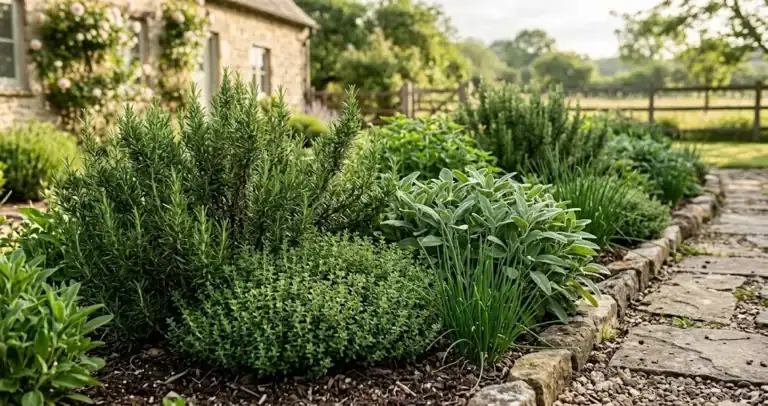
Mediterranean herbs prefer warm, sunny spots and gritty, well-draining soil. These perennial herbs are drought-tolerant once established and adapt well to indoor herb gardens:
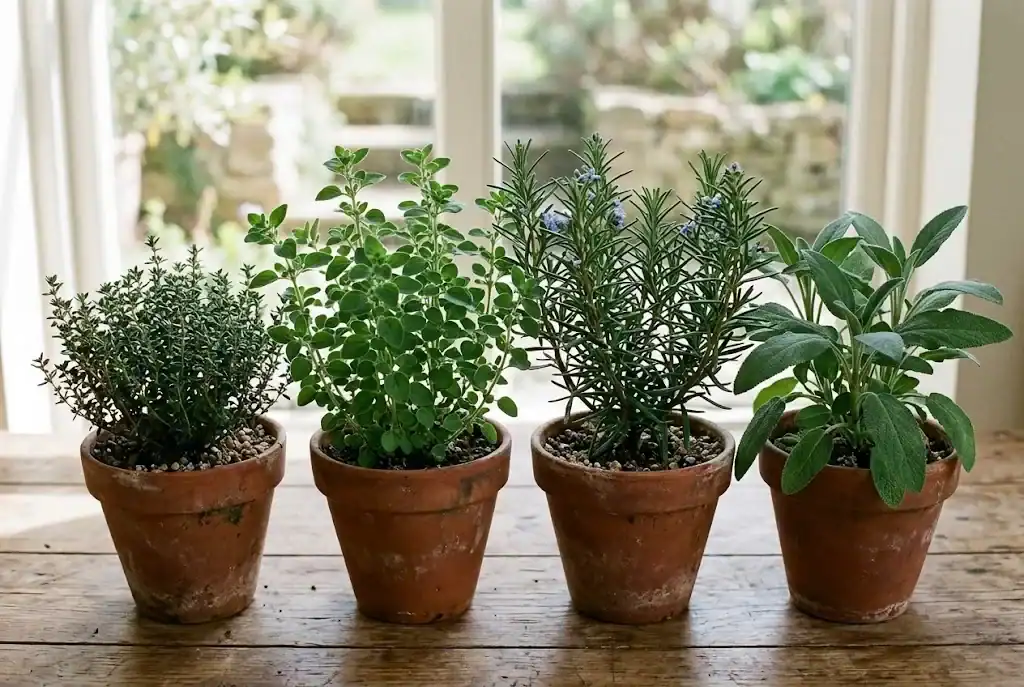
- Thyme (Thymus vulgaris): Compact and sturdy, English and French thyme grow well indoors in modest 4- to 6-inch herb pots. They require minimal water and provide steady harvests of aromatic leaves for stews, roasted meats, and pasta dishes.
- Oregano (Origanum vulgare): Greek oregano produces peppery, pungent leaves that thrive on sunny windowsills. It handles dry indoor air better than most soft-leaf greens.
- Rosemary (Salvia rosmarinus): A woody perennial that requires abundant direct sun and careful moisture control. Rosemary prefers sandy, well-aerated potting mix and should never sit in soggy soil.
- Sage (Salvia officinalis): Broad, velvety leaves provide deep herbal flavor for soups, stuffing, and roasted squash. Sage needs good ventilation and moderate moisture.
Tender Leafy Culinary Herbs
Soft-stemmed culinary herbs require slightly more consistent moisture and moderate feeding to sustain rapid leaf production:
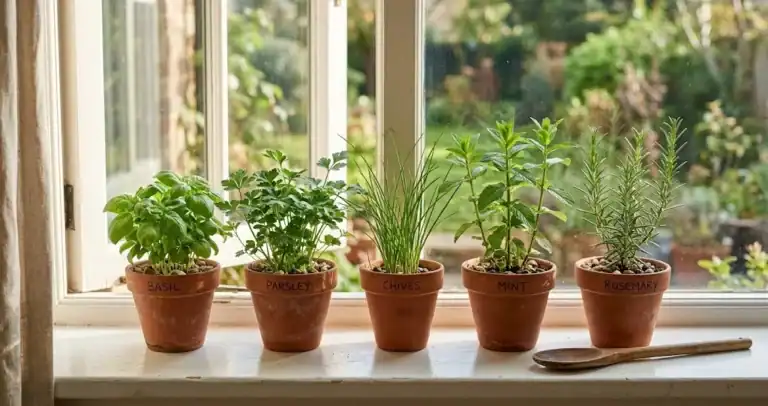
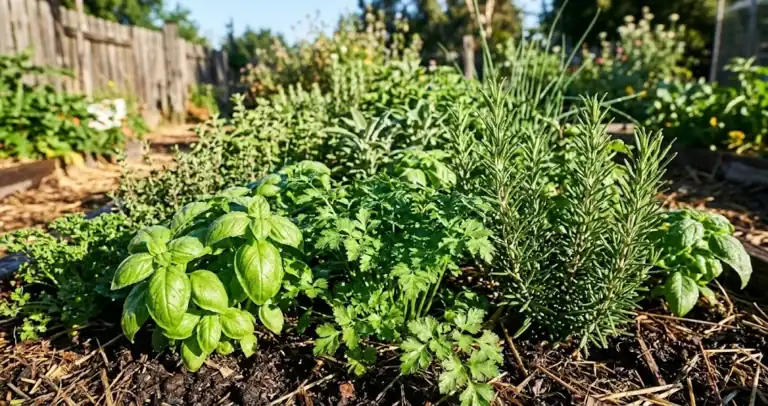
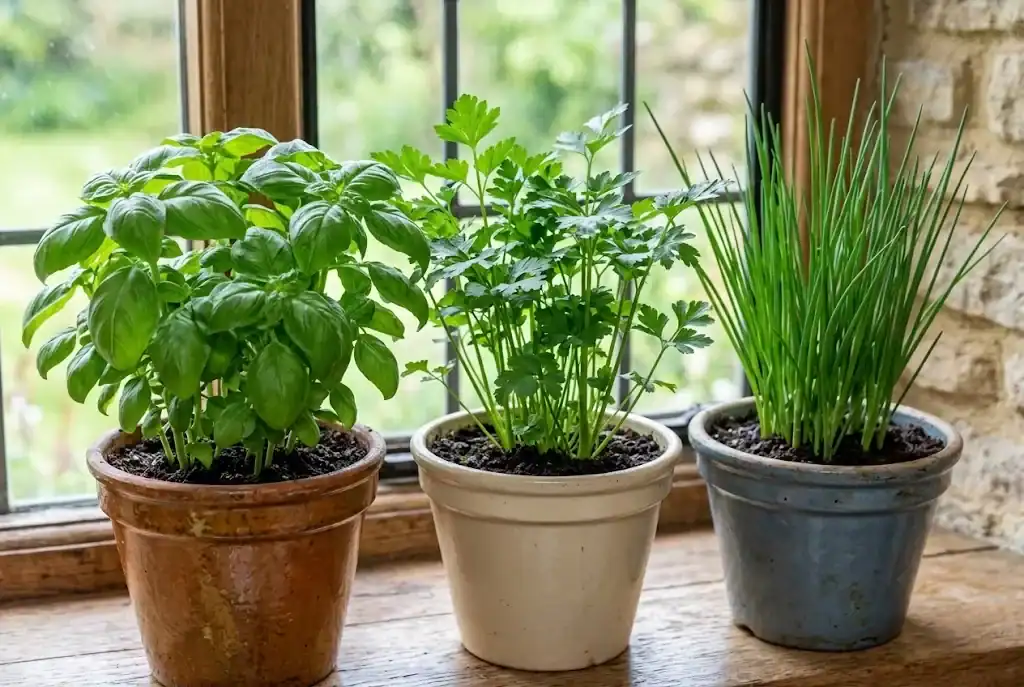
- Basil (Ocimum basilicum): Among the most popular herbs for cooking, sweet basil and Genovese basil grow fast in warm rooms. Herbs like basil require plenty of warmth and bright light to keep their leaves tender and aromatic.
- Parsley (Petroselinum crispum): Both flat-leaf Italian parsley and curly parsley grow successfully indoors. Flat-leaf varieties provide robust flavor for sauces, while curly types offer dense, ornamental mounds of foliage.
- Chives (Allium schoenoprasum): Chives are exceptionally easy to grow indoors on a windowsill. They tolerate slightly lower light levels than woody herbs and regrow rapidly after you snip their slender, onion-flavored spears.
- Mint (Mentha): Spearmint and peppermint are vigorous growers that produce fragrant leaves for teas and salads. Always plant mint in its own dedicated container because its creeping roots will quickly overtake companion plants in shared herb planters.
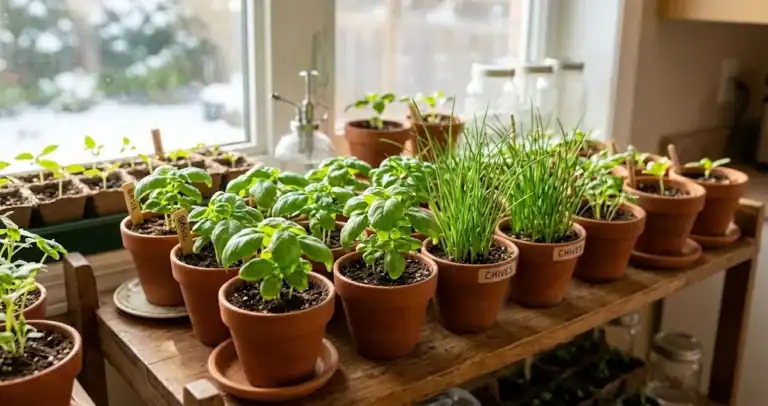
When you start growing herbs inside, you can begin with nursery transplants or explore sowing herb seeds indoors to raise young plants from scratch. Starting from nursery seedlings gives you an instant harvest, while raising herbs from seed is economical and lets you grow unique organic herbs from specialty seed catalogs.
How Much Light Do Indoor Herbs Need?
Lighting is the single most critical factor for indoor growing. In outdoor garden beds, many of the herbs we grow receive full sun for six to eight hours of direct sunlight each day. Inside, window glass filters sunlight intensity, and seasonal angles change how much light reaches your indoor plants.
Maximizing Natural Sunlight on Windowsills
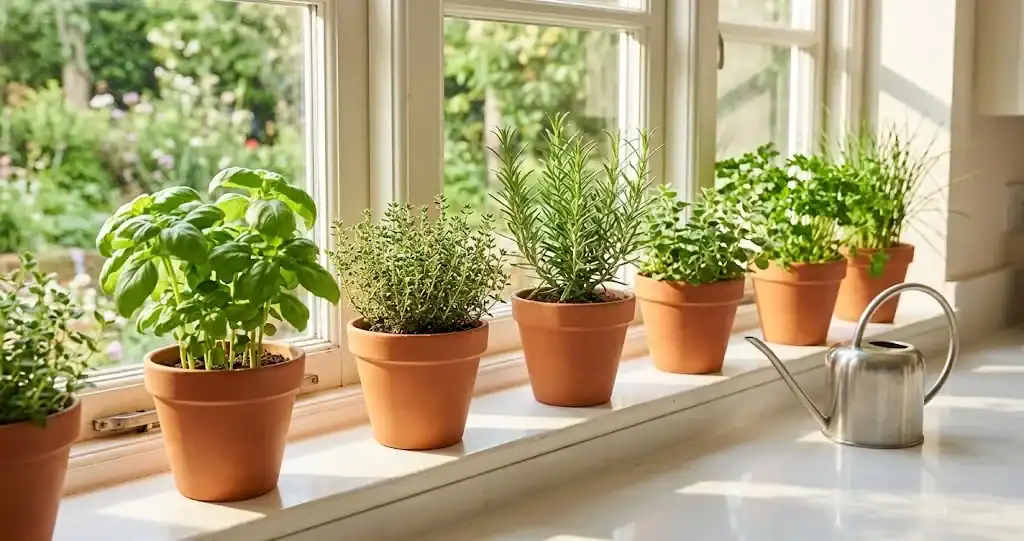
To give your indoor herbs the best exposure, place your herb pots on an unobstructed south-facing windowsill. South-facing windows deliver the longest duration and strongest intensity of sunshine throughout the year. East-facing and west-facing windows offer moderate brightness (about four to six hours of sunlight) and suit tolerant plants like chives, parsley, and mint. North-facing windows rarely provide adequate light on their own for edible herbs.
Signs That Your Herbs Are Not Getting Enough Light
Check your indoor plants regularly during their first few weeks. Clear signs of light deficiency in indoor herbs include:
- Pale, yellowish leaves instead of vibrant green color.
- Tall, spindly stems that stretch toward the glass (etiolation or leggy growth).
- Wide spacing between leaf sets along the main stems.
- Slow growth, weak branching, and muted herbal aroma.
Using an LED Grow Light for Year-Round Growth
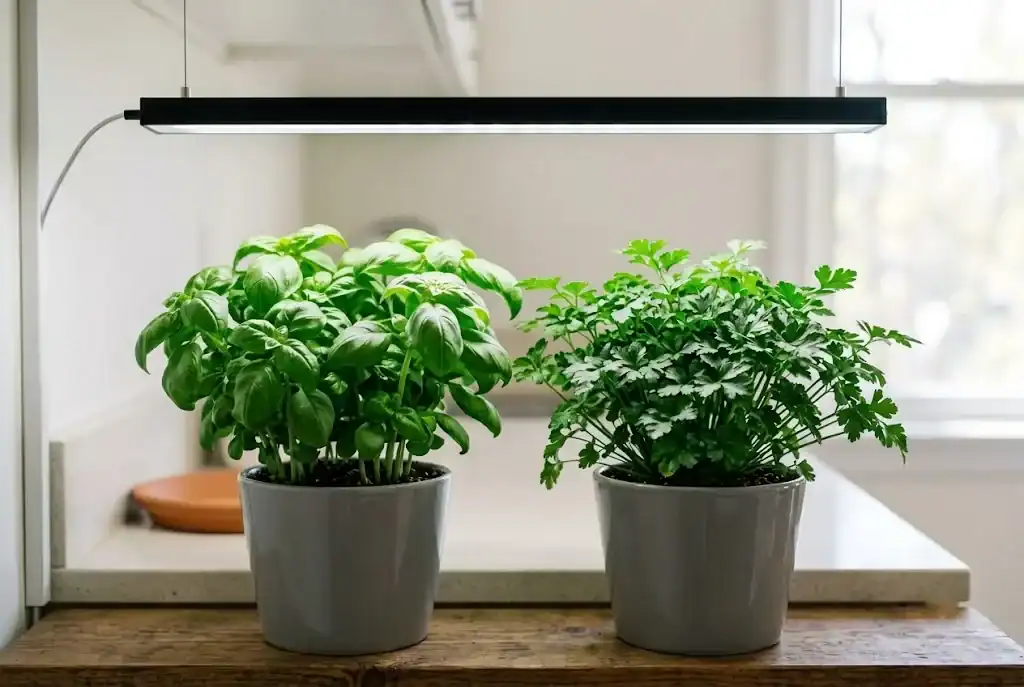
If your home lacks sunny windows, you can easily use a grow light to provide the energy your indoor garden needs. Modern full-spectrum LED grow lights deliver balanced light wavelengths that help plants grow compact and bushy without generating excess heat.
Position your LED grow light 6 to 12 inches above the top of the foliage canopy. Connect the light to a timer set for 12 to 14 hours of daily illumination. As stems lengthen, adjust the height of the light fixture to maintain steady clearance and prevent heat stress on tender leaves.
Containers, Potting Soil, and Planters for Indoor Herb Growing
Providing a healthy root environment is vital when you grow an herb garden indoors. Garden soil from your outdoor beds is too dense for indoor containers; it compacts in pots, drains poorly, and suffocates root systems. Well-planned container herb gardens thrive when potted in dedicated containers with porous potting media.
Selecting Herb Pots and Planters
You can plant your herbs in individual pots, a multi-pocket herb garden planter, or a compact window box. An all-in-one herb garden kit is another convenient way to start. Whatever container style you select, ensure every pot has functional drainage holes at the base.
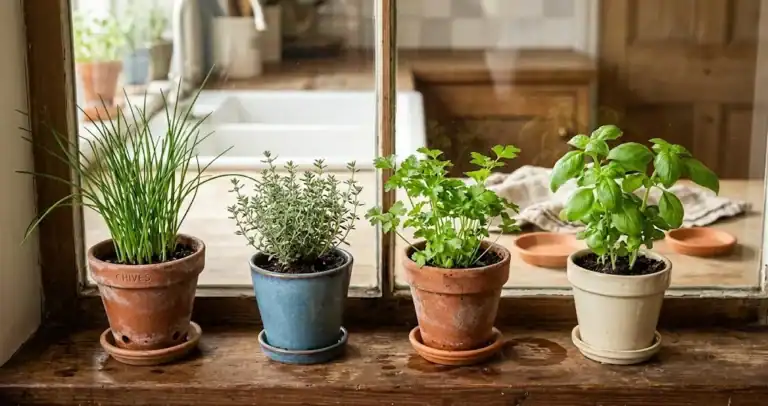
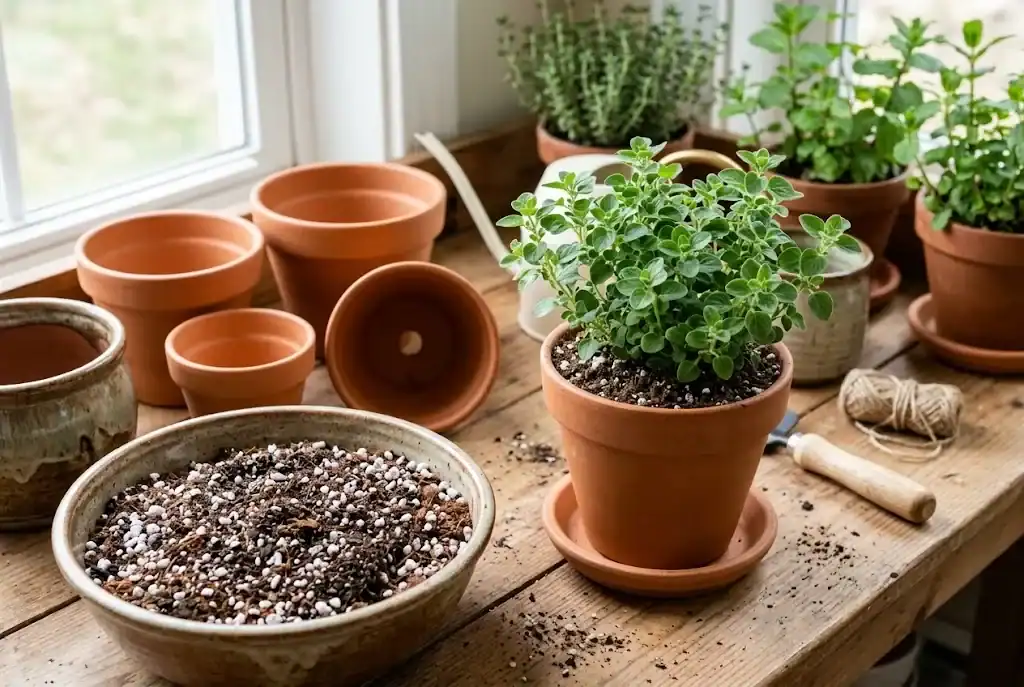
Unglazed terracotta pots work best for Mediterranean herbs because porous clay walls breathe, allowing excess moisture to evaporate freely. Plastic and glazed ceramic containers retain moisture longer, which benefits moisture-loving plants like basil and parsley. Place a saucer under each pot to protect your windowsill, but always discard standing drainage water after 20 minutes so roots never sit in saturated conditions.
Before potting your plants, taking time for setting up an indoor herb garden with proper pot spacing and surface protection makes daily maintenance simple and tidy across all your windowsill herb gardens.
Choosing a Well-Draining Potting Mix
Fill containers with a lightweight organic potting soil formulated for container gardening. A quality blend of peat moss or coconut coir, compost, and perlite holds just enough moisture while keeping root channels airy. For herbs that prefer drier conditions, such as rosemary and thyme, incorporate an extra handful of perlite or coarse sand to accelerate drainage.
Watering, Humidity, and Care to Keep Indoor Herbs Healthy
Watering mistakes cause most problems in indoor herb gardens. While underwatering wilts foliage, chronic overwatering leads to root rot and fungal disease.
How to Water Indoor Herbs Correctly
Check your herbs every few days rather than watering on a rigid calendar. Knowing when potted herbs require moisture comes down to a simple finger test one inch beneath the soil surface:
- For herbs that prefer dry soil (rosemary, thyme, oregano, sage): Let the top 1 to 2 inches of soil dry completely before soaking the pot until water runs from the bottom.
- For leafy culinary herbs (basil, parsley, chives): Water when the top half-inch feels dry, keeping the mix evenly damp like a wrung-out sponge.
- Watering technique: Pour water directly onto the soil around the base of the plant. Avoid wetting foliage, which invites fungal mildew in closed rooms.
Temperature and Humidity Conditions
Indoor herbs grow best in normal household temperatures between 65°F and 75°F (18°C to 24°C). Avoid placing herbs near cold window drafts in winter, or directly above heating vents and radiators that blow dry, hot air.
Winter indoor air can become very dry. Grouping several different herbs together creates a localized humid microclimate. You can also rest pots on a shallow tray filled with pebbles and water, ensuring the pot bottom rests on the stones above the waterline.
Feeding Container Herbs
Frequent watering washes nutrients from potting soil over time. During the spring and summer growing season, feed your indoor herbs every four to six weeks with a balanced liquid organic fertilizer mixed at half-strength. Pause feeding during midwinter when plant growth naturally rests.
Pruning and Harvesting to Grow Herbs Successfully
Regular harvesting is an essential care practice that keeps indoor herb plants compact, bushy, and productive throughout their life.
Pinching and Harvesting Tips
When left unpruned, herb stems grow tall and woody, eventually setting flower buds. Flowering signals the plant to stop producing tender leaves, often turning foliage bitter. Frequent pinching redirects growth into dense side shoots.
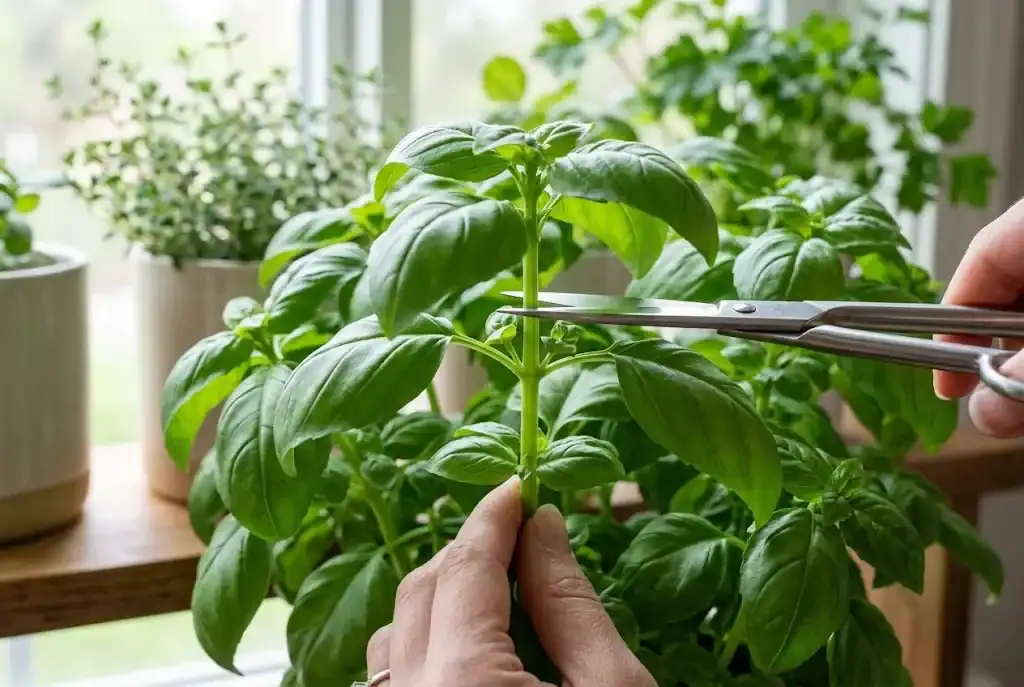
- Use clean, sharp scissors or pruning snips to trim stems cleanly.
- Cut stems just above a set of healthy leaf nodes. Two new branching stems will sprout from that point.
- Never harvest more than one-third of the total foliage at one time, giving the herb plant enough leaf surface to photosynthesize.
- Harvest in the morning when aromatic essential oils are at peak concentration.
Rotating Pots and Managing Pests
Indoor plants lean toward natural light over time. Rotate each pot a quarter turn once a week so all sides receive balanced light, ensuring straight, even stems.
If you notice fungus gnats on the soil surface, let the top layer of potting mix dry thoroughly between waterings. For aphids or spider mites on leaves, rinse foliage gently with lukewarm water or spray with diluted organic insecticidal soap. Running a small oscillating fan on low speed improves air circulation and discourages fungal issues.
Using Fresh Culinary Herbs from Your Indoor Garden
Growing your own culinary herbs at home gives you immediate access to fresh flavors year-round. Snip fresh basil and oregano into pasta sauces, stir chopped chives and parsley into roasted potato dishes, or steep fresh mint leaves for a comforting herbal tea.
When you want fresh herbs for cooking, a well-tended windowsill garden delivers fresh herbs year-round with minimal effort. Start with two or three of your favorite herbs today and discover how easy indoor herb growing can be.