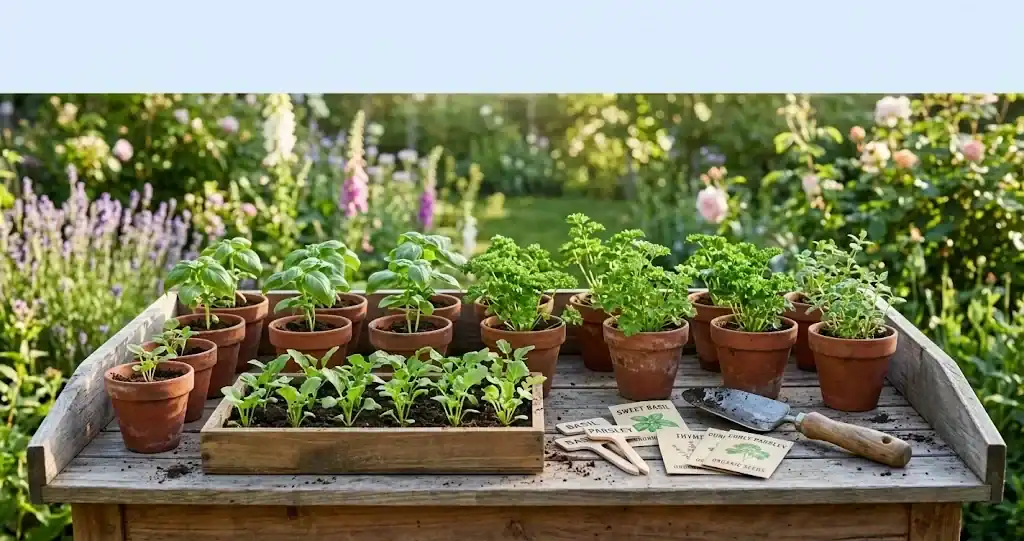
Starting herbs from seed gives you access to dozens of vibrant cultivars rarely found in garden nursery rows. When you grow herbs from seed, you control soil quality from day one, avoid synthetic greenhouse treatments, and build resilient root systems suited to your microclimate. Whether you plan to cultivate a fragrant culinary plot or design a backyard kitchen garden, propagating your own herb plants provides an economical and satisfying way to fill every garden bed and container.
While nursery starts offer instant greenery, many herbs develop stronger vitality when established directly from seed packets. Successful propagation relies on understanding basic botanical requirements: moisture management, appropriate soil warmth, sufficient aeration, and species-specific light preferences during germination.
Why Grow Herbs from Seed at Home?
Choosing to start herbs from seed allows you to grow herbs that match your culinary needs precisely. Commercial nurseries often carry only one standard genovese or curled parsley variety, whereas seed catalogs offer cinnamon, Thai, dark opal cultivars, and Italian flat-leaf selections. Growing from seed also prevents introducing garden pests and soil-borne diseases into your home landscape.
Furthermore, propagating annual herbs and perennial herbs from packets costs pennies per crop compared to nursery pots. When you establish plants from early stages, root systems adapt naturally to local growing conditions rather than suffering severe transplant shock from root-bound commercial containers.

Understanding Herb Seed Germination Requirements
A dormant herb seed holds an embryo plant surrounded by protective tissue and nutrient reserves. When environmental conditions align, the seed absorbs water, swells, and activates enzymes that fuel growth. For reliable propagation, focus on four core environmental factors:
- Moisture: The growing medium must remain evenly moist without becoming waterlogged. Saturated compost suffocates roots and invites fungal rot.
- Warmth: Most culinary herbs emerge best when ambient substrate temperatures sit between 65 and 75 degrees Fahrenheit. A gentle heat mat beneath flats stabilizes temperatures during chilly early spring weather.
- Growing Medium: Use sterile seed starting mixes based on peat, coco coir, and perlite rather than heavy garden soil. Light seed starting soil permits fine root penetration and preserves drainage.
- Oxygen: Loose soil texture ensures air circulates around emerging roots as seeds sprout.
Light versus Dark: Sowing Depths for Different Herb Seeds
One common mistake during planting seeds is burying every variety too deeply. Herb seeds need specific light triggers depending on species adaptation. Some require bright exposure to break dormancy, while others need complete darkness beneath a layer of fine compost.
Fine seeds such as oregano, chamomile, and thyme have minimal energy reserves and need light to sprout. For these varieties, simply scatter the seeds across the surface and press them lightly onto the top of the soil without covering them. Water your seeds gently with a fine mist spray to avoid washing tiny seeds away.
In contrast, larger seeds like borage and coriander greens germinate best in darkness. Cover these varieties with roughly one-quarter inch of growing medium. Medium-sized seeds such as sweet varieties benefit from a light dusting of vermiculite, which holds moisture around the seed packet contents while allowing adequate ambient light to reach them. Always inspect each seed packet for specific burial instructions before you sow seeds.
Direct Sowing versus Starting Seeds Indoors
Depending on plant biology and regional frost dates, herb seeds can be started indoors in trays or seeded directly into outdoor soil. Deciding which route to take depends largely on root structure and seasonal timing.
Fast-growing annuals with sensitive taproots do best when sown directly in the garden bed or outdoor raised bed after all danger of frost has passed. Herbs that do well with direct outdoor sowing include dill, chervil, and cilantro. Sowing directly prevents disturbing delicate root structures that trigger premature bolting.
Conversely, slow-growing perennials and cold-sensitive annuals benefit significantly when raised under controlled conditions 6 to 8 weeks before your last frost date. If you are raising herb seedlings indoors, dedicated flats and steady heat allow tender varieties to mature ahead of the outdoor growing season.
Step-by-Step Seed Sowing Technique
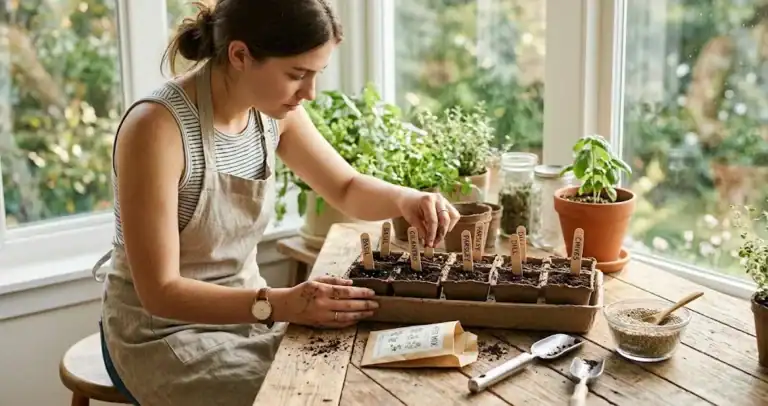
Achieving a high sprouting rate requires consistent preparation. Follow these straightforward steps to set up your indoor trays or outdoor flats:
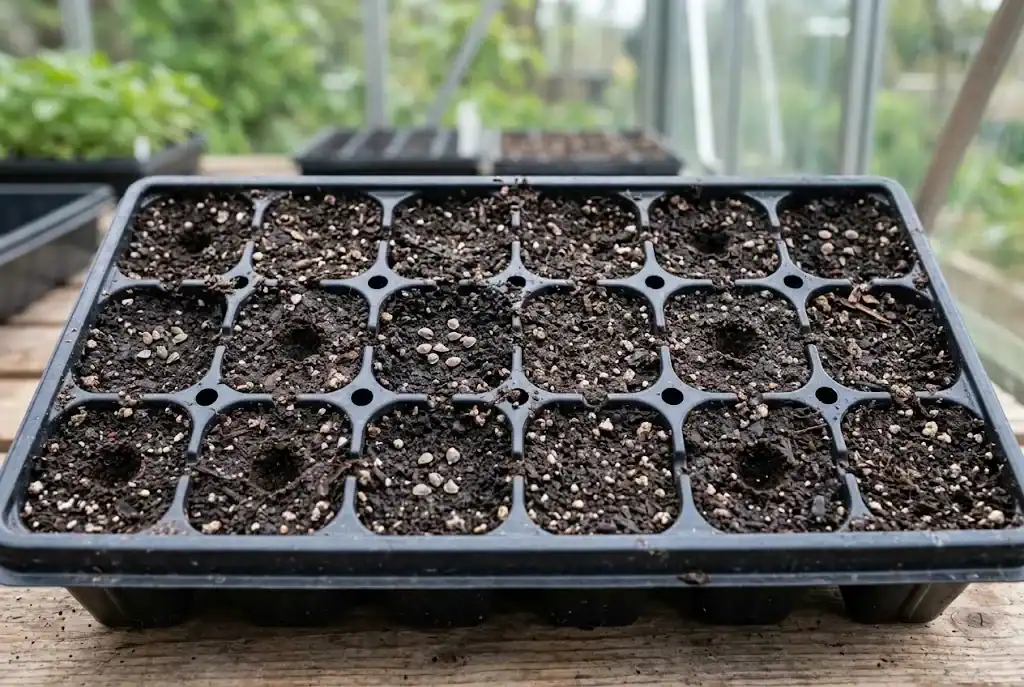
- Prepare Containers: Fill clean trays or a small pot with drainage holes using pre-moistened growing mix. Press the mix down gently to eliminate large air pockets.
- Select Quality Seeds: Begin with fresh stock from reputable seed houses to ensure strong vigor; take time for selecting reliable seed stock with verified emergence rates.
- Plant: Deposit seeds according to their specific depth requirements. For tiny seeds, pinch small amounts between your fingers and distribute them evenly.
- Moisten: Mist the surface lightly with room-temperature water or set trays in a shallow basin for bottom hydration.
- Cover: Place a clear plastic humidity dome over the flat to keep seeds damp until green shoots emerge.
Nurturing Young Seedlings After Emergence
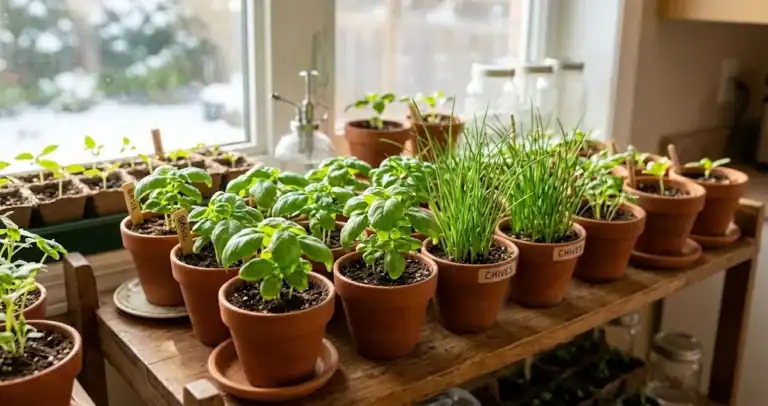
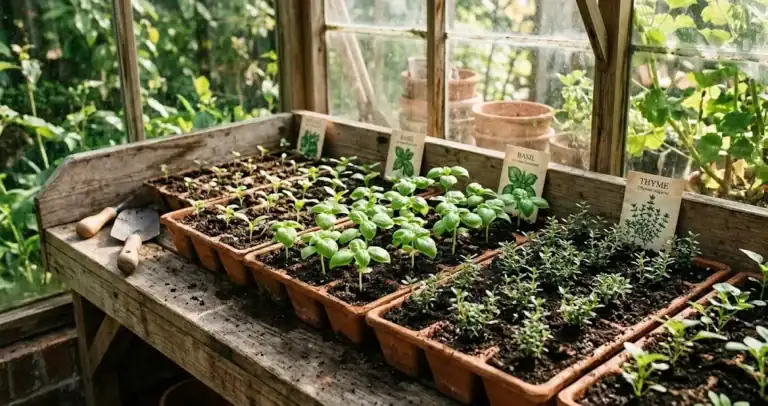
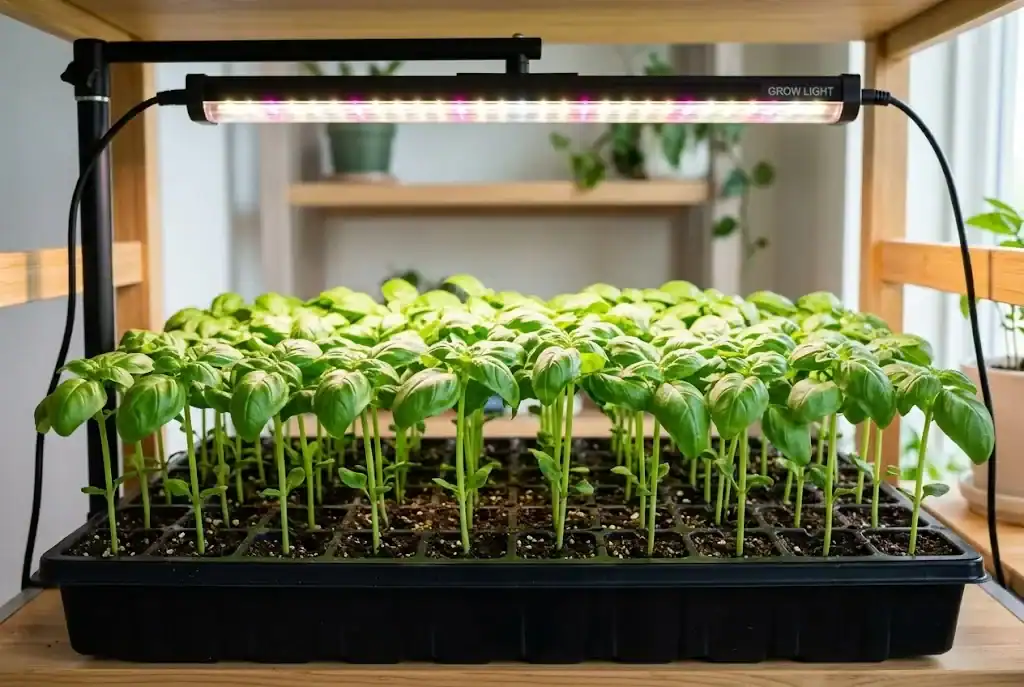
The moment seeds have germinated and green cotyledons appear, remove humidity covers immediately to encourage airflow. As young herb seedlings grow, they require bright, consistent light to build sturdy stems. Natural window light is often too weak during late winter, leading to pale, spindly growth.
Position an adjustable grow light roughly 2 to 4 inches above the canopy, running 14 to 16 hours daily. Keep ambient air moving with a gentle fan to strengthen stems and discourage damping off. Once seedlings develop their second set of true leaves, thin crowded cells to leave the single strongest plant per pot.
Hardening Off and Outdoor Transplanting
Before moving home-grown herb plants outdoors, you must harden them off over 7 to 10 days. Move trays to a sheltered outdoor spot with dappled shade for two hours on day one, gradually increasing exposure to direct sunlight, breeze, and shifting temperatures each afternoon.
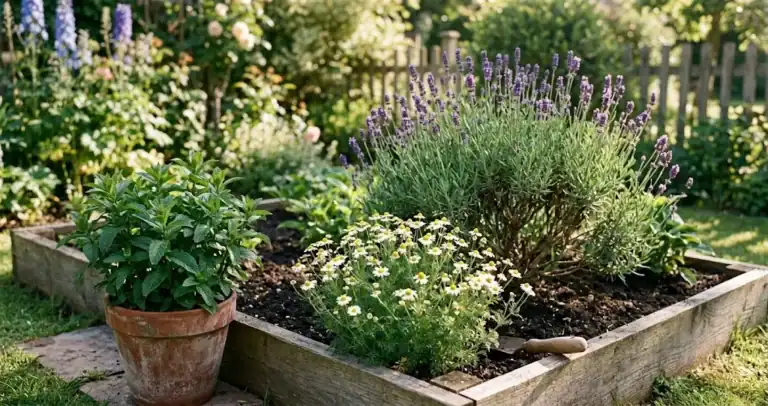
When transplanting into a permanent garden bed or outdoor container, dig holes slightly wider than the root ball, settle the seedling at soil level, and water thoroughly to eliminate air pockets. For broader guidance on garden planning and bed layout, consult our foundational herb garden setup guide.
Herb-by-Herb Propagation Profiles
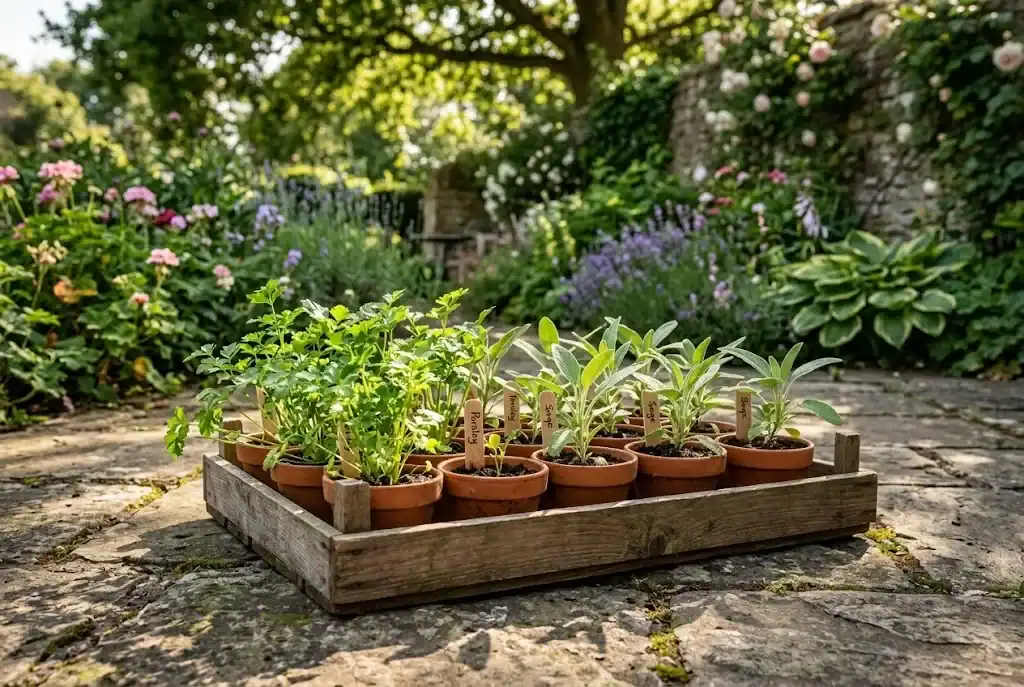
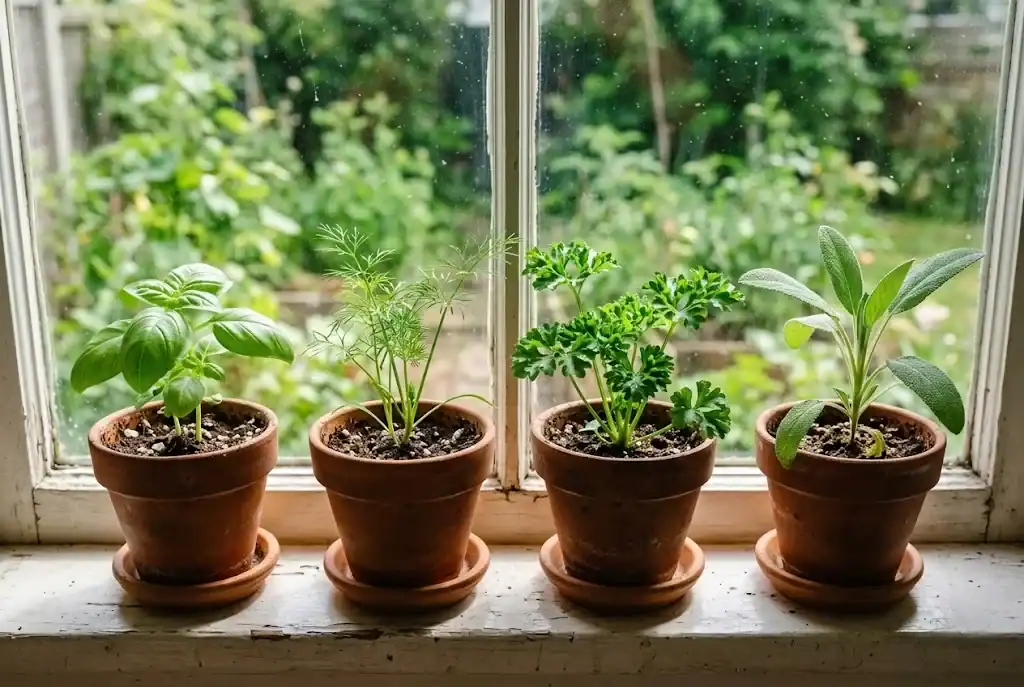
Different culinary herbs exhibit distinct timelines and growth habits. Here is what to expect when propagating popular varieties, including herbs like basil, parsley, and sage:
- Basil (Ocimum basilicum): Fast and reliable. Seeds sprout within 5 to 10 days at 70 to 75 degrees Fahrenheit. Start under cover 4 to 6 weeks before your last spring frost date. Needs bright light and warm conditions.
- Parsley (Petroselinum crispum): A slow-emerging biennial. Seeds can take 14 to 28 days to appear. Soaking seeds in warm water overnight accelerates emergence.
- Cilantro (Coriandrum sativum): Rapid cool-season annual. Direct sow in spring or late summer; plants bolt quickly under intense heat.
- Dill (Anethum graveolens): Quick to emerge in 7 to 14 days. Direct sow because plants dislike root disturbance during transplant.
- Oregano and Thyme: Perennial herbs with dust-fine seeds. Surface scatter without covering; emergence takes 10 to 20 days.
- Rosemary and Sage: Woody perennial selections with variable germination rates. Rosemary emerges slowly (15 to 30 days) and appreciates steady bottom heat.
Troubleshooting Common Sowing Challenges
Even experienced gardeners encounter occasional obstacles during herb growing. Here is how to diagnose and correct frequent issues:
Leggy, Spindly Growth: Weak, stretched stems indicate insufficient light. Lower your grow light closer to the foliage or move flats to a brighter location.
Damping Off: If healthy seedlings suddenly collapse at soil level with darkened stems, a fungal pathogen is responsible. Prevent damping off by using fresh, sterile potting media, avoiding standing water, and maintaining good ventilation.
Slow or Patchy Emergence: Low substrate temperatures or dried-out media often delay sprouting. Use a waterproof heat mat and ensure the top of the soil remains consistently damp until shoots break the surface.
Frequently Asked Questions
Can I grow herbs from grocery store seeds? Whole coriander or fennel seeds from spice jars can sometimes sprout, but packaged garden seeds guarantee specific culinary varieties, verified disease resistance, and reliable germination rates.
How long do packaged seeds remain viable? Most packets stay viable for 2 to 3 years when stored in a cool, dry, dark environment. Lavender loses vigor faster than thyme.
When should I apply fertilizer to young seedlings? Seedlings do not need fertilizer until they produce several sets of true leaves. At that point, apply a half-strength organic liquid feed every two weeks to support steady leaf production.