Three pots on a sunny windowsill will outproduce a jar of dried herbs within a month. That is the whole pitch for herbs for beginners: small cost, fast feedback, a steady supply of fresh leaves for the kitchen, and almost no equipment. Pick forgiving herbs, give them six hours of sun and decent drainage, and they will grow while you learn. You do not need a green thumb, a big yard, or a long list of tools. Different herbs like different conditions, but most of them ask for very little, which is exactly why they are a great place to start growing.
Why herbs are the best first garden
Herbs are forgiving where vegetables are not. Most cook with a snip, not a harvest, so a small mistake costs a sprig, not the season. They fit on a kitchen window, a fire escape, a back step, a single raised bed, or a row tucked into a vegetable plot. They smell good, draw pollinators, and ask for very little: six hours of sun, water when the top of the soil feels dry, and a trim now and then. New gardeners who start with herbs learn watering, feeding, and harvesting in small, safe doses. The skills transfer to everything else you plant later, and you do not need a green thumb to begin.
For new to gardening readers, herbs also have a fast payoff. Most are ready to harvest within weeks of planting, which is the part that keeps new gardeners coming back. You can also grow a single pot of basil on the kitchen counter and call it a garden.
The easiest herbs to start with
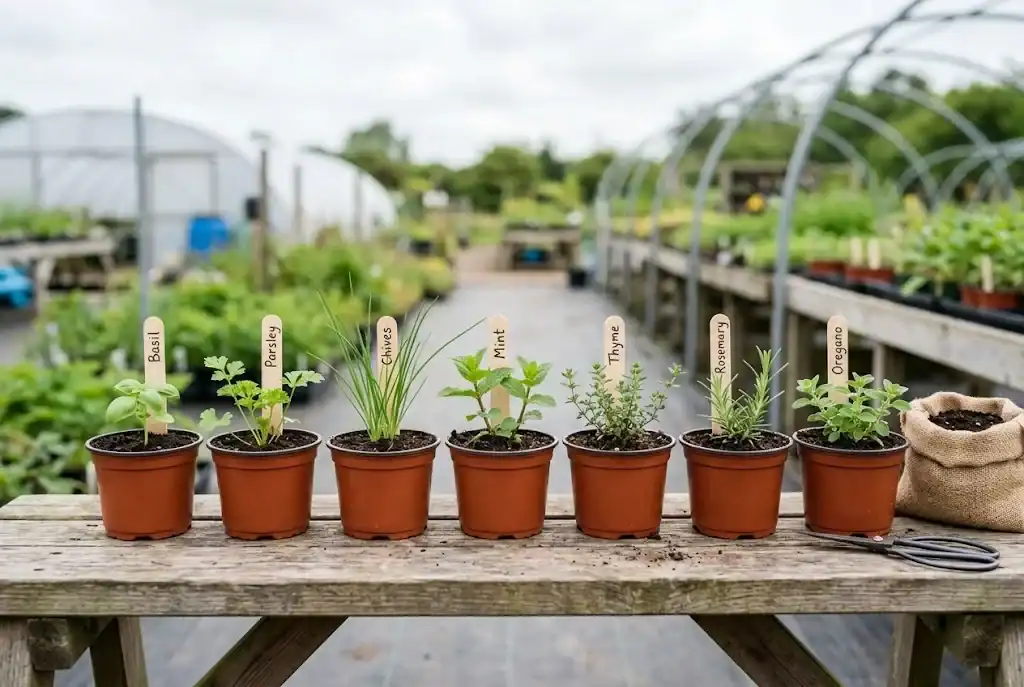
Begin with herbs that are easy to grow and that survive a missed watering or two and still reward you. These nine are reliable, widely available as small plants or seeds, and useful in everyday cooking. Different herbs like different conditions, so group them by what they want. If you want a low-stakes way to start an herb garden without overthinking it, pick two or three from this list and put them in the sunniest spot you have. Most are versatile in the kitchen, and a few of them grow fast enough to give you a real harvest the first season.
Basil. The summer workhorse and a tender herb that loves heat. It wants full sun and steady moisture. Pinch the tips weekly and it branches into a bushy plant rather than a tall single stem. Add it to pasta, salads, and pizza at the very end of cooking so the flavor stays bright. The seeds do not germinate well in cold soil, so plant it out two weeks after your last frost. To grow it indoors, give it the brightest window you have and a container with good drainage. It is also one of the most beginner-friendly of the bunch and one of the most fragrant: brushing past a healthy plant fills the kitchen with that sweet, peppery scent. A small batch of homemade pesto from your own harvest will convince anyone that the planting was worth it.
Mint. Probably the easiest of the bunch and the hardest to keep contained. It spreads by underground runners and will take over a bed within a season. Grow it in a container on its own and you avoid the fight. It tolerates partial shade, prefers moist soil, and gives you leaves for tea, salads, and a simple sauce from spring through fall. Spearmint and peppermint both grow fast and forgive most new-gardener mistakes. To keep it in a small pot, pinch the tips weekly so the plant branches instead of stretching.
Parsley. A cut-and-come-again staple. Pick the outer stems first, leave the central crown alone, and a single plant will feed you for months. It grows well in some shade and tolerates cooler weather, so it is one of the first you can set out in spring and the last one still producing in fall. Flat-leaf and curly both work; flat-leaf has more flavor, curly looks better on the plate. It is one of the easiest herbs to grow indoors on a sunny kitchen window.
Chives. The mild onion note that earns its place in almost any dish. They grow in tidy clumps, return every year, and tolerate cold better than most. Cut a handful of leaves two inches above the soil and the plant bounces back within a week. The purple flowers are edible and pretty in a salad. One clump is plenty for a household, and they grow well in a small container on a window ledge or balcony.
Thyme. A Mediterranean herb that asks for sun and well-drained soil, then mostly leaves you alone. It hates wet feet, so plant it where water drains quickly. It is a small, woody perennial that rewards a light trim after flowering and slips into roasted vegetables, soups, and meat dishes without effort. Common and lemon thyme are both easy to start from small plants. Mediterranean herbs like it need a lean, gritty soil; rich compost-heavy mixes hold too much water around their roots.
Rosemary. A woody evergreen shrub, not a tender annual. It wants full sun, lean soil, and dry feet. In a container it can stay outside in mild winters or come indoors to a cool, bright window. Strip the leaves from a stem and the kitchen fills with a resinous, piney scent that pairs with roasted potatoes, lamb, and bread. It is slow to grow from seed, so buy a small plant. Once established, a single shrub can give you harvests for many years.
Oregano. The pizza herb. Like Mediterranean perennials, it likes dry, sunny conditions and lean soil. It grows fast in summer, can be cut hard, and dries well for winter use. One plant usually produces more fresh leaves than a household can use, which is a problem you want to have. Greek oregano has the strongest flavor for cooking. The flowers attract pollinators, which is a quiet bonus for the rest of the planting.
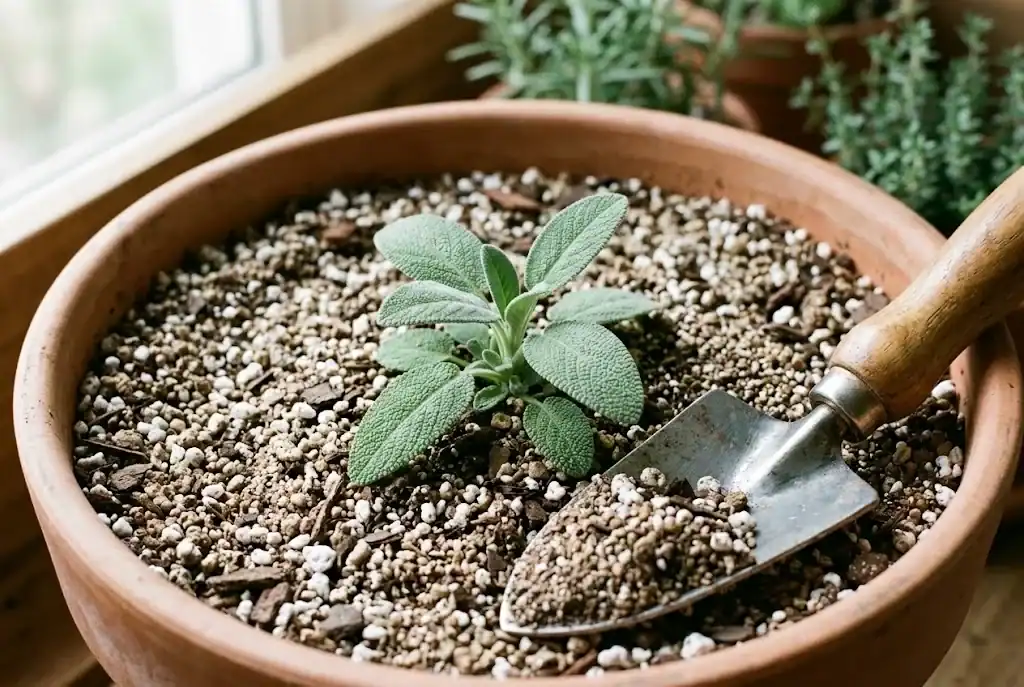
Sage. The poultry herb. A hardy perennial with soft, gray-green leaves that earn their keep in stuffing, sausage, and browned butter. It likes sun, well-drained soil, and not too much water. One plant is enough; it grows into a small shrub and benefits from a hard cut back in early spring to keep it bushy. On a kitchen window it stays usable for most of the year. It dries particularly well, and a few dried leaves in a jar will keep their flavor all winter.
Cilantro. The salsa herb. It grows fast from seed and bolts quickly in heat, so plant a new batch every three weeks for a steady supply. It prefers cooler weather and some shade in summer, and it self-seeds once established. Let a few plants go to seed and you will get coriander spice plus a free round of seedlings for next year. It is one of the easiest to grow from seed, and a single packet gives you enough plants for the season.
Pick a spot: sun, soil, ground, or planter
Most culinary herbs want at least six hours of direct sun. A south- or west-facing window, a balcony ledge, or a strip along a sunny fence all work as a small growing space. A few tolerate some shade, so a spot with morning sun and afternoon shade still produces a usable harvest. If you only have a kitchen window, most will do well there. Different herbs prefer different levels of sun, so match the plant to the spot you have.
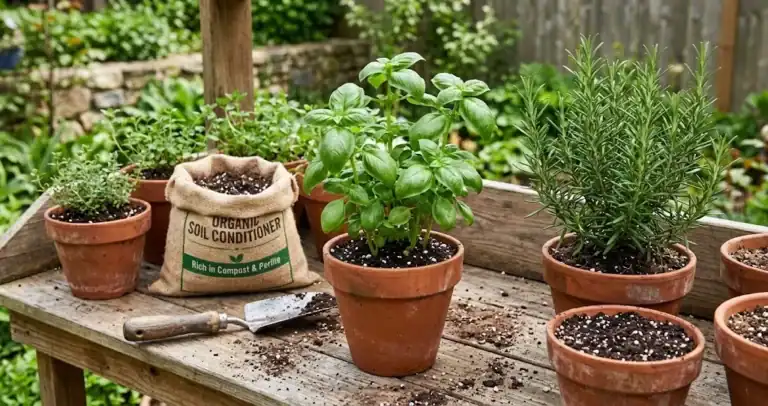
Soil matters more than planter size. Most herbs are Mediterranean plants that evolved in dry, stony ground, and they rot quickly in heavy, soggy soil. If you are planting in the ground and your soil is dense clay, work in a few inches of compost and coarse sand to loosen it. If you are planting in containers, use a quality potting mix rather than garden soil, and pick planters with drainage holes. Terracotta breathes and helps the root zone dry out between waterings, which suits Mediterranean ones. Some prefer a slightly richer mix with more organic matter. Most require well-drained soil more than they require rich soil, so resist the urge to overfeed.
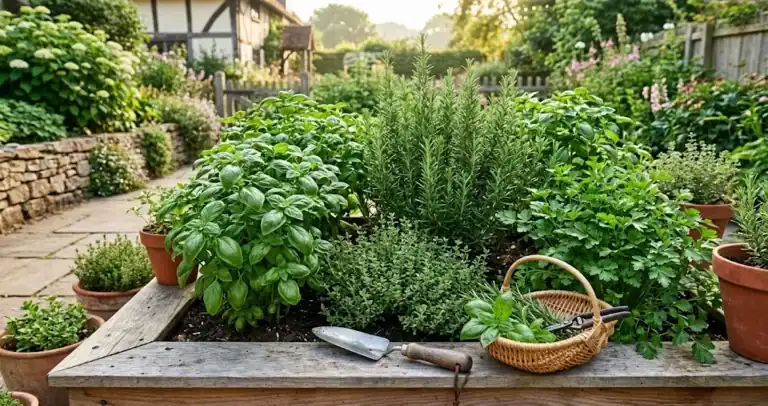
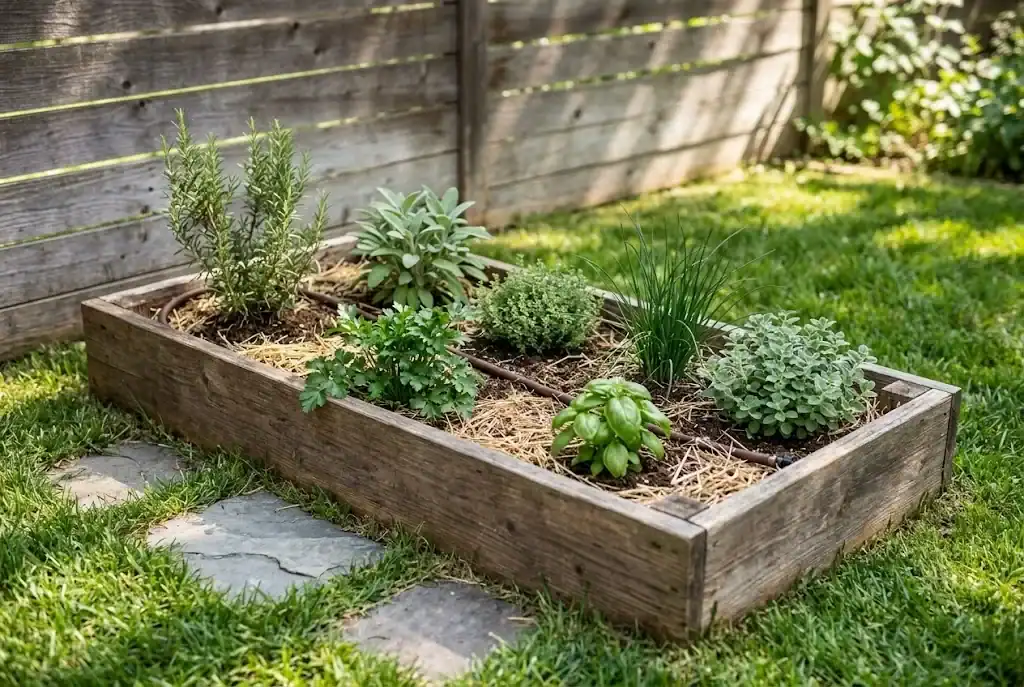
Raised beds work beautifully for herbs. They drain well, warm up earlier in spring, and keep the soil loose. A four-by-eight bed along a sunny fence can hold six to eight mature plants with room to grow. In a vegetable garden, herbs make great companion plants: basil near tomatoes, dill near cucumbers, chives around the edge to deter pests. A deeper breakdown of what each plant actually wants from its soil is in our guide on what herbs want from their soil.
Seeds, seedlings, or small plants
For new gardeners, small nursery plants give the fastest, most reliable result. A four-inch container of basil, mint, or a curly-leaf one already has a working root system and starts producing within weeks. Buy from a local plant nursery or garden center where the staff water and feed the plants, so you can see what healthy growth looks like. Most new gardeners find nursery plants much easier to start with, even though they cost a little more than a packet of seed.
Seeds are cheaper and offer more variety, but they ask for more attention. Cilantro and dill germinate quickly from seed. Parsley and rosemary are slow and fussy, and usually best bought as plants. To grow from seed, sow in small trays indoors four to six weeks before your last frost, then transplant out when the soil warms. If you want a deeper look at picking varieties and reading seed packets, see our notes on picking seed worth sowing. Either route works; the goal is to get a plant in the ground while you are still excited about it.
You can also start many from cuttings. A cutting from mint or another leafy herb, placed in a glass of water, will root in a week or two and give you a free new plant. This is a great way to multiply your favorites, and it is a satisfying way to share them with friends.
Water, food, and the everyday care that matters
Overwatering kills more starter-friendly plants than drought. A simple rule: stick a finger an inch into the soil. If it feels dry, water thoroughly until water runs out the drainage holes. If it feels damp, leave it alone. Plants in containers dry out faster than plants in the ground and usually need water every two to three days in summer. Plants in the ground often do fine on rainfall once established. Annuals need more water than woody perennials.
Most herbs do not want much fertilizer. A single feed with a balanced liquid fertilizer in midseason, or a top dressing of compost in spring, is enough. Heavy feeding produces soft, leafy growth with weaker flavor, which is the opposite of what you want from a culinary herb. For plants in containers, a light feed every four to six weeks during the growing season is plenty. If you are gardening organically, compost and a monthly fish emulsion or kelp feed is plenty.
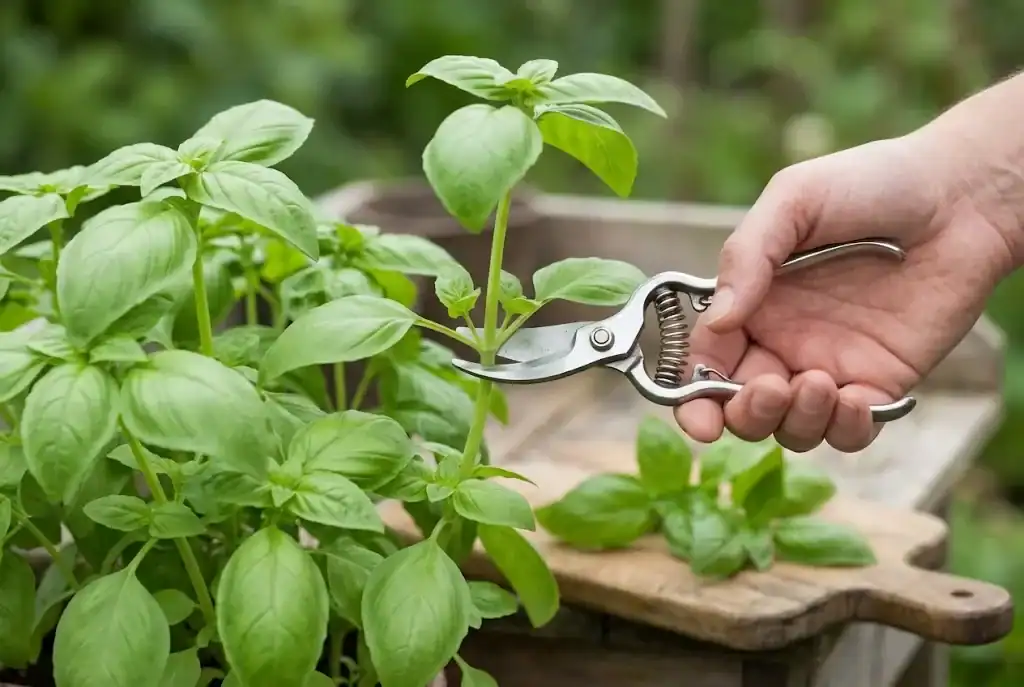
Pinch and trim often. The more you snip, the more the plant branches. For leafy herbs like basil, regular trimming keeps the plant bushy instead of leggy. For woody ones, a light shaping after flowering keeps the plant compact and productive. Pinch off each flower bud as it forms to keep them in leaf longer. Good herb care is mostly about paying attention and cutting back what the plant has already grown. Most require surprisingly little from you once they are settled in.
Indoor growing year-round
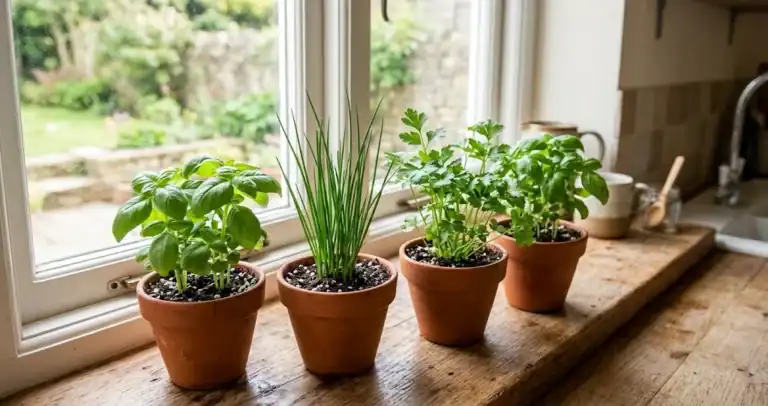
You can grow herbs indoors on a kitchen window or under grow lights. South- or west-facing windows are best, with at least four to six hours of direct sun a day. Most do well indoors. The Mediterranean ones prefer a cooler room, around 60 to 65 degrees F, and as much direct sun as you can give them. Avoid putting them near a hot radiator or a cold draft. Growing indoors is one of the easiest ways to keep fresh flavor in the kitchen all year, even in a small apartment.
If your home does not get enough natural sun, a simple grow light set on a timer for twelve to fourteen hours a day fills the gap. Indoor containers need the same well-drained soil and careful watering as outdoor ones. Pinch and use the plants often; indoor herbs grow more slowly than outdoor ones and benefit from regular harvesting. A kitchen window with three containers is a real garden; you do not need room to grow a full row.
Seasonal timing and what to grow when
Most herbs have a natural growing season. Cool-season ones prefer spring and fall, and they bolt in summer heat. Warm-season ones, including basil, prefer summer. Mediterranean ones are perennial in mild climates and stay productive through most of the year. Plan your growing season around what each prefers, and replant the annuals as needed.
Starting seeds indoors four to six weeks before your last frost gives you a head start on the growing season. You can also plant a second round of these in late summer for a fall harvest before the first frost. Perennials need room to grow and are best planted where they can stay for several years.
Companion planting
Many herbs do double duty as companion plants. Basil is famously good near tomatoes, both in the kitchen and in the garden, where it is said to improve tomato flavor and deter some pests. Chives around the edge of a vegetable plot help deter aphids. Dill attracts beneficial insects that prey on garden pests. Mint is best kept out of the vegetable plot entirely because of its running roots. A mixed herb and vegetable layout gives you fresh flavor for cooking and useful companions for your other crops at the same time.
Annual vs perennial herbs
Annuals complete their life cycle in a single growing season, so plant them fresh each spring. Perennials come back year after year from the same roots, so plant them once in a permanent spot. Many fall somewhere in between: one is a biennial that often self-seeds, another is a hardy perennial that needs containment, and the chive is a clump-forming perennial that lasts many years. Knowing which type you are planting helps you decide where to put it and how much room it will need.
Harvesting without killing the plant
Harvest in the morning, after the dew has dried and before the sun stresses the plant. The oils that carry flavor are at their peak then. Take no more than a third of the plant at one time. Cut just above a leaf pair so the plant branches from that point rather than dying back to a bare stem.
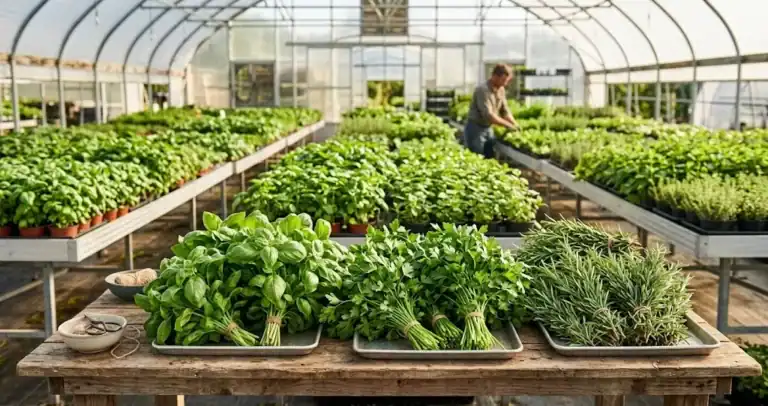
For fresh herbs, snip as you cook. For ones you want to keep, dry small bundles hung in a warm, airy room out of direct sun, or lay leaves on a screen. Some are better frozen than dried; woody herbs like rosemary and thyme keep their flavor when dried. You can also freeze them in olive oil in an ice cube tray for ready-made flavor cubes to drop into soups and sautés. To dry for winter, cut just before the plant flowers, when the essential oils are at their peak.
Quick troubleshooting
Yellow leaves. Usually overwatering, especially in containers without drainage. Let the soil dry out and check that the planter drains freely.
Leggy, stretched growth. Not enough sun, or the plant has not been pinched. Move it to a brighter spot and trim back to a leaf pair to encourage branching.
Bitter or strong flavor. Often a sign the plant has bolted, or is heat stressed. Harvest before the plant flowers, and water consistently in hot weather.
Nothing grows at all. Cold soil, a bad batch of seed, or a container with no drainage. Check the soil temperature, switch to small nursery plants, and make sure water can escape.
Pests on the leaves. A quick rinse with a hose often dislodges aphids. For tougher pests, a spray of diluted dish soap or insecticidal soap usually clears them up. Healthy herbs resist most pests on their own.
Your first garden: a starter plan
Pick two or three from the list above, set them in the sunniest spot you have, and water them when the soil dries. Within a few weeks you will have a usable harvest and a much better feel for what works in your space. A simple starter set: basil, curly parsley, and chives. They cover most everyday cooking, all tolerate some shade, and they make excellent kitchen window companions. Once those thrive, add two more, then build out from there as your confidence and your growing season grow. Perennials come back every year, so plant them once and enjoy them for years. Annuals need to be replanted each spring, but they grow fast and give you a full season of harvest.
When you are ready to scale up, our broader guide to growing an herb garden walks through the planning, layout, and seasonal rhythm of a larger bed.
Common questions
Which is the easiest herb to grow? Mint. It tolerates some shade, recovers from missed waterings, and grows fast. Keep it in a container so it does not take over the garden.
What herbs cannot be planted next to each other? Mint does not play well with others because of its spreading roots; give it its own container. Otherwise, group by water needs: dry-soil lovers together, and thirsty ones together.
Do herbs grow better in containers or the ground? Both work. Containers give you control over soil and drainage, which helps new gardeners avoid the most common mistake. In the ground, herbs usually need less watering once established but ask more from your soil.
How much sun do herbs need? Most culinary herbs want at least six hours of direct sun a day. A few manage with four hours and some afternoon shade.
How often should you water herbs? Check the soil with your finger. Water thoroughly when the top inch feels dry, then let it drain. In summer, containers usually need water every two to three days; in the ground, once or twice a week is often enough.
Can you grow them indoors? Yes, on a south- or west-facing window or under grow lights. Most do well indoors. Some prefer a cooler room and as much direct sun as you can give them.