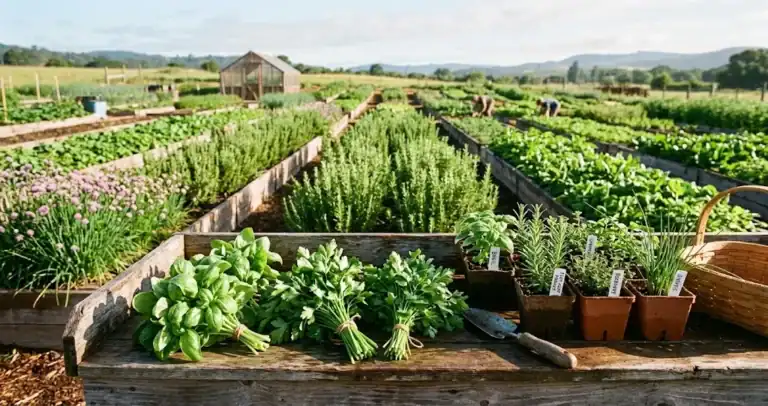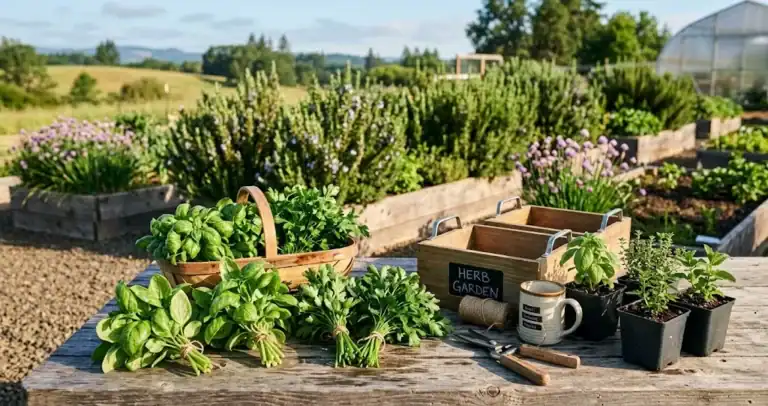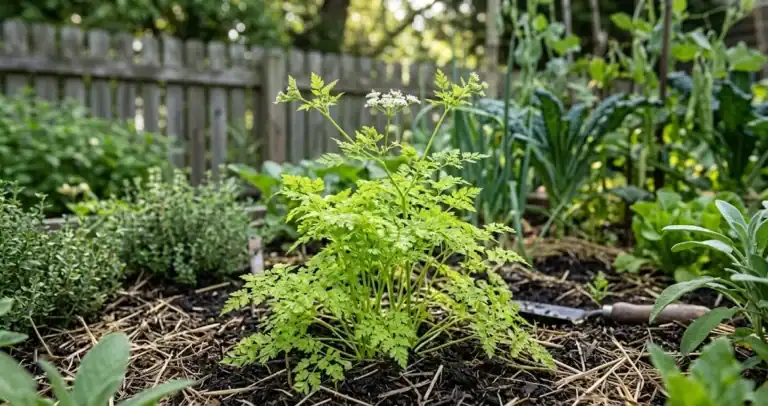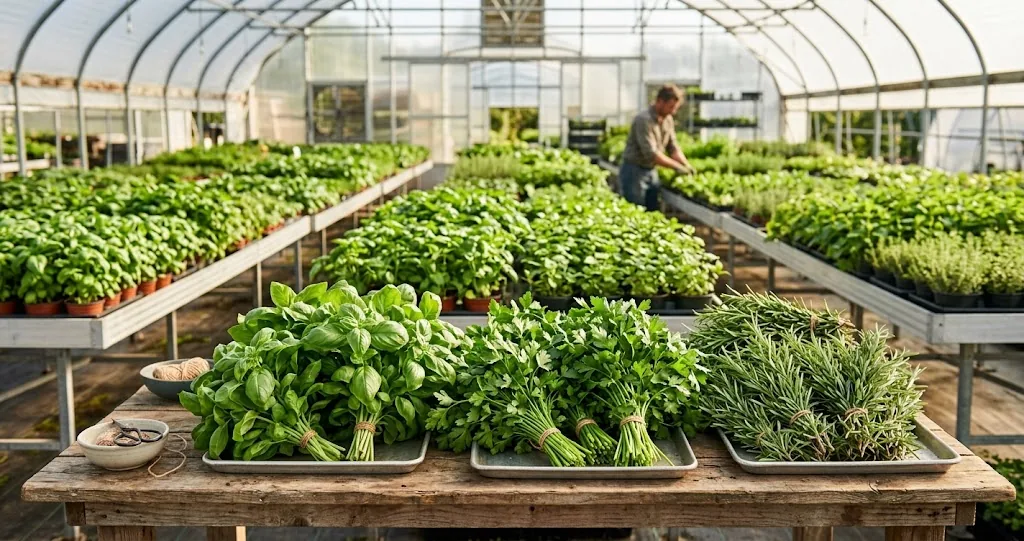
Growing and selling herbs is one of the most reliable ways to turn a small herb garden, greenhouse, or modest bit of land into a profitable commercial venture. When you grow herbs for market, both culinary herbs and high-value medicinal herbs generate exceptionally high revenue per square foot. Whether you manage a small scale backyard plot or an expanding organic herb farm, selling fresh herbs, potted live plants, and dried flowers offers steady farm income throughout the growing season.
To make a profit with herb farming, a commercial grower must look beyond casual gardening and understand what buyers actually want. Retail customers, a local restaurant chef, and community grocery markets all seek a good supply of fresh, aromatic greens, healthy herb plants, and specialty herb products. By researching which herbs thrive in your climate and aligning your production with proven sales outlets, you can build a resilient herb business with modest startup investment.
Choosing Marketable Varieties and Herbs to Grow
Selecting the right herbs to sell requires balancing crop growth speed, customer demand, and post-harvest durability. Successful herb growers divide their catalog into fast-maturing annual crops and dependable multi-year varieties, supplying both fresh cuts and potted nursery stock.
High-Demand Kitchen and Culinary Crops
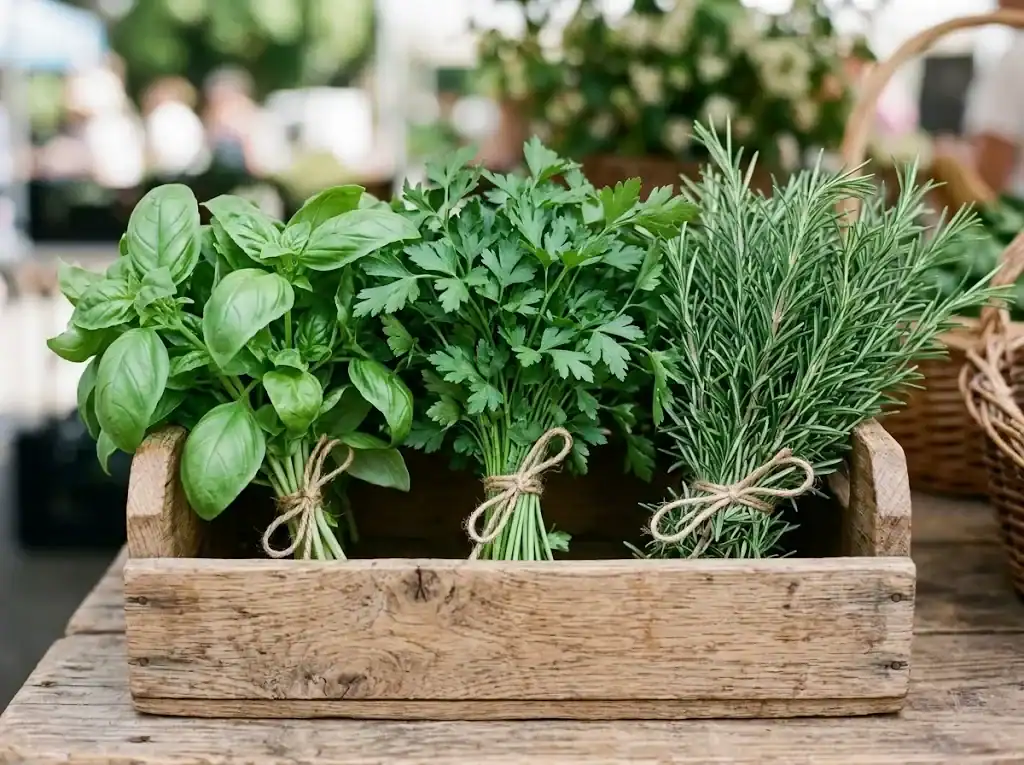
Fresh culinary greens form the backbone of weekly direct-to-consumer sales. Home cooks and professional kitchens purchase these staple varieties continuously:
- Sweet Basil (Ocimum basilicum): The top-selling culinary herb across the United States. Fast-growing from herb seeds, sweet basil provides repeated leaf harvests during warm summer months. Herbs like basil must be protected from cold temperatures and handled gently to prevent leaf discoloration.
- Parsley (Petroselinum crispum): Flat-leaf Italian parsley and curly varieties produce heavy yields from spring through autumn. Both dill and parsley sell reliably in generous bunches at any local market.
- Cilantro (Coriandrum sativum): A cool-season annual with strong market appeal. Because it bolts rapidly in summer heat, herb farmers use succession planting every two weeks to maintain continuous harvest cycles.
- Rosemary (Salvia rosmarinus): A fragrant woody evergreen prized for aromatic foliage. Growers sell freshly cut sprigs as well as potted rosemary plants for home gardeners.
- Thyme (Thymus vulgaris) and Oregano (Origanum vulgare): Hardy perennial crops from the Lamiaceae mint family. Both are easy to grow, drought-tolerant once established, and well suited for fresh bundles and dried kitchen seasonings.
- Chive (Allium schoenoprasum) and Marjoram (Origanum majorana): Excellent companion crops that offer delicate flavor profiles for specialty displays.
Profitable Medicinal Botanicals and Specialty Crops
Beyond the kitchen, consumer interest is expanding rapidly for herbal tea blends, botanical skin care ingredients, and traditional wellness botanicals. Cultivating high-demand botanicals allows a grower to expand into value-added dried herbs and specialty craft items:
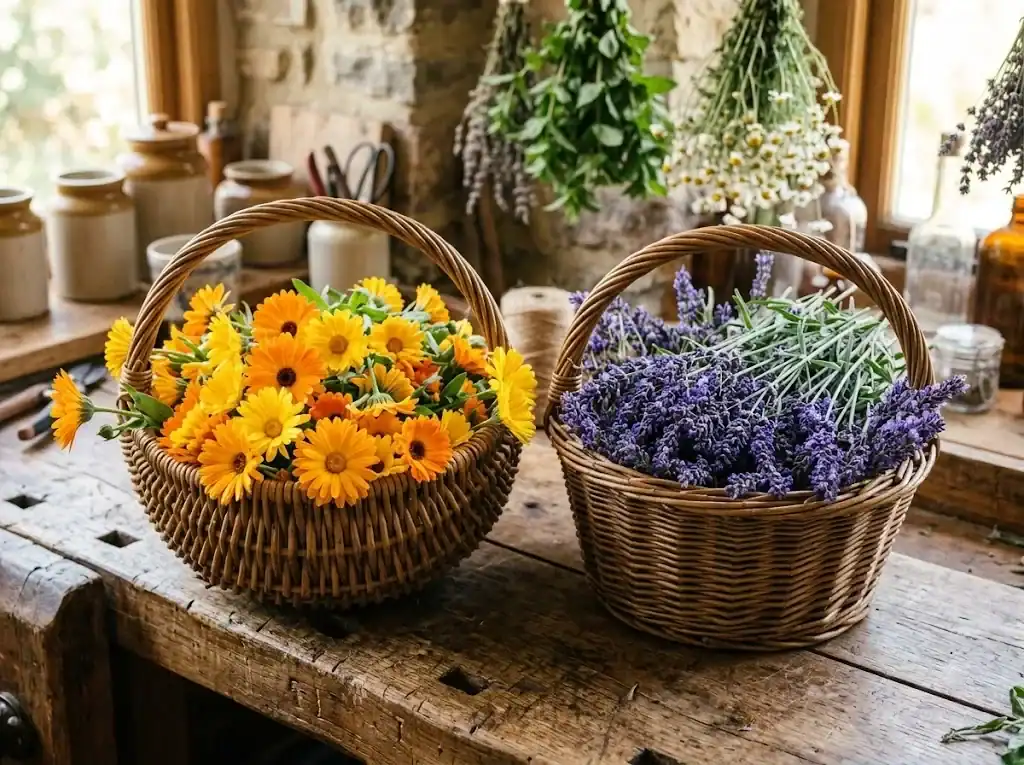
- Calendula (Calendula officinalis): Produces abundant vibrant orange and yellow blossoms throughout the season. The dried petals are highly valued in handcrafted salves, soothing balm recipes, and natural cosmetics.
- Lemon Balm (Melissa officinalis): A vigorous aromatic perennial herb whose leaves and flowers make soothing botanical infusions and herbal extracts.
- Catnip (Nepeta cataria): Simple to cultivate and highly marketable both as live potted greenery and as potent dried leaf packaging for pet owners.
- Lavender (Lavandula species): Prized for its calming scent and visual charm. Distillers use fresh cuttings for perfume and essential oils, while craft markets purchase dried bouquets and decorative sachets.
Production Methods for Small Scale Herb Growers
Successful commercial herb growing depends on creating optimal soil conditions, efficient irrigation, and structured planting layouts. Depending on your available space, several production setups deliver strong returns.
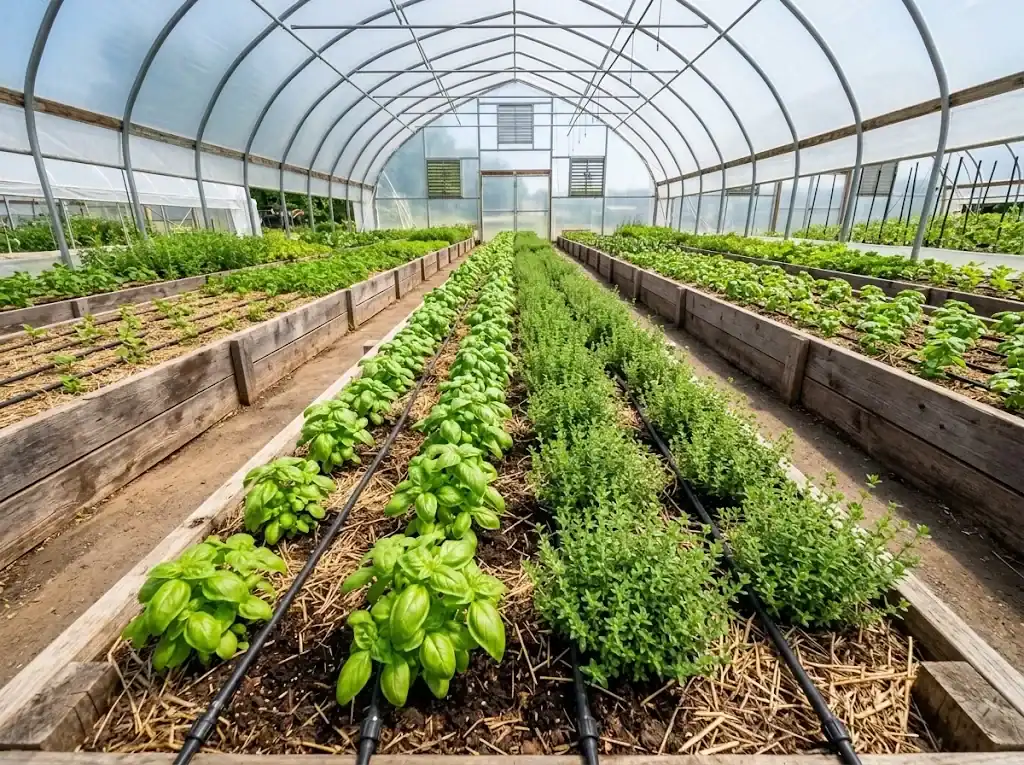
Raised-bed gardening and open-field rows remain popular for field-grown crops. Preparing fertile, well-drained soil rich in organic matter prevents root diseases in Mediterranean species like oregano and rosemary. Incorporating balanced natural compost supplies necessary nitrogen without encouraging excessive leafy growth that dilutes aromatic oils. Applying organic mulch conserves soil moisture, moderates root temperatures, and suppresses weed competition.
For operations with limited ground space, growing in containers and propagation trays offers precise control over drainage and fertility. Potted herbs appeal strongly to urban gardeners seeking patio greenery. If you are developing a formal commercial plan, review our guide to growing herbs for profit to analyze production budgets, equipment investments, and expected revenue per square yard.
According to commercial crop research from the North Carolina State University Extension, intensive herb cultivation can produce higher gross returns per acre than traditional field crops when growers target direct-market outlets. In addition, the USDA Agricultural Marketing Service highlights steady consumer demand for locally grown specialty crops. A greenhouse or high tunnel hoophouse provides significant advantages, shielding crops from harsh wind, regulating moisture through drip irrigation, and extending the sales season from early spring into late autumn. Many successful growers start new plants from seed in propagation trays, while multiplying woody stock through softwood stem cutting techniques.
Harvesting and Post-Harvest Handling
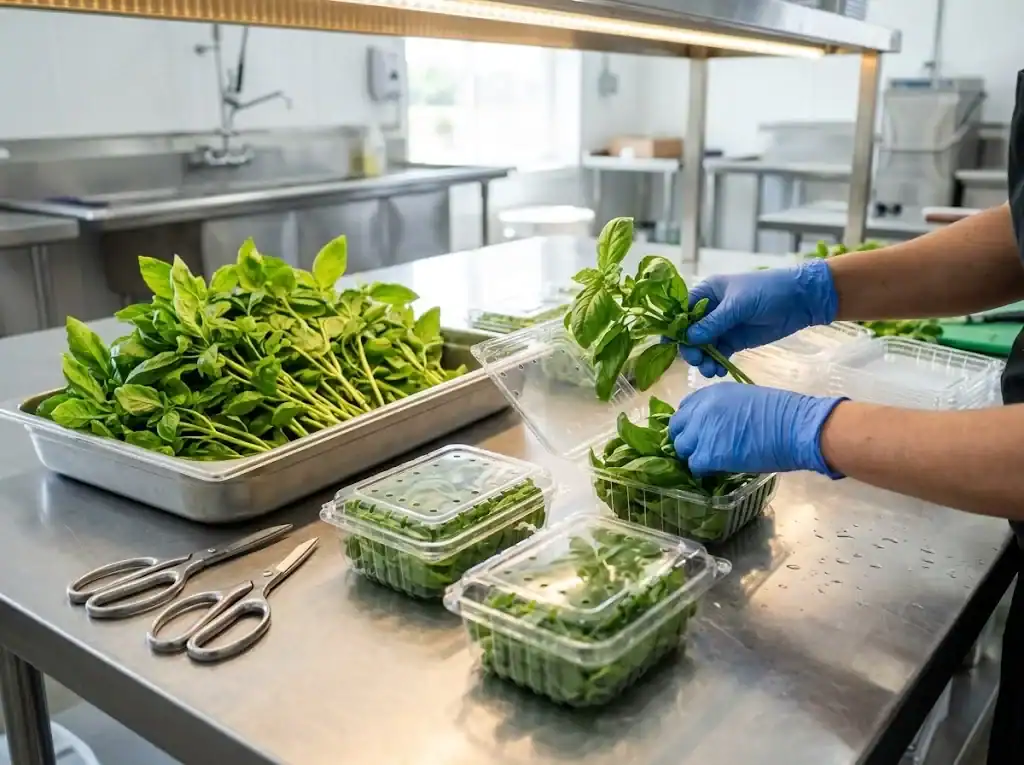
Proper harvesting practices protect crop quality and maximize shelf life. For produce freshly cut for culinary use, harvest leafy stems early in the morning once dew evaporates but before midday sun causes heat stress. Use sharp, sanitized harvest snips to make clean cuts, leaving sufficient foliage on the parent stock for rapid regrowth.
Immediately move harvested crops to a cool, shaded packing station. Gently rinse field soil, inspect for insect damage, and cull damaged leaves. Uniform presentation is essential for commercial sales:
- Fresh Bunches: Group uniform stems into a neat bunch secured with food-safe rubber bands or branded paper bands.
- Protective Clamshells: Pack delicate leafy greens such as sweet basil and dill in breathable clear containers to prevent crushing during transit.
- Living Potted Plants: Clean each pot exterior, groom lower foliage, and attach care tags explaining sunlight and watering needs.
- Drying and Dehydration: Hang herbs in warm, dark, well-ventilated drying rooms or use commercial dehydrators to preserve natural color and aromatic oils for dried culinary seasonings.
Proven Sales Channels to Sell Your Herbs
Diversifying your sales channels ensures steady cash flow and cushions your herb farm against seasonal market shifts. Exploring multiple market outlets helps you determine where your specific herbs earn the highest margin.
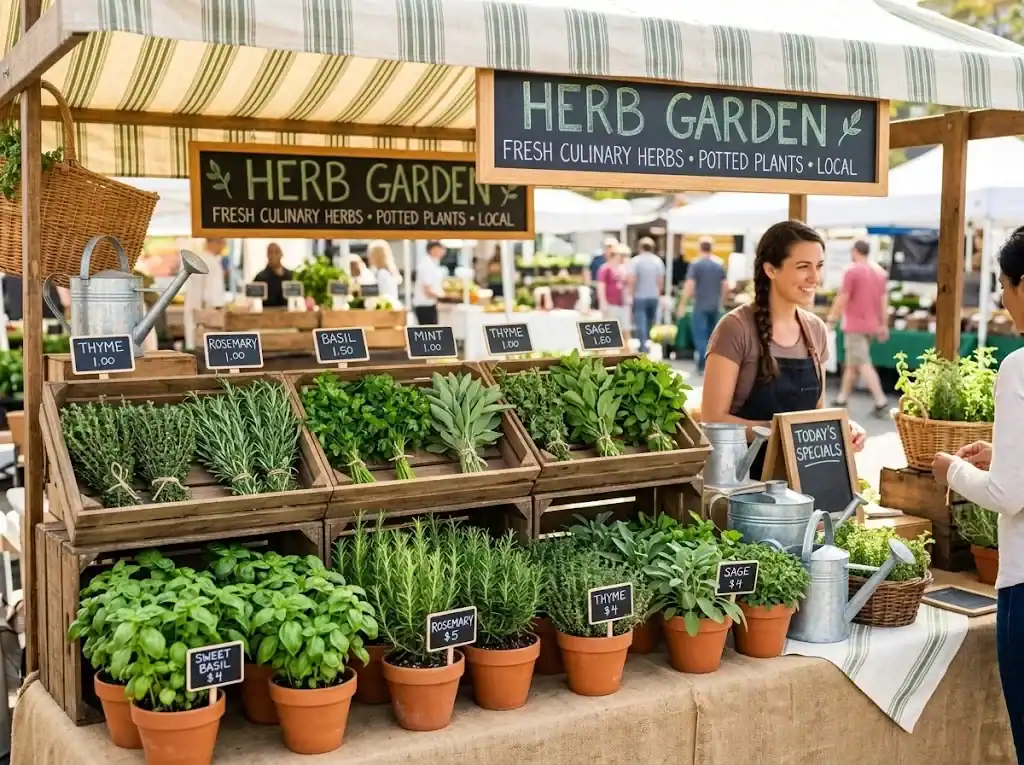
Selling direct to consumers at a weekly farmers market remains the most popular starting point for new growers. Setting up an attractive stall with a colorful bouquet of fresh cuts, potted herbs, and dried goods draws enthusiastic foot traffic. A roadside farm stand on your own property offers another convenient low-overhead alternative for local sales.
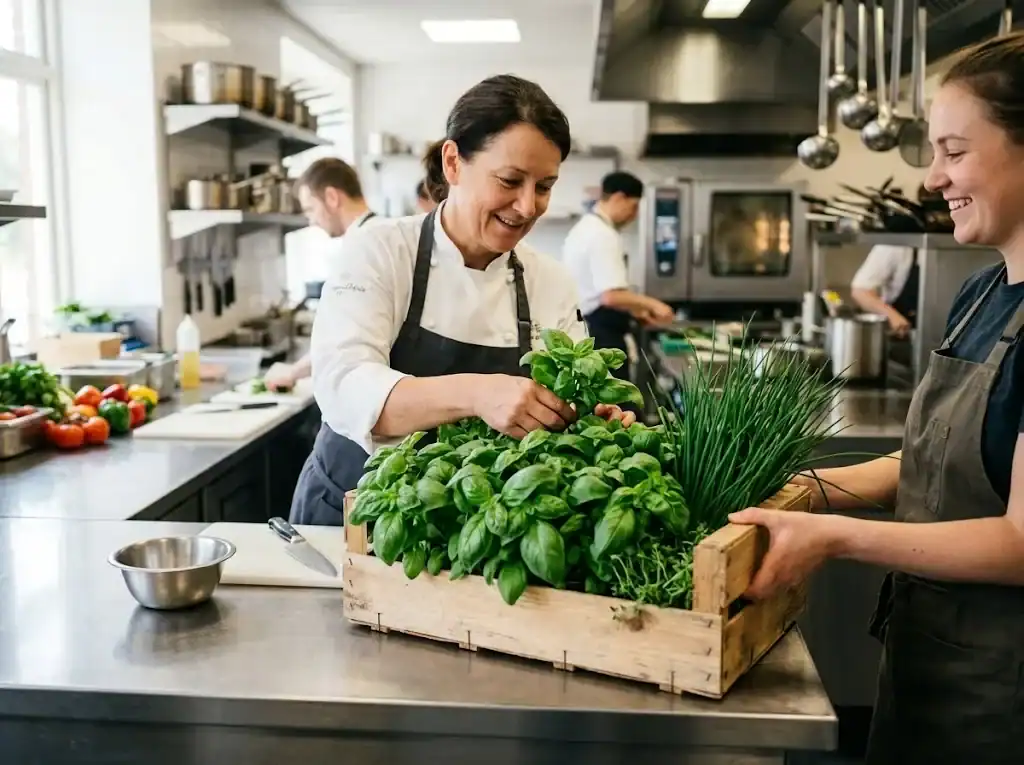
Partnering with a local restaurant and independent chef provides predictable weekly wholesale volume. Chefs appreciate reliable delivery of freshly harvested specialty greens that outshine standard distributor produce. Establish consistent delivery schedules and provide samples of unique varieties to build lasting commercial accounts.
Local grocery stores, specialty food markets, and online marketplaces offer additional wholesale and mail-order opportunities. For guidance on establishing wholesale accounts and farm distribution channels, explore effective ways of growing and selling herbs across diverse commercial markets.
Pricing, Economics, and Sustainable Business Growth
To ensure a good profit margin, calculate your true cost of production including seed stock, potting soil, irrigation supplies, packaging, labor, and market fees. Price your herbs competitively based on local market rates while highlighting organic growing practices and same-day freshness.
Growing your enterprise sustainably involves steady reinvestment and professional networking. Connecting with regional agricultural extension programs and joining active herb growing and marketing associations connects you with experienced growers, wholesale buyers, and valuable commercial industry updates.
Frequently Asked Questions About Growing and Selling Herbs
What is the most profitable herb to grow and sell?
Sweet basil is widely considered the most profitable culinary crop due to its rapid growth cycle, high customer demand, and repeated harvests throughout the season. For specialty growers, potted evergreen shrubs and dried medicinal flowers like calendula also offer exceptional profit margins per square foot.
Do I need a special license to sell herbs?
Selling fresh cut herbs and live potted plants at local markets typically requires a standard business license and state nursery certification. If you process herbs into dried seasonings, infused oils, or value-added food products, check your state cottage food laws and commercial kitchen regulations.
Can I start a profitable herb business on a small backyard plot?
Yes. Because herbs yield high value in small spaces, a dedicated quarter-acre plot or intensive raised-bed backyard garden can generate substantial seasonal income when focused on premium fresh bunches, specialty restaurant varieties, and potted starter plants.