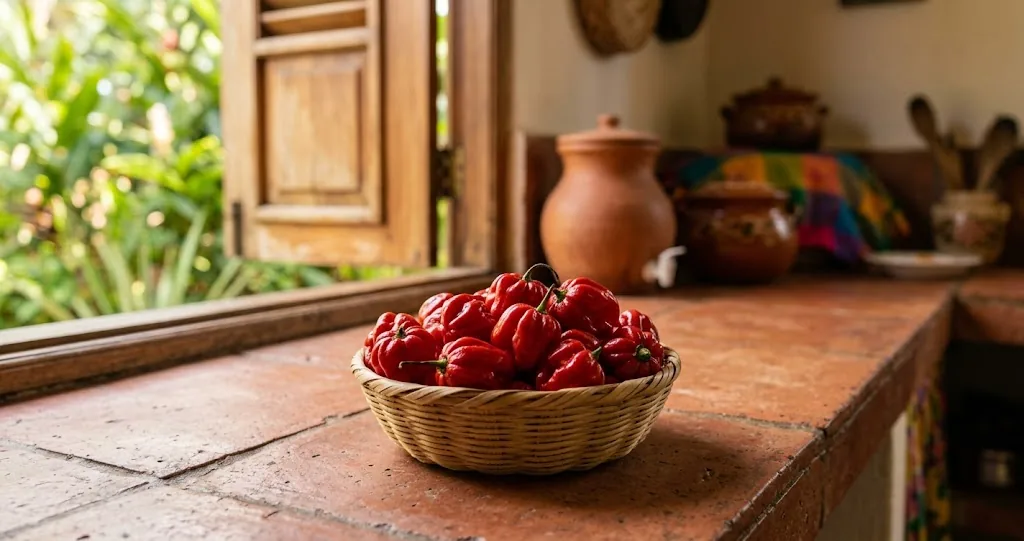
Ají dulce is a group of sweet, fragrant Caribbean and Latin American Capsicum chinense landraces and selections, not one uniform cultivar. Many share the wrinkled form and fruity aroma of fiery habaneros but have little to no heat. Pod shape, ripening color, and pungency can vary by seed line, so a supplier description is the best guide to the plants you grow.
In Puerto Rico and elsewhere in the Caribbean, cooks use ají dulce in sofrito, recaito, bean dishes, and slow-cooked meals. Its floral aroma adds a savory base that ordinary green peppers cannot fully copy. This profile covers the plant group, flavor, growing conditions, harvest, and cooking uses.
Origin and Cultural History of Cachucha Sweet Peppers
Ají dulce is associated with Caribbean and Latin American foodways, and regional names often describe related sweet chinense peppers rather than one identical variety. A 2023 USDA Forest Service study documents the cultivation and use of sweet chinense peppers in Puerto Rico.
Different regions developed their own names for local strains of this versatile sweet pepper:
- Puerto Rico: Known locally as ajicito or called ají dulce, it is a familiar ingredient in Puerto Rican cooking.
- Cuba: Widely celebrated as aji cachucha (and occasionally spelled quechucha), named for its resemblance to a traditional brimmed cap.
- Dominican Republic and Cuba: Frequently referred to as ají gustoso in island kitchens, highlighting its role as a fragrant, tasty culinary companion.
- Venezuela: Cultivated under several local ecotypes that anchor regional marinades, table sauces, and braises.
Ají dulce includes regional selections with a sweet flavor and strong aroma. When exploring different types of chili peppers, it is a useful example of a chinense pepper grown for flavor rather than intense heat.
Botany and Traits of the Aji Dulce Pepper
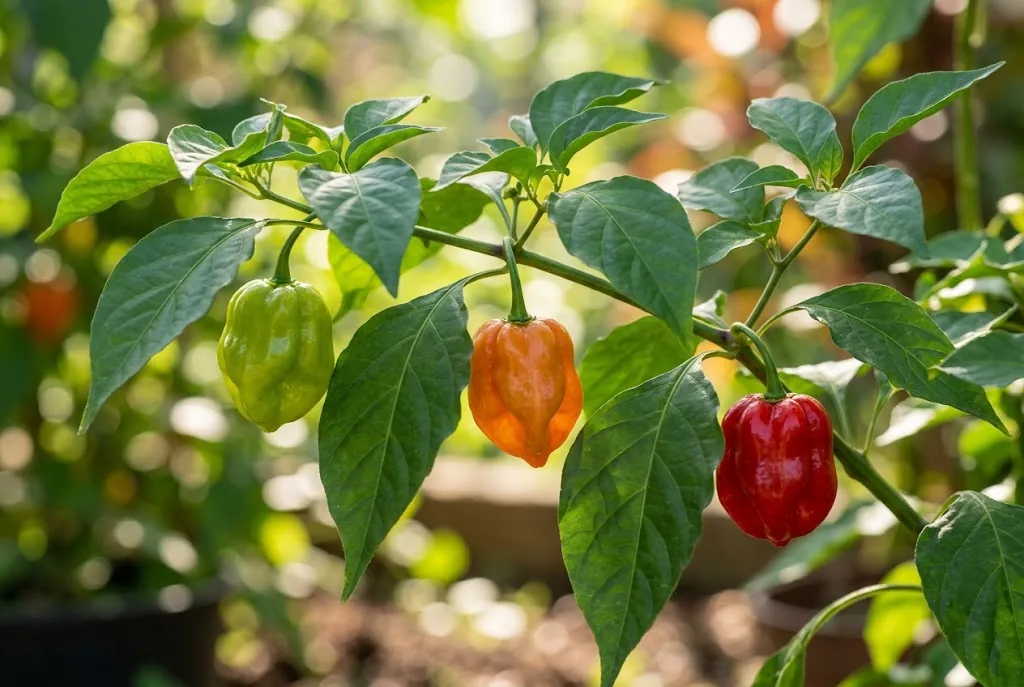
Botanically, ají dulce belongs to the chinense group, distinct from common annuum cultivars and Peruvian baccatum peppers. Plants are warm-season shrubs with broad leaves and small white flowers. Height, fruit set, and pod form vary by seed line and growing conditions.
The fruit exhibits distinct morphological traits:
- Shape and Dimensions: In shape and size, the fruit measures 1 to 2 inches (2 to 5 cm) across, showing a compressed, lantern-like form with three to five distinct lobes. The skins show a distinct wrinkle along each fold, and the lower walls taper slightly toward the blossom end.
- Color Development: Immature fruit starts pale green, shifting through chartreuse and warm orange before ripening to vibrant scarlet red.
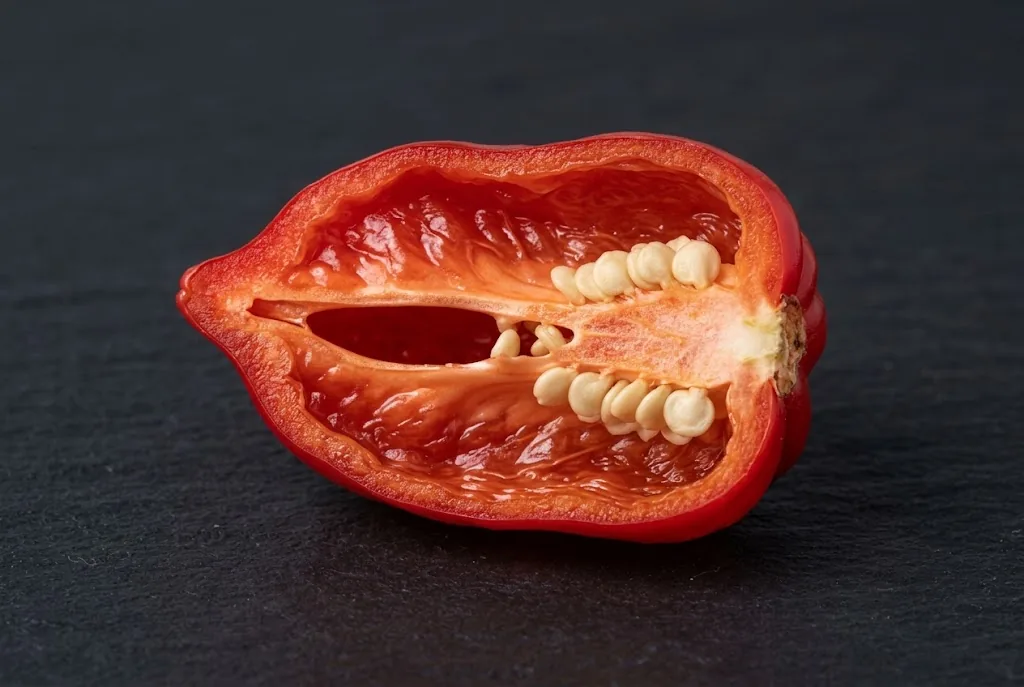
- Internal Structure: Slicing open the fruit reveals a central cavity with thin, crisp walls enclosing small clusters of cream-colored seeds attached to a pale placenta.
Puerto Rican research describes sweet chili pepper as a locally important crop, including landraces selected for mild flavor. Give plants full sun, warm conditions, and enough spacing for air movement.
Flavor Profile and Sweet Aromas on the Scoville Scale
The primary attraction of aji dulce peppers is their captivating sensory contrast. Slicing into a fresh pod releases an immediate burst of tropical perfume featuring sweet notes of apricot, melon, and citrus zest, accompanied by subtle smoky flavor and herbal fragrance. When eaten raw, the flesh offers a juicy, sweet taste, reminiscent of a fruity habanero pepper without capsaicin fire.
Ají dulce is generally mild, but a single Scoville range does not describe every regional landrace or commercial seed line. Taste a small piece before using a large quantity from an unfamiliar source. It stands out among mild chili peppers with big flavor because its fruitiness transforms grains and braises.
How to Grow Sweet Plants from Pepper Seeds
Growing these pepper varieties is straightforward for gardeners with a warm climate or sunny patio. Chinense pepper plants need a long, warm growing season, so early indoor preparation helps in cool regions. Check the seed supplier for the expected maturity period of your selection.
1. Starting Pepper Seeds Indoors
Sow heirloom pepper seeds indoors 8 to 10 weeks before your region’s average last frost date. Place seeds 1/4 inch deep in sterile seed-starting mix, keeping the soil consistently moist and warm. Fruition Seeds recommends about 85°F for its ají dulce selection and reports germination in 7 to 10 days under good conditions. Other seed lines can take longer.
2. Transplanting and Site Selection
After all danger of frost has passed and night temperatures stay above 55°F (13°C), begin hardening off young pepper plants. Choose a garden spot with full southern exposure offering at least 6 to 8 hours of direct daily sunlight. Plant in well-draining garden beds or 5-gallon containers filled with potting soil enriched with organic compost and a soil pH between 6.0 and 6.8. Gardeners who get these fragrant plants established in warm, sheltered locations enjoy productive pepper plants that are easy to grow all summer.
3. Watering and Feeding
Water deeply when the surface begins to dry, then let excess water drain freely. Mulch helps stabilize soil moisture. Follow the label directions for a balanced vegetable fertilizer and avoid excessive nitrogen once flowering begins.

Harvesting, Preserving, and Storing Fresh Peppers
While green fruit is edible and offers a bright, grassy crunch, waiting until the skins turn completely mature red or deep orange ensures peak sugar concentration and fuller fragrance. Use clean bypass pruners to snip fruit from branches, leaving a short stem attached.
Because heat varies by seed line, wash your hands after cutting and avoid touching your eyes until you know the batch. Store dry, unwashed peppers in a breathable container in the refrigerator and wash them just before cooking.
- Freezing Whole: Rinse, dry thoroughly, and freeze whole chilies in single layers on baking trays before bagging. Add frozen fruit directly into a simmering stew or soup pot.
- Making Flavor Cubes: Puree fresh pods with garlic, yellow onion, culantro, and parsley, then spoon into silicone trays and freeze for convenient meal preparation.
- Dehydrating for Paprika-Style Seasoning: Halve fruit, remove seeds, and dry it in a dehydrator according to the appliance instructions. Mill fully dry skins into a sweet spice powder with rich undertones.
- Light Pickling: Preserve whole fruit in a mild vinegar brine seasoned with coriander, whole black pepper, and fresh oregano for a vibrant garnish.
Where to Find Ají Dulce Peppers and What to Use Instead
To get ají dulce peppers fresh, start with Caribbean or Latin American grocers, regional farmers’ markets, and growers who sell seedlings or pepper seeds. Availability varies by season and location, so frozen chopped ají dulce can be a useful option for sofrito when fresh pods are hard to find.
If you need a substitute, a sweet bell pepper can provide bulk but not the same aroma. A small amount of habanero adds a related fragrance, but it also adds heat, so use it cautiously. For a mild sauce or stew, a sweet pepper is usually the better choice when heat is unwelcome.
Cooking with Cachucha Chilies in Traditional Recipes
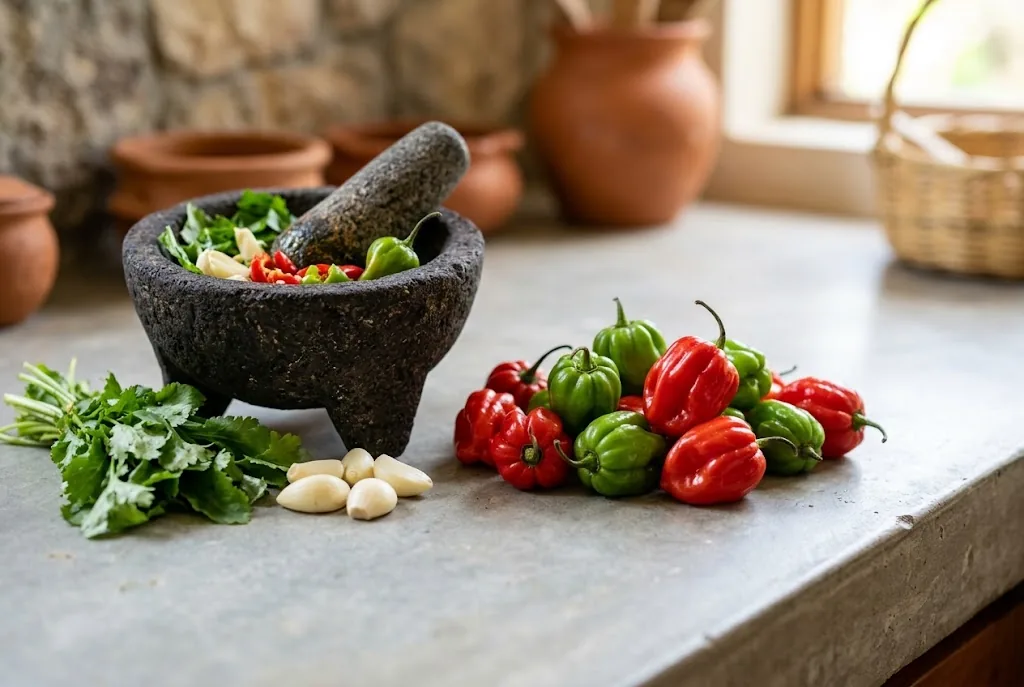
In the kitchen, this sweet chili is an all-purpose aromatic flavor builder. Often called ajicito in community markets, it imparts deep herbal warmth without spiciness. Unlike fiery peppers like habaneros or spicy Scotch bonnet peppers, which must be measured cautiously to prevent overpowering a pot, cooks can incorporate generous handfuls of diced sweet fruit without fear of scorching a recipe.
Classic ways to cook with this variety include:
- Traditional Island Flavor Paste: Mince a dozen sweet fruit with diced onion, garlic, and fresh recao. Saute this fragrant mixture in olive oil before adding rice, beans, or braised poultry.
- Hearty Soups and Sauteed Vegetables: Toss diced fruit into black bean soups, lentil pots, or sauteed vegetables to impart rich island character.
- Table Sauces and Marinades: Blend raw fruit with lime juice, garlic, cilantro, and olive oil to create a vibrant dipping sauce for grilled seafood and roasted meats.
- Roast Pepper Relish: Lightly roast whole fruit over a hot skillet to blister the skins, then chop with sea salt and vinegar for an authentic Cuban table relish.
Whether you cultivate your own garden bushes from seed or source fresh pods locally, ají dulce chilies provide an essential gateway into authentic Caribbean cooking.
