
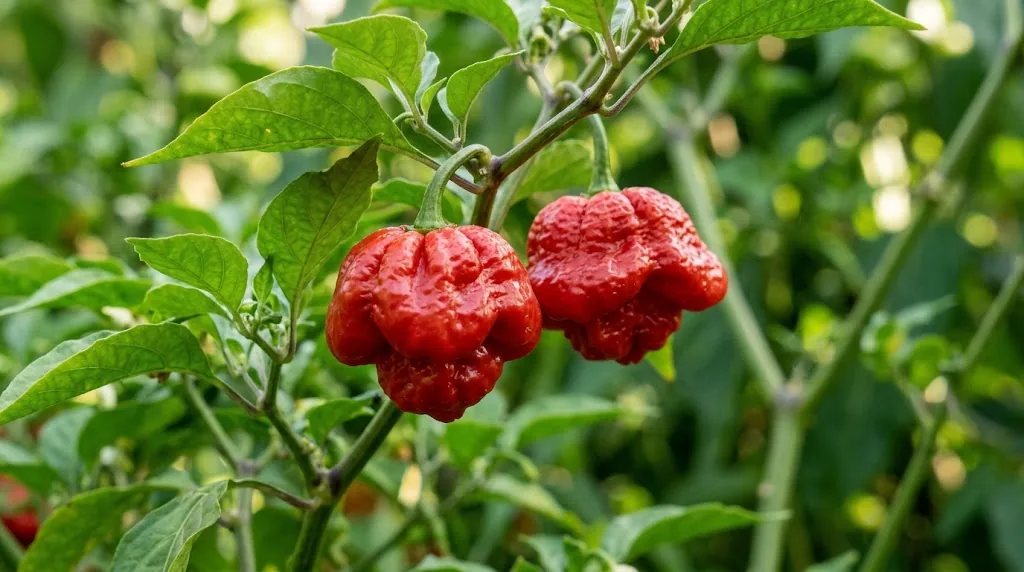
Scotch bonnet peppers (Capsicum chinense) are squat, wrinkled chilies shaped like a tam o’shanter, the Scottish wool bonnet that gives them their name. They sit in the same species as habaneros, share much of the same heat, and run roughly 100,000 to 350,000 Scoville heat units. The flavor lands fruity, floral, and slightly sweeter than a typical habanero, which is why island cooks prize them for jerk marinades, pepper sauce, and slow-cooked one-pot dishes where the fruit should come through, not just the burn.
Outside the islands, Scotch bonnets used to be hard to find in US grocery stores. They are easier to source now through Latin and Caribbean markets, online seed catalogs, and specialty produce shippers, and they grow well in most of the southern United States and in containers further north. This page covers what a Scotch bonnet actually is, how hot it gets, how to grow it at home, and how it works in island cuisine. A single Scotch bonnet pepper weighs only a few grams, but a quarter of one is enough heat for a dish that feeds four.
Origin and history
The Scotch bonnet belongs to Capsicum chinense, the species that also holds the habanero and many of the world’s super-hot peppers. According to the species overview, Capsicum chinense traces back to the tropical Amazon basin and spread through the Caribbean. Today Scotch bonnets are best known from Jamaica and Trinidad, and they are also grown in West Africa and Sri Lanka.
The name comes from the pod’s supposed resemblance to a tam o’shanter. Other names include Bonney peppers and Caribbean red peppers, and Central American growers call it the Panamanian pepper, as the Scotch bonnet entry notes. In Jamaica it anchors jerk chicken, curry goat, escovitch fish, and rice and peas, where the whole pod perfumes the pot without being eaten.
Botany and technical facts
The Scotch bonnet plant is a bushy shrub, typically 60 to 120 cm (about 2 to 4 ft) tall. In frost-free climates it lives for several years as a perennial, while in cooler regions it is grown as an annual because it will not survive winter. Leaves are broad, slightly fuzzy, and medium green. Flowers are small, white to greenish, and appear singly or in small clusters at the branching points. The plant sets fruit continuously through warm weather and pauses in cool spells.
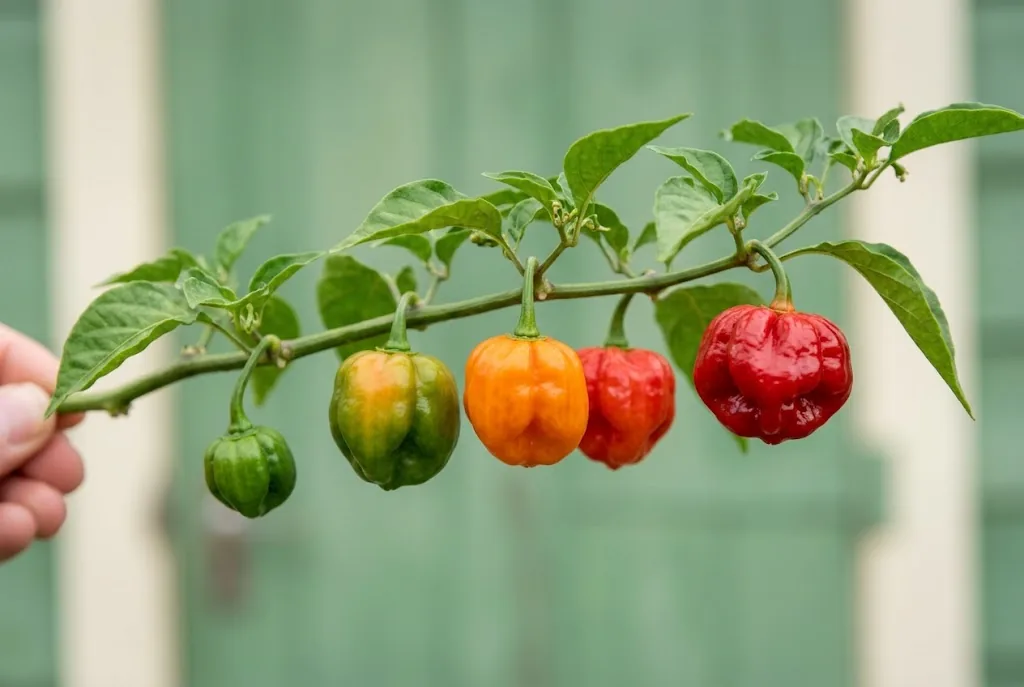
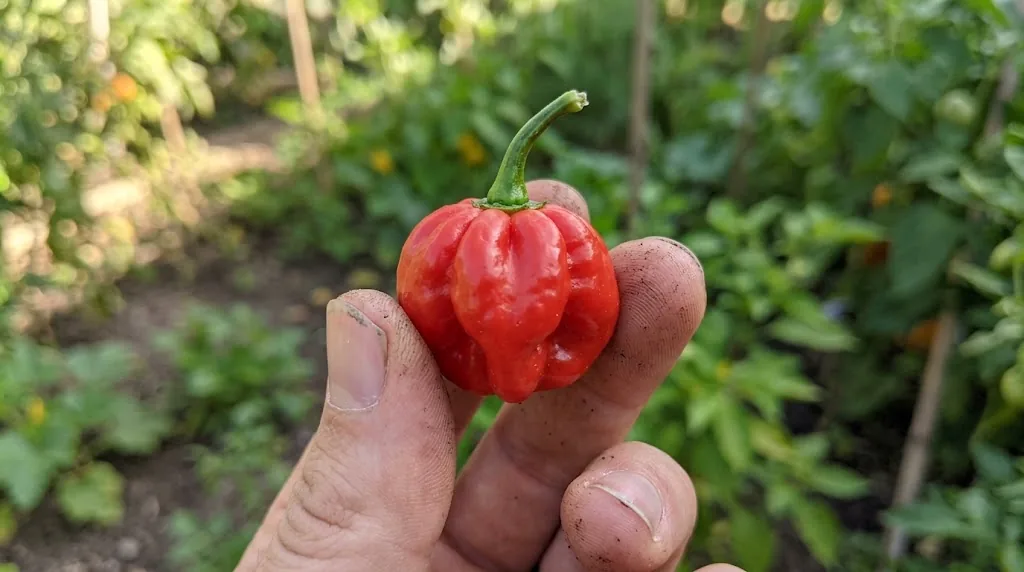
The pods are what give the variety its name. A mature pod is squat and wide, around 2.5 to 4 cm across and roughly the same in height, with a flattened bottom and a pinched top. The skin is wrinkled and slightly waxy, not smooth like a bell pepper. Ripe color depends on the line: yellow, orange, and red are the most familiar, and a chocolate-brown form is often described as slightly hotter and earthier. A sweet, mild cousin called cachucha grows on some Caribbean islands.
How it differs from a habanero
The two peppers are the same species, so the differences are landrace rather than species-level. Habaneros are usually longer, more lantern-shaped pods, while Scotch bonnets are squat and bonnet-shaped. Their heat ratings overlap heavily, and so does their flavor, though Scotch bonnets tend to taste a little fruitier and less citrusy. A deeper head-to-head sits on the habanero versus Scotch bonnet page.

Heat and flavor
Scotch bonnets run from about 100,000 to 350,000 SHU, which puts them level with their close cousin, far above jalapeños (roughly 2,500 to 8,000 SHU) and well below super-hots like the Carolina Reaper. On the Scoville scale they sit firmly in the upper-middle band. Individual pods vary with variety, growing conditions, and ripeness, so treat any single pod as a range, not a promise.
Beyond the burn, the flavor matters. Tasters usually describe Scotch bonnets as tropical, slightly sweet, and floral, with a perfume-like note that comes through clearly in cooked dishes. That character holds up in fermented hot sauce and in slow-cooked bean dishes where plain cayenne would just taste hot. Green pods are just as hot as ripe ones but taste grassier, with the full aroma arriving at mature color.
Wear disposable gloves when you cut fresh pods, and keep your hands away from your face. The Kitchn’s tests of hot pepper hand remedies found that oil and dish soap help dissolve the capsaicin, and that flushing eyes repeatedly with warm water is the thing to do if pepper oil gets in them. For a deeper primer on what makes chilies hot, see the capsaicin page.
Germination and growing
Scotch bonnets are warm-season peppers and behave like other Capsicum chinense varieties: slow to start, slower than a jalapeño, but vigorous once nights stay warm.
Starting seeds
Sow indoors 8 to 10 weeks before your last expected frost. Seeds often take 7 to 21 days to germinate at soil temperatures of 27 to 32 degrees C (about 80 to 90 degrees F), and a heat mat makes a real difference. Plant seeds 6 mm (a quarter inch) deep in a sterile seed mix, keep the surface moist but not soggy, and give seedlings strong light as soon as they emerge. For a deeper walkthrough, see the chili seed-starting timing guide.
Transplanting and site
Harden seedlings off for 7 to 10 days before moving them outside. Plant out only when nights are reliably above 13 degrees C (55 degrees F). Scotch bonnets like full sun, well-drained soil with plenty of organic matter, and a pH around 6.0 to 6.8. Space plants 45 to 60 cm (18 to 24 in) apart so air can move between them, which cuts down on fungal problems in humid weather.
In containers, choose a pot at least 30 cm (12 in) wide with several drainage holes. A quality peat-free potting mix amended with compost and a little perlite works well. Water when the top 2 to 3 cm of soil feels dry, and feed every two weeks with a balanced liquid fertilizer during vegetative growth, switching to a lower-nitrogen, higher-potassium feed once flowering starts. For more on container growing, see the chili container guide.
Common problems
Aphids, spider mites, and whiteflies are the usual pests. Cutworms can take young transplants at the soil line. Diseases include bacterial leaf spot and anthracnose on ripe pods in wet weather, so water at the base of the plant and space plants for airflow. Blossom drop usually points to temperature stress (above 32 degrees C / 90 degrees F or below 16 degrees C / 60 degrees F) or to inconsistent watering. A focused list of problems and fixes sits on the chili plant diseases page.
Days to harvest depend on climate, but most plants start producing ripe pods about 90 to 120 days after transplanting, with steady production through warm weather.
Harvest and handling
Pick pods when they reach full size and the right color for the line: yellow, orange, red, or chocolate brown. Pods continue to ripen off the plant, but flavor is best when they ripen on the vine in warm sun. Cut pods off with pruners or scissors rather than pulling, since the stems are brittle and a hard pull can snap a branch.
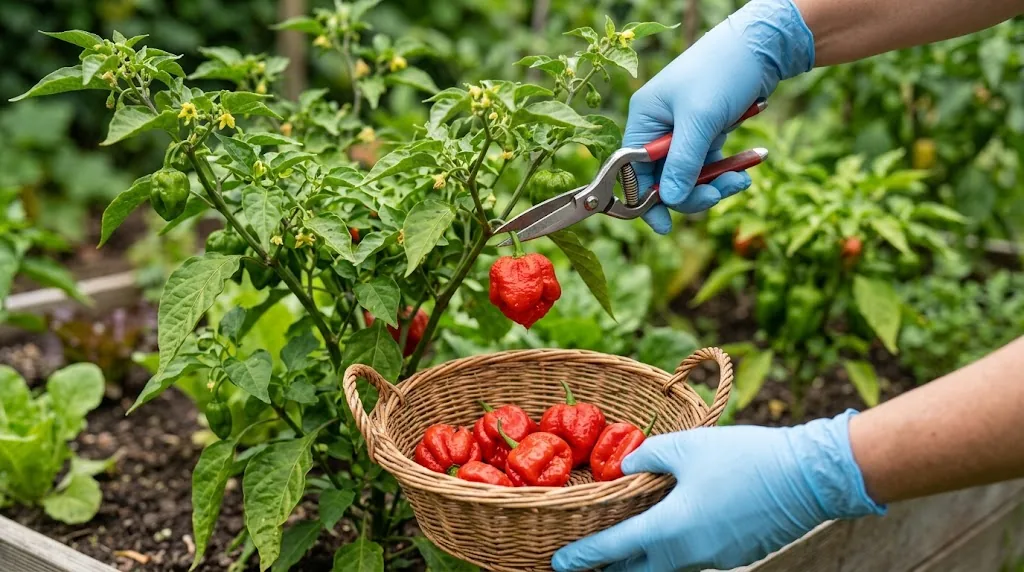
Wear nitrile or latex gloves when picking, slicing, or deseeding. Capsaicin is the same compound whether the pod is ripe or green, so unripe pods are just as hot. If you handle them bare-handed, wash with dish soap and cool water, and do not touch your eyes or contact lenses until your hands are thoroughly clean.
For most kitchen work, slice the pod in half lengthwise, scrape out the pale pith and seeds with a small spoon, and use the flesh. The seeds carry some heat but little flavor, so many cooks discard them. The pith, the white membrane holding the seeds, carries most of the capsaicin and stays in for many jerk and curry preparations.
Storing, drying, and preserving
Fresh ripe Scotch bonnets keep in a paper bag in the refrigerator for 1 to 2 weeks, longer if the pods are firm and unwashed. For longer storage, choose your method based on how you want to cook with them later.
Drying pods on a screen or in a dehydrator
Air-dry whole pods on a screen in a warm, ventilated spot for 1 to 3 weeks, or use a dehydrator at 50 to 60 degrees C (120 to 140 degrees F) for 6 to 12 hours until brittle. Fully dried pods keep in an airtight jar in a cool, dark cupboard for a year or more, and they rehydrate in warm water for one-pot dishes and curries. The dedicated drying guide walks through air, oven, and dehydrator methods.
Freezing whole and chopped pods
Whole pods freeze well with no pre-cooking. Wash and dry them, lay them on a tray to freeze individually, and then bag them. Frozen pods lose their crisp texture but keep most of their heat and flavor for cooked dishes, and they grind cleanly into paste right from the freezer.
Pickling and making pepper sauce
Pickled Scotch bonnets are an island staple. Pack clean pods into a jar with a hot vinegar brine (about half water, half white vinegar, with a tablespoon of salt per cup), seal, and keep the jar in the refrigerator. If you want shelf-stable jars, follow a tested recipe from a source such as the National Center for Home Food Preservation rather than improvising. Pepper sauce blends fresh pods with vinegar, salt, and sometimes onion, carrot, or mango, and fermented versions develop a deeper, rounder flavor over 1 to 3 weeks at room temperature. The hot sauce guide covers the basics.
Hanging pods as a ristra
Where late-season pods come in faster than you can cook them, string them by the stems onto sturdy twine and hang the ristra in a dry, airy spot. The pods dry slowly while staying intact, and a ristra in the kitchen keeps dried pods within reach for months.
Culinary uses
Scotch bonnets are commonly blended into jerk marinades, pepper sauces, soups, stews, and curries. A classic jerk marinade combines the pods with scallions, thyme, allspice, ginger, and soy, massaged into pork or chicken before grilling, traditionally over pimento wood. The same pods flavor brown stew chicken and curry goat, and they season the peppered shrimp and fried fish escovitch that show up on Jamaican tables.
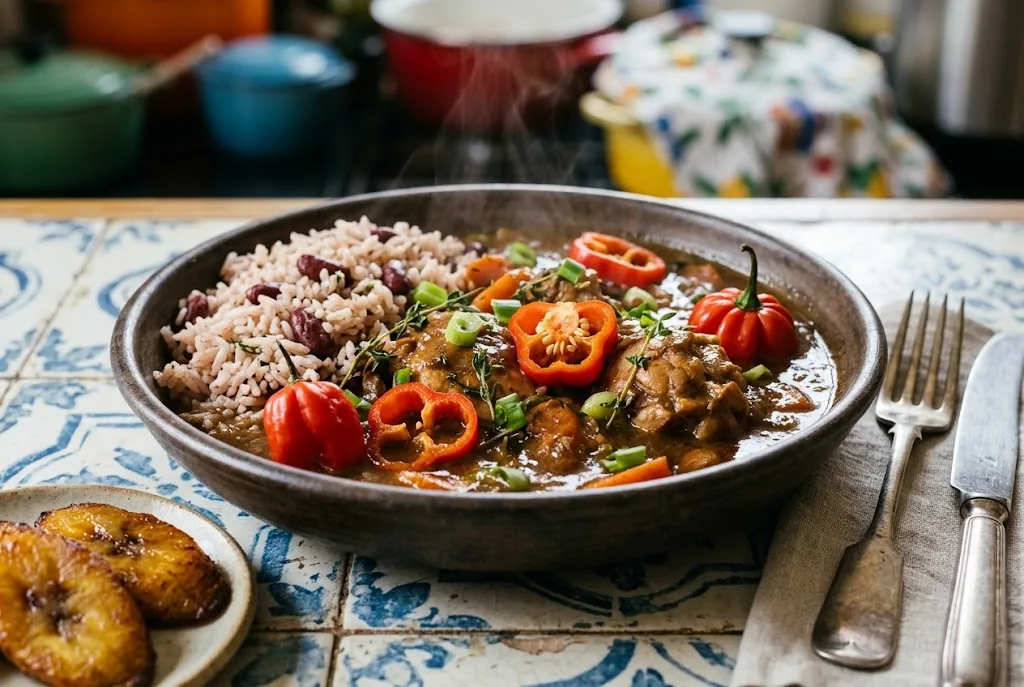
Outside the islands, Scotch bonnets work anywhere you want a tropical, floral heat with more depth than a generic cayenne. A single minced pod lifted into a pot of beans or lentils adds heat and an aroma that holds through long cooking. Drop a whole pod into a pot of rice and peas, then lift it out before serving for flavor without the full burn.
For everyday cooking, start small. One quarter of a pod usually flavors a dish for four people, and a whole pod, seeds and all, is a serious dose. Taste as you go, because heat builds during cooking and often intensifies the next day. When a dish lands too hot, cooks commonly reach for yogurt or coconut milk, more starch such as rice, bread, or potato, or a small amount of acid. A clear explanation lives on the reducing-heat page.
A batch of pepper sauce keeps in the refrigerator for weeks and earns its place on eggs, grilled fish, and roasted vegetables. For a quick weeknight dish, halve and deseed a few pods, blister them skin-side down in a dry pan until charred, and stir them into a pan of rice or a bean dish at the end of cooking.
Quick buying and seed guide
When buying fresh pods, look for firm, glossy pods that feel heavy for their size, with a fresh green stem. Scotch bonnet skin is naturally wrinkled, so judge freshness by firmness and shine instead. Soft spots, dull skin, or a dried, brown stem mean the pod has been sitting. Heat varies by lot, so if you are heat-sensitive, start with a yellow or orange pod and work toward red and chocolate as you learn the variety.
For seed, buy from a reputable catalog that lists the species as Capsicum chinense and names the selection. Generic “bonnet pepper” seed can be a mixed bag of similar-looking types, so a named line from a specialist grower is the safer bet. For a wider look at what to plant alongside it, the chili varieties guide walks through heat and flavor profiles across the spectrum.
Common questions about Scotch bonnets
Is a Scotch bonnet hotter than a habanero?
Not reliably. Both are rated at roughly 100,000 to 350,000 SHU, so any difference comes down to the individual pod and how it was grown.
Can you get Scotch bonnets in the US?
Yes. Look in Caribbean and Latin markets, or grow your own from seed. Some stores label them as Caribbean red peppers.
What can you substitute for a Scotch bonnet?
The closest swap is its habanero cousin, which gives similar heat with a slightly more citrusy note. For a milder result with the same fruity character, use a sweet cachucha pepper.
Bottom line
Scotch bonnet peppers are the island cousin of the habanero: the same species, a distinct squat and wrinkled pod, and a range of ripe colors from yellow to chocolate brown. Heat runs about 100,000 to 350,000 SHU, and the flavor brings a tropical, floral note that ordinary cayenne cannot match. They grow like other Capsicum chinense plants: a long warm season, full sun, steady water, and patience. In the kitchen they anchor jerk, pepper sauce, and brown stew, and they earn a small role in any dish that needs heat with depth.
If you want to grow one hot pepper at home and have a long enough warm season or a big enough container, the Scotch bonnet is a strong pick. It is not the hottest in the world and not the easiest to germinate, but it turns a simple pot of beans or a plate of grilled fish into something memorable.
For a closer look at the Scotch bonnet’s relative, the habanero peppers page is the next natural stop after this one.
