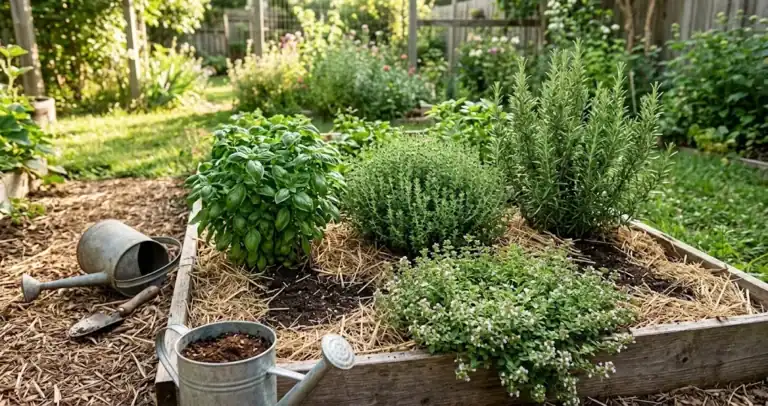
White horehound rewards home gardeners with resilient, aromatic foliage that carries a distinctive bitter-sweet flavor. Known botanically as Marrubium vulgare, this hardy perennial from the mint family has served traditional apothecaries for centuries. Whether you sow seeds in spring or take a stem cutting from an established stand, knowing how to store horehound correctly ensures that its volatile oils, aromatic resins, and active bitter principles remain potent all winter long.
Proper storage begins the moment stems leave the garden. Freshly cut leaves and stems lose their aromatic qualities rapidly when exposed to excessive heat, dampness, or direct sunlight. By drying sprigs thoroughly and keeping cured leaves in an airtight container, you preserve the natural qualities that make this bitter crop famous for easing a dry cough and soothing a sore throat with comforting infusions.
How to Harvest and Store Horehound for Maximum Potency
Before preserving your gathered stems, inspect every branch carefully to guarantee high quality. If you recently completed harvesting your horehound, gently shake the foliage outdoors to dislodge any visiting garden insects, dried garden soil, or fallen debris. Avoid washing whole branches under running water unless they are visibly muddy, because excess surface moisture invites mold during the curing phase. If rinsing is necessary, pat the foliage dry with clean kitchen towels before proceeding.
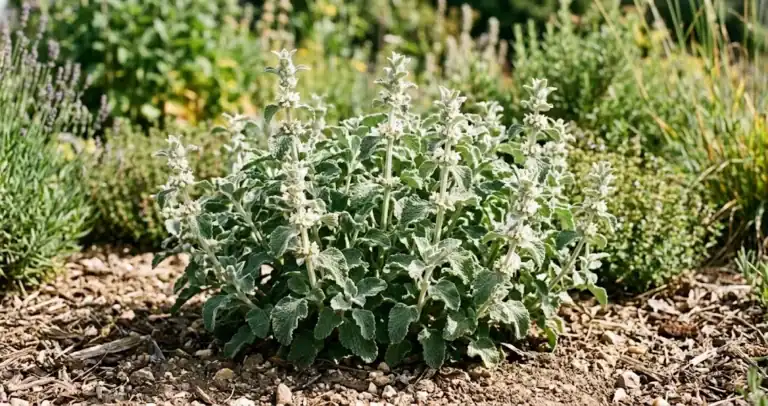
Sort through your cuttings and strip off any discolored or damaged foliage near the base of the stems. In home gardens, horehound grows into a bushy mound that reaches twelve to eighteen inches tall and can naturalize readily in gravelly rockeries. The most flavorful parts of the horehound plant are the top third of the vegetative growth, especially tender leaves and flowers gathered just as each small white flower emerges in late summer. These clusters of small white flowers and flowering tops hold the highest concentration of bitter marrubiin, the active chemical prized by any traditional herbalist.
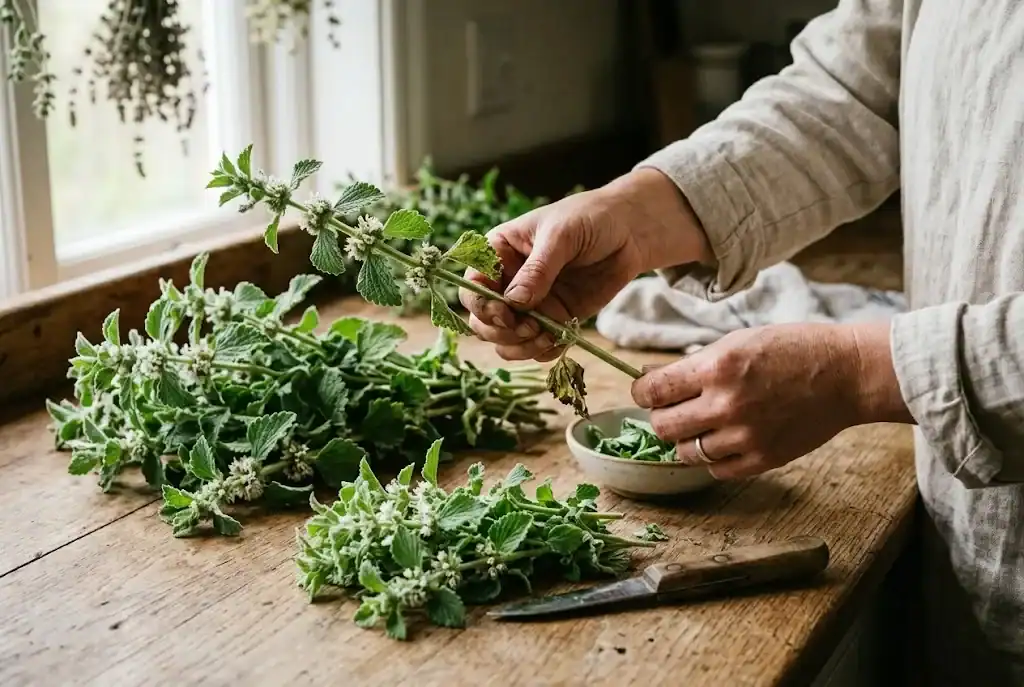
When you grow horehound in lean, well-drained soil without rich fertilizer, the plants thrive in rocky ground and develop compact, woolly foliage that naturally resists evaporation. If you cut the plant back during flowering, the roots produce vigorous regrowth before autumn dormancy. Take advantage of that compact leaf structure by handling sprigs gently. Bruising the fresh foliage prematurely releases delicate aromatics before the plant cures, leaving you with less flavorful dried horehound later on.
Drying Methods: Air-Drying Stems vs. Dehydrator Trays
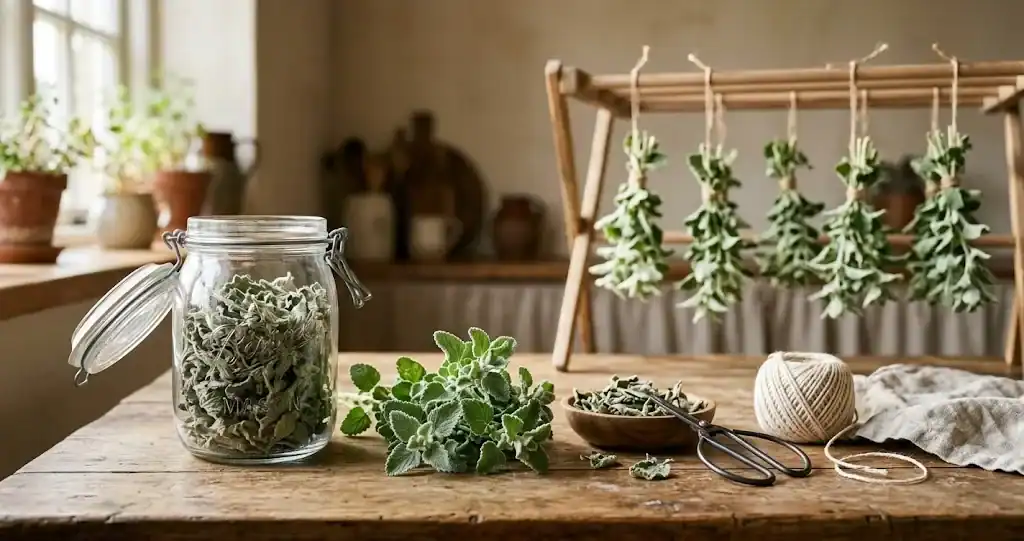
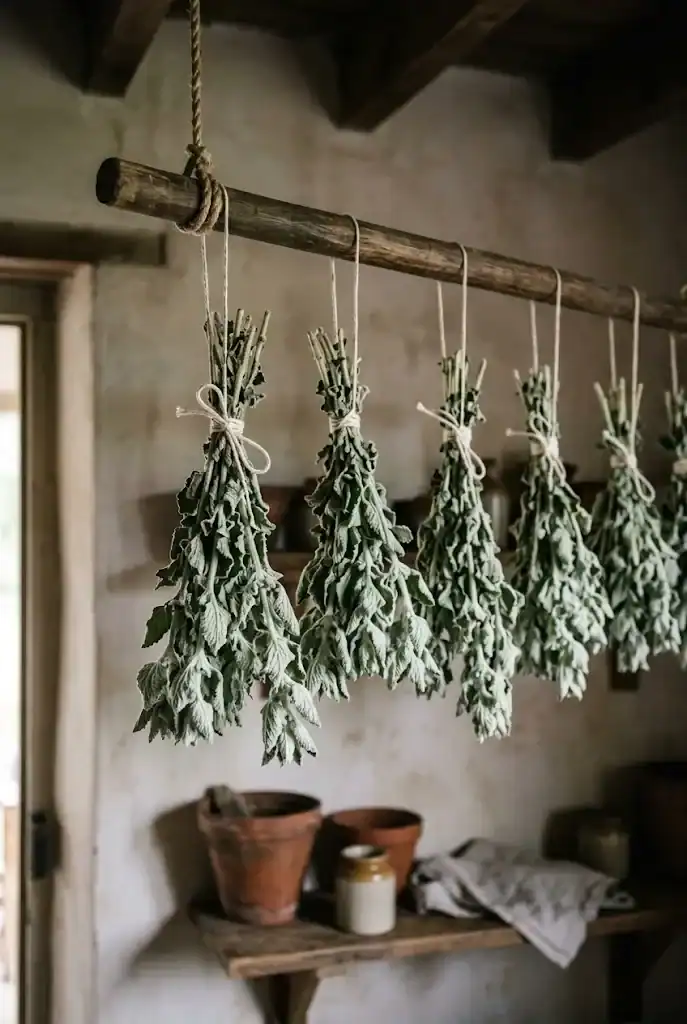
Air-drying is the classic, time-tested approach for preserving this botanical native to Europe, northern Africa, and parts of Asia. While horehound prefers full sun in the garden, drying sprigs requires total darkness. Tie four to six stems together at the cut ends using sturdy cotton kitchen twine. Keep the bundles small so air circulates freely around each leafy branch. Hang the bundles upside down in a warm, dark, dry location with steady airflow, such as a ventilated pantry or attic. Avoid hanging plants in humid kitchens or bright sunrooms where heat and ultraviolet light bleach the gray-green foliage.
Depending on ambient humidity, bundle hanging takes between seven and fourteen days to finish. Gardeners looking for broader advice on preserving seasonal garden yields can explore herb harvesting and drying fundamentals across different plant families. You will know air-drying is complete when the leaves crumble easily between your fingers and the central stem snaps cleanly rather than bending with pliable moisture.
An electric food dehydrator provides precise temperature control, especially in damp climates where mold risks run high. Lay the stems in a single layer across dehydrator mesh trays, ensuring leaves do not overlap heavily. Set the machine to a low temperature between 95°F and 105°F (35°C to 40°C). Drying at this gentle heat preserves delicate oils without cooking the foliage. Check the trays after three to four hours. Most batches dry crisp within four to six hours.
Whichever method you choose, never dry horehound in a domestic kitchen oven. Even at their lowest settings, standard household ovens generate excessive heat that cooks out delicate flavor compounds, darkens the foliage, and degrades the natural bitter resins that give this botanical its therapeutic value.
Optimal Storage Containers and Pantry Conditions
Once drying is finished, strip the crispy leaves and flowers from the woody stems. Discard the fibrous stems or add them to your compost pile, retaining only the clean dried foliage. Keep the dried leaves in whole form whenever possible. Crushing leaves into a fine powder increases surface area and accelerates oxidation, leading to a flat aroma and shorter storage life.
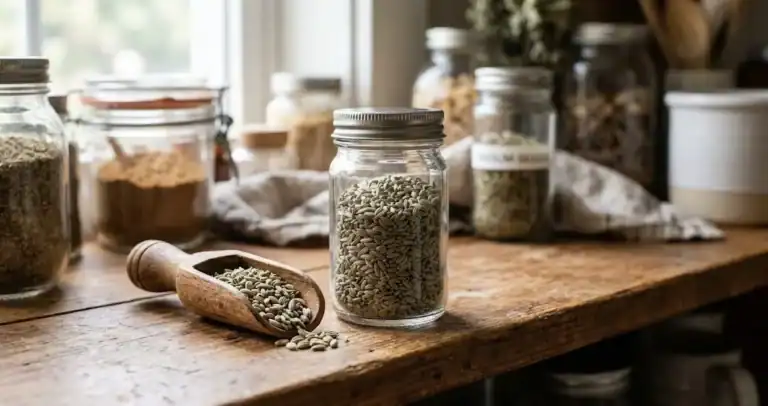
Pack the dried material gently into clean, dry glass jars fitted with airtight rubber gaskets or tight-fitting screw lids. Glass canning jars are ideal because they do not absorb essential oils or leach synthetic odors into your dried stock. Label each jar clearly with the botanical name, harvest date, and batch notes so you can monitor your supply across the year.
Store your sealed jars in a dark cabinet, closet, or pantry where temperatures remain consistently cool, ideally between 55°F and 68°F (13°C to 20°C). Moisture, warmth, and ambient light are the chief enemies of preserved botanicals. Following practical growing tips and dark storage habits ensures that your whole dried horehound maintains excellent aroma, bitterness, and infusion strength for twelve to eighteen months.
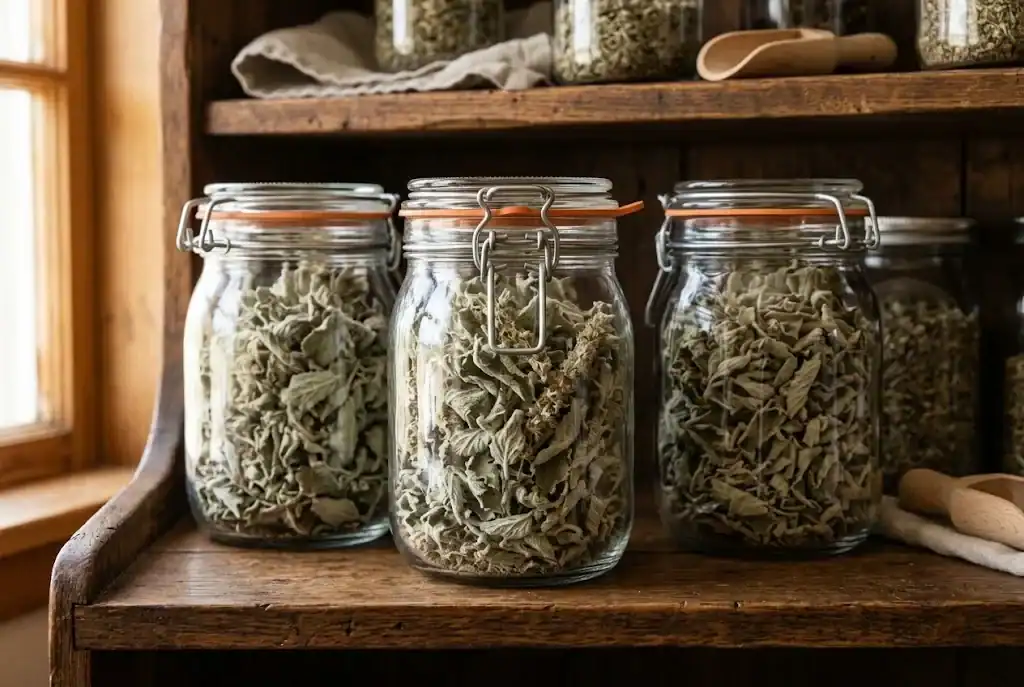
During the first two weeks of storage, practice conditioning by inspecting your jars daily. Shake each jar lightly and examine the interior glass walls. If you notice any fogging, droplets, or condensation, the contents still hold residual moisture. Empty the contents immediately back onto dehydrator trays or drying screens for another day of drying before resealing the container.
Preserving Horehound in Syrups, Tinctures, and Infused Honey
Beyond whole dried leaves, traditional preparation methods include shelf-stable liquid extracts that concentrate the characteristic flavor of Marrubium vulgare. A strong decoction made from dried leaves used to make teas can be simmered with raw honey or sugar to create a soothing syrup to relieve a stubborn cough. Once strained and poured into sterilized bottles, homemade syrup keeps well in the refrigerator for three to four weeks, or can be frozen in silicone ice cube trays for convenient single-portion use.
For an alcohol-based extraction, place one part dried plant material into a clean glass jar and cover it with five parts high-proof neutral spirit (such as 80-proof to 100-proof vodka). Seal the jar tightly and store it in a cool, dark cupboard for four to six weeks, shaking the mixture every couple of days. Strain the liquid through a fine mesh strainer and coffee filter into amber glass dropper bottles. Stored away from direct light, an alcohol tincture remains shelf-stable for up to five years.
Infusing raw local honey with dried leaves offers another tasty technique. Warm raw honey gently over a double boiler, stir in chopped leaves, simmer gently, and then remove from heat to steep for two hours. Strain while still warm and store in a clean jar at room temperature for up to one year. Readers interested in confection techniques can explore making horehound syrups and hard candies, which traditionally rely on concentrated decoctions and a candy thermometer boiled to the hard crack stage. This syrup is used to make cough drops that harden reliably into a soothing throat lozenge.

Traditional Herbal Uses, Active Compounds, and Safety
White horehound holds a celebrated place among classic medicinal herbs. According to research summaries published by Utah State University Extension, gardeners have grown this sturdy plant for centuries as a folk remedy to soothe throat irritation and support seasonal wellness. To preserve these traditional botanical benefits, protect your stored jars from light and heat. The plant flowers reliably in its second year, providing abundant foliage for tea blends and traditional bitter tonics.
The characteristic bitter taste stems from marrubiin, a labdane diterpenoid studied in peer-reviewed pharmacological investigations available through PubMed Central. In laboratory and botanical evaluations, marrubiin and its derivatives show notable expectorant, antispasmodic, and mild antiinflammatory properties that may help thin airway mucus and ease respiratory conditions or seasonal bronchitis discomfort. Historically, traditional horehound uses also included light bitter infusions to settle an occasional upset stomach or make a soothing warm poultice.
While culinary beverage brewing and occasional horehound candies are generally recognized as safe for healthy adults, concentrated preparations require sensible care. Pregnant and nursing individuals should avoid large therapeutic doses of horehound, as uterine-stimulating actions have been documented in traditional literature. Furthermore, individuals taking blood pressure medications should consult their physician before using concentrated extracts. Always seek professional healthcare advice if symptoms persist, worsen, or include a high fever.
Frequently Asked Questions About Storing Horehound
Can you freeze fresh horehound leaves?
Freezing fresh leaves directly in freezer bags is generally not recommended because the woolly foliage turns dark, mushy, and watery upon thawing. If you wish to freeze the plant, brew a concentrated botanical decoction, pour the cooled liquid into ice cube trays, freeze solid, and transfer the cubes to an airtight freezer bag for up to six months.
How do you tell if your preserved herb has gone bad?
A properly dried herb should maintain a dusty gray-green color and a sharp, minty-bitter fragrance. If the leaves turn dull brown, smell musty or sour, or show any signs of white powdery mold, discard the entire batch. A loss of bitterness and aroma simply means the dried material is old and has lost its volatile oils, making it ineffective for flavorful infusions.
Should I store horehound as whole leaves or crushed flakes?
Always store your harvest in whole leaf form inside sealed glass jars. Crushing leaves breaks open cellular glands and exposes volatile oils to oxygen, degrading the flavor within a few months. Crush or crumble only the small portion you intend to steep immediately before brewing your tea or preparing a batch of herbal confections.