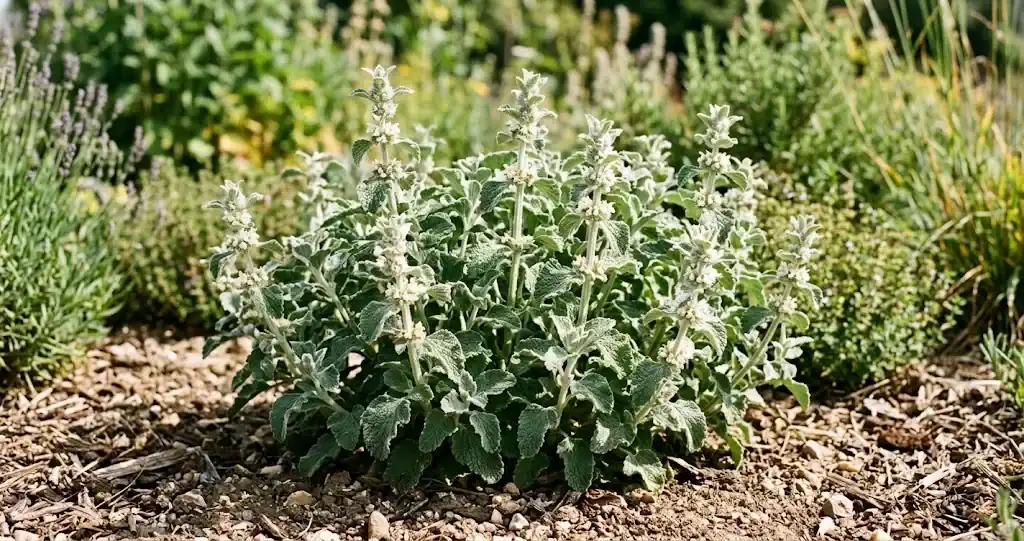
White horehound is one of the most durable traditional medicinal herbs in Western botanical history. Belonging to the mint family, this rugged perennial herb produces wrinkled gray foliage cloaked in soft hairs, creating a distinct woolly texture. For generations, gardeners have cultivated the horehound plant in domestic plots for practical herbal wellness, gathering its tender leaves and flowers as a traditional expectorant in folk herbalism.
Understanding the exact techniques for gathering this hardy species ensures that your cut stems carry their full profile of essential oils and bitter principles. If you trim branches when damp or too late in autumn, the leaves lose their aromatic punch and turn prone to mold. For gardeners seeking broader field techniques across garden plantings, a fuller guide to harvesting herbs provides foundational advice on seasonal garden collection.
This practical growing guide outlines optimal gathering windows, clean trimming methods, and dependable storage practices so you can harvest horehound with confidence.
When to Harvest Horehound for Maximum Potency
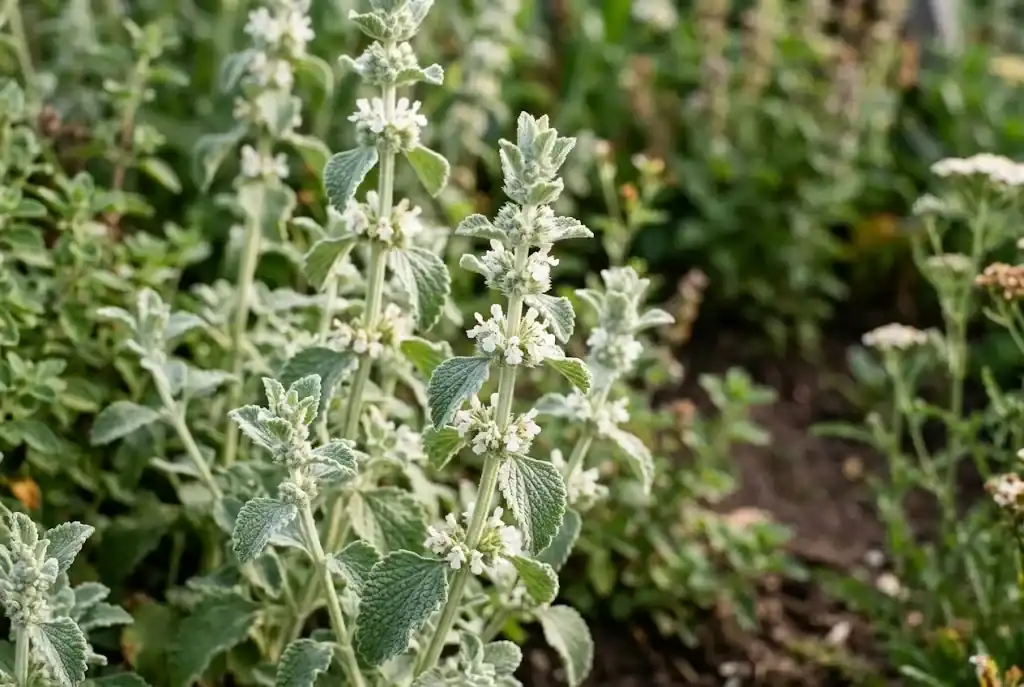
Careful timing determines the quality of your gathered foliage. Botanically identified as Marrubium vulgare, the species develops peak levels of marrubiin, the bitter diterpene credited with its therapeutic qualities, just as the small white blossoms emerge. In temperate zones, this initial flowering surge typically arrives from late spring into mid-summer.
As lower stems turn woody with advancing maturity, the tender upper shoots remain succulent and rich in aromatics. Always wait until morning dew has fully evaporated from the foliage before clipping. Trimming wet leaves invites fungal spore development during post-collection curing. However, complete your gathering before midday heat warms the garden, since strong sunlight can volatilize delicate aromatic terpenes and degrade potency.
A plant’s maturity also dictates harvesting decisions. During its first season following seed starting or transplanting, common horehound directs its energy into root establishment. An attentive gardener should clip sparingly in year one, taking only modest samples. Once specimens enter their second year, they produce vigorous branch clusters, allowing two or three substantial pickings across the season.
Tools and Preparation for Cutting Horehound
Proper equipment protects plants from tissue bruising and keeps gathered foliage pristine. As stems mature, their lower sections develop woody bark, making sharp tools indispensable.
- Sharp pruning snips: Clean cuts close cleanly and prevent stem crushing.
- Disinfectant wipes or alcohol: Sanitizing blades between plants halts the spread of garden pathogens.
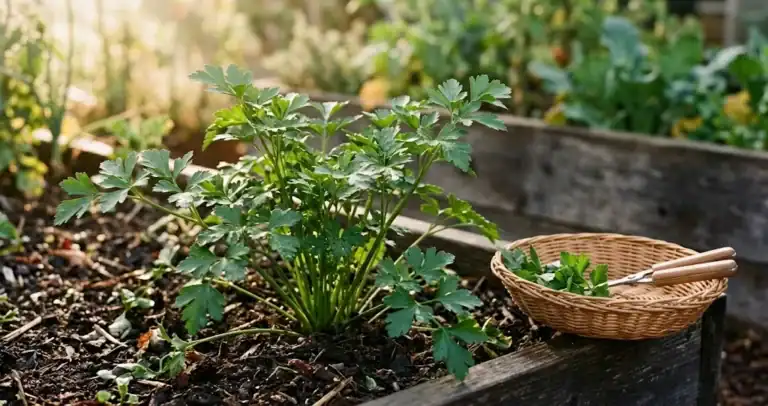
- Shallow garden basket: Laying stems loosely in a ventilated basket prevents heat buildup and wilting.
- Light work gloves: While this species has no thorns, its textured leaves and intensely bitter sap can leave a stubborn film on bare fingers, and its lingering bitter taste can transfer to food.
Examine your planting prior to clipping. Select healthy branches free from dust, insect webs, or powdery mildew. Removing flawed sprigs at the garden bed saves sorting effort during dehydration.
Step-by-Step Instructions: How to Harvest Horehound
Harvesting horehound requires targeted pruning rather than mowing the entire bush flat. Selective pruning maintains specimen vigor and stimulates rapid regrowth.
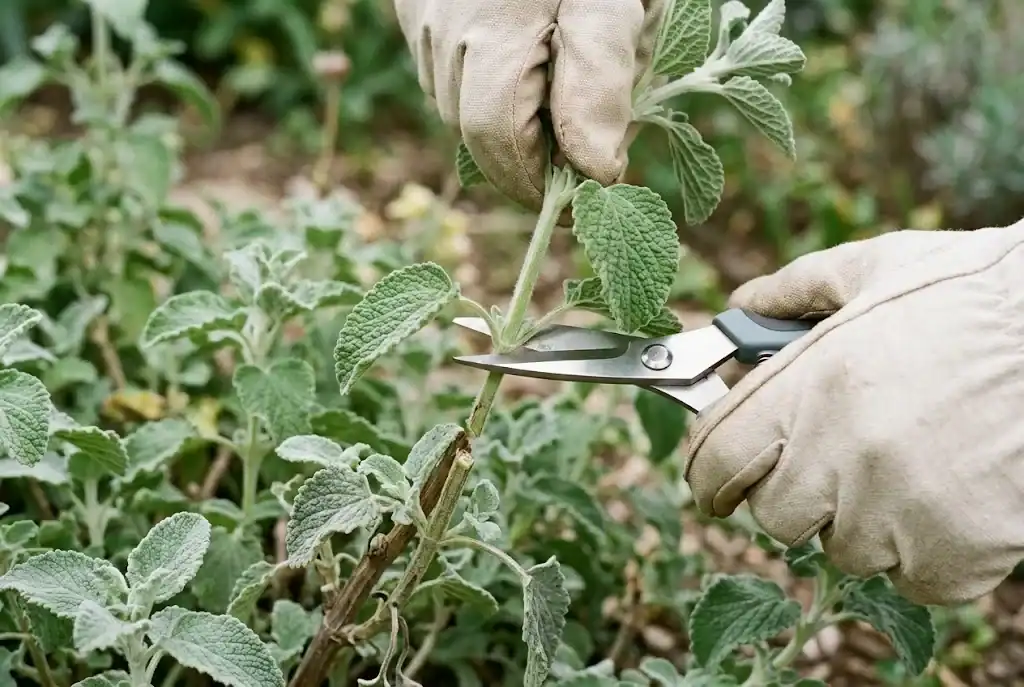
- Identify tender growth: Focus on the top four to six inches where leaves remain supple and flower buds are just swelling.
- Make angled cuts above leaf nodes: Slice stems cleanly one-quarter inch above a healthy pair of leaves. This pruning spurs dormant lateral buds into new growth for mid-season collection.
- Protect the basal crown: Never cut into the thick base of the plant. Coarse lower stems do not regenerate readily if sheared too close to root level.
- Observe sustainable cutting limits: Never remove more than one-third of total leafy volume during a single cutting session. Leaving ample foliage allows the plant to photosynthesize and replenish its crown.
Keep gathered stems in the shade while finishing yard tasks. Avoid washing fresh leaves under water unless heavily coated with soil splash, as excess moisture complicates drying.
Drying and Handling Your Harvested Leaves
To harvest and store your bounty effectively, prompt drying is essential. The wrinkled leaves can harbor pockets of moisture, so adequate airflow is vital.
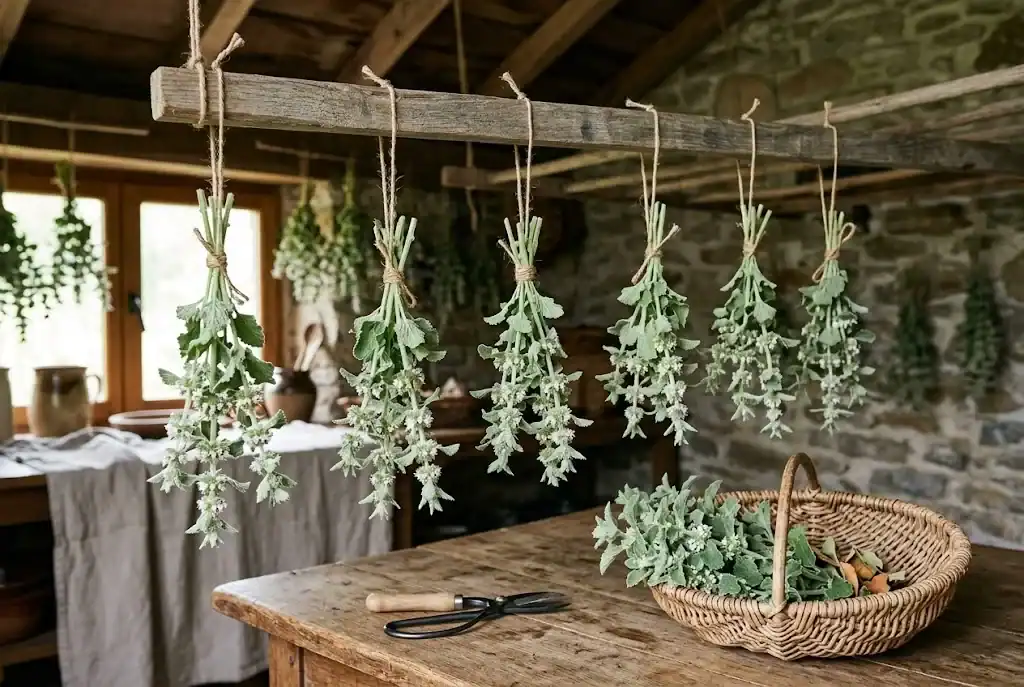
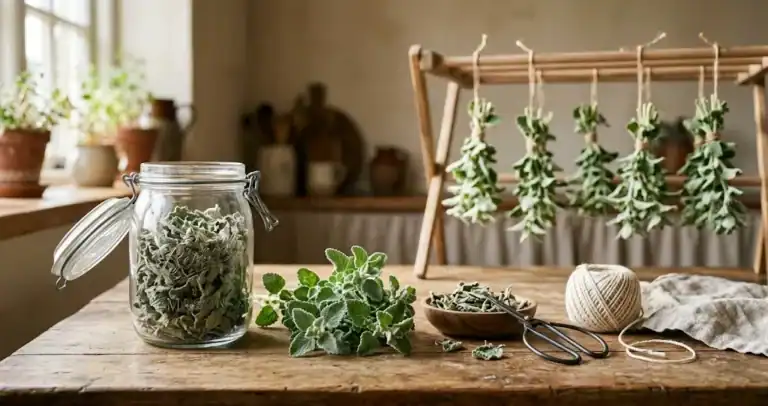
You can bundle four to six sprigs with cotton string and hang them upside down in a warm, dry room out of direct sunlight. Alternatively, lay separated sprigs in single layers on mesh drying racks. If utilizing a food dehydrator, keep the heat low, between 95 and 105 degrees Fahrenheit, to dry the tissue without scorching active botanicals.
When stems snap crisply and foliage crumbles between your fingertips, the dried horehound is ready for packaging. Strip foliage from brittle stems and store in an airtight container away from heat. For comprehensive guidance on container selection, cellar storage, and shelf stability, review how to store horehound to protect your pantry supplies over winter.
Horehound Growing Tips to Support Future Yields
Resilient plants yield higher-quality harvests. White horehound is native to Europe, Northern Africa, and Central and Western Asia, but today it has naturalized widely across North and South America in dry grasslands and along sunny roadside banks. Recreating those lean conditions in your home garden yields compact foliage with concentrated bitter compounds.
Choose an open location with full sun and porous dirt, as the species needs well-draining soil to protect root health. The plant prefers poor soil and dislikes heavy compost or nitrogen-heavy fertilizer, which produce leggy foliage lacking aromatic strength. When you plant and grow this perennial, generous plant spacing of 12 inches apart fosters airflow and prevents foliar disease.
To sow from seed, plant shallowly in early spring or start flats indoors six weeks before the final frost. The seeds germinate reliably in fourteen to twenty-one days under warm conditions. Water young seedlings until rooted, then allow the top several inches of soil to dry out between waterings. Because it can spread via runners and self-seeding, trimming stems before seedheads ripen controls unwanted spread, though plants readily naturalize across arid slopes.
Traditional Uses for Harvested Horehound
Referred to in historical herbals by the Old English word horhoune and the folk name houndsbane, it has served home medicine for centuries. Herbalists traditionally brewed its bitter leaves into herbal syrups, infusions, and old-fashioned cough drops as a folk preparation sometimes used for coughs that accompany common colds. If symptoms are severe, persistent, or worsening, consult a qualified medical professional.
Modern public monographs recognize these historical practices. The European Medicines Agency notes that white horehound preparations have well-established traditional use for easing cough related to common colds. Additionally, gardening experts at Utah State University Extension highlight the plant as a drought-tolerant herb prized by beneficial pollinators.
Beyond teas, the plant’s bold flavor pairs with honey, lemon, or brown sugar in historic confections, such as classic horehound candy. Once your supply is secured, consult horehound recipe ideas for tested techniques on crafting old-fashioned drops and herbal syrups.
Frequently Asked Questions About Harvesting Horehound
Can you gather horehound after the plant finishes flowering?
Yes, though foliage gathered before or during early bloom carries better flavor and higher active compounds. Once the plant finishes flowering, stems become fibrous and leaves take on an unpleasantly harsh tone.
How often can you gather horehound in a season?
In established beds, gardeners can take two or three harvests per season: an initial cutting in late spring, a second in mid-summer, and a modest trim in late summer before plant dormancy.
Can you keep fresh cuttings in a bag in the refrigerator?
You can hold fresh sprigs wrapped in a slightly moist towel inside a bag in the refrigerator for two or three days. However, because the leaves dehydrate easily and retain their punch when dried, drying remains the preferred method.
Sources and References
- European Medicines Agency (EMA). Community Herbal Monograph on White Horehound Herba. Committee on Herbal Medicinal Products.
- Utah State University Extension. Horehound in the Garden. Yard and Garden Guide Series.
- Botanical Safety Handbook, Second Edition. American Herbal Products Association. CRC Press.


Thank you so much! My horehound looked like it was going to flower, and I wasn’t sure if I should harvest it first, before it flowered.
So thanks!!!