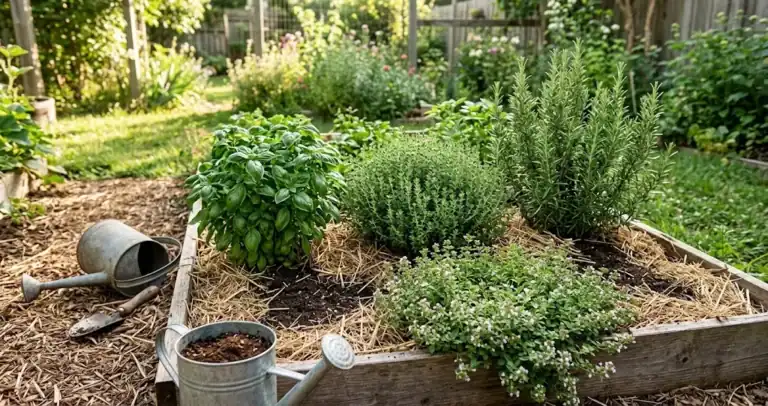
A small harvest can make a herb garden more productive. Snip at the right point, leave enough leafy growth behind, and your basil, thyme, and other aromatic leaves can keep supplying the kitchen through the growing season.
The best way to harvest herbs is to cut clean, healthy growth after the morning dew has dried, taking only what you will use. To harvest herb plants well, work with their natural growth pattern instead of taking the same cut from every stem. For most leafy culinary herbs, regular light harvesting encourages branching and helps the plant stay compact.
Start with the three rules of herb harvesting
- Harvest dry plants. Wait until dew or rain has dried from the foliage. Wet leaves bruise easily and are harder to dry well.
- Use clean, sharp snips. A clean cut protects tender stems better than tearing or pinching a thick stem.
- Leave the plant plenty of leaves. Do not strip a small plant bare. Take a modest share of vigorous growth, then let it recover before the next cutting.
Before you begin harvesting, check that the herb plants are healthy and actively growing. Skip yellow, spotted, wilted, or pest-damaged foliage. If you use a spray in the garden, follow its label before picking anything for cooking.
Keep a small tool kit nearby
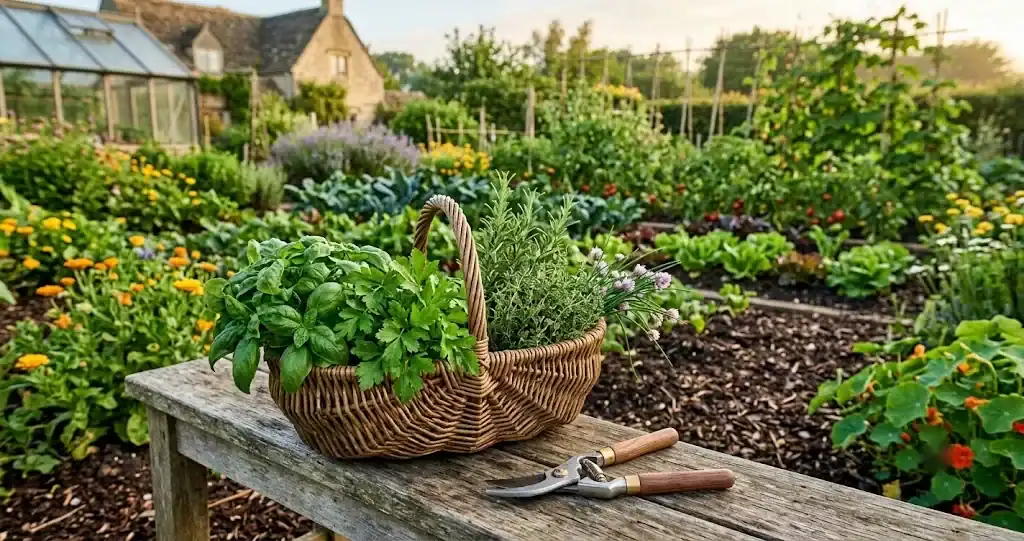
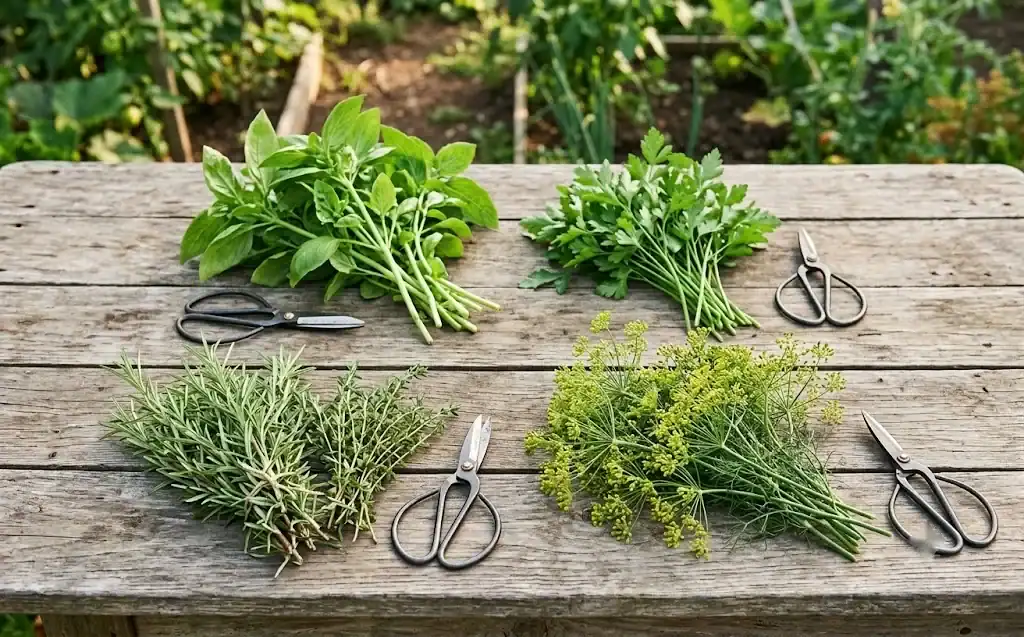
Keep sharp scissors or snips, a shallow basket, and a clean towel close to the herb garden. Use the tool that fits the stem: scissors work for tender leaves and chives, while snips give cleaner control on thicker stems. A shallow container protects the cut leaves from being crushed on the walk back to the kitchen.
When to harvest fresh herbs
For fresh flavor, harvest in the morning after dew has dried and before strong afternoon heat. The leaves are usually firm and fragrant then. Pick as close as possible to when you plan to cook, make pesto, garnish a salad, or steep a pot of tea.
Timing also depends on the part you want. Harvest leafy herbs before flowering when you want tender foliage. Pick flowers such as lavender or calendula when buds are just opening. Let seed crops such as dill dry on the plant until the heads turn brown and seeds release easily.
How to cut herbs so they regrow
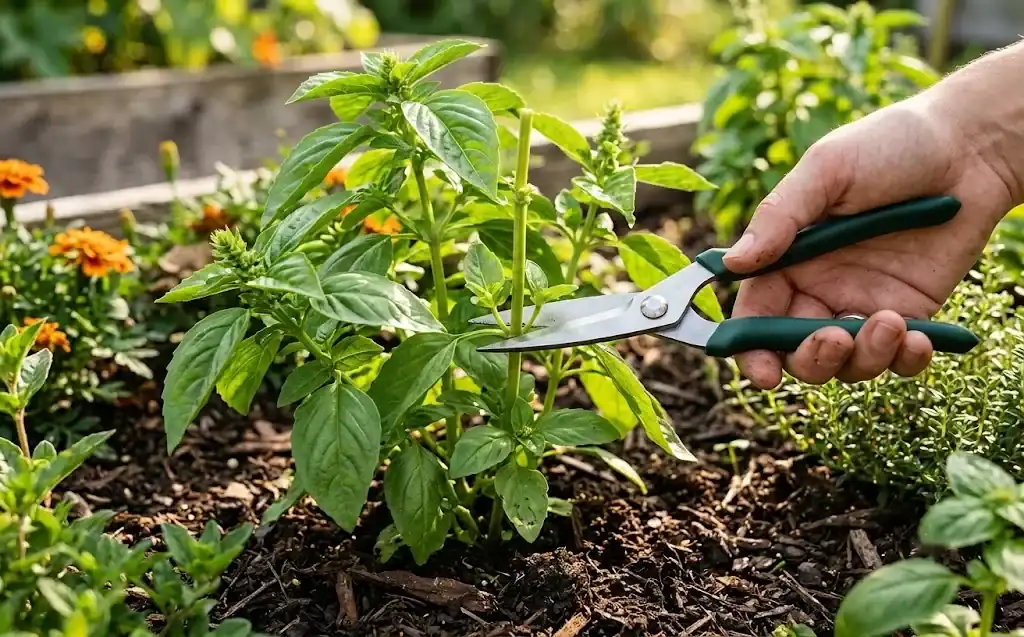
Look for a leaf node, the point where a pair of leaves or side shoots meets the stem. On a branching herb such as mint, make the cutting just above a pair of leaves. The buds below the cut can develop into new stems, which makes the plant bushier.
Take the longest, healthiest stems first rather than repeatedly picking a few leaves from the center of the plant. Avoid cutting into old, leafless wood on rosemary, sage, thyme, or lavender. Those woody herbs that return year after year often reshoot slowly from bare wood.
How much can you take at once?
A mature, healthy plant can handle a light regular harvest, but it needs enough foliage to keep growing. Take less from young plants, newly transplanted herbs, plants under drought stress, or herbs that are about to flower. If you need a large crop for drying, harvest in stages instead of clearing the whole bed.
Harvest annual herbs and perennial herbs by type
Leafy herbs that grow quickly
These quick-growing plants put most of their energy into soft new growth. Snip basil stems above a pair of leaves, and pinch out flower buds if you want the plant to keep producing foliage. Cut cilantro and dill stems near the base when you need a handful, but leave the center growing point intact on young plants.
These leafy harvests are easy additions to salads, soups, and sauces. When one begins going to seed, let a few flowers mature if you want seeds or beneficial insects, then replace the plant for a steady supply of tender leaves.
Soft herbs that return each year: chives, oregano, tarragon, and mint
Cut chives a couple of inches above the soil, leaving a short green base on each chive plant. Gather mint or oregano by taking several stems, cutting just above a leaf set. Regular harvesting keeps these herbs leafy, but stop cutting hard late in the season so perennial plants can prepare for cooler weather.
Mint spreads quickly, so it is often easiest to grow in a container. Oregano and thyme can be clipped little and often for pizza, stew, roasted vegetables, or a quick garnish.
Woody herbs: rosemary, thyme, and lavender
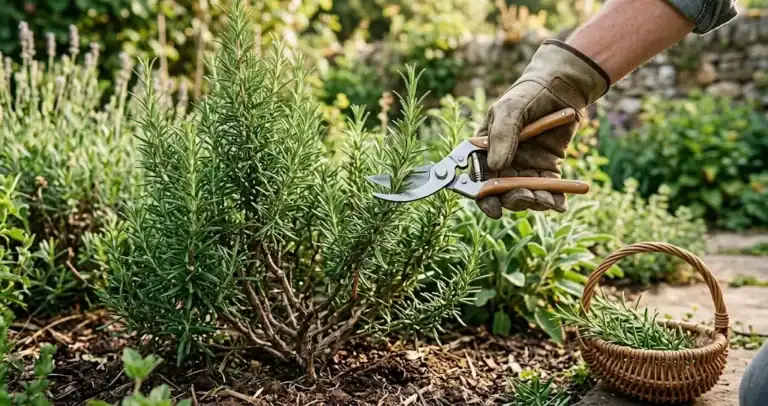
With woody herbs, harvest young green tips and short leafy stems. Snip a leafy branch just above a healthy branch point. Trim thyme carefully, leaving green growth on each stem. For lavender, cut flowering stems above the leafy mound and avoid cutting into thick woody crowns.
For a detailed plant-specific method, see how to harvest rosemary. It covers the cuts that keep that plant useful without turning this general guide into a separate rosemary tutorial.
What to do right after the harvest
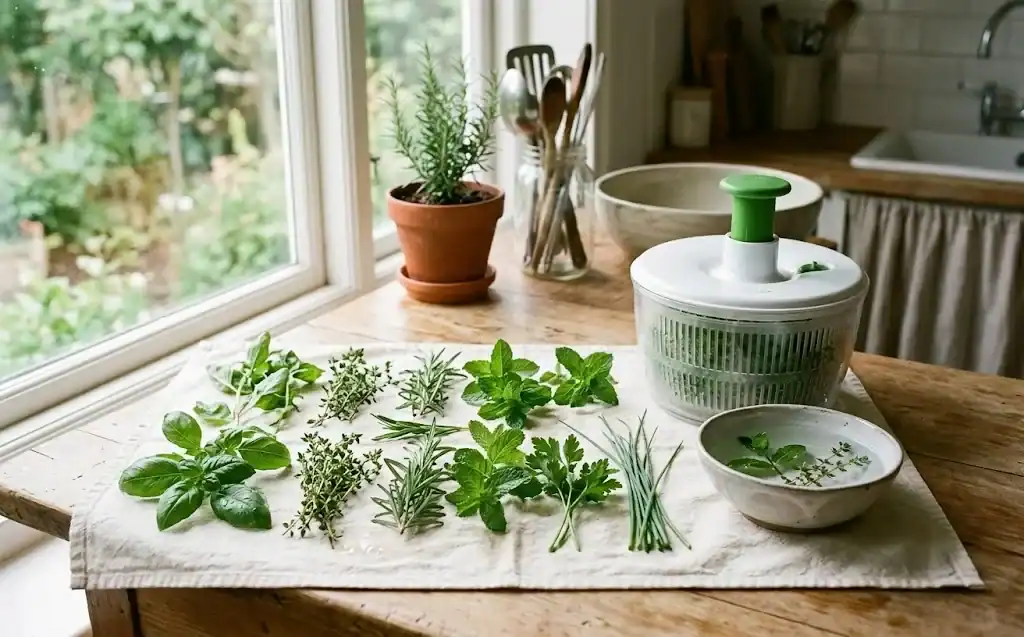
Handle herbs gently. Shake off insects and loose soil, then remove damaged leaves. Do not wash a harvest until you need to use it unless it is visibly dirty. Extra moisture shortens the life of fresh leaves and slows drying.
For herbs you will use today, place stems in a glass with a little water or wrap the leaves loosely in a barely damp towel and refrigerate. Basil is usually happier at cool room temperature for a short time than in a very cold refrigerator. Keep herbs out of direct sun once picked.
If the crop is larger than tonight’s meal, move promptly to your preferred storage method. Our guide on how to preserve herbs explains when drying, freezing, and other methods make sense.
How to dry herbs or freeze your harvest
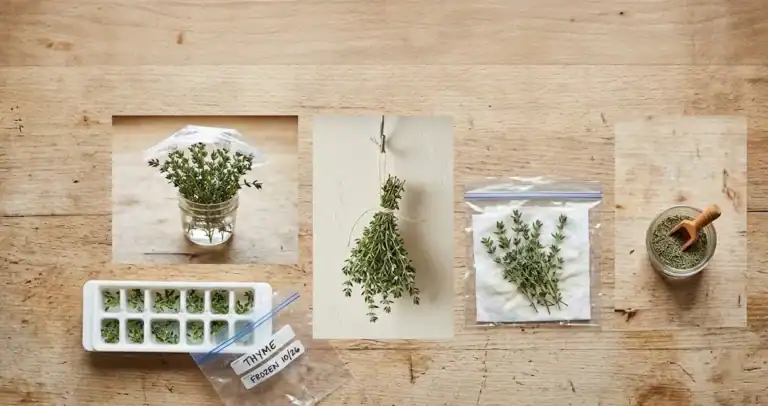
Drying works especially well for thyme, oregano, and other sturdy herbs. Tie small bunches with string and hang them upside down somewhere dry with good air circulation, or spread leaves in a single layer on a rack. Keep them out of direct sun. When leaves are dry and crisp, strip them from the stems and store them in an airtight jar away from heat.
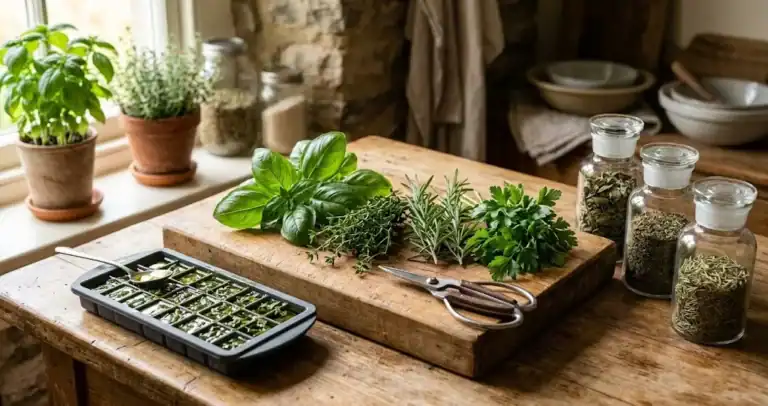
Freezing is a better choice for soft leafy herbs that lose too much character when dried, including basil and chives. Chop clean dry leaves, pack them into ice cube trays with a little water or oil, and freeze. Drop a cube into soups, stews, sauces, or a pan of vegetables when you want a quick flavor boost.
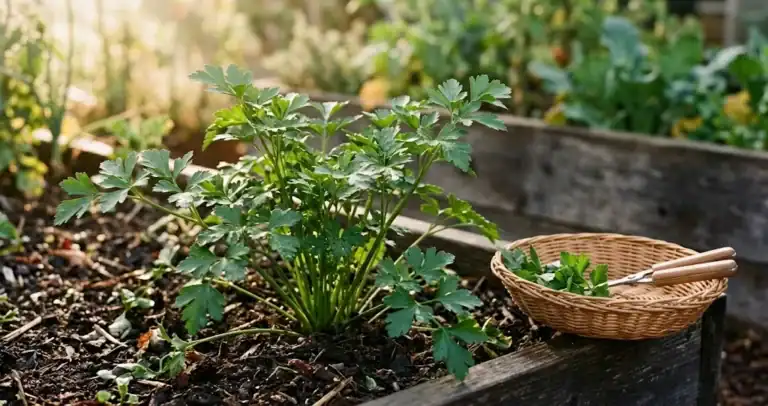
If parsley is your main crop, this focused guide on how to harvest and store parsley can help you move from a fresh bunch to practical storage without waste.
Harvesting and preserving: make a plan before you cut
These practical tips make a full basket easier to use. Decide whether you want leaves for today, herbs to dry for the pantry, or portions for the freezer before you begin. Use cuts above leaf pairs on the herbs to encourage new branches, then move the picked leaves promptly to the kitchen.
Choose between pruning, fresh use, drying, and freezing
For a home gardener, pruning and picking have different jobs. Prune to shape an overgrown plant or remove spent growth. Pick tender stems when you want herbs for cooking, and use the leaves while their fragrance and flavor are still bright. This distinction helps keep the plant compact without making every cut an oversized picking.
When you want to preserve a crop, separate leaves from the stems or stalks before choosing a method. Herbs can be dried when their leaves are clean and fully dry: air dry small loose bunches, or spread leaves in a single layer. For seeds, let the heads finish drying in a paper bag. Freezing herbs is often the better choice for soft, fragrant leaves that you want ready to use in sauces, soups, or pesto.
Common harvesting mistakes to avoid
- Picking from a weak or newly planted herb before it has enough growth.
- Removing all the leaves from one stem or cutting every stem to the same height.
- Cutting woody plants back into bare, leafless wood.
- Waiting until tender leafy herbs have flowered heavily when you want foliage.
- Leaving a large harvest in a hot bowl or bag before cooling, drying, or using it.
- Drying thick, crowded bunches that trap moisture instead of allowing air circulation.
Frequently asked questions about harvesting herbs
Do herbs regrow when you cut them?
Many plants regrow well after a careful harvest. Basil, mint, chives, oregano, and other leafy herbs can keep producing when you leave healthy leaves and growing points behind. Woody plants grow more slowly, so take smaller cuts from their green, leafy tips.
Can you harvest herbs after they flower?
Yes, though leaves can become tougher or less flavorful once a plant focuses on flowers and seed. You can still use them, but harvest before flowering when leaf quality is the priority. Only use flowers as garnish when you have identified the plant as edible.
How often should you harvest herbs?
Pick whenever a healthy plant has enough new growth and you have a use for the leaves. Frequent light snips are usually better than occasional severe pruning. Let the plant’s growth rate, weather, and season guide you.
Make every cut count
Harvesting is part of growing herbs, not the final step. Pick dry, vigorous stems with clean snips, cut where new growth can form, and decide right away whether your herbs are for fresh cooking, drying, or freezing. That simple routine keeps the garden tidy and puts more flavor within reach.