These coriander recipes make the most of the plant’s two useful forms: bright green leaves and warm, citrusy seeds. Use the leaves as a finishing herb, then build depth with toasted seeds or ground spice. The result is a flexible collection for weeknight dinners, quick sauces, salads, and simple sides.
For a closer look at stems, leaves, seeds, and powder, see our guide to cooking with coriander before you begin.
Choose the right form for the recipe
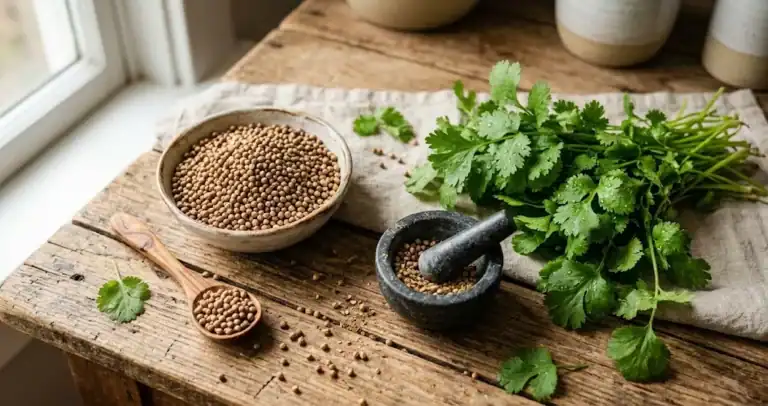
In the United States, the fresh leaves of Coriandrum sativum are usually called cilantro, while the dried seed is called coriander. Elsewhere, the same name can refer to the whole plant. Fresh leaves belong at the end of preparation, while toasted seed and ground spice do their best work earlier.
- Fresh leaves: Chop leaves and tender stems together for a green sauce or salsa.
- Whole seed: Toast it briefly in a dry skillet, then crush it for a fragrant, textured finish.
- Ground spice: Stir it into warm oil with other seasonings for about 30 seconds before adding liquid.
It is one of many culinary herbs that can make a pantry meal feel more complete. Its lemony, gently nutty note is especially good with lime, lemon, ginger, cumin, tomato, coconut, yogurt, and beans.
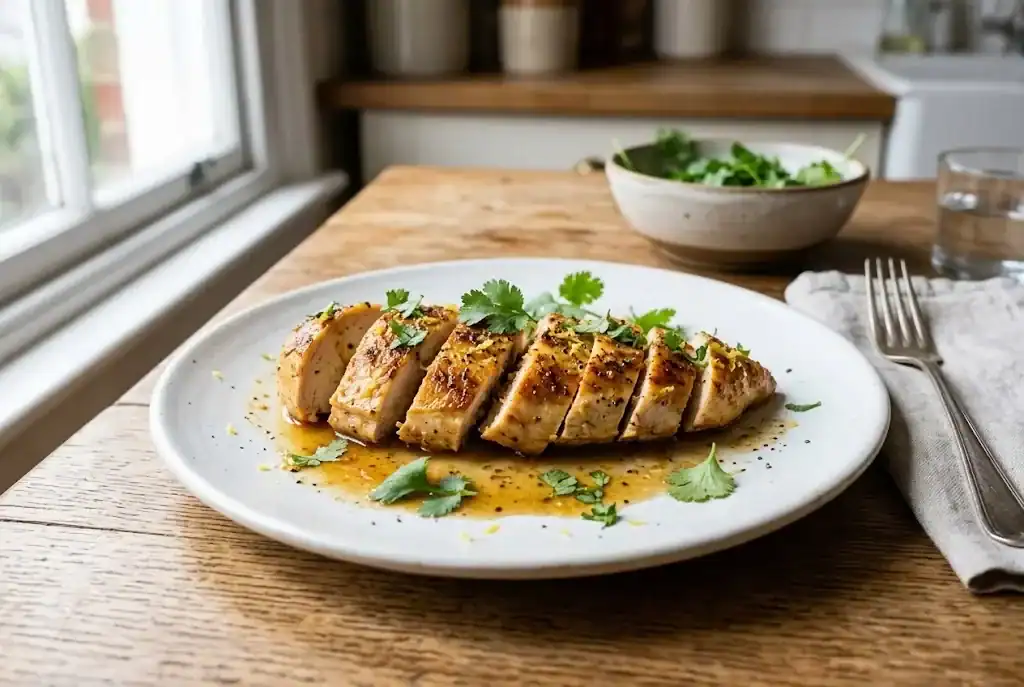
1. Lemon-spiced chicken with a quick pan sauce
This recipe turns a short marinade into an easy pan sauce. Serve the chicken with rice and a green vegetable, or slice the leftovers for a warm sandwich.
What you need for the lemon-spiced chicken
- 1 pound boneless, skinless chicken breasts or thighs
- 1 tablespoon olive oil
- 1 teaspoon ground coriander
- 1 teaspoon cumin
- 1 teaspoon grated lemon zest
- 1 tablespoon lemon juice
- 1 small garlic clove, finely minced
- Salt and black pepper
- 2 tablespoons finely chopped fresh leaves
How to make the pan sauce
Mix the oil, ground spice, cumin, lemon zest, lemon juice, garlic, salt, and pepper. Coat the chicken and let it stand for 20 minutes while you prepare the rest of dinner. Brown it in a skillet over medium heat until cooked through. Add a splash of water, scrape up the browned bits, and spoon the sauce over the meat before scattering on the fresh leaves.
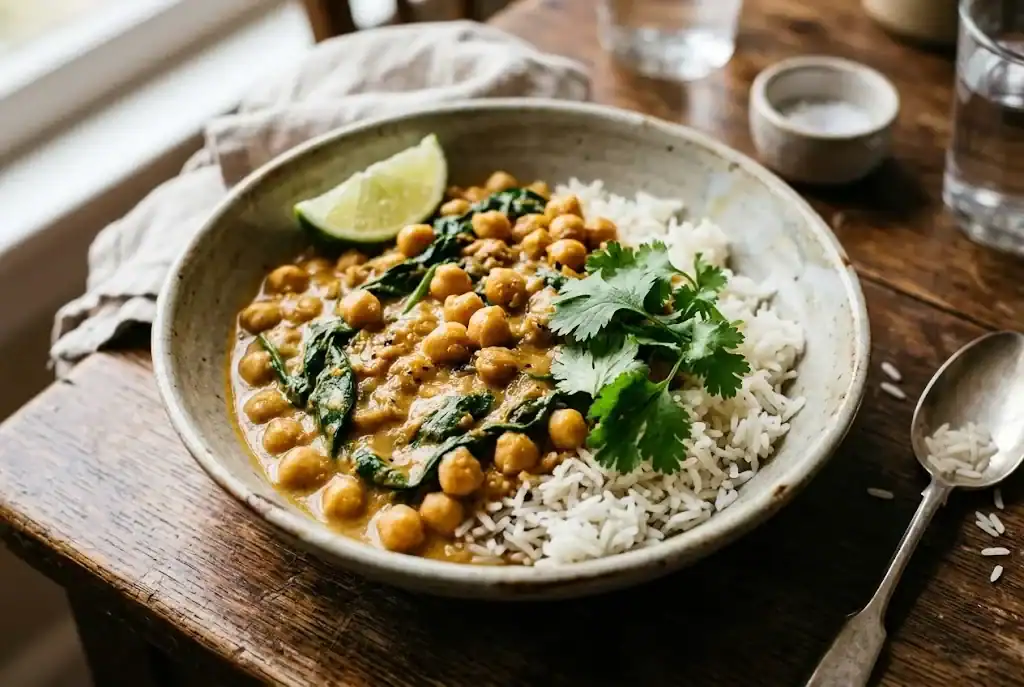
2. Coconut chickpea curry with spinach
This vegetarian curry makes a substantial dinner from chickpeas, spinach, coconut milk, and a few cupboard spices. Ginger and chili paste add warmth, while a final handful of cilantro adds a fresh note.
What you need for the curry
- 1 tablespoon olive oil
- 1 small onion, chopped
- 2 garlic cloves, minced
- 1 teaspoon grated ginger
- 1 teaspoon ground spice
- 1 teaspoon cumin
- 1 teaspoon mild chili paste
- 1 can chickpeas, drained
- 1 can coconut milk
- 2 cups spinach
- Salt and lime juice
- 2 tablespoons chopped fresh cilantro
How to finish the curry
Soften the onion in oil. Add garlic, ginger, ground spice, cumin, and chili paste, then stir for 30 seconds. Add chickpeas and coconut milk, simmer until lightly thickened, and fold in spinach until wilted. Balance with salt and lime juice, stir it in just before serving, then spoon over rice.
Use a fresh bunch promptly, then see our guide to keeping the extra leaves fresh so the remaining leaves stay useful for the next meal.
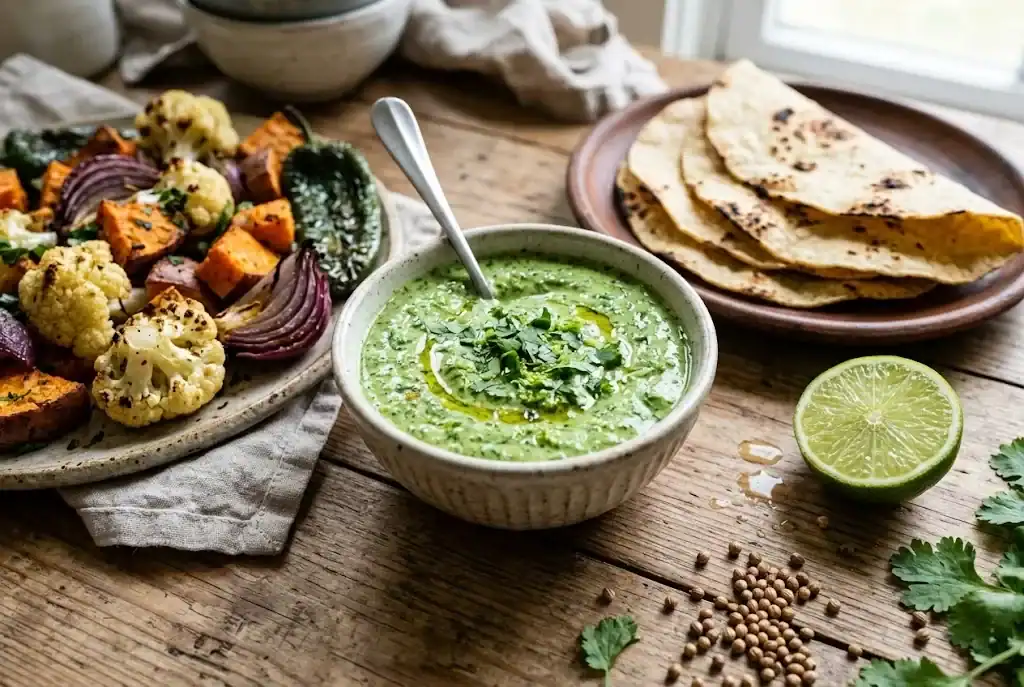
3. Green yogurt sauce for roasted vegetables and tacos
This fast sauce works with roasted vegetables, tacos, crisp potatoes, grilled pork, or raw vegetable sticks. Blend 1 cup cilantro with 3/4 cup plain yogurt, 1 small peeled clove, 1 tablespoon lime juice, 1 tablespoon olive oil, a pinch of salt, and a little jalapeño if you like heat. Thin with a teaspoon of water when needed.
4. Tomato, cucumber, and lime salad
Combine chopped tomato, cucumber, a little red onion, lime juice, olive oil, salt, pepper, and finely chopped fresh coriander leaves. Let the salad stand for five minutes, then toss again. A pinch of toasted seed adds crunch and a gentle lemon-peel aroma. Serve it with fish, paneer, burgers, or a bean bowl.
5. Crisp chickpea burgers
These vegetarian burgers are tender inside and crisp outside. Mash one can of chickpeas with 1 teaspoon ground coriander, 1/2 teaspoon cumin, one small minced clove, 1 tablespoon lemon juice, 1/3 cup breadcrumbs, salt, and pepper. Form four patties and chill for 15 minutes. Pan-fry in a thin layer of oil until browned, then serve with the green yogurt sauce.
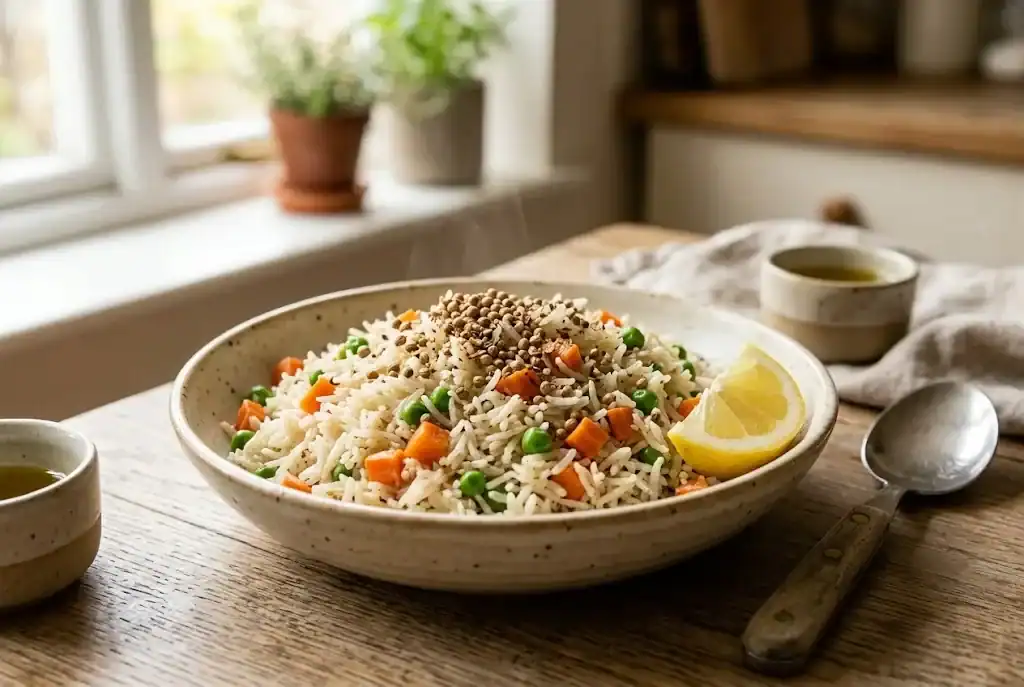
6. Toasted seed rice with vegetables
Whole seeds have a warm, citrus-peel aroma that is excellent with rice, carrots, peas, and roasted cauliflower. Toast 1 teaspoon of coriander seed in a dry skillet until fragrant, then lightly crush it. Fold it through cooked rice with sautéed carrot, peas, a little onion, salt, and lemon juice. The same seasoning also suits tofu or leftover poultry.
Can you swap leaves, ground spice, and whole seed?
Not directly. Fresh leaves are green and bright, ground spice is warm and dry, and whole seed gives a more textured bite. When a recipe calls for the fresh herb and you have none, parsley plus a little lime zest can provide color and freshness, although the taste will change. When you need ground spice, crush toasted seed instead.
Make the collection easy to repeat
- Keep ground spice in a small jar away from heat and light. Replace it when its scent is faint.
- Freeze chopped leaves in olive oil or water in a small tray for soups and curries. They will not stay crisp, but they work well in cooked food.
- Make a double batch of the yogurt sauce. It keeps in the fridge for two or three days.
- Pair this seasoning with citrus, cumin, and salt, then taste before adding more.
Frequently asked questions
What foods taste best with this herb?
It pairs well with chicken, chickpeas, lentils, tomato, coconut, yogurt, citrus, rice, roasted vegetables, and tacos. The fresh leaves are especially good in salsa and salads, while the ground form fits soups, marinades, curries, and spice blends.
Can I make powder at home?
Yes. Toast whole seed in a dry skillet for one or two minutes, cool it, and grind it to a powder. Make a small amount because freshly ground seasoning gradually loses its aroma.
Are these recipes family-friendly?
Yes. Leave out the chili paste, keep the yogurt sauce mild, and offer the fresh herb at the table. Each person can then choose how much green flavor and heat to add.
Start with the chicken, coconut curry, bright salad, or toasted rice, then use the same simple seasonings in your own kitchen. The plant is most useful when its fresh and dried forms are matched to the meal.