Fresh coriander brings an unmistakable burst of bright, citrusy flavor and vivid green color to global cooking. Whether you know this fragrant plant as fresh coriander or call its tender leafy greens cilantro (Coriandrum sativum), keeping harvested sprigs crisp and aromatic presents a familiar kitchen challenge. Like many delicate fresh herbs, a fresh bunch of cilantro contains high natural moisture and tender cell walls that can cause the entire harvest to wilt, darken, or turn soggy within days if left on a warm counter.
Mastering how to store coriander properly protects your culinary investment, prevents food waste, and ensures you always have pungent greens ready for salsas, curries, soups, and garnishes. Storing fresh coriander successfully comes down to managing two critical factors: moisture and temperature. By learning the best ways to store cilantro in the fridge or freezer, you can help leaves stay fresh longer, make them last for weeks of daily meals, or freeze herbs for months of flavorful cooking.
Why Fresh Herbs Spoil Quickly: Moisture Control When Storing Coriander
Understanding why coriander leaves deteriorate helps you choose the right storage technique for your kitchen routine. Once severed from the root system, leafy sprigs continue to transpire water vapor while losing access to soil moisture. If exposed to dry refrigerator air without protection, the foliage quickly loses turgor pressure, causing the sprigs to turn limp.
Conversely, excess trapped surface moisture creates an equally damaging environment. When wet greens are packed tightly inside a sealed carrier bag or closed plastic container without air circulation or an absorbent buffer, condensation builds rapidly. This trapped water encourages bacterial breakdown, turning crisp greens into mushy, blackened decay. Furthermore, warm ambient room temperatures accelerate the evaporation of delicate essential oils like linalool, which give the plant its distinct aroma. Storing cilantro in the fridge slows metabolic breakdown, while freezing protects flavor compounds for cooked applications.
Beyond culinary versatility, research published by the National Institutes of Health (NIH) highlights that Coriandrum sativum foliage and seeds contain rich antioxidant polyphenols and bioactive compounds that support digestive wellness. Nutritional profiles documented by the USDA FoodData Central confirm that fresh leaves deliver vitamins A, C, and K, making proper post-harvest handling essential for preserving both nutrition and flavor.
Preparing Harvested Stems: When to Wash Cilantro Before Storing
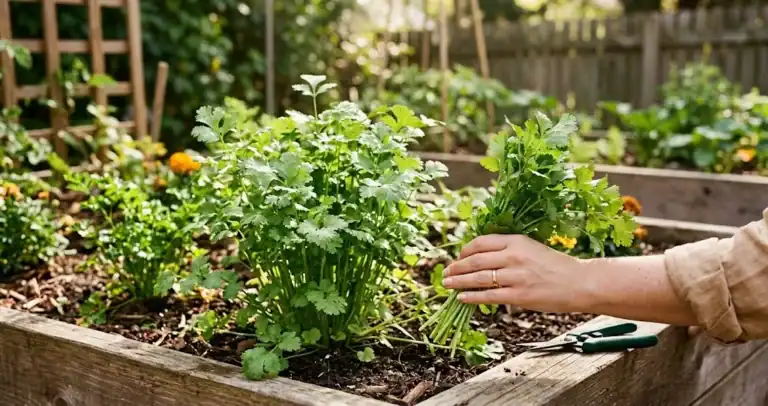
Proper preparation before storing harvested greens determines whether your herb bundle will stay fresh or spoil prematurely. Reviewing practical techniques for harvesting herbs will help you clip sprigs in the morning when moisture content and essential oil levels peak.
Follow these essential preparation steps before you put it in the fridge:
- Inspect and sort the sprigs: Lay the harvest on a clean prep counter and remove any yellow, slimy, or rotten foliage. Decaying leaves emit moisture and gas that accelerate decomposition across neighboring sprigs.
- Decide when to wash cilantro before storing: As a general rule, storing unwashed sprigs prolongs shelf life because added water invites mold and decay. If your harvest is clean from an indoor garden or market, store it dry and wash individual sprigs right before cooking.
- Wash and dry thoroughly if soiled: If the sprigs carry garden soil or grit, submerge them gently in a large bowl of cold water, swish carefully, and lift them out. Dry them completely using a salad spinner, then spread the foliage across a dry paper towel until no water droplets remain. Wet leaves stored in cold air deteriorate rapidly into black mush.
- Trim the cut ends: Take sharp kitchen shears and snip about half an inch off the base of each stem. Trimming dry stem ends clears sealed vessels, allowing the cut sprigs to draw clean moisture when stored upright.

Storing Cilantro in the Fridge: How to Keep Cilantro Fresh in a Water Jar
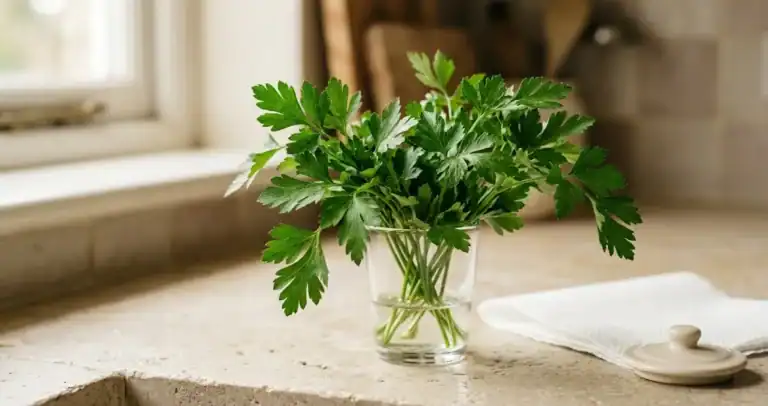
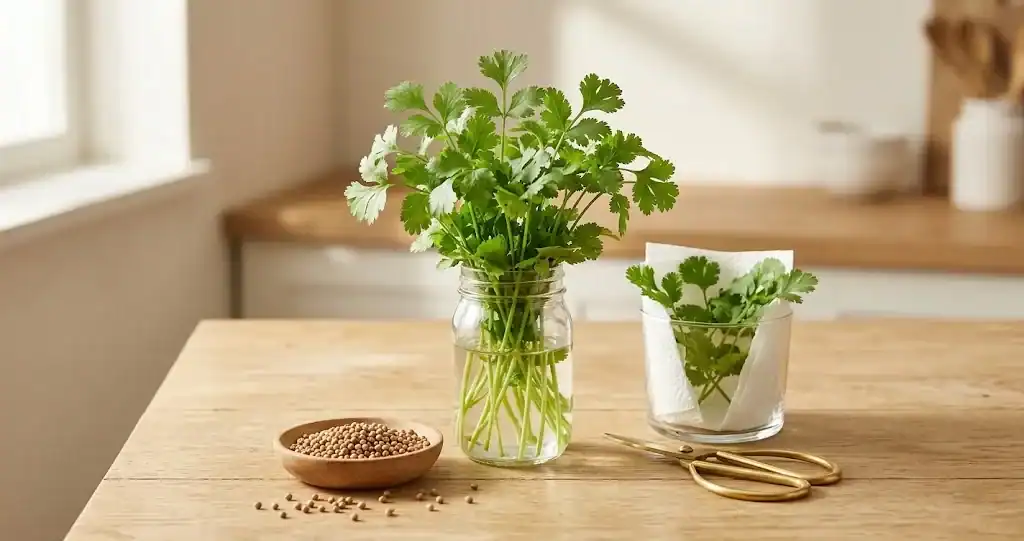
For whole sprigs, the single most dependable technique to keep cilantro fresh for 2-3 weeks is treating the greens like a fresh bouquet in a jar of water.
This method keeps cut vessels hydrated while shielding tender leaves from dehydrating drafts:
- Prepare the container: Fill a clean glass jar or sturdy glass of water with 1 to 2 inches of clean, cool water at the bottom.
- Place the stems: Lower the trimmed stem bases into the water and place the vessel upright on a stable flat surface. Ensure no lower leafy foliage sits submerged beneath the water line, as submerged leaves rot quickly and foul the water.
- Cover the leaves loosely: Place a clean produce bag, plastic bag, or lightweight sandwich bag over the top of the vessel, draping it loosely over the foliage. A loose plastic bag works remarkably well to maintain humidity without trapping heavy moisture. You can secure the bag around the rim with an elastic band, leaving sufficient slack for gentle air circulation.
- Refrigerate on an interior shelf: Transfer the cilantro in the jar to the main body of your refrigerator where temperatures remain steady.
- Refresh the water: Check the container every few days. If the liquid appears cloudy, empty it, rinse the base, add fresh water, and replace the sprigs.
Stored this way, fresh cilantro in the fridge retains crispness and vibrant green color, allowing the herb to last for at least two to three weeks.

The Paper Towel and Airtight Container Method to Store Cilantro Leaves
If you have limited vertical shelf space in your refrigerator or have already separated individual sprigs, a container lined with paper towels is an outstanding alternative that keeps leaves fresh for up to two weeks.
This technique uses an absorbent buffer to balance humidity around the foliage:
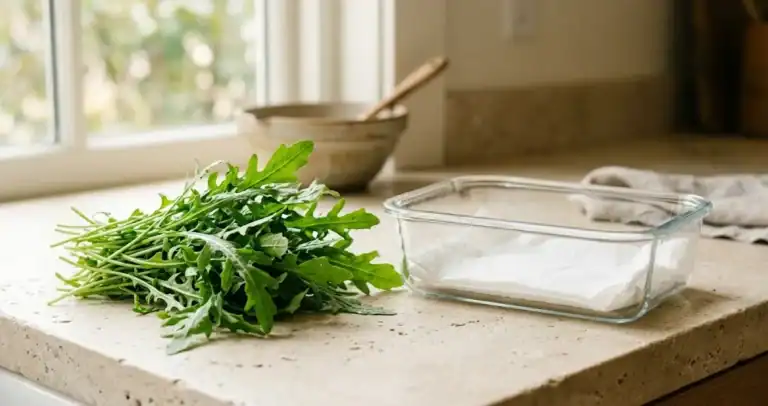
- Prepare the container: Take a sheet of dry paper towel or slightly damp paper towel (wrung out until barely moist) and line the bottom of a glass dish, plastic box, or tupperware.
- Layer the leaves: Spread a loose layer of dry sprigs across the moist paper towel or dry paper towel lining. Avoid cramming the entire harvest into a tight pack.
- Add a protective top layer: Place another sheet of absorbent paper over the foliage to catch condensation, then seal the airtight container or tight container firmly. Alternatively, place the wrapped bundle inside a ziplock bag or sealed storage bag, pressing out excess air before closing.
- Store in the crisper drawer: Place the container inside your refrigerator vegetable crisper drawer, which maintains high humidity and stable cooling.
Check the container every few days. If the paper towel becomes damp or soggy from natural plant transpiration, replace it with a fresh dry sheet to keep them fresh and prevent spoilage.

How to Freeze Cilantro: Storing Herbs in the Freezer and Ice Trays
When you harvest a large bounty from the garden and want to preserve herbs for long-term storage, freezing is the most practical solution. While frozen foliage softens and loses crisp texture for raw salads, it locks in rich aroma and vibrant color for hot, cooked dishes.
You can freeze fresh foliage using two simple techniques:
Method 1: Chopped Herb Cubes in Oil or Water
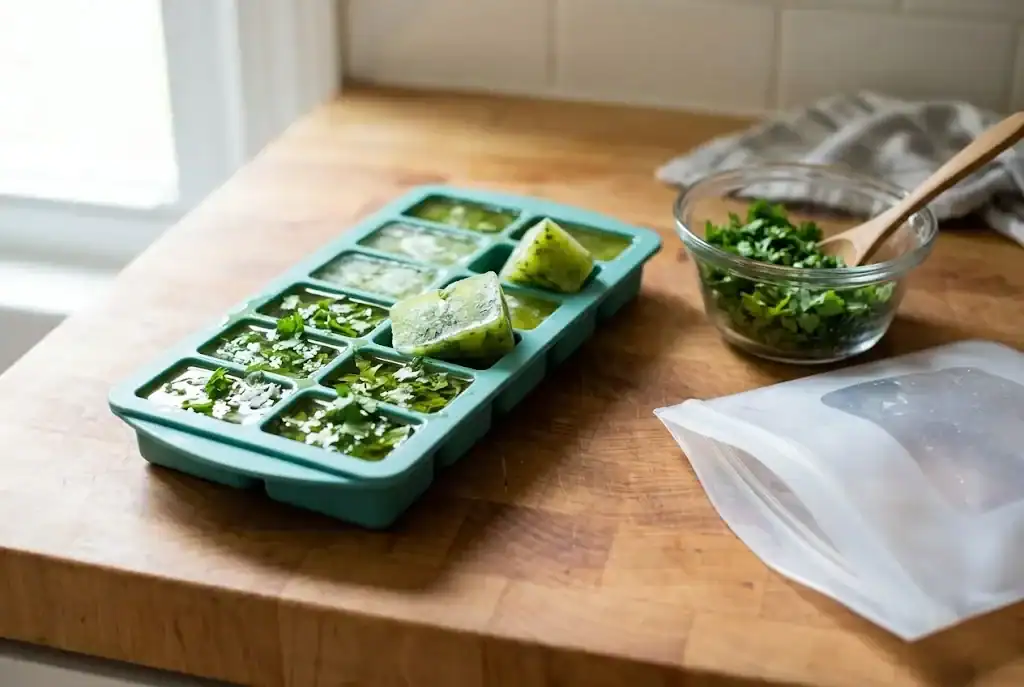
Freezing chopped sprigs in an ice cube tray creates convenient, pre-portioned flavor blocks ready to drop directly into a simmering curry, chilli, soup, or stew:
- Rinse and dry the foliage thoroughly, then chop the tender leaves and upper sprigs finely on a cutting board.
- Pack the chopped herb into each compartment of an ice cube tray, filling each slot about three-quarters full.
- Pour olive oil, neutral cooking oil, or cold water over the herbs until the leaves are fully submerged, which prevents freezer burn.
- Place the tray in the freezer until solid, then pop out each ice cube and bag and store the frozen cubes in a heavy-duty ziploc bag or cold storage box.
Method 2: Whole Foliage Flash Freezing and Puree Logs
To freeze whole sprigs, spread clean, thoroughly dry greens in a single layer across a baking tray lined with parchment paper. Place the tray in cold storage for one to two hours until frozen solid, then transfer the green leaves quickly into a freezer storage bag. Alternatively, blend fresh leaves with olive oil into a smooth puree and freeze in small silicone molds. When cooking, you do not even need to defrost the herb: simply drop the frozen cube directly into your hot skillet or pot.
Drying Foliage and Storing Coriander Seeds for the Pantry
Many gardeners ask whether they can air dry foliage like other garden herbs. While you can preserve the plant by drying, leaves behave differently from woody Mediterranean herbs:
Drying green foliage: Delicate leaves lose much of their volatile citrus punch when dried with heat. If you choose to air dry, bundle small sprigs loosely with string and hang them upside down in a warm, dark room with good airflow, or dry on a dehydrator tray at 95°F. Once crumbly, store in a sealed glass spice bottle. While dried leaves lack the bright zing of fresh sprigs, they still impart pleasant herbal depth to slow-simmered recipes.
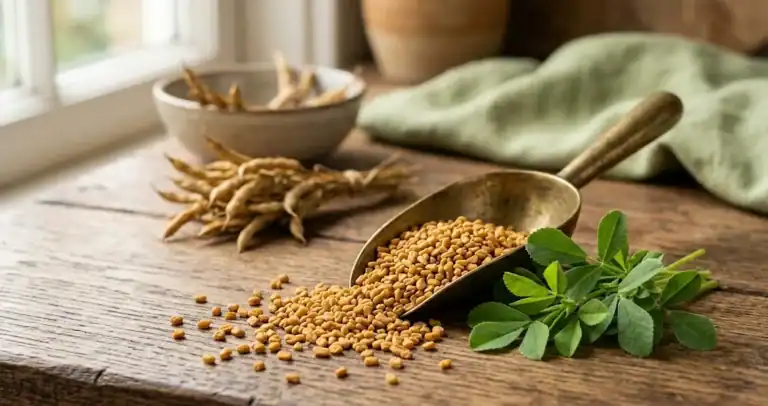
Harvesting and storing seeds: As plants mature in late summer, they bolt, flower, and develop spherical green seed heads. Learning how to harvest coriander seeds at the right stage allows you to stock your pantry with rich spice. When the seed heads turn tan and dry on the plant, snip the umbels into a paper carrier bag, shake gently to dislodge the seeds, and allow them to cure for another week in a dry room. Store whole seeds in sealed glass vessels in a cool pantry, where they retain full potency for up to two years. Toasting whole seeds in a dry pan before grinding releases complex floral and warm citrus notes.

How to Revive Limp Sprigs and Make Fresh Leaves Last Longer
If you find a forgotten herb bunch that has started to wilt and lose its posture, do not discard it immediately. As long as the leaves have not turned black, slimy, or foul, you can easily revive them to make fresh leaves last longer using a quick ice water bath:
- Fill a medium mixing bowl with cold water and add several ice cubes.
- Trim a fresh quarter-inch slice off the bottom of each stem to reopen xylem channels.
- Submerge the entire wilted greens, leaves and sprigs, completely in the ice water.
- Let the sprigs soak for 15 to 20 minutes. The cold temperature and osmosis allow plant cells to reabsorb water, restoring cellular turgor pressure.
- Lift the refreshed greens out, shake off moisture, dry on a clean towel, and use the fresh greens immediately as a crisp garnish or in fresh salsa.

Frequently Asked Questions: How Long Does Fresh Foliage Last in Storage?
Exploring the wide range of culinary uses for coriander in cooking shows how this versatile herb enhances fresh garnishing, marinades, and spice pastes. Tender sprigs carry concentrated essential oils, making them ideal for blending into curry bases and broth infusions, while leafy tops provide fresh brightness.
How long does fresh foliage stay good in the fridge?
When stored in a water vessel with a loose plastic cover, whole sprigs remain fresh for two to three weeks. If you wonder how long in the fridge loose leaves survive, wrapping them in paper towels inside a sealed container keeps them crisp for 10 to 14 days without wilting.
Can you freeze fresh leaves without blanching?
Yes. Tender foliage does not require blanching before freezing. Simply wash and dry thoroughly, chop, and freeze in ice cube trays with oil or water to preserve optimal flavor for cooked recipes.
Why does foliage turn black and mushy in storage?
Leaves turn black primarily due to excess surface water trapped in low-oxygen containers, or from cold damage if placed against the freezing back wall of the refrigerator. Keeping foliage dry and allowing gentle airflow prevents blackening.
How do you tell the difference between fresh cilantro and Italian parsley?
While both leafy herbs look similar at first glance, the plant has rounded, delicate lobes with gentle serrations and a distinct pungent citrus aroma, whereas flat-leaf Italian varieties feature sharper, triangular pointed leaf tips and a milder, peppery aroma.
Can older stored sprigs start sprouting roots?
When kept in a clean water vessel on the counter or in mild light, healthy cut sprigs may occasionally sprout small white roots. While this demonstrates plant vitality, refrigerating the greens in cool darkness remains the best approach to keep leaves fresh and crisp for cooking.