A recipe calls for a tablespoon of chopped coriander. You reach for a bunch of cilantro from the crisper drawer. Then another recipe calls for a teaspoon of the ground seeds instead, and that same bunch is no help at all.
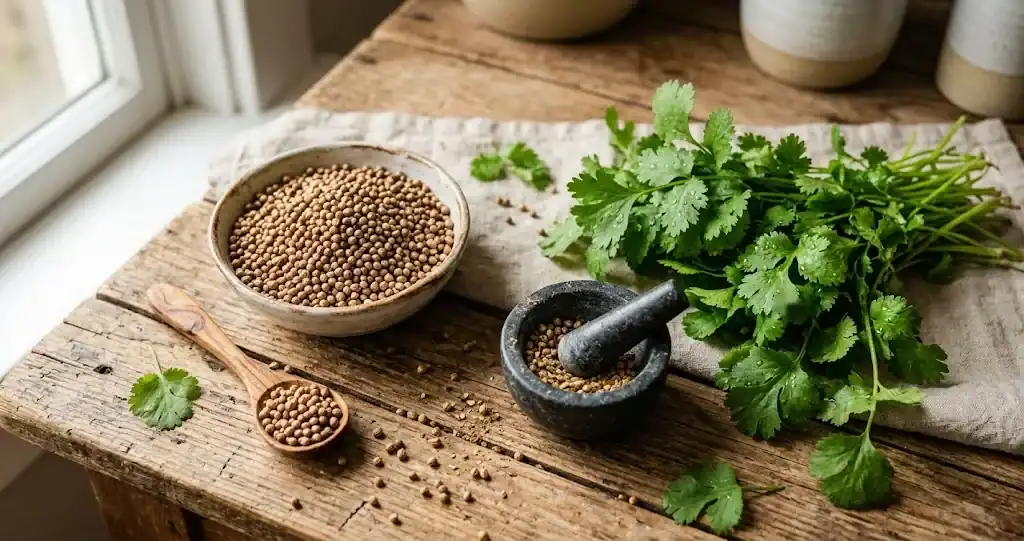
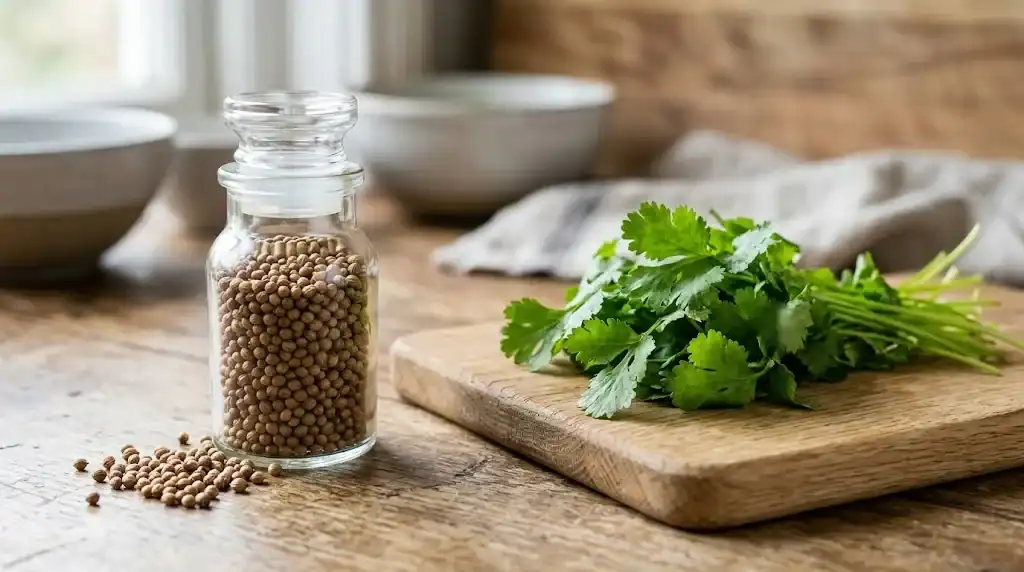
Both readings are correct, and the mix-up is common. In the United States, cilantro means the fresh green leaves and tender stems of the plant Coriandrum sativum, and coriander almost always means the dried round seed, whole or ground. Outside the US, in the UK, Australia, India, and much of the rest of the English-speaking world, cooks call the fresh leaf “fresh coriander” too, and add the word “seed” only when they mean the spice. Whichever term your recipe uses, the rest gets a lot simpler once you know which part you are holding.
What coriander and cilantro taste like
Cilantro leaf tastes bright, lemony, and herby, with a peppery, slightly grassy edge that fades fast once it hits heat. If it tastes like soap to you instead, that is not just pickiness. The leaf carries aldehyde compounds that also show up in soaps and in the scent stinkbugs give off. Most people never notice the overlap. A variation in a cluster of smell receptor genes appears to make others register it strongly, though researchers describe that variation as only a small part of the picture rather than the whole explanation. Depending on ancestry, somewhere between 3 and 21 percent of people report the soapy version.
Coriander seed tastes almost nothing like the leaf. Toast it and the flavor turns warm, nutty, and lightly floral, with a zesty note that reads closer to lemon zest than lime. The ground form loses that warmth fast once it has been sitting in a jar, which is one reason whole seed gives a more reliable flavor over time.
How do you use coriander in cooking?
The leaf and the seed work best at opposite ends of the cooking process.
Add cilantro at the very end, off the heat or close to it. Stir it into a finished soup, fold it into a salsa, scatter it over tacos or grilled fish as a garnish, or toss extra stalks into a quick stir fry just before it comes off the heat. A few minutes of hard cooking is enough to flatten its brightness into something closer to dried hay.
Coriander seed goes in early instead. Toast whole seeds in a dry skillet for a minute or two until they turn fragrant, then crush them with a mortar and pestle or grind them in a mill. Add the toasted seed to the base of a braise, a pan of carrots, or a pickling brine, so the oils have time to bloom in the fat or the heat. The ground form works the same way and stirs easily into a dry rub, a bowl of hummus, or a mix for spiced chickpeas or tofu.

What pairs well with coriander: curry, salsa, and salad ideas
Coriander seed has a natural affinity for other warm spices. It shows up alongside cumin and ginger in curry powders and chili blends, pairs well with cardamom and garlic in braises, and adds a peppery lift to roasted carrots, pork, or lamb. It is also a workhorse in pickling brines, where its floral edge balances the sharpness of vinegar.
Cilantro leans in a different direction. It is a natural match for lime, chili, and ginger, which is why it shows up across so many cuisines, from Mexican salsas to Thai curries to Vietnamese noodle bowls. Stir it into a mango or avocado salsa, fold it through a chickpea or shrimp salad, blend it into a green sauce for tacos, or work it into a chutney with green chili for an Indian-style condiment. It also holds its own with salmon, grilled corn, and even a simple burger, and a pineapple relish gets a nice lift from a handful of chopped leaves.

Fresh, dried, raw, or cooked: when each form works best
Cilantro is almost always better raw. Heat mutes its brightness quickly, so treat it more like a finishing herb, the way you would use basil or parsley, rather than a base seasoning like thyme. Dried leaf is the one form worth skipping. Most of its aroma disappears in the drying, so a jar of it will not stand in for a fresh bunch.
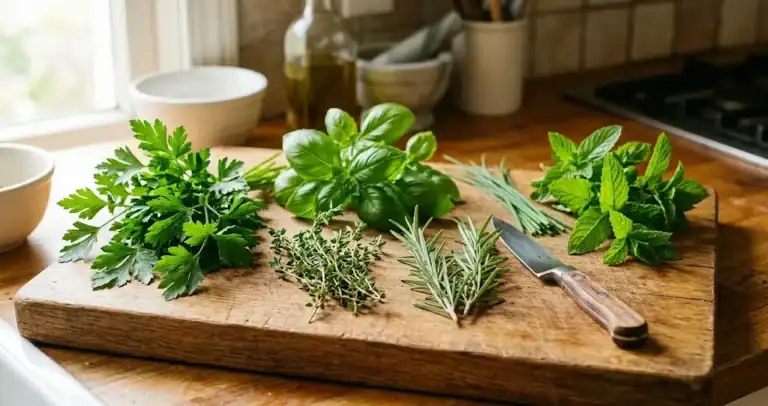
That split between finishing herbs and base seasonings decides when almost any leaf goes into the pan, so it is worth knowing across the rest of your kitchen herbs and not just this one.
Coriander seed is the opposite. It benefits from heat, whether that is a quick toast in a dry skillet or slow cooking in a spiced dish, because heat releases the oils locked inside the seed’s hard coat. Buy whole seed rather than ground when you can. The ground form is convenient, but it loses its fragrance within a few months, while whole seed keeps its flavor for a year or more if you toast and grind it as you need it.
How to prepare coriander seed and cilantro leaf
Toasting seed is simple. Warm a dry skillet over medium heat, add the whole seeds, and shake the pan often until they smell fragrant and turn a shade darker, usually one to two minutes. Let them cool before grinding, since a hot mill can scorch the oils and turn the flavor bitter.
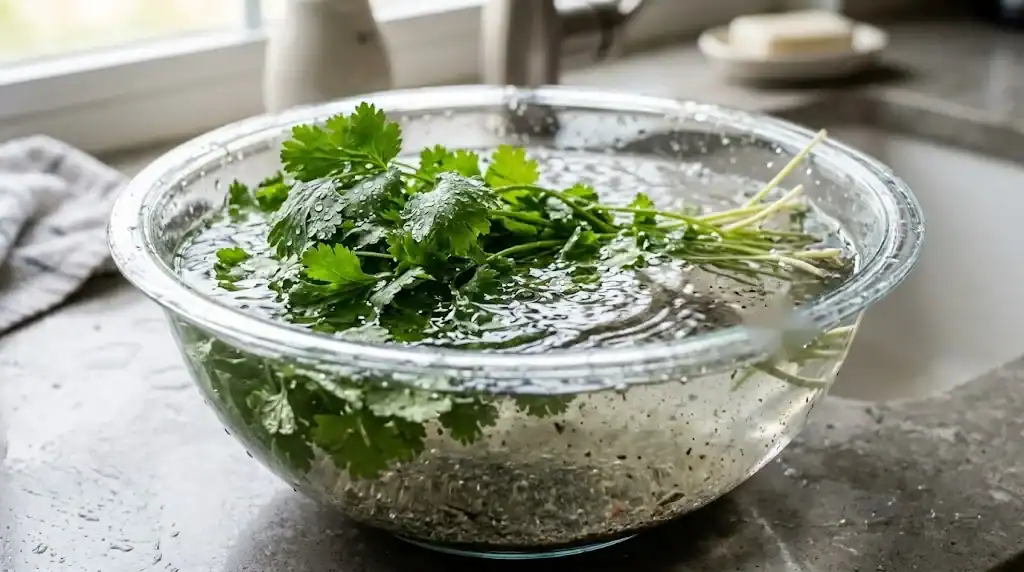
For the leaf, wash it thoroughly. Sand hides between the stalks, and a quick rinse under the tap often misses it. Swishing the bunch in a bowl of cold water, letting the grit sink, then lifting the leaves out works better. Do not throw away the thin stems near the leaves. They are tender and carry plenty of flavor. Send the thicker, woody stalks to the stockpot. If your bunch still has its roots attached, scrub them well and freeze them, since coriander root is a prized base in Thai cooking.
Once the basics feel familiar, a few coriander recipes to try next are a natural next step for turning this into an actual dinner.
A few simple ways to cook with coriander and cilantro
- Toast and crush coriander seed with a little salt and use it as a dry rub for pork chops or chicken thighs before they go in the oven.
- Whisk cilantro, lime juice, and olive oil into a quick dressing for a grain salad.
- Stir ground coriander into a pot of lentil soup along with cumin for a warm, earthy base.
- Blend cilantro, avocado, and a spoonful of yogurt into a cooling sauce for tacos or grilled fish.
- Blitz cilantro with toasted pumpkin seeds into a quick pesto for grain bowls or roasted vegetables.

A quick note before you shop: look for cilantro with perky, unwilted leaves and a clean, grassy smell, since a limp bunch turns slimy fast. For the full details on keeping coriander fresh, it is worth a look once you are home from the store.
What to use instead of coriander
If a recipe calls for cilantro and you do not have any, or you are one of the people who taste soap instead of citrus, fresh parsley with a little lime zest gets you closer than most substitutes, though it will not be a perfect match. For Southeast Asian dishes, a mix of mint and a touch of lemongrass works better than parsley alone.
Out of coriander seed, cumin is the closest single swap, though it trades that warm, floral note for something earthier. Blending in a little caraway comes closer to the original balance, especially in a rub or a braise.
One thing worth separating: tasting soap is a preference, not an allergy. Genuine reactions are uncommon, but the plant sits in the same family as celery and carrot, and some people who react to those, or to birch or mugwort pollen, react to this one as well. Itching, tingling in the mouth, or any swelling is a different matter from disliking the flavor, and it is worth talking to a doctor before eating more.
Common questions about cooking with coriander
Can ground coriander replace whole seed? Yes, close to one for one. If you crush your own, a teaspoon of whole seed yields a little more than a teaspoon of powder, so measure after grinding. A jar that has been open a while has usually lost some punch, so taste and add more if the dish reads flat. Either way, bloom it early in the fat, the same as the whole seed.
Can you eat coriander seeds whole? Yes. They are edible as is and often used whole in a pickle brine or a dry rub, though cracking or toasting them first brings out noticeably more flavor.
Once you know which one a recipe means, the rest is mostly about timing: seed early, leaf late. Get that right and both forms earn a regular place in your kitchen.