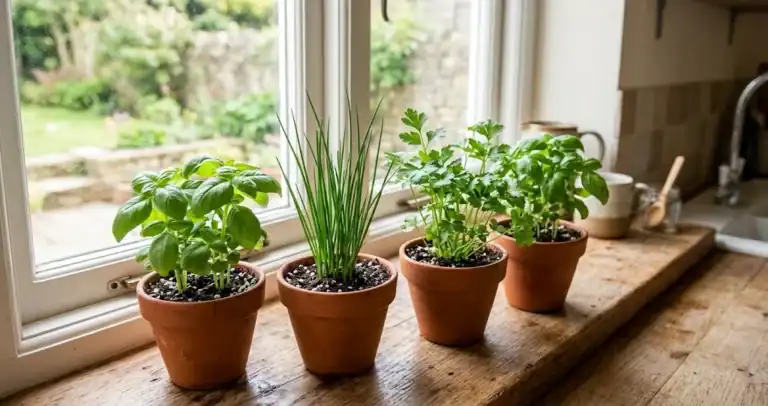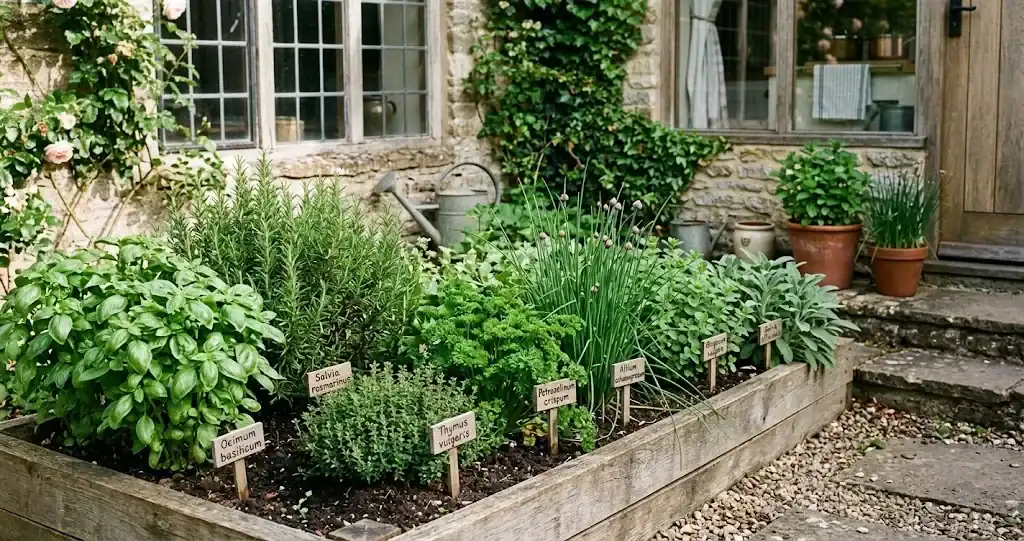
A few fresh leaves can change a weeknight meal, but a good herb garden starts with a simpler goal: grow the plants you will actually use. Begin with a small sunny space, choose herbs that share similar needs, and make well-drained soil your first priority. You do not need a large yard or a perfect garden bed to get started.
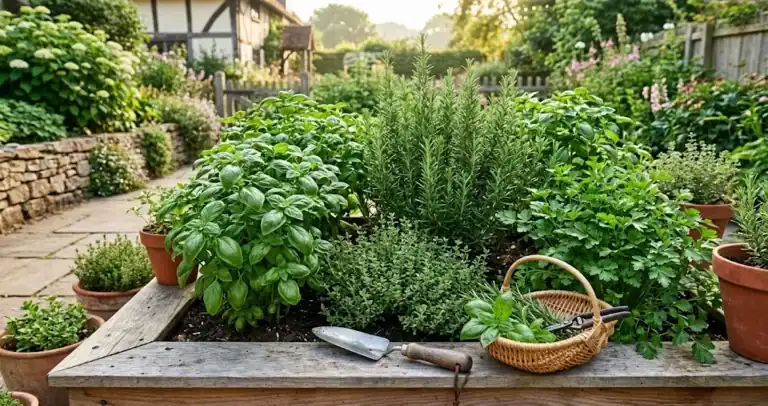
This guide shows you how to make an herb garden outdoors, in a raised bed, or in containers. Start with a manageable group of plants, then expand after you learn how your space behaves through one growing season.
Choose the right growing space first
Most culinary herbs grow best with at least six hours of direct sunlight. Watch your proposed spot for a day before buying plants. Morning sun is especially useful because it dries dew from leaves, while a hot west-facing wall may need a little afternoon protection in very warm climates.
A kitchen garden works best when it is close enough to visit often. Place pots by a sunny door, tuck a raised bed beside a path, or use a bright patio. Convenience matters because regular snipping, checking the soil, and noticing wilt happen naturally when the garden is on your daily route.
- Choose a level site with sun and easy access to water.
- Use a bed only where water can drain away after rain.
- Use containers when you rent, have poor native soil, or want to move tender plants.
- Keep mint in its own pot. Its roots spread quickly and can overtake a bed.
For a fuller plan that covers layouts and long-term care, see a practical guide to building an herb garden that lasts. This page focuses on the first decisions that make planting easier.
Pick a simple herb garden layout
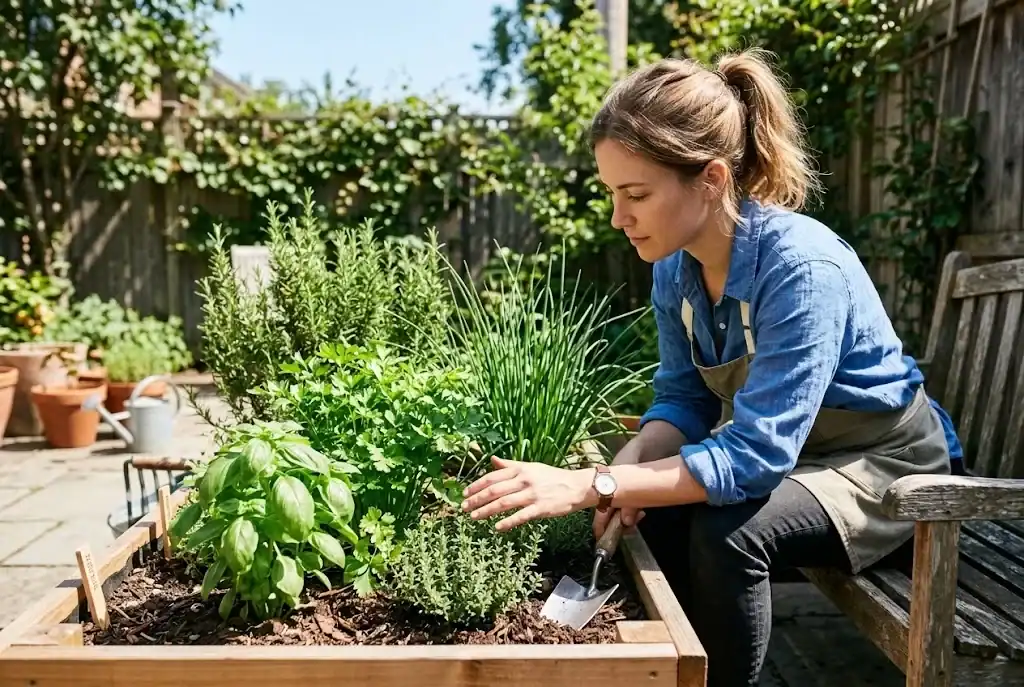
Group plants by water and sun needs instead of arranging them only by height. Mediterranean herbs such as rosemary, thyme, sage, and oregano prefer full sun and fast-draining soil. Basil, parsley, cilantro, and chives also appreciate sun, but they usually want more even moisture.
In a small garden, make one dry section and one moderately moist section. A raised bed can hold both zones if you place the drought-tolerant group along its warm, well-drained edge. In pots, the easiest solution is one herb or one compatible group per container.
Give each mature plant room to fill out. Crowded herbs stay damp longer, compete for light, and are harder to harvest cleanly. Read the plant label for mature width, then plan for the size of the adult plant rather than the small nursery pot.
Choose herbs you will use
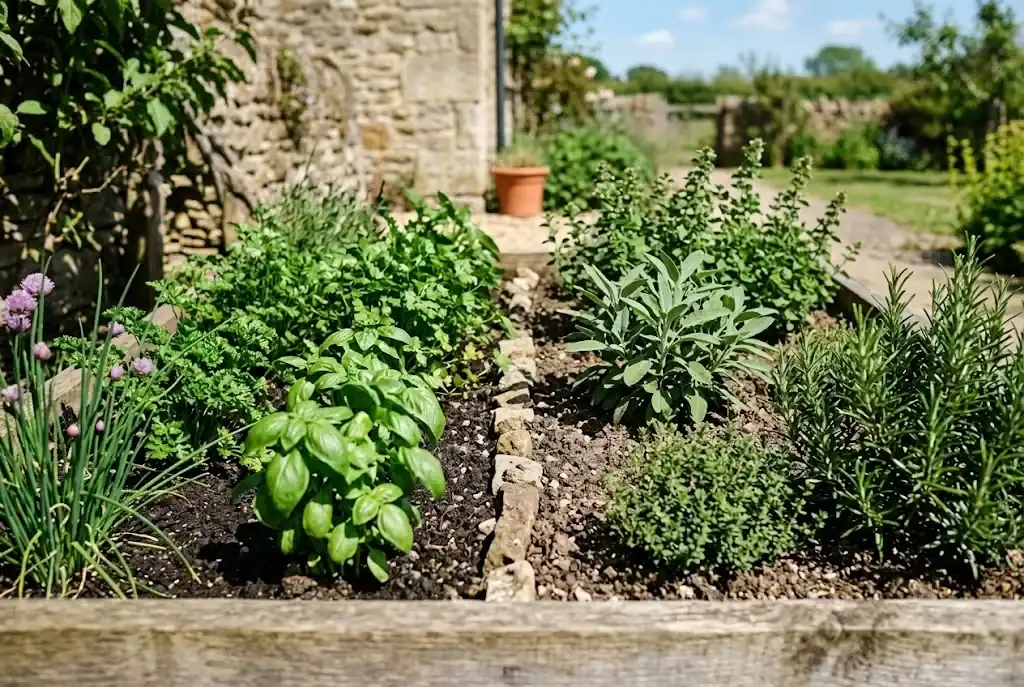
The best herbs to grow are the ones that fit your cooking and your conditions. For a first outdoor herb garden, basil, chives, parsley, thyme, oregano, and rosemary make a useful starting list. Basil and parsley provide tender leaves for frequent picking. Chives return reliably, while thyme, oregano, and rosemary are perennial herbs in many regions.
Cilantro grows quickly in cool weather but often bolts when temperatures rise. Dill can self-seed, and sage grows into a small woody shrub with age. Start with three to six herbs rather than trying to plant every favorite at once.
If you want to begin from seed, learn what to look for when choosing herb seed before filling a tray. Buy vigorous starter plants for slow-growing herbs such as rosemary when you want an earlier harvest.
For a new gardener, chives are one of the easiest herbs to grow. They handle a small pot well, and a reliable grower can cut a few leaves whenever a meal needs a mild onion flavor.
Prepare soil or containers for good drainage
Herbs need oxygen around their roots as much as they need water. In a garden bed, loosen compacted soil and mix in finished compost if the soil is thin or lacks organic matter. Avoid building a rich, soggy bed for rosemary, thyme, or oregano. They are more likely to struggle in soil that stays wet than in soil that is merely lean.
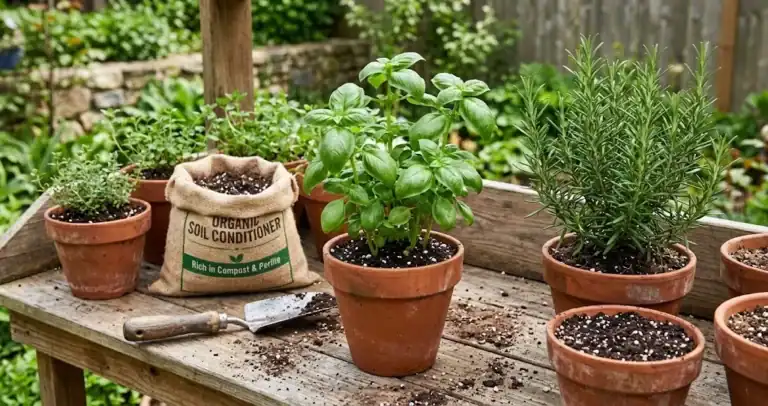
For containers, use a fresh potting mix rather than heavy garden soil. Every pot needs holes in its base. Choose a container large enough to hold roots through the season, and use a saucer only when you empty standing water after rain or watering.
Soil is not a background detail. It controls how quickly water moves, how roots explore, and how steadily plants grow. Read more about why soil has such a strong effect on herb growth before making major changes to a difficult bed.
Plant your herbs with a clear plan
Plant outdoors after the danger of frost has passed for tender herbs such as basil. Cool-season plants, including parsley and cilantro, can often go out earlier when local conditions allow. Check the label and your local frost dates rather than relying on a calendar alone.
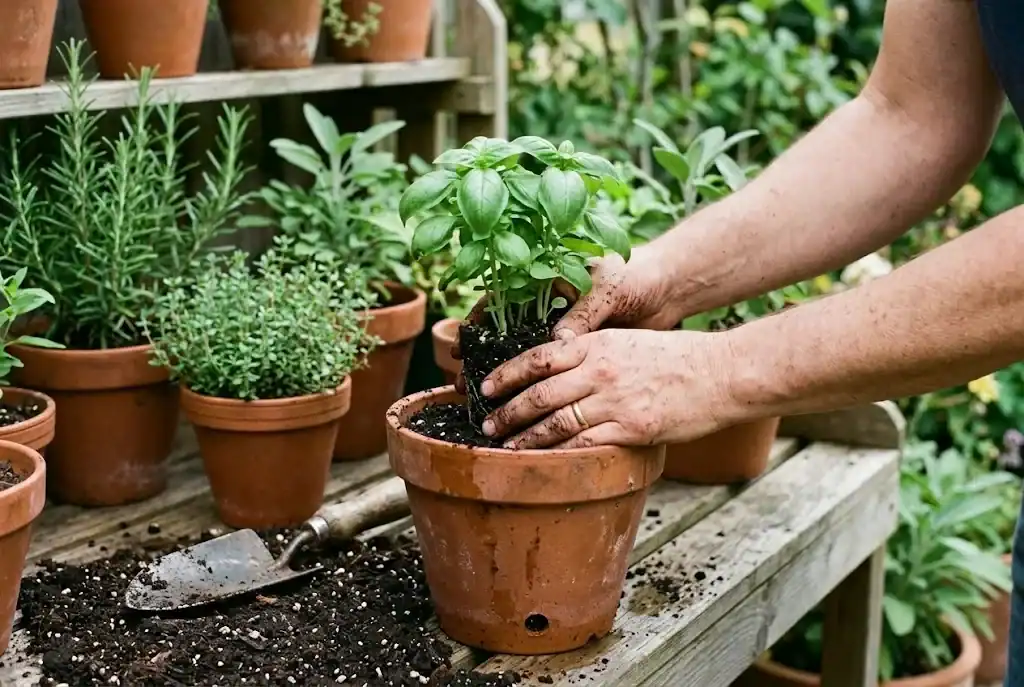
- Water plants in their nursery pots before planting.
- Dig a hole as deep as the root ball and a little wider.
- Set the plant at the same depth it grew in the pot.
- Backfill gently, firm the soil with your hands, and water slowly.
- Add a light mulch around outdoor plants, keeping it away from woody stems.
Do not fertilize heavily at planting. Too much fast-release fertilizer can produce lush, weak growth with less concentrated flavor. Compost and a modest, slow-release feed are usually enough when plants show they need support.
Water according to the plant, not the calendar
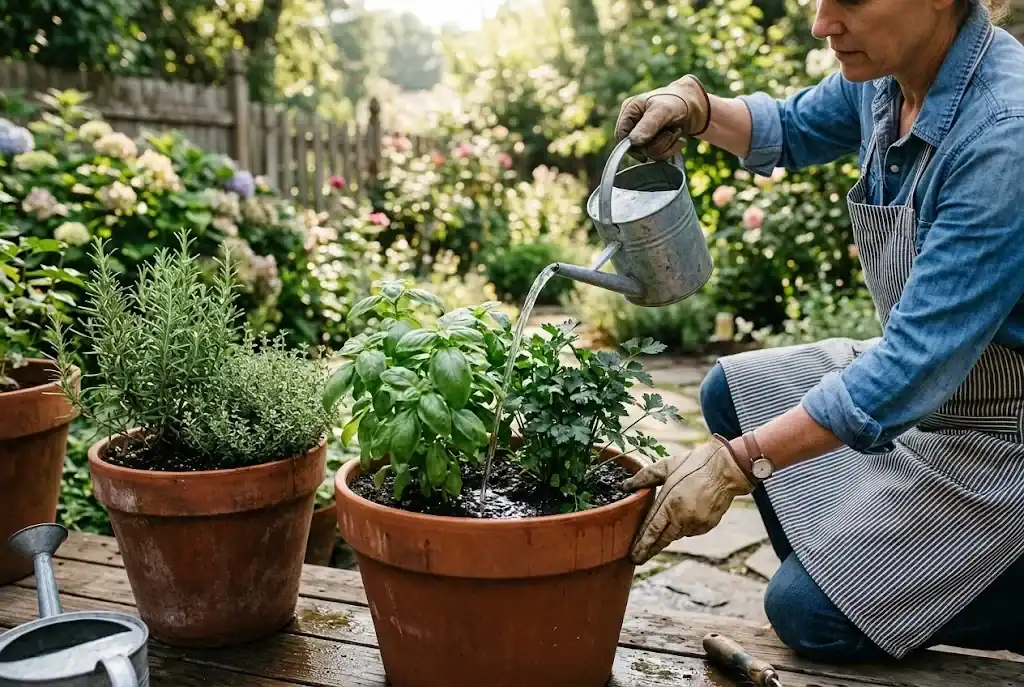
Check moisture a finger deep before watering. When the root zone is beginning to dry, soak it thoroughly so moisture reaches the roots. A shallow daily sprinkle encourages shallow roots and wastes water.
Basil, parsley, cilantro, and chives generally prefer more consistent moisture than rosemary or thyme. Let the soil surface dry slightly between waterings, but do not let tender leafy herbs stay dry until they collapse. In containers, hot or windy weather may mean checking every day.
Harvest early and often
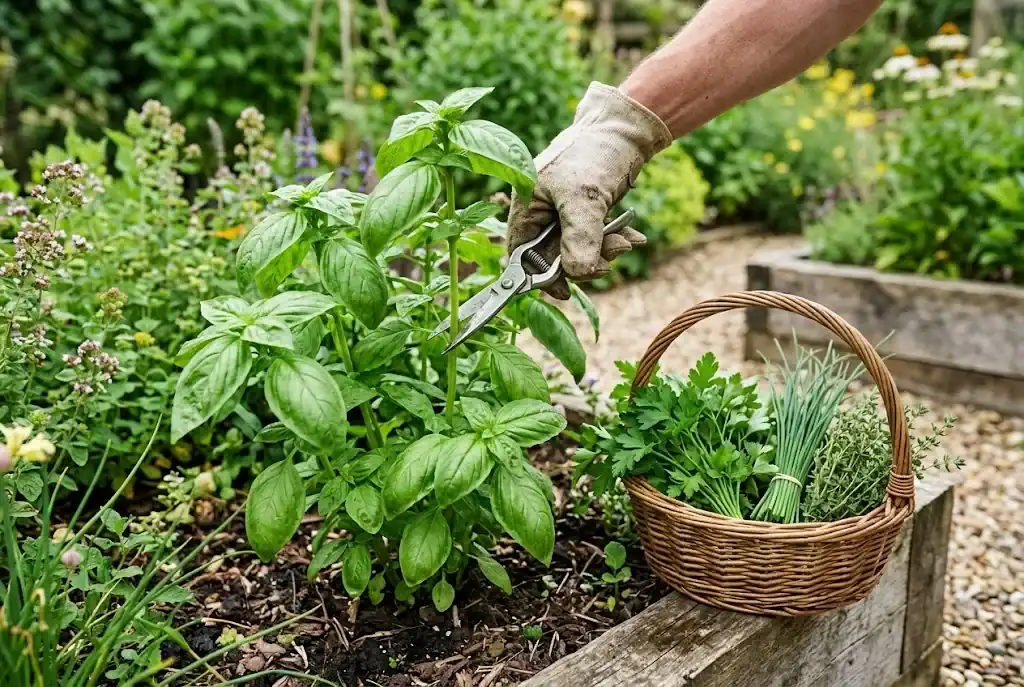
Frequent harvesting keeps many herbs compact and productive. Snip soft stems just above a pair of leaves so the plant can branch. Pick basil before it sets many flowers, trim chives a few inches above the soil, and take small amounts from woody herbs rather than cutting bare old stems.
Use fresh herbs soon after harvest for the clearest flavor. When the garden gives you more than you can use, dry sturdy herbs such as oregano, rosemary, sage, and thyme in small bundles or freeze chopped tender herbs in water or oil. Label everything with the herb and date.
Common herb garden mistakes to avoid
- Planting in too little sun: Growth becomes thin and flavor is often weak.
- Using pots without drainage holes: Roots can rot in standing water.
- Watering every plant the same way: Match care to each herb’s preferred growing conditions.
- Putting mint in a shared bed: It can crowd out neighboring herbs.
- Waiting too long to harvest: Regular picking encourages useful new growth.
- Starting too big: A small garden you tend well teaches more than a large neglected one.
Frequently asked questions
Can I grow herbs indoors?
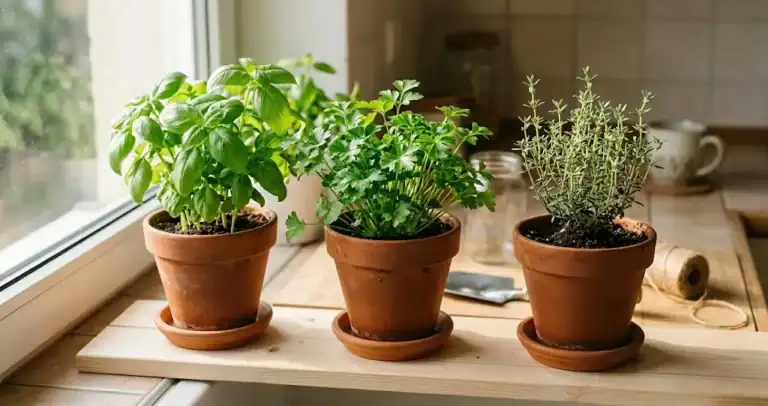
Yes. Grow herbs indoors in the brightest available window, ideally one with several hours of direct sun. Use pots with drainage holes and rotate them weekly so growth stays even. If light is weak, choose a supplemental grow light rather than expecting a dim windowsill to support basil or rosemary.
What three herbs grow well together?
Thyme, oregano, and sage grow well together when they receive full sun and fast-draining soil. Basil, parsley, and chives can share a larger container or bed section if you keep their soil evenly moist. Keep mint separate.
What time of year should I start an herb garden?
Start planning anytime. Plant hardy herbs and cool-season seedlings when local spring conditions allow, then plant basil and other tender herbs after frost risk has passed. In mild climates, fall can also be a good time to establish perennial herbs.
Start small, then let the garden teach you
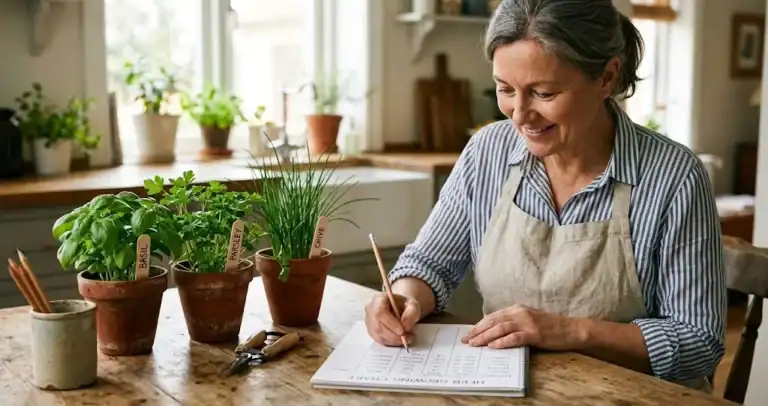
To make an herb garden, choose sun, drainage, and a short list of plants you enjoy using. Keep notes on what thrives, what needs more water, and what you harvest most. Those observations will guide a better second season than any oversized first planting plan.