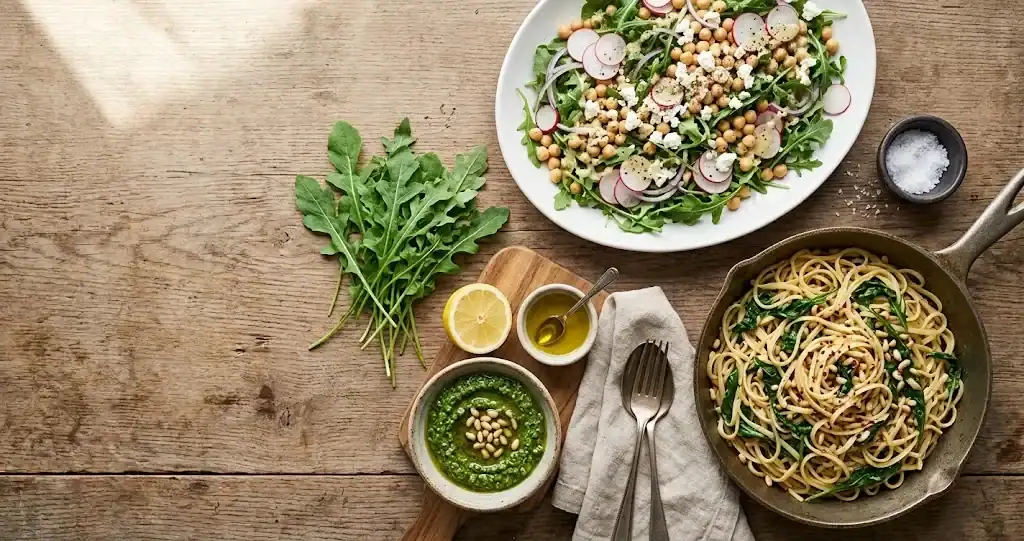
A bag of arugula wilts fast in the crisper drawer, so the real question is what to make before it turns. This peppery green, sometimes labeled rocket, works raw in a fast salad, stirred into hot pasta, blended into a pesto, or added to a warm grain bowl. The five recipes below cover that ground, and the longest takes about 35 minutes, quick enough for a weeknight dinner or a light lunch.
Arugula belongs to the mustard family, which explains its sharp bite. It is technically a salad green rather than a culinary herb, but if the pantry vocabulary around herbs is useful too, this rundown of familiar culinary herbs covers what they taste like and how they are commonly used.
Raw or cooked: a quick note before you start
Arugula holds up differently depending on how you use it. Left raw, it keeps its crunch and sharp flavor, so dress it right before serving or it turns soggy fast. Add it to a hot pan or a bowl of pasta in the final seconds of cooking, and the heat will wilt it into something closer to sauteed spinach than the raw leaf. For a deeper technique walkthrough, this guide to cooking with arugula at home covers more ground than a recipe collection can.
Rinse the leaves either way. Bagged greens labeled washed or ready to eat can go straight into a bowl, but rinse anything else under cold running water, including the bunched leaves called for in the sauteed recipe below, since they are field grown and often gritty. Dry them well before cooking or dressing: wet leaves steam instead of searing in a hot pan, and they dilute a vinaigrette instead of letting it cling.
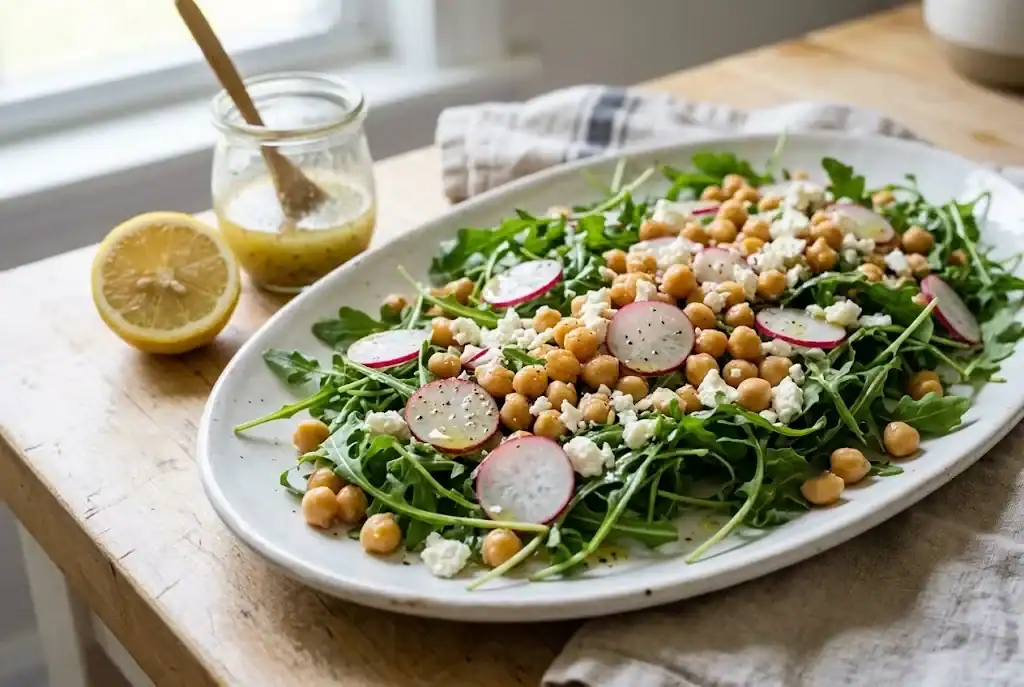
Chickpea, feta, and arugula salad with lemon vinaigrette
Servings: 4 | Prep time: 15 minutes | No cooking required
Ingredients
- 5 ounces baby arugula (about 6 cups, loosely packed)
- 1 can (15 ounces) chickpeas, rinsed and drained
- 4 radishes, thinly sliced
- 1/3 cup crumbled feta cheese
- 3 tablespoons olive oil
- 2 tablespoons fresh lemon juice
- 1 small shallot, minced
- 1/2 teaspoon Dijon mustard
- Salt and black pepper, to taste
Instructions
- Whisk the olive oil, lemon juice, shallot, and Dijon mustard in a small bowl until combined. Season with salt and pepper.
- Spread the arugula on a wide platter instead of piling it in a bowl, so the leaves don’t clump together.
- Scatter the chickpeas, radishes, and feta over the top.
- Drizzle with the vinaigrette right before serving, then lift and turn the leaves gently with two spoons rather than tossing. Dressed arugula turns limp within about 20 minutes, so hold off until guests are at the table.
For a creamier version, fold in diced avocado, swap in goat cheese for a tangier bite, or scatter in toasted walnuts for crunch.
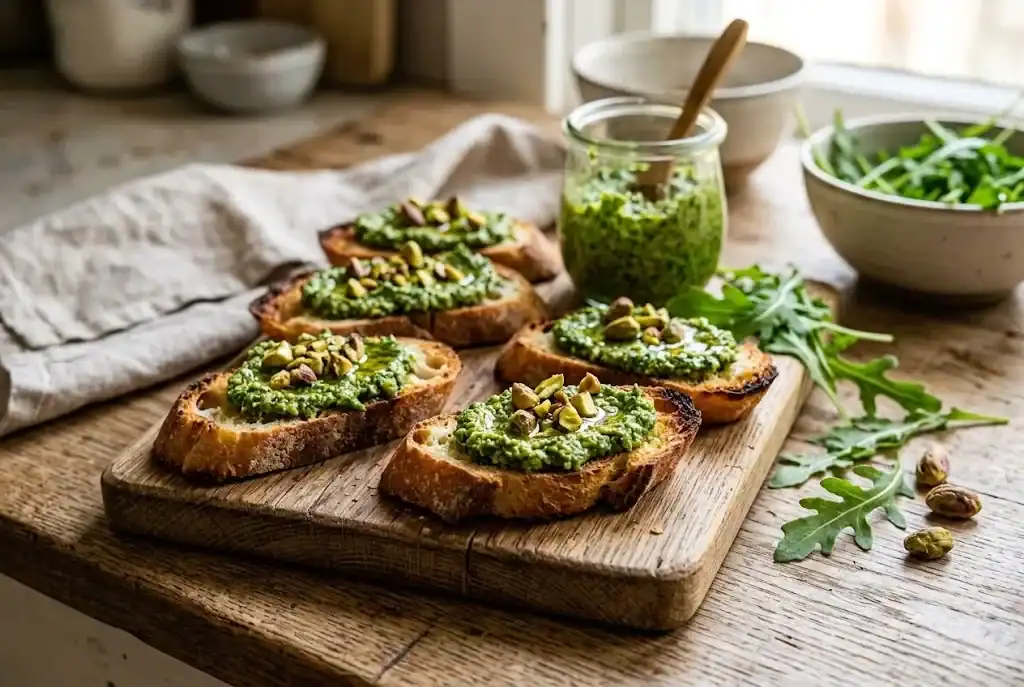
Pistachio pesto crostini
Makes about 1-1/2 cups pesto, enough for about 24 crostini | Prep time: 10 minutes
Ingredients
- 3 cups packed arugula
- 1/2 cup shelled unsalted pistachios, plus extra chopped for topping
- 1/2 cup grated Parmesan cheese
- 1 garlic clove
- 1/2 cup olive oil
- 1 tablespoon fresh lemon juice
- Salt and black pepper, to taste
- 1 baguette, sliced 1/2 inch thick and toasted, for serving
Instructions
- Combine the arugula, pistachios, Parmesan, and garlic in a food processor. Pulse until finely chopped.
- With the processor running, slowly stream in the olive oil until the pesto is smooth but still has some texture.
- Add the lemon juice, then season with salt and pepper.
- Spread the pesto over the toasted baguette slices and finish with a few chopped pistachios and a light drizzle of olive oil.
This pesto keeps about 4 days in a sealed jar in the refrigerator. If pistachios aren’t in the pantry, toasted almonds or pine nuts work just as well, though the flavor will lean earthier.
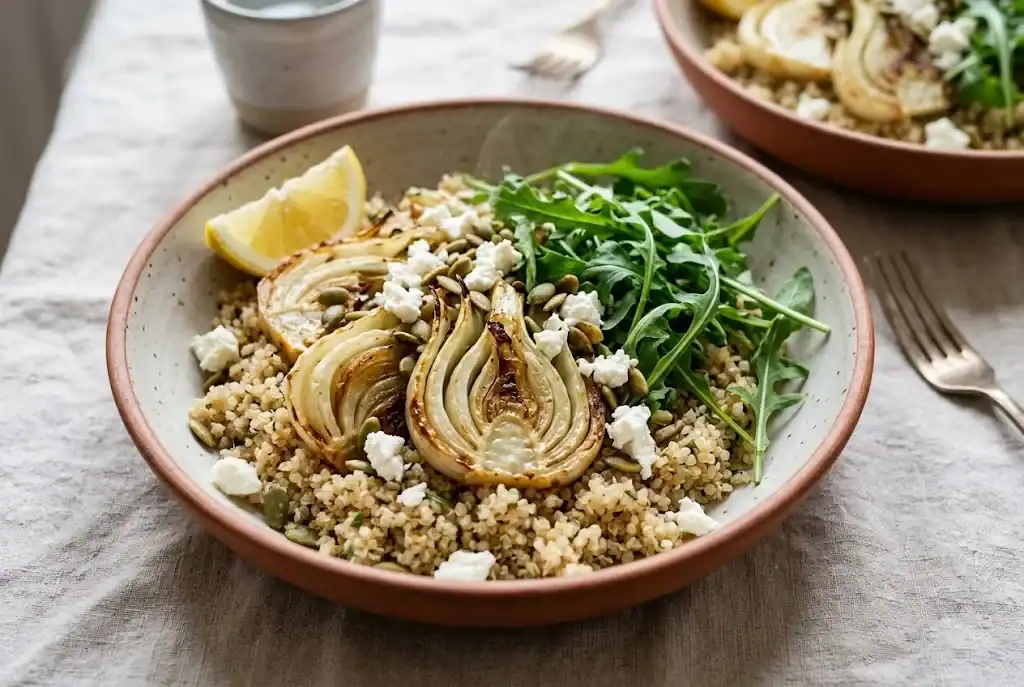
Warm quinoa bowl with roasted fennel and feta
This also works as a make-ahead side dish for roasted meat.
Servings: 4 | Prep time: 10 minutes | Cook time: 25 minutes
Ingredients
- 1 cup dry quinoa, rinsed
- 2 cups water or vegetable broth
- 1 fennel bulb, cored and thinly sliced
- 2 tablespoons olive oil, divided
- 4 ounces arugula (about 4 cups)
- 1/2 cup crumbled feta cheese
- 1/4 cup toasted pumpkin seeds
- 2 tablespoons fresh lemon juice
- Salt and black pepper, to taste
Instructions
- Preheat the oven to 400 F. Toss the fennel with 1 tablespoon of the olive oil and a pinch of salt, spread it on a sheet pan, and roast for 20 to 25 minutes, stirring once, until browned at the edges.
- Meanwhile, bring the quinoa and water to a boil in a small saucepan. Cover, reduce the heat to low, and simmer for 15 minutes, or until the liquid is absorbed. Fluff with a fork.
- Divide the warm quinoa among four bowls. Add a generous handful of arugula to each bowl while the quinoa is still warm, so the leaves soften slightly against the heat.
- Top with the roasted fennel, feta, and pumpkin seeds. Drizzle with the remaining olive oil and the lemon juice, then season with salt and pepper.
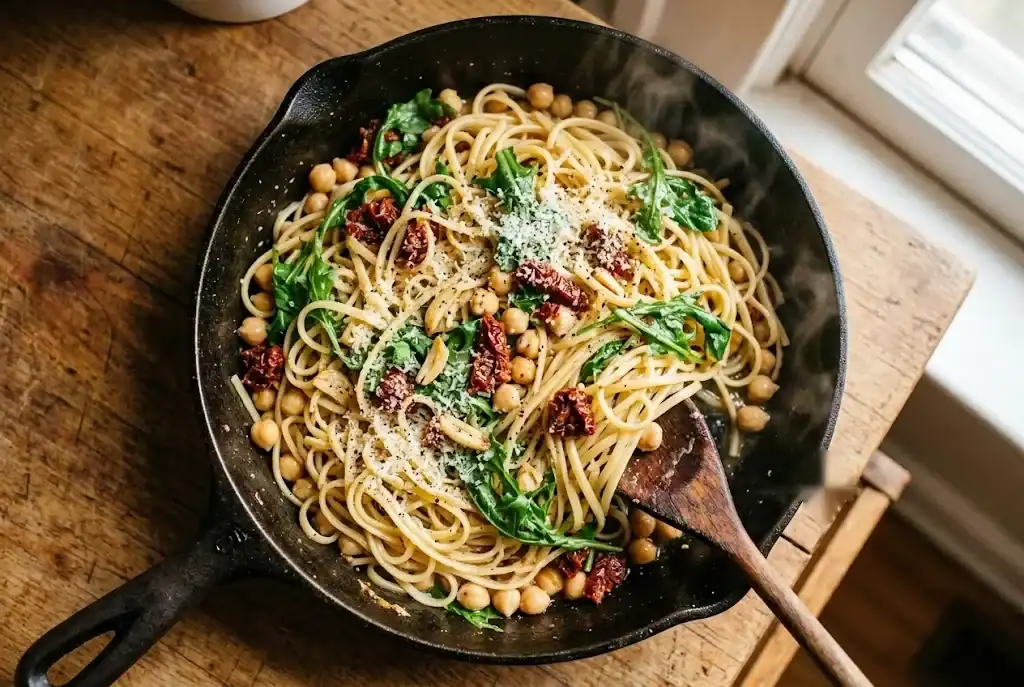
Skillet linguine with chickpeas and sun-dried tomatoes
Servings: 4 | Prep time: 10 minutes | Cook time: 20 minutes
Ingredients
- 12 ounces linguine
- 3 tablespoons olive oil
- 3 garlic cloves, thinly sliced
- 1/2 cup oil-packed sun-dried tomatoes, chopped
- 1 can (15 ounces) chickpeas, rinsed and drained
- 1/4 teaspoon red pepper flakes
- 5 ounces arugula (about 6 cups)
- 1/2 cup reserved starchy cooking water
- 1/2 cup grated Parmesan cheese, plus more for serving
- Salt and black pepper, to taste
Instructions
- Cook the linguine in a large pot of salted boiling water until just shy of al dente, about 1 minute less than the package directs. Reserve 1/2 cup of the cooking water, then drain the noodles.
- While the linguine cooks, warm the olive oil in a large skillet over medium heat. Add the garlic and red pepper flakes and cook for about 30 seconds, until fragrant.
- Stir in the sun-dried tomatoes and chickpeas and cook for 3 minutes, until the chickpeas are heated through.
- Add the drained linguine to the skillet along with the reserved cooking water. Toss for 1 to 2 minutes, letting the starch build a light sauce that clings to the noodles.
- Remove the skillet from the heat, add the arugula, and toss until it collapses into the hot noodles. Stir in the Parmesan, then season with salt and pepper.
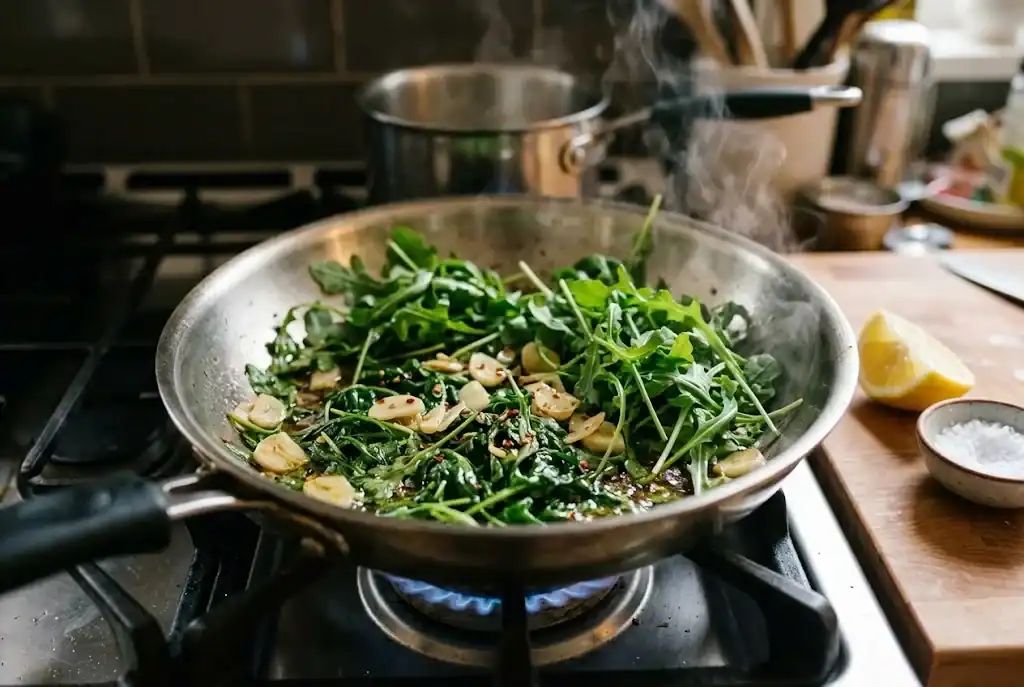
Quick garlic-sauteed arugula
Servings: 2 as a side | Prep time: 5 minutes | Cook time: 5 minutes
Ingredients
- 2 tablespoons olive oil
- 3 garlic cloves, thinly sliced
- 10 ounces arugula (about two large bunches), tough stems trimmed
- Pinch of red pepper flakes
- 1 tablespoon fresh lemon juice
- Salt and black pepper, to taste
Instructions
- Warm the olive oil in a large skillet over medium heat. Add the garlic and cook for about 30 seconds, until just golden, taking care not to let it burn.
- Add the arugula in two or three batches, tossing each addition with tongs as it collapses down, almost the way spinach does in a hot pan.
- Once it is all added and just softened, about 2 minutes total, remove the pan from the heat so it doesn’t turn mushy.
- Finish with the lemon juice, red pepper flakes, salt, and pepper. Serve warm alongside grilled chicken, fish, or a fried egg for a fast, simple plate.
Buying and storing arugula for these recipes
Arugula is more delicate than kale or collards, so buy it close to your cooking day and check the bag for wet leaves before you pay. The baby version suits the raw salad above; the mature leaf’s stronger edge suits the roasted fennel bowl or the sauteed side. Once home, keep it in the crisper in its original bag or a loosely closed container with a dry paper towel tucked in, and use it within three to five days. For how long it keeps, and how to revive leaves that have gone limp, this guide on storing arugula properly walks through the details.
Common questions about arugula
What does arugula taste like?
Fresh arugula has a sharp, mustardy bite that gets stronger as the plant matures. Young baby leaves are much milder, so start there if the mature leaf tastes too sharp raw.
Is arugula the same as rocket?
Yes, mostly. Rocket is the British and Australian name for the plant. The accepted botanical name used in these recipes is Eruca vesicaria, with Eruca sativa treated as a synonym for the same species. Wild rocket sold in UK and Australian shops is usually a different, sharper plant, Diplotaxis tenuifolia, but for the everyday rocket at the grocery store, arugula is exactly what to buy.
Why does arugula sometimes cause stomach discomfort?
Arugula is a cruciferous vegetable, related to broccoli and kale, and its fiber can cause mild gas or bloating for some people, especially raw and in large servings. Cooking it tends to ease that. If discomfort is severe, lasts more than a day or two, or comes with other symptoms, check with a doctor rather than assuming this green is the cause.
What pairs well with arugula in a recipe?
Its sharp flavor balances well against something fatty or creamy, such as olive oil, cheese, or ripe fruit, and something sweet or acidic, such as lemon, balsamic vinegar, or roasted vegetables. Toasted walnuts, pistachios, or pumpkin seeds add crunch once the leaves soften under a warm topping or dressing.