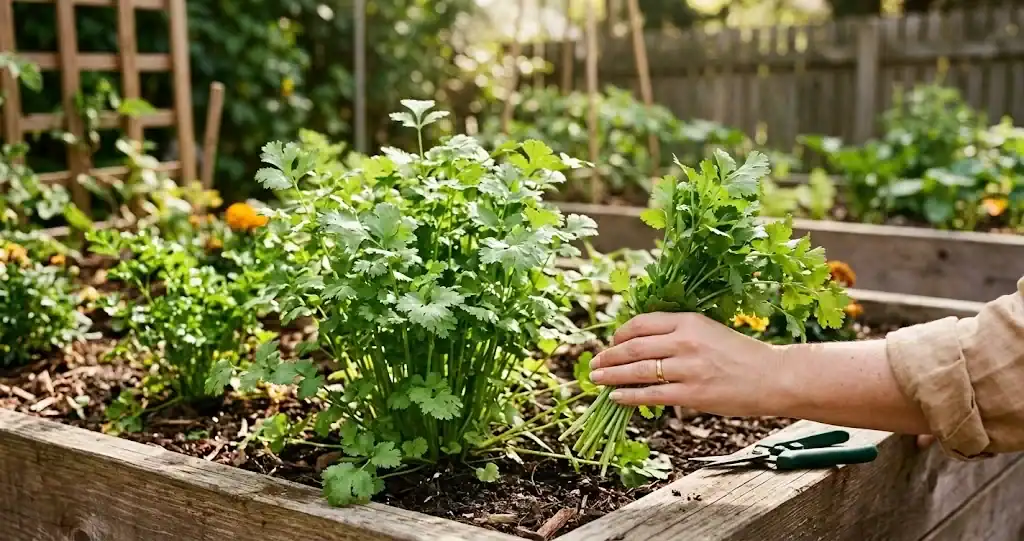
A cilantro plant gives you two harvests if you let its season unfold. Snip the tender, bright green leaves while the plant is leafy, then leave a few plants to flower and collect their dry seeds as coriander. The timing and cutting method change with the part you want.
For a broader look at timing and tools across the garden, see this practical guide to harvesting herbs. This page stays focused on coriander and cilantro from the same plant.
Coriander and cilantro come from the same plant
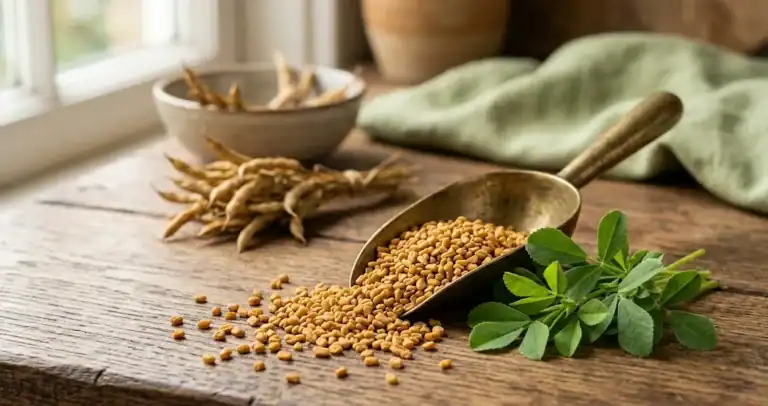
In US cooking, cilantro usually means the fresh leaves and tender stems of Coriandrum sativum. Coriander usually means its round, dried seeds. The roots are also used in some cuisines, but they are a separate, whole-plant harvest.
Choose your goal before you cut. Regular leaf picking can give you several small harvests. Letting a plant bolt, flower, and set seed ends leaf production but gives you coriander seed to dry, grind, cook with, or sow next season.
When to harvest cilantro leaves
Begin harvesting when plants are about 6 inches tall and have several sturdy stems. Pick before the plant sends up a tall flower stalk, while the foliage is still soft and fragrant. Cool conditions keep a cilantro plant leafy longer; heat and long days encourage it to bolt. Oregon State University Extension notes that temperature and day length both affect flowering and seed set. Read its cilantro and coriander growing guidance.
Harvest in the morning after dew has dried, when the leaves look firm. Do not wait for a thin, flowering plant to make a big leaf harvest. Once it starts to go to seed, the flavor and texture of the leaves decline quickly.
How to harvest cilantro without stripping the plant
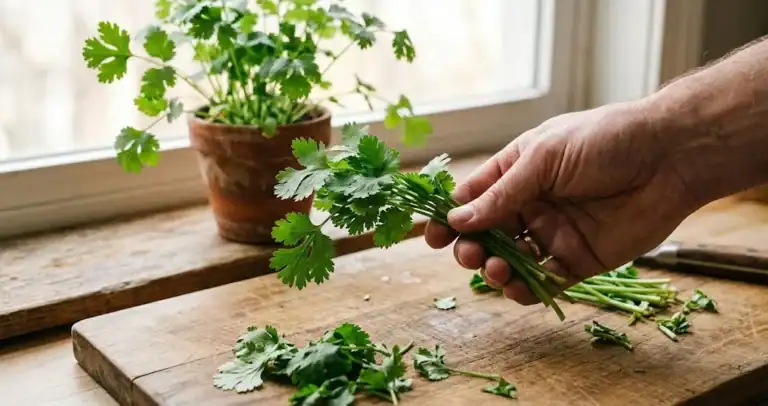
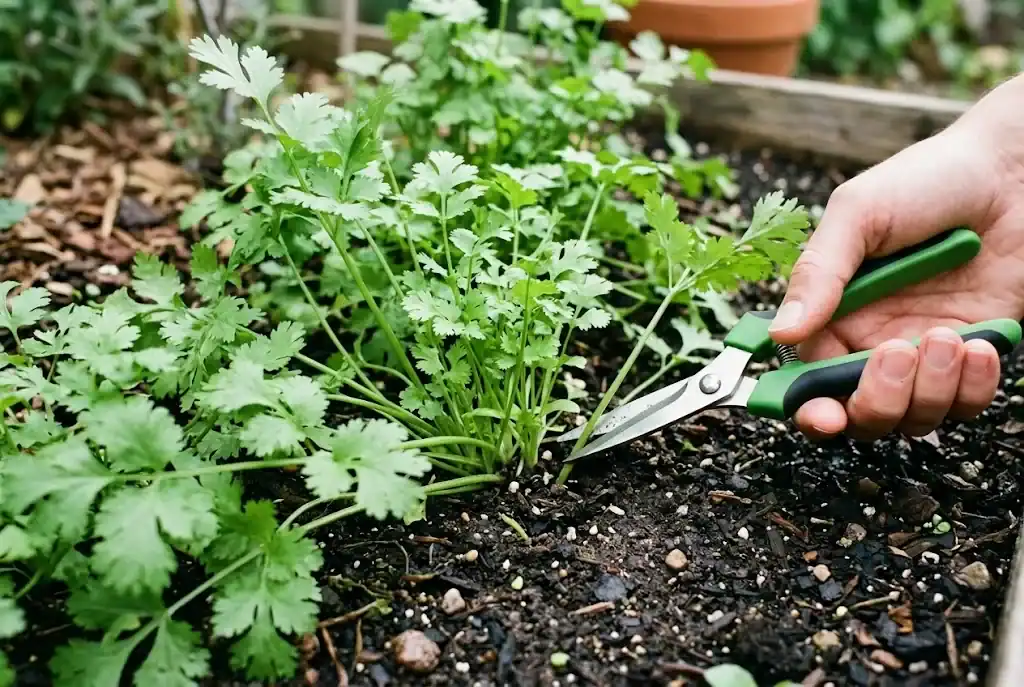
- Use clean scissors or garden snips.
- Choose outer stems first and cut them near the base, leaving the small center shoots in place.
- Take no more than about one-third of the leafy growth at one time.
- Rinse only what you plan to use soon, then give the plant water if the soil is dry.
Cutting stems instead of plucking individual leaves makes a cleaner harvest and leaves the growing point intact. You can harvest cilantro every few days when it is growing strongly, but let it replace foliage before taking another large handful. A plant can regrow after a light cut, though it will not keep producing forever.
When coriander seeds are ready to harvest
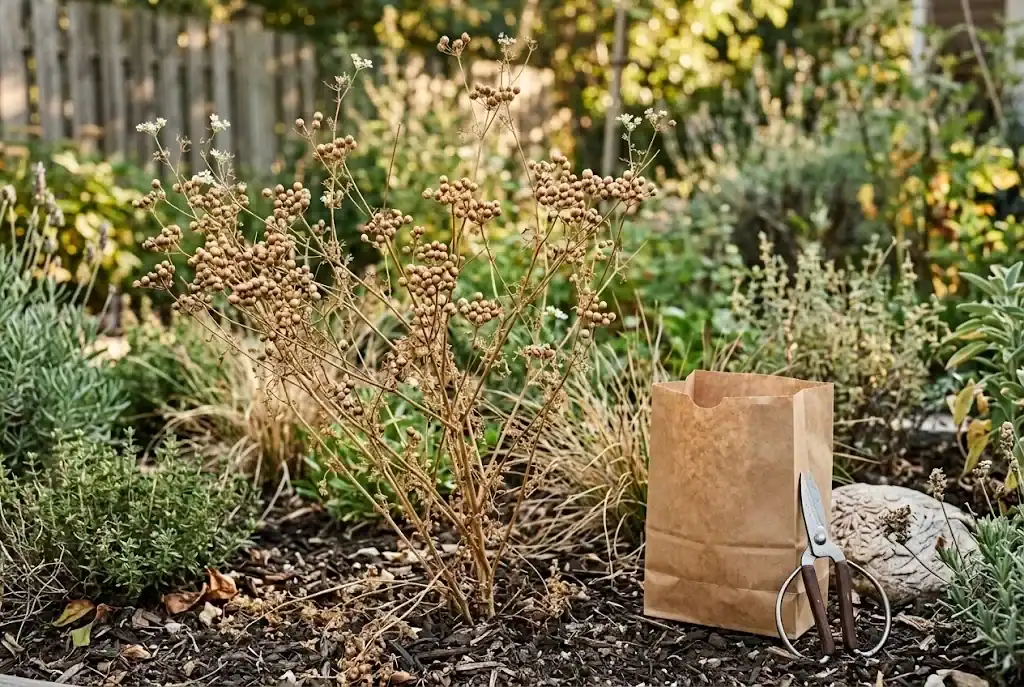
Leave selected plants alone once they flower. Their small white flowers form green, round seed heads. Wait until most seed pods turn light brown and feel dry and papery on the stalk. Catch them before they shatter or drop in wind and rain.
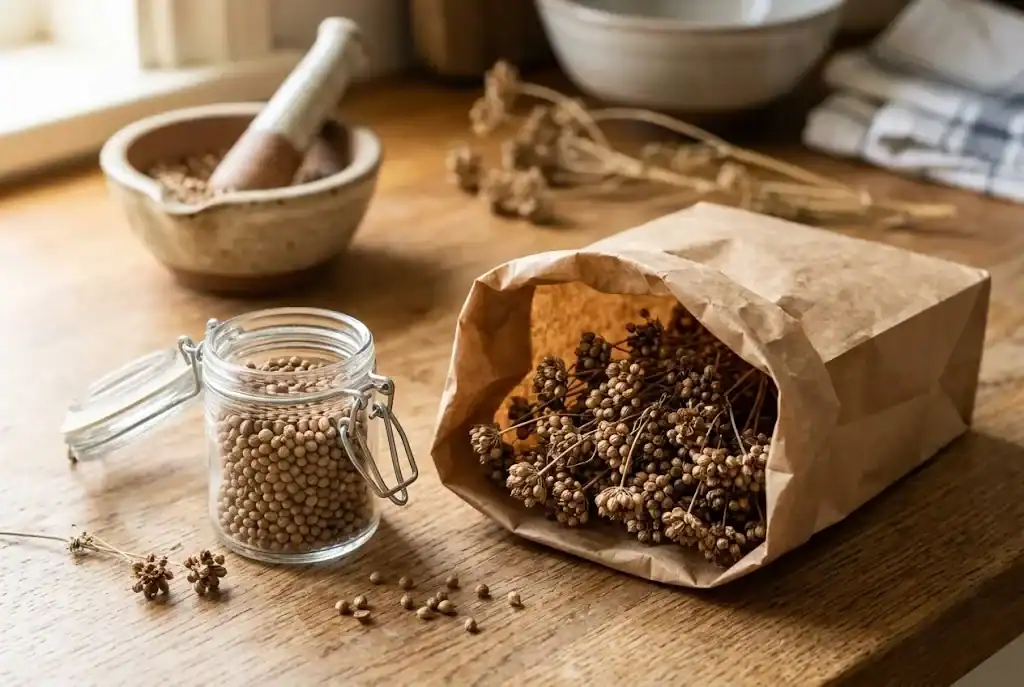
If wet weather, birds, or a hard frost threaten, cut whole seed heads with several inches of stalk while they are mostly brown. They can finish drying indoors. OSU Extension similarly advises cutting the stalks, placing them in a paper bag, and storing them somewhere cool and dry to finish drying. See its harvest and storage notes for cilantro.
How to harvest coriander seeds step by step
- Hold a paper bag under a dry seed head.
- Snip the stalk and place the head, not loose seeds, into the bag.
- Label the bag and keep it in a dry, airy spot for one to two weeks.
- When the stalks are crisp and the seeds are fully dry, rub the seed heads gently between your hands inside the bag.
- Separate large bits of stem, then move the dried seeds to a clean, airtight container.
Do not seal seeds that still feel cool, soft, or flexible. Give them more drying time first. For cooking, lightly toast whole coriander seed in a dry pan and grind only what you need, using a mortar and pestle or spice grinder. Freshly ground coriander has a warmer, citrusy aroma than old pre-ground spice.
Handle the harvest before you store it
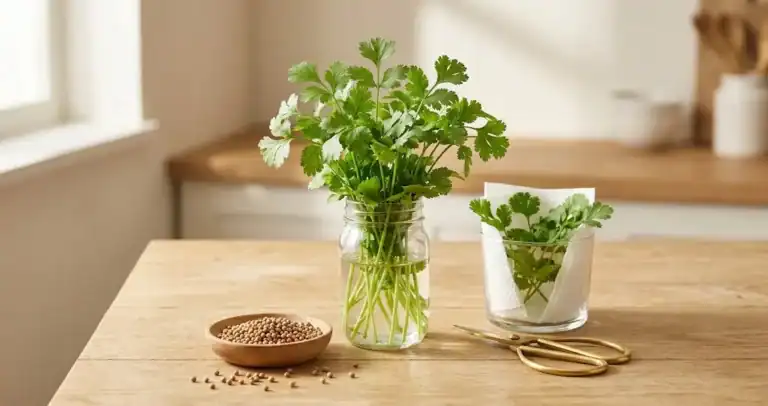
Keep leaf stems dry until you are ready to use them. If you need a short pause, stand the stems in a small glass of water in the refrigerator and cover them loosely. For seed harvests, keep the container away from heat, moisture, and direct light. Good drying matters more than rushing the jar.
For a full walkthrough of refrigerating, freezing, and drying the leafy portion, learn how to keep harvested coriander fresh after you finish picking.
What to do when cilantro bolts
Bolting is a change of plan, not a failed crop. If you want leaves, sow small batches every few weeks and begin a new planting when older plants flower. If you want coriander seeds, let the best plants finish their cycle. The flowers also feed beneficial insects, so leave a few seed-bound plants standing if you have room.
Use the part you harvested
Use cilantro leaves fresh in salsa, salads, soups, or tacos, adding them near the end so their flavor stays bright. Use whole or ground coriander in curries, pickles, marinades, and stews. For more ideas once the garden work is done, explore ways to cook with coriander.
Frequently asked questions
Can you eat coriander when it goes to seed?
Yes. The seeds are the coriander spice. Let them mature until mostly brown, dry them fully, then use them whole or ground.
How often should you harvest cilantro?
Take a few outer stems whenever the plant has enough leafy growth to spare. Frequent light cuts work better than removing most of the plant at once.
Does coriander regrow after being cut?
A leafy cilantro plant can regrow after a light harvest if its center shoots remain. A plant harvested for seed has completed its annual cycle and will not return after the stalks dry.