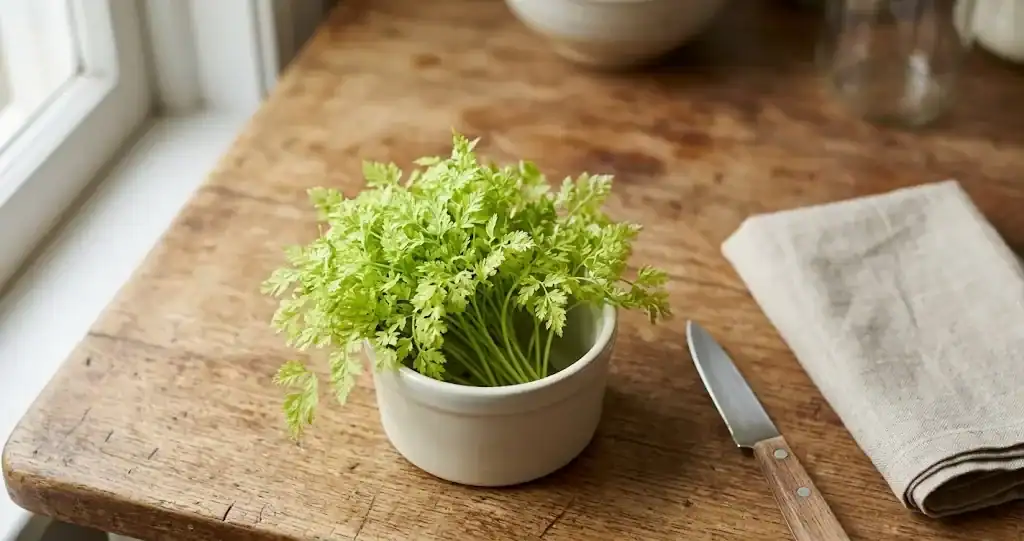
Chervil sits in the quiet corner of the rack next to chives and tarragon: small leaves, easy to overlook, gone in a week if you blink. That is also the point. It brings a fresh, lightly sweet lift to anything that needs a finishing touch and disappears into a plate without announcing itself. Once you know what to do with a small bunch, plain weeknight cooking starts to taste like it came from a nicer kitchen. Chervil is an annual herb, easy to start from seed in spring’s cool soil, and most gardeners find chervil will flower and seed itself once it gets going. For cooking, the soft, lacy leaves are what you want; the stem is edible but a bit tougher, so use it for stocks.
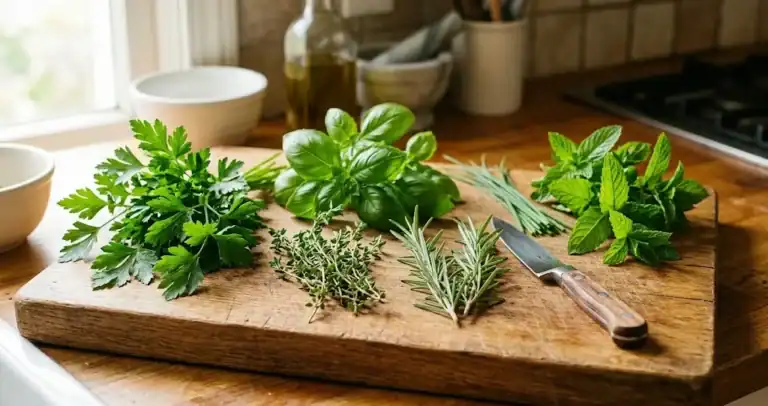
For a broader look at how this little green sits next to basil, thyme, and the rest of the cook’s shelf, our guide to the culinary herbs worth cooking with is the place to start.
What it tastes like
It tastes like its two kitchen neighbors had a quieter, more polite child. There is a soft grassiness from one side, a faint licorice note from the other, and a bright green lift you do not really get from either alone. The flavor is delicate, like a delicate herb that asks you to leave it alone most of the time and treat it as a finishing herb at the end. Heat mutes the flavour quickly. Add the leaves at the end of cooking or scatter raw as a finishing touch, the same way you would use fresh dill or chives. If you have ever wondered what chervil tastes like, or how chervil compares to those flat-leaf greens: similar to parsley in look and to cilantro in tone, but it has a soft anise edge that the flat-leaf green lacks in that faint cool note but without the soapiness some people taste in cilantro.
This herb is sometimes sold as French parsley, a useful clue when you cannot find it labeled correctly. The leaves look like a finer, paler cousin of that flat-leaf green, similar at a glance, but the flavour runs lighter with a soft edge. If a recipe calls for chervil and you swap in the standard green, you will get a different flavor, not a worse one.
Buying and prepping
Look for bunches with bright green leaves, no yellowing or wilt, and stems that still feel perky rather than rubbery. Most grocery stores that carry a fresh herb section will have it at least seasonally. Farmers markets and CSA boxes are a more reliable source, especially in spring when the leaves are at their peak. If you grow your own, snip whole stems rather than pulling leaves off one at a time, then strip them at the kitchen counter right before you use them. A light sprinkle of water in the bag keeps the stems from wilting in the fridge for a few extra days.
Give the leaves a quick cool rinse and dry them gently in a salad spinner or between clean towels. Wet bunches clump into sad little heaps in a pan and water down vinaigrettes. If your recipe calls for chopped leaves, run a sharp knife through them once or twice rather than mincing. The herb bruises easily and turns dark at the cut edges when chopped too hard. A rough chop is the right move.
Quick ways to use it
Think of it as a finishing herb, not a cooking herb. Drop it in at the end or scatter raw on top of something finished. The list below is where it earns its keep as a versatile herb that takes to many classic French dishes.
Eggs and butter
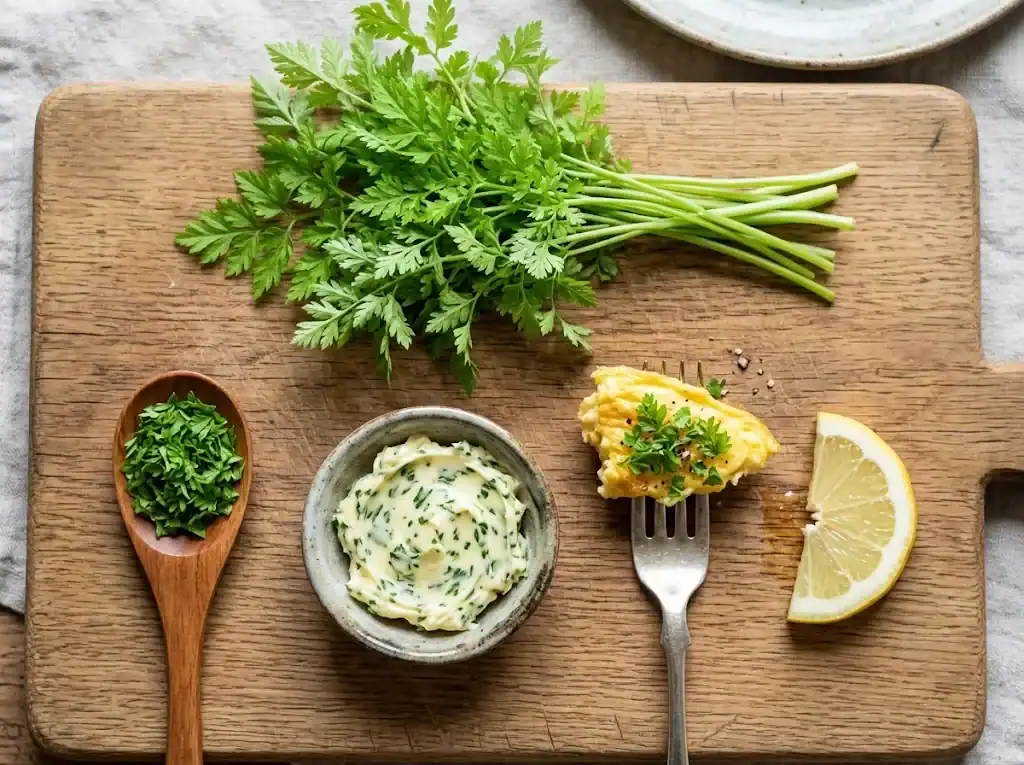
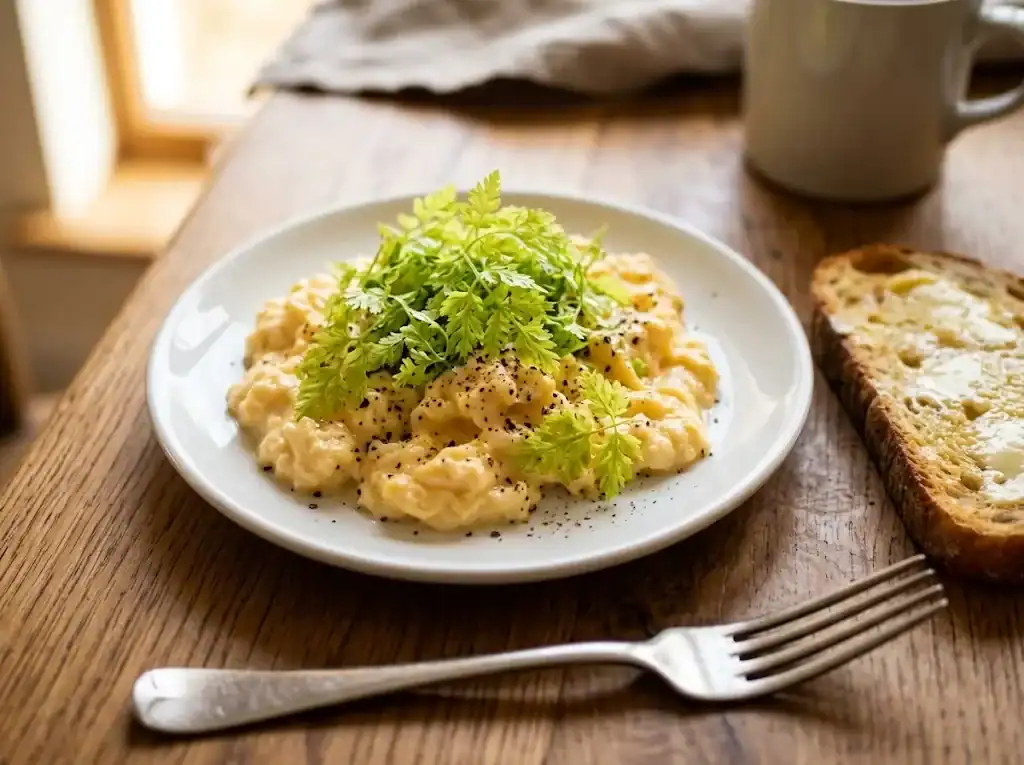
In sautéed eggs or softened butter, stir finely chopped leaves with a pinch of salt and a small squeeze of lemon. Spread that on toast, drop a pat on top of a hot omelette, or melt a spoonful over scrambled eggs just before they leave the pan. It also folds beautifully into a soft scramble: pull the pan off the heat a touch early, add the leaves, and let the residual heat finish the eggs. The same trick works in a frittata. A small dish of chervil butter in the fridge turns plain bread into an easy starter.
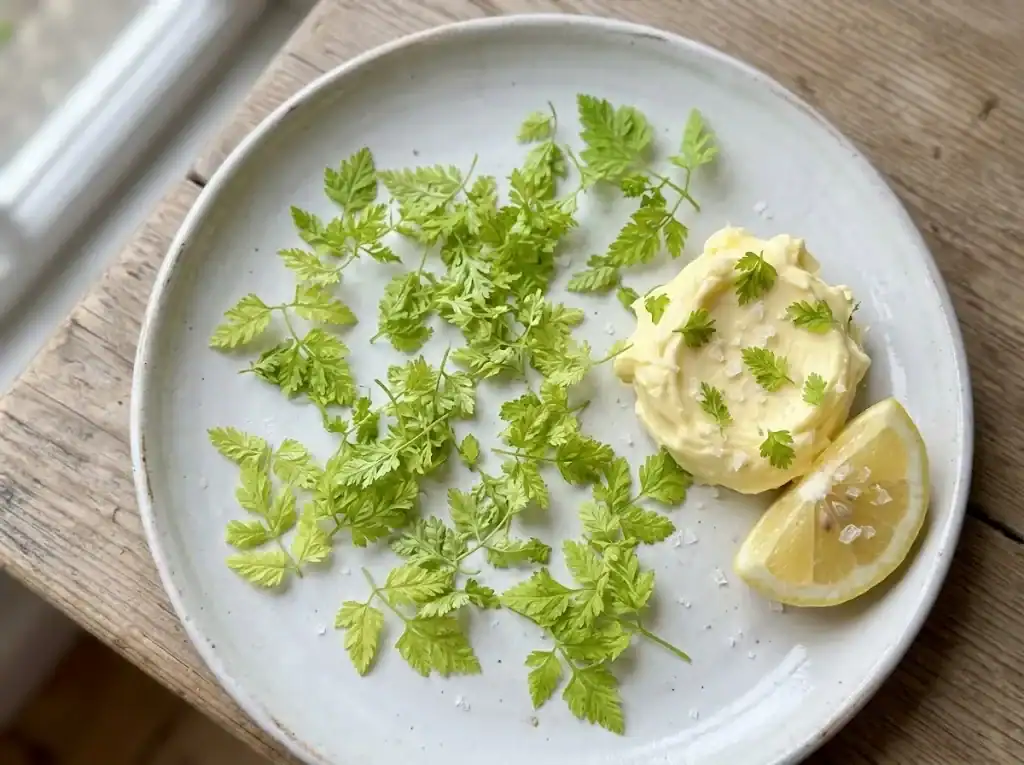
If you want more recipe ideas built around a whole bunch, our chervil recipe ideas run from simple compound butters through to a light broth and pan-seared fish with a chervil pan sauce.
Fish and chicken
Pan-seared salmon, trout, or sole takes kindly to it. Cook the fish simply with butter, lemon, and salt, then scatter a tablespoon of chopped leaves over the top right before serving. The leaves wilt just enough from the residual heat to release their flavor without going dull. Poached chicken breast benefits from the same treatment. A classic French beurre blanc made with white wine, shallot, butter, and a final spoonful stirred in off the heat is the move if you have a few extra minutes and want something that feels restaurant-worthy without much fuss.
Salad and vinaigrette
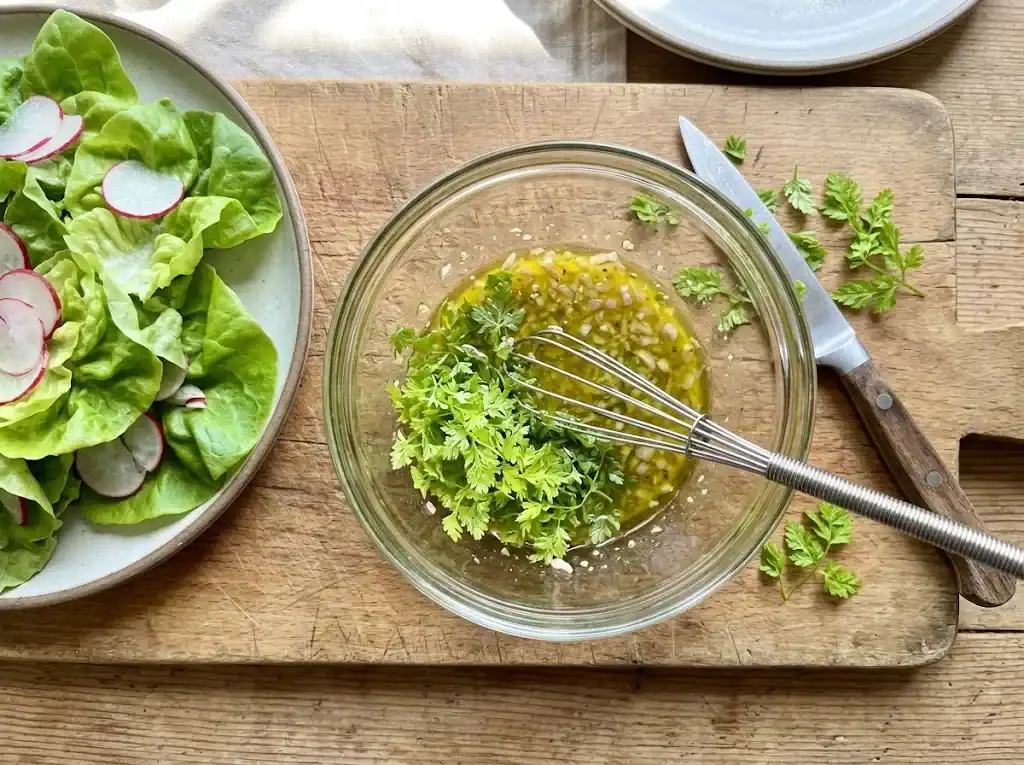
A vinaigrette built on the leaves is one of the easiest and most rewarding uses. Whisk together a teaspoon of Dijon mustard, a tablespoon of white wine vinegar, a small minced shallot, salt, and pepper, then drizzle in three tablespoons of good olive oil while whisking. Stir in a generous tablespoon of chopped leaves at the end. The dressing keeps its bright flavor for an hour or two and pairs well with green leaves, butter lettuce with shaved radish, or a simple cucumber plate dressed with nothing but salt, lemon, and olive oil.
Soups and broths
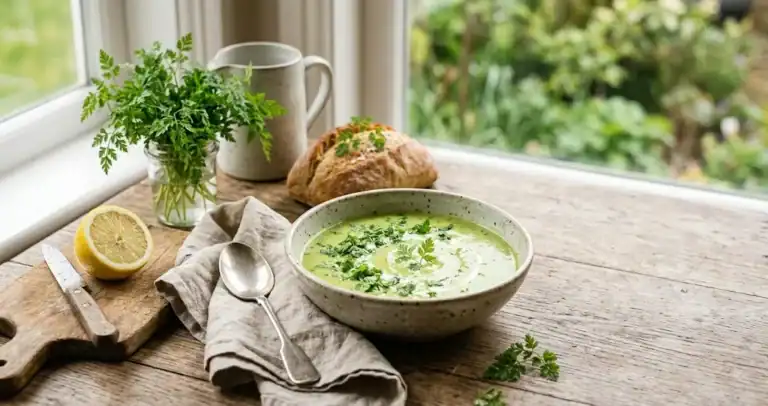
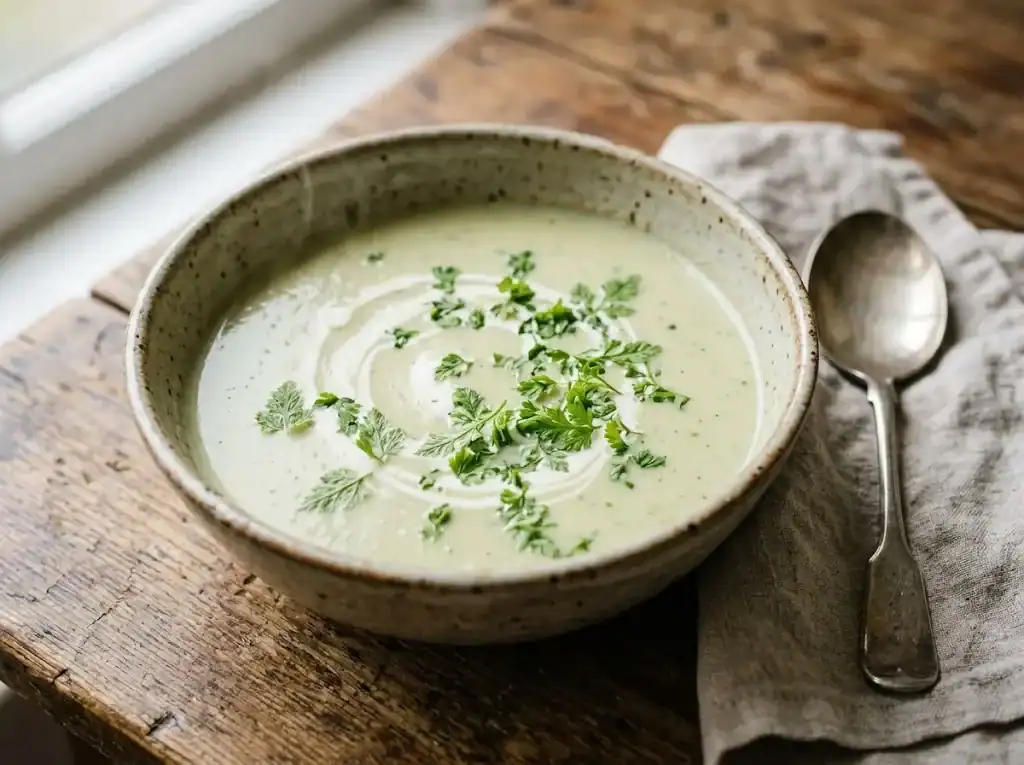
Spring vegetable broths, a root broth, and a classic herb soup all let the leaves shine. Add the leaves just after the pot comes off the heat and stir, or pass at the table in a small bowl so each person can season their own. A pot of leek and potato broth finished with chopped chervil, a swirl of cream, and a few cracks of black pepper is one of those quietly impressive lunches that costs almost nothing. A few leaves stirred into a chicken broth at the end of cooking adds the same lift without much work.
What it pairs well with
It likes the same ingredients you would put with its kitchen neighbors when pairing flavors. Eggs, butter, cream, mild white fish, chicken, asparagus, spring peas, pea shoots, young lettuces, lemon, and shallot are all natural partners. It also works well with a sliced mushroom finished in a little cream, and it adds a clean finish to a delicate carrot potage or a fennel side. Avoid heavy or strongly spiced plates. The flavour does not stand up to chili heat, smoked paprika, cumin, or assertive vinegars. If your cooking already has those spice seasonings, the standard green will do more for you than it will. A pinch of seasoning at the end of cooking is often what carries the meal. For a tomato-based preparation, the standard green is the safer call.
Substitutes that work in a pinch
No single plant does what this one does. The closest single swap is a combination of flat-leaf parsley and tarragon, about three parts parsley to one part tarragon, chopped together. The flat-leaf green alone works for visual garnish but does not bring the same lift. Chervil leaves, when dried, are a pale shadow of the fresh version. If a recipe specifically calls for dried chervil and you only have fresh, use about three times the fresh amount and add it at the end.
For a single plant in a pinch, flat-leaf parsley is the safest call. It will give you the green color and the clean finish, and most readers will not notice the missing gentle lift. Slivered chive is a decent second choice for egg and butter dishes, where its mild onion edge actually helps. Skip the curly kind, which adds little flavor and an awkward texture. A small amount of fresh mint, finely chopped, is sometimes added to a substitute blend in French cuisine, though that is more of a regional tradition than a hard rule.
Storage and shelf life
The leaves wilt faster than its kitchen neighbors, so treat them gently. The shortest, easiest method is to wrap the stems loosely in a slightly damp paper towel and slide the bundle into a loosely closed plastic bag in the fridge. Used within three to four days, it will still have plenty of life for finishing work on a meal.
For longer storage, freeze the leaves in olive oil in an ice cube tray, then drop a cube into broths and sautés when you need a burst of fresh flavor in the off season. Frozen cubes are particularly useful for a winter broth when fresh is hard to find.
If you want the full rundown on drying, freezing, and keeping it in good shape for weeks, our guide to keeping fresh chervil on hand walks through each method with the timing and conditions that work.
Cooking with chervil: FAQ
Can you cook it or is it only raw?
Most cooks use chervil only as a finishing herb, but you can cook it, just briefly and at the very end. Brief heat, like a hot pan or a ladle of warm broth, brings out the flavour without dulling it. Long cooking destroys it. If your recipe has a long simmer, stir the leaves in after you take the pot off the heat.
Is it the same as flat-leaf?
No. Chervil is a different plant with a softer flavor profile. They look similar but taste different. If you want flat-leaf as a substitute, the meal will still be good, just not what the recipe intended.
What role does it play in French cooking?
Chervil is one of the four herbs in fines herbes, a classic ingredient in French cooking used in omelettes, mild fish sauces, and light spring cooking. It is also the main herb in a traditional béarnaise sauce, and is often stirred into a cream of chervil soup at the end of cooking.
Try it next
Start with a small bunch and a simple meal, like scrambled eggs finished with chervil butter or a green plate with chervil vinaigrette. Once you have a feel for the flavor, try it in a classic four-herb omelette or a creamy potato broth finished with a handful of the chopped leaves. The herb rewards small amounts added at the right moment more than it rewards elaborate technique.