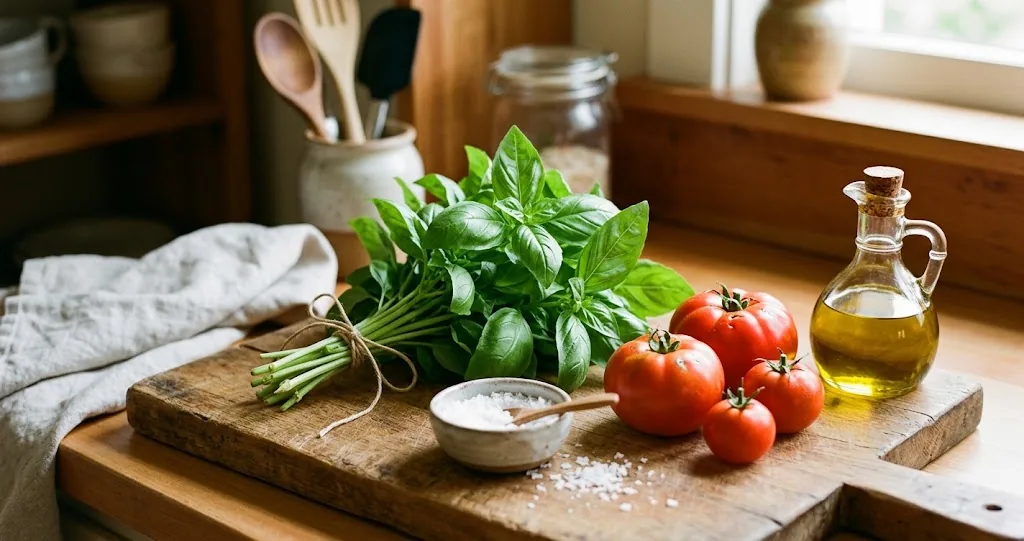
This Mediterranean herb turns a one-note dinner into something memorable when you know how to handle it. It likes warmth, hates a long simmer, and pairs with tomatoes, garlic, oil, fresh cheese, lemon, and almost any savory summer ingredient you can name. Treat the leaves gently, use it as a finishing touch, and you will cook with it the way Italian and Southeast Asian kitchens have for generations.
What the herb actually tastes like
The species (Ocimum basilicum) carries a green, slightly peppery flavor with notes of anise and clove. It is the classic Mediterranean variety, milder and rounder than Thai basil, with softer leaves and a sweeter finish. The volatile oils that give the foliage its perfume break down with heat, so a simmered dish will taste flat even if you started with fragrant leaves.
For the brightest flavor, tear or chiffonade the leaves at the end of cooking or sprinkle them over a finished plate. Whole leaves hold their flavor slightly longer if you drop them into a simmering pot during the last two minutes.
Fresh versus dried
Fresh leaves are the form you reach for ninety percent of the time. They are the right choice for pesto, caprese, pasta finishing, mixed greens, and any recipe that comes together in under thirty minutes.
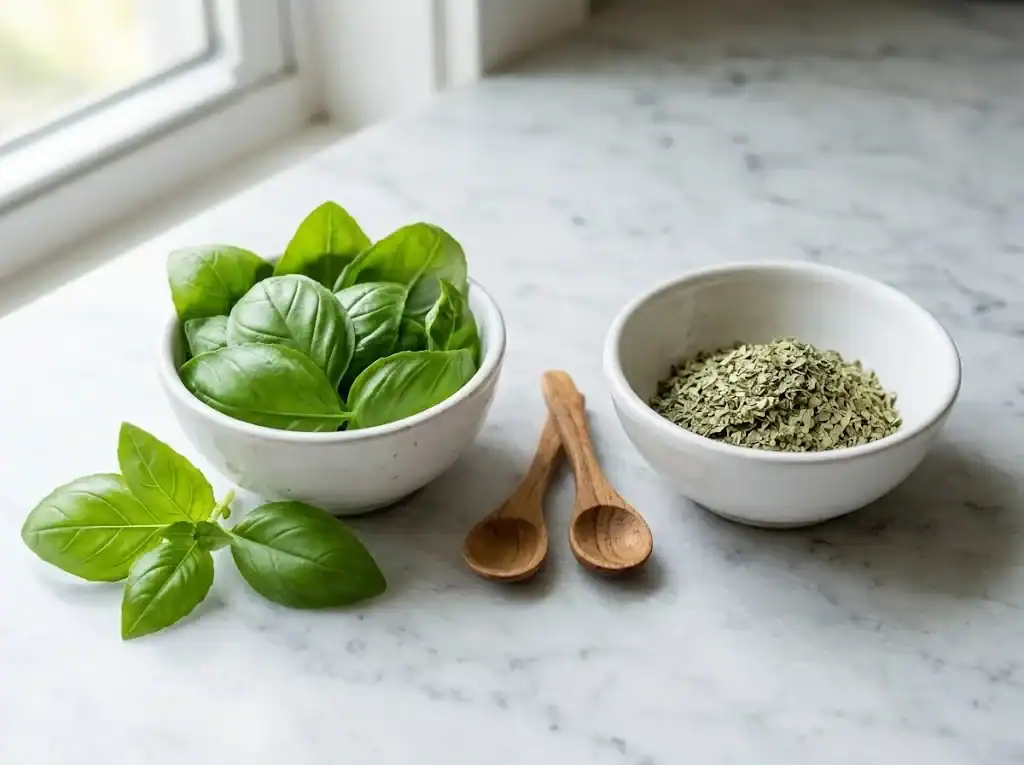
Dried leaves work in long-simmered marinara, soups, stews, and braises where fresh ones would lose their flavor to the heat. A general rule: one tablespoon of fresh equals about one teaspoon of dried. If you only have dried, add it early so the seasoning has time to soften and bloom.
Choosing fresh basil at the store
A good basil plant or bunch at the market makes the cooking easier later. In the summertime, basil is abundant and inexpensive at farmers markets and supermarket produce aisles. Look for bunches or potted plants with bright green, perky leaves. Avoid any leaves that are yellowed, brown at the edges, wilted, or smell musty. Pinch a leaf between your fingers and rub; the aroma should be vivid, sweet, and slightly peppery, with a faint note of anise.
If you are buying a live basil plant for the kitchen windowsill, choose one with several stems and good leaf color. Snip the top leaves often and the plant will branch and keep producing fresh leaves for weeks. Home cooks who want a steady source for weeknight cooking often keep a small pot on a sunny window year-round.
Pairings that always work
The herb has a quiet talent for making good things better. The classic pairings:
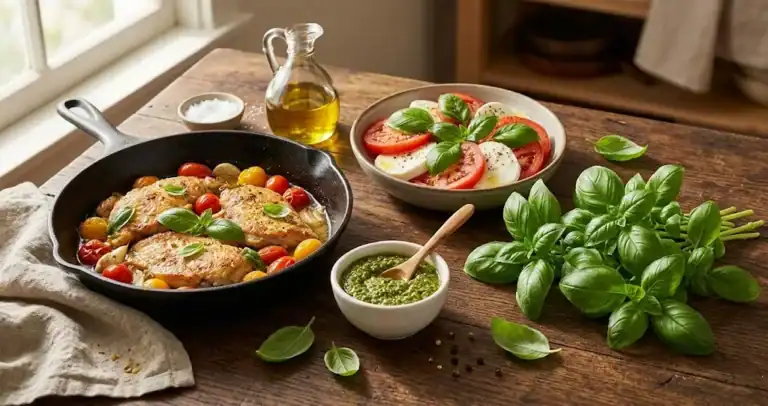
- Tomato, fresh or cooked. The herb, sliced mozzarella, and a ripe tomato is a classic Italian plate for a reason.
- Garlic and oil. The foundation of most basil sauces.
- Lemon. The leaves love acid, and lemon lifts them out of an oily dressing.
- Parmesan or pecorino. Salt, fat, and herb in one bite.
- Strawberries and other ripe summer fruit. The herb belongs in desserts and fruit bowls.
- Eggplant, zucchini, and bell pepper. Roasted vegetables wake up with the leaves scattered on top.
- Bruschetta on toast. Rub a warm slice with garlic, drizzle with oil, pile on chopped tomato and torn leaves for a five-minute appetizer.
For a quick comparison with other culinary herbs and where they shine, the how the common culinary herbs compare guide covers the common choices side by side.
Pesto: the classic sauce
Homemade basil pesto is the simplest recipe to learn what the herb can do. Once you make pesto at home, it becomes a weeknight staple. It keeps for a week in the fridge under a thin layer of oil, freezes well in ice cube trays, and turns plain pesto pasta, rice, or a piece of grilled fish into a meal.
The basic ratio for a small batch:

- 2 cups packed fresh basil leaves, washed and dried
- 1/3 cup pine nuts, lightly toasted
- 2 medium garlic cloves
- 1/2 cup grated parmesan
- 1/2 cup good olive oil, plus more to cover
- Salt and pepper to taste
Pulse the fresh leaves, pine nuts, garlic, and a pinch of salt in a food processor until coarsely chopped. Add the parmesan and pulse again. With the machine running, stream in the oil until the pesto looks like a loose paste. Taste, adjust seasoning, and transfer to a jar. Cover the surface with a thin layer of oil to keep the color bright and the flavor fresh.
If you have a mortar and pestle, use it for a more traditional pesto with brighter flavor and a coarser texture. Pound the leaves and garlic with a little salt first, then work in the pine nuts, parmesan, and oil in slow additions.
Pesto does not have to be traditional. Swap half the leaves for spinach or arugula, use walnuts or pistachios instead of pine nuts, or skip the cheese for a vegan version that still tastes of summer.
Pasta dishes
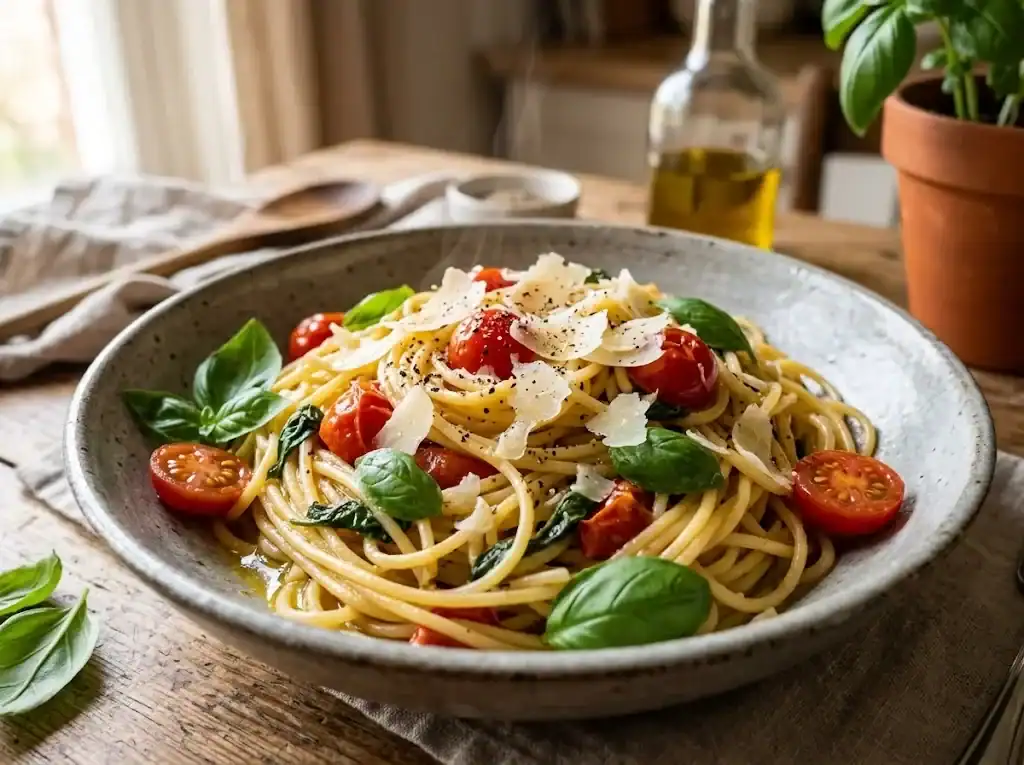
The herb belongs in pasta more often than most home cooks realize. A handful of torn leaves tossed with hot noodles, oil, garlic, and grated parmesan is a five-minute weeknight dinner. Add halved cherry tomatoes, fresh cheese, or a spoonful of ricotta and you have a meal.
For cooked sauces, add the leaves at the end. A basil cream comes together by simmering minced garlic in cream, finishing with parmesan and a fistful of torn leaves off the heat. A simple pomodoro gains a final flourish if you stir in the herb just before tossing with the noodles.
These techniques show up in the tested sweet basil recipe collection, which spans salads, sauces, and drinks.
The classic Italian plate, mixed greens, and sandwiches
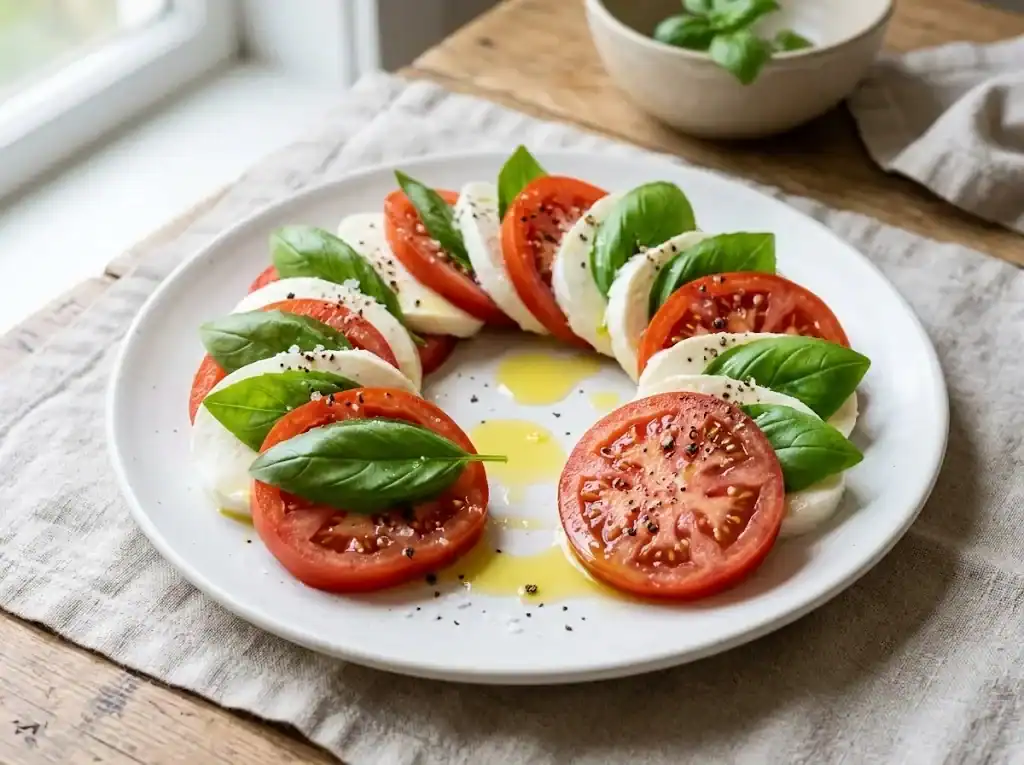
The classic Italian plate is a study in restraint: ripe tomatoes, fresh cheese, the leaves, oil, salt. Slice the tomatoes thick, fan them with the cheese, tuck whole leaves between, and finish with a pour of good oil and a pinch of flaky salt. That is the whole recipe.
For everyday salads, the herb turns plain greens into something aromatic. Toss baby lettuce with shaved cucumber, halved cherry tomatoes, torn leaves, lemon juice, oil, salt, and pepper. Add grilled chicken or chickpeas for a complete lunch.
On sandwiches, the leaves pair with sliced cheese, tomatoes, and a slick of pesto on a ciabatta roll. They also belong in a Vietnamese-style summer roll, layered with rice noodles, shrimp, mint, and a dipping condiment.
Soups and stews
The herb softens and rounds a long-simmered pot. Add a handful of leaves in the last ten minutes of a minestrone, a tomato soup, or a white bean stew. For chilled soups such as a summer tomato or cucumber soup, the herb goes in raw at the end with a drizzle of oil.
Basil in other cuisines
Italian and Mediterranean cooking get the most attention, but the herb and its relatives show up across Asia. Thai basil (a different species, with narrower leaves and a stronger anise note) anchors Thai basil chicken, Thai green curry, and Vietnamese pho garnishes. Holy basil appears in Thai stir-fries and has a peppery, almost clove-like flavor. If you grow Thai basil alongside the everyday variety, treat them as different ingredients rather than substitutes for each other.
For marinating proteins, whisk a few tablespoons of pesto with lemon juice and oil and let chicken, shrimp, or sliced vegetables sit in it for twenty minutes before cooking. The pesto coats and seasons the food without overwhelming it. A drizzle of the same pesto over the finished dish keeps the herb flavor consistent from start to plate.
Basil in desserts and drinks
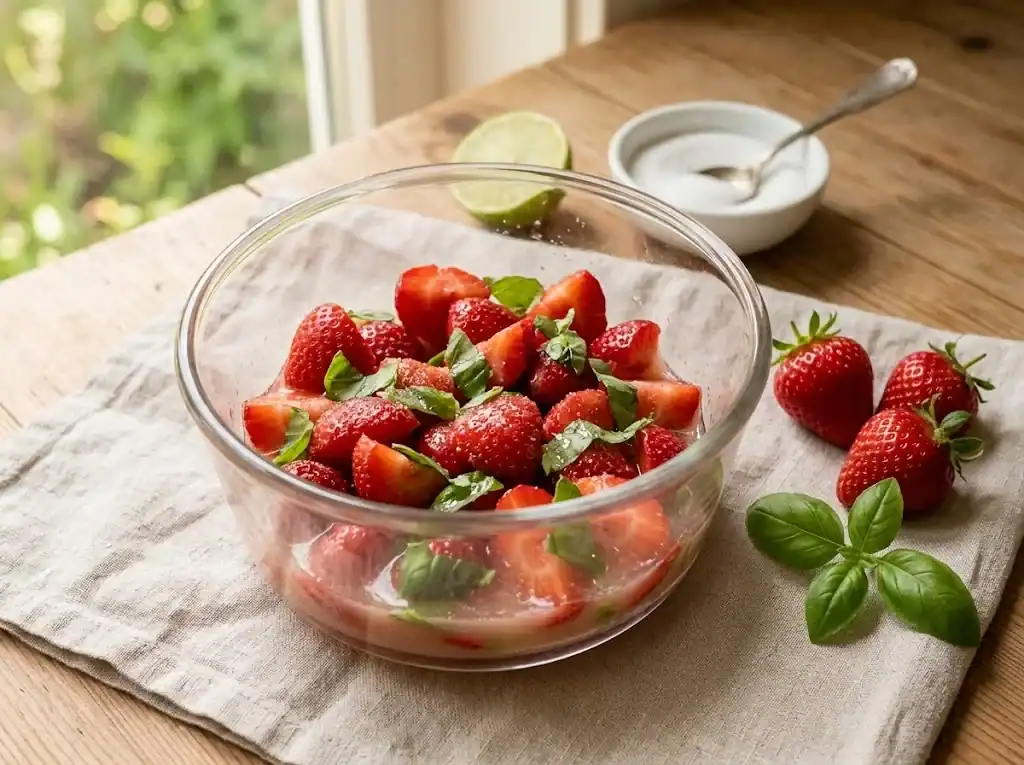
The herb has a place in the dessert course. Macerate strawberries with a few torn leaves, a squeeze of lime, and a spoon of sugar for ten minutes before spooning over shortcake or ice cream. The herb also makes a simple syrup for lemonade and cocktails: simmer equal parts sugar and water, drop in a handful of leaves, cool, and strain.
How to make basil oil at home
Basil oil is a useful finishing ingredient for crostini, grilled vegetables, caprese, roasted potatoes, and soups. The ingredient list is short: a generous bunch of fresh leaves, good oil, and a pinch of salt. The method is even shorter. Pulse the leaves with a small splash of oil in a blender until smooth, then stream in the rest of the oil until the mixture loosens. Pass it through a fine mesh strainer, season with salt, and store in a sealed jar in the fridge for up to a week.
For a richer, more savory version, warm the oil gently with a smashed garlic clove and a few black peppercorns for ten minutes off the heat, then pour it over the fresh leaves and let it cool before blending. The resulting oil carries a deeper, almost nutty basil flavor and pairs well with grilled fish, sliced steak, or a simple bowl of pasta. A drizzle right before serving keeps the brightness intact.
When to add basil during cooking
The general rule is short. Add fresh leaves at the very end of cooking or after the dish comes off the heat. The volatile oils that carry the herb’s perfume evaporate with long heat and leave behind a flat, almost grassy taste.
- Add torn leaves to hot pasta after tossing with the sauce.
- Stir the herb into a cooked sauce in the last minute or two.
- Drop whole leaves into a simmering soup or stew for the final ten minutes.
- Scatter leaves raw over pizza, salad, or grilled vegetables just before serving.
Keeping fresh leaves on hand
Fresh basil does not last long in the fridge. For a few days, trim the stems and stand the bunch in a jar with an inch of water, loosely covered with a plastic bag, on the counter. To freeze basil for later use, pulse fresh leaves with oil, freeze the mixture in ice cube trays, and pop the cubes into a freezer bag. For longer storage and other methods, see the how to store sweet basil guide for drying, freezing, and refrigerating fresh leaves.
Ingredient swaps and substitutes
Most recipes that call for the herb can flex to other ingredients if you adjust your expectations. For pesto, swap half the leaves with baby spinach or arugula to stretch a small bunch, or substitute walnuts, pistachios, or almonds for pine nuts to change the flavor and the cost. For Italian-style tomato-and-cheese plates where the herb is the headline, there is no good substitute, so pick another fresh herb-driven plate instead.
For cooked sauces, soups, braises, and long-simmered stews, oregano, thyme, marjoram, or savory can stand in without losing the spirit of the dish. Use a lighter hand than you would with fresh leaves because dried Mediterranean herbs run smaller in volume. A teaspoon of dried oregano or thyme replaces about a tablespoon of fresh in most cooked dishes. Fresh parsley or chervil can substitute in green salads and herb sauces where the dish is served raw.
Common mistakes when cooking with basil
The fastest way to flatten basil is to cook it too long. The volatile oils that give the leaves their perfume evaporate within a few minutes over heat, so a long-simmered dish that started with a cup of torn leaves tastes bland at the end. Add the leaves at the very end of cooking or after the dish comes off the heat, and the flavor stays bright.
Two other pitfalls home cooks run into. Slicing with a dull knife bruises the leaves and turns the edges black, which is why professional kitchens chiffonade basil with a sharp blade or tear it gently by hand. And treating dried basil like fresh in a finishing dish is a wasted ingredient, because the dried leaves need time in the pot to release any flavor at all. If a recipe says to scatter fresh basil on top, do not reach for the jar in the back of the spice cabinet.
Frequently asked questions
Can you eat the herb raw?
Yes. The leaves are most often eaten raw as a finishing touch. Whole leaves on a caprese or chiffonade scattered over pasta are the usual forms.
Is it the same as regular basil?
The everyday cooking basil sold in supermarkets and used in Italian and Mediterranean cooking is the same herb. Thai basil, lemon basil, and holy basil are different species with stronger, more distinctive flavors.
How do you keep the leaves from turning black when you chop them?
Use a sharp knife and a light touch. Tearing or chiffonading the leaves with your fingers or a sharp knife avoids the bruising that a dull blade causes.
Does the herb lose its flavor when cooked?
Yes. The volatile oils evaporate quickly with heat. Add the leaves late in cooking or after the dish is off the heat.
What pairings surprise people?
Strawberries, watermelon, and other sweet fruit. The herb has an affinity for ripe summer produce that goes beyond savory cooking.