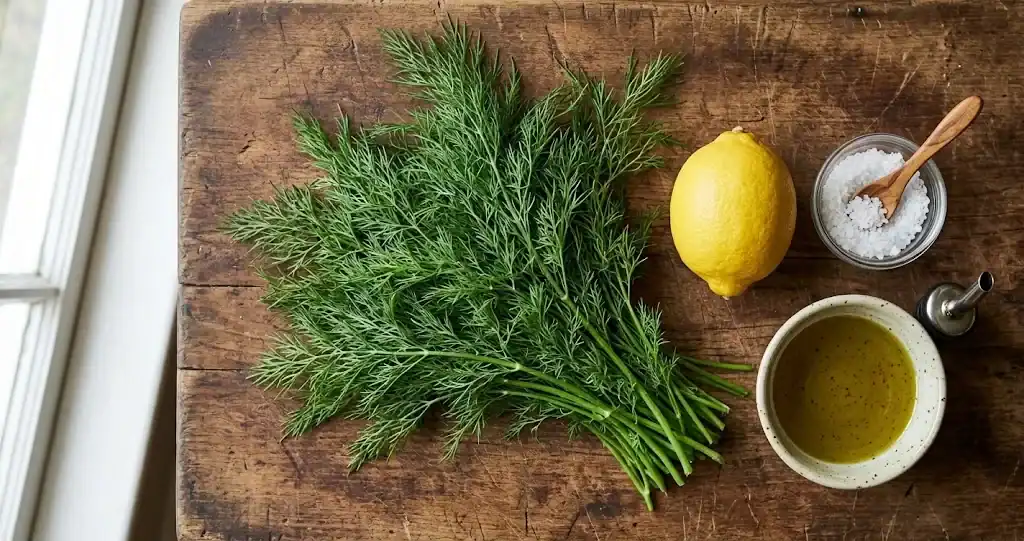
Cooking with dill brings an unmistakable clean, grassy, and slightly citrus aroma that cuts through rich dishes and brightens everyday meals. Belonging to the Apiaceae family alongside parsley, fennel, and carrots, this fragrant annual herb offers feathery green leaves and aromatic seeds that have shaped culinary traditions in Scandinavian and Eastern European cooking for generations.
Whether you bring home a crisp bunch from local supermarkets, harvest from a plant in your garden, or reach for a jar of dried weed in your pantry, understanding how heat, acid, and texture interact with this feathery herb is the key to creating balanced, flavorful food. From crisp summer slaws and homemade dill pickles to comforting soups, fresh culinary dishes add instant character to simple home cooking.
Dill Weed vs. Dill Seed: Culinary Differences
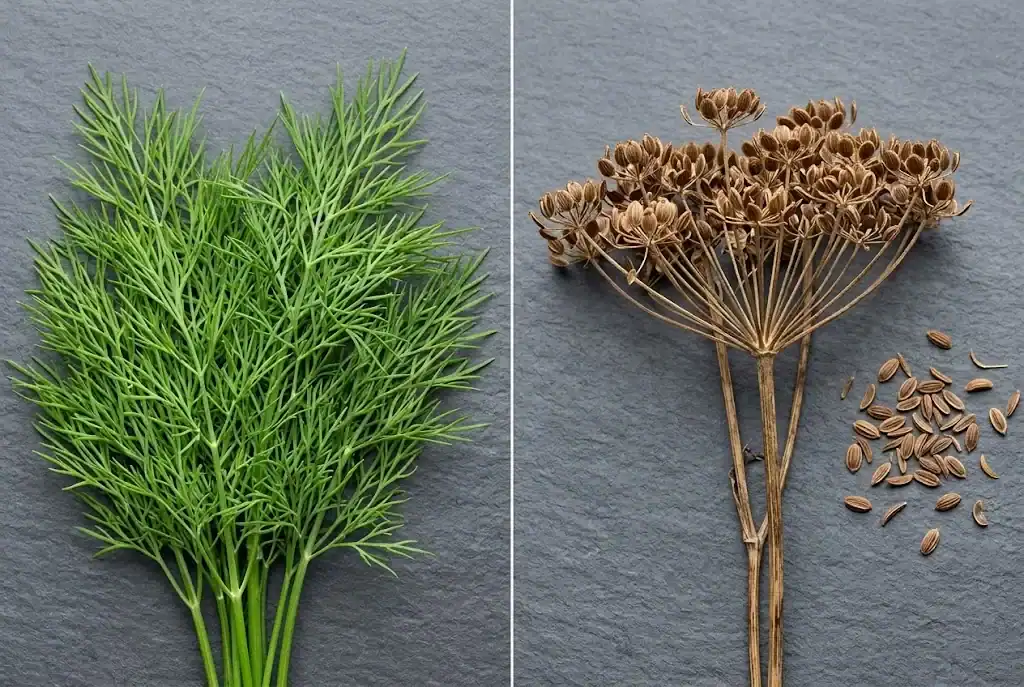
The dill plant provides two distinct culinary ingredients from different growth stages: the tender green foliage, known in any standard cookbook as dill weed, and the flat oval dill seed produced after the flowering umbels mature.
Fresh dill weed carries a bright, lemony profile with delicate notes of anise and mild licorice. Its slender leaves contain volatile essential oil compounds that quickly dissipate when exposed to high heat or long simmering. Consequently, tender greens are best enjoyed raw in cold salad dressings, folded into soft cheese, or stirred into hot dishes right before serving.
In contrast, dill seed possesses a warm, pungent, and slightly bitter character similar to caraway. The whole or crushed seeds withstand higher cooking temperatures and longer simmering times, making them essential for a classic pickle brine, braised cabbage, rye breads, and savory marinades.
Using Fresh vs. Dried Dill
When deciding between fresh or dried dill in your cooking, consider the texture and heat requirements of the dish:
- Fresh dill: Provides a vivid green color, delicate texture, and vibrant aroma. It is the ideal choice for crisp produce salads, cold dips and sauces, herbed potato salad, classic chicken salad, and delicate fish fillets.
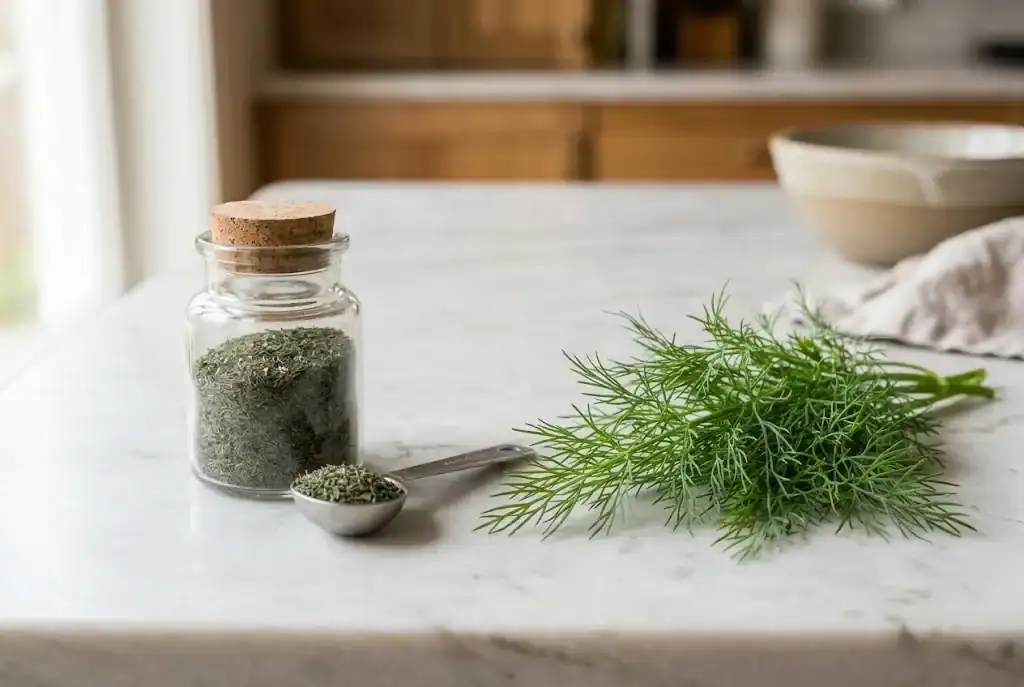
- Dehydrated weed: Milder and earthier than fresh foliage, the dried herb works reliably in baked casseroles, slow braise recipes, and spice rubs where fresh greens might scorch or disintegrate.
As a practical rule of thumb, use 1 teaspoon of dried weed for every 1 tablespoon of chopped fresh dill called for in a recipe. Because dehydrated herbs release their aromatics gradually, stir dried weed into a marinade, vinaigrette, or simmering broth early in preparation so its flavors have time to bloom.
How Heat Affects Dill Flavor in Cooking
The aromatic essential oils that give fresh dill its distinctive perfume are highly sensitive to heat. Boiling or roasting the tender fronds for extended periods drives off their citrus notes, leaving behind a faded flavor and darkened color. Unlike woody herbs like thyme, which benefit from long simmering, delicate annual greens require gentle handling.
- Add near the finish: Stir chopped fresh dill into warm soups, creamy sauces, or braises during the last two minutes of cooking, or immediately after removing the pan from heat.
- Utilize the stems: The thicker stalk sections of the plant carry pleasing herbal flavor without the delicate texture of the fronds. Tie a bundle of dill stalks with kitchen twine and simmer them in poaching liquids or vegetable stocks, discarding the fibrous stems before plating.
- Finishing garnish: A final scattering of green fronds over roasted root vegetables, pan-seared fish, or breakfast omelets adds pleasant visual contrast and an immediate burst of aroma.
Classic Flavor Pairings and Culinary Partners
Dill has natural affinities across several staple ingredient categories, making it easy to incorporate into everyday menus:
- Fish and Seafood: Dill is the premier partner for rich fish like salmon and trout, as well as poached cod, shrimp, crab, and canned fish delicacies. Acidic ingredients and citrus naturally complement the herbal aromatics, balancing rich oils and briny flavors effortlessly.
- Dairy and Cultured Products: Sour cream, plain yogurt, Greek yogurt, cream cheese, ricotta, and salty feta provide a creamy base that lets herby notes sing. Tzatziki, herbed butter, and creamy dressings are natural showcases.
- Potatoes and Vegetables: Steamed new potatoes, roasted carrots, sweet garden pea pods, zucchini, and ripe tomatoes pair naturally with melted butter or extra-virgin olive oil and minced herbs.
- Crisp Produce and Slaws: The crisp texture of thinly sliced English cucumbers, radishes, and shredded cabbage slaws harmonizes with herbed dressings in cool summer sides.
- Legumes, Poultry, and Eggs: A warm chickpea bowl, scrambled eggs, spring frittatas, classic chicken salad, and Swedish meatballs with cream sauce gain pleasant lift from this seasoning.
How to Use Dill in Everyday Cooking: 5 Simple Recipes
If you have lots of fresh dill to use up, these approachable culinary applications represent some of the best dill recipes for weeknight meals and entertaining menus.
1. Creamy Cucumber Salad with Fresh Dill
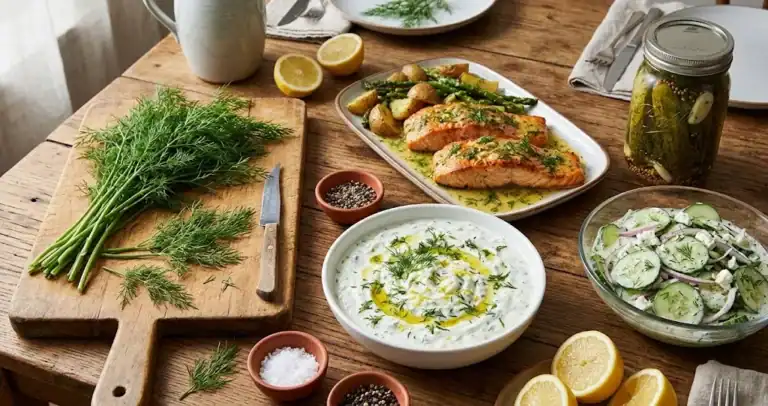
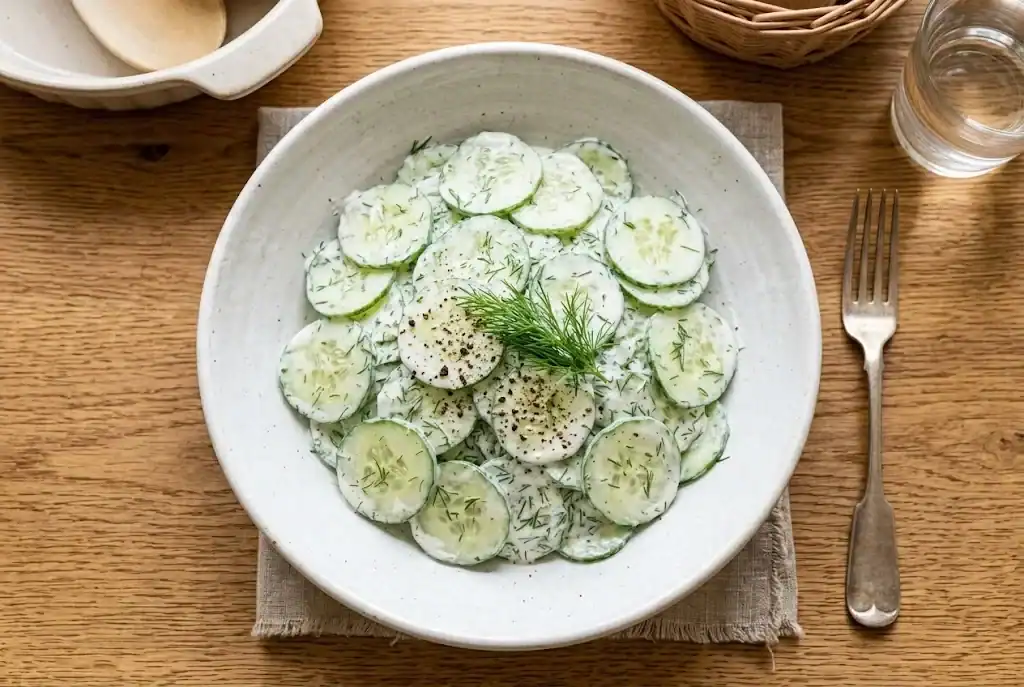
This refreshing salad is a classic summer side dish for an outdoor cookout or casual family meal. Thinly slice two crisp English cucumbers and toss them with half a cup of sour cream or Greek yogurt, one tablespoon of fresh lemon juice, one teaspoon of Dijon mustard, a pinch of sea salt, cracked black pepper, and three tablespoons of chopped fresh dill. Chill for 15 minutes before serving alongside roasted poultry or grilled trout.
2. Pan-Seared Lemon Fish with Fresh Dill
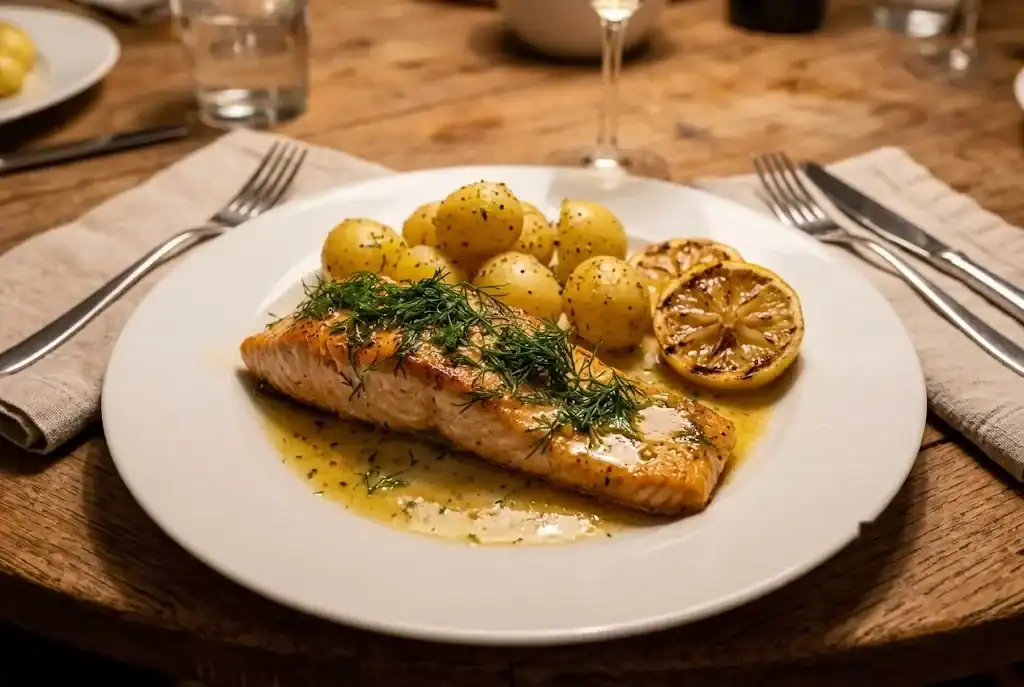
Pan-sear seasoned salmon fillets in olive oil until golden and tender. While the seafood rests, melt two tablespoons of butter in a small skillet over low heat with a minced garlic clove, a squeeze of lemon juice, and two tablespoons of minced fresh dill. Spoon the citrus butter directly over the fillets before serving with steamed baby potatoes.
3. Classic Herbed Potato Salad
Boil small red or gold potatoes until fork-tender, halve them, and toss while still warm with a bright vinaigrette made of olive oil, white wine vinegar, Dijon mustard, minced shallot, and three tablespoons of minced dill. The warm potatoes absorb the tangy dressing, creating a flavorful side dish that holds up well at picnics.
4. Homemade Greek Tzatziki Dip
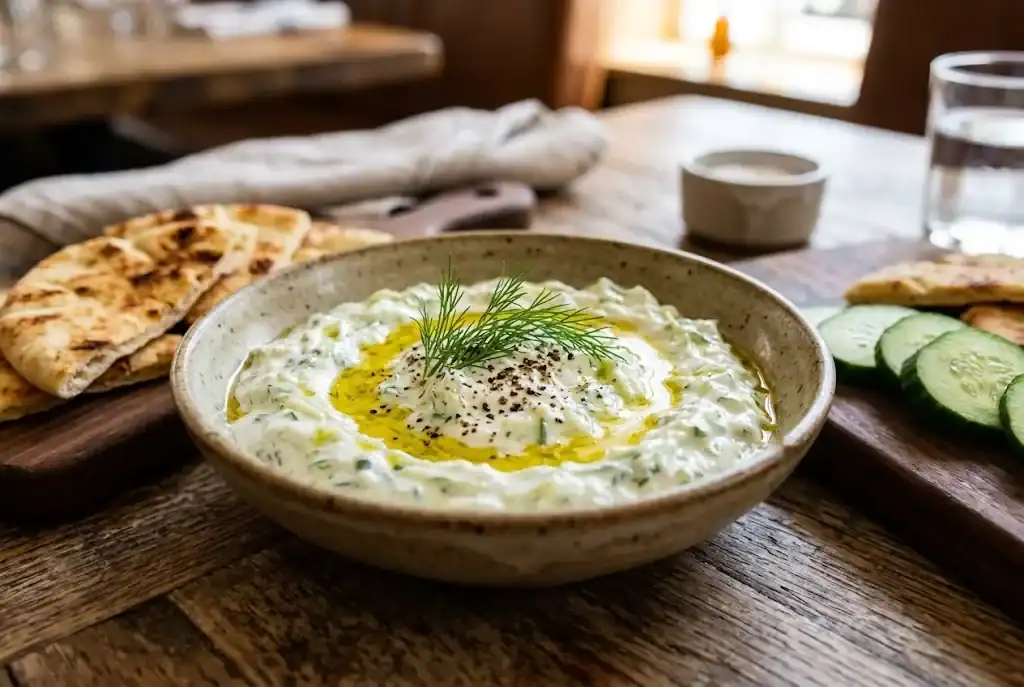
Grate one medium garden cucumber and squeeze out excess moisture in a clean kitchen towel. In a mixing bowl, combine the drained vegetable with one cup of plain yogurt, two minced garlic cloves, one tablespoon of extra-virgin olive oil, a splash of red wine vinegar, and two tablespoons of chopped fresh dill. Season with salt and serve this herby tzatziki dip with warm pita bread, crunchy vegetables, or roasted lamb.
5. Herbed Chicken Salad with Walnuts
Give classic chicken salad a vibrant refresh by folding diced poached chicken breast with crisp celery, toasted walnut pieces, a spoonful of mayonnaise, Dijon mustard, and three tablespoons of chopped dill. Serve in leafy lettuce cups or spread over toasted whole-grain bread for a satisfying lunch.
To discover more specialized dishes, seasonal menus, and savory baking ideas, explore creative dill recipe ideas for home cooking.
Fresh Herb Preparation and Chopping Techniques
Proper preparation ensures the herb maintains its bright green color and crisp texture on the plate:
- Washing: Swish the sprigs in a large bowl of cool water to dislodge any garden soil. Shake gently, then dry thoroughly in a salad spinner or between clean kitchen towels. Wet foliage clumps together and bruises when cut.
- Stripping fronds: Hold the thick main stalk with one hand and pull your fingers downward along the stem to easily strip the tender feathery leaves away from woody stems.
- Clean slicing: Gather the green leaves into a compact mound and slice through cleanly with a sharp chef knife in smooth, single cuts. Avoid rocking the blade repeatedly back and forth, which crushes the plant tissue and darkens the cut edges.

For gardeners interested in growing dill, cultivating this annual plant alongside other garden staples is an essential step in getting to know the culinary herbs that transform home meals.
How to Store Dill for Maximum Freshness
Fresh foliage is tender and wilts quickly if exposed to dry refrigerator air. For short-term storage, trim half an inch from the bottom of the stem cluster and place the bunch upright in a glass containing an inch of cool water. Cover the top loosely with a plastic produce bag and store in the refrigerator, replacing the water every two days.
Alternatively, wrap unwashed sprigs loosely in slightly damp paper towels and seal them inside an airtight container or reusable silicone bag in the crisper drawer. When preserving an abundant harvest, you can also freeze chopped green fronds in ice cube trays with olive oil or melted butter for convenient use in winter cooking, or pack fresh heads into homemade dill pickles.
For step-by-step guidance on keeping herbs crisp and extending their shelf life, see the complete guide on how to store dill after harvesting.
Frequently Asked Questions About Cooking with Dill
What part of the dill plant is used for cooking?
Both the feathery green leaves (dill weed) and the seeds are used in cooking. Fresh leaves are ideal for salads, cold sauces, fish, and table garnishes, while seeds are used in pickling spice, breads, and hearty braises.
Can you substitute dried herbs for fresh dill in recipes?
Yes, you can substitute dried weed for fresh leaves using a ratio of 1 teaspoon dried weed for 1 tablespoon chopped fresh dill. Fresh greens are strongly recommended for uncooked dressings, dips, and finishing garnishes where crisp texture and bright aroma are essential.
What foods pair best with fresh dill?
This versatile herb pairs exceptionally well with rich fish, cucumbers, potatoes, sour cream, yogurt, eggs, lemon, mustard, and sweet peas.
What is a good substitute for dill if you run out?
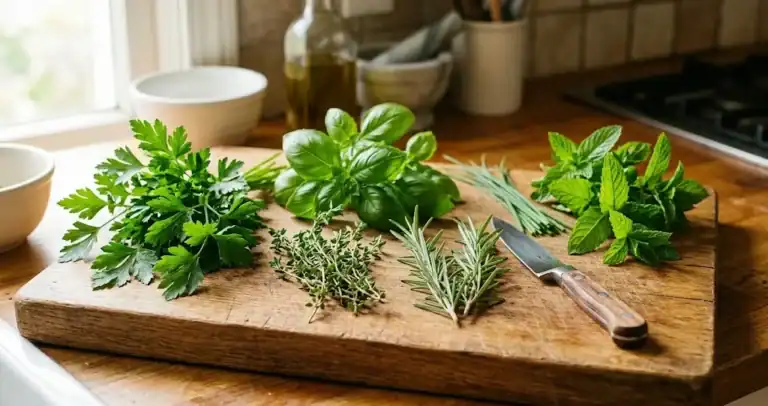
Fresh tarragon or fennel fronds offer a complementary sweet anise note. For general fresh herbal brightness in salads and dressings, flat-leaf parsley with a squeeze of fresh lemon juice is an excellent alternative.