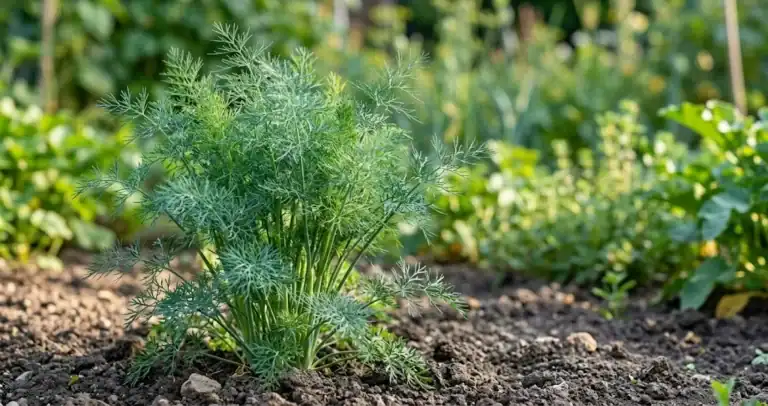
Dill can go from feathery and fragrant to limp and dark in a hurry. The trick is simple: keep the stems hydrated, keep the fronds dry, and give the herb enough air in the fridge. With the right setup, you can keep the herb useful for several meals instead of racing to use it on the day you bring it in.
The best storage method depends on when you plan to use it. For this week’s cooking, treat dill like a small bouquet. For a larger harvest, freeze dill or dry dill so its flavor is ready when soups, dressings, and pickles need it.
Among fresh herbs, dill needs a little more attention because its soft fronds lose moisture quickly. For a simple way to store fresh dill, start with dry leaves and give the stems water.
Start with clean, dry dill
Sort through the bunch before you store dill. Remove any slimy stems, crushed fronds, or leaves that have started to turn yellow. A little damage spreads quickly in a closed container.
If the fronds are dusty, rinse them gently in cool water and use a salad spinner or a clean towel to remove surface water. Pat dry with care. Do not put soaking-wet dill into the fridge, because excess moisture promotes decay. If it already looks clean, wait to wash it until just before use.
Harvest timing matters too. If you grow it yourself, learn how to harvest dill for kitchen use so you begin with tender, undamaged sprigs.
Keep it in the refrigerator
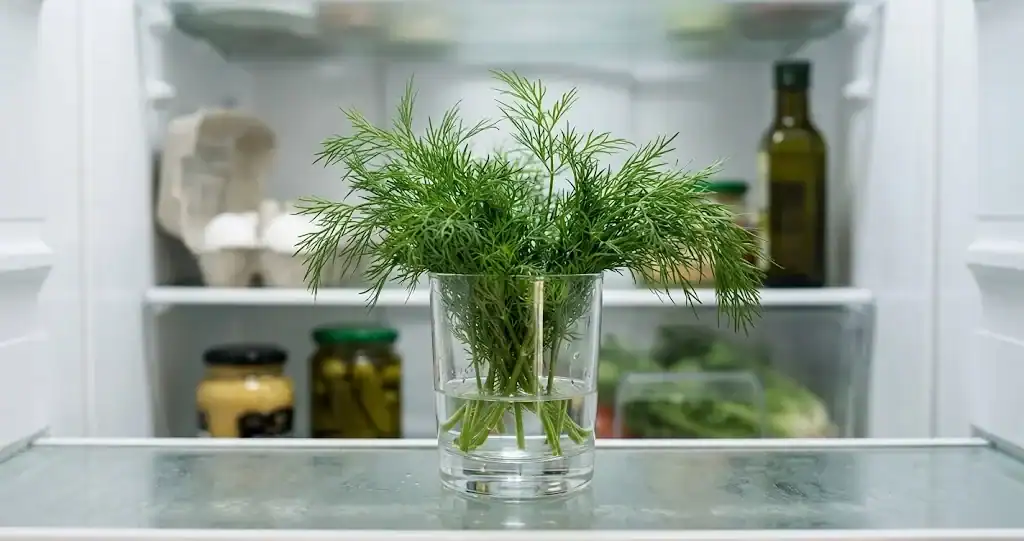
For most home cooks, the chilled-glass method is the most reliable way to keep it fresh. Trim a small amount from the stem ends, then stand the dill upright in a glass or jar with about an inch of water. Keep the fronds loose rather than packed tightly.
Cover the top loosely with a plastic bag, leaving enough room for air, and place the glass in the fridge. The crisper can work if the jar fits safely, but a stable shelf is often easier. Change the water when it looks cloudy, and discard any sprigs that begin to wilt.
This method works because the stems can take up water while the leafy tops avoid sitting in it. Check the sprigs every few days. If condensation collects inside the bag, dry the bag and cover the jar loosely again.
Use a damp paper towel for a smaller bundle
If fridge space is tight, wrap dill sprigs in a slightly damp paper towel and place the bundle in a resealable plastic bag or container. The towel should feel barely moist, not wet enough to drip. Keep the bag partly open or use a container with a little ventilation.
This option is handy for a small bundle that you expect to use within a few days. A single sprig should feel dry rather than slick before it goes into the bag. It is less forgiving than the glass method, so inspect it often. Replace the damp paper towel if it becomes slimy or overly wet.
Freeze dill for future use
Freezing holds its flavor better than drying, although the thawed leaves will not have the same crisp texture. It is a good choice for cooked dishes, a stew, scrambled eggs, potato salad, or a creamy dressing.
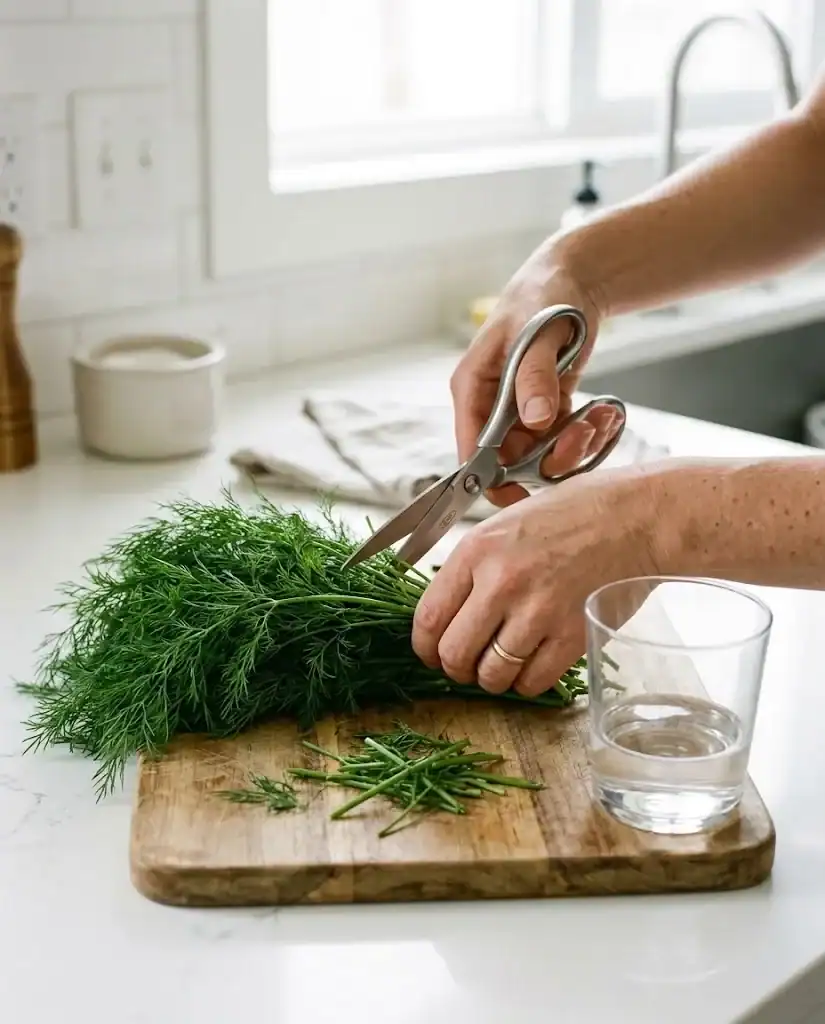
To freeze the herb, wash it if needed and pat dry very well. Chop the fronds and tender stems, spread them in a thin layer on a tray, and freeze until firm. Transfer the frozen chopped dill to an airtight freezer container or plastic freezer bag, pressing out excess air before sealing.
You can also portion chopped dill into ice cube trays with a little water or olive oil. Freeze the cubes, then move them to a labeled freezer bag. A cube is convenient when you want to add dill to soup or a sauce without thawing a whole container.
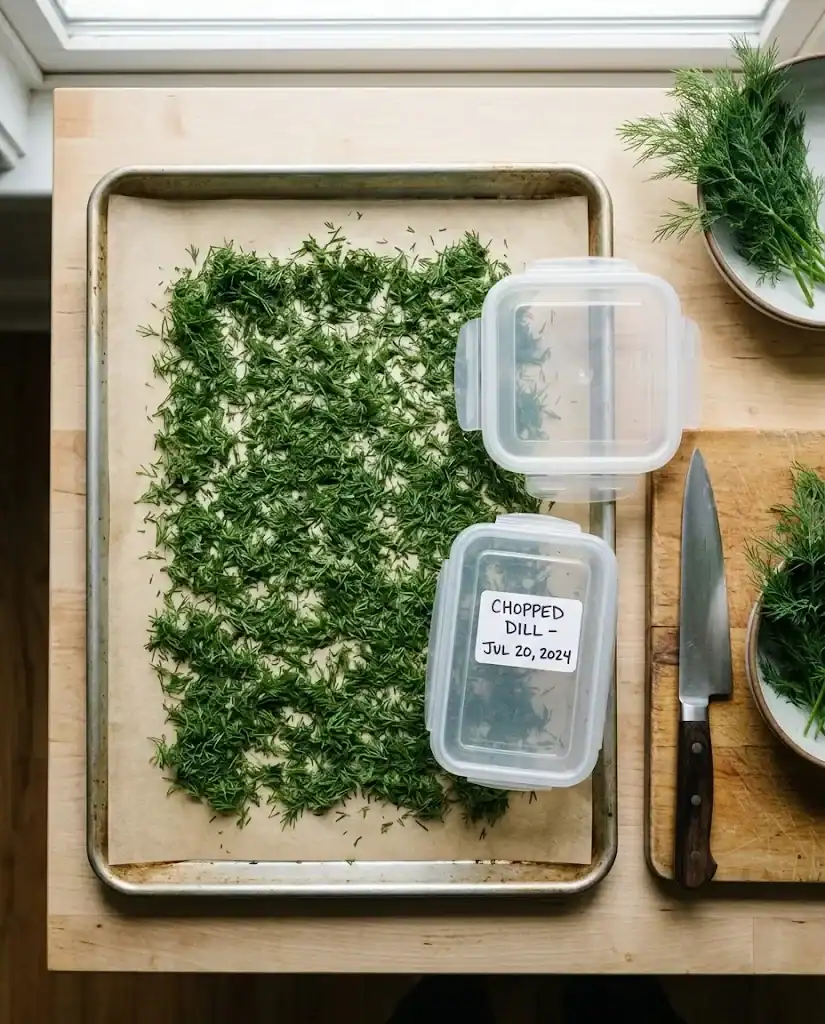
Frozen portions are best used for cooked food, not as a garnish. Label the package with the date and use it while the aroma is still bright. Ice crystals are not harmful, but heavy frost is a sign that air reached the herb and quality will fade faster.
Dry dill when you want a pantry herb
Drying herbs makes sense when freezer space is limited or when you want dill ready for spice blends and long-simmered dishes. Dried dill has a different flavor from the herb, so use it as its own ingredient rather than a perfect substitute.
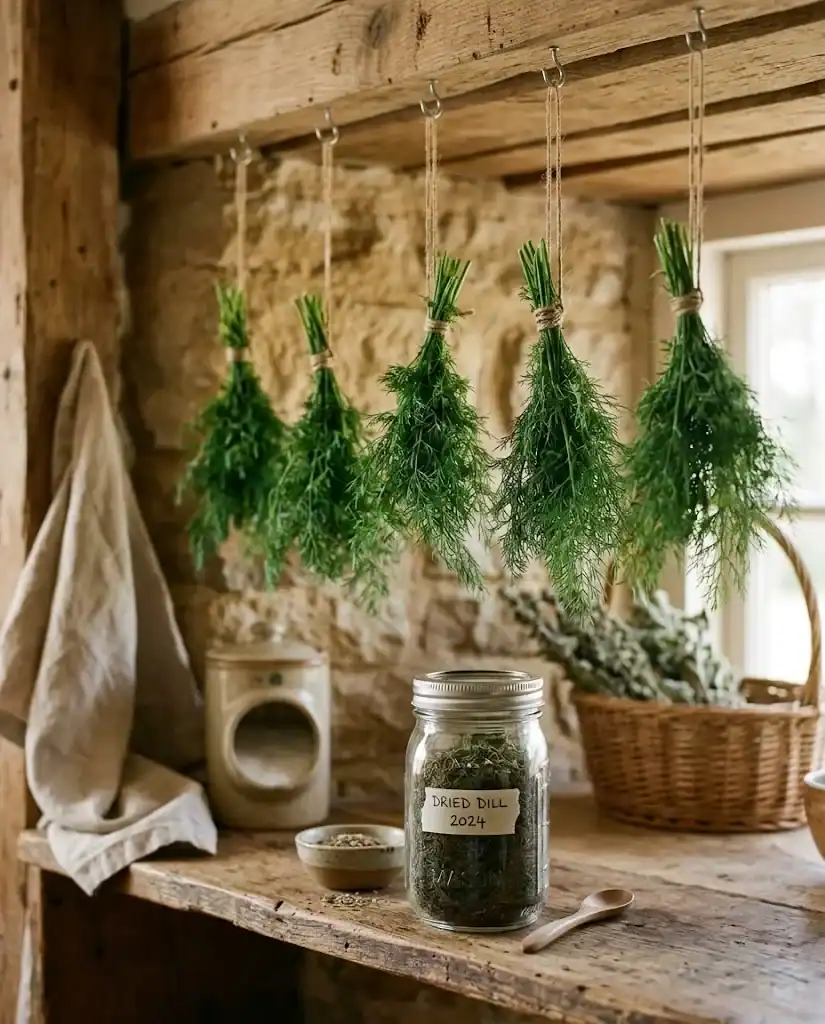
For air drying, tie a few small stems together and hang them in a warm, dry place out of direct sun. Good airflow matters. When the fronds crumble easily, strip them from the stems and store them in an airtight jar away from heat and light.
A dehydrator on a low setting is quicker and more predictable. Avoid high heat, which can make it lose its delicate aroma. Dry dill completely before sealing it. Any remaining moisture can cause clumping or spoilage in the jar.
Store dill seed separately
The seed needs a different approach from dill weed. Let the seed heads dry fully on the plant or indoors in a dry, airy spot. Rub the dry heads over a bowl to release the seeds, remove chaff, and store the seeds in an airtight container away from heat and sunlight.
Use the seed in pickling brine, bread, and spice blends. Keep it whole until you need it, since whole seeds hold their aroma longer than ground spices.
Choose the right storage method
- Use within a week: Keep dill upright in a glass with water in the fridge.
- Use within a few days: Wrap a small bundle in a barely damp paper towel.
- Save for cooked meals: Freeze dill in a bag or in ice cube trays.
- Save for the pantry: Dry dill slowly, then store it airtight.
- Save seeds: Dry seed heads completely before storing seed.
Avoid the common storage mistakes
The most common mistake is sealing wet fronds in a tight bag. That traps moisture around the fronds and can make the herb slimy. Another is leaving the stems dry on a fridge shelf, where the leaves lose moisture quickly.
Do not submerge the fronds in water. Keep only the stem ends in water, like cut flowers. And do not freeze a large, loose bunch without drying and portioning it first. You will end up with a hard frozen clump that is difficult to use.
Use dill before its flavor fades
Dill belongs in cucumber salad, yogurt sauces, eggs, fish, potato dishes, and quick dressings. If you need ideas once the storage job is done, explore practical ways to cook with dill without turning a good harvest into food waste.
Store the remaining sprigs promptly, check them often, and choose freezing or drying before they lose their aroma.
For a broader view of how careful cutting affects freshness across the garden, see our guide to harvesting herbs without weakening the plant.
Frequently asked questions
How long does fresh dill keep in the fridge?
The herb usually keeps longest when the trimmed stems stand in a small amount of water and the fronds are loosely covered. Check it every few days and remove damaged sprigs. Its useful life varies with how fresh it was when harvested and how steadily your fridge holds temperature.
Is it better to freeze or dry dill?
Freeze dill if you want more of its fresh flavor for cooked dishes. Dry dill if you want a shelf-stable pantry herb. Neither method preserves the crisp texture of fresh fronds, so use the herb first when you want a garnish.
Can you freeze dill without blanching it?
Yes. Wash only if needed, dry it thoroughly, chop it, and freeze it in portions. Blanching is not necessary for dill intended for soups, sauces, and other cooked dishes.