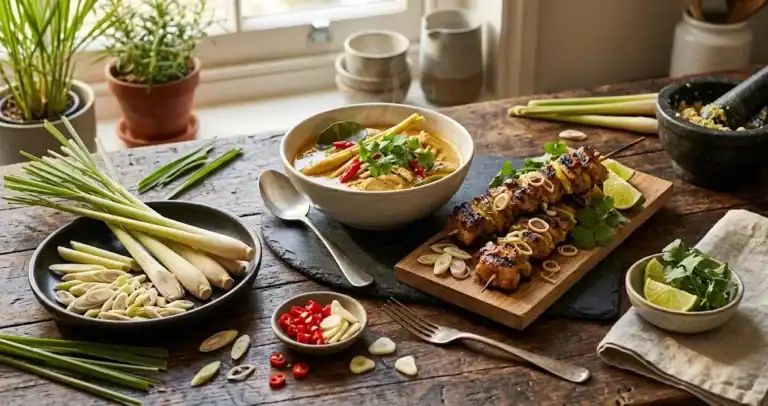
You bring home a bundle of pale green stalks from the Asian grocery store, and then the questions start. Which part do you actually eat? Why is it so tough to cut? Cooking with lemongrass looks intimidating the first time, but once you know where the flavor lives, it becomes one of the easiest ways to bring bright, lemony depth to soups, marinades, and curry pastes.
Lemongrass (Cymbopogon citratus) is a tall, grassy herb native to South and Southeast Asia and used constantly in Thai, Vietnamese, Malaysian, and Indonesian cooking. The flavor is lemony but rounder and more floral than an actual lemon, without the sharp acidity. Cooks often describe it as lemon with a hint of ginger and mint, and that combination is why it works so well against rich coconut milk, fish sauce, and chile.
Which part of lemongrass do you actually eat?
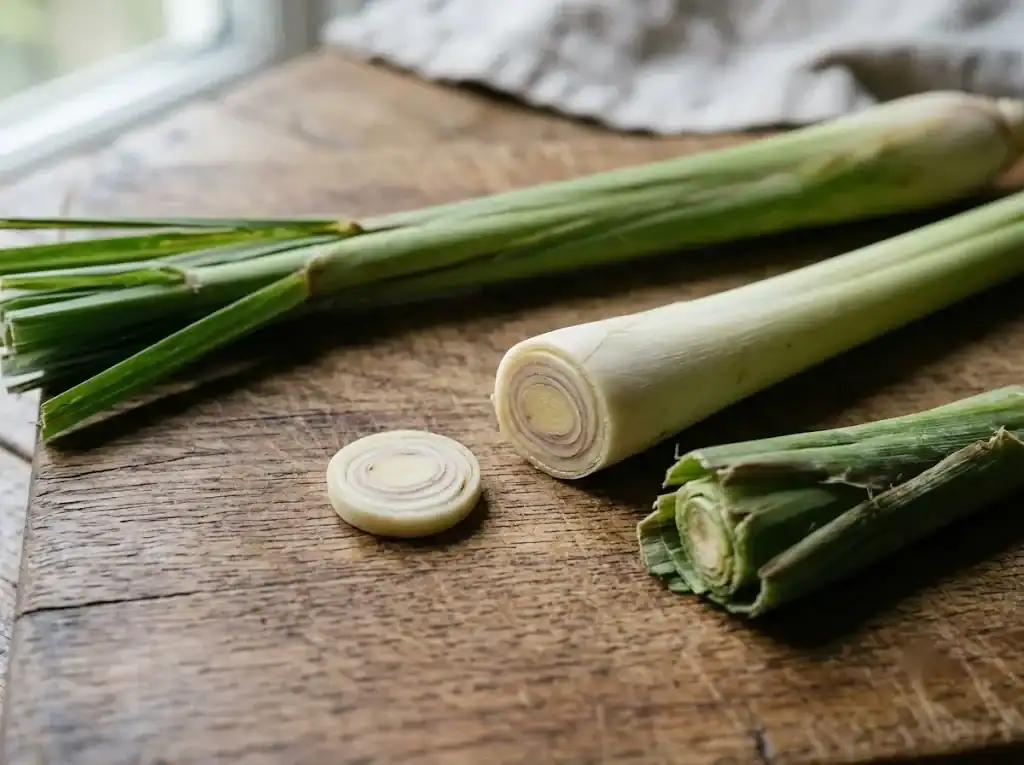
Only the bottom third of the stalk is worth eating. That’s the pale, tightly layered bulb where the citrusy aroma concentrates. The tough and fibrous outer leaves and the long leaves on top are too woody to chew, though they aren’t wasted: many cooks use lemongrass leaves and whole stalks to infuse a simmering broth or a pot of tea, then fish them out before serving, the same way you’d use bay leaves.
If you slice into it and the core still feels dense and fibrous rather than tender, you’ve likely cut too far from the bottom of the stalk. Move closer to the root end, where the layers are tightest and tender enough to mince. The difference in texture is easy to feel with the tip of a knife.
That same distinction, knowing which part of an herb actually carries the flavor, comes up throughout the kitchen. The culinary herbs guide covers the broader basics across the pantry, from storage to flavor pairing.
How to prepare lemongrass for cooking
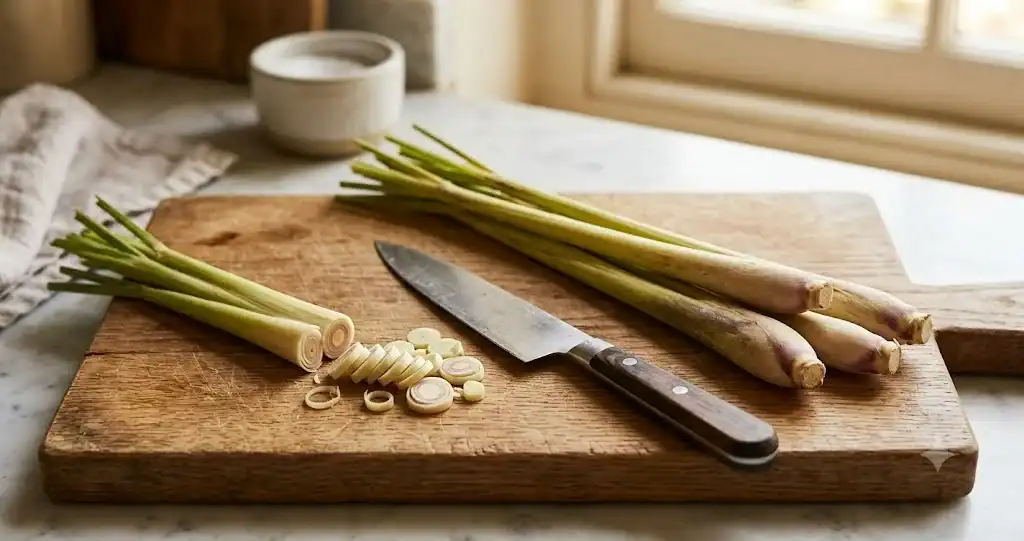
Start by trimming off the root end and the tough green top, leaving roughly the bottom four to six inches. Peel away the dry, papery outer layer until you reach the smoother, paler core underneath. From there, preparation depends on how you plan to use it:
- To infuse liquid: Bruise a whole stalk with the back of a knife or a mallet to crack the fibers open, then simmer it in broth, coconut milk, or tea and remove the tough piece before serving.
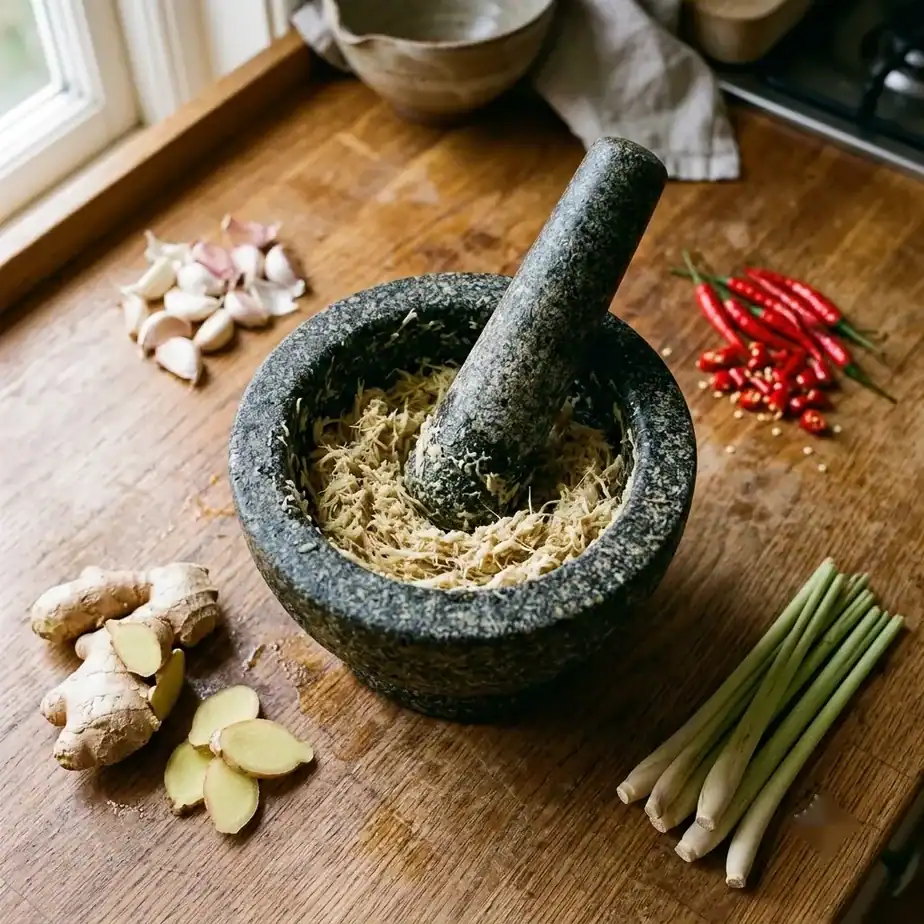
- For marinades and pastes: Slice the stalk thinly across the grain, then mince it finely by hand or pulse it in a food processor until it breaks down into small, aromatic bits. A mortar and pestle also works well for pounding lemongrass into a smooth curry paste with garlic, chile, and ginger.
- For eating whole in a dish: Slice it paper thin so the fibrous texture disappears into stir fries or salads.
However you cut it, work with small chunks of lemongrass rather than trying to slice a whole stalk at once. Cutting stalks of lemongrass into two or three inch pieces first makes them far easier to control on the board.
How to cook with lemongrass
Lemongrass is a foundation flavor in Vietnamese and Thai cuisine, the ingredient a dish is built around rather than a garnish added at the end, and it shows up constantly in the backbone of curry pastes, marinades, soups, and stews. It’s a workhorse ingredient in dishes across the region. A few reliable ways to use it:
- Curry paste: Pound minced lemongrass with chile, garlic, shallot, and galangal for a base that carries Thai green and red curries, including a classic chicken curry.
- Marinade: Combine minced lemongrass with fish sauce, lime juice, garlic, and a little sugar for a lemongrass marinade suited to chicken or pork, the same combination that flavors lemongrass chicken. Lemongrass fibers stay tough even after mincing, so scrape the larger bits off the meat before grilling or searing, where they’d otherwise scorch.
- Soup and stew: Bruised whole stalks are essential in tom yum and other broths, where they steep and release flavor without breaking apart. The same trick works to flavor a simmering stew.
- Stir fries: Thinly sliced lemongrass adds a citrusy flavor to quick stir fries with beef, tofu, or shrimp.
- Tea and drinks: Steep bruised stalks in hot water for a simple tea, or muddle a small piece into a cocktail for a citrus flavor that isn’t quite lemon or lime.
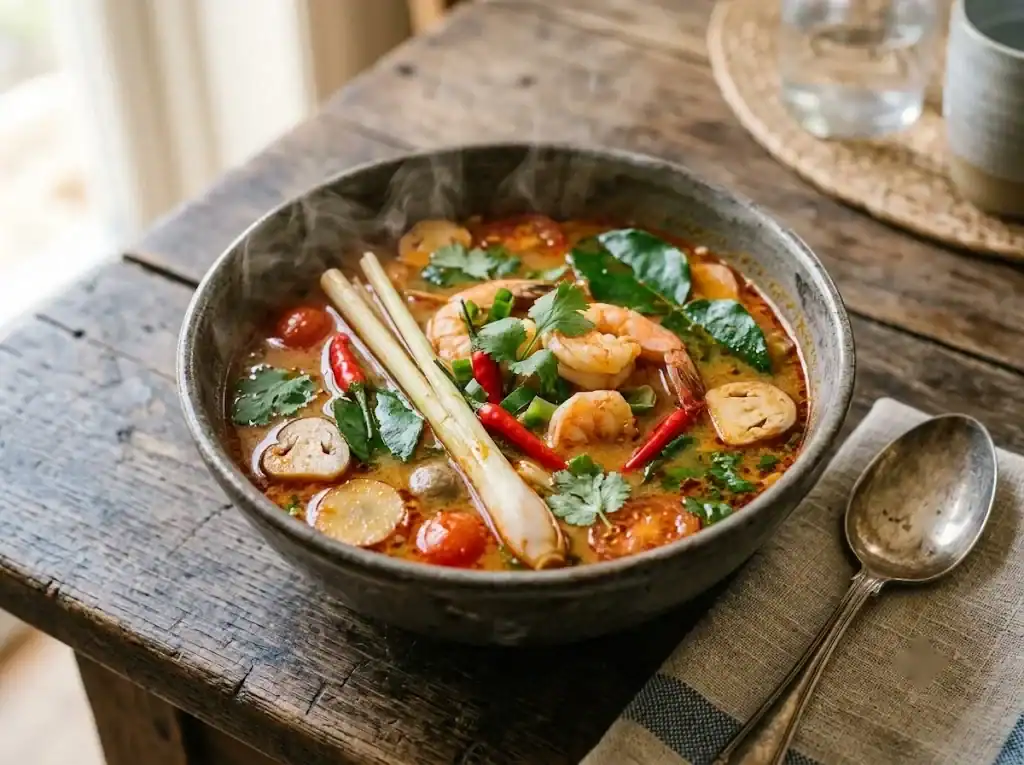
As a starting point, one to two stalks flavor a pot of soup or stew for four; one minced stalk is enough for a marinade for a pound of chicken or pork. Lemongrass is forgiving, so taste the liquid after it simmers a few minutes and add lemongrass again if the flavor reads faint.
What pairs well with lemongrass
Lemongrass holds its own against the assertive flavors common in Southeast Asian cooking. It pairs naturally with coconut milk, ginger, garlic, chile, fish sauce, lime leaves, and fresh cilantro or green onions as a finishing herb. On the protein side, it works especially well with chicken, pork, shrimp, and firm white fish, where its bright, lemony aroma cuts through richness without overpowering the dish.
Once you’ve got the flavor pairings down, a full set of lemongrass recipe ideas is a good next stop for specific dishes to try, from soups to grilled skewers.
Where to buy lemongrass, and what to look for
Asian grocery stores are the most reliable source, usually selling lemongrass in bundles of several stalks for very little money. Many farmers markets carry it in the warmer months, and a growing number of regular supermarkets stock it fresh or as a paste in the produce section.
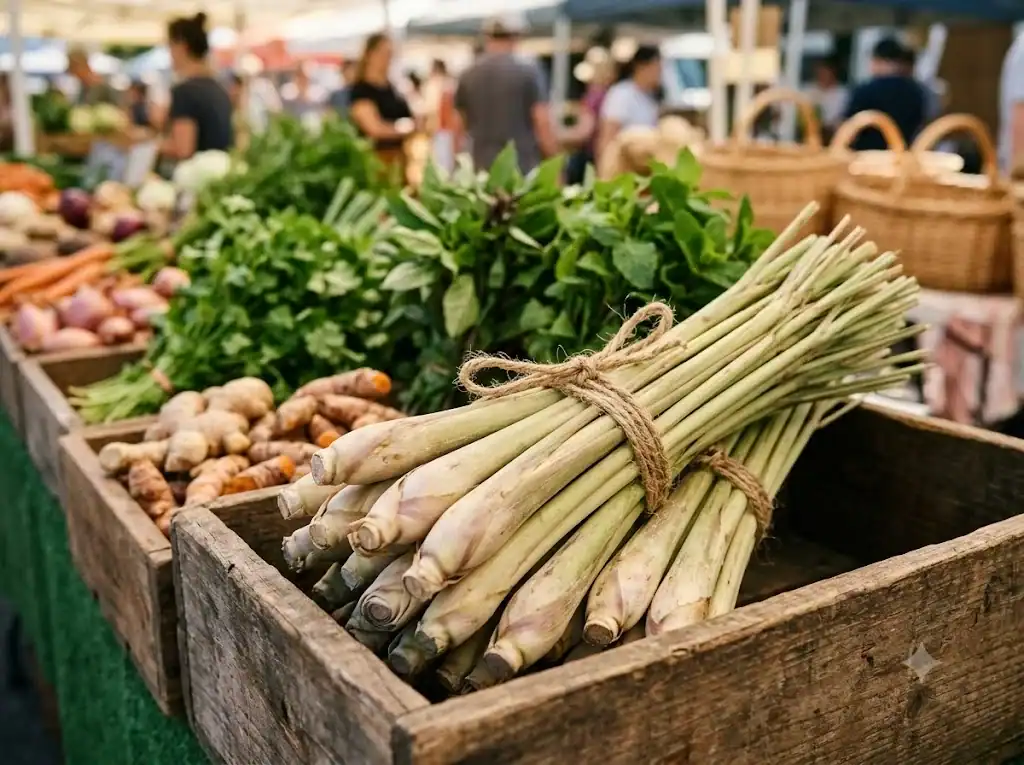
Look for stalks that are firm, pale at the base, and free of soft or dry spots. A fresh stalk should smell strongly of lemon as soon as you snap or bend the base. Fresh lemongrass keeps in the refrigerator for one to two weeks if wrapped loosely in a damp paper towel and a plastic bag.
For longer storage, whole trimmed stalks freeze well. If you regularly cook with lemongrass but only need a little at a time, mince a batch and freeze it in small portions so you can pull out exactly what a recipe calls for. For the full method and how long frozen lemongrass keeps its flavor, see freezing lemongrass.
Substitutes for lemongrass
Fresh-cut lemongrass has a flavor that’s hard to fully replace, but a combination of lemon zest and a little grated ginger gets close for marinades in a pinch. As a rough guide, use about a teaspoon each of lemon zest and minced fresh ginger in place of one stalk. Dried lemongrass slices rehydrate well in simmering liquid, though the flavor is milder than fresh. Lemongrass powder disperses rather than rehydrating and tastes flatter, so use it sparingly.
Is lemongrass safe to cook with?
Used the way most home cooks use it, as a flavoring in food-level amounts, lemongrass is a normal, well-established ingredient across Southeast Asian cooking. If you’re pregnant, on medication, or managing a health condition and want to use lemongrass beyond ordinary cooking amounts, such as strong teas or supplements, check with your doctor first, since that’s a different question from adding it to a pot of soup.
Frequently asked questions
Does lemongrass actually taste like lemon?
It’s lemony, but rounder and more floral than an actual lemon, with a background note similar to ginger. There’s none of the sharp acidity you’d get from lemon juice or zest.
Can I use lemon zest instead of lemongrass?
Yes, in a pinch. Pair the zest with a little grated ginger to get closer to lemongrass’s fuller flavor, since zest alone tastes more purely sour.
Can you root and regrow a lemongrass stalk?
Often, yes, if the base is intact; it can root in a glass of water on a sunny windowsill within a couple of weeks, then be potted up if you want a steady kitchen supply.
Once you’ve trimmed your first stalk and tasted the difference it makes in a pot of soup or a marinade, it stops feeling like an intimidating ingredient and starts feeling like a pantry staple worth keeping on hand.