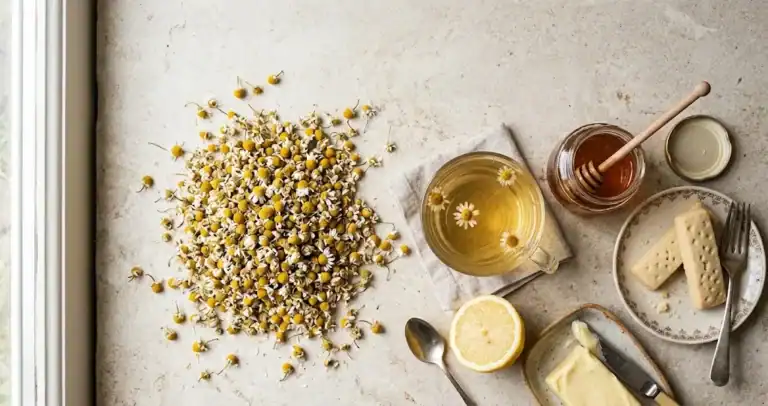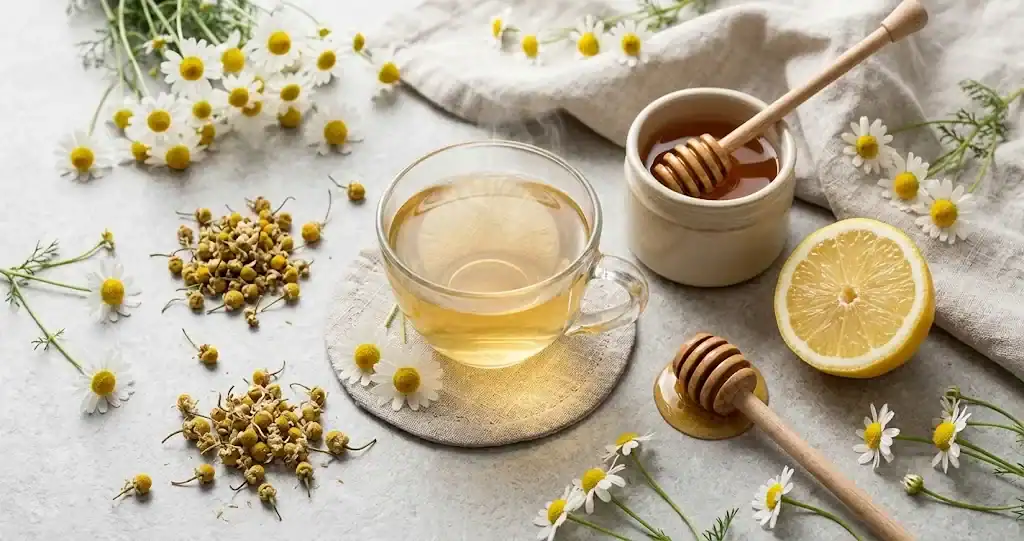
A handful of sweet chamomile blossoms carries a delicate scent of chamomile with notes of sweet apples and floral sweetness like honey. While many people only recognize chamomile from commercial chamomile tea bags, recipes with chamomile extend far beyond a standard mug before bed. Working with whole dried blossoms or fresh flowers, you can craft a versatile honey chamomile syrup, an iced summer drink with lemon, a delicate panna cotta, or a comforting caffeine-free herbal tea with lemon balm.
Whether you grow the chamomile plant at home or stock your pantry with dried chamomile flowers, this guide walks you through creative ways, delicious recipes, safety guidelines, and reliable storage tips.
Classic Chamomile Tea Recipes: How to Make a Cup of Chamomile Tea
Every great herbal recipe begins with knowing how to make chamomile tea properly. Pouring boiling water directly over a delicate flower head can scald the petals and release bitter notes. Preparing a rich, aromatic cup of tea requires gentle heat and generous measuring.
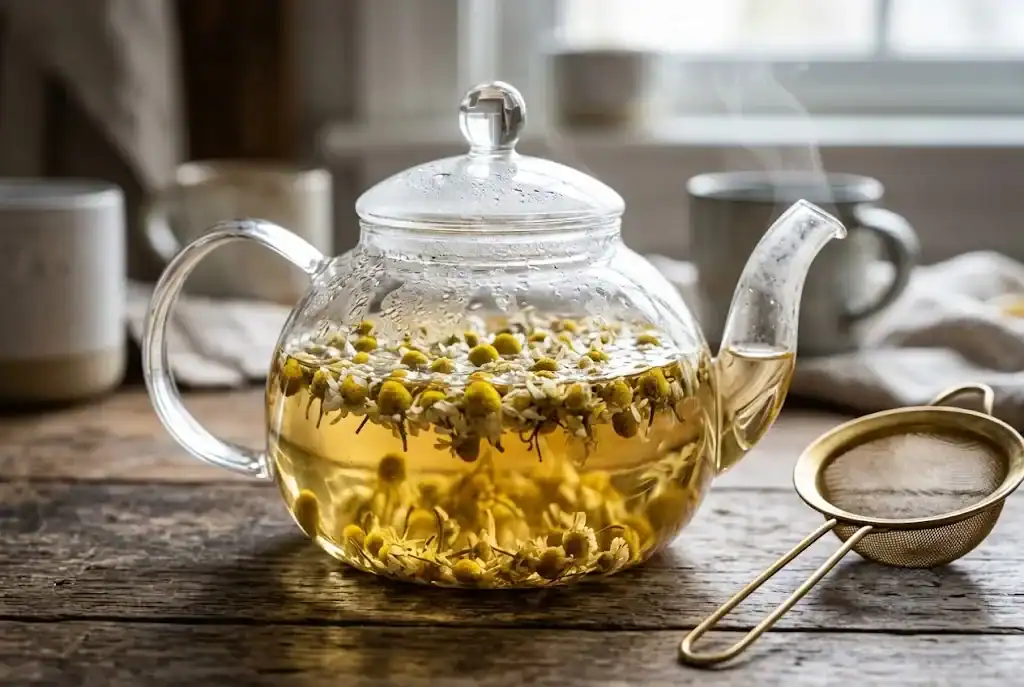
- Measure 2 tablespoons of dried chamomile (or 3 tablespoons of fresh blossoms) per cup of water into a ceramic teapot or small pot.
- Heat fresh water until it reaches a gentle simmer, just under a boil at roughly 200 F (93 C).
- Pour 1 cup of water over the flowers, cover the vessel immediately with a lid, and let the mixture infuse for 8 to 10 minutes.
- Pass the liquid through a fine mesh strainer to strain the chamomile and catch all loose flower heads and petals.
- Serve hot in your favorite tea cup, plain or sweetened to taste.
To sweeten your tea naturally, stir in a spoonful of raw honey or add a fresh lemon slice. If you prefer iced chamomile tea, double the quantity of flowers during preparation, steep in hot water for 10 minutes, strain over ice, and garnish with fresh petals.
Honey Chamomile Syrup, Panna Cotta, and Edible Flower Desserts
Infusing honey with dried blossoms produces a golden syrup that elevates both beverages and desserts. Drizzle homemade chamomile syrup over fruit salads containing apricot or pineapple, or spoon it over warm pancakes and waffles. For a broader look at building an herbal pantry, see our guide on culinary herbs.
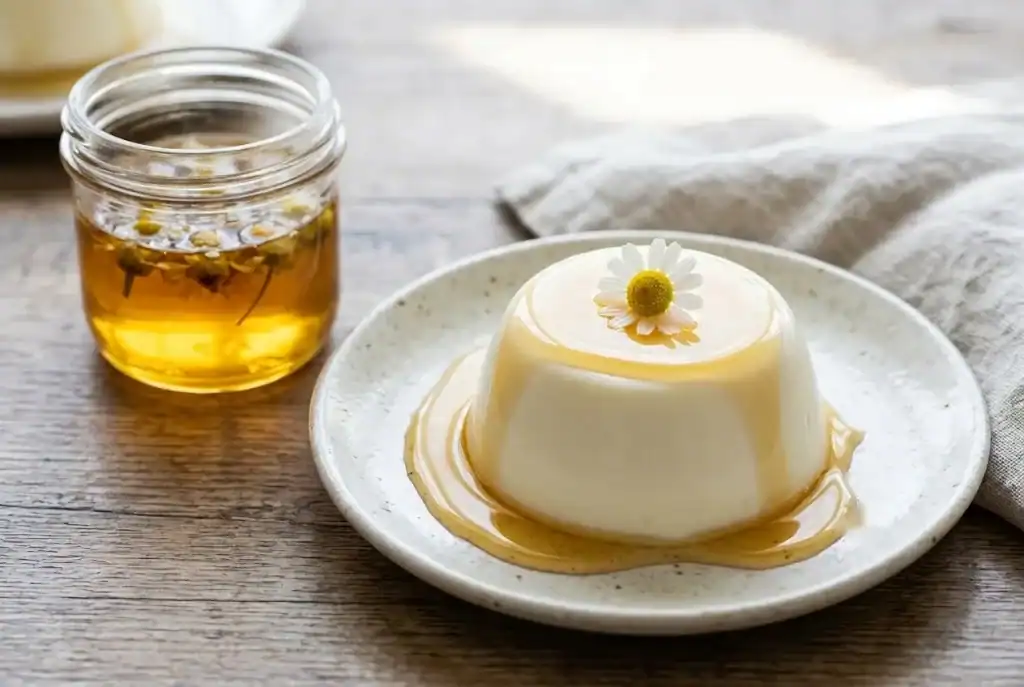
To prepare honey chamomile syrup, combine 1 cup of water and 1 cup of raw honey in a saucepan over medium-low heat. Stir until the honey dissolves, then turn off the heat and add the chamomile flowers (about 1/2 cup of dried blossoms) and a sprig of fresh mint. Cover the pan and let the syrup infuse for 20 minutes before passing through a fine mesh strainer into a clean glass jar.
For an elegant dessert, try a honey chamomile panna cotta. Warm 1 cup of heavy cream and 1 cup of milk in a saucepan with 2 tablespoons of dried blossoms until steam rises. Turn off the heat, stir in dissolved gelatin and honey, and let infuse for 15 minutes. Strain the liquid into ramekins, chill until set, and garnish each portion with a fresh edible flower petal.
How to Infuse and Use Chamomile Tea in Daily Cooking
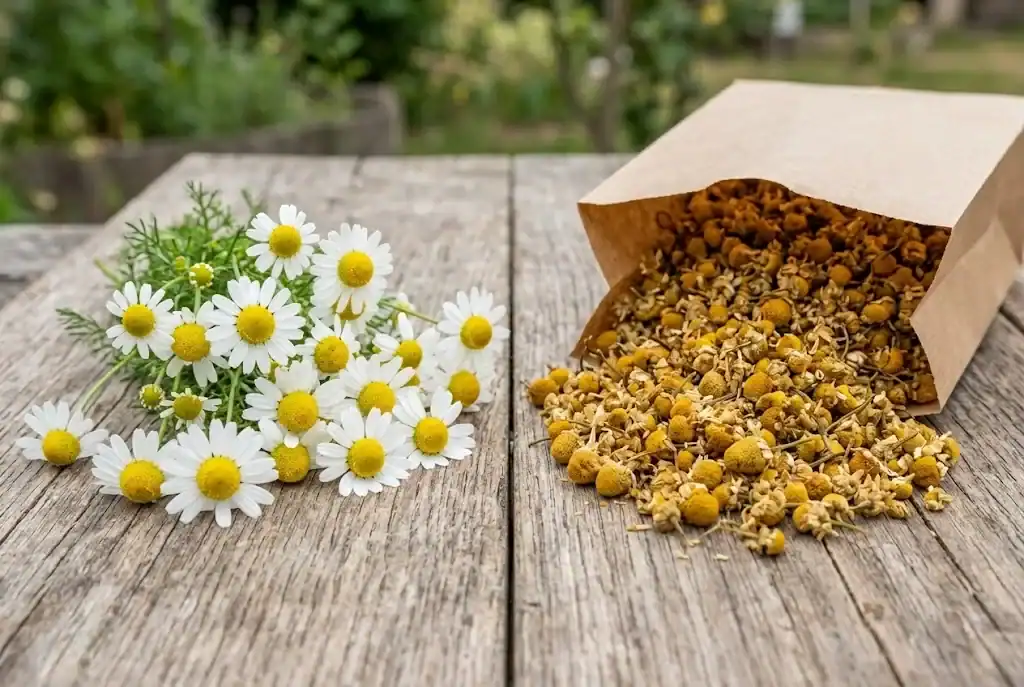
Choosing between fresh and dried flowers depends on the application. Fresh blossoms contribute a crisp, grassy flavor with bright herbal notes, whereas dry chamomile offers a deeper, sweet concentration. Wash fresh blooms gently in cool water and pat dry before cooking. Because fresh petals contain natural water, use double the volume when substituting fresh blooms for dried flowers in syrups or baked goods. See our guide on storing fresh chamomile for additional preservation tips.
When preparing baked items such as shortbread or sugar cookies, grind dried blossoms finely using a spice grinder before folding into butter and flour. Whole petals in baking can create a tough texture, but ground flowers distribute the subtle scent evenly throughout the dough. Using fresh blooms or dry chamomile adds a pleasant herbal complexity to homemade baked treats.
Which Types of Chamomile to Use: German vs Roman Chamomile
Understanding botanical varieties ensures you select the best species for cooking and tea making. Two primary species of the plant are cultivated for herbal use:
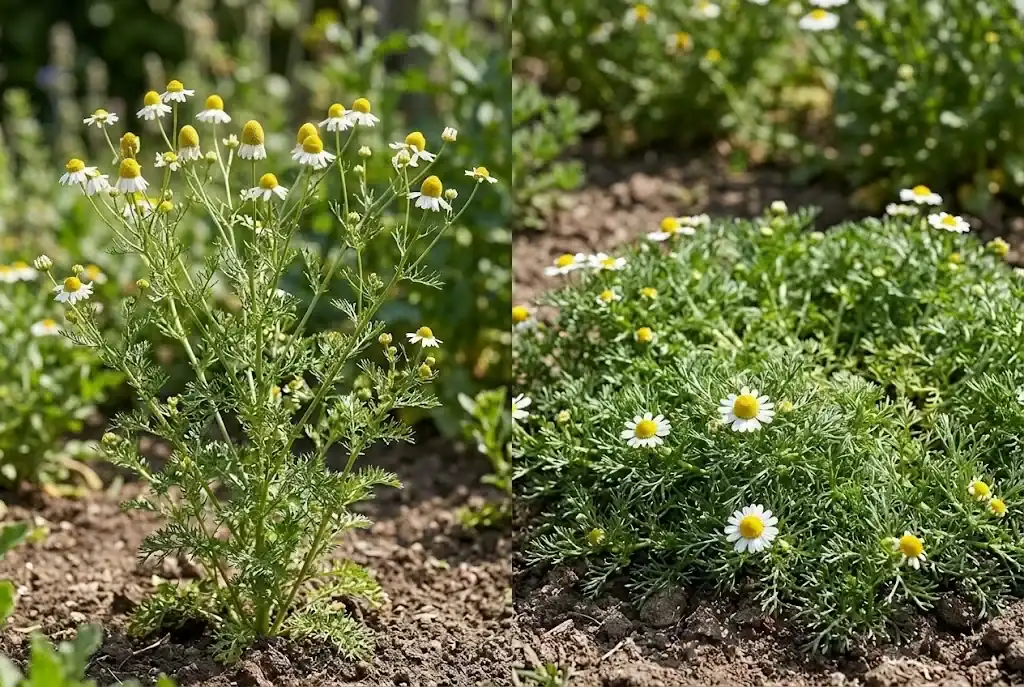
- German Chamomile (Matricaria chamomilla): An annual plant native to Europe featuring erect branching stems, white petals and yellow centers, and hollow yellow central cones. The German variety is easy to grow, produces abundant flower heads, and remains the preferred species for making tea, syrups, and culinary uses.
- Roman Chamomile (Chamaemelum nobile): A low-growing perennial groundcover with aromatic foliage and solid yellow centers. While edible, Roman chamomile develops a noticeably bitter flavor when heated, making it better suited for topical salves and bath preparations.
For detailed identification guidelines and botanical descriptions, refer to the University of Wisconsin-Madison Extension chamomile guide.
Chamomile Tincture, Salves, and Home Herbal Uses
Beyond beverage and dessert recipes, there are many practical ways chamomile can also be used at home to help you relax and unwind:
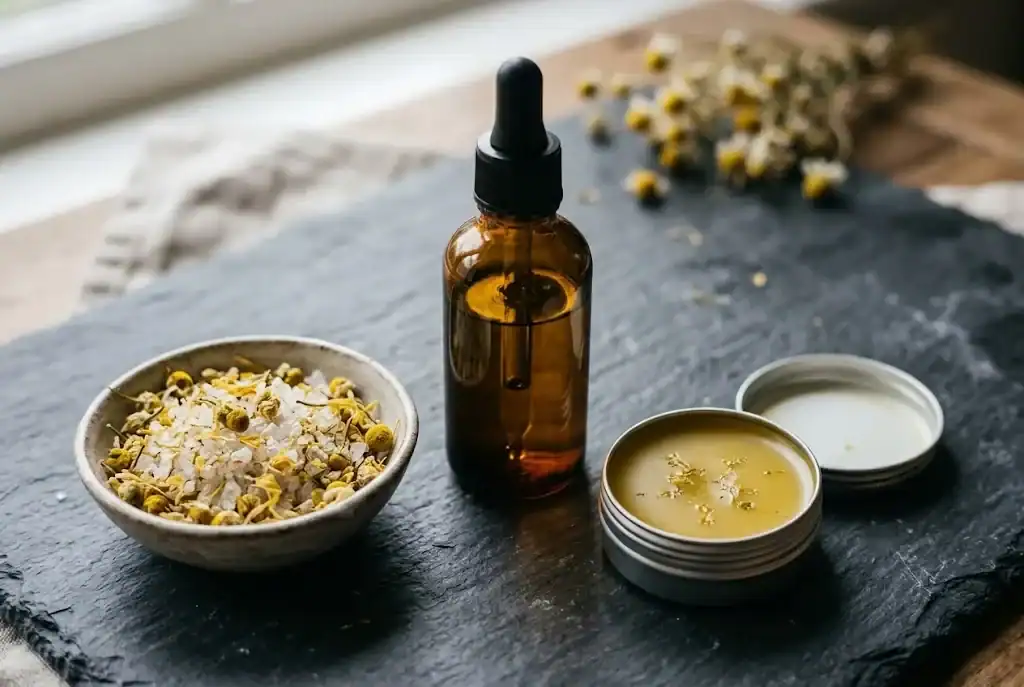
- Chamomile Tincture: A concentrated herbal extract prepared by steeping dry chamomile in food-grade alcohol or vegetable glycerin for 4 to 6 weeks. A few drops added to water provide a convenient way to soothe digestion and calm tension on busy evenings.
- Herbal Lip Salve: Infusing olive oil or coconut oil with dried blossoms over low heat creates a gentle base for homemade lip balm, body butter, or skin salves.
- Chamomile Bath Salts: Combining coarse Epsom salt, sea salt, and dried petals makes a fragrant, antiinflammatory bath soak to help relax tired muscles.
Potential Health Benefits, Evidence, and Safety Guidelines
Chamomile tea is one of the most widely consumed herbal infusions, known for traditional use to soothe minor digestive discomfort, calm tension, and act as a mild natural sedative to support sleep. Modern chemical analysis shows that Matricaria chamomilla contains active flavonoid compounds, including apigenin, which possess antioxidant properties.
According to the National Center for Complementary and Integrative Health (NCCIH), chamomile flowers or chamomile tea are generally recognized as safe for food use. Small clinical trials on standardized chamomile extracts indicate potential support for sleep quality and mild anxiety, although evidence remains modest compared to medical treatments. Chamomile does not cure or replace medical care for chronic insomnia or anxiety disorders.
Observe these safety precautions when using chamomile:
- Allergies: Individuals allergic to ragweed, chrysanthemums, marigolds, or daisies in the Asteraceae family may experience allergic reactions to chamomile.
- Medication Interactions: Chamomile contains coumarin compounds that might interact with blood thinners like warfarin. Consult a healthcare provider if taking prescription medications.
- Pregnancy & Infants: Pregnant women should seek medical advice before using concentrated tinctures. Never offer honey or honey-sweetened chamomile syrup to infants under one year old due to infant botulism risks.
Best Chamomile Sourcing and How to Store in an Airtight Container
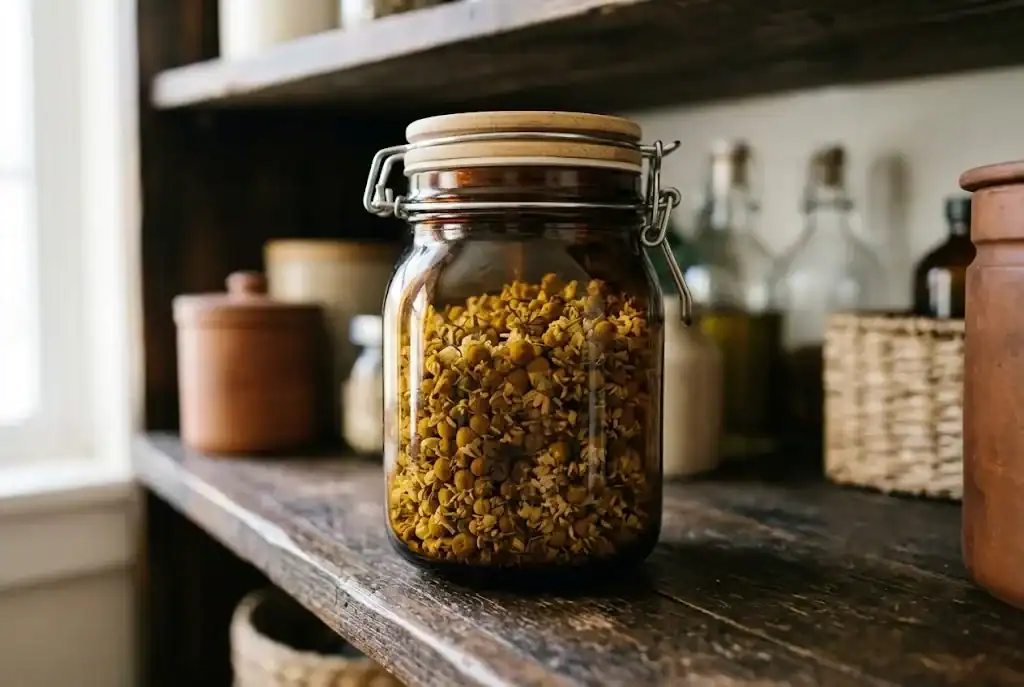
To preserve the rich aroma and taste of your herb supply, store in an airtight container away from direct sunlight, heat, and moisture. Whole dry chamomile stored in a sealed dark glass jar retains its essential oil content and fragrant scent for up to 12 months.
If you choose to grow chamomile in your home garden, plant seeds in well-drained soil with full sun. Harvest flower heads in full bloom on a dry morning once dew evaporates, following our instructions on how to harvest chamomile correctly, then spread the blossoms on a drying screen in a warm, ventilated area.
Frequently Asked Questions About Recipes with Chamomile
Can you drink chamomile tea every day?
Yes. For most healthy adults, enjoying a daily cup of tea as a caffeine-free beverage is safe and refreshing.
Is fresh chamomile better than dried chamomile for tea?
Both options excel. Fresh blossoms yield a lighter, grassy infusion, while dried flowers produce a sweeter, honey-like flavor.
How do you sweeten chamomile tea naturally?
Sweeten hot tea with raw honey, maple syrup, a splash of homemade chamomile syrup, or a fresh lemon slice.
What herbs pair well with chamomile?
Chamomile pairs exceptionally well with mint, lavender, ginger, cinnamon, and fresh lemon peel in custom herbal blends.
Start with a Classic Brew
If you are trying recipes with chamomile for the first time, begin with a carefully brewed hot tea or a batch of golden honey syrup. Explore our additional guides to expand your herbal kitchen skills.
Sources and References
- National Center for Complementary and Integrative Health (NCCIH). Chamomile. U.S. Department of Health and Human Services. https://www.nccih.nih.gov/health/chamomile
- University of Wisconsin-Madison Division of Extension. Chamomile (Matricaria chamomilla). https://hort.extension.wisc.edu/articles/chamomile/