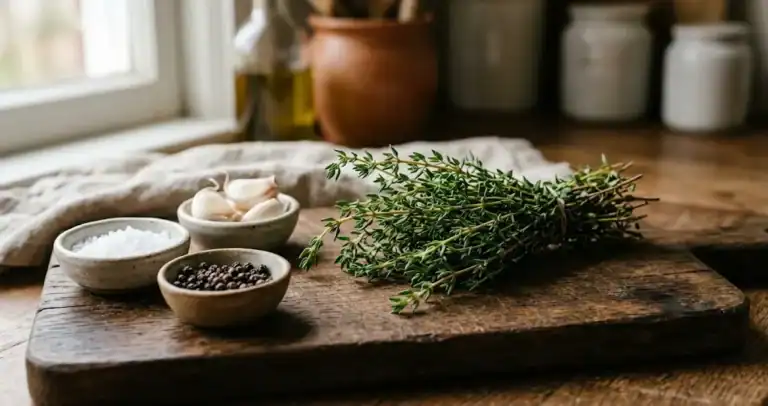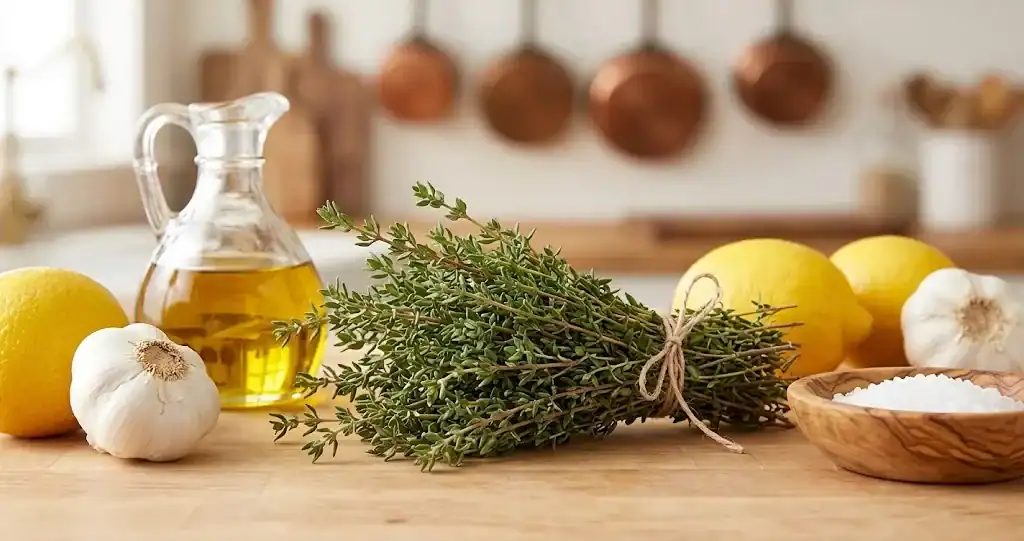
Thyme is one of the most dependable kitchen workhorses and versatile herbs in the culinary world. As a classic member of the mint family (Lamiaceae), this fragrant seasoning delivers an earthy flavor with subtle floral, pine, and peppery notes that elevate everyday home cooking. Whether you simmer a hearty pot on a chilly evening, sear chicken thighs in a heavy skillet, or prepare roasted vegetables, knowing how to cook with thyme unlocks balanced depth in many different dishes.
Unlike tender leafy greens that wilt under high heat, common thyme (Thymus vulgaris) possesses sturdy, woody stems and oil-rich foliage. This natural resilience allows the plant to withstand long cooking times and slow simmer cycles while releasing its gentle essence into pan juices, comforting soups and stews, and wet rubs. Understanding where this herb sits among culinary herbs helps home cooks master its rich depth across classic French, Mediterranean, and modern family meals.
What Does Thyme Taste Like and How to Use Thyme in Everyday Dishes
If you have ever wondered what does thyme taste like, think of a warm, woodsy, and subtly sharp flavor profile with a faint clover sweetness. The dominant essential oil, thymol, provides its herbal pungency, while background notes of citrus, mint, and wood give the seasoning its distinctive earthiness. Because the flavor is balanced rather than sharp, thyme pairs well with both rich meats and light, delicate ingredients.
In daily meal preparation, you can add sprigs to flavor pan reductions, vegetable bakes, legume dishes, and braised meats. A single sprig added to a simmering pot of tomato reduction or beef broth lends complexity without drowning out the other seasonings in the dish. When used fresh, a sprinkle of minced leaves over scrambled eggs, creamy goat cheese, or sauteed wild mushrooms provides an instant lift.
Choosing Fresh or Dried Seasoning: Scent, Flavor, and Cooking Ratios
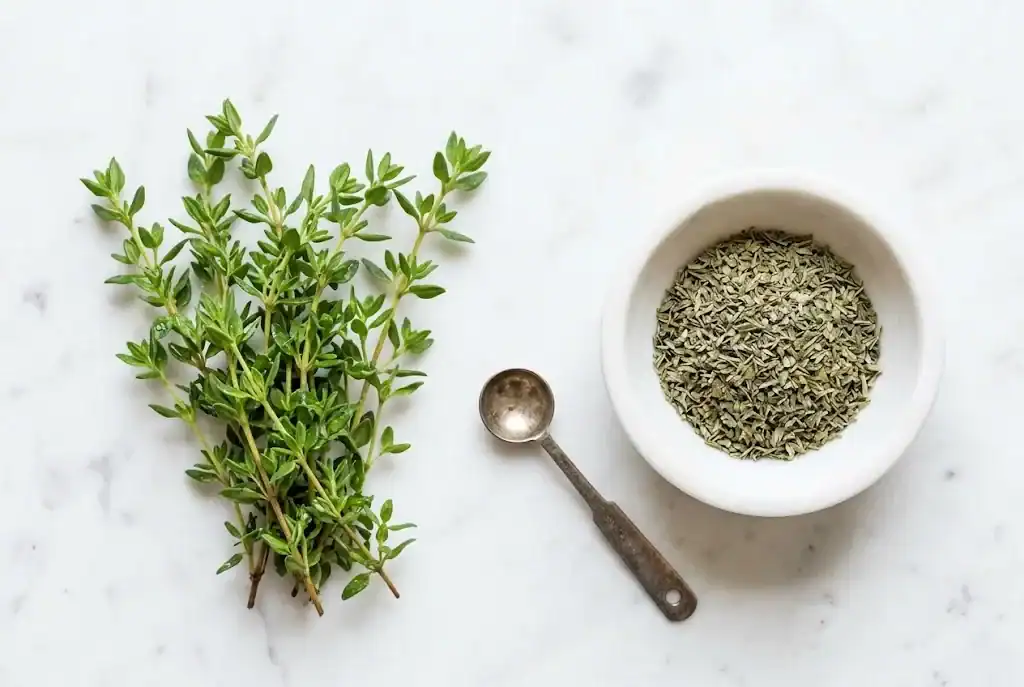
Both fresh and dried forms have an essential place in your kitchen, but their flavor intensity and moisture levels differ significantly. Understanding when to choose fresh or dried ensures your recipes achieve perfect balance every time.
Fresh sprigs deliver a vibrant green fragrance with bright citrusy top notes. Fresh sprigs excel in quick sauteing, fresh vinaigrette dressings, compound butter, and as a finishing garnish. Dried thyme is more concentrated and pungent, with deeper woodsy tones that shine in slow-cooked braises and bean soups where the dried seasoning has ample time to rehydrate and distribute its aroma throughout the cooking liquid.
When substituting between forms, follow the standard three-to-one rule. Use 1 teaspoon of dried seasoning in place of 1 tablespoon (1 tbsp) of chopped fresh leaves, or vice versa. When cooking with sprigs of fresh thyme, remember that three average sprigs yield approximately 1/2 teaspoon of stripped leaves.
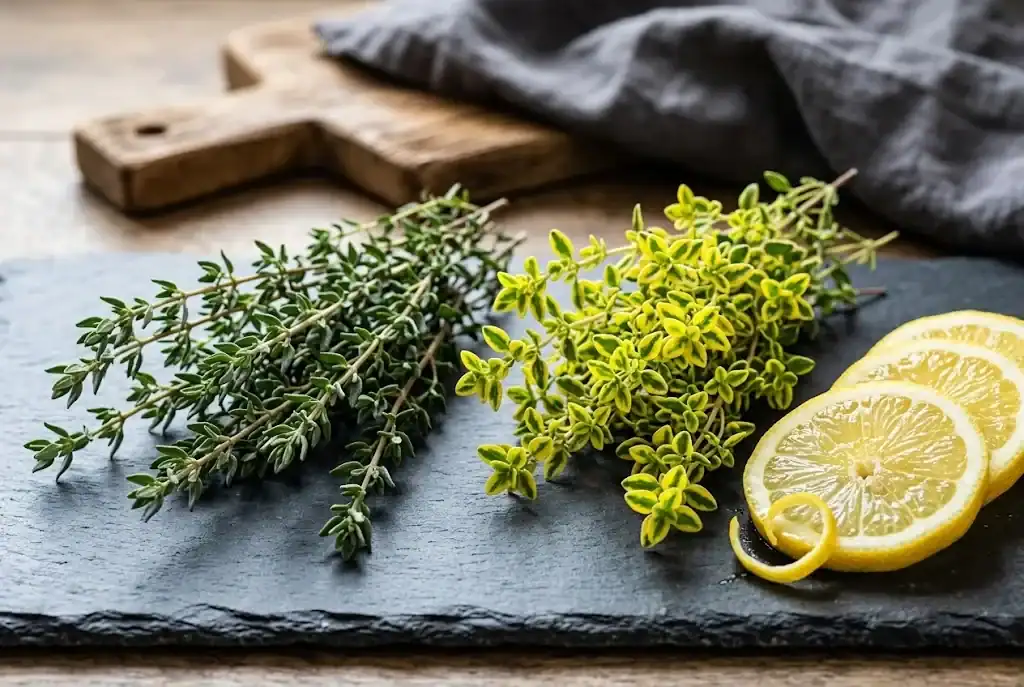
Popular Culinary Varieties: English Garden Thyme and Citrus Thyme
While botanists recognize many different varieties across the genus, home cooks rely primarily on two kitchen varieties:
- Common Thyme / English Thyme (Thymus vulgaris): The standard kitchen staple. It features small, oval gray-green leaves on woody stems with a warm, peppery fragrance. It is the best thyme for traditional poultry roasts, gravies, and stuffing.
- Lemon Thyme (Thymus citriodorus): A delightfully lemony variety that carries a natural burst of citrus along with its herbal base. This citrusy botanical works exceptionally well with poached fish, grilled poultry, roasted carrots, and shortbread cookies. Pair it with fresh lemon peel or grated lemon zest to amplify its bright scent.
Other specialty selections, such as caraway or orange varieties, provide intriguing nuances, but common garden selections remain the benchmark for cooking.
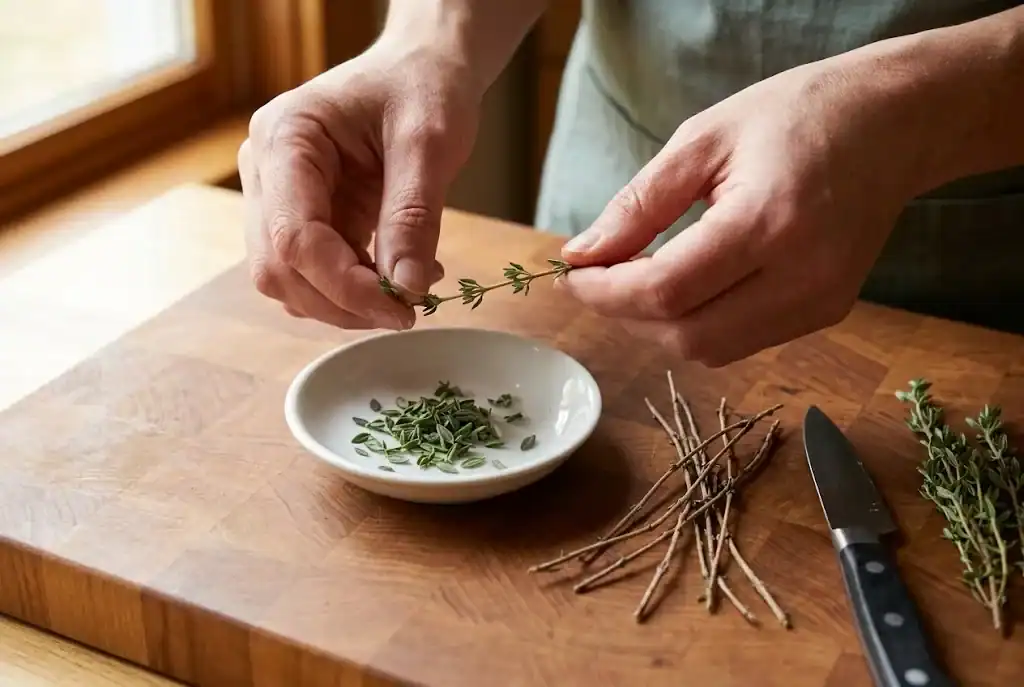
How to Strip Fresh Thyme Leaves or Cook with Whole Sprigs
Working with fresh thyme sprigs is straightforward once you understand how stem texture influences your cooking process:
- Stripping fresh thyme leaves: Hold the top tip of a sprig firmly with one hand. Pinch the stem with the thumb and index finger of your other hand just below the tip, and slide your fingers down against the direction of leaf growth. The small leaves will strip cleanly into your prep bowl. Mince the leaves finely with a sharp chef knife for dressings and garnishes.
- Cooking with a whole sprig: When preparing long-simmered dishes such as beef stew or chicken pot pie filling, you do not need to strip the leaves beforehand. Drop whole sprigs directly into the warm liquid. As the dish simmers, the leaves detach naturally from the woody twigs. Simply fish out and discard the bare woody stems before serving.
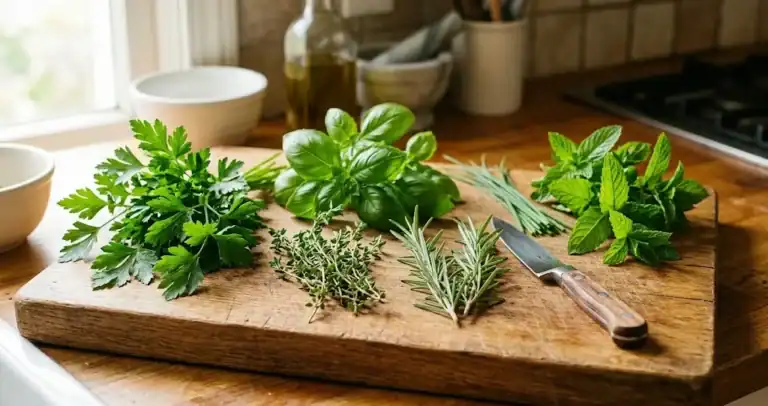
- Making a bouquet garni sachet: Tie fresh stems together with rosemary sprigs, bay leaves, and flat parsley stems using kitchen twine, or bundle them in a cheesecloth sachet. This classic bouquet garni allows the flavorful oils to diffuse into stocks while making removal effortless.
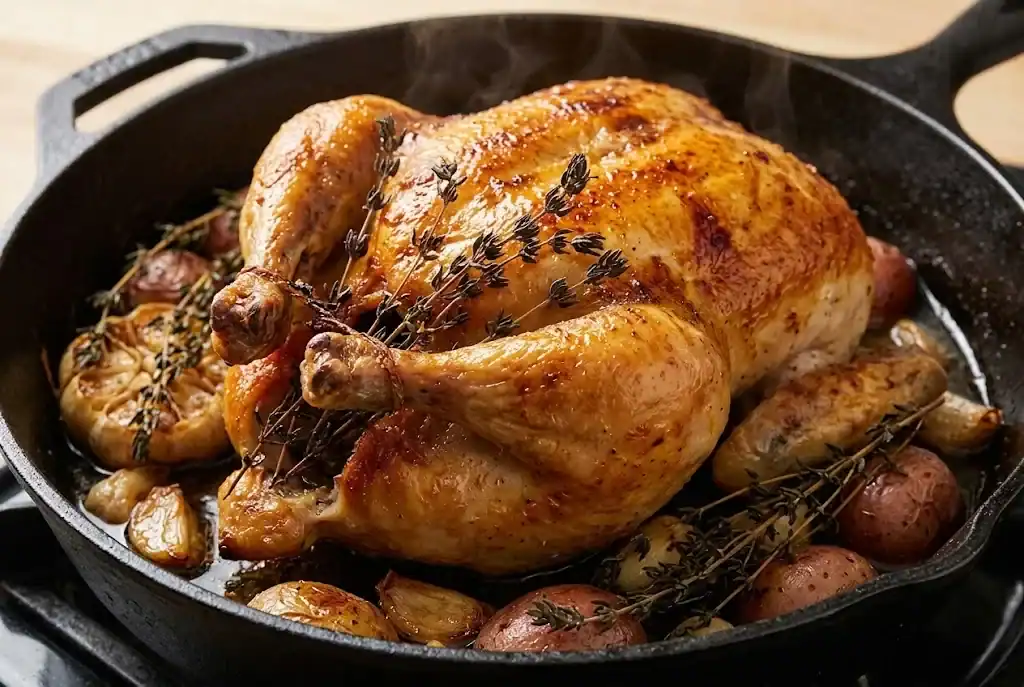
Classic Cooking Methods: Roast Chicken, Hearty Stew, and Braised Meats
The plant thrives when exposed to steady, sustained heat. Here is how to apply classic culinary techniques to get the most flavor from each stem:
- Roast chicken and poultry: Tuck fresh thyme sprigs under the skin of a chicken before roasting. As the bird cooks in the oven, the herbal oils melt into the butter and poultry fat, basting the meat from the inside out and producing crisp, thyme-scented skin. Toss chicken thighs with olive oil, garlic and lemon, kosher salt, and minced thyme before roasting at 400 degrees Fahrenheit.
- Slow braise and hearty stews: In slow-cooked braises such as beef short ribs or braised shanks, add seasonings early in the browning and deglazing stage. Fat-soluble flavor compounds dissolve into the rendered fat and cooking wine, creating rich depth throughout the hours of gentle simmering.
- Broths and chowders: Add dried flakes or fresh sprigs to French onion soup, creamy potato leek chowder, or lentil broth. The seasoning cuts through starch and dairy richness, providing a grounded note.
- Roasted vegetables: Toss cubed butternut squash, baby potatoes, carrots, or mushrooms with olive oil, minced garlic, sea salt, and fresh thyme leaves before spreading them across a baking sheet. Roast at high heat until caramelized and fragrant.
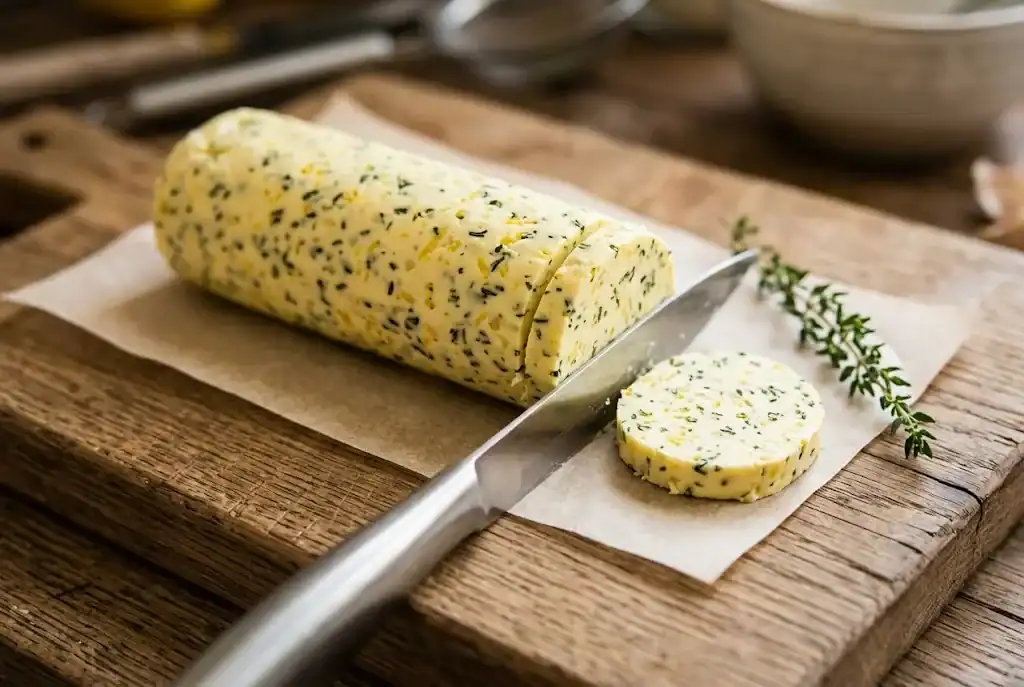
How to Infuse Flavor into Compound Butter, Seasoning Rubs, and Pan Sauce
Beyond whole dishes, the plant acts as a magnificent base for building versatile sauces, condiments, and seasoning preparations in your home kitchen:
To make a simple garlic-herb compound butter, combine 1/2 cup of softened unsalted butter with 1 tbsp of finely minced fresh thyme leaves, 1 minced garlic clove, 1/2 teaspoon of finely grated lemon zest, and a pinch of flaky sea salt. Roll the seasoned butter into a log using parchment paper and chill in the refrigerator until firm. Slice a medallion of this thyme-infused butter over a freshly grilled steak, roasted salmon, or steamed green beans just before serving.
For quick pan sauces, deglaze your skillet with white wine or chicken broth after searing pork chops or cutlets. Add 2 fresh thyme stems and a teaspoon of Dijon mustard, reduce the liquid by half over medium heat, and swirl in cold butter to create a silky, thyme-forward pan sauce.
When mixing a quick marinade for grilled chops or flank steak, blend olive oil, red wine vinegar, crushed garlic, a pinch of dried oregano, and minced thyme. Let the meat sit for at least 30 minutes to absorb the aroma before cooking.
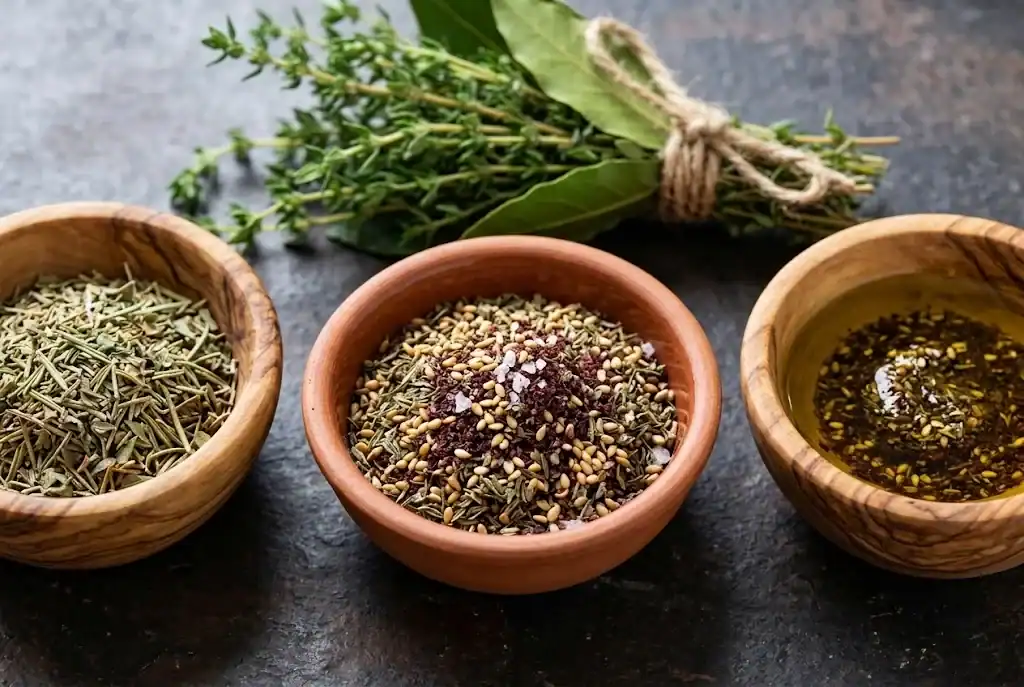
Traditional Seasoning Blends: Za’atar, Herbes de Provence, and Herb Bundles
Thyme is a foundational component in several of the world’s most renowned dry blends. If you enjoy making your own kitchen seasonings, consider these famous formulas:
- Za’atar: A beloved Middle Eastern spice blend combining dried leaves, toasted sesame seeds, ground sumac, and sea salt. Mixed with extra virgin olive oil, it makes an extraordinary dip for warm flatbread or a crust for roasted poultry.
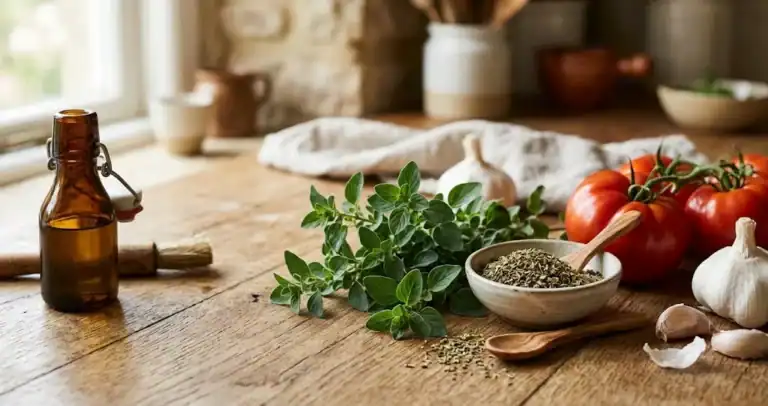
- Herbes de Provence: A classic French blend from the Mediterranean coast consisting of dried thyme, rosemary, savory, marjoram, and oregano. It is ideal for grilled meats, ratatouille, and roasted tomato dishes.
- Italian seasoning: Most Italian blends balance equal parts dried leaves, basil, oregano, rosemary, and marjoram to season pasta sauces, meatballs, and focaccia bread.
What Goes Well with Thyme: Rosemary, Oregano, Marjoram, and Roasted Meat Pairings
Because the seasoning possesses woody and citrus undertones, it harmonizes effortlessly across a wide spectrum of culinary ingredients. Thyme is often paired with hearty meats, aromatic roots, and robust herbs:
- Meats and poultry: Roast chicken, turkey, duck, roast beef, pork tenderloin, braised lamb, and game meats.
- Vegetables: Potatoes, onions, leeks, shallots, garlic, wild mushrooms, tomatoes, carrots, parsnips, and winter squash.
- Dairy and cheeses: Goat cheese (chevre), feta, aged cheddar, Gruyere, parmesan, ricotta, and heavy cream.
- Fruits and citrus: Lemon, orange, apples, pears, figs, and blackberries in baked and dessert applications.
- Complementary herbs: Rosemary, sage, oregano, bay leaf, parsley, tarragon, marjoram, and chives. Thyme goes well with other pungent seasonings without competing for dominance.
Simple Recipes That Use Thyme for Quick Weeknight Cooking
Looking for concrete culinary inspiration? Exploring special thyme recipe ideas allows you to experiment with sweet and herbed recipes ranging from roasted lemon-thyme chicken to herb-infused biscuits and honey-thyme glazes.
Practical recipes that use fresh herbs make weeknight dinners effortless. Toss hot cooked pasta with olive oil, freshly grated parmesan cheese, cracked black pepper, and fresh thyme leaves for an instant dinner. Or whisk a teaspoon of minced seasoning into an olive oil and Dijon mustard vinaigrette to dress crisp salad greens.
When cooking with fresh herbs, properly handling your leftover harvest keeps your sprigs crisp and fragrant for weeks. Learning how to store thyme in a sealed jar or damp paper towel prevents drying out and ensures ready access to fresh seasoning whenever inspiration strikes.
Frequently Asked Questions About Cooking with Thyme
Can you eat thyme stems?
Young, green stems near the top of fresh sprigs are tender enough to eat when finely minced. However, as the plant matures, its main stems become hard, fibrous, and woody. These woody stems should not be consumed directly; use them whole in simmering liquids and discard them before plating, or strip the leaves before chopping.
Can you substitute rosemary for thyme?
Yes, rosemary is a fellow member of the mint family and shares pine and woodsy notes with thyme. However, rosemary is significantly more potent and pungent. If substituting rosemary for thyme, use about one-third to one-half the specified amount to prevent the pine flavor from overpowering your recipe. Marjoram, oregano, and tarragon also serve as dependable substitutes.
When should you add thyme during cooking?
Because thyme is a hardy, woody plant, dried flakes and whole fresh sprigs should be added early in the cooking process (such as during simmering, braising, or roasting) so their essential oils have time to season the dish with rich thyme flavor. Delicate fresh leaves or citrus sprigs used for garnish should be added near the end of cooking or just before serving to preserve their bright aromatic top notes.