Cold air does not have to end your herb garden. With the right plant choices and a little seasonal preparation, you can keep harvesting fresh herbs through fall frosts, freezing nights, and the gray weeks of late winter. Growing herbs in cold weather is mostly a matter of matching the plant to the climate and giving the tender ones a head start before the first hard freeze.
Some herbs shrug off the cold. Others need protection or a move inside. This guide walks through which culinary herbs survive winter outside, how to keep them productive, and what to do with the ones that cannot handle the chill.
Which herbs can handle cold weather
Hardy perennial herbs are the backbone of a cold-season garden. They come back year after year in zones where winter temperatures drop well below freezing. Tender perennials, by contrast, usually survive only in mild climates or with shelter.
Hardy perennials you can leave outside
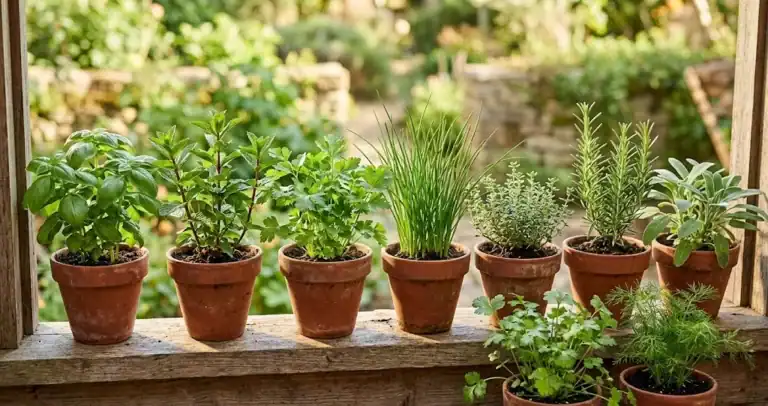
Thyme, chives, sage, mint, and lemon balm are reliably cold hardy and survive winter in most temperate gardens. Thyme is a low-growing woody shrub with small gray-green leaves that hold through the season in zones 5 to 9. Lemon thyme adds a citrus note and overwinters well in zones 5 to 9. Chives belong to the onion family, and a single chive plant sends up tender green shoots from a clump that overwinters easily, even in zones 3 to 10. Mint and the other Mediterranean herbs follow the same pattern: top growth may die back during the coldest weeks, but the roots send up fresh growth once the soil warms.
Chervil and parsley are biennials that handle cold better than most gardeners expect. Both often survive light frost and keep producing leaves well into winter, especially with a light row cover. Parsley is actually the hardier of the two, often taking several more degrees of cold before chervil starts to struggle. Both will flower and set seed in their second year, so plan to replace them after that.
Tender perennials that need protection
Rosemary, basil, and tarragon are tender perennials that need winter help in most climates. Rosemary is hardy only to about zone 7, although a few cultivars such as ‘Arp’ extend that to zone 6. Below those zones the plant dies back to the roots or dies outright. Tarragon is hardy in zones 4 to 7 but goes fully dormant in winter, sending up fresh leaves in spring. Basil is an annual in nearly every climate and will not survive a frost, so plan to harvest the last of it before the first hard freeze or bring a pot inside. A protected spot against a south-facing wall can keep these plants going a few weeks longer in zone 7, but a hard freeze ends the season for them.
How to protect herbs from cold weather outdoors
The right protection depends on your zone, your herb, and how much work you want to put in. Three approaches cover most situations: cold frames, heavy mulch, and a simple cover for the occasional cold snap.
Match the herb type to your climate
The first decision is whether each herb in your bed is an annual, a biennial, or a perennial plant. Annual herbs like basil live for one growing season and die at the first hard frost, so they need a warm spot or a move indoors to keep producing. Biennial herbs like chervil grow leaves their first year and flower in their second, and they usually survive mild winters with a layer of mulch. Hardy perennial herbs like chives and mint return year after year and are the backbone of a winter garden. Sage (Salvia officinalis) and oregano belong to the same Lamiaceae family and overwinter the same way. With the right mulch or a cold frame these perennial plants keep producing leaves well into winter.
Cold hardiness and winter hardiness vary by cultivar as well as species. A zone 7 Mediterranean herb is fine outside all winter in Atlanta but will not survive in Minneapolis. Raised beds warm up faster than ground-level beds in late winter and give established plants a head start, while garden covers and cold frames extend the harvest of leafy herbs into the coldest months. The best herbs to grow in cold weather are the ones that match your zone and the kind of protection you are willing to set up.
Use a cold frame or cloche
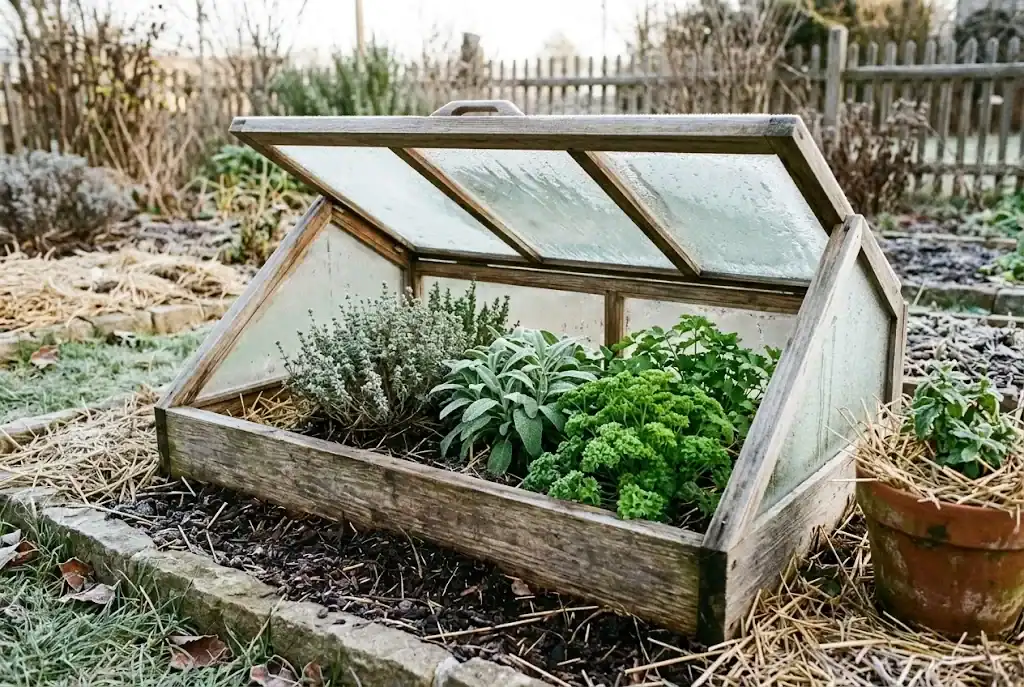
A cold frame is the simplest way to extend the harvest of leafy herbs through winter. The frame traps solar heat and buffers wind, raising the temperature around the plants by 5 to 10 degrees. Even an unheated cold frame keeps hardy herbs productive when the air outside sits in the 20s Fahrenheit. A cloche made from a clear plastic bottle or a small glass jar works for a single plant, and a mini hoop tunnel covered with row fabric covers a whole bed. In zone 6 and warmer, a cold frame or tunnel is often the difference between harvesting all winter and losing the bed to a hard freeze.
Mulch heavily around the roots
A thick layer of mulch insulates the root zone and keeps soil temperature more even. After the first hard frost, pile 3 to 4 inches of straw, shredded leaves, or evergreen boughs around the base of each established plant. The top growth may die back, but the roots stay alive under the blanket. Pull the mulch back in early spring once new growth starts so the crown does not rot.
For herbs in containers, mulch is even more important. Roots in pots freeze faster than roots in the ground because the surrounding air reaches them from all sides. Sink the pot into a garden bed, a pile of mulch, or a sheltered corner against the house. Insulating the pot with bubble wrap or burlap adds another layer of protection for tender perennials.
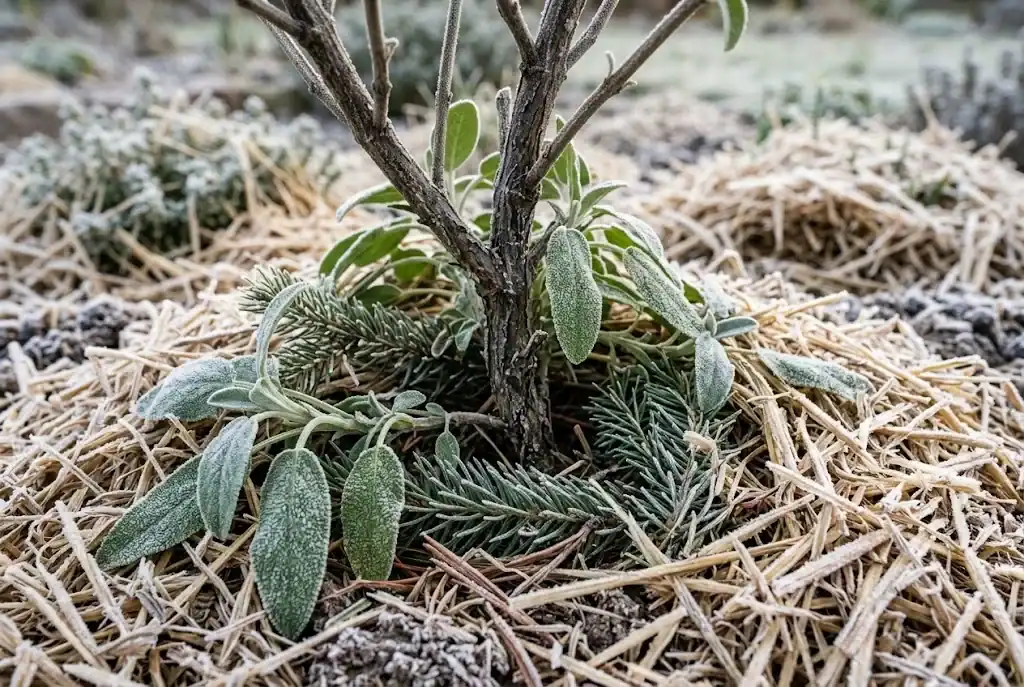
Cover up before a hard freeze
Watch the forecast for the first hard freeze and have frost cloth, an old bed sheet, or a row cover ready. Drape it over the herb bed in the late afternoon so the plants hold daytime heat through the cold night. Remove the cover the next morning so the bed can breathe and light can reach the foliage. Covering is a temporary fix, not a winter strategy, but it saves tender growth during a single cold snap.
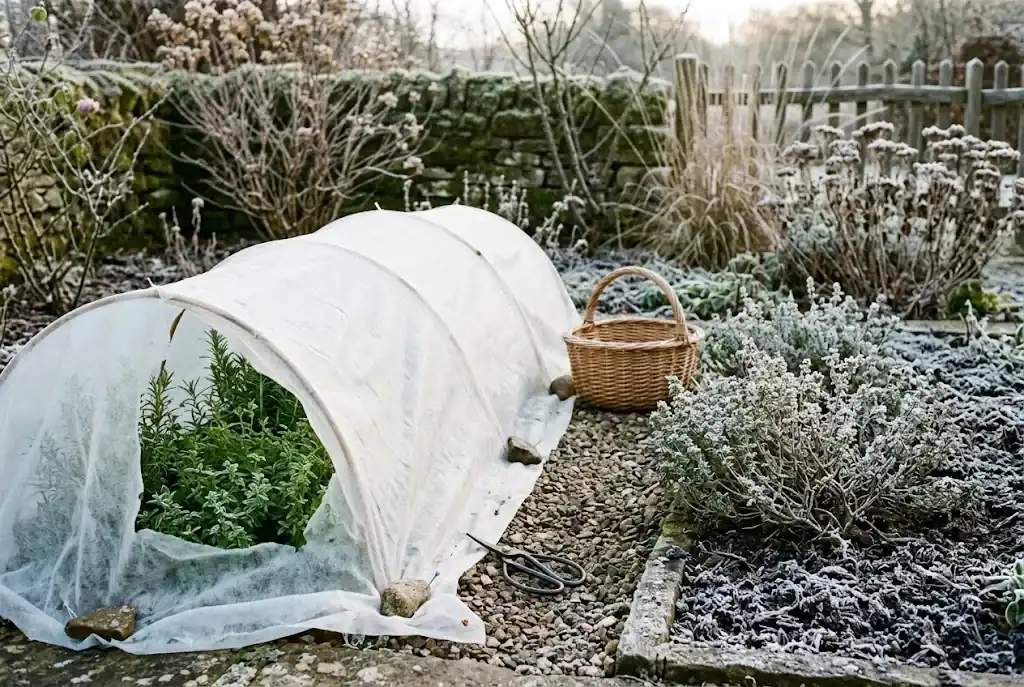
Mild-climate winter gardens
Growers in zones 7 to 9 can keep an outdoor herb garden productive year long. A zone 7 Mediterranean herb keeps producing through December and starts again in February. Oregano thrives throughout the winter in a mild climate, especially with a layer of straw or evergreen boughs for extra winter protection. Even in a zone 6 garden, raised beds and heavy mulch can insulate roots against brief drops into the 20 degrees Fahrenheit range. The biggest risk in mild climates is a sudden hard freeze after a warm spell, which catches tender new growth off guard. Keep a frost cloth or a stack of old bed sheets on hand for those nights.
Bringing herbs inside for the winter
For gardeners in cold climates, moving the tender perennials inside is the surest way to keep basil and tarragon productive. Even a gardener with a windowsill and a single grow light can keep a few pots going through the coldest months. The basic steps are simple and work for almost any culinary herb.
Move plants in before the first frost
Bring pots inside a few weeks before the average first frost date for your area. This gives the plants time to adjust to indoor conditions before the heat comes on and humidity drops. Check each plant for pests such as aphids and spider mites, and rinse the foliage before bringing it in. A short stay in a shaded outdoor spot for a week helps the plant transition from outdoor sun to indoor light without shocking the leaves.
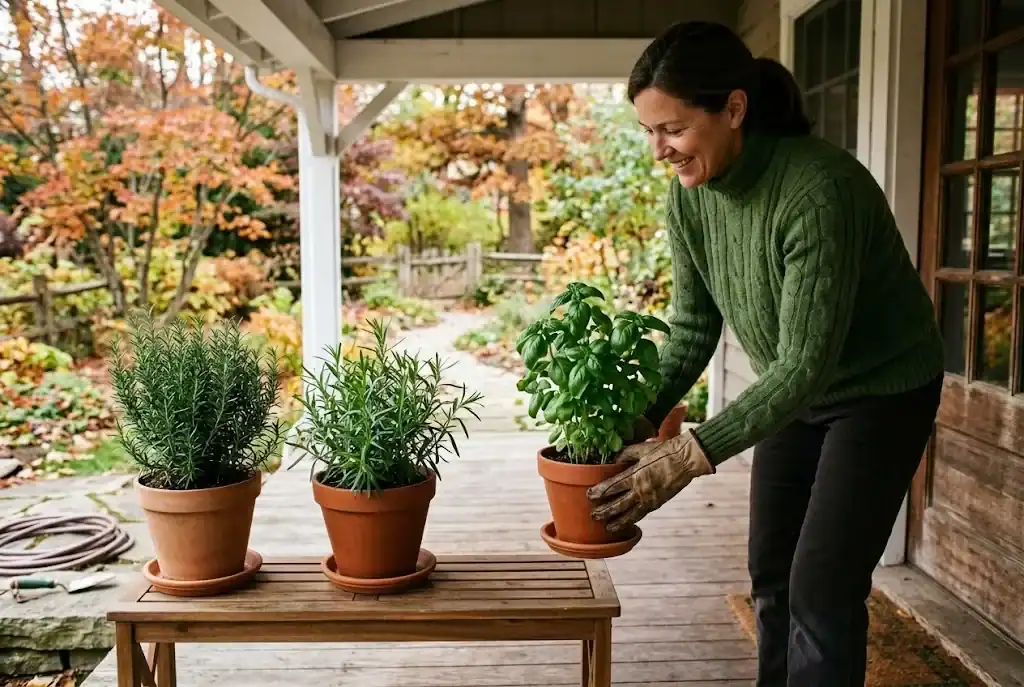
Set up a sunny window or a grow light
Most culinary herbs need at least six hours of light per day. A south-facing sunny window is the easiest setup. If you do not have one, a simple LED grow light on a timer for 12 to 14 hours a day will keep herbs productive. Keep the light a few inches above the top growth and raise it as the plant grows. Herbs stretch toward weak light and become leggy, which reduces the harvest. Chives are especially forgiving of the move indoors and bounce back quickly, and a small pot of curly parsley on the counter keeps garnishes within reach all winter; grown this way, perennial herbs can be kept going for years with a short rest period in late winter when growth slows.
For a thorough walk-through of starting an indoor herb garden from scratch, the indoor herb growing guide covers light, watering, and container choices in more detail.
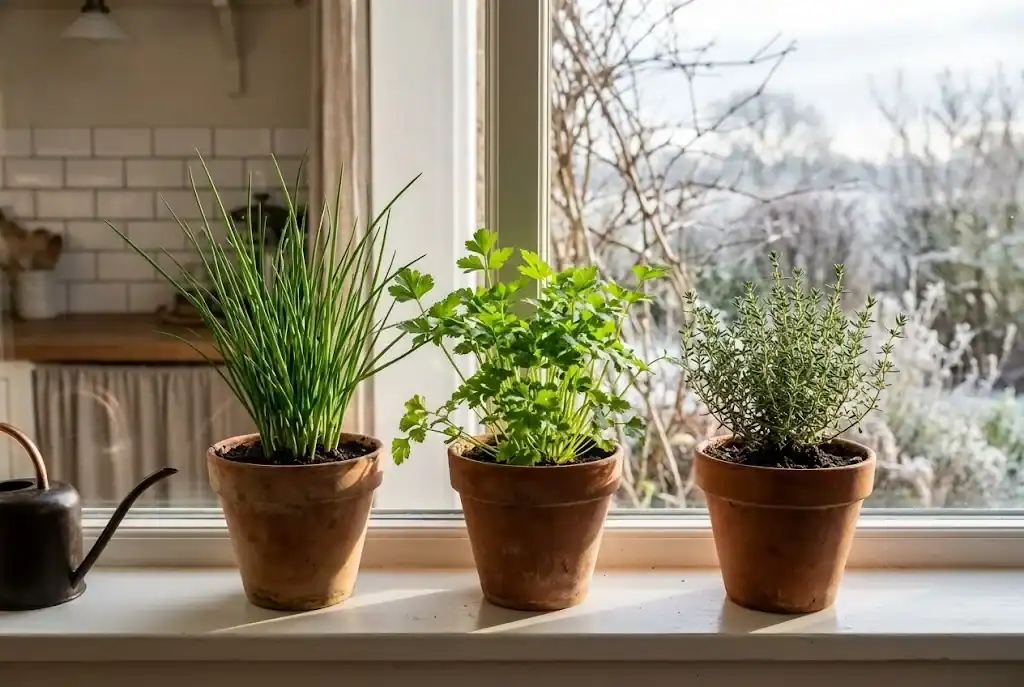
Water and feed lightly through winter
Indoor herbs grow slowly during winter and need less water than they did outdoors. Let the top inch of potting soil dry between waterings, then water deeply until it drains. Skip fertilization until fresh growth picks up in spring. Overwatering is the most common indoor herb killer and leads to root rot in pots with poor drainage, so check the moisture level before each watering.
Quick answers to common cold-weather herb questions
How cold is too cold for herb plants?
Hardy perennials such as chives, sage, and mint tolerate temperatures down to 0 degrees Fahrenheit when established and mulched. Tender perennials such as rosemary and basil start to suffer below 40 degrees, and a hard freeze ends their season.
What herbs grow well in cold weather?
Chives, mint, and chervil are the most cold-tolerant culinary herbs. All keep producing leaves in cool weather and survive freezing nights when grown in the right zone with basic protection.
Can I leave herbs outside in winter?
Yes, but only the hardy perennials. The tender ones survive outdoors only in zone 7 and warmer without protection, and basil will not survive a frost anywhere. For everything else, a cold frame, a heavy mulch, or a move inside is the safer choice. Gardeners in zone 6 can grow herbs indoors through the coldest weeks and transplant them back out once the soil warms.
Winter herb care checklist
Two or three small tasks in late fall save a winter’s worth of worry. Before the first hard frost:
- Cut back the top growth on mint by about a third to tidy the plant and reduce wind damage. Leave the rest of the stem so the plant can still make food on any mild days.
- Pile 3 to 4 inches of straw or shredded leaves around the base of each established plant.
- Move potted tender perennials into a sheltered spot or bring them inside.
- Take cuttings from basil and tarragon as insurance in case the parent plant does not survive. A cutting in water on the windowsill is a free backup plant.
- Cover these two biennials with a low tunnel or cold frame so you can keep harvesting through the winter months.
- Plant cilantro in late summer for a cool-season crop that thrives in fall and mild winter weather.
For a deeper look at how to grow specific culinary herbs and what each one needs from soil to harvest, the broader getting to know your herbs reference is a good companion piece.
A note on harvesting through cold months
Pick herbs lightly during the coldest weeks so the plant can keep producing energy without trying to regrow a lot of foliage. A few sprigs at a time is plenty for kitchen use. Once new growth picks up in spring, resume normal harvesting. If a hard freeze damages the top growth of mint or chives, leave the damaged stems in place until you see new leaves at the base, then trim back to the new growth.
Plan for next winter now
Cold-season herb gardening starts in midsummer with the right plant choices. If you are planting a new bed, lean heavily on hardy perennials and biennials so the garden has something to offer when the temperatures drop. For tender perennials you want to overwinter, decide in early fall whether you will bring them inside or invest in a cold frame. Both work; both need a little preparation. The pay-off is fresh herbs in the kitchen when the rest of the garden is asleep.
For a step-by-step plan for keeping herbs productive through the entire winter, including indoor setups, season extenders, and per-herb tips, the growing herbs in winter guide builds on the basics here.