Fresh herbs turn a scrambled egg into dinner and a slice of tomato into a meal. A small planting, even a single pot by the kitchen door, gives you that flavor on demand for the cost of a packet of seeds and a few minutes a week. The plant kingdom is wide, but the species most home cooks reach for are forgiving, generous, and happy in a container or a window box.
If you are starting from scratch and want to know which plants earn their place, what they need, and how to keep them productive, this growing guide walks you through the whole first season. By the end you will know which species to plant, where to put them, how to care for them, and how to pick leaves without setting the plant back.
Why grow herbs at home
A home planting pays back faster than almost any other bed. A single herb plant of basil gives a steady handful of leaves from early summer until the first cold night, and that handful is bigger and fresher than anything you can buy. A small shrub of thyme by the back door is a year-round seasoning. A cup of steeped mint is a free after-dinner tea. Most home plantings pay back the cost of seeds within a season and then keep producing for years.
Beyond flavor, a kitchen garden pulls its weight in other ways. Flowering species draw bees, hoverflies, and the parasitic wasps that keep aphid populations in check. A clump of chives by the roses, a small pot of dill near the lettuce, and a low border of creeping thyme along the path make the rest of the bed quieter and more productive. Many herbs prefer full sun and good soil, but they tolerate a wide range of conditions, so they also dry, freeze, or steep well, which means a summer glut becomes a winter of pesto. The hardest part of starting out is choosing which plants to grow first.
Choosing your first herbs
Start with what you actually cook with. The best beginner plants are the ones you will pick often, because regular harvesting keeps them bushy and productive. Pick four to six species for a first planting and resist the temptation to grow everything at once. A small, well-tended patch teaches faster than a sprawling one that gets away from you. Most gardeners are ready to start an herb garden after a single successful season of one or two species.
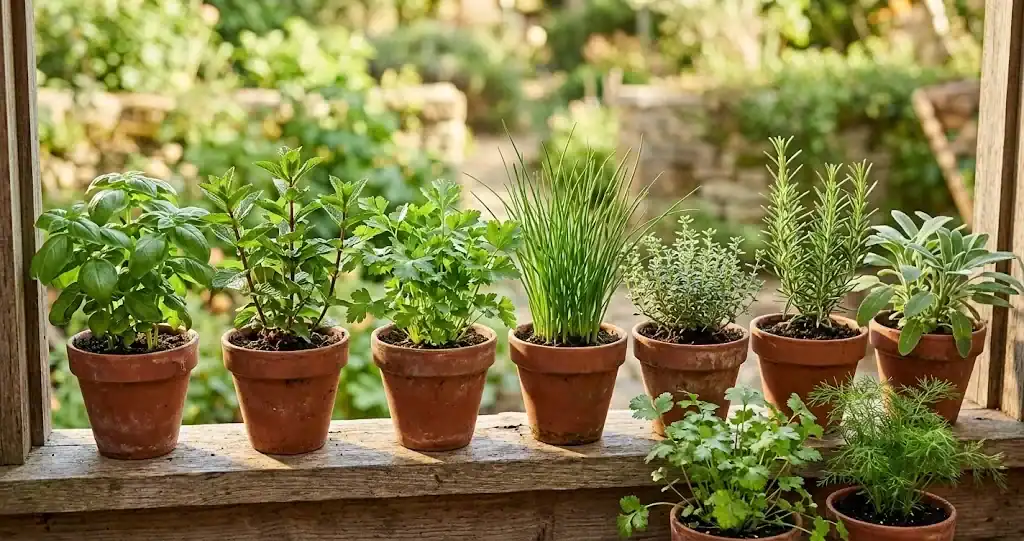
The list below covers the easiest culinary herbs to grow and the ones that earn their space on a beginner’s bench. All of them do well in the ground or in containers, and most are forgiving of an occasional missed watering. These are also the best herbs to start from seed or pick up as starter plants at any garden center.

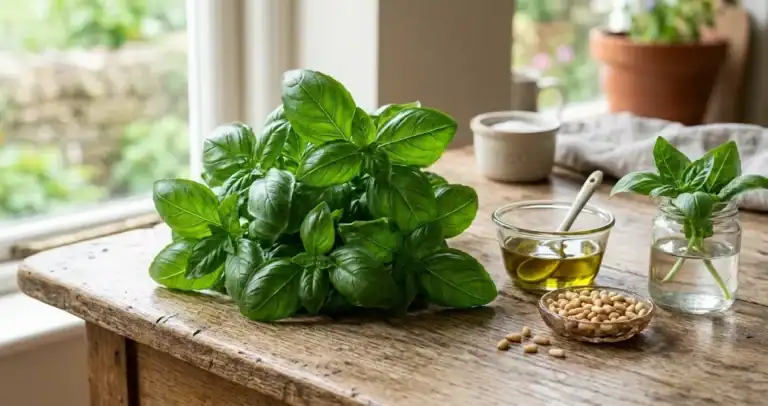
- Basil. The cornerstone of summer cooking. Likes warmth, steady moisture, and full sun. Pinch off flower stalks as they form to keep leaves coming.
- Mint. Near-indestructible, useful for tea, salads, and sauces. Spreads aggressively, so plant in a container sunk into the bed unless you want a mint lawn.
- Parsley. Both flat-leaf and curly do well from seed, though slowly. A biennial, leafing the first year and going to seed the second.
- Chives. A grass-like plant that comes back every spring. The flowers are edible and pull in pollinators.
- Thyme. A woody Mediterranean species that thrives on neglect. Wants lean, well-drained soil and direct sun.
- Rosemary. An evergreen shrub in mild climates and a tender perennial elsewhere. Tolerates dry soil. Often grown as an annual in colder zones.
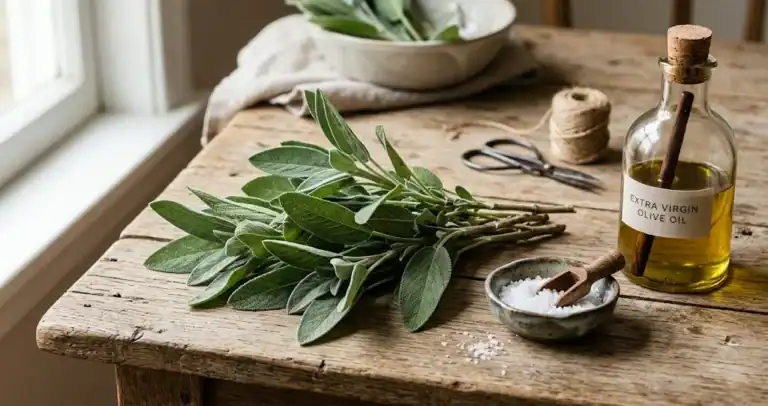
- Sage. A soft-leaved Mediterranean plant with a long season. Likes the same dry, sunny spot as rosemary.
- Cilantro. A cool-season species that bolts in summer heat. Sow in early spring and again in late summer for two crops a year.
- Dill. A tall, feathery annual that pulls in beneficial wasps. Bolts easily in heat, so direct-seed in succession through spring.
If you are unsure where to begin, plant basil, chives, and thyme in three containers by the kitchen door. Those three cover most weeknight cooking, and each one teaches a different lesson: pinching, division, and lean soil. A biennial stand-by at the other end of the bed gives you a second-year surprise when it sets seed. Many herbs to grow follow the same pattern once you learn it, and grow your herbs well with very little fuss once you have the rhythm down.
For a closer look at one of the most useful kitchen plants, our guide to using basil in the kitchen covers varieties, storage, and the recipes that get the most out of a fresh pick.
Choosing the right spot
Most culinary species want three things: sun, decent drainage, and a little elbow room. Pick a spot that gets at least six hours of direct sun a day, ideally near the kitchen so you actually walk past it on the way to the door. A south-facing windowsill, a balcony, or a strip along a sunny fence all work. Avoid low pockets where water collects after rain, because most plants rot quickly in saturated soil.
Soil matters more than fancy amendments. Most home soil is fine as long as it drains. If your bed is heavy clay, work in a few inches of compost before planting, or grow Mediterranean species in a raised bed or container where ideal growing conditions stay on the dry side. A simple soil mix of garden loam and compost gives most plants the best soil to settle into. Mulch lightly with straw or shredded leaves to keep roots cool and to slow evaporation through the hottest weeks of summer.
Climate narrows the list a little. The Mediterranean woody species prefer warm weather and tolerate mild frost, while tender annuals fade at the first cold night. Hardy perennials like oregano and chives come back year after year in most temperate climates. If your winters are cold, plan to bring tender ones inside or treat them as annuals. Check your local frost date and count back six to eight weeks when planning seeds indoors.
Starting from seed or starter plants
Both work, and the choice depends on how patient you are and which species you want. Starter plants from a nursery give you a head start and are worth it for slow growers. Seeds are cheaper and offer varieties the local garden center never stocks, and they are the only practical way to plant cool-season species in succession through the season.
A short guide to starting each way:
- Starting from seed. Direct-seed leafy annuals into the bed after the last frost. Seed is small, so sprinkle thinly and thin seedlings to 8 inches apart once they have two sets of true leaves. Leafy biennials are slow and germinate unevenly, so soak the seed overnight and expect two to three weeks before sprouts appear. Many herbs started indoors six to eight weeks early give the gardener a head start on a short growing season. A fast-spreading herb like this grows easily from a single starter pot, and growing from seed is rarely worth the wait.
- Buying starter plants. Pick up woody Mediterranean species and a fast-spreading herb as small nursery containers in spring. Plant out after the last frost, and water well until new growth shows they have rooted in. Woody Mediterranean shrubs like this are easier to start this way than from cuttings.
- Growing indoors under lights. A simple shop light on a timer gives you leafy annuals through winter, and chives on a windowsill will produce for months. Use a well-drained potting mix and let the surface dry between waterings.
Whatever you start with, label each plant or row. The first set of true leaves on many species looks similar, and a sharpie on a wooden stake saves a season of guessing.

Caring for herbs through the season
Most species are forgiving, but a few habits make the difference between a planting that survives and one that produces generously. None of them take long, and most become routine within a week.
- Water deeply but less often. A short daily sprinkle encourages shallow roots. A longer soak two or three times a week pushes roots down where the soil stays moist longer.
- Feed lightly. Most want lean soil. A single spring feeding with a balanced organic fertilizer, or a top-dressing of compost once a year, is plenty. Overfed leafy annuals grow fast but lose flavor.
- Pinch early and often. The single most useful habit. Pinching the growing tips of leafy and woody species encourages the plant to branch and double its production. Pinch above a pair of leaves and the stem will fork.
- Remove flowers unless you want seed. Tender annuals lose leaf quality when they flower. Pinch off flower stalks as they form, or leave a few to flower for the pollinators and the seed crop.
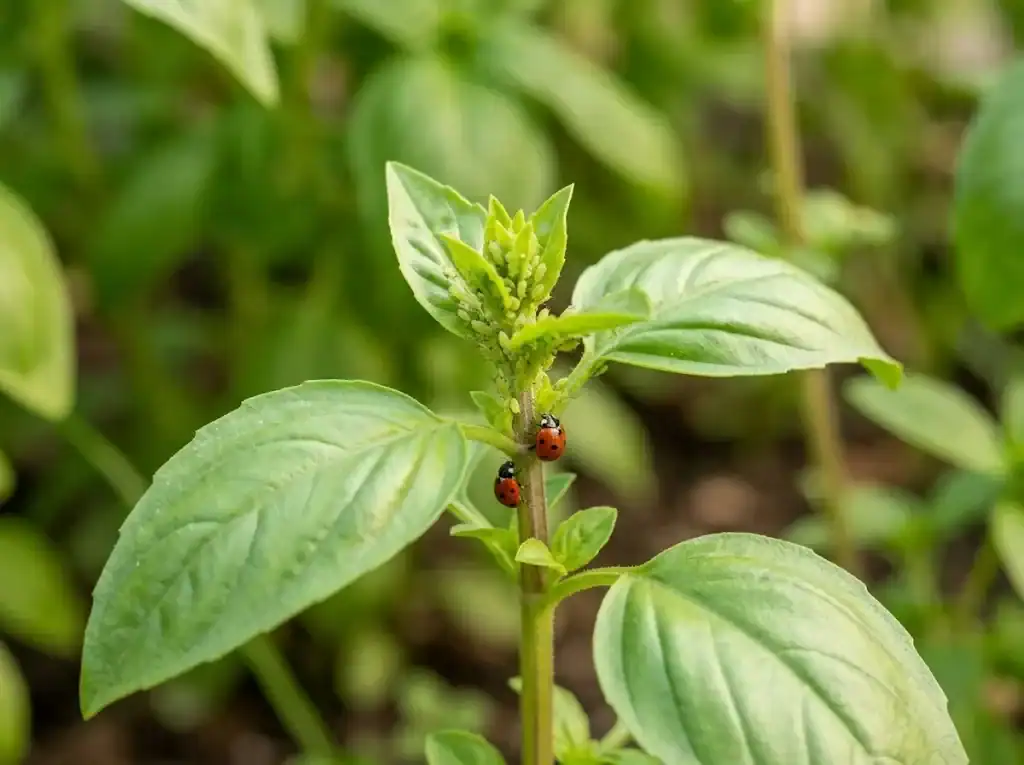
- Watch for pests. Aphids cluster on new growth of soft-leaved plants. A strong spray from the hose knocks them off, and a few ladybugs usually move in within a week. Prune out any badly infested stems and bin them away from the bed.
Container plants dry out faster than bed-grown ones, especially terracotta in summer. Stick a finger into the soil before watering; if the top inch is dry, water thoroughly until it drains from the bottom.

Pruning and shaping
Pruning is what turns a small plant into a productive one. A young leafy annual with a single stem becomes a bushy mound when you pinch the top once a week. A leggy specimen cut back to a few inches rebounds within a fortnight. A woody plant that has gone bare at the base responds to a hard cut just as the new growth starts in spring.
The rule is simple: cut just above a pair of leaves, and the stem will fork into two. Cut just above a node where you want new branches to start. Avoid cutting into the bare woody part of Mediterranean shrubs, since most struggle to regrow from old wood.
Harvesting without killing the plant
The first picking is the moment a planting starts to feel like a garden. Cut leaves in the morning after the dew dries and before the sun hits hard. The essential oils are most concentrated then, and the leaves stay fresh longer in the kitchen.
How much you can take depends on the species. Use these rules of thumb and your own plants will tell you what they can spare.
- Leafy annuals. Take no more than a third of the plant at once. Cut the stems above a pair of leaves, and the plant will branch from the cut. Harvest leaves in the cool of the morning for the best flavor.
- Woody Mediterranean species. Cut whole stems, but never into the bare woody part at the base. Leave at least two thirds of the leafy growth so the plant can recover.
- Soft-leaved spreaders and grass-types. Cut back to a few inches above the soil every few weeks. They regrow quickly. Snip chive leaves from the outside of the clump and leave the inner stems to keep producing.
Pick little and often rather than stripping a plant bare. A handful of leaves twice a week keeps the plant productive. A single cutting of the whole plant sets it back for a month.

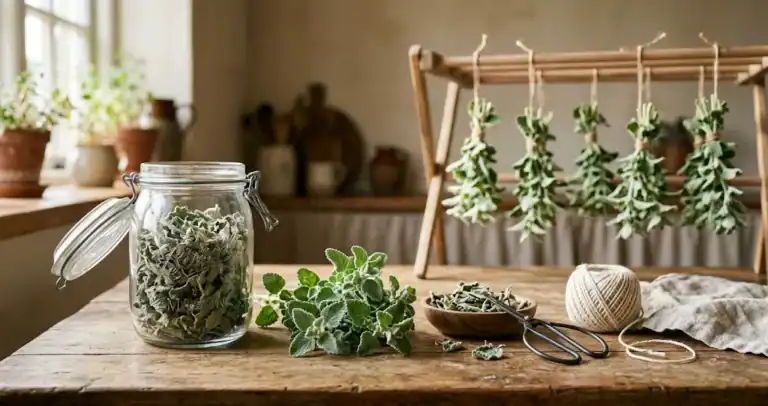
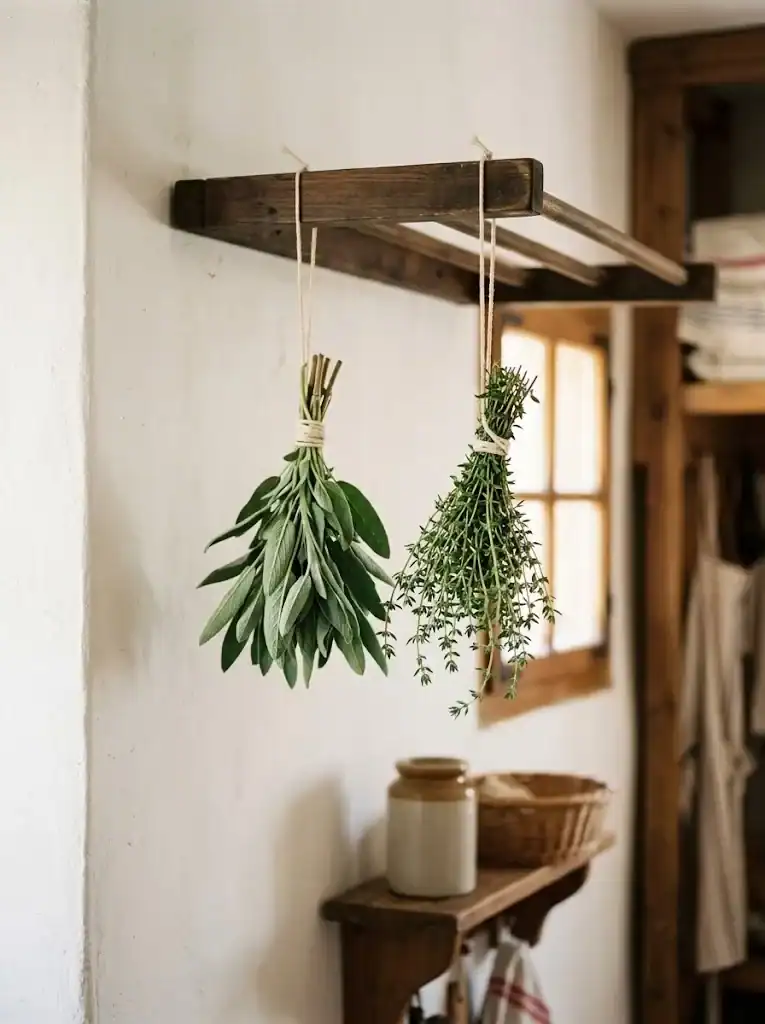
To store for winter, dry leafy species in small bundles hung in a warm, airy spot out of direct sun. Freeze tender leaves blended with olive oil in ice cube trays, or chop the soft-leaved ones and freeze them flat in a labeled bag. Woody plants keep their flavor dried better than frozen. For a soft-leaved Mediterranean that dries especially well, our guide to the different ways to use sage covers drying, varieties, and the recipes that benefit most from a strong-flavored leaf.
A practical layout for a small herb garden
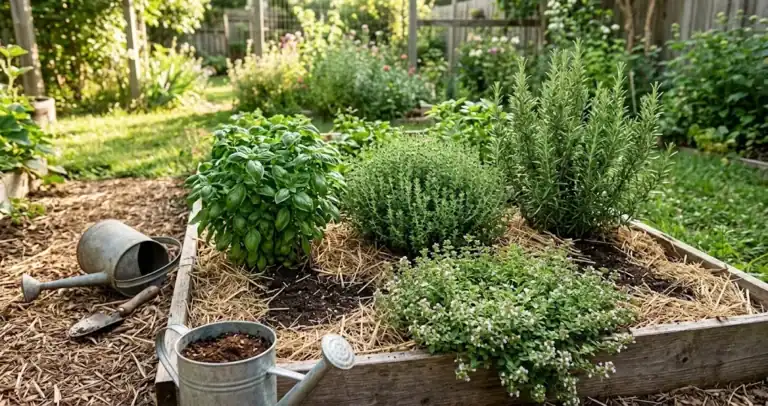
If you have a bed about 4 feet by 6 feet, you have room for a useful planting. Lay it out by water needs: Mediterranean species on the dry, sunny end, leafy annuals in the middle, and a fast-spreading herb in a sunken container at the far corner. The list below is one workable starting point, not the only answer.
- North end. A small rosemary anchor.
- Middle. A row of leafy annuals in summer, replaced by cool-season species in early fall. A biennial stand-by at one end of the row.
- South edge. Creeping thyme as a low border that takes foot traffic and smells great when brushed.
- Corner. A large container of it, sunk into the soil so the rim is level with the raised garden bed.
- Throughout. Chives dotted in groups of three to break up the bed and pull in spring pollinators.
Leave at least 8 inches between leafy annuals and 12 inches between woody perennials, so each plant has airflow and you can reach in to pick without compacting the soil. A simple layout like this gives the best results even in a small home garden.

Common problems and easy fixes
Most problems trace back to one of four things: too much water, too little sun, too much fertilizer, or letting the plant go to flower. Spot the cause and the fix is usually simple.
- Yellowing leaves on leafy annuals. Usually overwatering. Let the surface dry between waterings and check that the container drains freely.
- Leggy, sparse growth on woody species. Not enough sun, or soil that stays too wet. Move the plant to a sunnier spot and cut back the bare stems to encourage new growth from the base.
- Bolting cilantro and dill. Heat. Sow successive small batches every three weeks through spring, then pause and sow again in late summer for a fall crop.
- Aphid clusters on new growth. Spray off with a hose in the morning. Repeat daily for a few days until predators move in.
- Powdery mildew on spreading herbs. Poor airflow. Thin the clump and water at the base rather than over the leaves.
Building from a single herb
Once you have a season of harvesting behind you, it is natural to want more. A common next step is to specialize: a tea garden with a fast-spreading herb, lemon balm, and chamomile; a pizza garden of basil, oregano, and rosemary; or a culinary classics garden of woody Mediterranean favorites with the soft-leaved ones. Each of these is a small investment and teaches a different set of lessons.
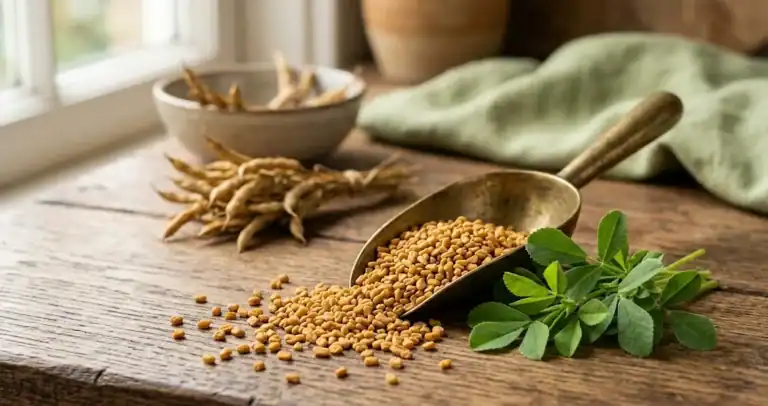
For a less common spice that grows well in similar conditions to these kitchen favorites, our fenugreek guide walks through growing, harvesting, and using the seeds and leaves that give this plant its maple-like aroma.
Frequently asked questions
What is the easiest herb to grow for a beginner?
For most beginners, basil or mint is the easiest first plant. Basil gives quick feedback because it grows fast and benefits visibly from pinching, and it tolerates a wide range of conditions. Both reward small amounts of care with large harvests.
Can herbs grow in shade?
A few do, but most culinary species want at least six hours of sun. Soft-leaved kitchen herbs tolerate partial shade, especially in hot climates. Mediterranean species grow poorly in shade and become leggy and weak.
How long do herbs take to grow?
Quick annuals are ready to pick within 4 to 6 weeks of sowing. Perennials take longer to establish but produce for years. It is slow from seed and is often easier to start as a starter plant.
Do herbs come back every year?
Perennial species do. Hardy ones like chives come back from their roots each spring in most temperate climates. Annual species complete their life cycle in one season and need to be resown. Parsley is a biennial, leafing the first year and setting seed the second.
Can I grow herbs indoors year-round?
Yes, with a sunny south-facing window or a simple shop light on a 14-hour timer. Leafy annuals and chives all do well indoors. Watch for lack of sun, which causes leggy growth, and water less than you would outdoors because indoor pots dry out more slowly.
How do I keep herbs fresh after harvesting?
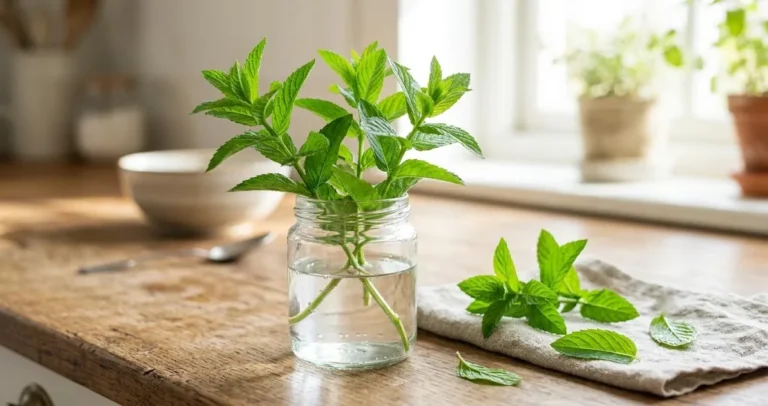
For a few days, store leafy species in a glass of water on the counter with a loose plastic bag over the top, the way you would keep a bouquet. For longer storage, dry them in small bundles, freeze them in olive oil, or chop and freeze them flat in labeled bags.
Bringing it together
A productive herb garden does not need much space, time, or skill. Start with three to five species you cook with regularly, plant them in a sunny spot with good soil that drains freely, and water deeply a few times a week. Pinch the growing tips to keep plants bushy, pick a third of the foliage at a time, and let flowering ones feed the pollinators. Within a single season you will have fresh flavor steps from the kitchen and a new set of plants that come back stronger the next year. The rest of the garden builds from there, one species at a time, one season at a time.