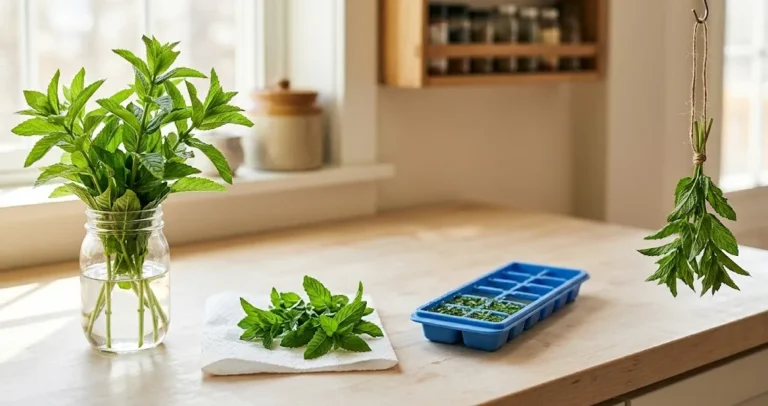
Fresh herbs turn limp in the refrigerator faster than almost any other leafy green, and once the leaves go wet and yellow there is no bringing them back. The fix is a small amount of prep at the start: dry leaves, a breathable container, and cold air. Done right, a fresh harvest keeps for one to two weeks in the cold drawer, and a deep-freeze stash keeps much longer.
Flat-leaf and curly parsley store the same way, so use whichever you grow or buy. What matters is keeping moisture in check and giving the leaves some breathing room. Below is the easiest way to keep the harvest fresh in a home kitchen, plus the best ways to preserve a big surplus you cannot use in time, from ice cube portions to dried leaves for the spice shelf.
Start with dry, sound leaves
The biggest storage mistake is putting wet leaves into a closed container. Water trapped against the leaves and stems is what starts the rot. Pick out crisp, deep green leaves and leave any wilted or slimy pieces behind. If the leaves are dirty or gritty, swish them in a bowl of cold water, lift them out, spin them in a salad spinner, and pat dry the last of the moisture with a clean towel. The leaves should look dry, not feel wet to a fingertip after a minute.
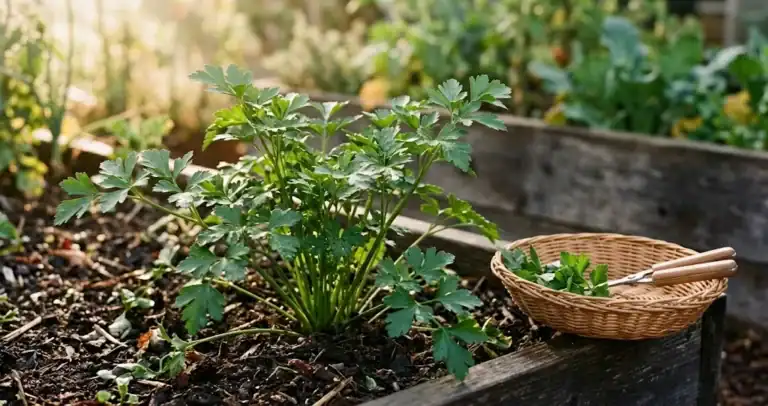
If you grow your own, the cut matters for how long the storage life is. Cut in the morning and get it into the kitchen quickly. For details on the cut that keeps the plant productive, see our guide on harvesting parsley without stunting it.
The refrigerator method that actually works
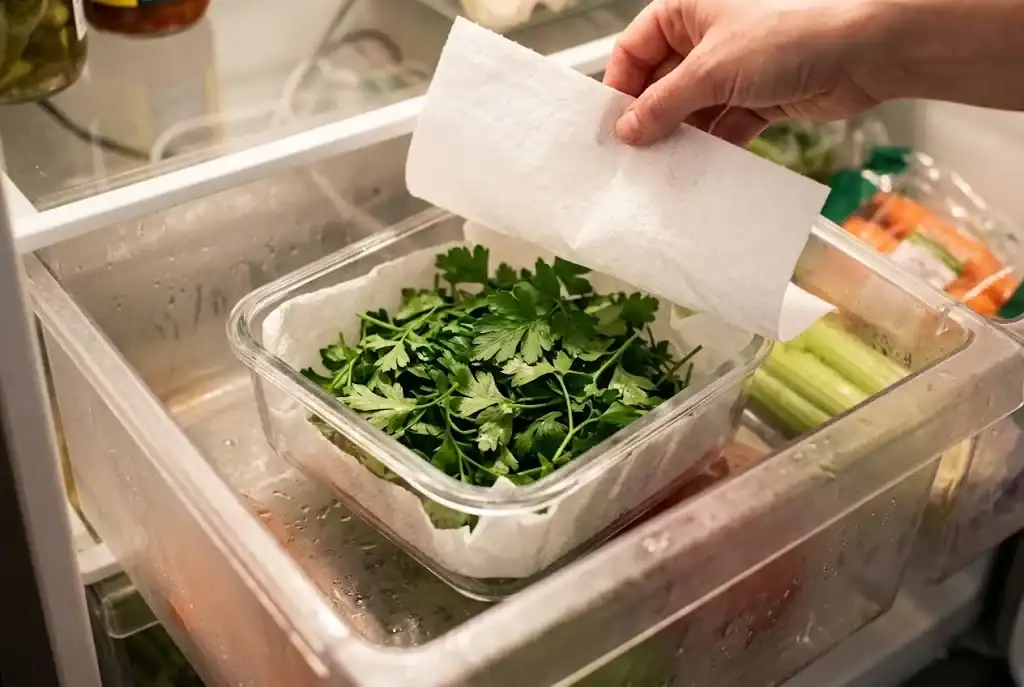
A lined container is the most reliable method for keeping the harvest fresh. It is the same idea as storing soft leafy greens: dry, cool, and a little airflow.
- Line a small, rigid container with a clean dry paper towel.
- Set the leaves on top in a loose layer. Do not pack the herbs tight, and keep the leaves loose rather than wedged into the bottom of the bag.
- Add a second paper towel over the top if the container is deep.
- Close the lid and slide the container into the crisper drawer.
- Check the paper every two or three days and swap it the moment it feels damp.
The paper pulls moisture away before the leaves can turn slick. A rigid box protects them better than an overstuffed plastic bag, but a plastic bag works if you add a dry sheet and leave the top open a crack. Keep the container away from the warm door and away from raw meat or seafood.
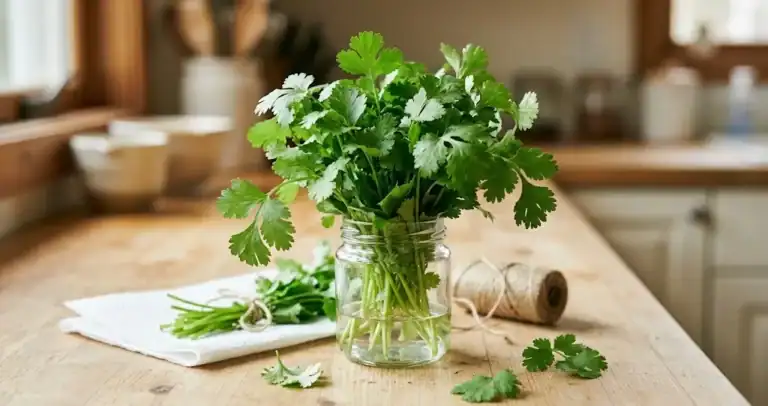
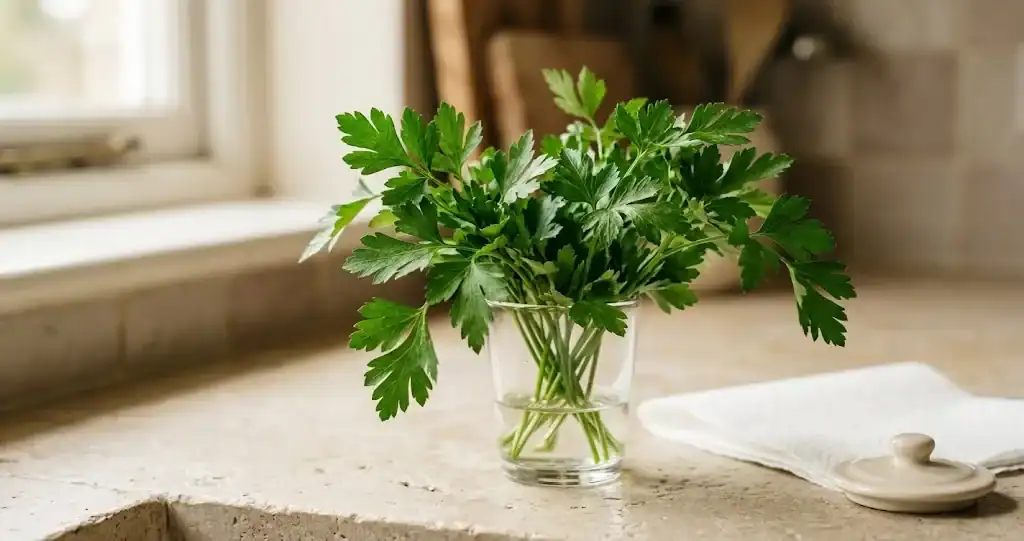
For a harvest still on the stem, the bouquet method is the other good option. Trim the stem ends so they are clean, drop the stems into a small glass or mason jar with an inch or two of water, and cover the whole thing loosely with a plastic bag, like a bouquet of cut flowers. Set it in the cold drawer and change the water every other day. Treated like a bouquet, the leaves can stay perky for nearly two weeks.
How long does parsley keep in the refrigerator?
A properly stored harvest keeps for seven to fourteen days in the refrigerator. Curly leaves tend to last slightly longer than flat-leaf because their tighter folds lose moisture more slowly. Baby or thin leaves spoil faster than full-grown ones, so plan to use them within a week.
Use the sniff and feel test before you cook with stored parsley. The leaves should smell green and bright; tired parsley smells flat or sweet, and the leaves go soft, wilt, and turn dark. Toss the harvest if it is slimy, has mold, smells unpleasant, or has widespread yellowing starting to spread. A few limp leaves can be revived with a quick soak in ice water, but truly mushy or moldy leaves belong in the compost.
Can you freeze parsley?
Yes, and freezing is the best way to keep a large harvest from going to waste. Thawed leaves are never crispy enough for a garnish, but the flavor holds up well in cooked dishes, dressings, and herb sauces. Freeze the harvest in a couple of forms depending on how you plan to cook with it.
For ice cube portions, chop the leaves roughly, pack them into ice cube trays, and top each compartment with a little water or extra virgin olive oil. Freeze until solid, then pop the cubes out and store them in a labeled freezer bag for future use. Drop a cube into a simmering soup, a pot of broth or beans, or a pan of vegetables when you want a quick flavor lift.
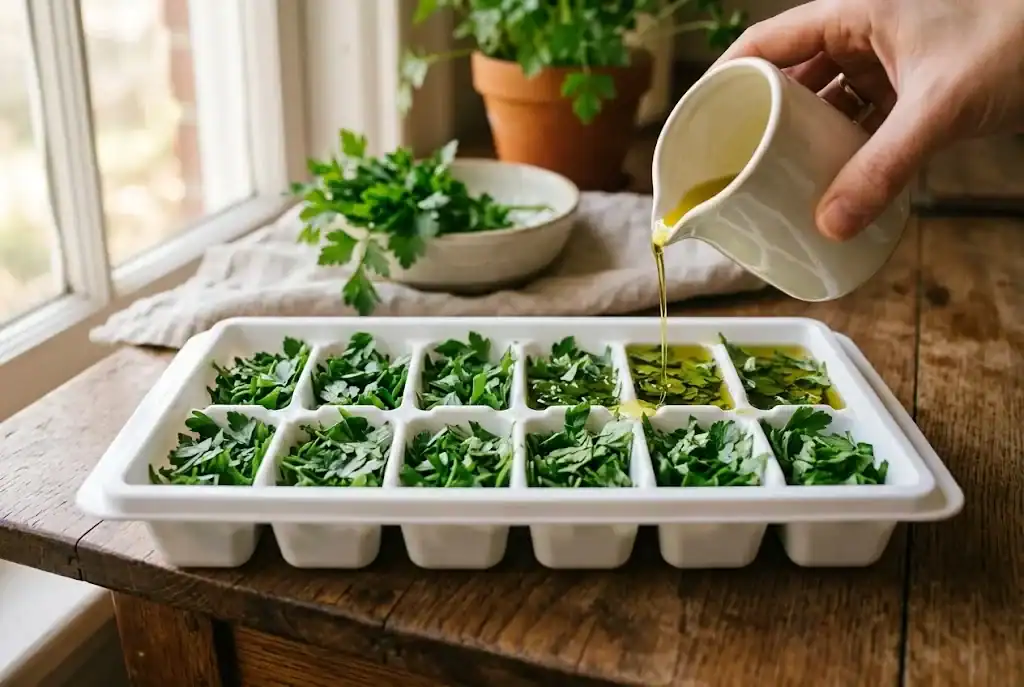
For loose-leaf frozen portions, spread clean dry leaves on a small tray in a single layer and freeze until firm. Tip the leaves into a freezer bag, press out the air, and seal the bag. This method keeps the leaves separate so you can pour out what you need without a frozen clump.
If parsley is your main harvest this season, our wider guide on how to harvest herbs without setting the plant back covers the picking rhythm that makes a frozen stash possible in the first place.
How to dry parsley
Drying is the right call when you want a pantry staple for soups, stews, and braises. Dried parsley loses the bright green color and the fresh aroma, but it keeps a useful herby note that works well in slow-cooked dishes and is a quiet way to keep a dried supply at hand through the colder months.
Tie small bundles with a rubber band and hang them upside down in a warm, dry spot with good air movement, out of direct sun. A spare room, a pantry, or a covered porch all work. When the leaves crumble between your fingers, strip them off the stems and store them in an airtight container away from heat.
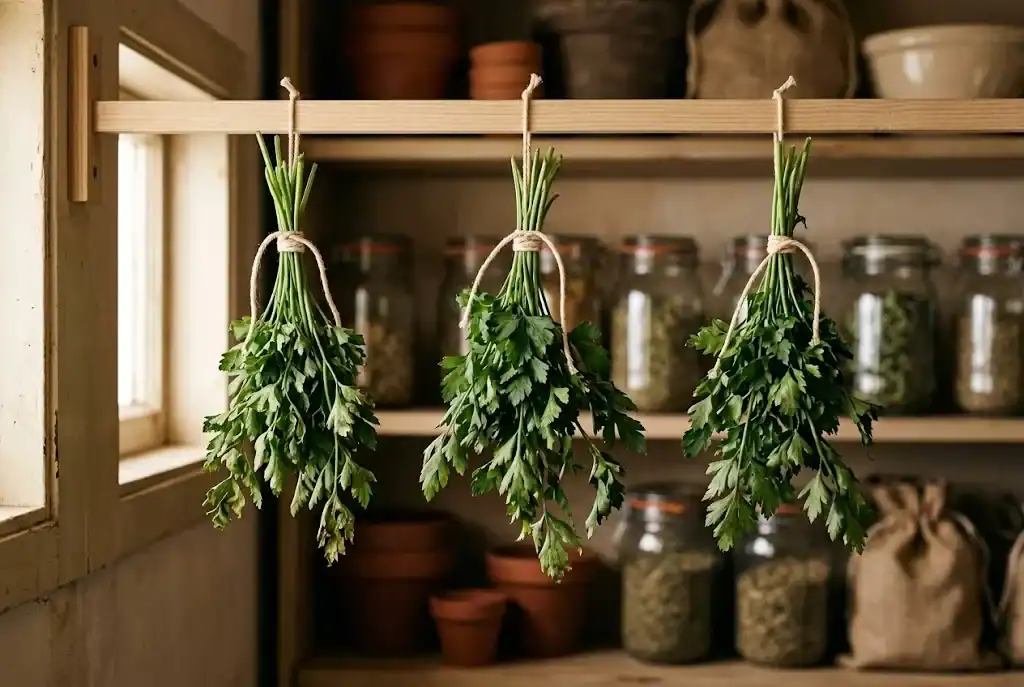
For a faster path, spread clean dry leaves in a single layer on a baking sheet and slide them into an oven on its lowest setting, usually around 170 degrees Fahrenheit. Leave the door cracked and check every fifteen minutes. A dehydrator works the same way on a lower setting for several hours. Either way, let the leaves cool fully before you seal them up so the last of the moisture does not get trapped inside.
The drying method works just as well for other soft leafy herbs such as sage, oregano, dill, chive, or thyme. A small tin of dried parsley on the spice shelf keeps for about six months, and the dried herb holds up well in stews, rice, risotto, and pasta sauces where you want a quiet herby note rather than a fresh green garnish.
What to do with a large harvest you cannot use in time
A garden parsley plant gives more than one meal can eat. Turn the surplus into something useful before it goes soft. A handful of chopped leaves stirred into softened butter with a little salt and lemon makes a bright compound butter that keeps in the cold drawer for a week and freezes for months. A simple herb oil, made by pulsing leaves with extra virgin olive oil and a pinch of salt in a small food processor, brings flavor to roasted potatoes, grilled fish, and grain bowls. Refrigerate the oil promptly, use it within four days, or freeze it in small portions for longer storage; Oregon State Extension explains why in herbs and vegetables in oil.
A classic tabbouleh uses a surprising amount of parsley and turns a big harvest into lunch for several days. A quick chimichurri, with the leaves, oregano, garlic, olive oil, and a splash of vinegar, keeps in the refrigerator for a week and lifts anything grilled or roasted alongside a chicken or a piece of fish. For ideas on what to do with those flavors, see our guide on what parsley does in the kitchen.

For a more cooked route, stir a few tablespoons of chopped leaves into a tomato sauce at the end of cooking, or fold it through a warm bean stew just before serving. The green lifts the dish without competing with the basil, rosemary, or thyme already in the pot.
Common parsley storage mistakes
- Sealing damp leaves in a closed container, which traps the moisture that rots them.
- Washing the whole harvest only to use a few sprigs and letting the rest sit wet in the bag.
- Storing near ethylene-producing fruit such as apples or bananas, which speeds yellowing.
- Cutting the leaves with a dull knife or scissors that crush the stems and stalks and shorten their life.
- Refreezing parsley that has already thawed, which turns the leaves to mush.
Frequently asked questions
Should I wash parsley before storing?
Only if it is dirty. Dry leaves keep better in the cold drawer than clean wet ones, so wash only what you plan to use right away. If the harvest needs a rinse, pat dry it thoroughly before storage.
Can I store parsley at room temperature?
For a few hours, yes. A small glass of water on the counter, like a bouquet, keeps the harvest usable for a day. Beyond that, cold storage is much better because warmth speeds moisture loss and yellowing.
Does parsley freeze better than cilantro?
Both freeze well in oil or water cubes. Parsley holds its color and flavor slightly better after thawing, but neither one will replace fresh herbs as a garnish. Use the frozen versions in cooked dishes, dressings, and sauces where texture does not matter.
What is the best container for fresh parsley?
A small rigid box lined with a dry paper towel, closed loosely. A zip-top bag or a piece of saran wrap with a folded paper towel inside works in a pinch, but a box protects the leaves from being crushed by other produce in the drawer.
What is the easiest way to keep parsley fresh?
The easiest way is the paper towel method: dry leaves in a lined container, changed paper every couple of days. For longer storage, freezing in oil or water cubes is the best method for keeping the harvest beyond a week or two.
Keep parsley usable, not just decorative
It is one of the most useful fresh herbs to keep on hand. Dry it once, line a small container with a paper towel, and you will have a steady supply of green flavor for soups, salads, and the next thing you cook. Big harvests can head to the deep-freeze as herb cubes or to the pantry as dried leaves. Either way, a little planning at the start means it actually gets used.