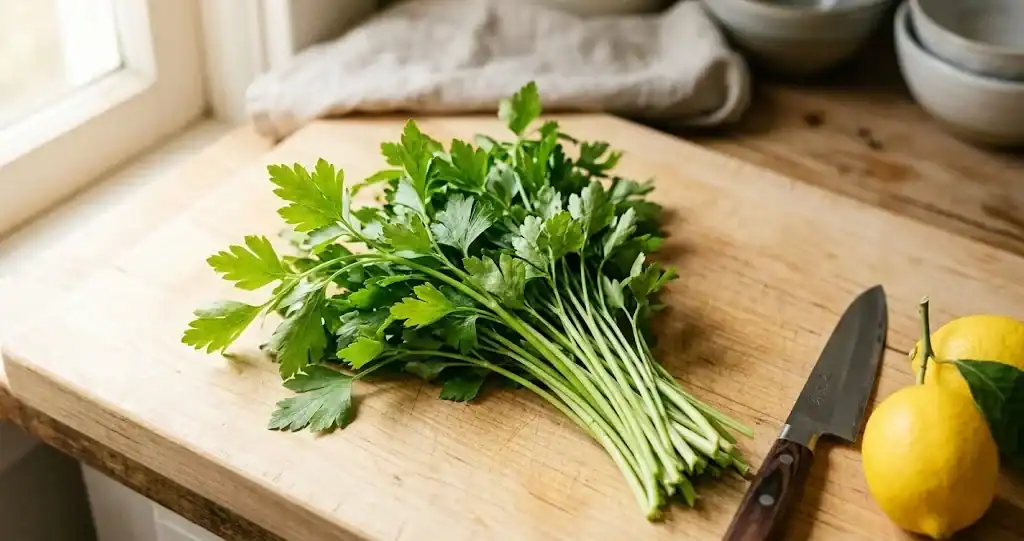
Parsley does more than sit on the edge of a plate. Pick a flat-leaf bunch at the market and you have a quiet workhorse that brightens soups, sharpens sauces, lifts salads, and turns a simple roast into something worth a second look. Cooking with it is mostly about choosing the right form, adding it at the right moment, and pairing it with ingredients that let its herby, slightly peppery flavor come through.
What parsley tastes like, and why the type matters
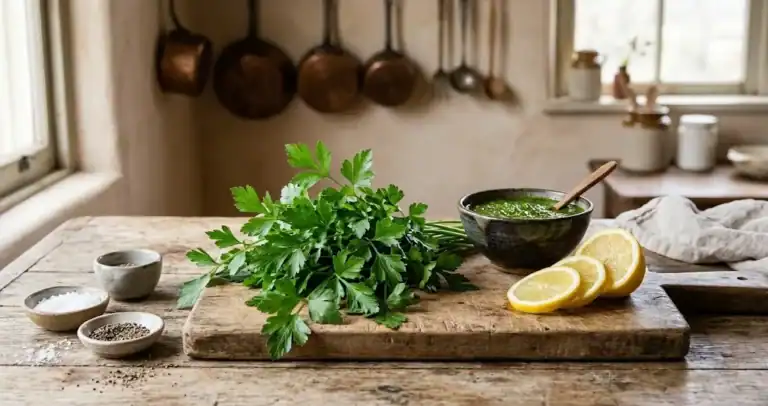
The fresh leaf has a clean, grassy flavor with a gentle peppery note and a touch of bitterness in the stems. That profile is why it works across so many cuisines: it cuts through richness in a butter sauce, balances salty olives, and adds freshness to a slow-cooked stew that has gone heavy. The plant is also the backbone of sauces like salsa verde and persillade, where it is the main flavor rather than a finishing touch. For a wider look at how parsley sits among the broader herb family, see this overview of herbs worth cooking with.
The two cooking types behave differently, and most recipes assume flat-leaf unless they say otherwise. Italian parsley has broader, deeper green leaves and a stronger, more savory flavor. The curly form is milder and looks prettier as a garnish, but it holds less flavor per leaf and its texture can fight soft dishes.
Choosing parsley at the store
A good bunch is bright green, leafy, and full of crisp stems. Avoid bunches with yellowed leaves, slimy stems, or a tired smell; the amount of flavor in any bunch drops sharply once the leaves go limp. The market will usually carry two types of parsley: flat-leaf (also called Italian) and curly-leaf. Pick whichever fits the dish, and plan to use a generous bunch in a Middle Eastern salad, a small handful in a sauce, or a few tablespoons stirred into a grain bowl. When you bring one home, snip the rubber band, trim the very bottom of the stems, and slip it into a jar of cool water like a flower bouquet until you cook.
Side-by-side, flat-leaf and curly
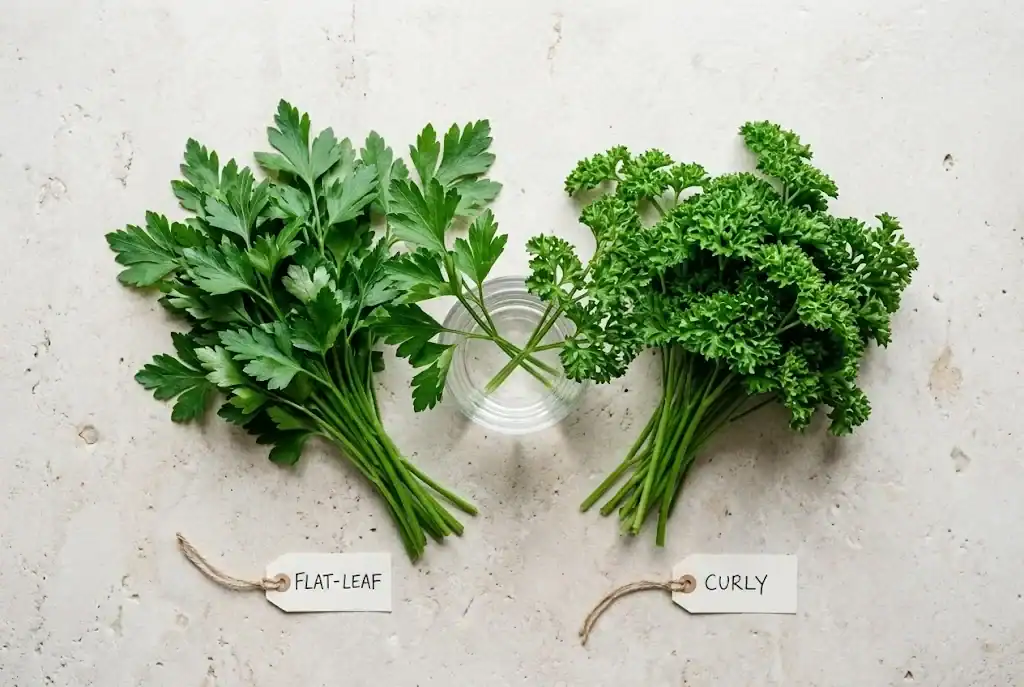
- Italian / flat-leaf parsley: best for cooking, sauces, and chopped use where flavor matters.
- Curly-leaf parsley: best for plating and dishes where crunch and color do the work.
- Stems: tender on flat-leaf, worth chopping and using; tougher ones go to the stockpot.
- Storage: both keep the same way, but flat-leaf benefits most from being chopped before freezing.
Fresh parsley versus dried
Dried parsley has its place, but it is not a fair substitute for the fresh leaf. Drying strips the volatile oils that give the herb its lift, leaving a flatter, hay-like flavor. Use it in long-cooked dishes like braises and bean stews where the leaves have time to rehydrate and where the brightness is not the point. For tabbouleh, chimichurri, or any finishing use, the fresh leaf is the right call.
A useful rule of thumb: 1 tablespoon of chopped fresh leaves is roughly equal to 1 teaspoon of dried. That ratio lets you swap one for the other in cooked dishes without losing its role, though you will lose the fresh leaf’s texture and color.
When to add parsley so the flavor stays bright
Parsley is one of the soft herbs, alongside basil, dill, and mint. Soft herbs lose their fragrance quickly under heat, so the timing changes everything.
- Add chopped leaves in the last 5 to 10 minutes of cooking a soup, stew, or braise.
- Stir it into a sauce off the heat so residual warmth releases the oils without dulling them.
- Sprinkle it over a finished dish, the way you would a grind of black pepper.
- For raw preparations like salads, dressings, and green sauces, it goes in cold and stays cold.
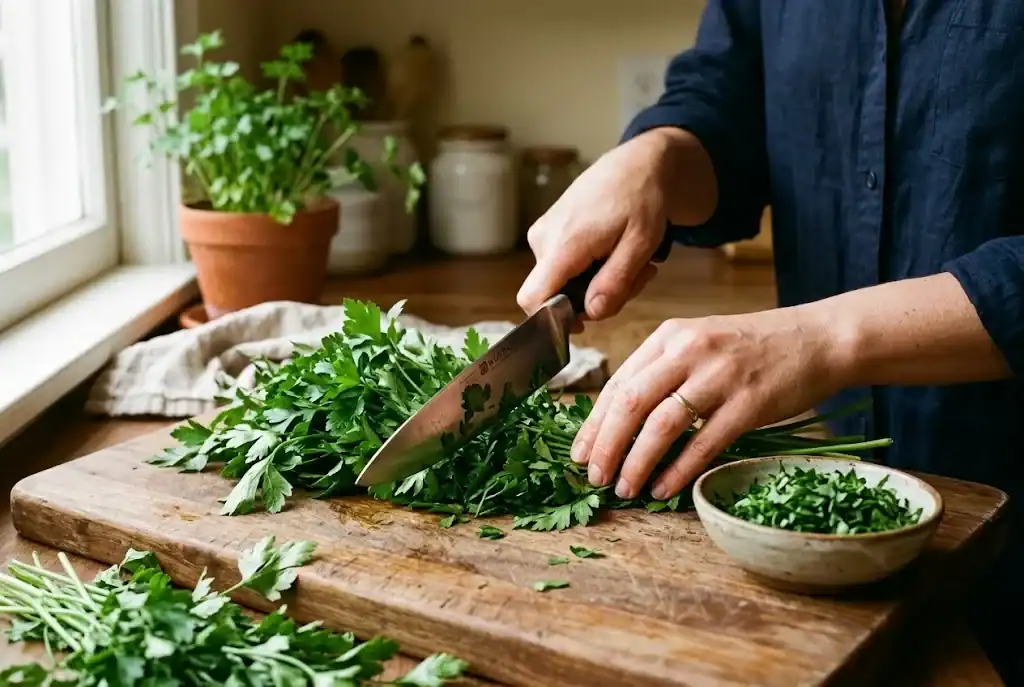
If a recipe calls for parsley early, treat it as part of the base flavor, the way you would carrot or celery in a soffritto. If the recipe calls for it at the end, the herb is there for aroma and color and should not be cooked down.
Five everyday ways to cook with parsley
These five preparations cover most of what home cooks actually do with a bunch of parsley. Each one uses a different technique so you can see how the herb behaves across raw, blended, and cooked uses.
Tabbouleh, the parsley-forward Middle Eastern salad
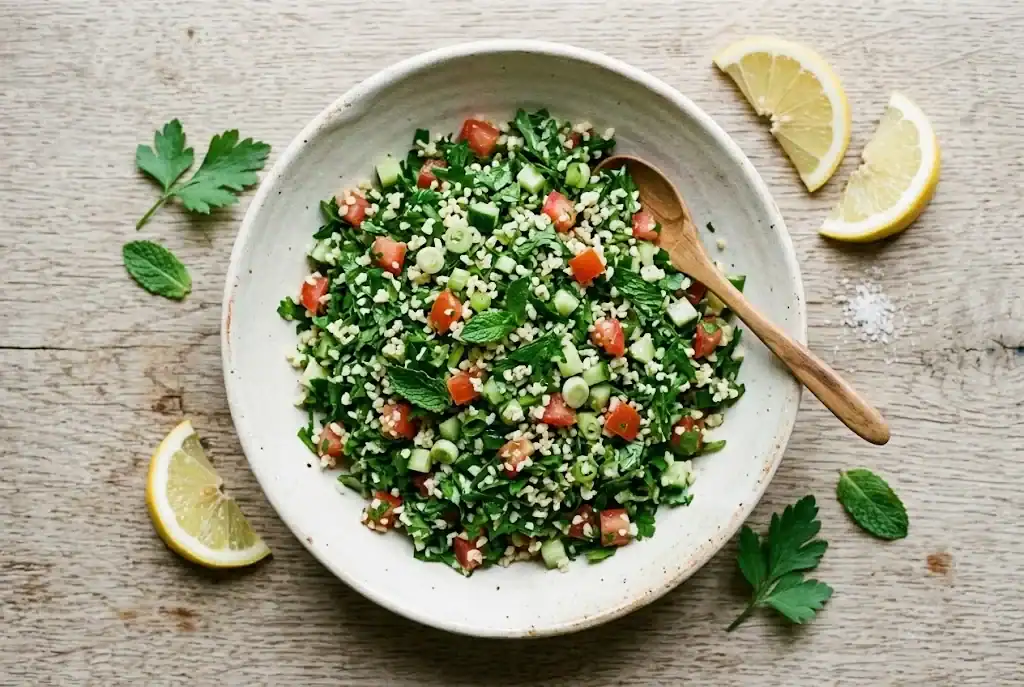
Traditional tabbouleh (or tabbouli) is mostly the herb. The classic version calls for a generous bunch of flat-leaf parsley finely chopped, a smaller amount of mint, bulgur that has been soaked until tender, finely diced tomato, cucumber, sliced green onion, and a simple dressing of lemon juice, olive oil, salt, and a little garlic. Toss gently so the leaves keep their volume, taste for acid, and let it sit 15 minutes before serving so the bulgur absorbs the dressing. For a heartier meal, scoop it into a pita with hummus and crisp lettuce.
Salsa verde, the Italian parsley sauce
Salsa verde is a rough chop of flat-leaf parsley, capers, a clove of garlic, a small handful of cornichons or green olives, a spoon of Dijon mustard, a slow stream of good olive oil, and a squeeze of lemon. Pulse or chop everything by hand and adjust the acid at the end. Serve over grilled chicken, grilled lamb, pan-seared fish, or a simple bowl of boiled potatoes.
Gremolata, the lemon and parsley finish
This Italian accent is lemon zest, parsley, and garlic, finely chopped together with no oil. It is meant to be sprinkled over osso buco, braised short ribs, roasted vegetables, or any long-cooked dish that needs a hit of fresh flavor at the end. Make it just before serving; the citrus dulls within an hour.
Parsley pesto, a twist on the basil classic
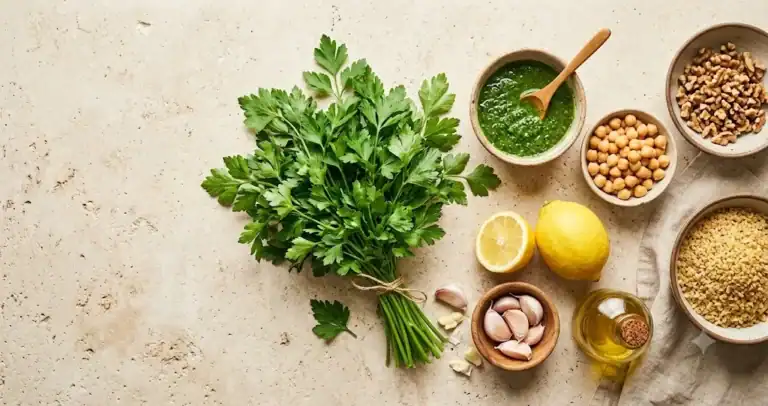
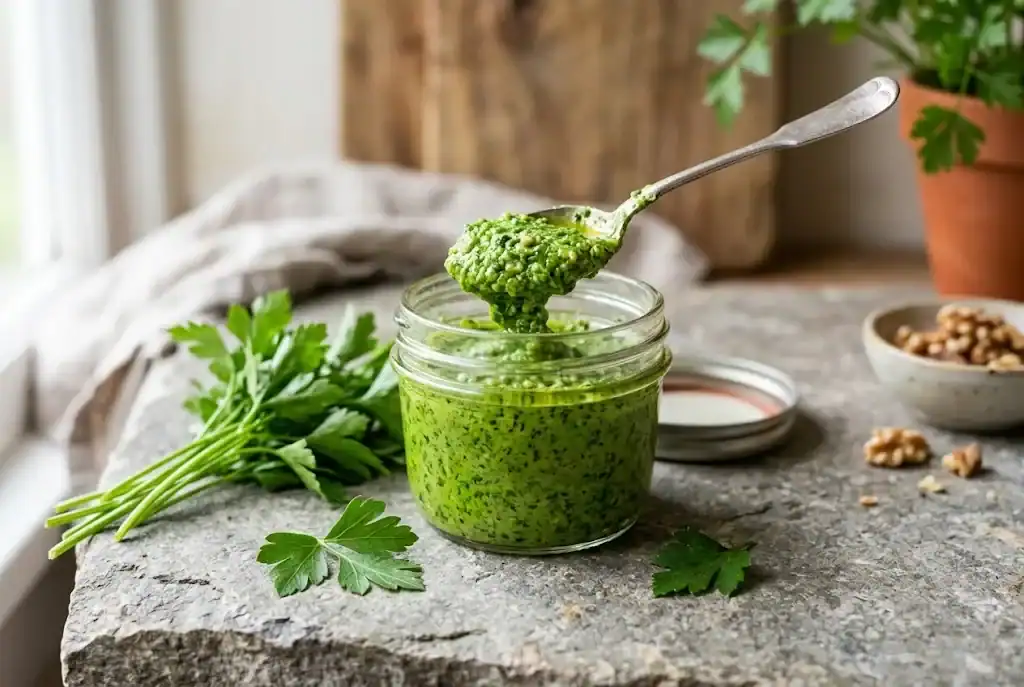
Use a clean bunch of flat-leaf parsley in place of about half the basil, then add toasted almonds or walnuts for warmth, a hard cheese like Parmesan, garlic, olive oil, and a touch of lemon juice to keep the color green. Toss with pasta, spoon over roasted summer squash, or use as a base for a grain bowl.
Parsley compound butter
Soften a stick of unsalted butter, fold in a few tablespoons of finely chopped parsley, a pinch of salt, and a small squeeze of lemon. Spread on grilled bread, melt over a ribeye steak, or top a baked potato. The butter keeps in the fridge for a week and freezes well in a log for months. For a fuller set of recipes for cooking with it, our sister guide walks through several preparations in detail.
Persillade and parsley-forward sauces
Persillade is the French cousin of salsa verde: finely chopped parsley, garlic, and olive oil blended into a coarse paste. Spoon it over roasted potatoes or stir a spoonful into cooked lentils and grains. To make the paste richer, melt a few chopped anchovies into the oil first; anchovies add a savory depth that holds up against red meat and grilled lamb. If you want a pesto that is more peppery than sweet, swap flat-leaf for half the basil and finish with a squeeze of lemon for a brighter color.
Pairings that work every time
Parsley plays well with a wide range of ingredients, which is why it shows up in so many traditional dishes. A short list of pairings covers most kitchens and helps when you want to build a meal around what you have.
- Proteins: grilled chicken, pan-seared fish, shrimp scampi, lamb, pork meatballs, and steak.
- Vegetables: summer squash, tomatoes, potatoes, mushrooms, onions, garlic, and roasted carrots.
- Grains and legumes: couscous, bulgur, orzo, rice, lentils, chickpeas, and white beans.
- Dairy and acid: feta, ricotta, lemon juice, vinegar, yogurt, and butter.
- Other herbs: dill, basil, fresh mint, oregano, and thyme, used in smaller amounts.
If you run out
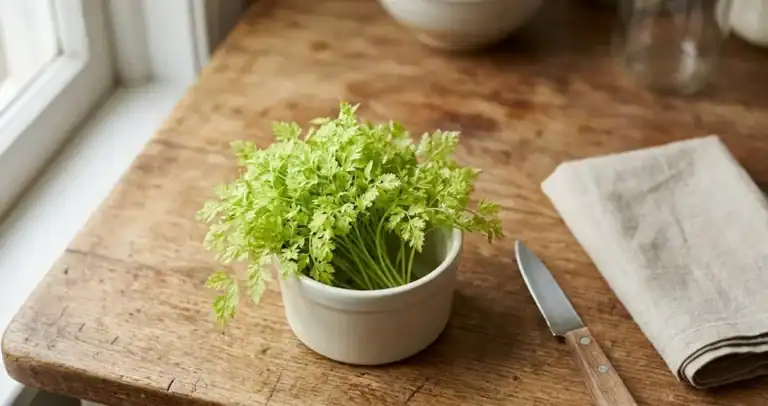
The flavor has its own clean grassy character, and a few alternatives can fill in for it in a pinch. For a finishing sprinkle, chervil is the closest substitute, and chives give a milder oniony note that works on eggs or potatoes. For slow-cooked dishes, a few leaves of celery tops stirred in at the end is a quiet stand-in. Dried leaves are fine in braises where they simmer for a long time, but they do not save a dish that wants fresh leaves at the end. The honest answer is that nothing else is a true swap, so if the dish depends on it, buy it.
How to store parsley so it lasts
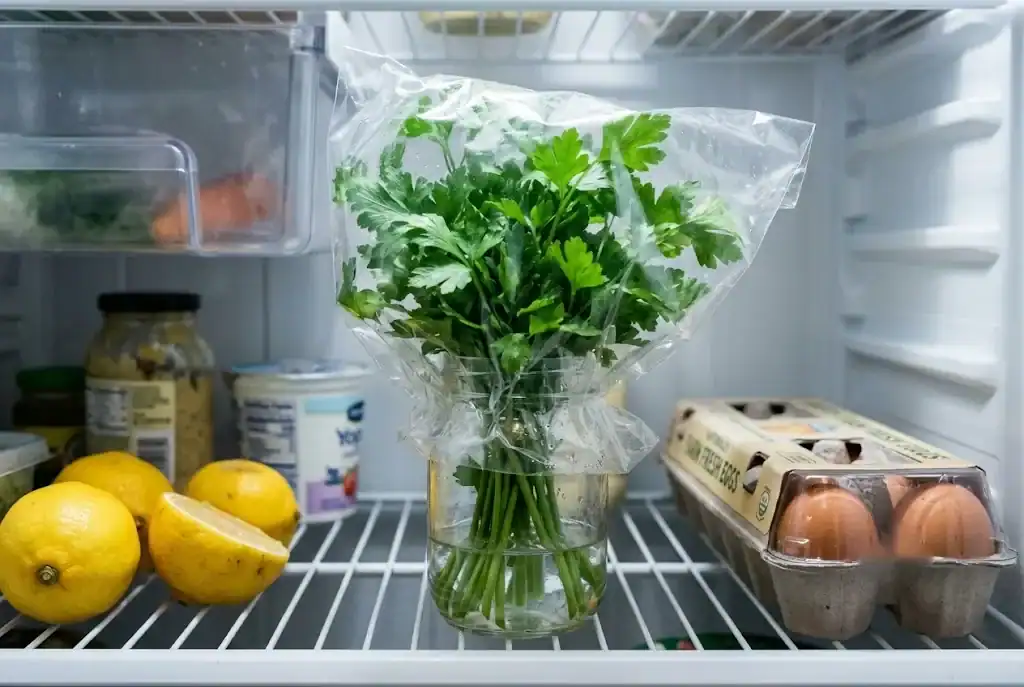
The fresh leaves keep for about a week in the refrigerator when treated right and several months in the freezer when you have more than you can use. Wash the stems under cool water, shake off the excess, then wrap the bunch loosely in a slightly damp paper towel and slip it into a zip-top bag or a container with a tight lid. Closing it airtight slows wilting. You can also bundle the stems with a rubber band and stand the bunch in a jar with an inch of water in the fridge, loosely tented with a bag. For longer storage, separate the leaves from the stems, chop the leaves, pack them into ice cube trays with a little olive oil or water, freeze, then transfer the cubes to a freezer bag; freeze the leaves this way and the cubes add color and flavor to cooked dishes all winter. To go from a fresh bunch to a kitchen-ready supply, see our guide to keeping the herb well.
Don’t toss the stems
The tender stems carry the same grassy flavor as the leaves, so save them from the cutting board rather than the bin. Chop them finely and stir them into a sauté early in the cook, simmer them in stock or soup with other aromatics, or steep them in warm olive oil for ten minutes and strain for a quick finishing oil. Tougher stems are best kept for stock or the compost.
Common cooking mistakes to skip
- Substituting a close cousin. They look similar at a glance but taste entirely different; parsley leans grassy and peppery, basil reads warm and sweet, and mint comes across cool and sharp.
- Adding parsley at the start of a long cook. It loses flavor and color by the time the dish is done.
- Using dried parsley where the recipe wants the fresh leaf. The texture and aroma cannot be rescued.
- Discarding the stems. Tender flat-leaf stems chop fine and add flavor; only the toughest stems of the other type belong in the bin.
Quick answers about cooking with parsley
Does parsley taste like cilantro? No. The two herbs sit in the same family, but parsley is grassy and slightly peppery with a hint of bitterness, while cilantro leans bright and, for some people, soapy.
Can you eat it raw? Yes. The flat-leaf form is commonly eaten raw in salads, chimichurri, and herb sauces. Wash it well and pat it dry before chopping.
How much equals one bunch? A typical market bunch contains roughly 1 cup of chopped leaves. The amount needed in any single recipe varies: a tabbouleh takes two or three bunches, while a simple salad or herb dressing wants only a handful.
Can I use a parsley-based dressing on pasta? Yes. Blend a generous handful of flat-leaf with olive oil, lemon juice, a clove of garlic, a small spoon of Dijon mustard, and a pinch of salt; toss with warm pasta or drizzle over a simple salad.
Is parsley only a garnish? No. The herb adds real flavor through the dish, not just on top. Use the tender stems early in slow-cooked dishes like braises and stocks for a quiet background flavor, then finish the dish with fresh chopped leaves near the end for brightness.
Is it nutritious? Parsley is a small but real source of vitamin K, vitamin C, and folate, and it adds brightness to dishes without adding calories or sodium.
How much do I need for four servings? For most pasta dishes and braises, two to three tablespoons of chopped leaves per four servings is plenty. For a salad where the chopped leaves are the main ingredient, plan on a full bunch for four.
Try parsley in your kitchen this week
Start with one bunch and one easy recipe, then build from there. A quick herb salad to use up summer tomatoes or a salsa verde on grilled chicken will show what the fresh leaves can do.