Arugula grows fast and rewards quick picking, which makes it one of the easier leafy greens for a first-time gardener to keep in steady supply. A few snips every few days will keep a single plant sending up new leaves for weeks, and a small bed can supply a salad bowl’s worth of peppery salad greens from spring until the first hot spell sends the plants to seed. The trick is matching the cut to what you want from the plant: young leaves for salads, mature leaves for cooking, or whole heads when the season turns.
When to harvest arugula
Most arugula plants are ready to harvest about three to four weeks after sowing. Look for:
- Baby leaves: two to three inches long
- Mature leaves: four to six inches long
Cut in the morning once the leaves are dry to the touch. Leaves picked before the day heats up stay crisp longest. Arugula is a cool-weather annual, so plan your main harvest season for spring and fall. Hot weather makes the plants bolt, sending up white flowers and seed pods that turn the older leaves bitter.

Tools you need
- Scissors or garden snips
- A basket or bowl for the cut leaves
- A bowl of cold water for a quick dunk if the bed splashed grit onto the leaves, though leaves you plan to store keep better unwashed
- A hand trowel for whole-plant harvests, to loosen roots cleanly without tearing neighboring plants in a closely sown row or raised bed
Harvest the outer leaves for a cut-and-come-again crop
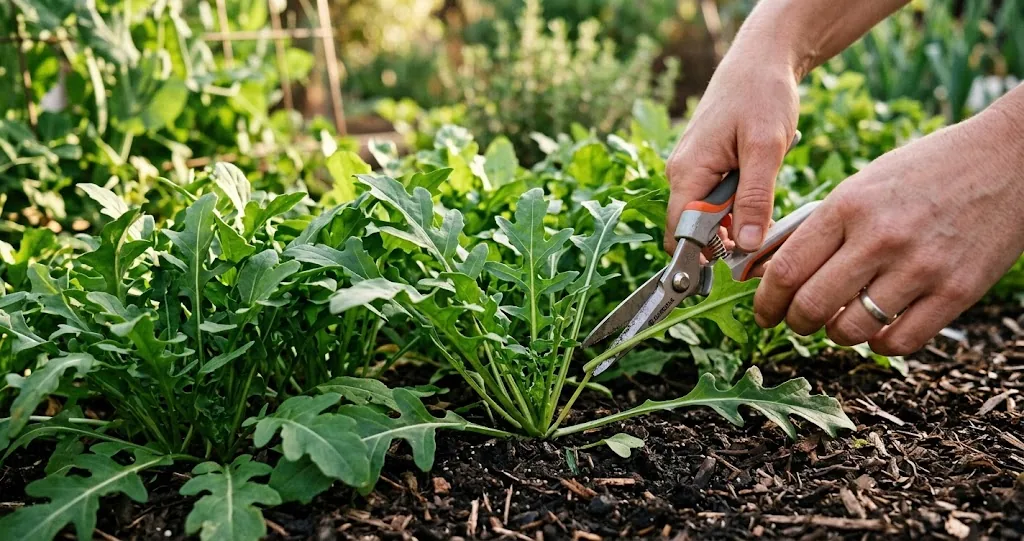
Cut-and-come-again is the method that keeps a bed of arugula productive throughout the season. Harvest the outer leaves first, leaving the smaller inner rosette intact so the plant keeps growing from the center. Cut the stems about an inch above the soil level rather than pulling them off, and the crown will push out fresh leaves within a week. Aim to take no more than a third of the foliage from a single plant at a time; that leaves enough for the plant to recover quickly.
For baby leaves, shear the whole bed once the leaves reach three inches tall. Wild arugula, sometimes sold as sylvetta, grows more slowly and stays compact, so it tolerates tighter picking than standard roquette. A spring sowing and a late-summer sowing cover most of the picking season in a cold climate; in a mild-winter area a third sowing in early fall will carry you into winter. Gardeners who plant arugula in a mixed salad green bed can run the same rotation across the whole bed, staggering lettuce and spinach alongside it.
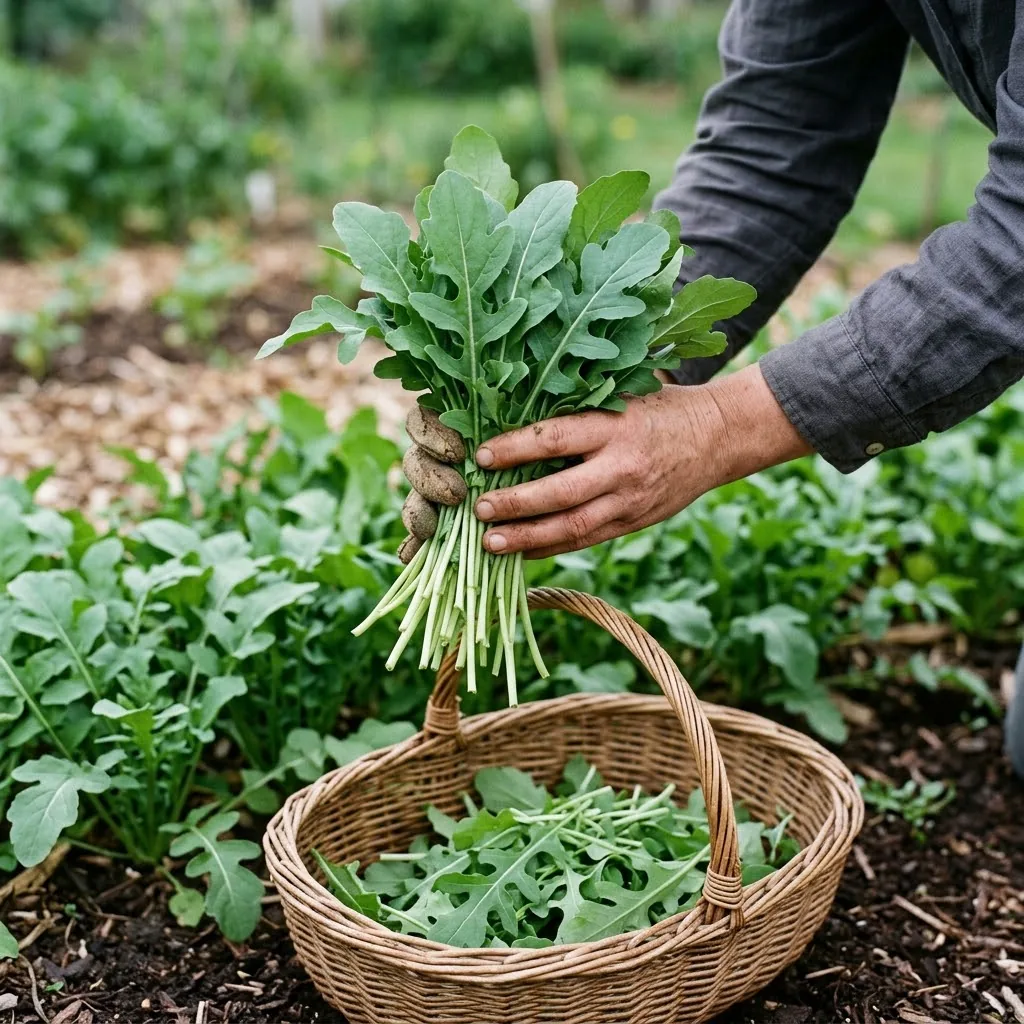
Take the whole plant when you want a single big cut
If you want a large handful for a salad or a batch of pesto, pull or slice the entire plant. Cut through the stem at soil level with your snips, or lift the whole plant with a trowel if you also want to clear the bed for the next crop. Whole-plant harvests make sense for spring plantings that are about to bolt, or for a final fall harvest before a hard frost. If the plant has already sent up a bud, cut low and use the leaves the same day; flavor sharpens fast once bolting starts.
Handle bolting without losing the crop
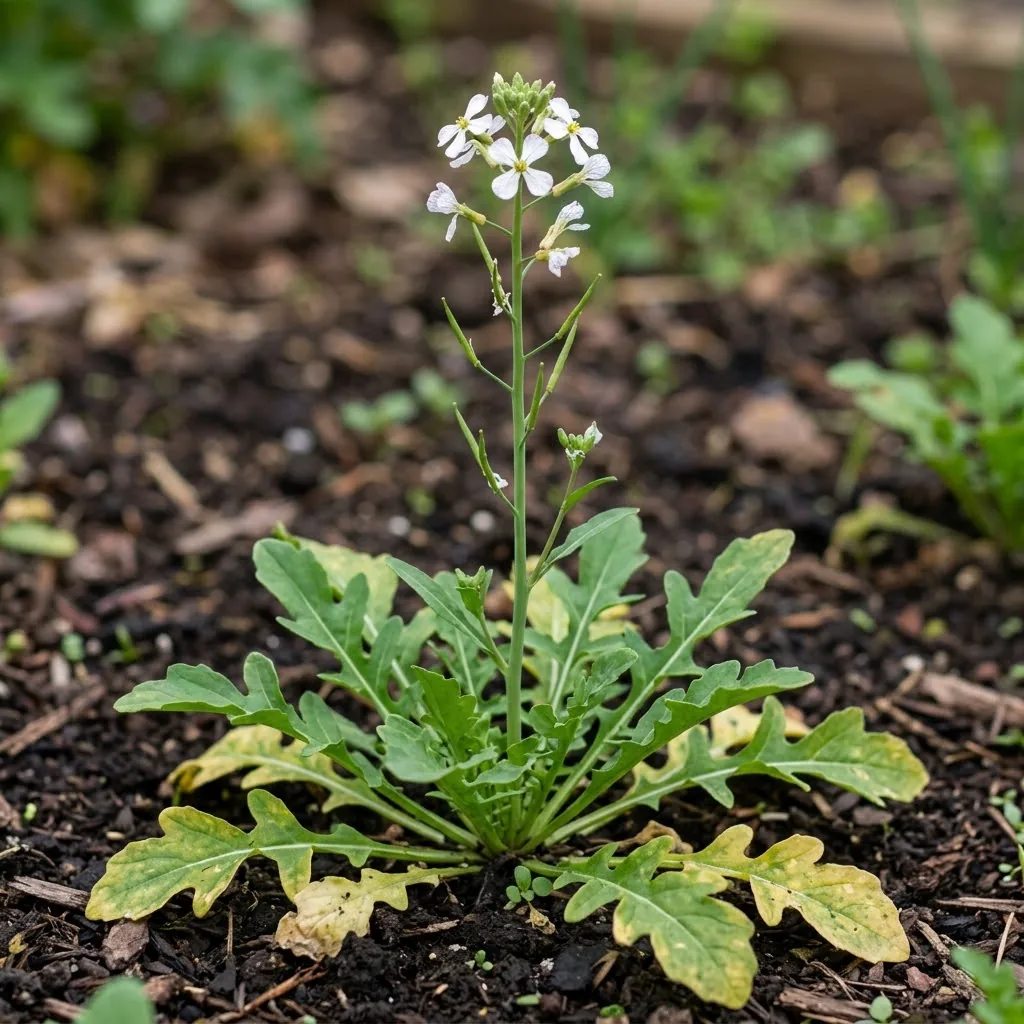
Once arugula sends up flower stalks, the older leaves turn sharp and unpleasant. You have two practical options. Cut the plant back to about an inch above the soil, leaving the crown, and water well. Some plants push a smaller second flush of milder leaves; others are spent, especially in heat. Either option keeps the garden bed productive. Or let the plant finish flowering so it sets seed. Arugula flowers attract beneficial insects, and the young green seed pods are edible and carry a light peppery bite. Leave a few pods to mature and dry on the plant, then save that seed for next season.
Keep the picking going
Successive sowings are the simplest way to stretch an arugula season across several months. Sow a short row every two to three weeks from early spring until about a month before your first expected hot spell. Resume sowing in late summer for a fall and winter crop in mild climates. Keep soil temperatures cool with a light mulch, give plants a bit of shade during heat waves, and water steadily so the leaves stay tender rather than tough. A row cover helps in early spring and late fall, both warming the bed and keeping flea beetles and other pests off the young seedlings.

Storing your greens
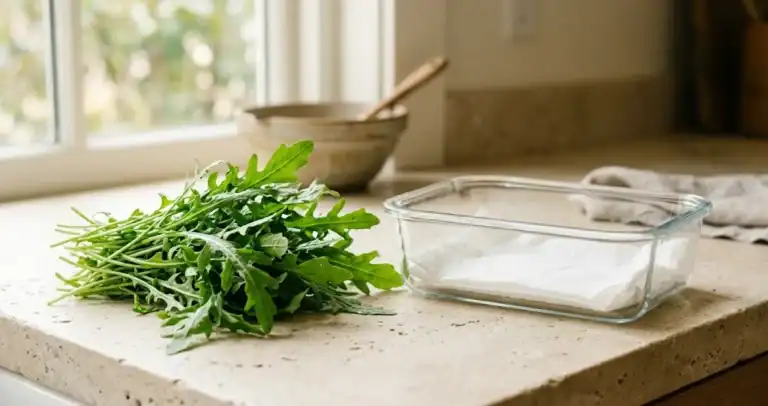
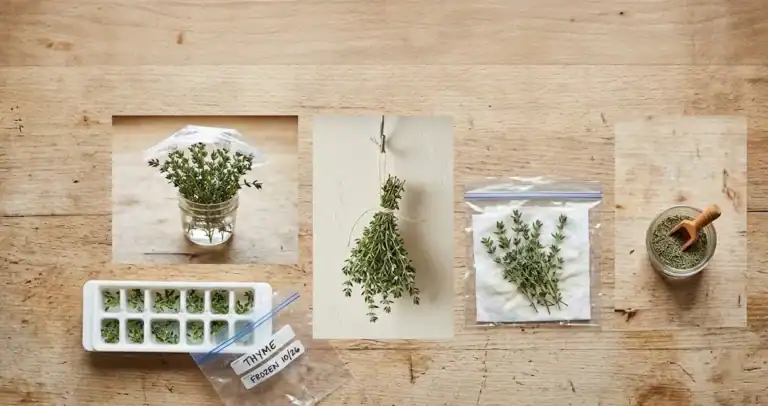
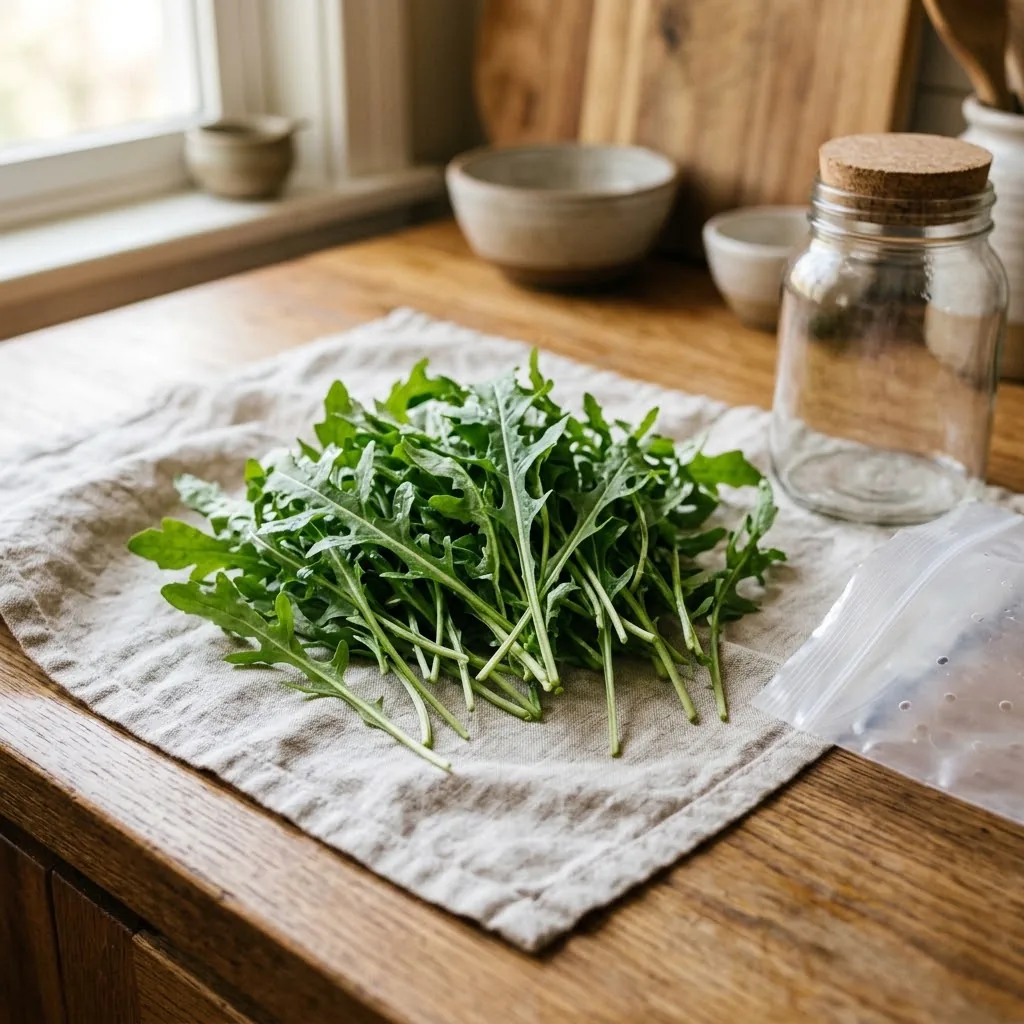
Fresh arugula keeps its flavor best when used the same day it is cut. For short storage, wrap unwashed leaves loosely in a dry paper towel and slide them into a perforated bag in the refrigerator; they will stay usable for three to five days. For longer keeping, you can freeze chopped arugula in olive oil for sautés and sauces. If you have more greens than you can eat now, see the steps for storing arugula after harvest so nothing goes to waste.
Putting arugula to work in the kitchen
Arugula’s bright bite suits more than salad. Toss it onto pizza after baking, layer it into sandwiches, or wilt a handful into pasta in the last minute of cooking. For longer recipes, it carries the heat without disappearing, which makes it useful in sautés, soups, and egg dishes. If you want a fuller set of ideas for serving this green, the cooking guide covers preparing arugula at home from a basic salad to warm dishes.
The same logic applies to most kitchen herbs
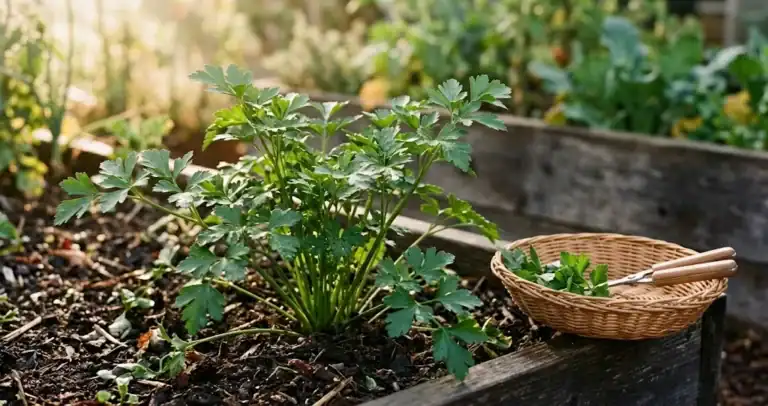
The outer-leaf rule that keeps arugula producing works the same way on cilantro, parsley, and basil, though each has its own signal for when to stop. For timing across common herbs, the broader guide covers when and how to cut any herb in more detail.
Quick answers
How do you pick arugula so it keeps growing? Snip the outer leaves about an inch above the soil, leave the inner rosette alone, and never take more than a third of the plant at a time.
Does arugula come back after cutting? Yes, as long as the crown and a few central leaves are left. A new flush typically appears within a week in cool weather.
Can you still eat arugula after it flowers? The older leaves turn bitter once the plant bolts, but the flowers and young seed pods are mild and edible. New leaves from a resprouted plant are also fine.
How do I know when my arugula is ready to harvest? Baby leaves are ready at about two to three inches, usually three to four weeks after sowing. Mature leaves are ready at four to six inches.