Cilantro wilts fast. A bunch from the grocery store often turns limp and yellow within three days on the counter, and many home gardeners watch their harvest go the same way within a week. The good news: a few simple storage methods can keep the leaves bright and usable for days in the refrigerator, months in the freezer, and close to a year dried. This guide walks through the methods that actually work, with the timing, conditions, and tradeoffs so you can pick one or two and stop losing this delicate herb to the compost.
The 30-second version: pick a method that fits how soon you will use it
Cilantro storage breaks into three windows. The best way to store cilantro depends on whether you want to use it tomorrow or months from now. Pick the window that matches how often you cook, then make that method your default so the leaves stay ready when you need them.
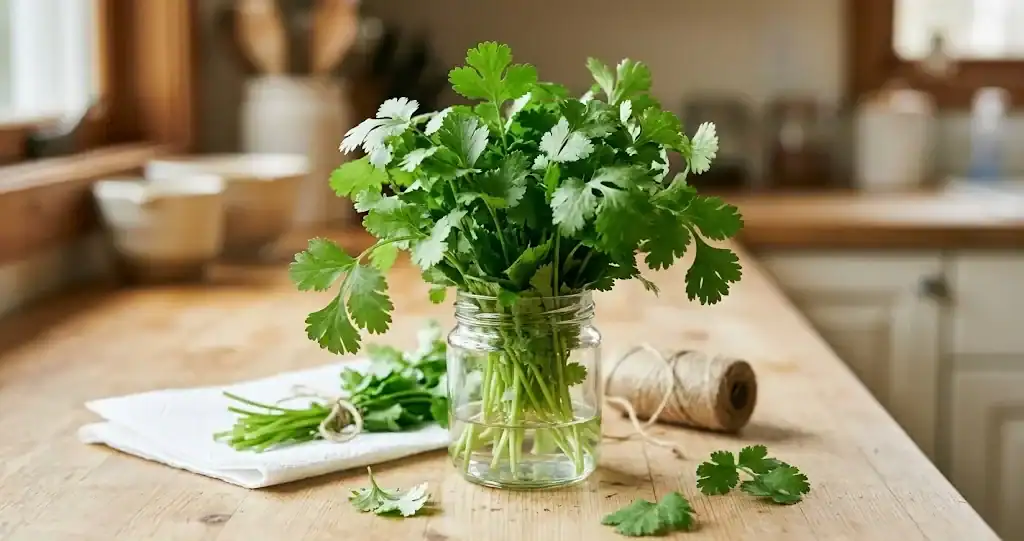
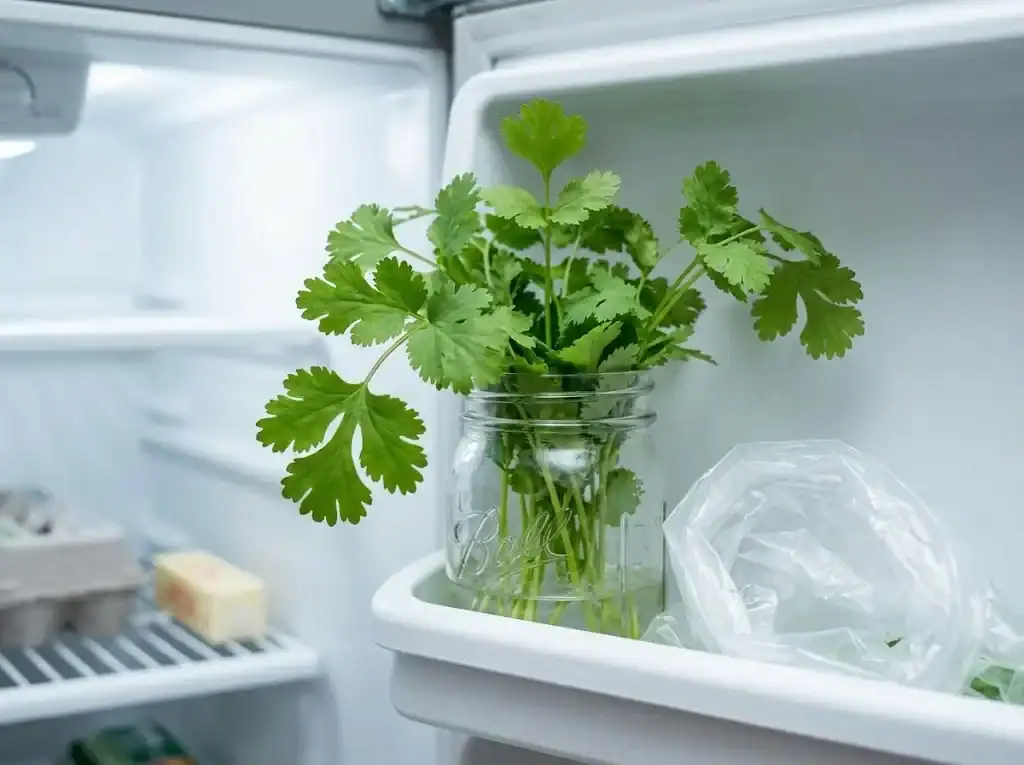
- Short term (5 to 10 days): treat it like cut flowers. Stand the stems in a jar of water, loosely cover with a plastic bag, and refrigerate. Change the water every two days.
- Medium term (3 to 6 months): wash, dry, chop, then freeze in oil in an ice cube tray, or freeze flat in a freezer bag.
- Long term (6 to 12 months): air-dry or use a dehydrator, then store the dried leaves in a sealed container away from light.
Each section below has step-by-step instructions and the conditions that matter. For the bigger picture on getting herbs from the garden to the kitchen, the guide to harvesting herbs without setting the plant back is worth a read before you cut a sprig.
Refrigerator storage: glass of water method
This is the simplest method for fresh cilantro. It keeps the leaves fresh for 7 to 10 days when the stems are healthy to start with and the water stays clean, and the leaves will look almost the same the day you use them as the day you bought them. The stems keep drinking water the way a cut flower does, and the leaves stay hydrated above the waterline.
- Trim the bottom of the stems by about half an inch. A quick diagonal trimming lets the stems drink rather than sit flat on the jar bottom.
- Remove any leaves below the waterline. Submerged leaves rot fast and turn the water cloudy, which then rots the rest of the harvest.
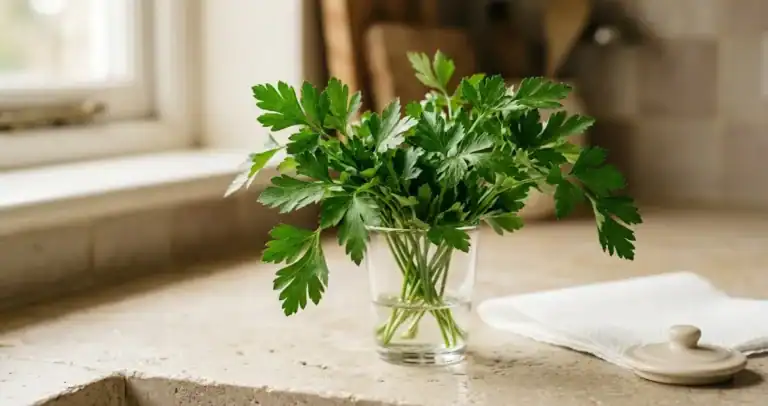
- Stand the stems upright in a jar with 1 to 2 inches of water. A mason jar or a drinking glass both work. Place the cilantro in the jar as you would a bouquet of flowers, then move it to the refrigerator.
- Loosely cover the leaves with a plastic produce bag. Do not seal it tight; you want some air exchange so the leaves do not turn slimy or wilt faster than they need to.
- Refrigerate. Change the water every 2 days and re-trim the stems if they look brown at the bottom.
This method keeps the harvest fresh and ready to use the way you would use it the day you bought it. The leaves stay turgid and bright, and you can pull a sprig out as you cook without defrosting anything. If your harvest came from your own garden rather than the store, the essential facts for harvesting cilantro explain how cutting choices affect how long the stored stems stay fresh.
Loosely cover the leaves with a plastic produce bag before placing the jar in the refrigerator, and the leaves will stay useable for the full week. That little cover is what makes this method beat the alternatives at home.
Tip: A glass of water in the refrigerator is not just for cilantro. Parsley, mint, and basil keep well the same way. If you grow fresh herbs at home, this is the routine that wastes the least. Cilantro and parsley side by side in the same jar is a common shortcut, and it works well for both.
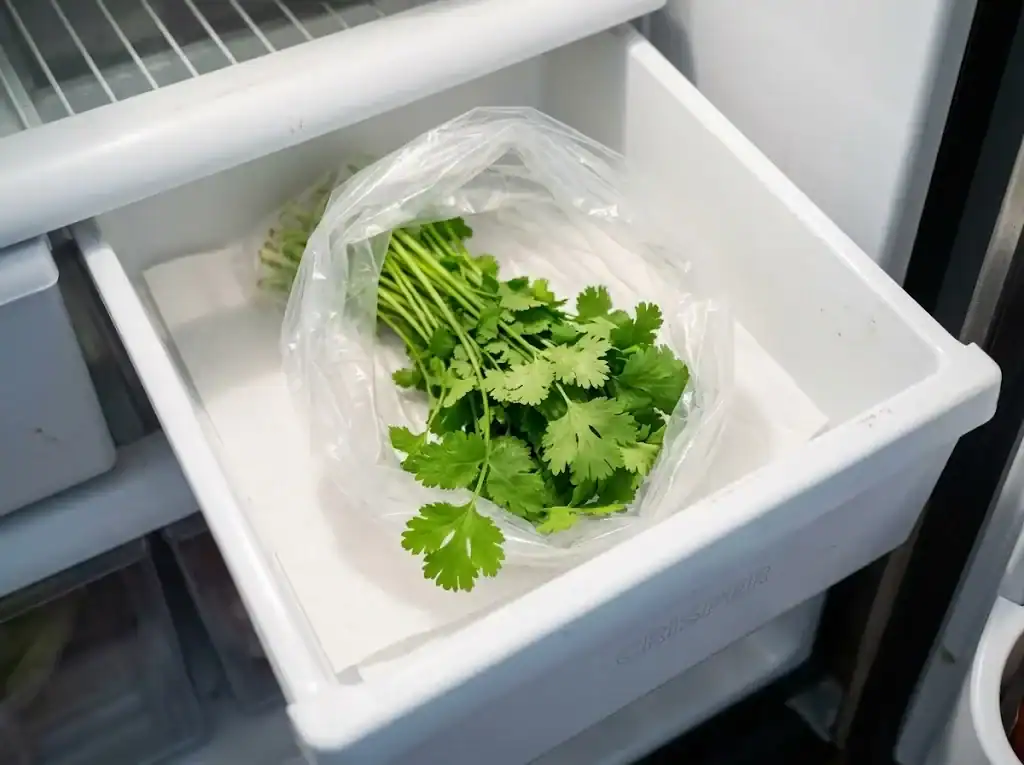
Refrigerator storage: paper towel method
This is the workhorse method for a crisper drawer full of mixed herbs. It works for 7 to 14 days when the leaves are dry to start and you avoid the common mistakes.
- Wash the harvest in cool water. A salad spinner dries the leaves faster than paper towels alone.
- Lay the stems on a clean dry paper towel. Pat dry.
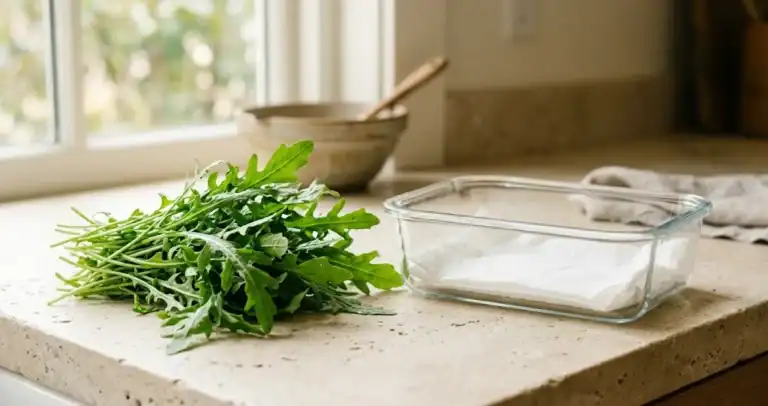
- Wrap loosely in a fresh dry paper towel. The towel absorbs moisture that would otherwise sit on the leaves and cause rot.
- Slide the wrapped bundle into a plastic produce bag or a loosely sealed zip-top bag. Do not press out the air; a little air space helps.
- Place in the crisper drawer. Recheck the paper towel every 3 days. If it is damp, swap it for a dry one.
The reason this works: the leaves are mostly water, and they give off moisture after cutting. A damp paper towel keeps that moisture sitting on the leaves and they go limp and slimy within a day or two. A dry paper towel wicks the moisture away so the leaves stay dry enough to remain crisp.
Common mistake: Sealing the bag tight. A fully sealed bag traps the moisture the leaves give off, and the leaves go limp and slimy within a couple of days. Leave a small opening in the bag so that moisture can escape.
Freezer storage
Freezing is the right method when you have more than you can use in a week. The flavor holds well for cooked dishes, less well for garnishes. Expect 3 to 6 months of quality storage, with usable leaves for longer if you seal the bag well. Freezing cilantro is the right call when you want cooked-dish flavor without the work of drying, and the freezer keeps the bright green color surprisingly well. A single freezer round can keep your cilantro ready through winter, when the leaves are out of season at the grocery.
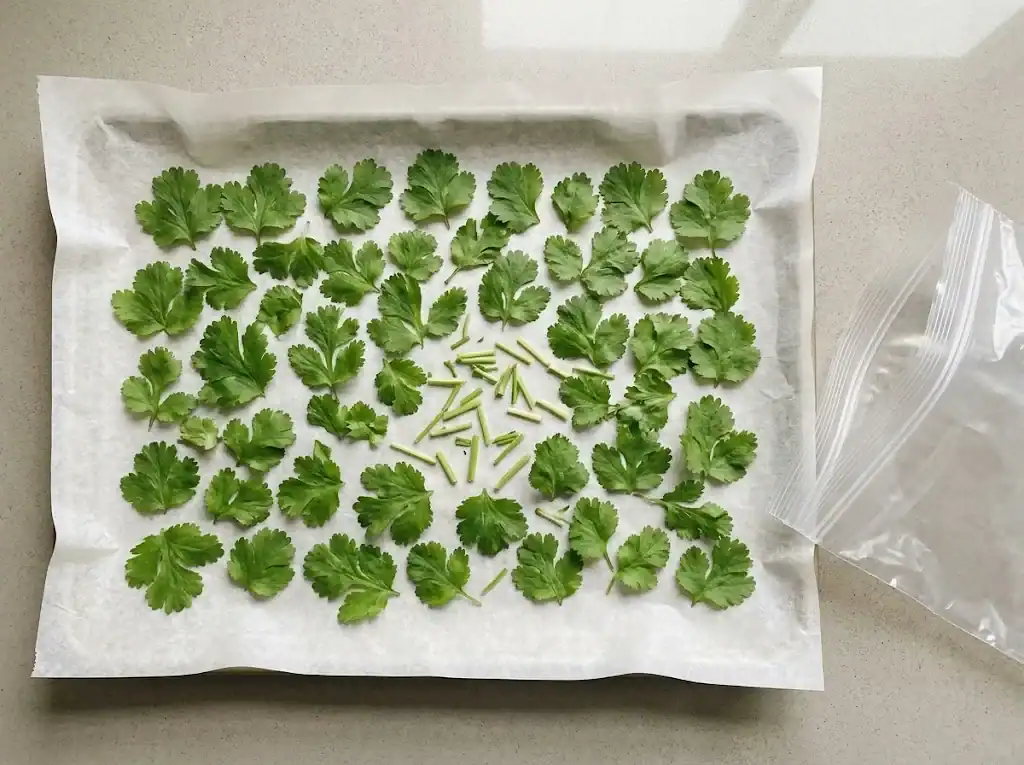
Method 1: freeze flat on a baking sheet, then bag
- Wash and dry the harvest thoroughly. Any surface water will freeze into ice crystals that damage the leaves.
- Chop coarsely or leave whole, depending on how you will use it later.
- Spread on a parchment-lined baking sheet in a single layer. Do not pile.
- Freeze for 2 hours until the leaves are solid.
- Transfer the frozen leaves to a freezer bag, press out the air, seal, and label with the date.
This method keeps individual leaves separate so you can scoop out a spoonful at a time without thawing the whole bag.
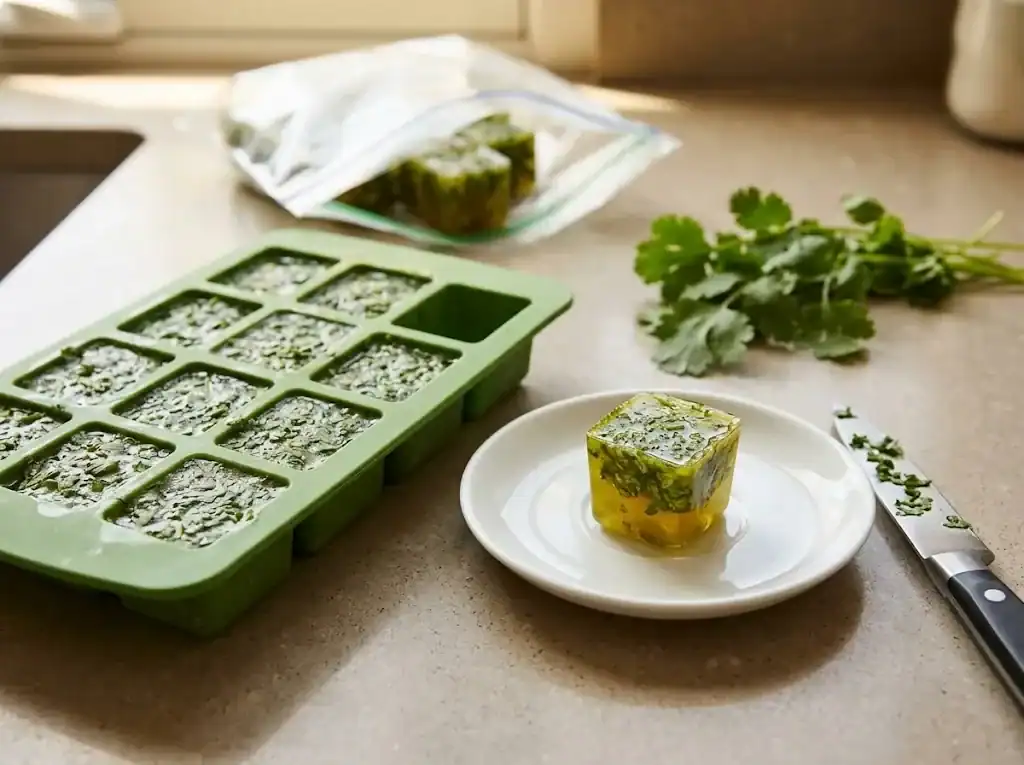
Method 2: freeze in olive oil in an ice cube tray
- Wash, dry, and chop the cilantro leaves.
- Pack the chopped cilantro into each compartment of an ice cube tray, about two-thirds full.
- Top with olive oil so each cube is filled.
- Freeze until solid, 4 to 6 hours.
- Pop the cubes out and store in a freezer bag.
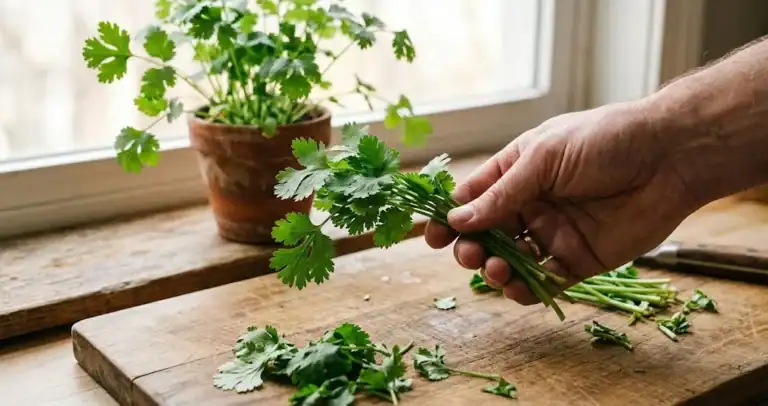
Each cube equals roughly a tablespoon of chopped cilantro plus the oil. Drop a cube into a hot pan at the start of cooking and the oil carries the flavor directly into the dish. Cilantro stems freeze just as well as the leaves, so do not strip them off before chopping. The whole plant goes in.
How to dry cilantro for long-term storage
The dried form is not the same herb as fresh. The flavor is more muted and reads differently in dishes. But dried is the right choice for spice rubs, soup sachets, and recipes that call for cooked herbs where the bright fresh note is not the point. To preserve cilantro this way, you give up the bright flavor and gain shelf life measured in months rather than days.
You have three options, in order of how much equipment they require:
- Air dry in a paper bag. Bundle 5 to 10 stems with a rubber band, place inside a paper bag with holes punched in the sides for airflow, and hang in a dry, dark, well-ventilated spot for 7 to 14 days. Once the cilantro leaves crumble off easily, strip the leaves from the stems and store in a sealed jar.
- Oven-dry on low heat. Spread leaves on a baking sheet and dry at the lowest oven temperature (170 degrees F or so) for 1 to 2 hours with the door cracked open. The leaves should feel brittle, not bend.
- Use a dehydrator. Follow the manufacturer settings for leafy herbs. Most dehydrators run a tray of leaves in 4 to 6 hours at 95 to 115 degrees F.
Store the dried leaves in a sealed jar away from direct light. A dark pantry shelf works well. Expect 6 to 12 months of usable flavor; past that the aroma fades.
When you grow cilantro yourself
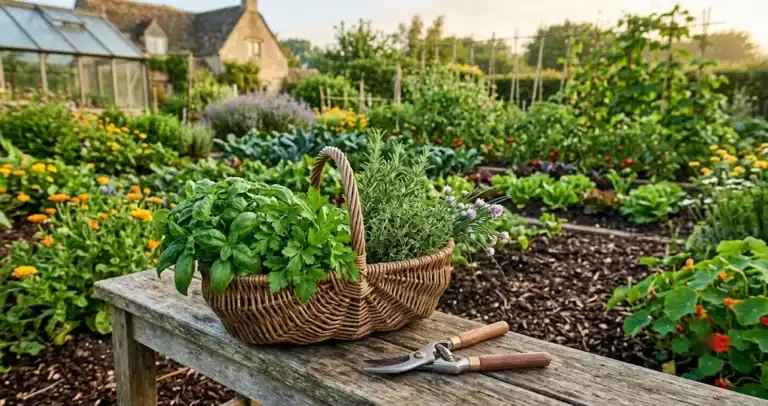
Homegrown cilantro needs slightly different handling than grocery-store bunches. The stems are thicker, the leaves are larger, and you usually have more at once. The same methods work; the difference is timing. Both the leaves and stems of cilantro are usable; the stems carry a stronger flavor and are worth chopping along with the leaves rather than throwing away. A bunch of cilantro from the garden often starts out fresher than a store-bought one, which tends to give it a longer storage life in the same conditions.
If your plant is the slow-bolt kind or you let one go to seed, the round beige seeds are coriander. They store the same way as the leaves and are worth saving separately for spice use. Garden fresh leaves have noticeably stronger aroma than store-bought, and that stronger flavor survives freezing better than it does drying.
- Harvest in the morning after the dew has dried but before the afternoon heat. Morning-picked leaves tend to be the freshest, with the strongest flavor and the most moisture in their stems.
- Skip the wash if you can. Cilantro from your own garden is usually cleaner than store-bought. If you do wash, give it a thorough dry before storing.
- Do not cut more than a third of the plant at once. The plant bolts fast in warm weather, and a hard cut accelerates bolting. Take what you need, then let it recover.
- Use the freezer method for surplus. A single garden harvest of cilantro often exceeds what a household can eat in a week. Freezing preserves the flavor and the work of growing cilantro.
- Cut with clean shears, not your fingers. A sharp pair of kitchen shears makes a clean cut that the plant heals faster than a torn leaf pulled by hand. Pinch off only what you need right away.
This is a how-to guide for home gardeners who want to keep their cilantro from going to waste. The trick is matching the method to how quickly the leaves would otherwise deteriorate.
Common mistakes that shorten the life of cilantro
A few habits shorten the life of cilantro more than any other factor. Avoid these and you will get noticeably more usable time out of any method.
- Storing wet cilantro. Surface water is the single biggest cause of slime, mushy leaves, and rot. Dry thoroughly before any storage method, or the leaves will quickly go from bright to brown.
- Sealing the bag fully closed. A fully sealed bag traps the moisture the leaves give off, and the leaves go limp and slimy within a couple of days. Loosely cover, do not vacuum-seal for fresh storage.
- Storing near ethylene-producing fruit. Bananas, apples, and tomatoes give off ethylene gas that speeds wilting. Keep cilantro in its own part of the refrigerator.
- Leaving leaves below the waterline. In the jar method, submerging leaves rots them in days. Strip the lower leaves before the stems go in the water.
- Storing in the warmest part of the refrigerator. The door is the warmest spot in most refrigerators and the temperature there swings every time it opens. Keep cilantro in the main body of the refrigerator or the middle of the crisper drawer where temperatures stay steadier.
- Skipping the pre-storage dry. Whether you use cilantro fresh, frozen, or dried, surface water shortens shelf life by days. Make sure to dry the leaves completely before they go into any storage container.
Quick reference: method and how long it lasts
If you just want the shortest path to a decision, this is the comparison. Pick the method whose window matches how soon you will use the cilantro.
- Glass of water on the counter: 1 to 3 days, until the leaves go limp. Best for a bunch you plan to use today or tomorrow.
- Glass of water in the refrigerator: 7 to 10 days. Simple, low-effort, and works for most bunches.
- Paper towel in a produce bag: 10 to 14 days. The longest-lasting fresh method and worth the extra minute.
- Frozen in a freezer bag: 3 to 6 months of quality, longer if you vacuum-seal. Best for cooked dishes.
- Frozen in olive oil cubes: 3 to 6 months. The most convenient cooked-dish option.
- Air dried in a paper bag: 6 to 12 months. Best for spice rubs and soups.
- Dehydrator dried: 6 to 12 months. Faster than air drying and shelf-life is the same.
Use cilantro with confidence once you have the routine down. The flavor reward is worth a small extra effort up the day.
Frequently asked questions
Does cilantro need to be refrigerated?
Yes, for fresh storage. Refrigeration slows wilting and keeps the leaves usable for 7 to 14 days depending on the method. The crisper-drawer paper towel method is the one that lasts the longest, mainly because the dry towel keeps the leaves from sitting in moisture. Dried leaves and frozen cubes can be stored at room temperature or in the freezer respectively.
What to do with fresh cilantro before it goes bad?
If you have more than you can use in a week, freeze it. The oil-in-ice-cube-tray method is the most convenient for cooked dishes and takes about 10 minutes of active work. Frozen cilantro cubes keep their bright color well, so use them freely in anything that cooks for more than a few minutes.
Is it better to freeze cilantro or dry it?
It depends on how you will use it. Freezing preserves the bright fresh flavor for cooked dishes. Drying changes the flavor into something more muted and earthy, which works in spice rubs, soups, and cooked dishes where the fresh note is not the point. Pick the method that matches your cooking. If you want to keep the cilantro fresh-tasting for cooked meals, freeze it. If you want a spice-rub jar on the shelf, dry it. Both methods work; the choice is about what you cook most often.
How can I extend the life of my cilantro?
The paper towel method in the crisper drawer is the longest-lasting fresh method. Expect 10 to 14 days when the leaves are dry to start and you swap the paper towel every few days. Beyond two weeks, freezing is more reliable. Whichever method you pick, dry leaves before storage and your cilantro will last much longer than if it went in wet. The actual life you get from any method depends on starting freshness, how dry the leaves are when they go in, refrigerator temperature, and how often you swap the paper towel or change the water.
Where to go next
Cilantro is one of the easier herbs to store once you have the routine down. Once you have a steady supply handled, the next natural question is how to put it to use. The page on ways to cook with cilantro covers the dishes and techniques that show the herb off well. The easiest habit to build is to keep a small jar of stems in water in the refrigerator and use it as your daily-use batch; freeze any surplus before the leaves wilt. With that rhythm, you stop losing the bunch to the compost and start using what you buy or grow. The same ideas also work for parsley and other leafy herbs, so the routine pays off across the kitchen.