The small, hard, golden seeds of this plant carry a scent that sits somewhere between maple syrup and roasted celery, with a warm, savory backbone that turns up in Indian dals, Persian stews, Ethiopian berbere, and Tunisian spice rubs. As a cooking ingredient, fenugreek bridges sweet and savory in a way few others can, which is why it has earned a quiet but enduring place in cuisines across half the world. This practical guide explains what the seed is, what it tastes like, and how to bring it into your cooking with confidence.
What is fenugreek?
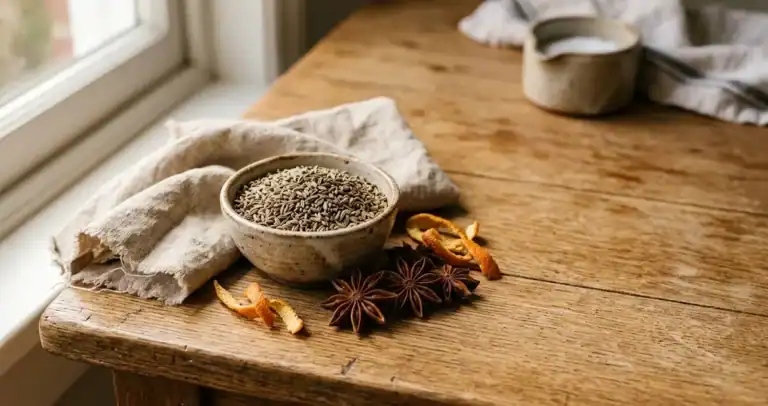
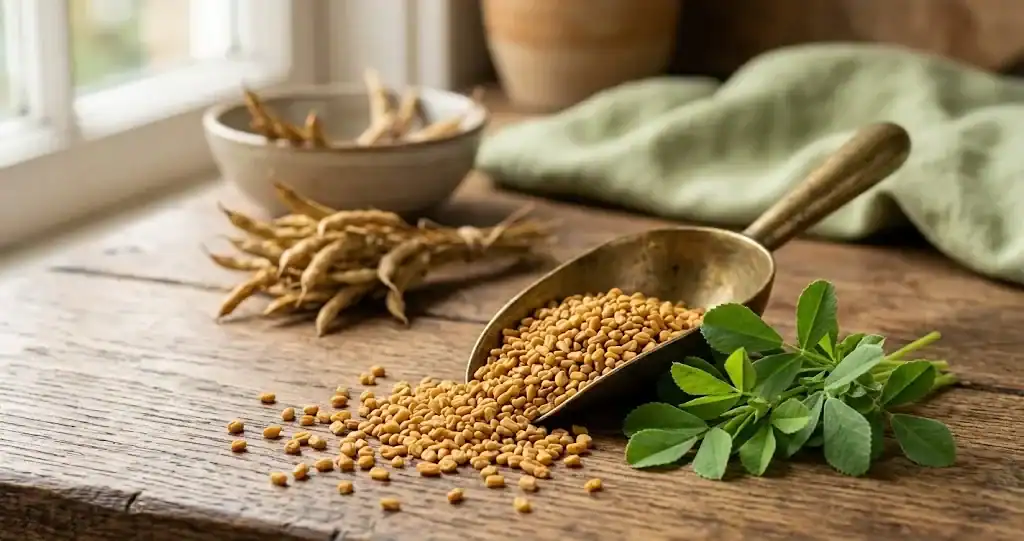
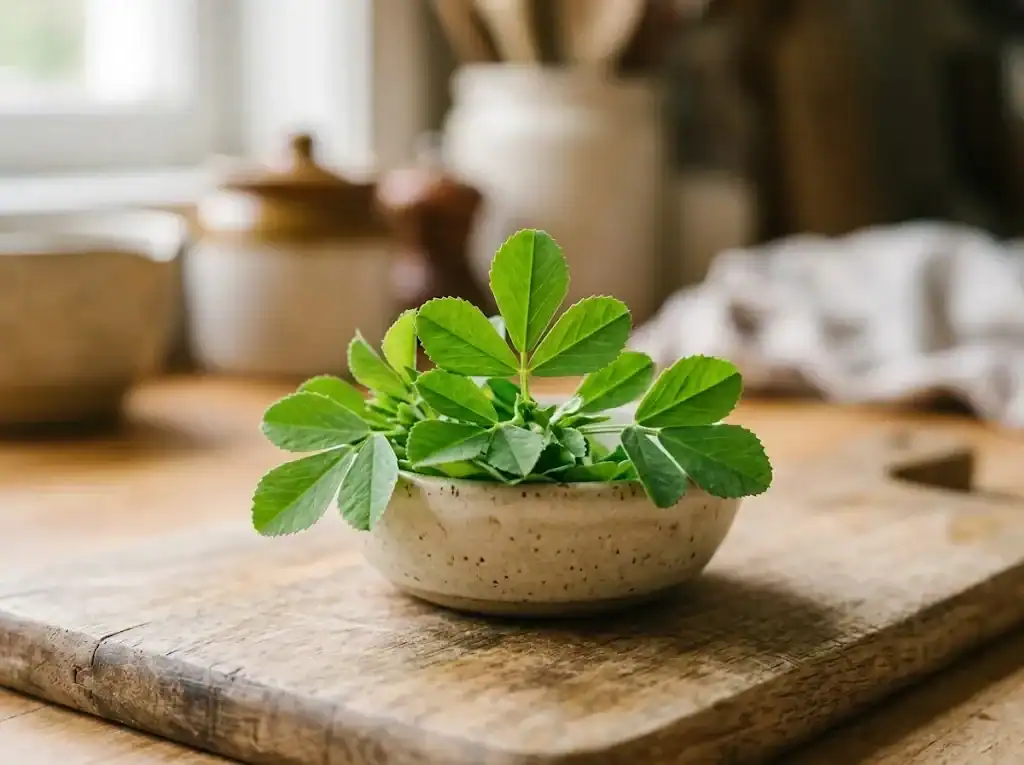
Fenugreek is a plant in the legume family, the same group as peas and beans. The botanical name is Trigonella foenum-graecum, which means “Greek hay,” a nod to its long history as livestock forage in the Mediterranean. Cooks use two main parts: the small, amber, angular seeds and the fresh or dried leaves, known as methi in South Asian markets.
The whole plant carries that distinctive sugar-on-the-stovetop smell. When you crush a seed between your fingers, the scent deepens into something nutty, slightly bitter, and faintly sweet at the same time. That layered fragrance is what makes this seed a backbone seasoning rather than a finishing one: it needs heat, oil, or moisture to open up.

What does fenugreek taste like?
The flavor is often described as a blend of burnt sugar, celery, and mild curry powder, with a savory edge that becomes more pronounced the longer you cook it. The sweetness is real, but it is not sugary. Think of the way toasted cumin smells, then add a dark, almost burnt-sugar note from the compounds the seed contains.
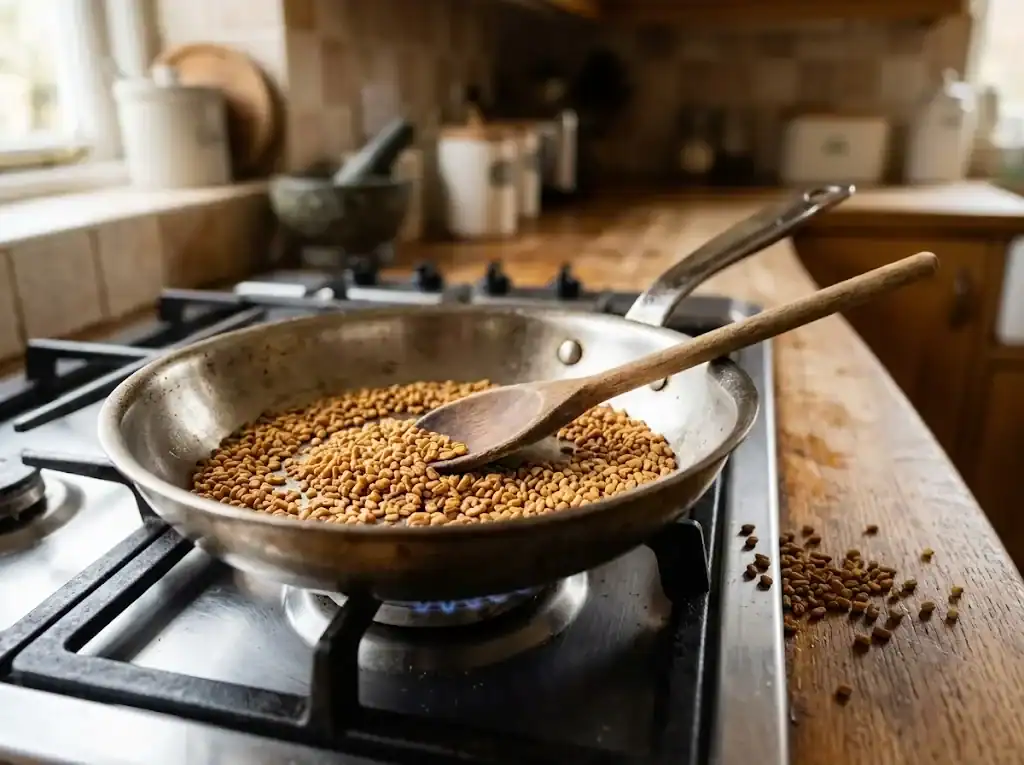
Raw seeds taste bitter and a little harsh, almost grassy. Toast them in a dry pan for a minute, and the bitter taste softens, the sweet note lifts, and the seed turns gently nutty. That toasting step is the single biggest difference between bland and memorable when cooking with fenugreek.
The fresh leaves taste more like a cross between spinach and watercress, with the same underlying sweetness in a milder form. Dried leaves carry more of that signature scent in concentrated form and work well in flatbreads, lentil dishes, and finishing blends.
History of fenugreek
This seasoning shows up in records from ancient Egypt, where the seeds were valued for both cooking and traditional medicine, and the plant has been found in tombs dating back several thousand years. Greek and Roman writers described it as a general-purpose plant for both people and animals. By the medieval period it was common across the Middle Eastern and North African worlds as a seasoning, a vegetable green, and a remedy for digestive complaints.
The plant travelled east through trade routes and became a staple of Indian cooking, where it is now central to dals, pickles, masala blends, and spice mixes. From there it reached Ethiopia, where it joined berbere, and the Levant, where it appears in everything from preserved lemons to slow-cooked stews. Knowing this history helps explain why fenugreek works in so many cuisines: it has been quietly binding them together for thousands of years.
How to use fenugreek seeds
The seeds are hard and need a little coaxing to release their flavor. There are three common approaches, and most recipes use one or a combination of them.
Toasting heats the seeds in a dry pan over medium heat for one to two minutes, until they darken slightly and smell toasted. Toast only what you will use in the next day or two, because toasted seeds lose their character faster than raw ones.
Grinding breaks the seed open so its full flavor reaches the dish. Use a mortar and pestle for small amounts, or a dedicated coffee grinder for bigger batches. Ground fenugreek is potent, so most recipes call for half a teaspoon or less.
Soaking softens the seed and tames its bitterness. Soak a tablespoon of seeds overnight in a half cup of water, then use both the seeds and the soaking liquid the next morning. The infused water carries much of the sweet character and works beautifully in dal, curry bases, soups, or a soothing herbal kitchen broth.
Sprinkle toasted seeds over flatbreads, fold them into long-cooked stews, or bloom them in hot oil at the start of a dish. If you are new to this ingredient, try a small amount first. Its flavor grows as it cooks, so a little goes a long way.
How to use the leaves
Fresh methi leaves have a tender, slightly bitter green flavor with that sweet undertone. They wilt quickly, so add them at the end of the cooking process, much as you would finish a dish with fresh spinach. Dried leaves, known as kasuri, are a pantry staple in many North Indian kitchens: crumble a small pinch over a finished curry, dal, or paneer dish, and the dish picks up an instantly recognizable fragrance.
Both forms pair well with potatoes, lentils, chickpeas, and paneer. Fresh leaves also work in omelets, savory pancakes, and stuffed flatbreads. Treat them as you would any soft green: gentle heat, brief cooking, and add them near the end.
Common spice pairings
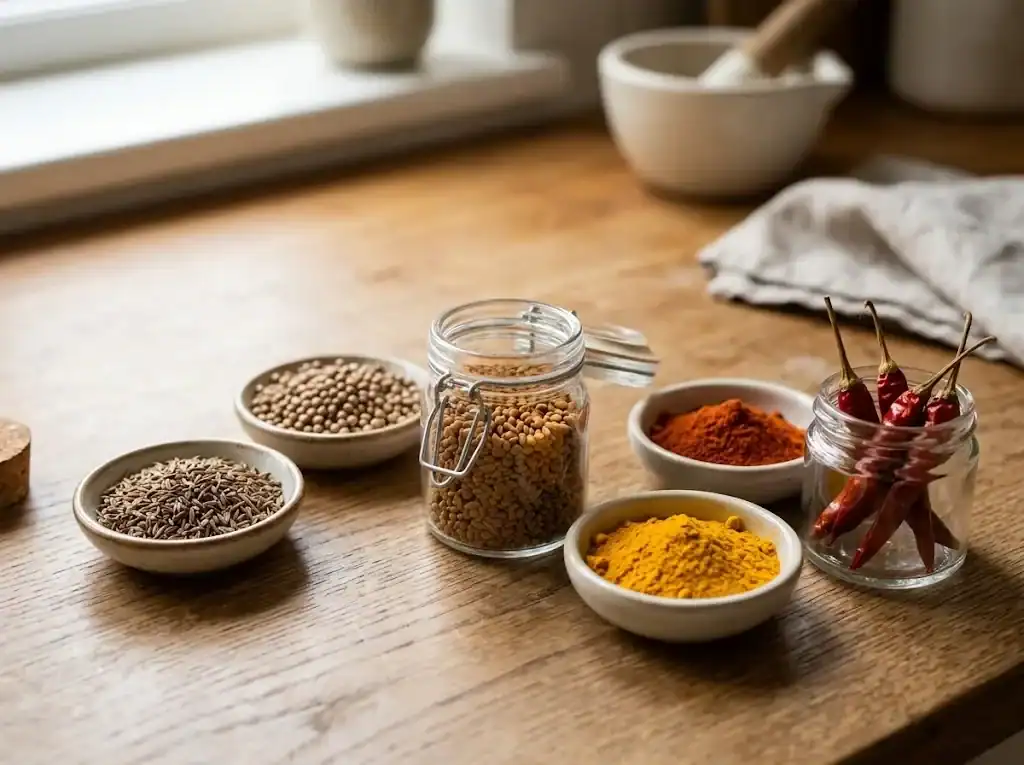
Fenugreek rarely stands alone. It is the kind of ingredient that ties a blend together, which is why it shows up in so many spice blends across very different cuisines. Pair it with cumin and coriander for Indian-style dals and Indian curries. Add it to berbere alongside chili, ginger, and paprika for an Ethiopian braise. Stir it into a Tunisian harissa or a Lebanese seven-spice blend. Mix it with turmeric and a touch of chili for a quick temper of oil poured over finished rice or vegetables.
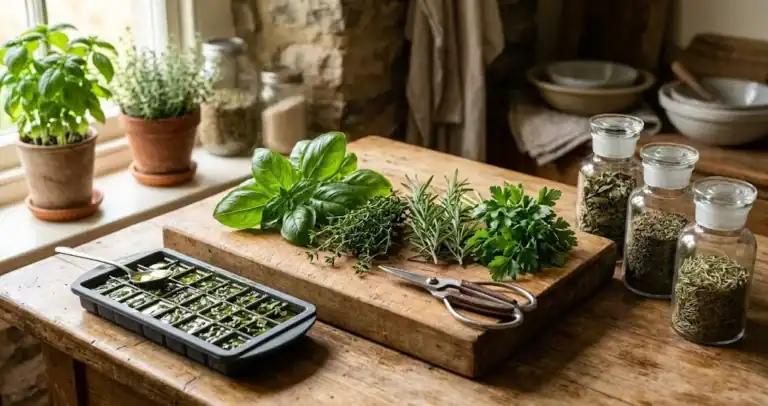
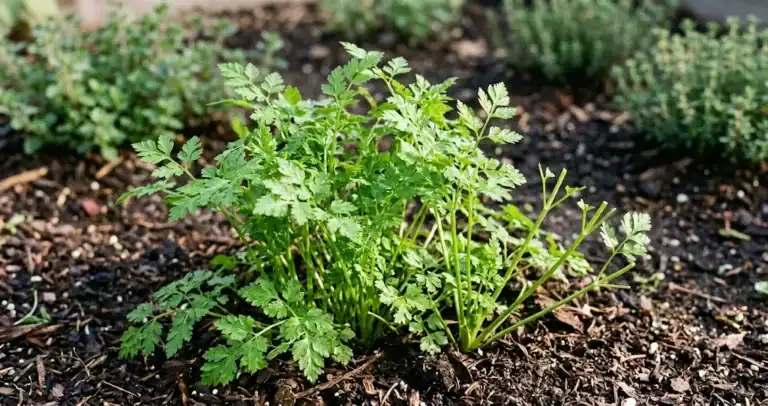
Because the sweetness can clash with delicate flavors, avoid pairing it with light plants like basil, chervil, or fresh mint. Stronger woody herbs such as thyme, rosemary, sage, and bay can handle it, especially in slow-cooked dishes. For a quick weeknight flavor lift, sauté sliced garlic in olive oil with toasted seeds and a pinch of chili, then toss with roasted vegetables or drizzle over flatbread.
Health benefits and safety considerations
This plant has a long history of use in traditional medicines, and modern research has begun to back up some of those uses. A review of clinical evidence on fenugreek and blood sugar, published by the National Library of Medicine, found modest support for its role in supporting healthy glucose levels when used as part of a balanced diet, though results vary. The same review noted traditional uses including digestive support and a long history of use during breastfeeding for lactation, areas where individual responses differ.
That said, this is a real plant with real effects. If you are pregnant, on diabetes medication, taking blood thinners, or have a hormone-sensitive condition, talk to a qualified healthcare professional before using concentrated supplement forms. People with peanut or chickpea allergies sometimes react to fenugreek, since it belongs to the same plant family. Whole seeds and leaves used in normal cooking amounts are generally safe, but concentrated extracts are not.
For a deeper overview of the evidence, see NIH Office of Dietary Supplements and Memorial Sloan Kettering’s Integrative Medicine monographs. If a symptom is severe, persistent, or unusual, seek medical care. Fenugreek can complement a healthy diet, but it does not replace medical treatment.
How to buy and store fenugreek
Buy whole seeds rather than pre-ground whenever you can. The whole seed keeps its character for years if stored properly, while ground product loses its scent within a few months. Look for plump, golden-amber seeds without cracks. You can buy them whole or ground, though whole seeds give you more flexibility and longer storage.
Store whole seeds in an airtight container in a cool, dark cupboard, away from the stove. Properly stored, they will keep for two to three years. Ground product is best used within six months. Fresh leaves keep for a few days in the refrigerator, wrapped loosely in a paper towel and stored in a bag. Dried leaves keep for a year in an airtight jar.
How fenugreek fits into a wider spice collection
If you are building a working spice rack at home, this seed is worth a small investment. It anchors the warmer, sweeter end of Indian and North African cooking in a way that cumin or coriander alone cannot. To get a feel for how spices work together across cuisines, take a look at a broader guide to common culinary herbs and how they differ.
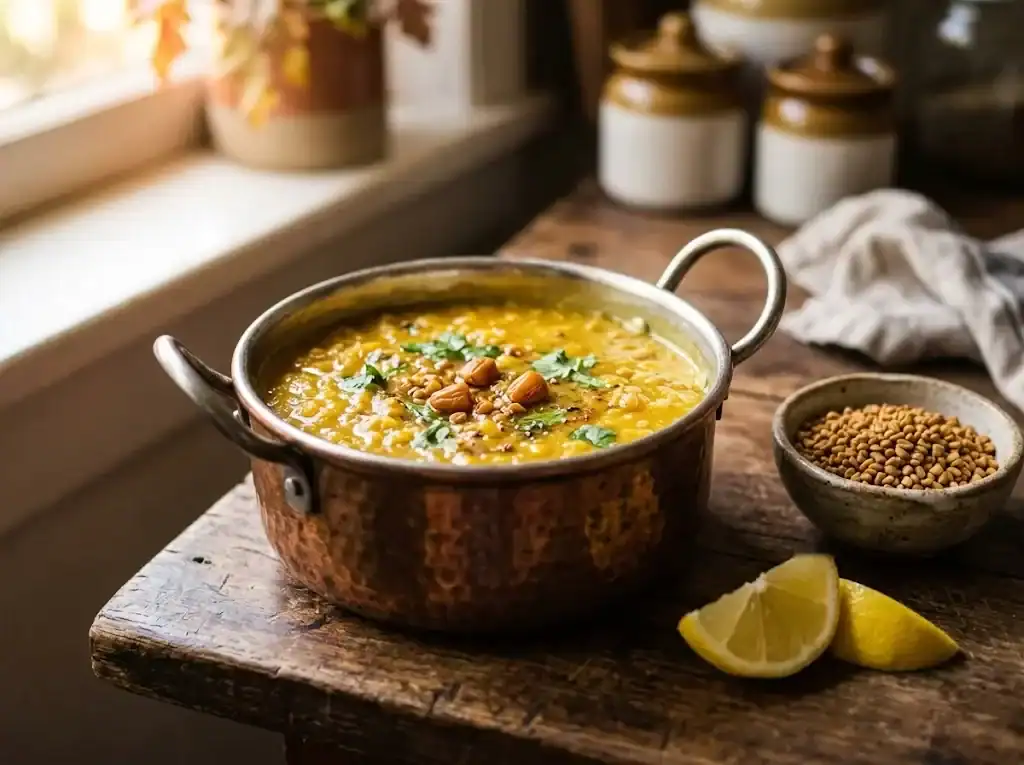
Start with one dish. Toast a teaspoon of seeds in oil with cumin and a slice of ginger, stir in cooked lentils, and finish with a squeeze of fresh lemon. That single pot shows you what fenugreek does, and once you taste it, the rest of the spice world opens up.
Quick answers
What is fenugreek used for in cooking? The seeds add a warm, sweet fragrance to dals, stews, pickles, spice mixes, flatbreads, and finishing rubs. The leaves are used fresh or dried, in different ways and at different stages of cooking.
Can you eat fenugreek raw? Raw seeds are hard and bitter, so they are not pleasant to eat on their own. Cook them, toast them, soak them, or grind them before adding to food. Fresh leaves can be eaten raw in small amounts, similar to other culinary greens.
Why does fenugreek smell sweet? The seed contains a compound called sotolone, the same aromatic molecule found in maple syrup and toasted bread. That is why the seeds often smell sweet when you toast them.
Is fenugreek safe for everyone? For most people, normal culinary amounts are safe. People who are pregnant, on medication for diabetes or blood thinning, or who have allergies to legumes should talk to a healthcare professional before using concentrated products.