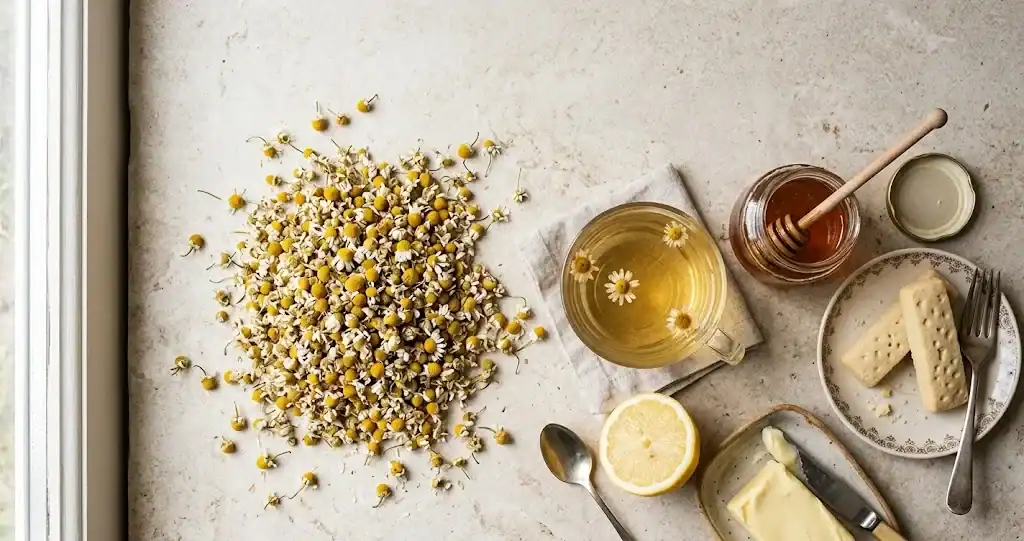
Crush a pinch of dried chamomile between your fingers and the scent gives the plant away: sweet, honeyed, and faintly like a bruised apple. That flavor is mostly wasted inside a paper teabag full of dust. Work with whole chamomile flower heads instead and one jar will give you a clean cup of tea, a floral honey syrup, poached pears, and shortbread with a soft apple note running through it.
Start with the cup, because every other recipe on this page is built on the same infusion.
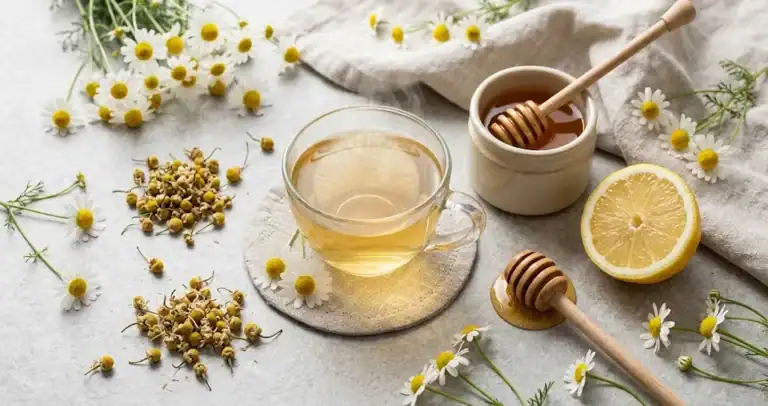
How to brew chamomile tea that tastes like the flower
Using chamomile well starts here. This is the recipe everything else is built on, and most people under-measure it.
- Use one heaping tablespoon of dried flower heads, roughly 2 to 3 grams, per 8-ounce cup.
- Heat water to just off the boil, around 200 F or 93 C. Furiously boiling water scalds the delicate top notes.
- Pour, then cover the cup or pot. Covering traps the volatile oils that would otherwise leave with the steam, and it is the single biggest improvement most people can make.
- Steep 5 minutes. Push much past 10 and the cup turns bitter and hay-like.
- Strain without pressing the flowers.
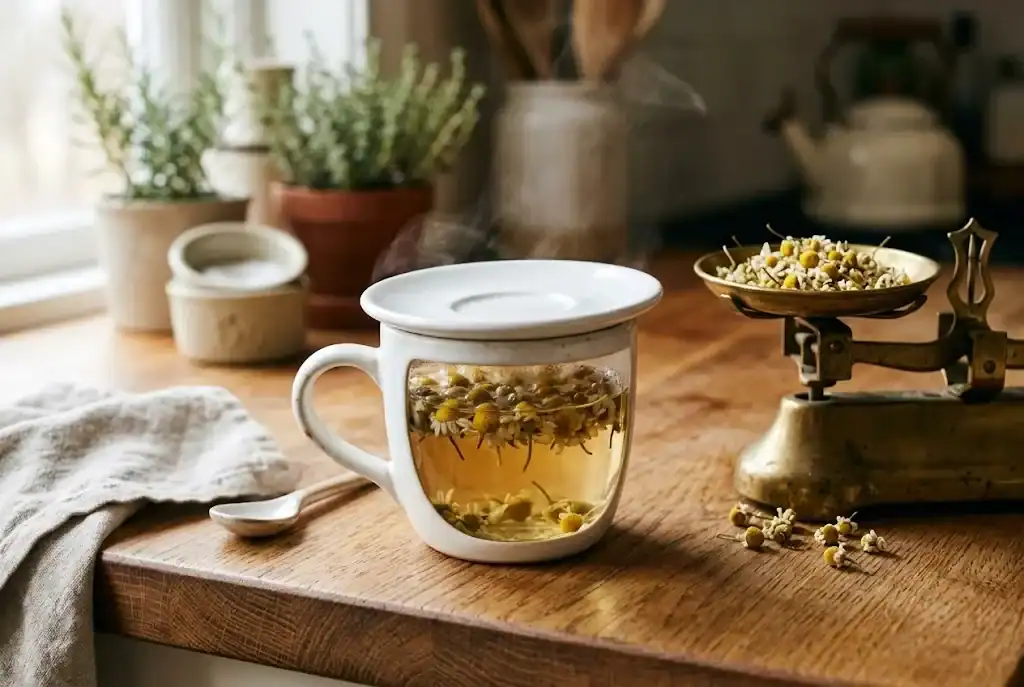
Serve it plain, or add a strip of lemon peel, a bruised mint sprig, or a spoon of honey once it has cooled a little. For iced herbal tea, brew it double strength and pour it straight over ice.
Which chamomile you should be cooking with
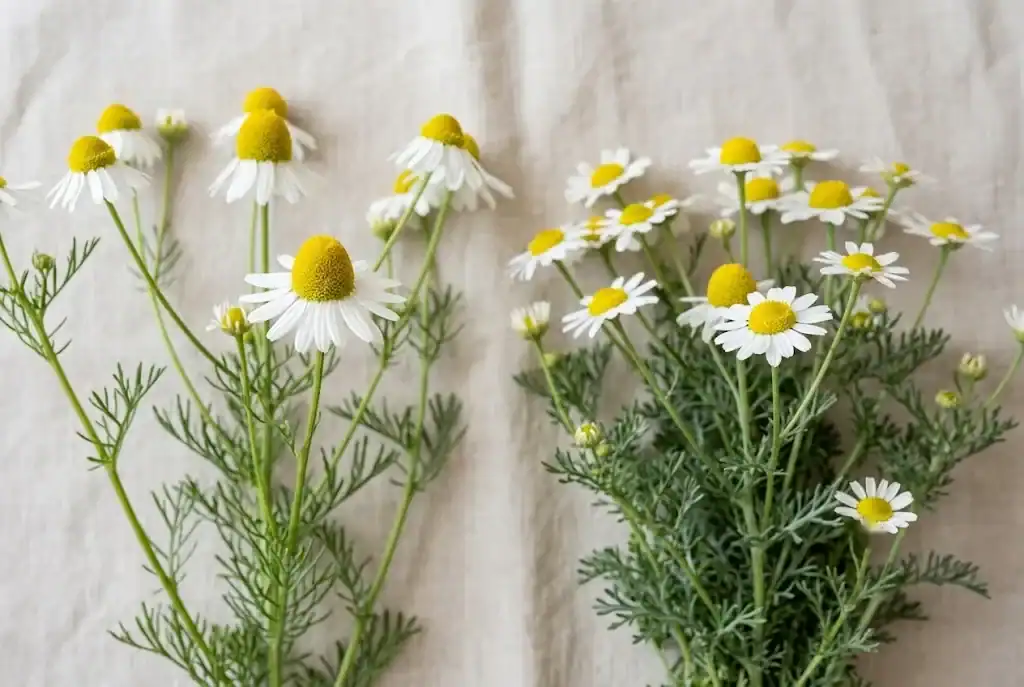
Two types of chamomile share the name: German chamomile and Roman chamomile. German chamomile, Matricaria chamomilla (older texts and seed packets say Matricaria recutita L.), is the annual grown for tea. Chamaemelum nobile, the Roman kind, is a low-growing perennial with a more bitter taste, so it turns up less often in a cup. Both belong to Asteraceae, the daisy family, and both are native to Europe. The two are not interchangeable in the kitchen, and most published trials have looked at the effect of German chamomile rather than the Roman kind.
Look at the flower heads to check what you have. The chamomile plant carries a domed golden center ringed by 10 to 25 white ray florets, with a strong apple-like fragrance, and the University of Wisconsin-Madison Division of Extension notes that it is easily confused with species of Anthemis, some of which are poisonous. That is a good reason to buy culinary-grade flowers from a food supplier, or to grow and identify your own rather than picking a roadside look-alike. Calendula, sold as pot marigold, is sometimes shelved beside it and tastes nothing like it.
The potential health benefits of chamomile, and what the evidence shows
Chamomile contains terpenoids and flavonoid compounds, and those chemical constituents carry most of its pharmacological interest, according to a 2010 review in Molecular Medicine Reports. The flavonoids in chamomile include apigenin. Laboratory work has also measured antioxidant effects in the flower, which is test-tube chemistry rather than a benefit you can count on from a mug. Chamomile has long been used in herbal medicine, going back at least to ancient Egypt, and the traditional use of chamomile covers everything from an upset stomach to the common cold, sore skin, and poor sleep.
Modern testing gives a more modest picture. The National Center for Complementary and Integrative Health (NCCIH), part of the NIH, states that studies of the effectiveness of chamomile for specific conditions “have not produced sufficient reliable evidence to rate clinical usefulness.” A 2019 review in Phytotherapy Research examined the efficacy and safety of the herb across 12 pooled trials and found that chamomile did improve sleep quality and reduced symptoms of generalized anxiety disorder at two and four weeks. The one trial that measured chronic sleeplessness and insomnia severity found no significant change, and state anxiety showed no clear benefit. In a 2016 randomized clinical trial in Phytomedicine, people who had responded to 1,500 mg of chamomile extract a day, taken as a dietary supplement, held on to lower anxiety symptoms over 26 more weeks, though continuing the capsules did not significantly reduce relapse compared with placebo.
Read those numbers before you read the marketing. The trials used standardized extract at doses far above what steeping a spoonful of flowers delivers, so the beneficial effects they report belong to capsules rather than to the cup of chamomile tea in front of you. Chamomile may help you settle at the end of the day, and plenty of people find that an infusion does exactly that, but chamomile’s calming effects are those of a pleasant drink with a long reputation as a mild sedative rather than a treatment for anything. It does not detox, cure, or replace care you already need.
Safety notes worth reading before you brew
Chamomile is likely safe in the amounts commonly found in teas, and the Food and Drug Administration lists chamomile among the natural flavoring substances generally recognized as safe for use in food. Side effects are uncommon. The exceptions still matter.
- Allergy. People who are allergic to related plants such as ragweed, chrysanthemums, marigolds, or daisies are more likely to react. Reported allergic reactions include severe hypersensitivity and anaphylaxis. If ragweed sets off your hay fever, treat a first cup carefully and stop at any swelling, hives, or trouble breathing.
- Blood thinners and liver-metabolized drugs. Interactions between chamomile and warfarin, an anticoagulant, and with some drugs processed by the liver, have been reported. Ask your pharmacist about a drug interaction before making a daily habit of it, and never adjust a prescribed medication on your own.
- Pregnancy and breastfeeding. Little is known about whether the herb is safe then, so pregnant women and anyone nursing should check with their clinician first.
- Babies and young children. Chamomile is used widely for colic, and that popularity is not evidence. Ask a pediatrician before giving it to an infant. Honey is a separate rule: never give honey, or anything made with it such as the syrup below, to a child under one year old.
- Chamomile oil. Chamomile essential oil belongs in cosmetics and aromatherapy, not in a saucepan. Cook with the flower, never the oil.
The allergy, medication, pregnancy, and infant cautions come from NCCIH. If sleep problems, anxiety, or stomach pain are persistent, severe, or getting worse, that is a conversation for a doctor rather than an herbal tea.
Where to get flowers worth cooking with
Buy whole dried heads, loose, sold for food or tea use. The one you want is the German kind, sold on some packets as Hungarian chamomile, wild chamomile, or true chamomile. Named varieties of chamomile such as Bodegold are bred for oil content, but any culinary-grade German flower will do. Tip some into your hand: you want recognizable little daisies with their yellow cones intact, not brown powder. Good chamomile smells sweet and applelike through the bag. Organic chamomile flowers are widely sold loose and are worth seeking out if you plan on consuming chamomile daily. Herbal products vary a lot in quality, so a supplier that dates its harvest is worth paying for.

Growing your own is easy and gives you fresh flowers, which taste lighter and greener than dried. Pick the heads when they are near full bloom and snip just the flower, leaving the stem. Timing changes the flavor more than people expect, and there is a full walkthrough of picking chamomile at the right stage if you want to get it right the first season. As a rough substitution rule, use about three times the volume of fresh flowers in place of dried.
Chamomile honey syrup
The most useful thing on this page. Make it once and it flavors drinks, fruit, and cream for two weeks.
Warm 1 cup water with 3/4 cup honey until it dissolves, then take it off the heat and stir in 1/4 cup dried flowers. Cover and steep 20 minutes, strain through a fine sieve, and refrigerate in a clean jar for up to two weeks.

Use it in lemonade, over grapefruit segments, whisked into softly whipped cream, brushed onto warm cake layers, or shaken with lemon juice and ice for a long soft drink.
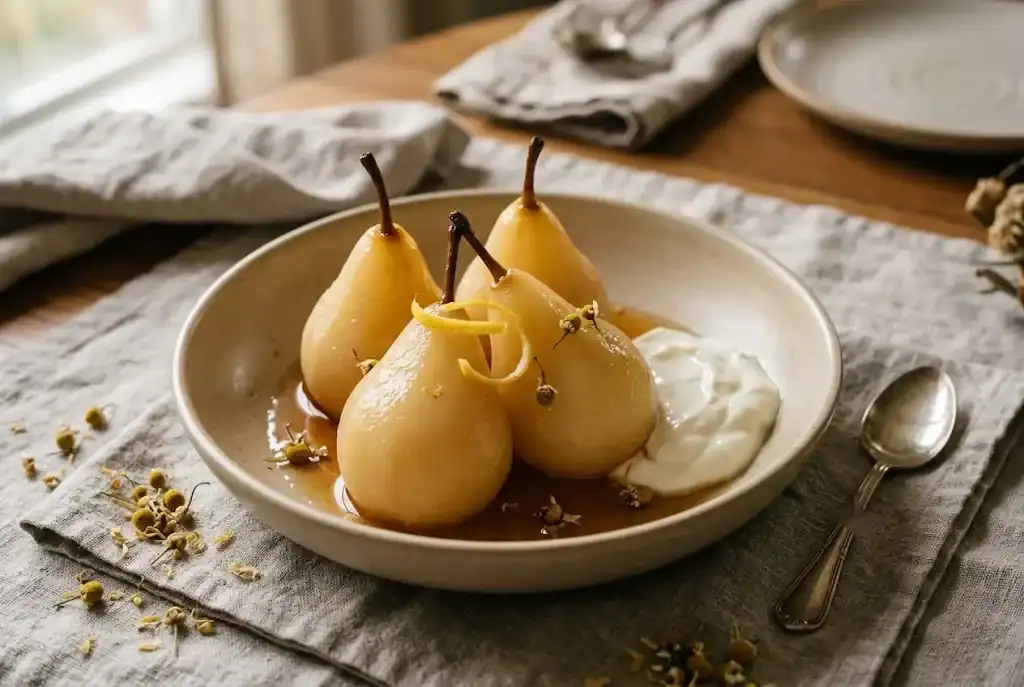
Chamomile poached pears
Firm pears and a floral syrup are a natural pair, and the dessert holds for days in the fridge.
- Peel 4 firm pears, such as Bosc or Anjou, leaving the stems on.
- Bring 4 cups water and 1/2 cup sugar to a simmer with a wide strip of lemon zest.
- Add 3 tablespoons of dried flowers in a tea ball or muslin bag, so the petals do not stick to the fruit.
- Slide the pears in, cover, and hold at a bare simmer for 15 to 25 minutes, until a knife meets no resistance at the neck. Turn the pears once, or lay a round of parchment on top, so they cook evenly.
- Cool the pears in the liquid, then lift out the pears and the flower bag, then boil the syrup down by half to glaze them.
Serve warm or chilled with thick yogurt, mascarpone, or a plain almond cake.
Chamomile shortbread
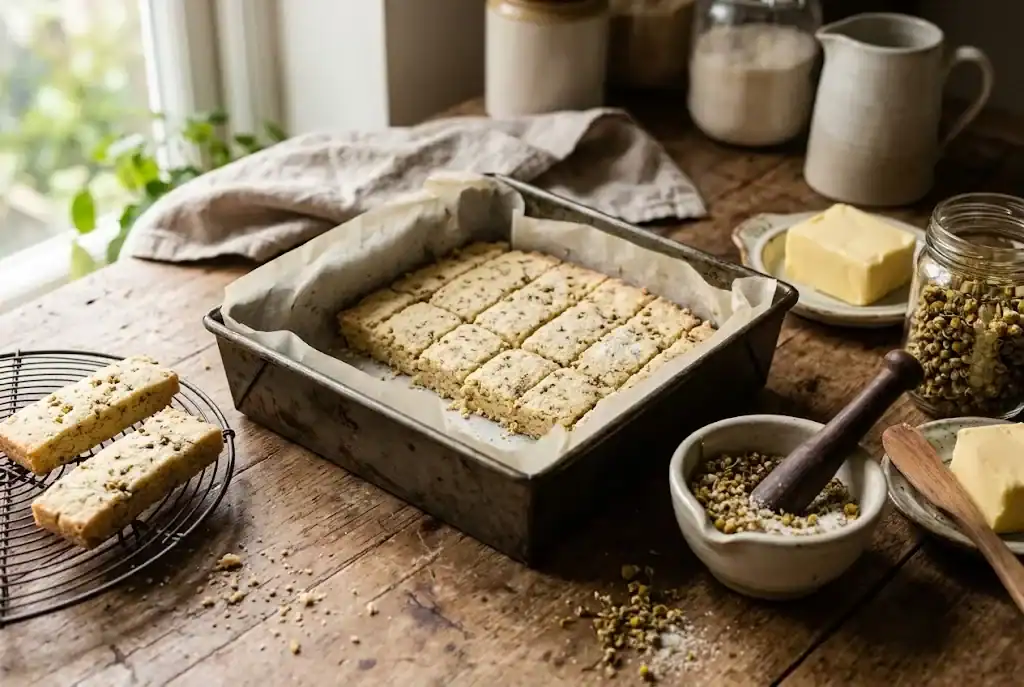
Grinding the flowers is the trick here. Whole petals in a cookie read as hay. Ground fine, they taste of apple and honey.
- Blitz 2 tablespoons dried flowers with 1/2 cup sugar in a spice grinder, or work them together in a mortar.
- Beat that sugar into 1 cup (226 g) softened butter until pale.
- Fold in 2 cups (250 g) all-purpose flour and 1/2 teaspoon fine salt, and bring the dough together by hand.
- Press into a lined 8-inch pan, or roll and cut, then chill 30 minutes.
- Bake at 325 F (165 C): 35 to 45 minutes for the pan, 18 to 22 minutes for cut cookies, until the edges are pale gold. Score the pan version into fingers while warm.
Three more ways to use the same jar
- Infused milk. Warm 1 cup milk with 1 tablespoon flowers, steep 10 minutes off the heat, strain, and froth it for a bedtime latte. It also makes a good base for rice pudding.
- Panna cotta or ice cream. Steep 2 tablespoons flowers in the hot cream before adding gelatin or making a custard, then strain.
- A gentler vinaigrette. Whisk a teaspoon of the honey syrup into lemon juice, mustard, and olive oil for a dressing that suits shaved fennel or peaches.
Keeping the flavor in the jar
Dried chamomile holds its aroma for about a year in an airtight container, away from light and heat. Store the heads whole and crush them as you go, because broken flowers fade much faster. Fresh-picked heads are the fragile ones and wilt within a day or two, so use them quickly or read up on the best way to store fresh chamomile before your first big harvest.
Common questions about cooking with chamomile
Is chamomile tea safe to drink every day?
For most people, yes. Chamomile is likely safe in the amounts commonly found in teas, and side effects such as nausea, dizziness, and allergic reactions are uncommon. The people who should check first are those taking blood thinners or other medicines processed by the liver, anyone pregnant or breastfeeding, and anyone allergic to ragweed, marigolds, chrysanthemums, or daisies.
Does chamomile actually make you sleepy?
It may help you sleep a little better rather than knocking you out. The 2019 review found better sleep scores across the pooled trials, while the single study that measured insomnia severity found no significant change. Treat drinking chamomile tea as a wind-down ritual with a mild effect, not a sleeping pill.
Can you cook with fresh chamomile flowers?
Yes, and they are lovely in syrup and infused cream. Fresh heads taste lighter, so use roughly three times the volume you would use of dried, and pick only clean, unsprayed flowers you have identified with confidence.
Does baking destroy the potential benefits?
Baking drives off some of the aromatic oils, which is why ground flowers work better than whole ones in shortbread. Any effects measured in trials came from concentrated extracts rather than cookies, so treat baked chamomile as a flavor, not a supplement.
Start with the syrup
If you make one thing from this page, make the honey syrup. It uses the same flowers as your evening cup, keeps for two weeks, and turns fruit, cream, and cold drinks floral with no extra work. Then plant a row of German chamomile in spring and taste the difference fresh flowers make.
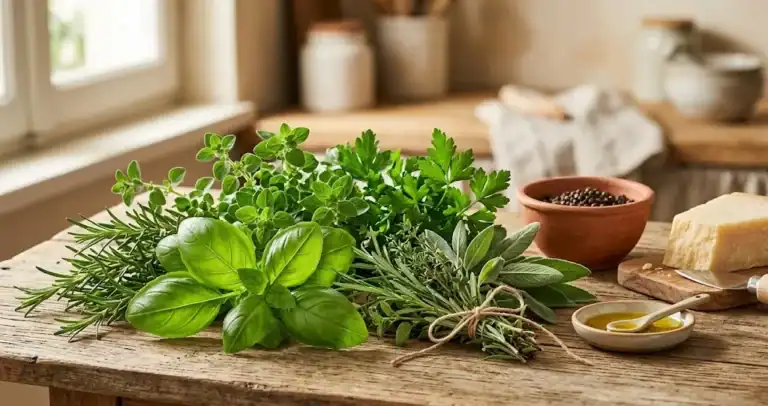
If you are building a cooking shelf from scratch, this overview of herbs worth cooking with is a sensible next stop.
Sources
- National Institutes of Health, Chamomile.
- Hieu TH and colleagues, systematic review and meta-analysis of chamomile trials, Phytotherapy Research, 2019;33:1604-1615, doi:10.1002/ptr.6349.
- Mao JJ and colleagues, “Long-term chamomile (Matricaria chamomilla L.) treatment for generalized anxiety disorder: a randomized clinical trial,” Phytomedicine, 2016;23:1735-1742.
- Srivastava JK, Shankar E, Gupta S, “Chamomile: a herbal medicine of the past with bright future,” Molecular Medicine Reports, 2010;3:895-901.
- University of Wisconsin-Madison Division of Extension, Chamomile, Matricaria chamomilla.
- FDA, 21 CFR 182.20, essential oils, oleoresins, and natural extractives generally recognized as safe.