A windowsill of fresh herbs is one of the most satisfying things you can keep in a small apartment, because the plants repay even modest care with fresh flavor in your cooking and a small bit of green in the room. The catch is that apartment conditions are different from a backyard setup, and most of the indoor failures come down to a few predictable problems: not enough light, containers without drainage, and watering on a calendar instead of when the plant actually needs it. This guide walks through how to set up a productive setup that lasts, including which herbs are easiest, how to read your light, what to put them in, and how to keep them alive once the initial enthusiasm wears off.
What an apartment herb garden actually needs
Most culinary herbs come from Mediterranean climates, where they grow in lean, well-drained soil under strong sun. The job indoors is to imitate just enough of those conditions to keep the plants productive. You are not recreating a greenhouse. You are giving each plant light, a pot that drains, water before the soil goes bone dry, and the occasional trim so it does not grow leggy and weak. Done well, a single south-facing window and three or four small pots can supply fresh flavor for most of the year.
Before you pick herbs, take a minute to look honestly at the light your apartment gives you. If you have one bright window where direct sun lands for at least 6 hours a day, you can grow almost any culinary herb on the sill. If the best you have is a north-facing window with indirect light all day, your list shrinks to the shade-tolerant few, and you will probably want to supplement with a lamp to keep them productive through winter. A short note on what it means to live in an apartment without a yard: the rooms you have are the rooms you work with, and a single bright sill will outperform any amount of wishful thinking.
If you are starting an indoor setup for the first time, it is worth understanding how the pieces fit together. A new collection of potted herbs needs light, containers that drain, the right soil, and a watering habit you can keep. The broader framework of planning a small indoor planting is laid out in the beginner’s guide to growing an herb garden, which covers the same fundamentals in more detail if you want to go deeper.
Pick the right herbs for indoor life
The easiest herbs to grow indoors are the ones that handle a pot well and do not need all-day sun to keep producing leaves. Start with two or three of these rather than trying to grow everything at once. A small collection you can actually keep alive will outperform a sprawling windowsill of struggling plants.
- Chives. Tolerant, productive, and forgiving of missed waterings. Cut a few stalks with scissors and they regrow within a week.
- Oregano. A Mediterranean herb that likes a leaner soil and bright sun. Trim often and it stays bushy rather than woody.
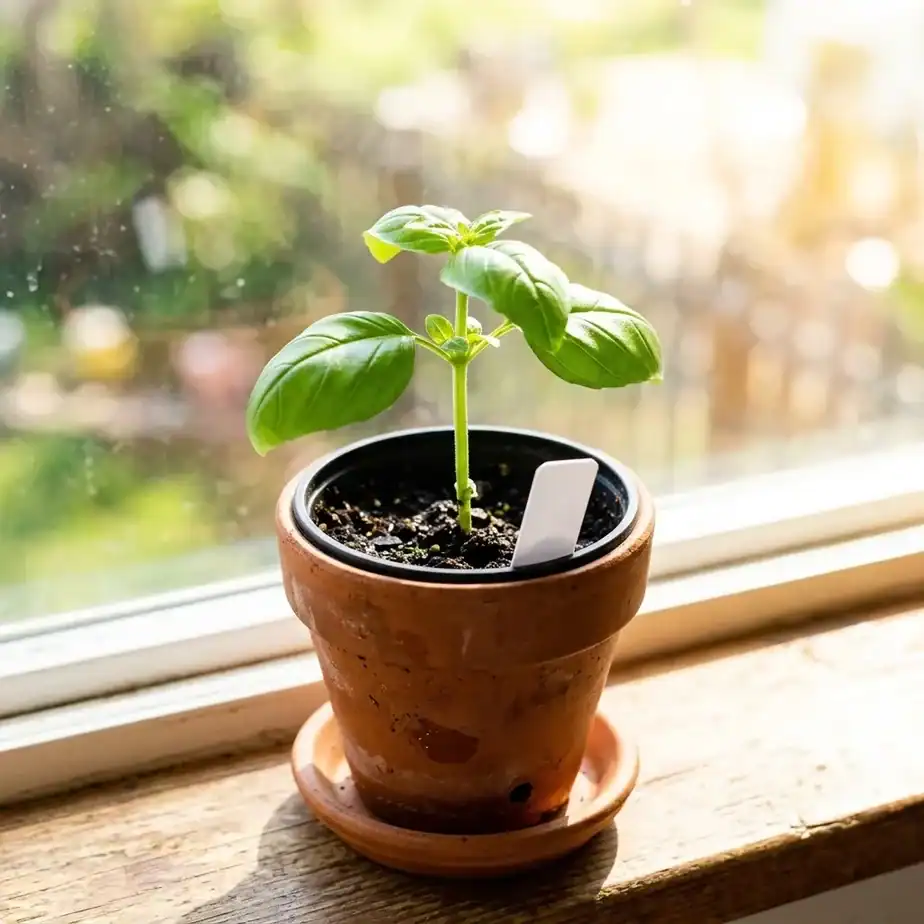
- Basil. The most wanted kitchen herb and the most demanding. It wants warmth, lots of light, and steady water. Treat it as a short-season plant and replant when it fades.
- Mint. Almost impossible to kill, and worth keeping in its own container because mint spreads and will take over a shared one.
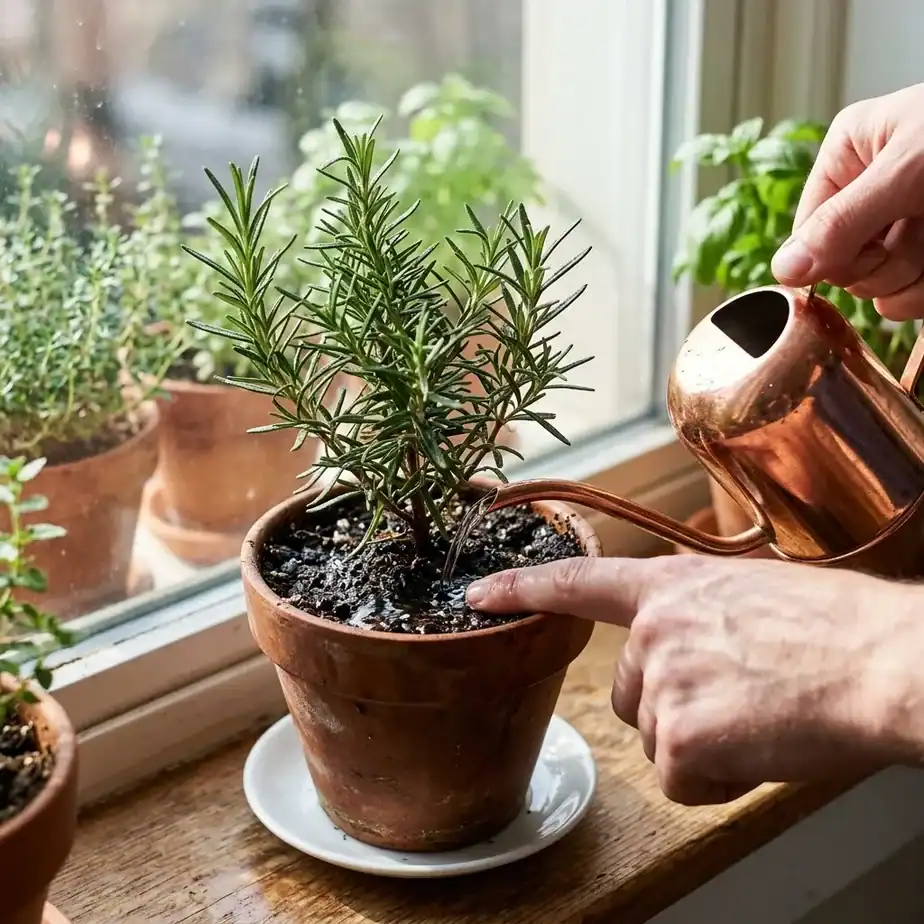
- Rosemary. Fragrant and useful, but rosemary indoors depends on bright light, careful watering, and some airflow around the pot. If you have a cool, sunny window it can thrive; if not, plan to replace it more often than other herbs.
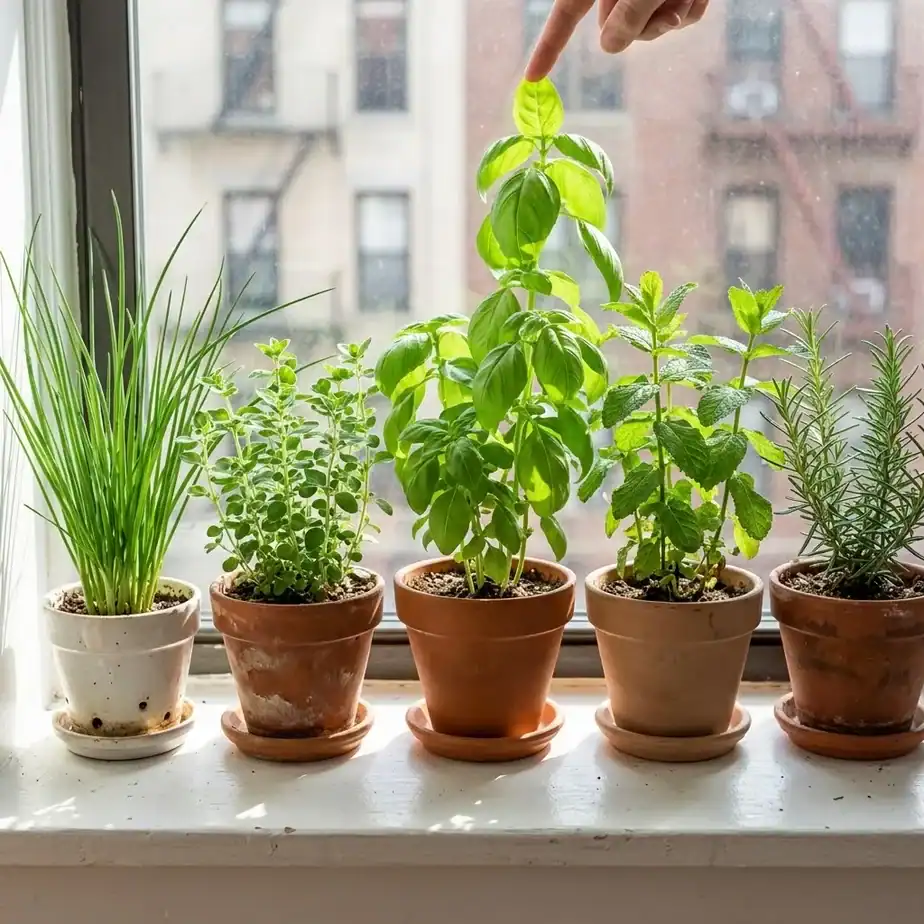
For a windowsill, three or four small pots is plenty. Pick the herbs you actually cook with. A single pot that you use twice a week is more valuable than a row of something you never touch.
Read your light before you buy anything
The single most common reason potted herbs fail indoors is light. Most culinary herbs want a long stretch of direct sun, and a north-facing window in winter will not provide that. South-facing and west-facing windows are the workhorses of apartment growing in the Northern Hemisphere; east-facing windows give a gentler morning sun that is enough for mint and chives but marginal for the Mediterranean family.
To size up a window, watch where the sun lands through the day. If direct sunlight hits the sill for most of the day, you have a full-sun spot. If the sun skims across for two hours in the morning and the rest of the day is bright but indirect, that is a part-sun spot, good for the leafy herbs but slow for Mediterranean ones. If the window is bright but never sees direct sun, plan on supplementing with a lamp during the darker months.
Natural light from a sunny window is ideal, but a small full-spectrum bulb on a clip-on stand is the easiest way to fill a gap when natural light falls short. Position it a few inches above the tops of the plants and run it for 12 to 14 hours a day during winter. Plants under supplemental lighting indoors can match the productivity of a sunny windowsill, especially for herbs that want steady light to keep producing leaves.
Containers, soil, and drainage that work indoors
The most important rule for indoor containers is drainage. Overwatering is the more common indoor failure, but a small pot can also dry out fast enough to stress or kill a plant in a hot room. Every container you use should have holes in the bottom, and every container should sit on a saucer so the runoff does not stain the sill.
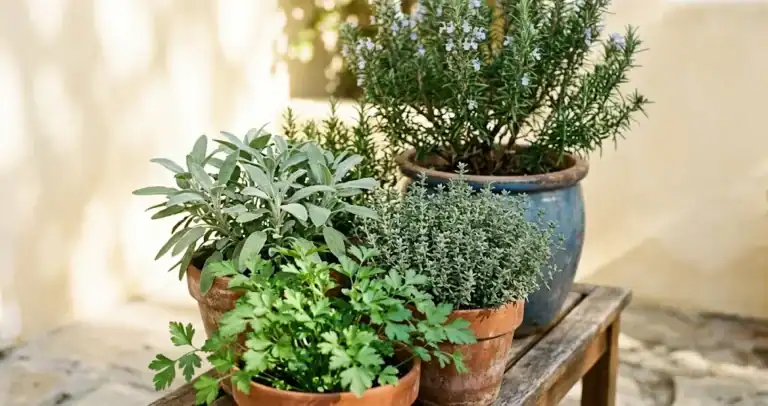
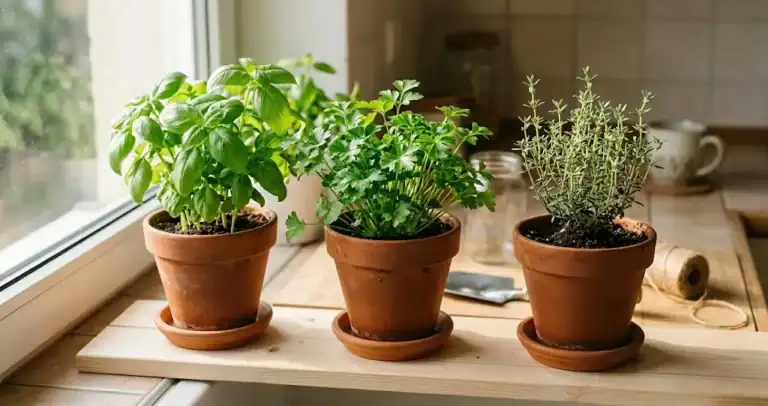
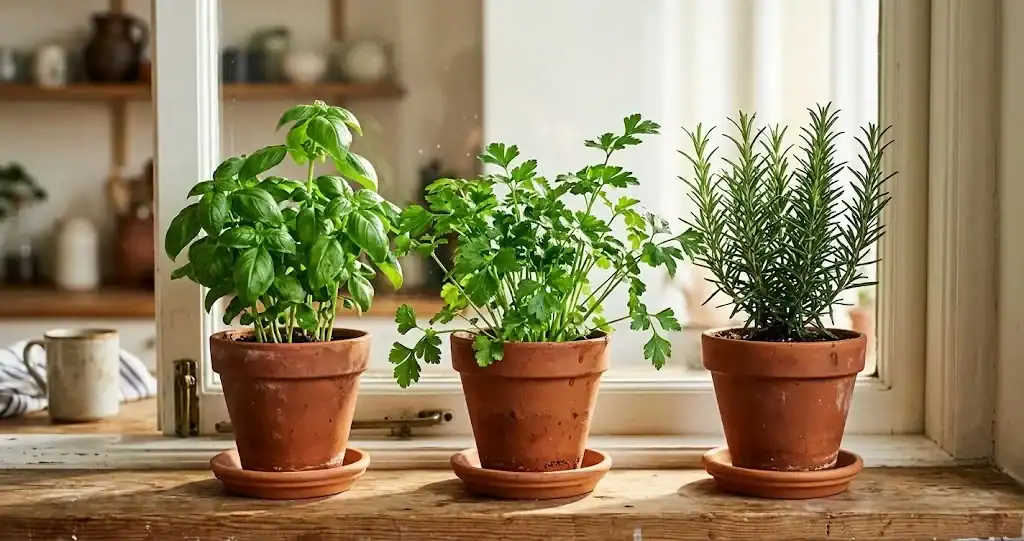
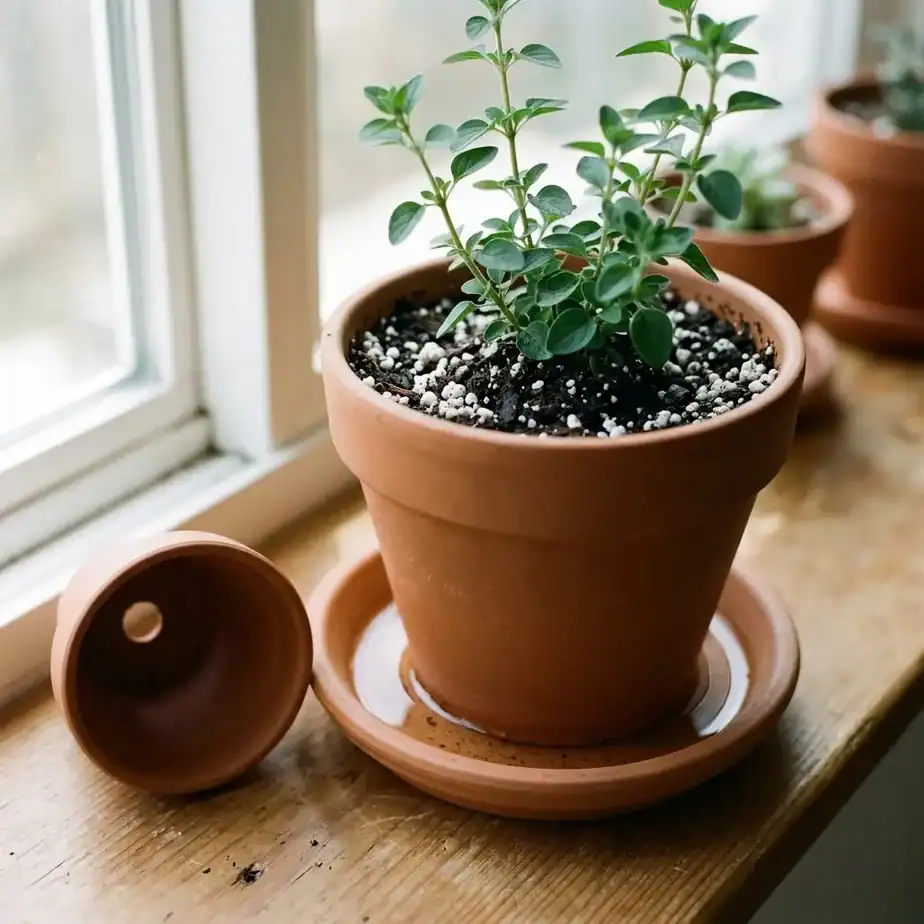
Terracotta pots are the default for a reason. Terracotta is porous and breathable, so the soil dries more evenly and the roots are less likely to rot. A six- to eight-inch terracotta pot is plenty for a single chive plant. Smaller terra-cotta pots also dry faster, which suits Mediterranean herbs that prefer soil on the drier side.
For potting mix, use a general indoor mix rather than outdoor soil. Outdoor soil compacts in pots and stays too wet. A standard potting mix amended with a little perlite gives good drainage and the airy structure that herb roots want. If you want one mix that works for everything, two parts potting mix to one part perlite is a safe starting point. Pre-blended herb or vegetable mixes work too.
If you want to grow vertically and reclaim floor space, a vertical garden on a sunny wall is a real option in an apartment. Wall-mounted pocket planters, a small tiered shelf in front of a window, or a freestanding vertical planter all work. Vertical setups dry faster than pots on a sill because of the air circulation around them, so plan on checking moisture more often.
Watering without overwatering
The rule that saves more potted herbs than any other is simple: water when the soil is dry an inch below the surface, not on a fixed schedule. Stick a finger into the pot. If the top inch is dry, water thoroughly until it runs out of the drainage holes, then empty the saucer so the pot is not sitting in standing water. If the inch is damp, leave the plant alone.
Most potted herbs need water roughly every three to five days in summer and every seven to ten days in winter. That is a rough guide, not a schedule. Apartment conditions vary too much for fixed watering days. A small pot in a hot, dry living room will dry out faster than a larger pot in a cool kitchen. The finger test is faster and more accurate than any app or chart.
A few specific herbs want different handling. The Mediterranean family prefers to dry out a bit between waterings. Basil wants steady moisture and will droop dramatically when it needs water. Chives and mint tolerate a wide range and recover quickly from a missed watering. Once you have watered a plant a few times you learn its rhythm and stop guessing.
Heat, humidity, and air that dry plants out
Apartment heating in winter is the second-biggest killer of potted herbs after bad light. A pot on a windowsill above a hot radiator can cook its roots in a day, and a planter across the room from a drafty window can chill below the comfort range for Mediterranean herbs. Aim for daytime temperatures around 65 to 75 F and nighttime temperatures above 55 F. Most culinary herbs tolerate normal indoor temperatures but sulk in cold drafts or hot, dry air right next to a heat source.
Humidity matters less than people think, but it matters. Rosemary in particular rewards bright light and steady airflow around the pot more than extra humidity, and it often struggles when a warm room sits still through the heating season. Grouping pots together raises local humidity a little, and a small tray of pebbles with water under the pots adds more without soaking the roots. Misting does almost nothing for humidity and is not worth the routine.
If your apartment runs very dry in winter and the leaves are browning at the tips, that is the signal to look at humidity and at how close the pots sit to a heater. Move them a few feet back from the heat source, group them together, and trim the damaged tips. New growth will come in better adapted.
Start with plants or grow kits, not seeds
For a first apartment herb garden, starter plants from a nursery or a grow kit give you a much better chance of success than a packet of seeds. Indoor seed-starting is finicky: the seedlings need very bright light from the day they emerge, and most apartment windowsills are not bright enough to keep them from getting leggy. A four-inch starter plant already has a root system and a head start, and you can be harvesting within a couple of weeks.
That said, seeds are worth using for herbs you want in volume, like basil and cilantro, where a packet of seed costs less than a single starter plant. If you start seeds indoors, use a seed-starting mix, keep them under a lamp or in your sunniest window, and transplant them into their permanent pots once they have two sets of true leaves. Cilantro especially prefers to be direct-sown where it will grow, because it does not transplant well. If you want to grow herbs indoors from scratch, plan on a small light from day one.
For herbs that you use heavily, plant a second pot a few weeks after the first. Staggered plantings keep a steady supply: one pot is being harvested, the other is regrowing. This is the simplest way to keep the harvest going all summer without a gap.
Pruning and harvesting so plants keep producing
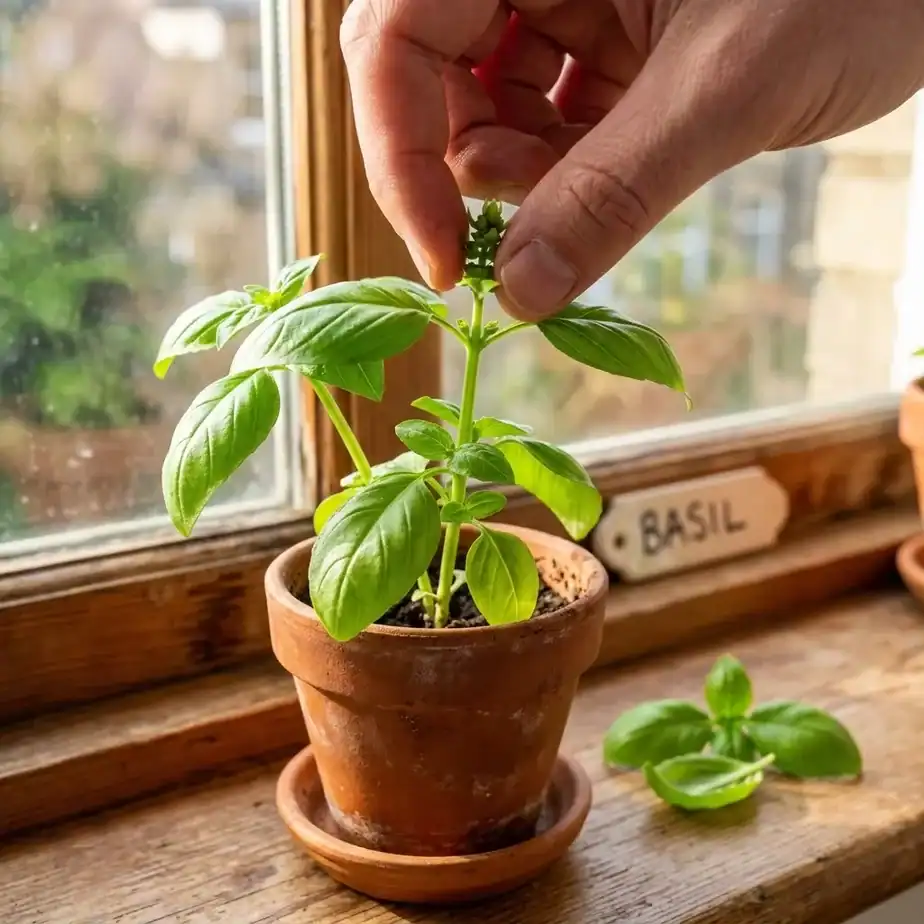
The most common indoor herb mistake is not pruning enough. A plant that grows tall and leggy with a few leaves at the top is a plant that has stopped producing. The fix is to pinch the growing tips regularly, just above a pair of leaves, and the plant branches out from there. The same trick works for mint and thyme.
When you harvest, take from the outer stems first and leave the inner ones to keep growing. Cut just above a leaf node, and the plant sends out new shoots from below the cut. Prune the outer growth regularly rather than stripping one stem bare. A well-pruned herb is a bushy, productive herb; an unpruned herb is a tall, sparse one.
For basil especially, do not let it flower. Once the plant sends up a flower stalk, the leaves get smaller and the plant puts its energy into seed. Pinch the flower stalk off at the first leaf joint below it as soon as you see it forming. The plant will redirect that energy back into leaves.
Common problems and quick fixes
Yellowing leaves usually mean overwatering. The soil stays wet, the roots suffocate, and the leaves go pale and limp. Stop watering until the pot dries out an inch down, and check that the drainage holes are not clogged. If the plant is severely yellowed, repot into fresh dry mix and trim any mushy roots.
Leggy, stretched-out growth means not enough light. The plant is reaching for the sun and putting distance between leaf pairs. Move it closer to the window or add a lamp. Once you fix the light, pinch the leggy stems back to a leaf joint and the new growth will come in compact.
White fuzzy patches on the leaves are usually powdery mildew, which shows up when the air is humid and the leaves stay wet. Improve air circulation around the plants, water at the base rather than over the top, and remove the worst affected leaves. A spray of diluted potassium bicarbonate can help if it keeps coming back.
Small flies around the pots are fungus gnats, which breed in constantly damp soil. Let the surface dry out between waterings, top-dress the pot with a thin layer of sand or fine gravel, and the gnats fade within a couple of weeks. Sticky traps catch the adults.
A single aphid or two on a leaf is not a crisis, but a few soft-bodied pest insects can multiply fast on a windowsill. A firm spray of water in the kitchen sink knocks them off, and a weekly check under the leaves keeps the colony small before it spreads. Quarantine any new plant for a week before setting it next to your established herbs so you do not import a fresh infestation.
For day-to-day troubleshooting beyond the basics, helpful tips for nurturing herb gardens covers the recurring problems you will run into once the first year is behind you.
Frequently asked questions
What are the easiest herbs to grow in an apartment? Chives and mint are the most forgiving for beginners. They tolerate a missed watering, do not need the very brightest window, and keep producing through imperfect care. Oregano is also beginner-friendly, but unlike the leafy herbs it wants a bright, sunny position to thrive indoors. Basil is the herb most people want most and the one that needs the most light and steady warmth, so treat it as a stretch goal rather than a starter.
How much light do apartment herbs actually need? Most culinary herbs want a long stretch of direct sunlight a day, or 12 to 14 hours under a full-spectrum lamp. Leafy herbs like mint and chives will tolerate bright indirect light with four hours of direct sun. Mediterranean herbs want full sun and sulk without it.
Can I grow herbs in an apartment without a balcony or yard? Yes. A sunny windowsill, a grow light, or a vertical planter on a wall all work without any outdoor space. The constraint indoors is light and drainage, not square footage, and a single bright window is enough for a useful herb garden.
What kind of soil should I use for apartment herbs? A standard indoor potting mix amended with perlite for drainage is the safe default. Avoid outdoor soil, which compacts in pots and stays too wet. For Mediterranean herbs that like drier conditions, add a little extra perlite or coarse sand to the mix.
How often should I water herbs in an apartment? Water when the top inch of soil is dry, not on a fixed schedule. Most indoor herbs need water every three to five days in summer and every seven to ten days in winter. The exact interval depends on pot size, light, and temperature in your apartment.
Do indoor herbs need fertilizer? Lightly. A half-strength balanced liquid fertilizer once a month during the growing season is plenty. Overfertilizing pushes soft, leggy growth that is more susceptible to pests and produces less flavorful leaves.
Once you have a small herb garden established, the day-to-day rhythm becomes simple. Water when the soil is dry, pinch back the growing tips once a week, rotate the pots so the plants do not lean toward the window, and replace the herbs that fade rather than nursing a struggling plant past its natural end. A small, healthy indoor herb garden in an apartment is one of the few kitchen luxuries that gets easier with time, and the plants you grow today will be the ones you reach for the next time a recipe calls for fresh parsley or thyme.
For a wider look at the conditions and adjustments that come up across a longer season, things to keep in mind when cultivating herbs is a useful next read.