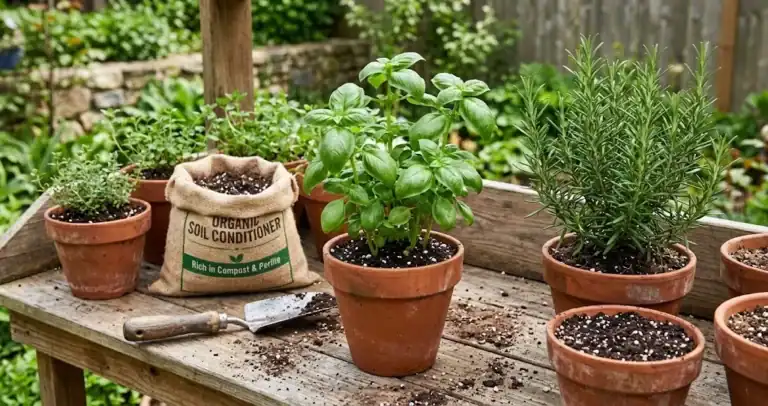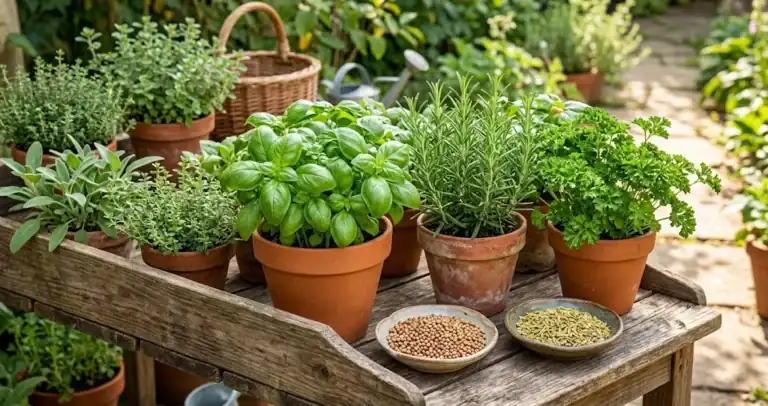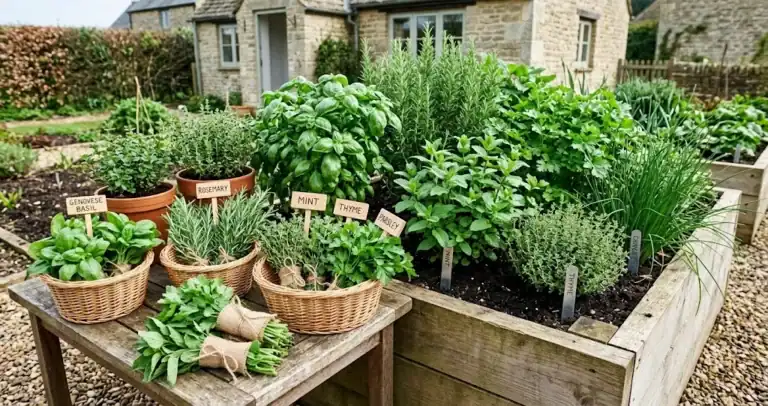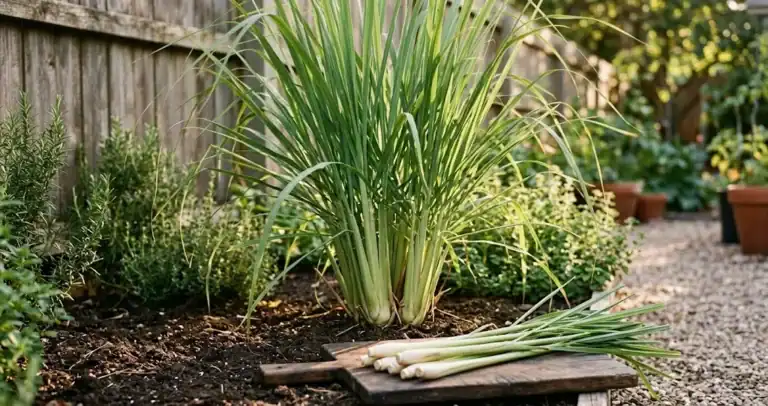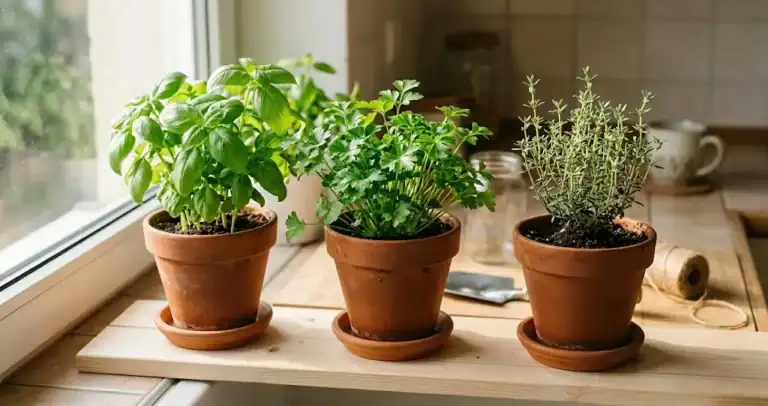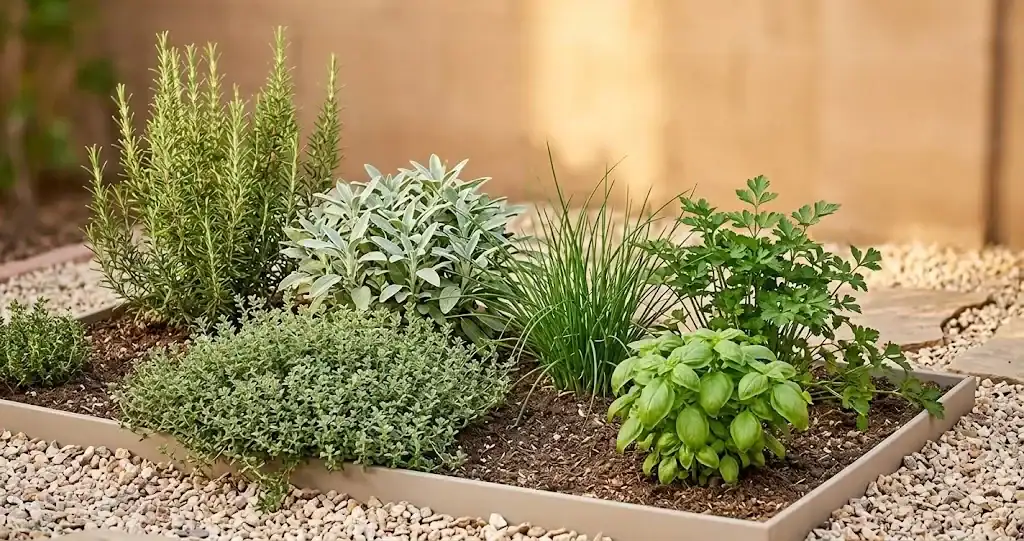
The fastest way to build an herb garden you will actually use is to plant what you already reach for in the kitchen. A handful of basil, parsley, chives, thyme, rosemary, and mint covers most weeknight cooking, and every one of them is forgiving for a beginner. From there, you can add the herbs that fit your climate, your soil, and the amount of sun you have, instead of fighting plants that were never going to settle in.
Choosing what to plant in a home herb garden is mostly three questions: what do you cook with, how much sun does the spot get, and how much room do you want to give up. This guide walks through the easiest herbs for a first garden, the difference between Mediterranean sun lovers and shade tolerant leafy herbs, which plants come back every year, and which need resowing. It ends with a short planting plan for a small garden and the basics of caring for the herbs once they are in the ground.
Start with the herbs you already cook with
The first cut is the easiest. Walk through your kitchen for a week and notice which fresh herbs you actually buy. Most home cooks come back to the same four or five. If your weeknight pasta is finished with a handful of torn basil, it belongs in the garden. If you roast chicken with lemon and rosemary, that belongs too. If you top everything from eggs to soup with chopped chives, those belong as well.
Planting for what you actually cook with keeps the garden working for you. An herb you will not reach for is a chore to look after and a wasted pot on the patio. An herb you reach for twice a week will get used, watered, harvested, and resown, and the garden earns its keep.
Beyond the everyday staples, add the herbs that match your climate and your cooking style. Cilantro for tacos and Vietnamese pho, dill for fish and pickling, tarragon for French sauces, fennel for Italian roasts and salads, summer savory for beans, marjoram alongside oregano, or chamomile for tea are all worth a small corner if you already cook with them.
The easiest herbs to grow at home
If you only have room for a small bed or a few pots on a sunny windowsill, plant the herbs that thrive on a little neglect. Most of these are forgiving about soil, watering, and pruning, and they keep producing all season.
- Basil. The classic summer herb, fast from seed, loves warmth and steady water. Pinch the tops weekly and it will branch out instead of bolting.
- Chives. A hardy plant in most climates. A single clump produces for years, and the purple flowers are edible too.
- Mint. Almost impossible to kill. Plant it in its own container unless you want it to take over a corner of the bed.
- Oregano. A tough Mediterranean herb that thrives on sun and lean soil. The leaves are stronger dried than fresh.
- Parsley. Both flat-leaf and curly grow well in partial shade. Treat it as a cool season annual and let it bolt in midsummer.
- Rosemary. A woody shrub that loves sun and dry feet. In cold climates, bring it indoors for winter or treat it as an annual.
- Sage. A soft silvery plant for the kitchen garden. Pinch it back hard each spring and avoid wet soil in winter.
- Thyme. A low mat-forming herb that thrives in a sunny, well drained bed or the edge of a path.
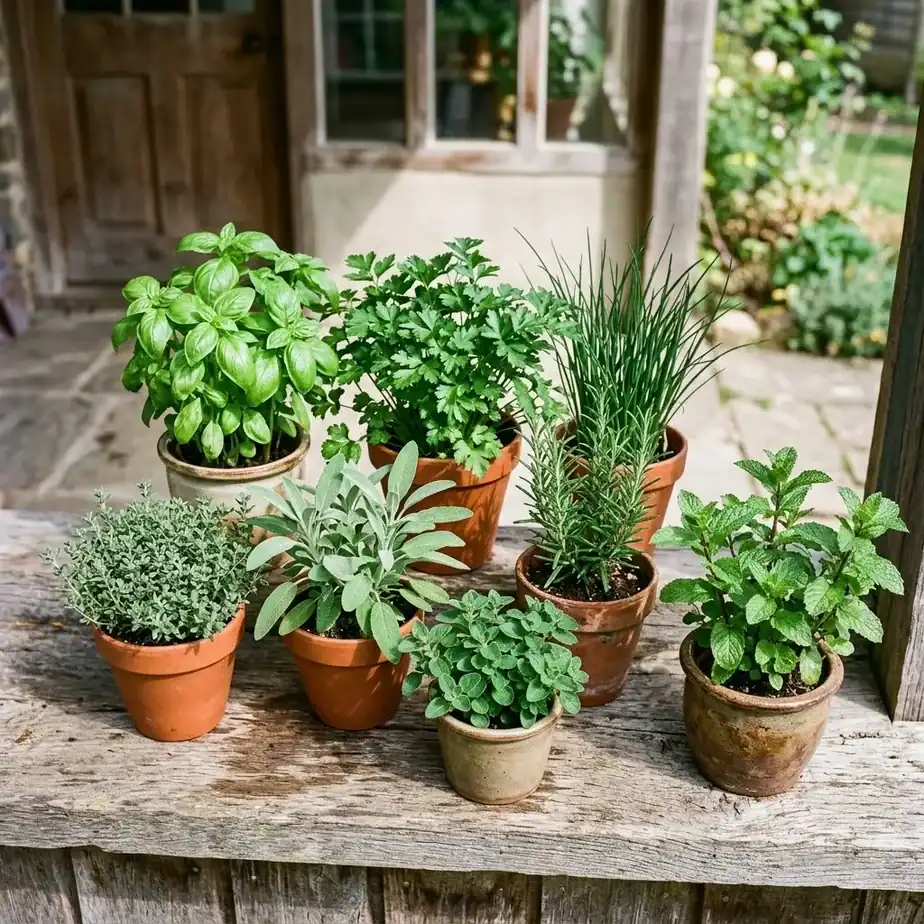
Any of these will reward a beginner gardener. If you want a slightly more ambitious start, add chervil for spring, lemon balm for tea, and tarragon for a French herb corner. A single chive plant is also easy to fit in, since the same clump grows for years. Dill is worth growing too, but like cilantro it prefers cool weather and tends to bolt in summer heat.
Mediterranean herbs for a sunny spot
If you have a spot that gets at least six hours of direct sun a day, that is the place for the Mediterranean herbs. These plants evolved on dry, rocky hillsides around the Mediterranean basin, and they share the same needs: lean soil, sharp drainage, and as much sun as you can give them.
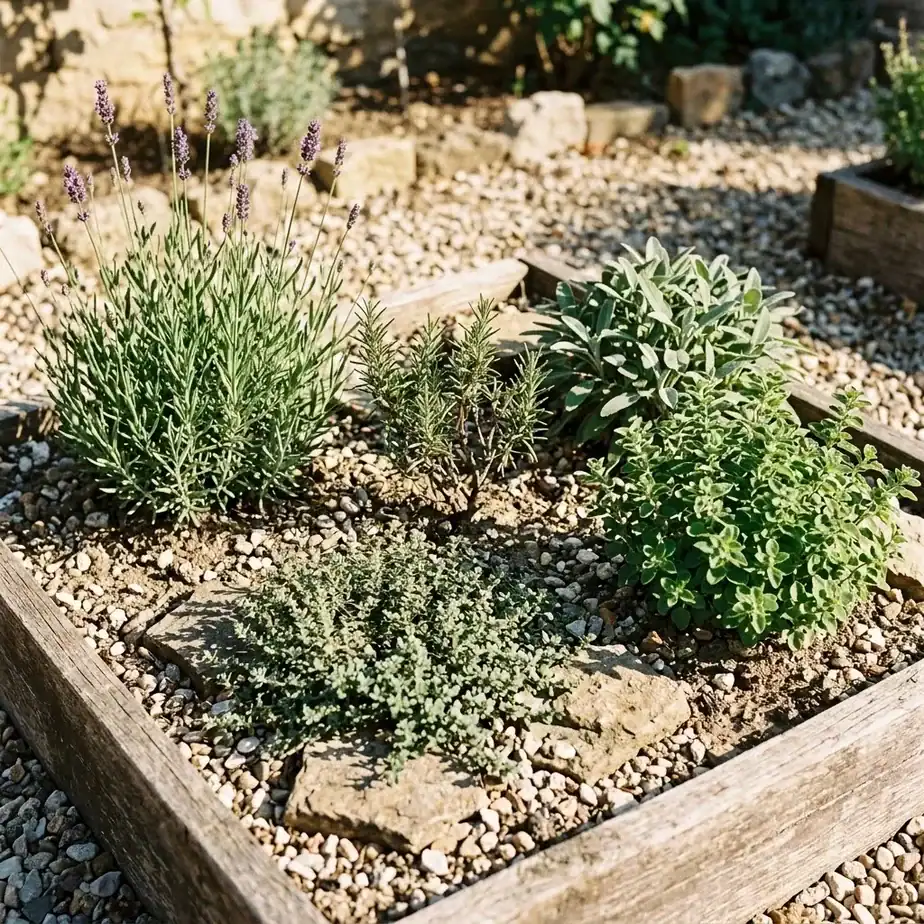
The core Mediterranean group is rosemary, thyme, oregano, sage, and lavender. All five prefer well-drained soil and dislike wet feet, especially in winter. If your soil is heavy clay, plant them in a raised bed or a mound amended with grit and compost, and look at our guide to the soil side of growing herbs before you set them out. A mulch of gravel or small stones works better than bark, which can hold too much moisture against the stems. Good drainage and plenty of sun is the short version: these are aromatic herbs that evolved on dry, rocky slopes, and they keep their strongest aroma when grown in lean conditions.
Plant the Mediterranean herbs close together so they can share the same dry conditions and the same sun. A tightly planted Mediterranean patch is easier to water and weed than the same plants scattered through a mixed bed. For a scented path, try a strip of creeping thyme between flagstones, with upright rosemary and lavender behind it.
Herbs that handle partial shade and moisture
Not every herb needs full sun. A handful of leafy herbs prefer partial shade and moisture, which makes them ideal for the shadier side of a yard or a north facing windowsill.
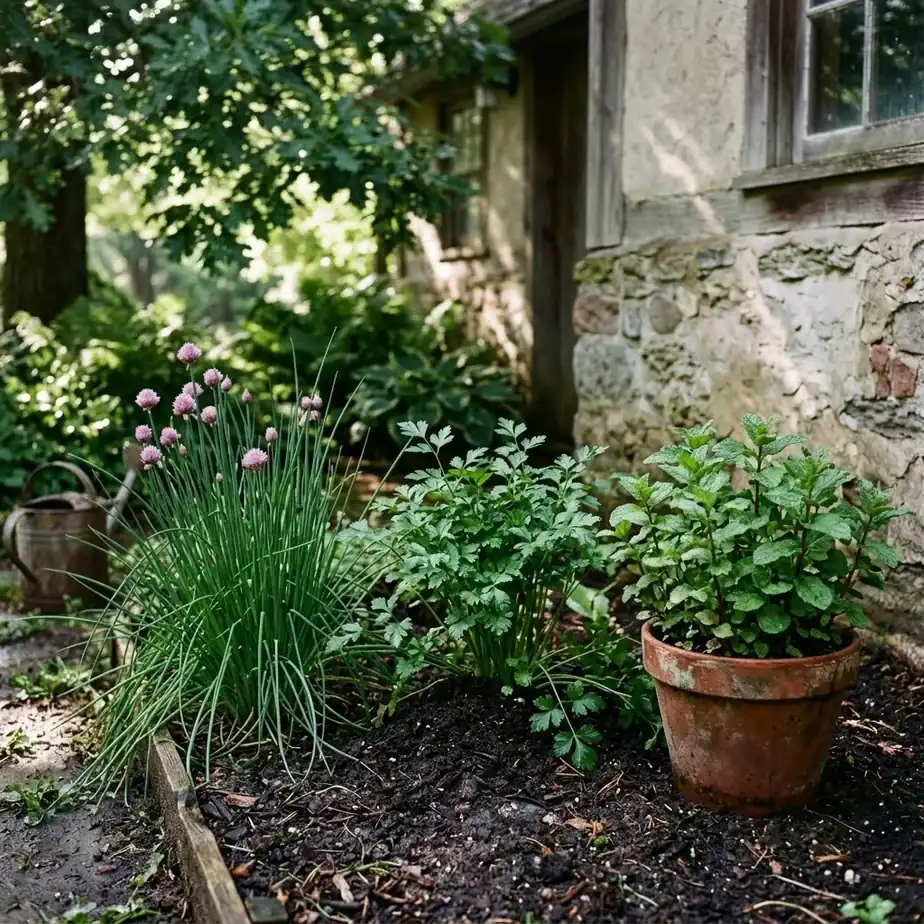
Parsley, chives, chervil, and mint all do better with morning sun and afternoon shade, especially in hot summer climates. They also prefer richer, more moisture retentive soil than the Mediterranean group. A small bed that gets three to four hours of direct sun is plenty for these leafy herbs, which prefer partial shade or a bright site with morning sun and afternoon shade; fairly deep shade is not a reliable place for any of them.
The trade off is that these herbs tend to be annuals or short lived in many climates. Parsley and the other leafy annuals are cool season crops that bolt in midsummer heat. Mint comes back from its roots year after year, but it spreads aggressively by runners, so most experienced gardeners keep it in a container sunk into the bed to stop it from taking over. For a damp corner of the garden that gets only morning sun, mint and chives are a natural pairing.
Perennial versus annual herbs
Perennial herbs come back from their roots every year and only need to be planted once. Annual herbs finish their life cycle in a single season and need to be resown or replaced. Knowing the difference helps you plan a bed that keeps producing without you having to start over each spring.
The classic culinary perennials are rosemary, thyme, oregano, sage, chives, tarragon, and lavender. Hardiness varies by herb and by cultivar, so gardeners in cold-winter climates should check their local zone for each plant. Rosemary is the most tender of the group and commonly needs winter protection or to be brought indoors in colder regions, while the others are generally hardy across a wider range of climates. Many herbs in this group are easy to grow once established, and a well placed plant can produce for five to ten years before it needs replacing.
The classic annuals are basil, cilantro, dill, and chervil. These are sown fresh each spring once the soil has warmed, and they finish when the first hard frost arrives. Perilla and the savories also behave as annuals in most climates. Bolting comes fast in warm weather, so a second sowing of the cool season annuals in late summer will give you an autumn harvest.
A simple rule of thumb for a low maintenance bed is to anchor the planting with three or four perennials that suit your climate, then fill the gaps with annuals you actually cook with. The perennials provide structure and a guaranteed harvest, and the annuals let you try something new each year without committing to it.
Companion planting: which herbs grow well together
Companion planting is mostly about matching herbs that want the same conditions rather than fighting plants that do not. Mediterranean herbs want sun and dry soil, so plant them together. Leafy herbs want moisture and partial shade, so plant them together. The mistake most new gardeners make is to mix the two groups in the same bed and then water on a schedule that suits only one of them.
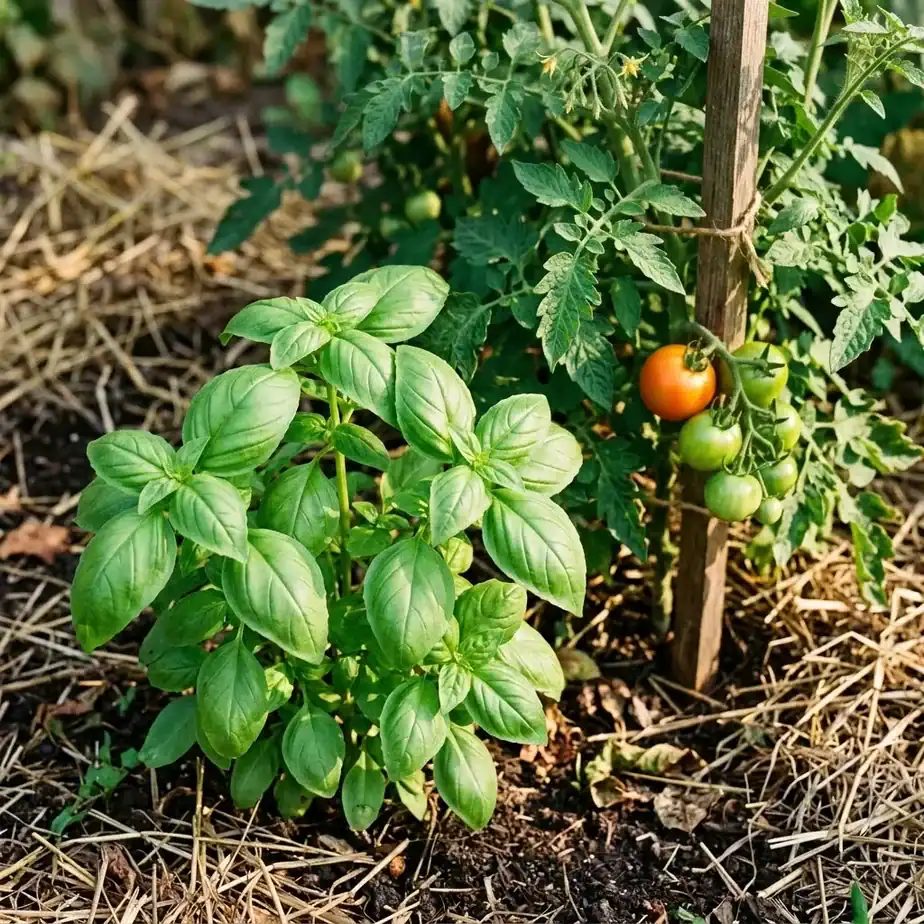
A few pairings are particularly useful. Basil and tomatoes are classic companions in a vegetable garden because they share the same warm season and watering needs, so the herb settles in next to the vines without extra fuss. Dill, once it flowers, draws in beneficial insects like hoverflies and parasitic wasps, and only needs to be kept away from carrots if you are saving carrot seed, since the two can cross pollinate.
Mint is the exception to every rule. It sends out runners that will crowd out everything around it, and once it is established it is very hard to remove. Always plant mint in its own container, even if you sink the container into the bed. The container keeps the roots contained while the foliage spills over the edge and looks like part of the planting.
For a fragrant and useful kitchen garden, a good basic layout puts the Mediterranean herbs in the sunniest, driest corner, the leafy herbs in the partial shade, and a pot of mint well away from either group.
Match the herb to your space
Most herbs are easier to grow than people expect, but they do need a space that fits them. A sprawling Mediterranean shrub does not belong on a narrow windowsill. A small pot of chervil does not belong in a large border where it will be lost.
In a small raised bed or a square of ground three feet on a side, plant three or four herbs that share the same conditions. In full sun, that means the core Mediterranean group. In a partial shade corner, a leafy herb combination does the job. A bed that tries to fit eight different herbs usually ends up with eight struggling plants instead of four thriving ones.
In containers, the same rule applies, only more so. A twelve inch pot holds one leafy herb comfortably, or one Mediterranean shrub for a larger container. A long window box can take a row of chives and parsley, with mint in a separate pot on its own. Mediterranean shrubs do best in unglazed terracotta because the walls breathe and the soil dries out faster.
If you are growing on a windowsill, choose the herbs you will actually use fresh. The leafy herbs are all reliable indoors with a south or west facing window and regular pinching. Mediterranean shrubs need more sun and air than most windowsills can give them, and they tend to grow leggy and weak indoors over winter.
A simple first season planting plan
If you want to plant an herb garden this weekend without overthinking it, here is a short plan for a small home garden that will keep producing from late spring through the first frost.
For a sunny bed in front of a kitchen window, plant one of each Mediterranean shrub from the list above, plus a clump of chives. Around the edge, tuck in a small pot of mint. For a shadier bed by the back door, plant one parsley, one chives, and one mint in a sunken container. Add basil and dill from seed once the soil has warmed in late spring.
For a windowsill herb garden, plant leafy herbs in individual pots at least six inches across. Pinch the basil weekly to keep it from flowering, and replace parsley when it bolts in midsummer.
None of these plans is final. The point of a first season is to learn what grows well in your soil and your microclimate, and to adjust next year. Most experienced herb gardeners keep a notebook through the season and replant the combinations that worked. If you would rather start from seed than potted seedlings, our notes on choosing seed that will actually germinate help with varieties and timing.
Care basics for the herbs you plant
Most herbs need less fuss than vegetables, but a few habits make the difference between a thriving bed and a struggling one. Water deeply but less often, so the roots grow down into the soil rather than sitting near the surface. Mulch Mediterranean herbs with gravel and leafy herbs with compost, and skip the fertilizer for the sun lovers, which actually taste better in lean soil.
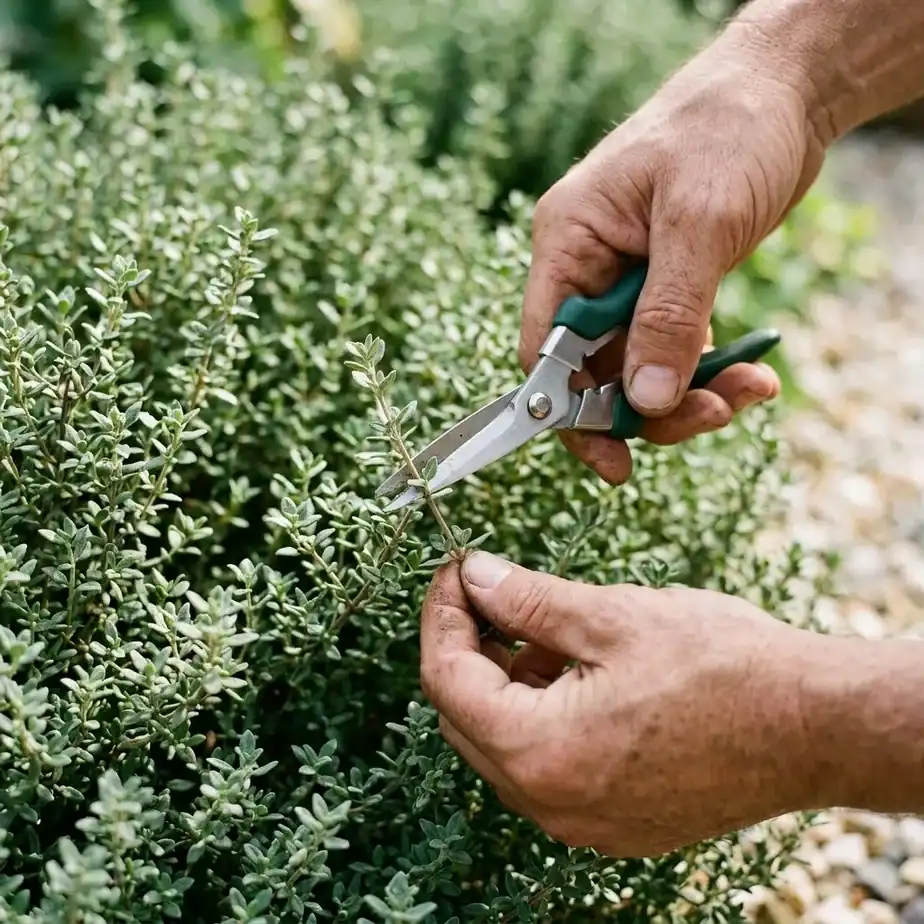
Harvest regularly and the right way. For leafy herbs, pinch the tops just above a leaf pair and the plant will branch out and grow back thicker. For woody herbs, snip whole sprigs rather than individual leaves, and avoid cutting into the bare wood at the base, which does not regrow.
Watch for the two most common beginner mistakes. The first is overwatering, especially of Mediterranean herbs, which lose their roots in soil that stays damp. The second is letting annual herbs bolt without using the seed heads. Basil flowers are edible, and the coriander seed from any bolted plant is a useful spice, so a bolted plant is not a wasted plant, just a different crop.
For a fuller picture of how to lay out and care for a new herb garden from scratch, including planning, soil prep, and seasonal timing, see our complete guide to what a new herb garden needs. With a small selection of herbs that suit your spot and your kitchen, a home herb garden is one of the easiest and most rewarding things you can grow.