Lavender rewards a patient gardener with fragrant silver leaves, summer bloom, and tidy mounds that come back every year. It survives drought, shrugs off most pests, and asks for very little once it settles in. The trick is to match the plant to the climate you actually have, give it a sunny spot with sharp drainage, and resist the urge to fuss over it. Get those three things right and the rest is mostly waiting.
The short version: pick English lavender for cold winters or Spanish lavender (Lavandula stoechas) for mild ones, plant lavender in spring after frost in gritty soil, water deeply but rarely, and prune once a year after bloom. Lavender grows well in a raised bed, along a sunny wall, or in a wide terracotta pot. Lavender is one of the herbs that grow well in containers and tolerates a small root run for years. If you are new to growing herbs at all, this beginner’s guide to growing an herb garden covers the broader framework so this page can stay focused on lavender.
Pick a variety that suits your climate
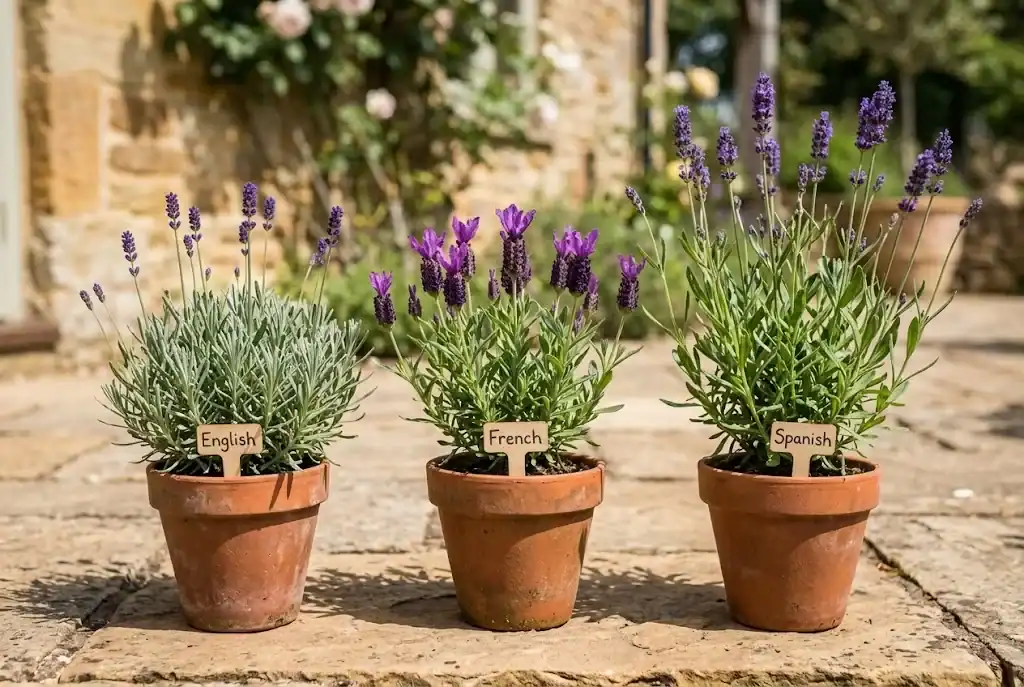
Most lavenders sold as ornamental or culinary belong to one of three species, and each one has a sweet spot for climate. Match the plant to the conditions you have and you avoid the most common cause of lavender failure.
English lavender (Lavandula angustifolia) is the hardiest and the one to grow if your winters drop below freezing. It forms a tight silver mound about 60 cm tall and wide, sends up slender spikes of fragrant purple flower in early summer, and tolerates zone 5 with good drainage. Cultivars like ‘Hidcote’ (deep purple, compact), ‘Munstead’ (early, soft violet), and ‘Melissa’ (pale lilac) are reliable across most of the temperate United States. English lavender is the most widely planted of the common lavender varieties and the one most often grown for lavender oil and lavender scent in perfumes.
Spanish lavender (Lavandula stoechas) carries chubby flower heads topped with tufted bracts and blooms earlier than English lavender. It prefers mild winters and free-draining soil and is the right choice for coastal California, the Pacific Northwest, the Mediterranean, and the warmer half of the Gulf Coast. Spanish lavender dislikes wet feet more than cold, so draining matters more than hardiness here. It grows best in the same conditions that the native Mediterranean region offers: lean soil, dry air, and plenty of sunlight.
Spike lavender (Lavandula latifolia) is a taller, looser plant with narrow leaves and long, branching flower spikes. It tolerates heat and lean soil and is widely planted in dry gardens, but it is less cold-hardy than English lavender and rarely survives a hard zone 6 winter without protection.
All three species are members of the mint family, which is part of why lavender thrives in tough conditions. The volatile oils that scent the foliage and flower evolved to deter pests in the dry Mediterranean hills, and that same chemistry keeps the plants relatively unbothered in home gardens.
Choose a sunny, well-drained spot
Lavender asks for two things from its location: at least six to eight hours of direct sun and soil that does not stay wet. Pick the sunniest bed you have, the south-facing slope, the strip along the driveway, the unfiltered side of the patio. Morning sun matters most, since it dries dew off the leaves and keeps fungal disease at bay.
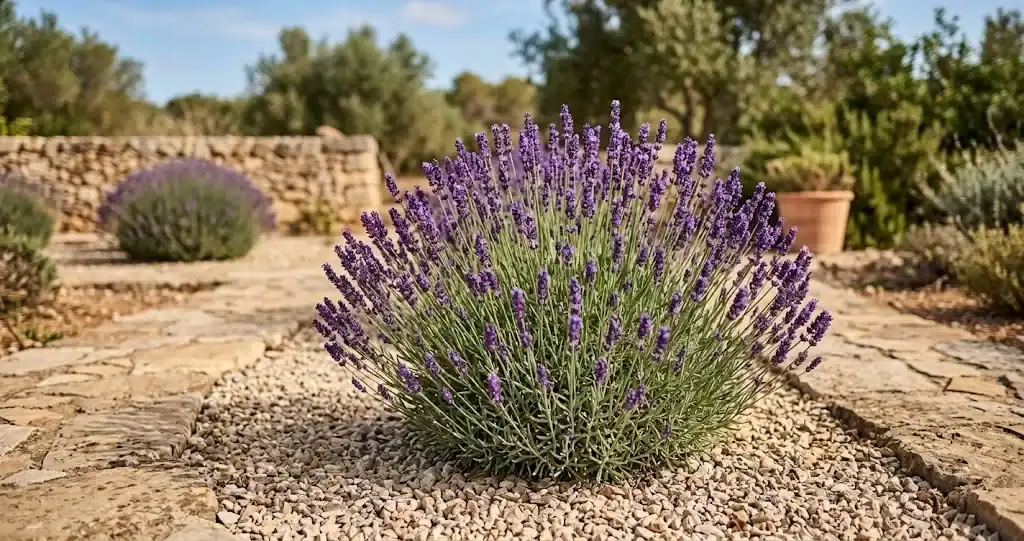
Drainage is the second half of the equation and the part most often missed. Lavender survives cold and drought; it does not survive wet roots in winter. If your soil is heavy clay, plant on a slope, build a raised bed at least 20 cm deep, or grow in containers. A gravel mulch under the plant helps water shed away from the crown instead of pooling there.
Plant at the right time
Spring is the safest planting season in most climates. Wait until frost has passed and the soil has warmed, then put young plants out so they have a full growing season to root before winter. In zones 7 and warmer, early autumn also works as long as you give the plants six weeks to settle in before the first hard frost.
Space plants 60 to 90 cm apart, depending on the cultivar. English lavender stays compact; Spanish and Spike lavenders spread wider with age. Good air circulation between plants keeps the leaves dry and helps prevent the one disease that troubles lavender in humid summers, Phytophthora root rot.
Dig each hole only as deep as the root ball and twice as wide. Lavender prefers a high crown, so set the plant so the base of the stem matches the surrounding grade. Backfill with the native soil rather than rich compost; lavender grows well in lean soil and struggles in heavily amended beds.

Build gritty, slightly alkaline soil
Lavender prefers a gritty, well-drained soil with a pH between 6.5 and 7.5. If your garden soil is heavy, work coarse builder’s sand or small gravel into the top 20 to 30 cm before planting. Compost is welcome in small amounts but should not make up more than a quarter of the backfill, since rich organic matter holds water against the crown and is the usual cause of winter loss.
If your soil is naturally acidic, a light dusting of garden lime at planting brings the pH into the slightly alkaline range lavender prefers. A pH test is the most reliable guide; lavender will tolerate neutral soil but struggles at pH below 6.0. In containers, use a potting mix blended with about a third coarse sand or fine gravel to keep the mix draining freely.

Water deeply but rarely
The first summer is the only time lavender needs regular water. Soak the root zone every five to seven days during dry spells, then let the soil dry out completely between waterings. After the plant is established, usually by the second growing season, rainfall is enough in most temperate climates. Lavender that gets the right start will thrive on neglect from then on.
Overwatering is the fastest way to kill a lavender plant. The leaves yellow, the stems flop, and the plant collapses from the crown up. If you are unsure whether to water, wait. Lavender is drought tolerant and prefers a dry season to a damp one. Container-grown plants need more frequent water than in-ground plants because the pot volume is small; check the mix with a finger and water only when the top 5 cm is dry.
Mulch with gravel, not bark
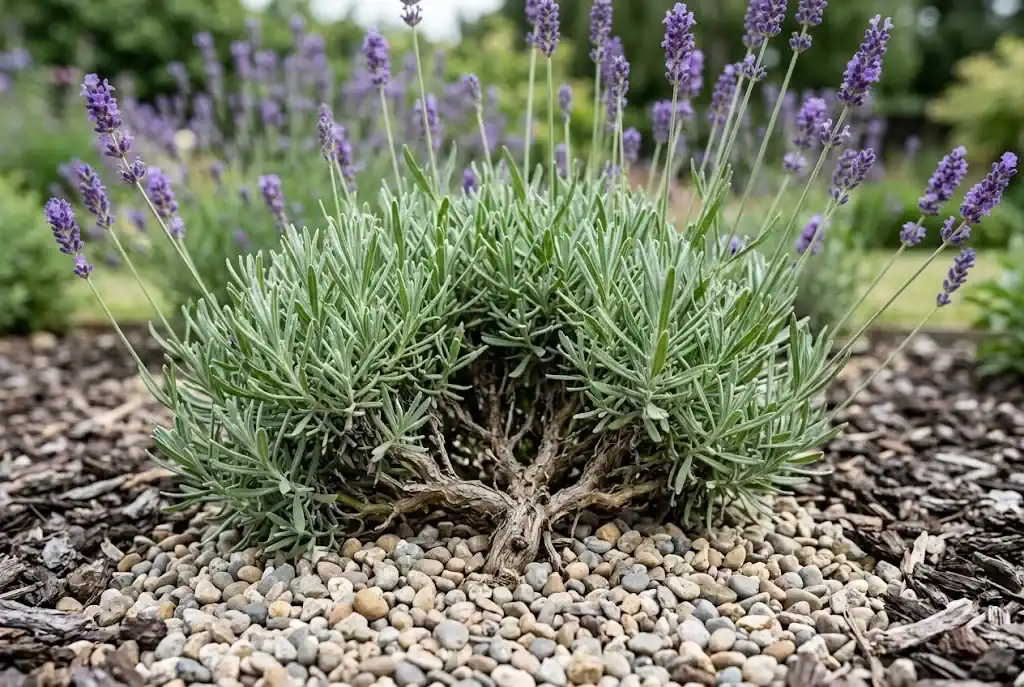
A 2 to 3 cm layer of light-colored gravel or crushed stone around the base of the plant is the best mulch for lavender. Gravel reflects heat back into the leaves, suppresses weeds, and most importantly keeps the crown dry through wet weather. Avoid bark, straw, or compost as mulch; these organic mulches hold moisture against the stems and invite rot.
If you already have bark mulch in the bed, pull it back from the base of the lavender by at least 15 cm so the crown sits on bare soil or gravel. A gravel top-dressing also gives the planting a clean, Mediterranean look that suits the aromatic foliage.
Prune once a year to keep plants bushy
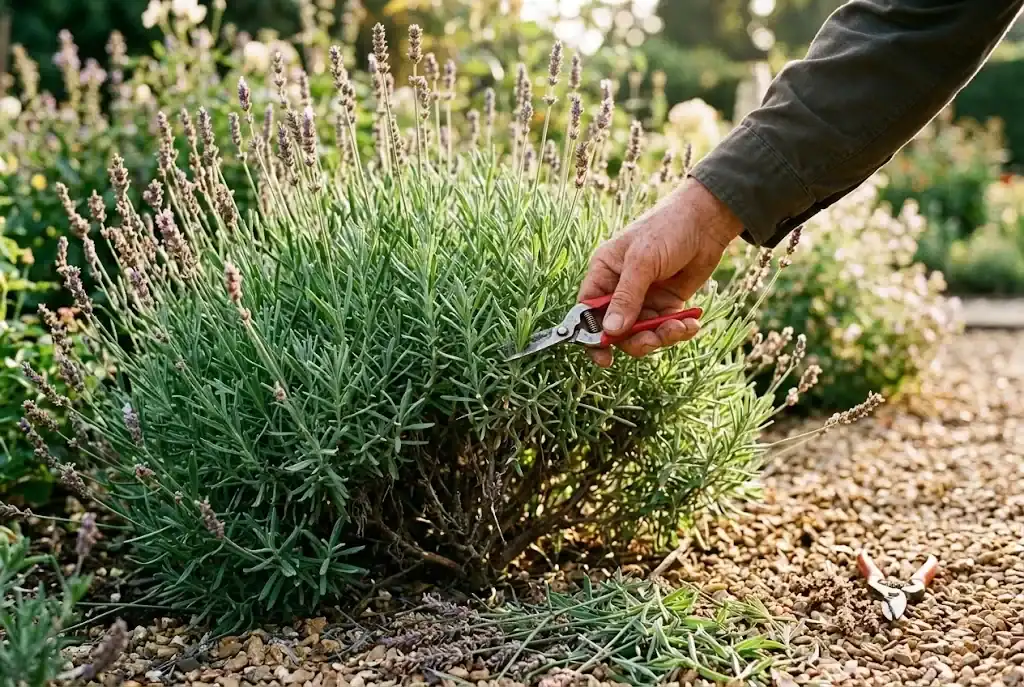
Annual pruning is what turns a leggy lavender into a tight, long-lived mound. The best time is late summer, just after the main flush of bloom fades. Cut back about one-third of the plant, shaping it into a rounded dome. Work from the outside in, removing spent flower spikes and the top third of the leafy growth. Pruning lavender this way each year encourages fresh new growth from the base and keeps the shrub compact for years.
Never cut into the woody base of the plant. Lavender does not regenerate from old wood the way rosemary does, so a hard prune into bare stems often kills the plant. If yours has become woody and bare at the center, plan to replace it rather than try to rejuvenate it. A light yearly trim keeps it productive for a decade or more in the same spot. For the full timing and technique, see our guide to harvesting lavender.
Use lavender as a low edging along paths
A row of lavender makes a fragrant, drought-tolerant edging along a path, a driveway, or the front of a sunny border. Plant the row 45 to 60 cm apart and let the plants grow into each other over the first two seasons; an annual trim after bloom keeps the top flat and the sides tidy. A lavender hedge asks for almost no feeding and almost no water once established, which is one reason it has lined Mediterranean gardens for centuries.
Bring potted lavender through winter
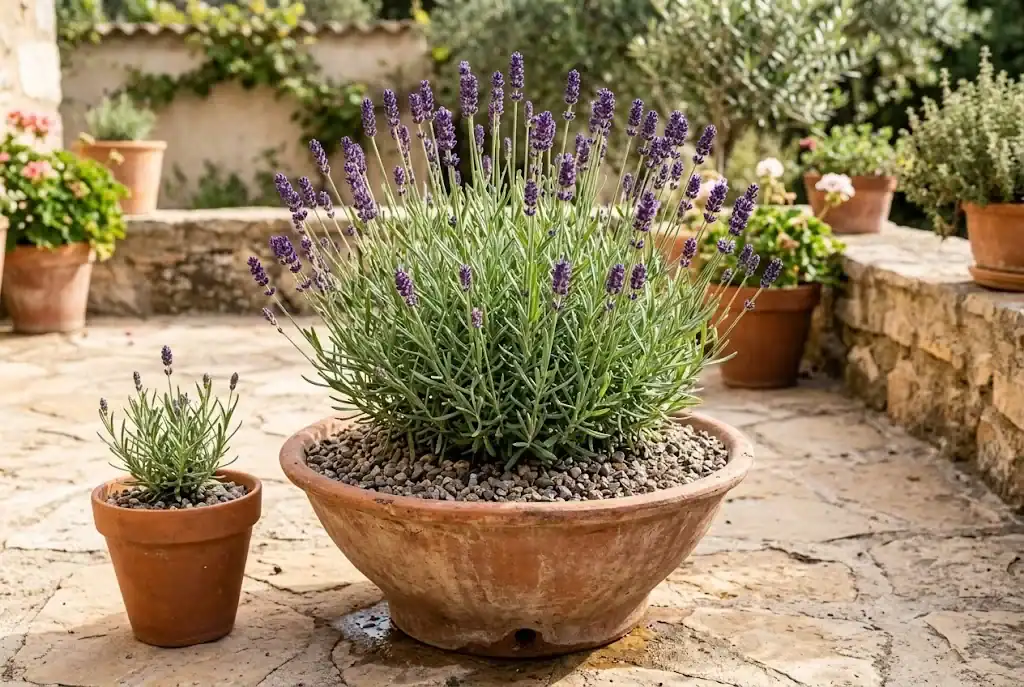
Lavender in containers is more vulnerable to cold and wet than lavender in the ground, because the root ball freezes more deeply and thaws more slowly. In zones 7 and warmer, pots can stay outside year-round with a sheltered position against a south-facing wall. In zones 5 and 6, move pots to an unheated garage or cold frame for the worst weeks of winter and water sparingly, just enough to keep the mix from going bone dry. Lavender is one of those herbs that is perfect for containers, since a wide pot lets the crown stay high and dry, the way it likes in its native Mediterranean habitat.
Raised beds offer a middle path. A bed at least 30 cm deep gives the roots enough insulation to survive zone 5 winters, especially with a gravel mulch on top. Container-grown plants also need a fresh pot of gritty mix every two to three years; the old mix compacts and the draining slows.
Common problems and quick fixes
Yellowing leaves usually means too much water or too little sun. Move the plant if shade has crept in, cut back on watering, and pull any mulch back from the crown. Plants that flop open in the center need an annual prune; if the woody part is exposed, plan to replace the plant next spring.
Spittlebugs and four-lined plant bugs sometimes show up on lavender but rarely do serious harm. A strong spray from the hose knocks them off. The bigger pest threats are fungal: Phytophthora root rot in wet ground, and Botrytis in humid summers with poor air circulation. Both are prevented by sharp draining and spacing the plants for airflow. Once a plant has either, remove it and improve the bed before replanting.
Few blooms usually point to one of three causes: too much nitrogen, too little sun, or a skipped prune. Cut back on fertilizer, move the plant to a sunnier spot if you can, and shape it the summer after planting.
After harvest, store what you cut
If you are cutting lavender for sachets, baking, or simply to keep the fragrance in a drawer, the next step matters as much as the grow. Hang bundles upside down in a dark, dry, well-ventilated room for two to three weeks, then strip the flower heads from the stems and store them in airtight jars away from direct light. Our guide to collecting and storing lavender walks through the timing, the drying conditions, and the tradeoffs between fresh and dried use.
Quick questions about growing lavender
How long does it take to reach full size?
Most lavender plants reach a useful size in two to three years. English lavender typically peaks at 60 to 90 cm across; Spanish and Spike lavender can spread to a metre. Prune yearly from the first summer after planting and the plant will fill out faster than one left untouched.
Can lavender grow in shade?
Lavender survives in light shade but does not bloom well. Six to eight hours of direct sun is the minimum for reliable flower production. In hot climates, a little afternoon shade is welcome; in cool climates, full sun all day is best.
Is lavender a perennial?
Yes. Lavender is a perennial shrub, which means it keeps a woody base from year to year and regrows leafy stems each spring. With a yearly prune and good draining, an English lavender plant typically lives 10 to 15 years in the same spot.
Does lavender need fertilizer?
Rarely. A single light top-dressing of compost in early spring is plenty. Avoid high-nitrogen feeds, which produce soft leafy growth that flops and reduces flower production. If the leaves look pale and growth is thin, a single application of bone meal in spring helps without pushing excess leaf.
Can I dry lavender at home?
Yes. Once the buds have formed but not fully opened, cut long stems, bundle them with a rubber band, and hang them upside down in a dark, dry room for two to three weeks. Dried lavender holds its scent for months and works well in sachets, baking, and simple syrups.