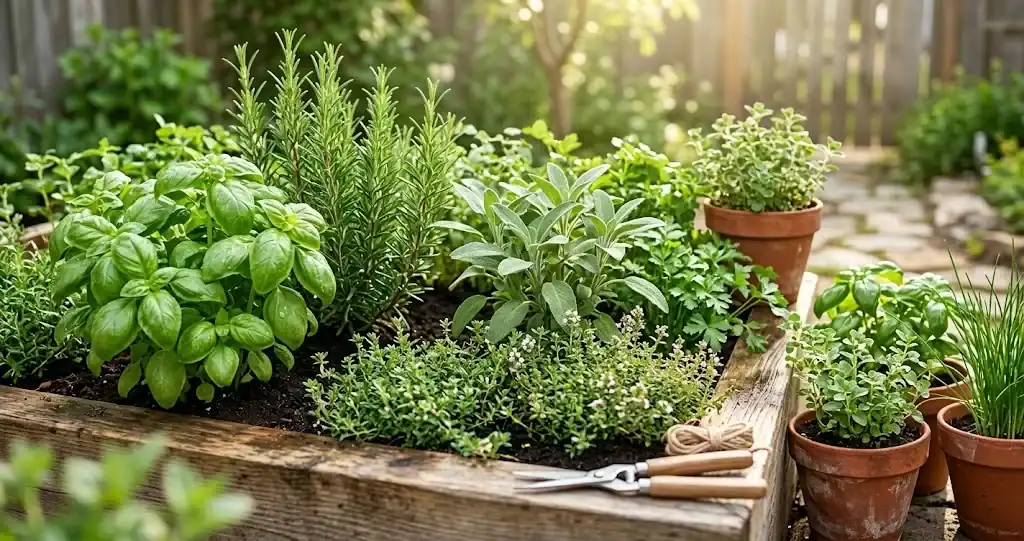
Learning how to start an herb garden gives you immediate access to vibrant flavor right outside your kitchen door. Snipping homegrown favorites like sweet basil, rosemary, and oregano lets you season meals at peak aroma and texture without relying on packaged store cuttings.
Herbs are exceptionally easy to grow and yield bountiful harvests in compact spaces. If you are exploring how an herb garden comes together, establishing clear fundamentals from the beginning will ensure your plants remain healthy and productive throughout the entire growing season.
Why Growing Your Own Seasonings at Home Is Worthwhile
A kitchen plot puts pungent seasonings within arm’s reach while cooking. Packaged cuttings lose volatile aromatic oils quickly after harvest, whereas homegrown leaves clipped moments before use deliver maximum punch and crispness.
Beyond culinary use in the kitchen, flowering varieties such as English lavender (Lavandula angustifolia), Spanish lavender (Lavandula stoechas), and chive blossoms attract beneficial pollinators like honeybees and hoverflies. These additions foster garden biodiversity while creating an attractive, productive landscape.
Choosing Where to Grow Herbs: Growing Herbs in Containers vs Garden Plots
Before choosing herbs, assess your available garden space, sunlight, and climate. Culinary varieties adapt readily to multiple setups, giving every grower flexible options to start growing successfully.
Growing Herbs in Containers and Sunny Windowsills
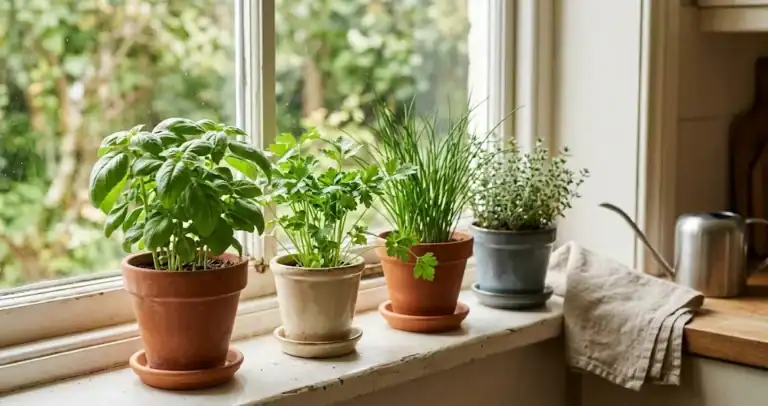
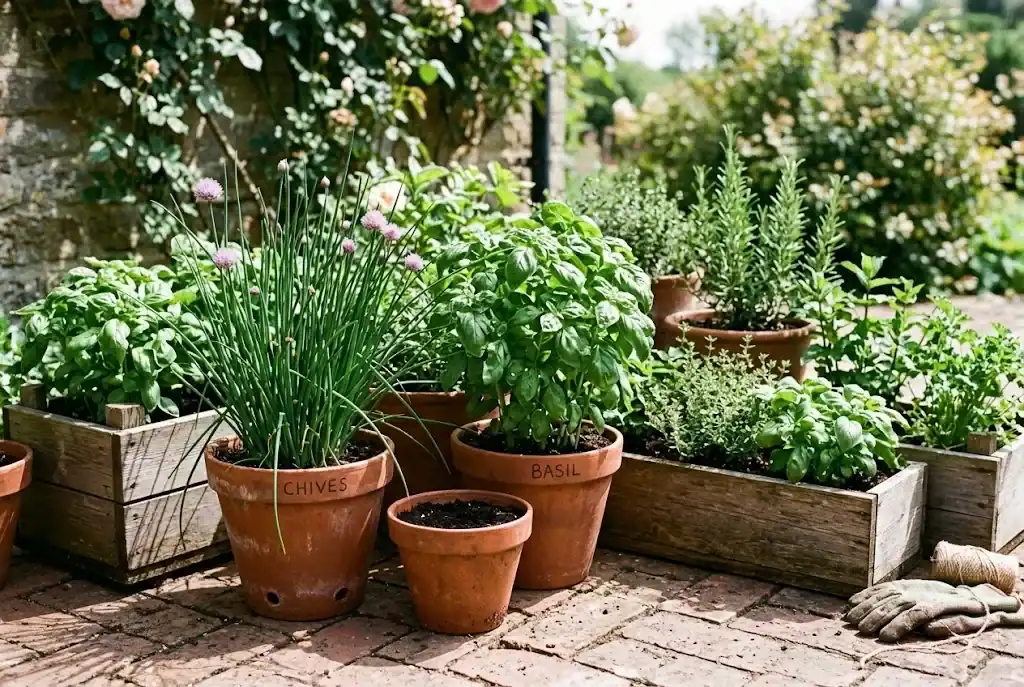
Growing herbs in containers is ideal for urban growers, apartment balconies, and small patios. A compact container garden allows you to move tender pots indoors when frosty weather approaches or shift them to capture direct sunlight throughout the day.
Choose individual pots that provide sufficient root room. Compact varieties like chives and leafy annuals grow well in 6-inch containers, whereas woody perennials like rosemary require deep pots of 10 to 12 inches. Crucially, every container herb pot must have open holes at the base to ensure water escapes freely. Trapped moisture quickly suffocates fine roots and invites rot. For small spaces, grouping favorite herbs in a tiered planter or sunny window box creates a handsome display.
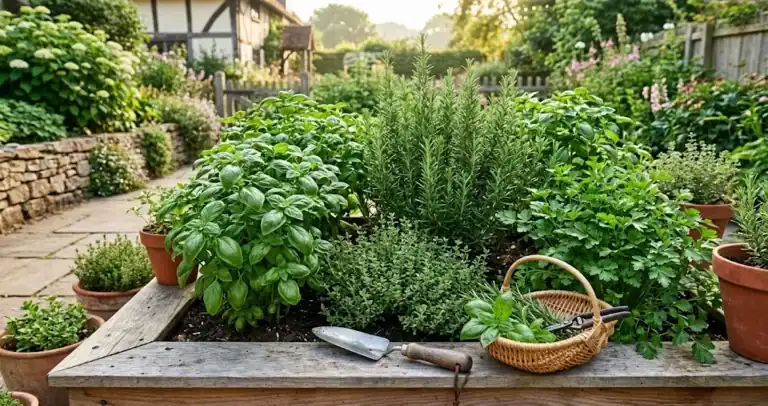
Raised Garden Beds and Outdoor Garden Plots
For any gardener with yard space, planting in a raised bed or directly in the ground provides expansive root volume. Raised-bed gardening allows you to customize potting soil texture, warm the ground early in spring, and avoid heavy native clay soil.
In-ground beds suit vigorous perennial plants that return each year. However, aggressive spreaders from the Mentha family, such as spearmint and peppermint, should never be planted directly in the ground without barriers. Grow mint in isolated containers to prevent invasive root runners from overtaking your garden.

How Herbs Grow Best: Sunlight, Soil, and Moisture for Every Herb Plant
To help each herb plant grow best, you must meet its fundamental sunlight, soil, and moisture requirements. Understanding their preferred growing conditions prevents common beginner pitfalls and delivers best results.
Sunlight Needs and Growing Herbs Indoors
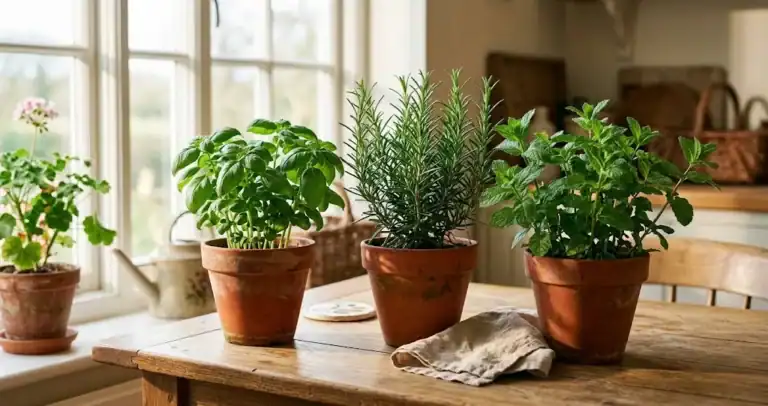
Most popular Mediterranean herbs thrive best in full sun, requiring at least six hours of direct sunlight daily. Generous solar exposure fuels essential oil production and prevents weak, spindly stems. If you choose growing herbs indoors, place pots on a south-facing windowsill where they receive ample light, or use supplemental LED grow lights, following manufacturer distance guidelines and adjusting the height if leaves show signs of bleaching or stretching.
While sun-loving plants relish heat, tender herbs like cilantro, French tarragon, and calendula appreciate light protection from the hottest afternoon rays in warm southern climates. Balancing sunlight exposure ensures steady vegetative vigor without scorching delicate leaves.
Soil Quality, Organic Compost, and Aeration
Proper soil texture is critical for root vitality. Dense, soggy ground starves roots of oxygen and fosters fungal decay. Reviewing soil quality and drainage for herbs will guide you in amending heavy dirt with coarse horticultural sand and well-rotted organic matter.
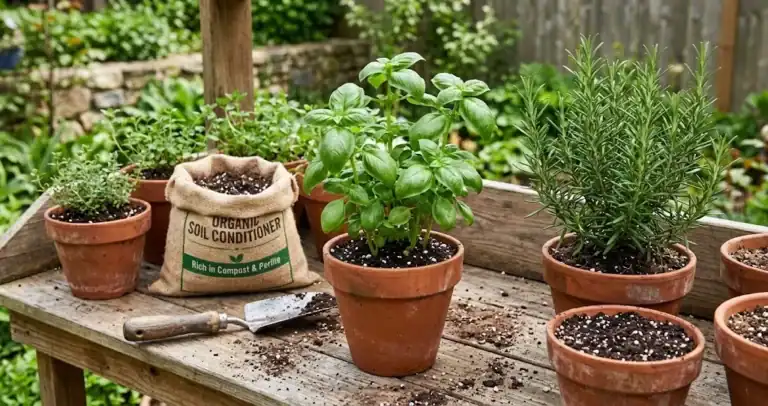
For container gardening, always use a premium, porous potting soil enriched with peat moss and perlite. Work in a light top-dressing of organic compost or apply shredded bark mulch around outdoor beds to conserve moisture and suppress weeds. Avoid excessive synthetic fertilizers; too much nitrogen produces rapid foliage growth that dilutes aromatic essential oils.
The Easiest Herbs to Grow: Selecting the Best Culinary Herb Varieties
When deciding what to plant, start with a balanced collection of easy-to-grow annuals and hardy perennial herbs that you frequently use in the kitchen.
Tender Annual and Biennial Varieties
Annual herbs complete their life cycle in one season, offering fast growth and tender leaves:
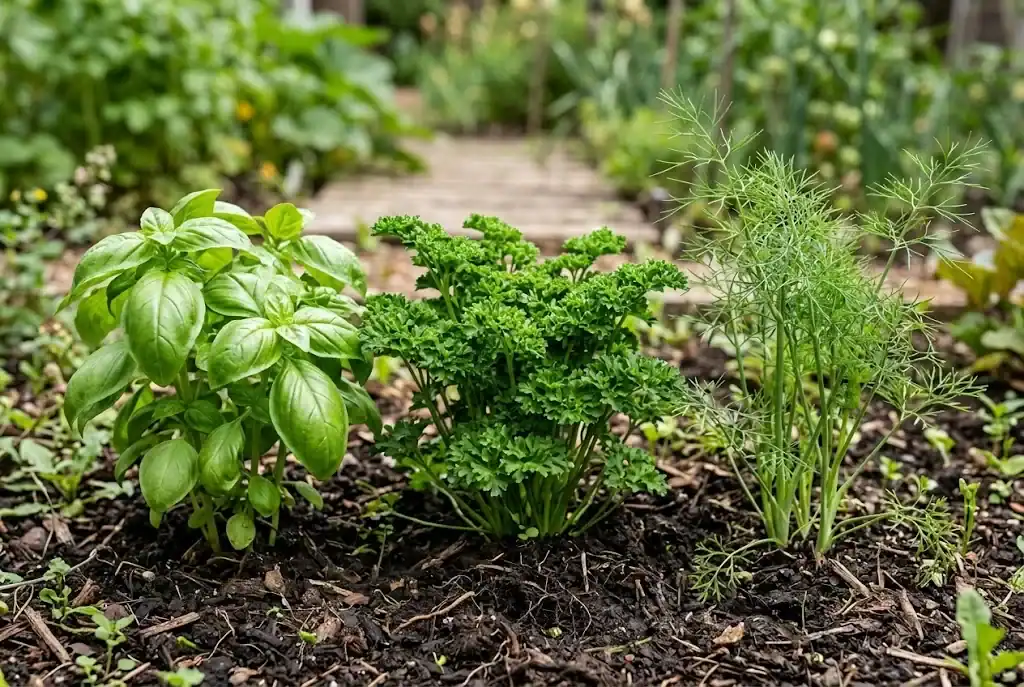
Sweet Basil (Ocimum basilicum): The undisputed centerpiece of the summer garden. If you want to grow basil, give it warm sunshine and moist, fertile soil. Pinching stem tips stimulates bushy lateral growth and delays flowering.
Parsley (Petroselinum crispum): A dependable biennial available in flat-leaf Italian and curly cultivars. Parsley handles cooler spring temperatures well and provides crisp, vitamin-rich garnish for savory recipes.
Dill (Anethum graveolens): A fast-growing annual featuring delicate feathery foliage and yellow umbels. It is a great culinary herb for dressings, seafood, and pickling recipes.
Cilantro (Coriandrum sativum): Prized for its citrusy foliage and flavorful coriander seeds. Cilantro grows rapidly in cool spring weather but bolts in summer heat, making succession planting ideal.
Hardy Perennial Herbs That Return Every Year
Perennial herbs develop sturdy root systems and live for several seasons, providing continuous harvests across multiple years:
Rosemary (Salvia rosmarinus): A resilient evergreen shrub with piney needle-like leaves. Rosemary requires porous, lean soil, full sun, and minimal watering once established.
Thyme (Thymus vulgaris): A classic Mediterranean culinary herb forming a low, fragrant ground cover. Herbs like thyme thrive in rocky, dry soils with infrequent watering.
Common Sage (Salvia officinalis): A hardy subshrub with velvety, grey-green leaves. Sage lends a deep, savory aroma to roasted meats, poultry, and autumn pasta dishes.
Oregano (Origanum vulgare): A vigorous perennial that intensifies in flavor under warm summer sun. Oregano is an indispensable staple for pizza, pasta sauces, and marinades.
Chive (Allium schoenoprasum): A cold-hardy onion relative producing slender, hollow leaves and edible purple blossoms. Chives are simple to maintain in both pots and garden borders.
Starting From Herb Seeds vs Transplanting Young Perennial Herbs
Beginners often ask whether to start from seed or purchase young starter plants from a local nursery. Each method has practical advantages depending on the particular herb.
Starting Herbs From Seed Indoors and Outdoors
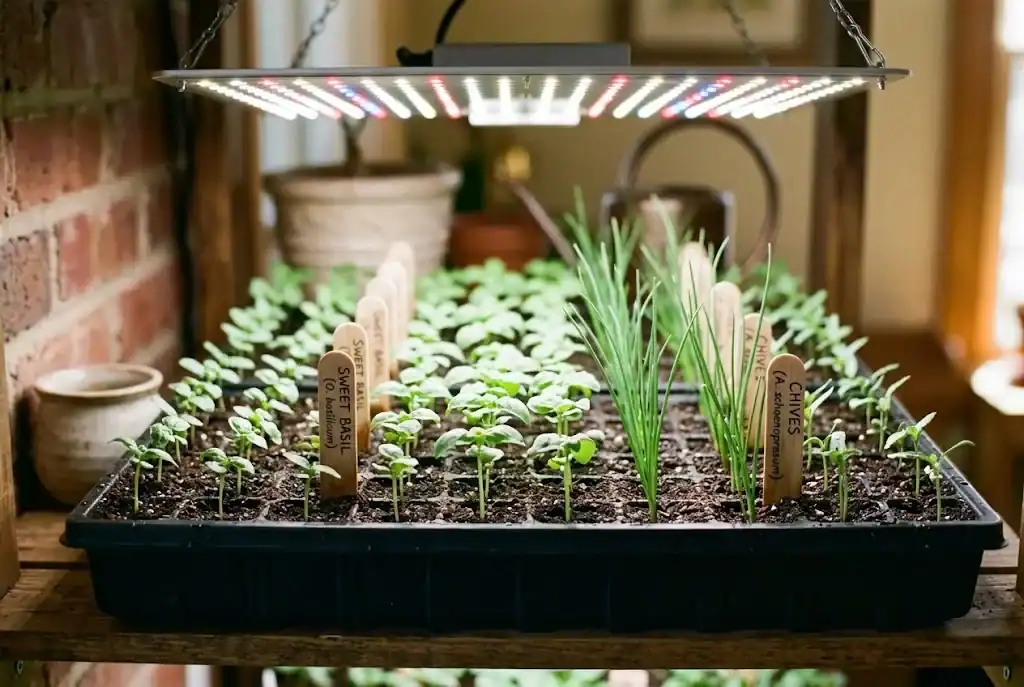
Seed starting is budget-friendly and gives you access to specialized cultivars like Thai basil. Fast-germinating annuals like basil, coriander, and chives start readily from seed. When selecting the right herb seeds, purchase viable packets from reputable growers to guarantee high germination rates.
Start seeds indoors in shallow seed-starting trays 4 to 6 weeks before your average last spring frost date. Keep the seed-starting mix evenly moist under a humidity dome until green seedlings emerge, then move them under bright grow lights.
Transplanting Nursery Starts into the Garden
For slow-growing woody perennials like rosemary, sage, and lavender, purchasing established seedlings from a local nursery saves months of waiting. Select sturdy plants with bright green leaves and strong root systems visible through container bases.
Before transplanting young herbs into outdoor garden beds, harden them off over 7 to 10 days. Gradually introduce tender plants to outdoor wind, direct sunlight, and fluctuating temperatures to avoid transplant shock.
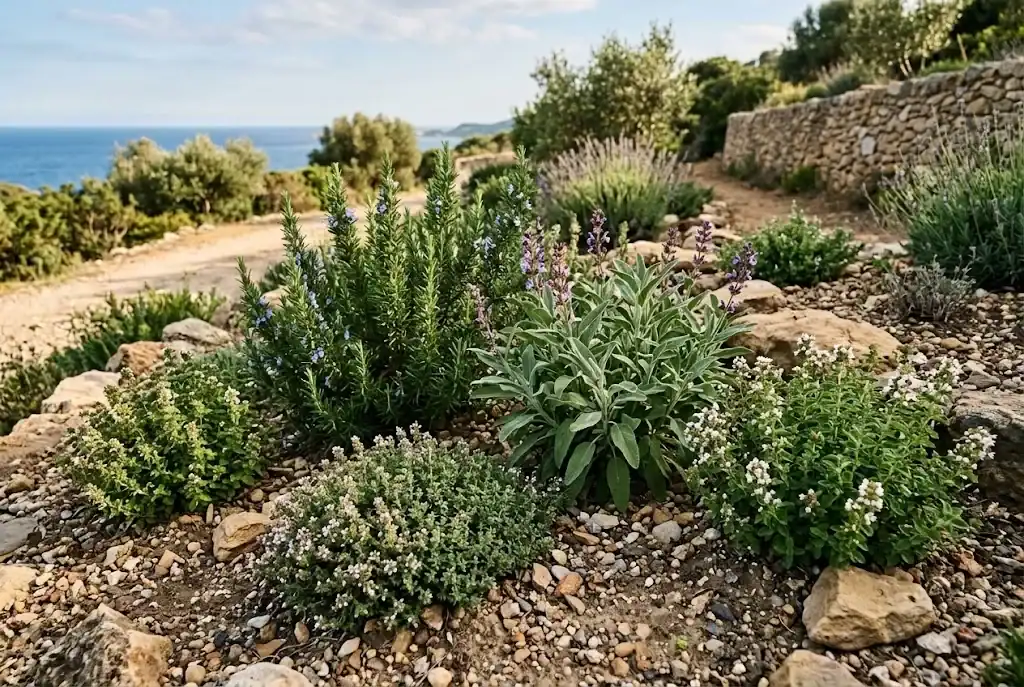
How to Group Companion Herbs by Moisture and Sunlight Needs
To avoid overwatering or underwatering, plant compatible herbs together that share identical cultural preferences in the same container or bed:
Mediterranean Group (Dry, Lean Soil): Rosemary, thyme, sage, oregano, and lavender require fast-percolating soil and prefer drying out between waterings. These sun-loving herbs are best grouped in sandy or rocky beds.
Moisture-Loving Group (Even Moisture, Rich Soil): Basil, parsley, cilantro, dill, and chives need consistent moisture and fertile potting soil to sustain tender, succulent leaves.
Routine Care and Growing Tips: Watering, Feeding, and Pruning
Maintain steady plant vigor through attentive moisture checks and regular trimming, following university extension guidelines on cultural care (see recommendations from Clemson University Cooperative Extension and Penn State Extension on home herb garden care).
Watering: Check the top inch of soil with a finger before adding moisture. For container plants, water slowly around the base until a small amount drains from the bottom holes, while in-ground beds need thorough soaking only when dry. Keep foliage dry to prevent fungal leaf spot.
Fertilizing: Most herbs require minimal fertilizer. Apply a diluted organic liquid fertilizer once a month during active growth. Overfeeding dilutes aromatic oils and weakens plant flavor.
Pruning: Pruning is the secret to bushy, productive plants. Trimming terminal stems prompts lateral branching, yielding lush new growth and extending your harvest window.

Harvesting Fresh Herbs for Culinary Use and Making Herbal Tea
Harvest culinary herbs in the cool morning after dew dries but before the midday sun heats the foliage. Use sharp kitchen shears to snip stems just above a pair of leaves, and never cut more than one-third of the plant at once so it can recover quickly.
Use them in the kitchen immediately for fresh cooking, brew aromatic leaves for herbal tea, or preserve surplus harvests as dried herbs by hanging small bundles upside down in a warm, ventilated room. Many herbs will naturally die back in late autumn and re-emerge vigorously when warm spring temperatures return.
Frequently Asked Questions About Starting an Herb Garden
What is the easiest herb to grow for a beginner? Sweet basil and chives are among the easiest herbs to grow, germinating quickly from seed and thriving in standard potting mix.
Can you start an indoor herb garden without direct sunlight? Yes, you can grow herbs indoors using full-spectrum LED grow lights run for 12 to 14 hours daily, adjusting fixture height so plants receive strong light without heat stress or bleaching.
How often should I water my container herb plants? Water container herbs whenever the top inch of potting soil feels dry to the touch, ensuring excess moisture flows away freely.
Why do my outdoor herbs lose their strong flavor? Over-fertilizing with synthetic nitrogen fertilizers or growing in excessive shade can cause herbs to produce watery, flavorless leaves.