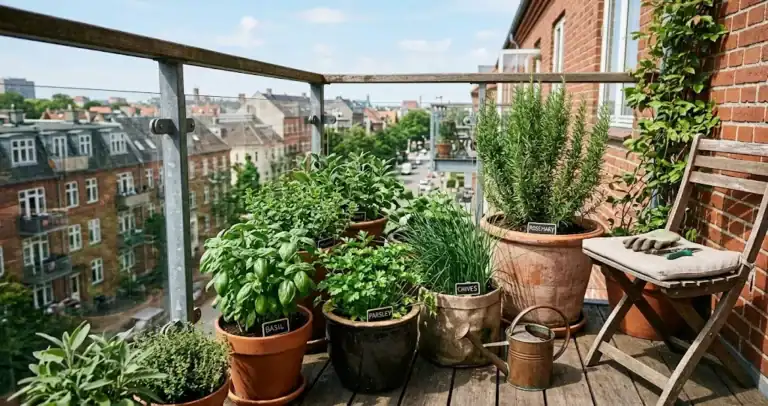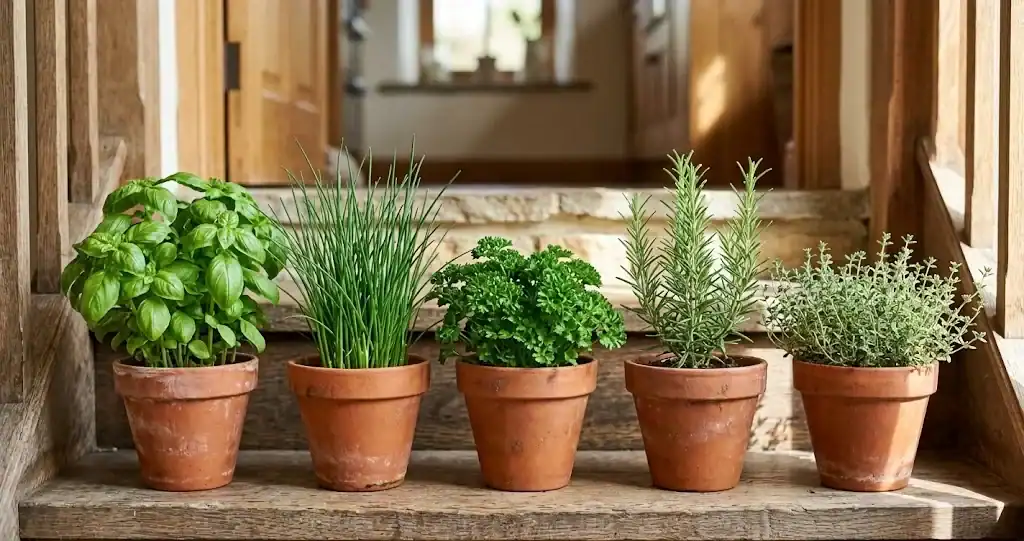
Fresh herbs turn a plain dinner into something you remember. A few containers on a sunny step, a small raised bed by the back door, or a window box in the kitchen are enough to get started. Herb gardening for beginners is mostly about giving plants what they already want: light, well-drained soil, and a little attention before problems build up.
This guide walks through the choices a new gardener actually makes. Which herb to grow for the kitchen, how to set up a container or a small bed, when to sow seeds or buy seedlings, and how to keep plants productive through the season. Read it once before you buy anything, then keep it open while you plant.
Pick a few kitchen herbs you already cook with
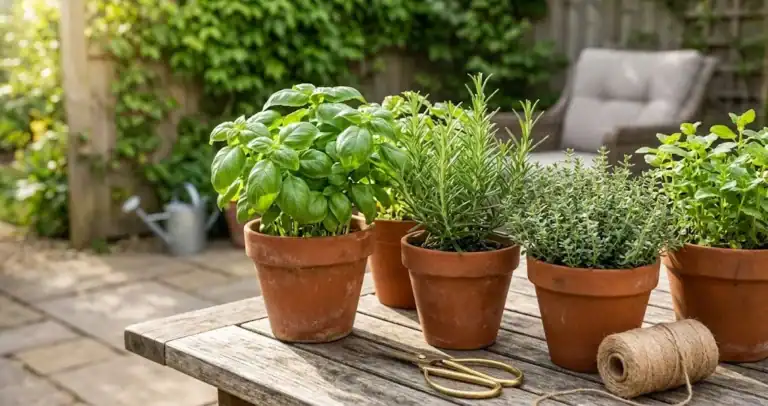
Beginnings go smoother when the plants are ones you reach for in the kitchen. A small selection of familiar kitchen herbs such as basil, rosemary, parsley, and cilantro covers most weeknight cooking, and each one is an easy to grow herb from a starter plant. You can always add more once you know what your garden gives you. If an herb sparks your curiosity but you have never grown it before, start with a single container rather than a whole bed and learn its habits before you commit space.
Start with three or four. Six is plenty in a single season. Trying to grow ten in year one usually means some get neglected, dry out, or bolt before you use them. Pick the herbs you buy in bunches at the store, then look for a compact version that suits your space. Whether you want to grow herbs on a windowsill or in a backyard bed, the same handful of varieties covers most kitchens. For a first herb garden, the easiest herbs to grow are chive, mint, sage, and thyme. They are forgiving plants and keep producing through summer. Most new gardeners are surprised how quickly a small pot of basil becomes a steady supply once it settles in.
Pay attention to life cycle too. Basil and cilantro are annual herbs that finish in one season, so you replant each year. Rosemary and sage are perennials in mild climates and come back from the same plant. Mix a few of each so something is always ready, even when an annual finishes. Mint spreads by runners rather than seed, and it is worth giving this herb its own corner so it does not crowd out slower growers. If you want to try a culinary herb that doubles as a tea plant, mint is the gentlest starting point. Most Mediterranean herbs are perennial once established, which is one reason they are such a good value in a small garden.
Find a spot with at least six hours of sun
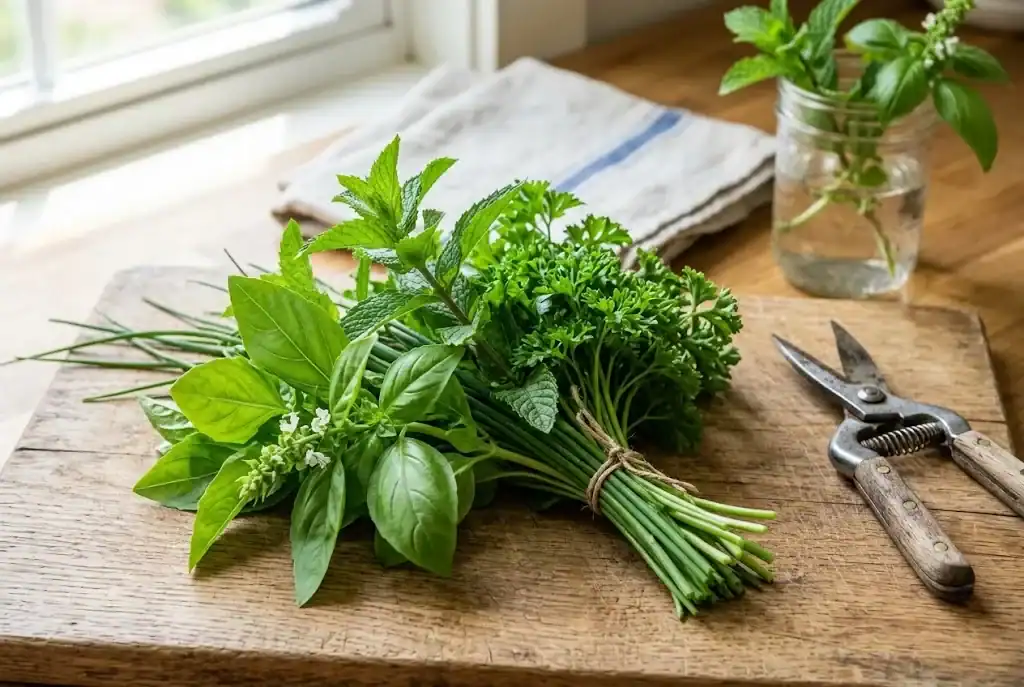
Most herbs you want for the kitchen are Mediterranean plants. They evolved in dry, sunny hillsides and they do best in the sunniest spot you can give them. A south-facing step, a patio that catches morning and early afternoon light, or an open patch along a fence all work well. Six hours of direct light is the practical minimum. Eight hours is better. Few beginner gardeners realise how much the right light matters until a plant that sulked in shade takes off after being moved into a brighter spot.
Watch the spot for a day before you commit. Morning sun is gentler and counts more than late afternoon shade, but full-day sun is fine for the popular herbs on this list. If you only have a partly shaded area, mint still performs with four hours of light, while rosemary sulks in anything less than six hours.
Wind is the other thing to notice. A balcony with constant gusts dries containers out fast and snaps tender stems. A wall, a railing, or a few taller plants on the windward side breaks the flow enough to matter.
Choose between a container and a garden bed
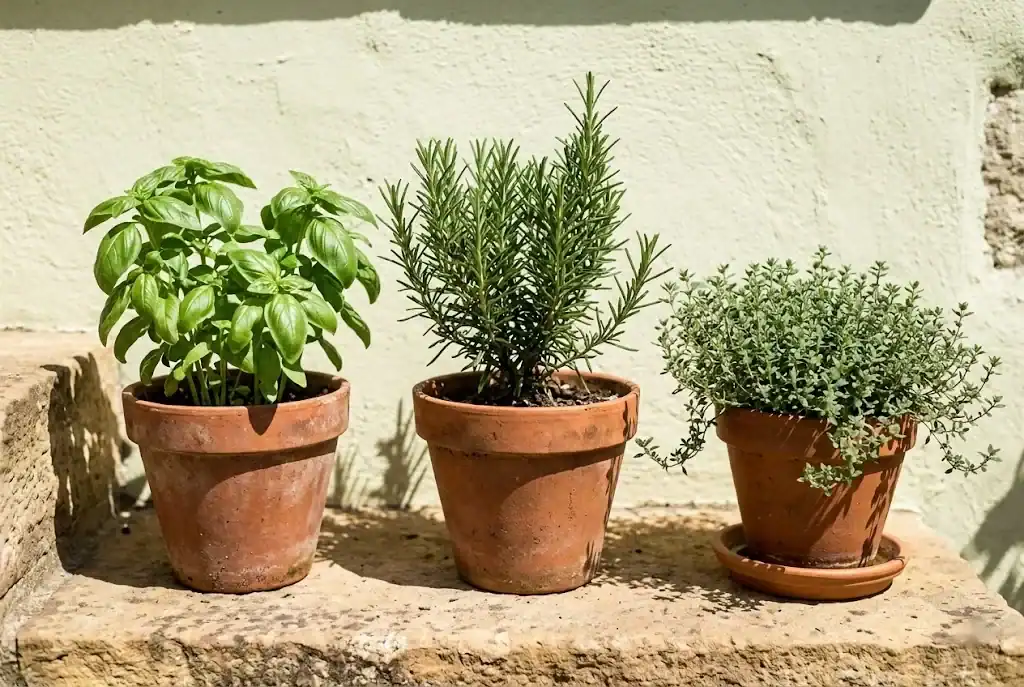
Both work. The right answer depends on your soil, your space, and how much you want to dig. Containers keep the garden close to the kitchen and let you move plants around as the season changes. Beds give roots more room and need less daily watering once plants are established.
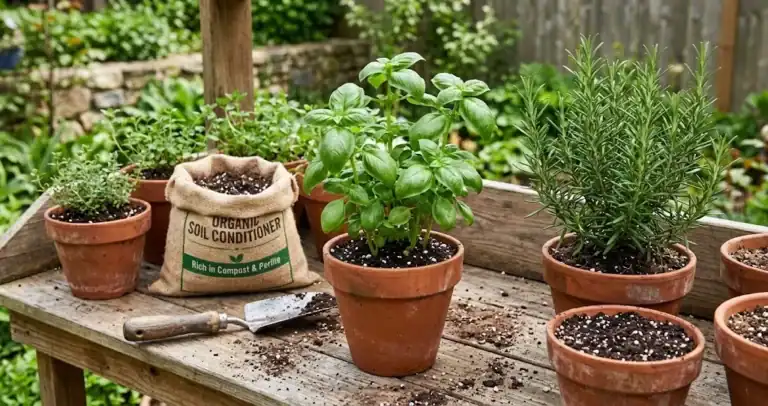
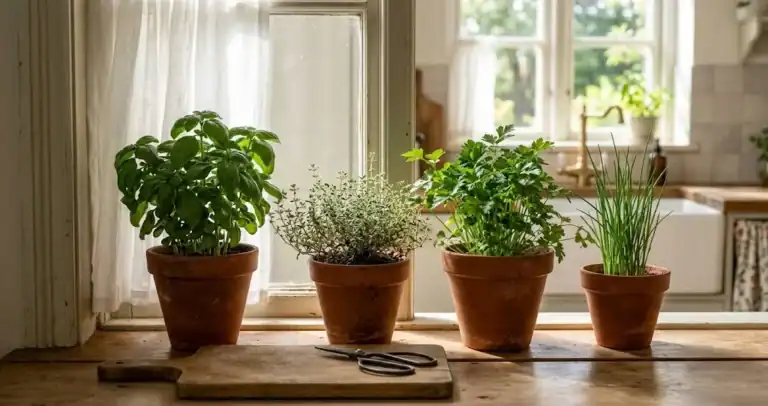
A container garden is the easiest way to start. Pick pots at least 20 cm (8 inches) deep so roots have somewhere to go, and make sure each one has a drainage hole. Terra cotta breathes and helps soil dry evenly, which Mediterranean herbs prefer. Glazed ceramic and plastic hold moisture longer and suit thirsty plants such as basil and mint. Use one pot per aggressive herb. Mint spreads quickly, and if you want it in the bed, keep it in a container sunk into the soil so the runners do not take over. A small herb planter on a sunny windowsill works just as well as a backyard bed when space is short.
A small raised garden bed is worth it once you know you will keep at it. A 1.2 by 2.4 metre bed gives room for eight to ten herbs with paths you can reach without stepping in. A bed against a fence or a wall warms up earlier in spring and drains well, two things most herbs appreciate.
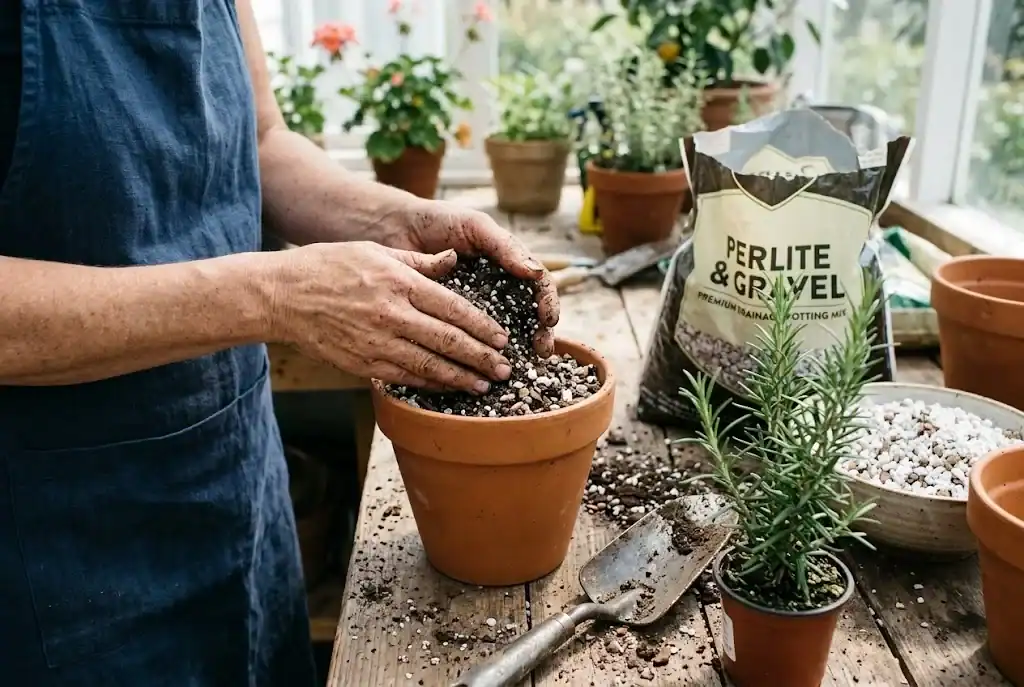
Whichever you pick, drainage matters. Herbs hate wet feet. If your soil is heavy clay, work in grit before planting, and consider a raised bed to lift the roots above the slow-draining layer.

Set up the soil and growing conditions so roots can breathe
The single biggest reason first-time herb gardens struggle is heavy, slow soil. Herbs want a loose, gritty mix that drains in a minute or two after watering. How much the soil matters becomes obvious the first time you loosen a root ball from a container and see white, healthy roots filling the space. Getting the soil right from the start is the change with the biggest payoff.
For containers, buy a good-quality potting mix. Most herbs do well in it as it comes. Where extra airflow around the roots is needed, work in a few handfuls of perlite or pumice. Skip the ordinary garden soil in containers: it compacts and stays wet around the roots. A bag of fresh potting mix with a small amount of perlite is a better starting point than a richer, denser blend.
For beds, dig in two to four centimetres of compost over the surface and fork it through the top 15 cm of soil. Compost feeds the soil life and helps sandy soil hold a little moisture. A light scattering of a balanced organic fertilizer at planting gives new roots something to work with. After that, most herbs prefer lean soil. Heavy feeding produces lush leaves with weaker flavor and more pests. The herb you grow will adapt to its preferred growing conditions within a few weeks of settling in, so pay attention to how each plant looks rather than to a generic feeding schedule.
Start from seed or from nursery seedlings
Both work, and each has a clear best use. Seedlings give you a head start and are the easier path for someone just starting out. Seeds cost almost nothing and let you grow unusual varieties, but they need more attention in the first weeks.
Buy seedlings of rosemary, sage, and chive. They transplant well and start producing within a few weeks. Pick compact, bushy plants with healthy green leaves and no flowers. Avoid leggy stems and roots poking out of the drainage holes, which means the plant has been in the pot too long.
Grow from seed for cilantro, and for any variety you cannot find as a starter plant. These herbs dislike being moved once they are established, and direct sowing avoids the transplant shock. Sow a short row every three to four weeks through the growing season. The staggered planting gives you a steady supply instead of one big glut. Choosing the right herb seeds for your climate and kitchen makes the difference between a packet that germinates in a week and one that sits in the soil for a month. Many gardeners start basil from seed once they realize how much a single plant produces, and the same trick works for chervil and other small leafy herbs.
Whatever you choose, plant after your last frost date. Most tender seedlings sulk in cold soil below 12°C. A cheap soil thermometer takes the guesswork out of timing.

Water, feed, and harvest in steady rhythms
New plantings need water often enough to keep the root zone damp but not soggy. Check containers every day in warm weather and water when the top centimetre feels dry. Beds need water two or three times a week in dry spells rather than a light sprinkle every day. Deep, infrequent soaking trains roots to grow down where the soil stays moist.
Feed lightly. A monthly watering with a dilute liquid fertilizer or a top dressing of compost is plenty for most herbs. Overfed plants grow fast but taste flat and attract aphids. If leaves are pale or growth has slowed mid-season, a single feed is enough.
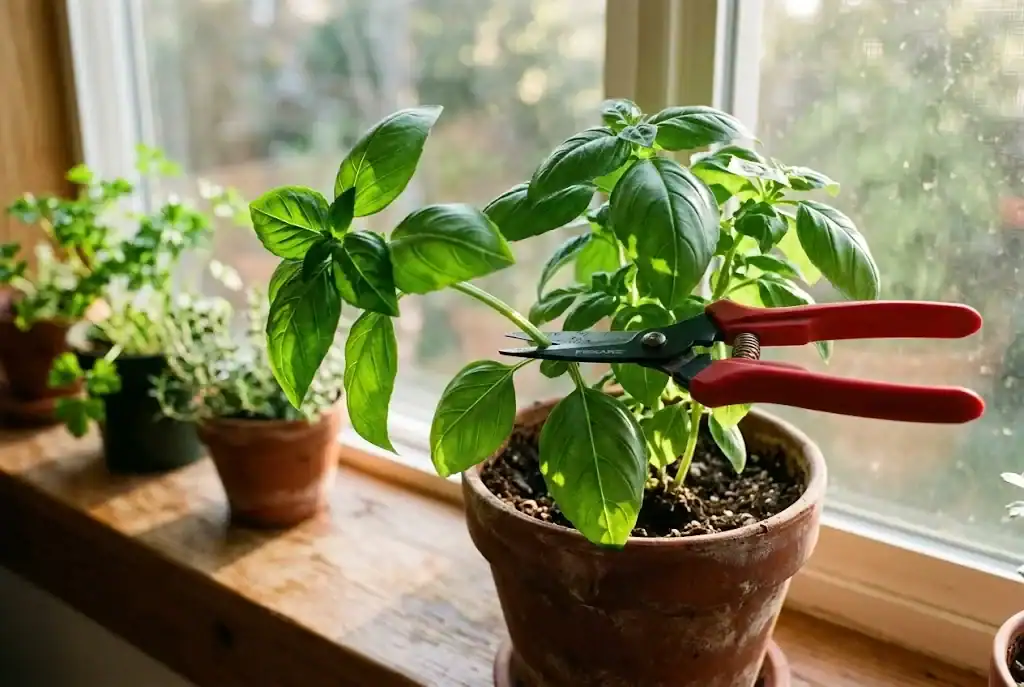
Harvest often. Regular picking keeps plants branching and delays flowering. For mint, pinch just above a pair of leaves and the plant sends out two new stems. For rosemary, snip the top few centimetres of a stem rather than cutting into the woody base. For leafy greens such as parsley and cilantro, cut the outer stems first and let the center keep producing. An herb you harvest often grows back bushier, and the regular cuts tell the plant it still has work to do.
Let one or two plants flower if you want to feed pollinators. The blossoms on oregano and thyme attract bees and other useful insects to the rest of the garden. Once a plant has finished flowering, cut it back by a third to encourage a second flush of leaves. This is also the easiest way to grow an herb that doubles as a pollinator plant.
Common mistakes and quick fixes
A few patterns show up in almost every first season. Spotting them early saves a plant.
- Crowded pots. One herb per small container, three at most in a large one. Crowding reduces airflow and spreads disease.
- Watering on a schedule. Check the soil, not the calendar. Potted herbs in full sun may need water twice in a hot afternoon.
- Letting basil flower. Pinch the tops as soon as you see buds. Once basil flowers, leaves turn bitter and the plant slows down.
- Planting mint in the ground. Mint spreads aggressively. Keep it in its own pot, sunk into the bed if you want it at ground level.
- Skipping the soggy-pot check. If water sits on the surface after watering, add grit and repot. Soggy roots rot fast.
Fix one thing at a time when a plant struggles. Most herb problems trace back to water, light, or container size. Adjust one of those and the plant usually tells you within a week whether the change worked.
Beyond the basics: dry herbs, pair them up, and plan the next season
Once a beginner’s herb garden starts producing, the natural follow-up questions are how to keep the surplus and how to make the plants work for each other. A few small habits turn a summer’s worth of fresh herbs into a year-round supply and a healthier bed. These gardening tips are the ones experienced herb gardeners share most often: dry what you cannot eat fresh, grow mint on its own, and treat the bed as a community of plants rather than a row of pots.
Dry herbs you cannot eat fresh. When mint outpaces the kitchen, hang small bundles upside down in a warm, airy room out of direct sun. Most leafy herbs dry in five to seven days and crumble into jars for winter cooking. Basil is better frozen than dried, since air-drying loses much of its flavor: blend the leaves with a little olive oil, freeze the mix in ice cube trays, and drop a cube into pasta, soup, or stew all winter. Use a labeled jar for dried herbs so you can tell summer savory from oregano six months later.
Pair herbs as companion plants. Some herbs grow well next to vegetables simply because they share the same conditions. Basil near tomatoes is the classic combination, and dill or chamomile near cucumbers brings in pollinators. Avoid planting mint next to slower-growing herbs because its runners will take over your garden within a season. Keep it in its own container or a raised bed with a hard edge. Tuck oregano together near the front of a sunny bed with other Mediterranean herbs; they like similar growing conditions and play well with most vegetable garden neighbours.
Plan ahead for cooler months. Basil is frost-sensitive and finishes at the first hard frost, so bring it indoors before nights drop below 10°C. Cilantro is a cool-season annual that tolerates light frost but usually bolts and sets seed before deep cold arrives. When thyme suits the local hardiness zone it is generally hardy. Rosemary is more dependent on variety and local hardiness zone. Plants in pots lose winter hardiness because their roots freeze faster than in-ground roots. Check the plant label and your local hardiness zone before leaving it outdoors through winter, and move it to a sheltered spot near a wall in colder zones. Many gardeners keep a small herb planter on the kitchen windowsill through winter and start fresh again in spring.
Treat your first year as a learning season. Note which herbs you reached for and which sat untouched. Skip those next year and add something new instead. Most beginners settle on five or six favorite herbs within two seasons and grow them well, rather than juggling ten varieties and struggling with all of them.
Year two: seeds, cuttings, and herbs for tea
The best way to grow herbs in your second season is to start with what already worked. Save seeds from cilantro that finished cleanly. Snip a sprig of mint, root it in a glass of water, and transplant it as a free starter plant for next year. This is also when many beginners branch out from cooking into herbs for tea.
For the kitchen, the same handful of culinary herbs that worked in year one will probably cover year two as well. Mint and chamomile make a gentle tea. Lemon balm and lavender also dry well for infusions. If you want to add chamomile or lemon balm, give them their own bed so each plant has the space it needs. None of these is hard to grow, and they all benefit from the same six hours of sun that kitchen herbs prefer. An herb garden that produces both fresh leaves and dried bundles for the year is one of the great milestones a new gardener can reach by year two.
Many herbs grow best when grouped by their preferred growing conditions rather than by use. Mediterranean herbs such as thyme and oregano like dry, lean soil and bright sun. Tender leafy herbs like basil and chive want richer soil and steadier water. An herb garden that respects those two groups is the best way to start a productive second year, and the plants you grow together will reward you with stronger growth and fewer problems. Keep an organic mulch around the leafy herbs to hold moisture, and skip mulch around the Mediterranean ones so their crowns stay dry. The herb gardener’s real skill is noticing how plants respond and adjusting the layout in the next season rather than fighting the conditions they already have.
If your garden space is small, focus on the herbs you reach for most often rather than the ones that look impressive. The best herbs to grow at home are the ones you actually use. A single mint plant on a windowsill, a few leaves of basil in a sunny corner, and one rosemary in a deep container will keep most kitchens in fresh flavor for the year. Skip the herbs that only suit a recipe you make once a year, and grow more of the ones you reach for weekly.
What to do next
A first herb garden is mostly about learning how your space behaves through the season. Once you have a few plants established, the natural next question is which herbs suit the way you cook and the room you have. Different herbs have different growing needs, and the more you observe them the more you start to plan around the plants rather than the calendar. A useful next step is selecting herb seed sensibly for the varieties you actually want, and a broader primer on setting up an herb garden that lasts through the seasons gives you the framework for year two. Keep notes as you go, water early in the morning rather than at midday, and pick often. The herbs do the rest.
Once you start growing herbs at home in earnest, the best herbs to grow are the ones you cook with most weeks rather than the ones that simply look impressive on a seed packet. The garden journey from one container of mint on a windowsill to a productive kitchen garden takes most beginners about two seasons, and it is one of the most rewarding projects in gardening. Keep an eye on the herbs that thrive in your conditions and add more of those next year. Skip the ones that bolt, sulk, or sit untouched. The herbs that you actually reach for are the herbs worth growing. For plants in the garden that need a little extra help, a thin layer of mulch around the base in mid-summer keeps the soil life active without feeding the leaves too much.