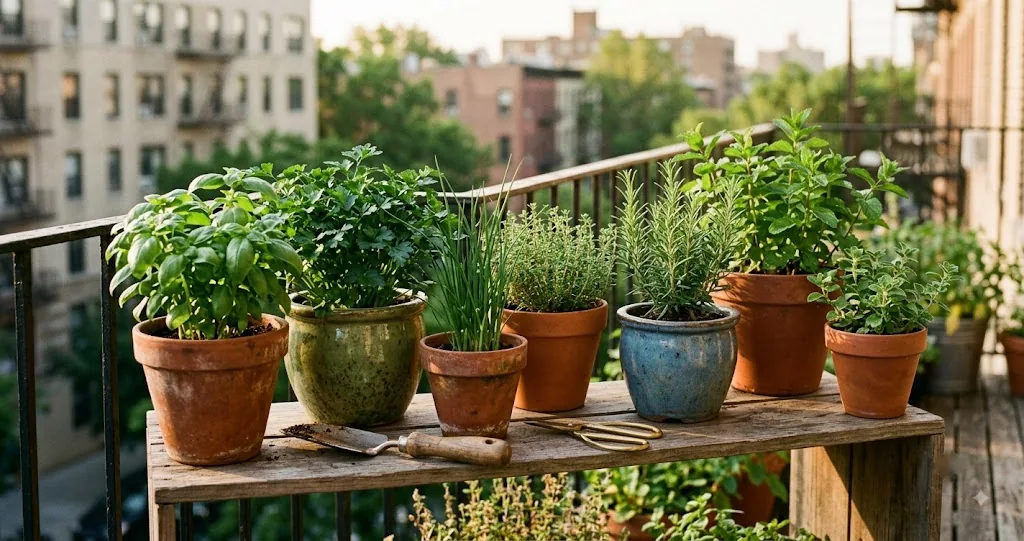
A few well-chosen herbs can turn a balcony, porch, or bright kitchen corner into a useful little garden. Success comes from matching plants to light, soil, and moisture, then giving their roots enough room. You do not need a garden bed to harvest fresh, fragrant leaves for cooking.
To grow herbs in pots, use a container with drainage holes, fresh potting mix, and a site that suits the plant’s light needs. Group only plants with similar watering habits, check the mix before you water, and snip often to keep new growth coming.
For a wider overview of planning a garden, see our beginner’s guide to growing an herb garden. This guide concentrates on getting a small container garden right.
Choose herbs that are easy to grow
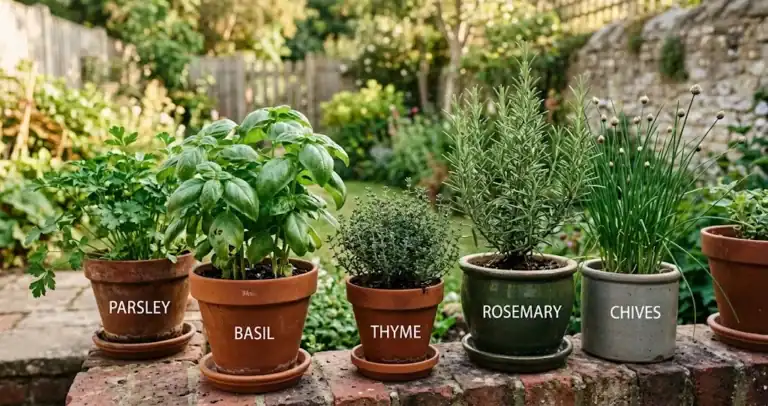
Basil, chives, parsley, cilantro, thyme, oregano, sage, rosemary, and mint all adapt well to a planter when their basic needs are met. For many beginners, chives and leafy annuals are among the easiest herbs to grow. Pick herbs you will actually use, rather than trying to plant every variety at once.
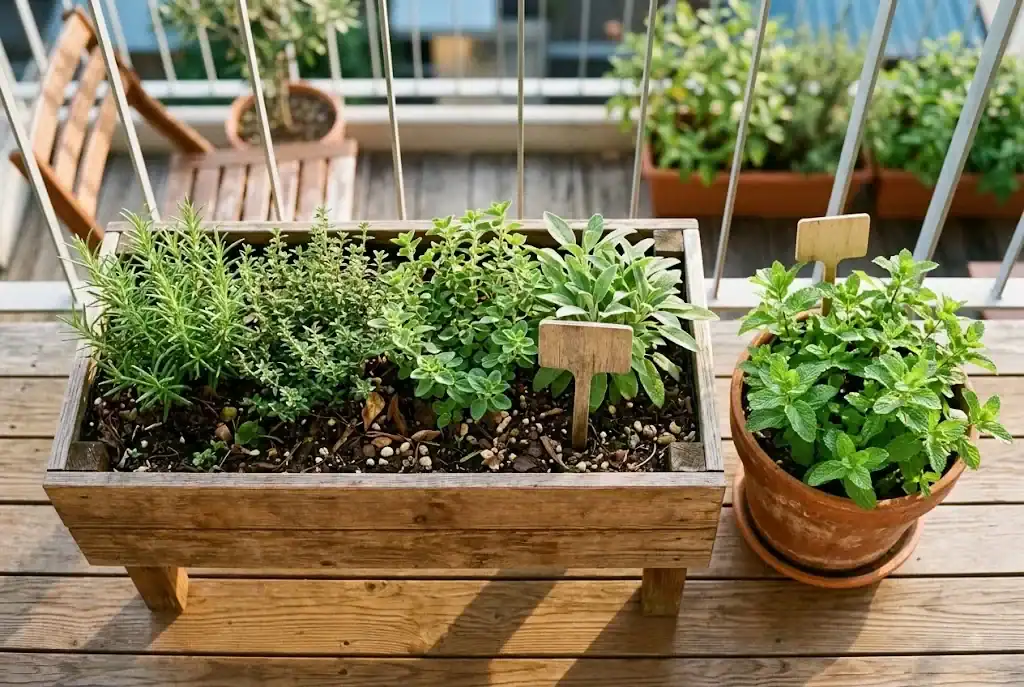
Match plants by their preferred rhythm. Leafy annuals like even moisture. Mediterranean choices prefer sun and a chance to dry slightly between drinks. Mint is vigorous, so give peppermint, spearmint, or another Mentha variety a container of its own.
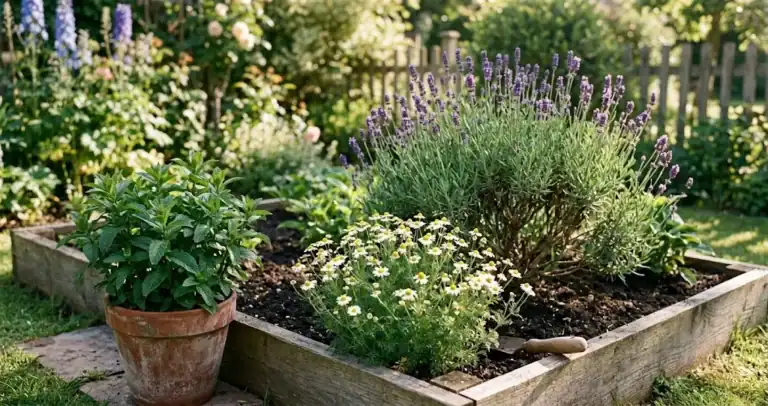
- Sunny and drier: lavender and other Mediterranean types.
- Evenly moist: chives and cilantro.
- Separate: mint, because its roots can crowd neighboring plants.
Choose the right herb container
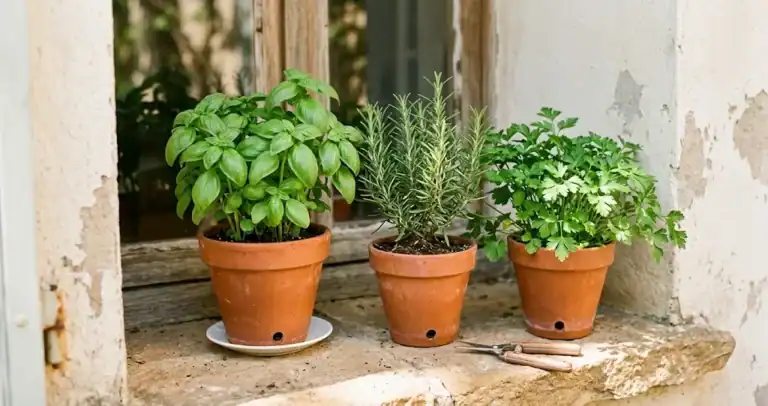
Good drainage is the first requirement. A pot needs a hole so excess moisture can leave the root zone. Use a saucer under indoor containers, then empty it after watering. Roots sitting in wet mix lose access to air and soon struggle.
Choose a pot that gives each plant room to spread. A single leafy plant is comfortable in a container about 8 to 10 inches wide. A woody perennial benefits from a deeper and heavier planter. A long box can hold compatible herbs, but crowding reduces air circulation and makes pest problems harder to spot.
Terra-cotta is porous and dries quickly. Glazed pottery, plastic, and metal hold moisture longer. The best material depends on your climate, how often you can water, and how much weight the location can carry. Our guide to herb containers can help with the next level of size, material, and placement decisions.
Use a light, well-draining potting mix
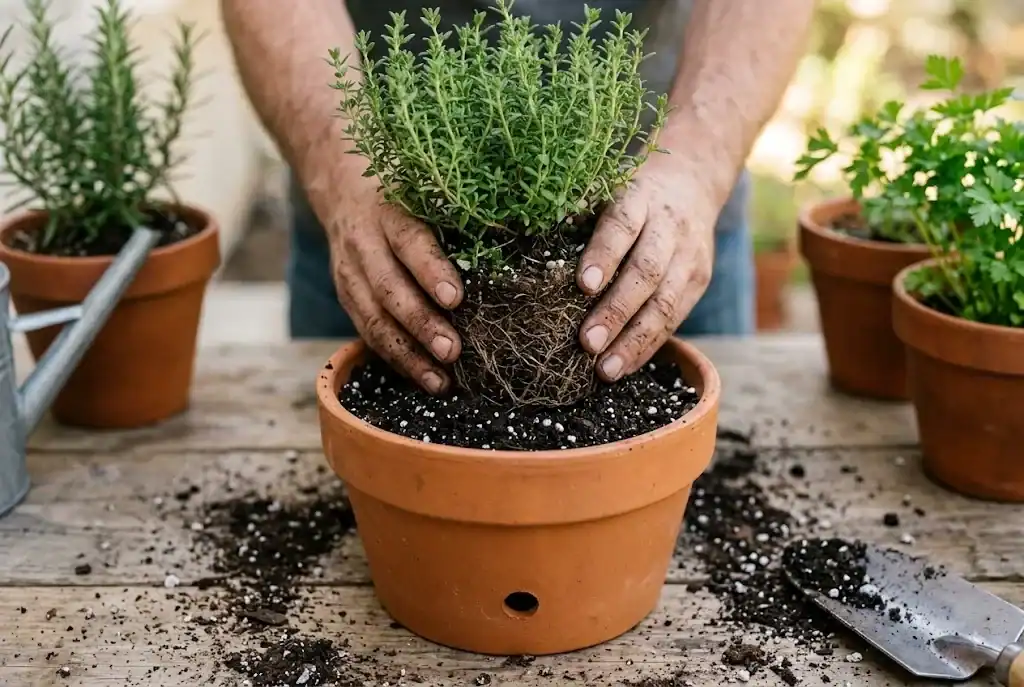
Use potting mix rather than soil from the garden bed. A quality mix is lighter, stays open around roots, and drains more reliably. For lavender or other plants that need excellent drainage, choose a well-draining blend or add perlite according to the product label. Compost can enrich a mix, but heavy soil is not a substitute for structure.
Skip the traditional layer of stones in the bottom. It takes away root space without fixing a soggy mix. Instead, start with a clean container, a clear hole, and fresh material that does not stay saturated for days.
Plant compatible herbs together
Set nursery plants at the depth at which they were growing, loosen any circling roots, and firm the mix gently. Leave an inch below the rim so water stays in the pot. Water once after planting and let the excess drain.
Leafy annuals and chives can share a roomy planter. Mediterranean plants make a sensible sunny group. Keep mint separate, and do not combine a thirsty annual with a drought-tolerant perennial only for the look of the leaves. If you begin from seed, cilantro is a forgiving choice, though a seedling gives a faster first crop.
Give potted herbs the right light and water
Most culinary herbs need about 6 hours of sun. Outdoors, a bright south- or west-facing location often works well. Herbs indoors need the brightest window you have. Turn the pot occasionally for even growth; pale leaves and stretched stems usually mean the plant needs more light.
Feel the top inch of mix instead of following a calendar. Soak leafy plants when that layer feels dry, and let the Mediterranean group dry a little farther down. Let moisture leave the bottom, rather than giving a shallow splash. Morning is a good time because foliage can dry before evening.
In very hot weather, a small pot may need checking daily. Cilantro and mint can appreciate shade in intense afternoon heat. Crisp edges, a dry root zone, or a sudden wilt are clues to investigate, not automatic reasons to add more moisture.
Feed lightly, harvest regularly
Fresh potting mix usually supplies enough nutrition to start. During an active growing season, use a light dose of balanced fertilizer according to its label if growth slows. Excess fertilizer can give you soft, less aromatic leaves.
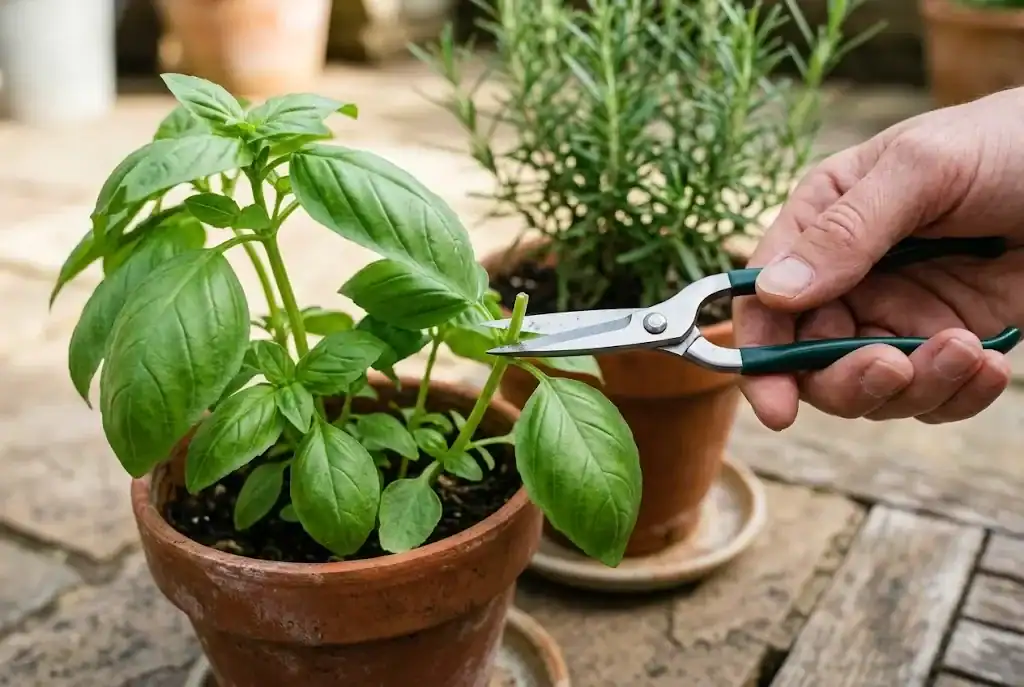
Harvesting is part of care. Snip tender stems just above a leaf pair. Pinch flower buds for leafy growth, cut chives a couple of inches above the mix, and take small cuttings of new growth from woody plants rather than cutting into old bare wood. Avoid taking more than one-third of a healthy plant at once. For follow-up care through heat, rain, and busy weeks, use these tips for growing herbs in pots.
Common mistakes when growing herbs in containers
- Ignoring drainage: a soggy root zone causes more trouble than a missed drink.
- Overcrowding: plants compete for light and air circulation falls.
- Using one watering routine: leafy and Mediterranean plants do not dry at the same rate.
- Accepting low light indoors: a bright room may still be too dim for culinary growth.
- Waiting to harvest: regular cutting keeps many plants compact and productive.
Adjust care as seasons change
Heavy rain can leave containers saturated, so move them under cover when possible. Tender annuals dislike cold nights and should come inside before a chill. Hardy herbs may stay outdoors, but roots in a pot are less insulated than roots in a garden bed. Protect the planter or move it near the house before a freeze.
Frequently asked questions
Do herbs like deep or shallow pots?
It depends on the plant. Deep-rooted choices appreciate more depth, while chives can manage in a moderately deep container. Give roots adequate width and avoid an oversized pot that stays wet too long.
What herbs should not be potted together?
Keep mint alone. Also avoid pairing thirsty leafy plants with drought-tolerant Mediterranean types. Pair plants by light, moisture, and growth rate, not by appearance.
Can herbs grow indoors year-round?
Yes, if they receive strong light, a free-draining mix, and air circulation. A sunny window can work in bright months; a suitable grow light helps when natural light is limited. Harvest little and often so the plants stay useful.
Start with a small, useful collection
A successful herb garden is mostly observation. Begin with two or three culinary favorites, give each plant the right conditions, and adjust from what you see. A handful of healthy, fresh-picked herbs will be more rewarding than a crowded display.