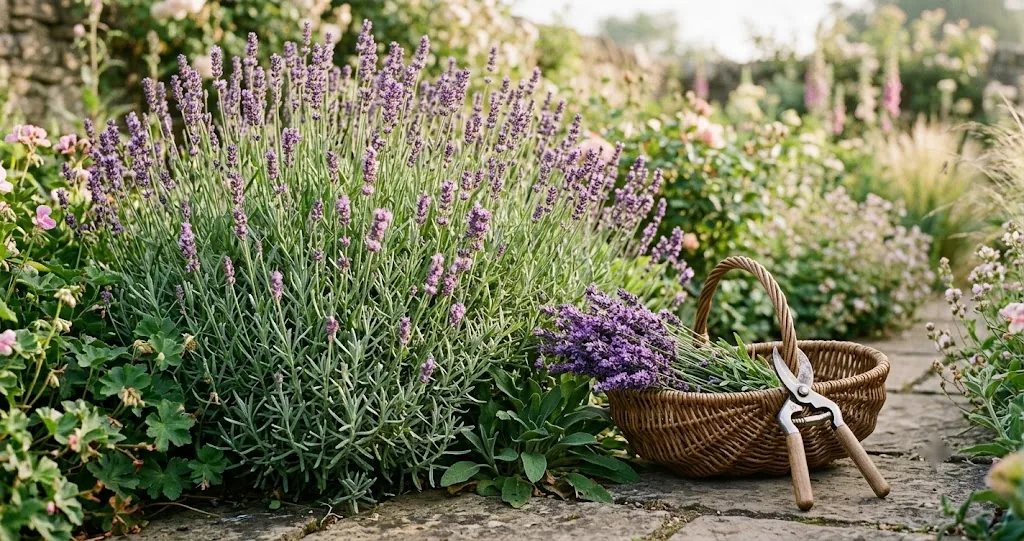
Lavender is at its most useful just before the flower spikes fully open, when the buds are fragrant, colorful, and easy to dry. The simple rule is to cut clean stems above the leafy green growth, never deep into the woody part of the shrub. That gives you a beautiful harvest and leaves the plant with the growth it needs to recover.
Use sharp, clean pruning shears or scissors on a dry morning after the dew has evaporated. If you are new to cutting herbs and flowers, start with a few stems from several parts of the plant rather than stripping one side bare. For broader timing tips, see our complete herb harvesting guide.
When to harvest lavender and choose the right buds
The right harvest window depends on how you plan to use lavender. Watch the individual flower buds instead of the calendar. Most lavender flowers open from the bottom of a spike upward, so a single plant can offer several useful harvest stages.
- For dried buds, sachets, and culinary use: Cut when most buds are plump and colored but only a few flowers have opened. This stage holds the buds together well and preserves a strong fragrance.
- For fresh bouquets: Wait until roughly one-third to one-half of the flowers on a spike are open. The stems will look lively in a vase, although they will shed more readily once dried.
- For drying whole stems: Harvest as buds begin to open, before the flower heads open entirely. The color is still rich and the finished bundles are less likely to drop flowers.
In many gardens, English lavender (Lavandula angustifolia) reaches this point in early to midsummer. Later-blooming lavandin and some French or Spanish lavender varieties can follow later. Weather, variety, and local climate matter more than a fixed month. Lavender is ready when the flower spike has color, scent, and firm buds, not merely when the first bloom appears.
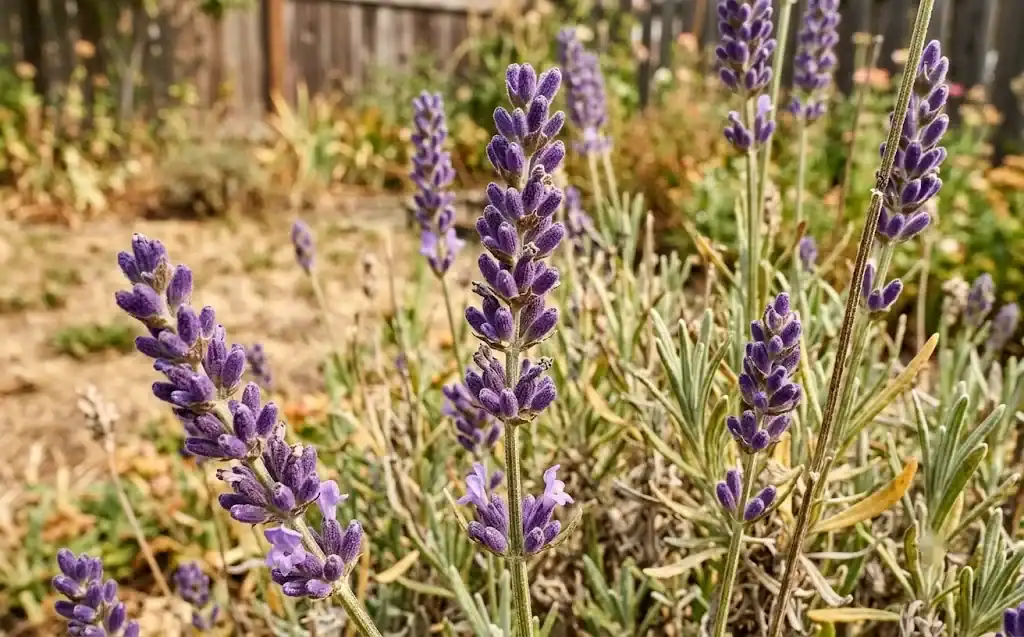
The best time to harvest lavender in your garden
Harvest lavender in the morning after dew has dried and before the heat of the day dulls the flowers. Damp stems can mold in a bundle, while a hot afternoon harvest may lose some scent before you get indoors. Skip plants wet from rain or irrigation and wait for a dry day.
Bring a clean basket, a small tray, and sharp pruners. Avoid crushing stems into a deep bucket. Once you’re harvesting lavender, transfer the flowers to a shallow container in the shade. Airflow matters, especially if you plan to dry lavender, and a shallow container keeps the flower buds from being bruised.
How to harvest lavender step by step
- Pick a healthy flower stem. Choose stems with clean foliage and firm flower spikes. Leave weak, damaged, or newly planted lavender alone until it has more green growth.
- Follow the stem down from the flower. Find the first leaves or side branches below the flower stem. This is the safe zone for your cut.
- Aim to cut above green leaves. Make one clean cut about an inch above the leafy base, leaving green leaves or side shoots beneath it. Do not cut lavender into old, leafless wood. Lavender often does not resprout reliably from that old base.
- Take only what the shrub can spare. Spread your cuts around the plant. A light harvest can double as tidy deadheading, but a hard cut on a small or stressed plant is not a shortcut to more flowers.
- Keep stems aligned. Lay each handful in the same direction so the flower heads are together. This makes it easier to make even lavender bundles for drying.
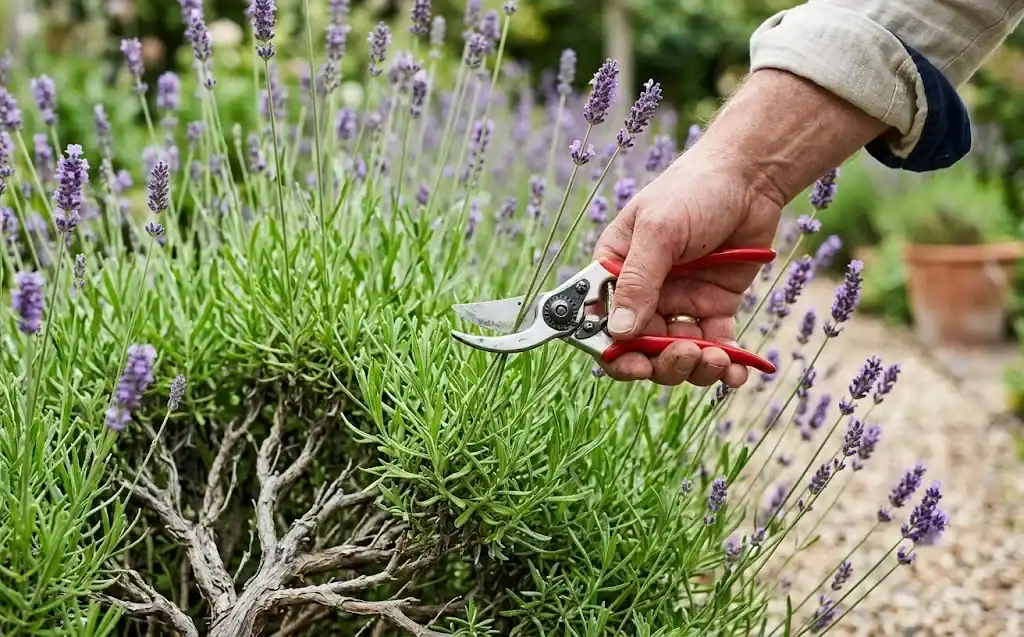
The exact cut varies by variety. English lavender generally has long flower stems rising from a compact mound. Spanish lavender has distinctive top bracts and may be treated more lightly. In every case, preserve visible leafy growth. The Royal Horticultural Society gives the same core caution: lavender does not readily make new growth from old stems, so avoid cutting back into old stems. The base of the flower stem is a useful place to start looking, but the leaves or side branches below it, not an arbitrary distance, should guide your cut.
Lavender varieties and the best lavender for each use
Different lavender varieties offer different stem length, flower shape, and scent. The compact varieties of English lavender are a familiar choice for dried lavender buds, tea blends, sachets, and cooking. Long-stemmed lavandin makes an excellent dried bouquet. French lavender and Spanish lavender are striking in the garden, but their distinctive flower heads and growth habits mean you should cut the flower stems lightly and leave the lavender leaves in place.
Lavender is a perennial shrub, so a harvest should respect the plant’s next season as well as today’s flowers. If you want to grow lavender for regular cutting, choose a healthy variety suited to your hardiness zone, give it full sun and free-draining soil, and let the green framework fill out before taking substantial stems.
Harvesting, deadheading, and pruning are not quite the same job
A harvest removes flower stems for a purpose. Deadheading removes spent blooms to keep the plant neat. Pruning shapes the shrub and manages its leafy growth. They may happen close together, but they are not interchangeable.
After the main bloom, a light trim of spent stalks and a little leafy growth can keep a lavender plant compact. Do not turn a summer harvest into a deep renovation. Save major decisions about an old, leggy shrub for the right season and its particular variety. The RHS advises annual trimming after flowering while avoiding old wood, a useful guardrail for a mature lavender plant.
Can you harvest lavender more than once?
Yes, many healthy lavender plants can give a light second flush, especially where the growing season is long. Remove the first set of stems while the plant still has plenty of green leaves, then let it recover. A second harvest is usually smaller, and it is fine to leave late flowers for pollinators or for the look of the garden.
Do not force a second crop from a young, drought-stressed, recently transplanted, or heavily mature shrub. Water the root zone during prolonged dry weather if your conditions call for it, but do not keep lavender in constantly wet soil. Good drainage and full sun matter more than frequent watering.
How to dry lavender and preserve lavender after harvesting
For bundles, gather a small handful of lavender stems, tie them loosely with twine or a rubber band, and hang the lavender upside down in a dark, dry, well-ventilated room. Small bundles dry more evenly than thick ones. Keep them out of direct sunlight, which can fade the purple color and weaken the fragrance.
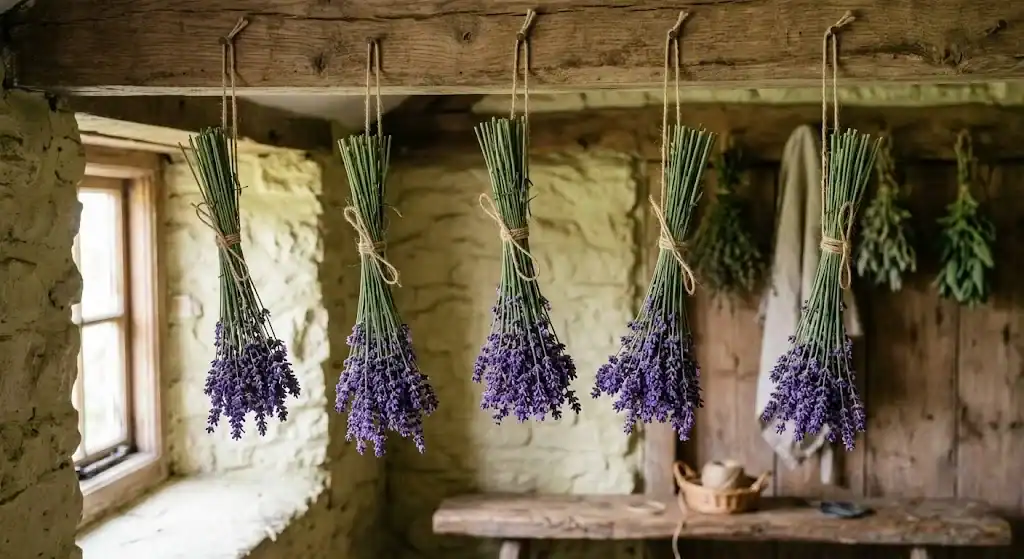
Check after about one to three weeks, depending on humidity and bundle size. Lavender is completely dry when the stems snap rather than bend and the flowers feel papery. To collect loose lavender buds, hold the dry stems over a tray or clean bowl and gently roll the flower heads between your fingers.
To air dry lavender without hanging it, lay the lavender sprigs in a single loose layer on a screen or tray in the same dark, airy room. Turn them once if needed. Do not seal the flowers until the lavender is dry all the way through. A little trapped moisture can spoil an otherwise careful lavender harvest.
Once the flowers are dry, move them to an airtight jar away from heat and light. If storage is your immediate next step, our guide on how to store lavender after harvesting covers containers and handling in more detail.
Ways to use lavender after harvest
Dried flowers are lovely in sachets, simple arrangements, and craft projects. Fresh or dried culinary lavender can also be used sparingly in cooking and baking, provided the plant has not been treated with products that are not labeled for edible crops. A little goes a long way because the flavor is intensely floral. For recipe ideas and variety notes, explore these ways to cook with lavender.
Try a few lavender buds in lavender simple syrup, a loose tea blend, or a small sachet before committing the whole crop to one project. These are gentle ways to use dried lavender while you learn which fragrance, color, and flavor you enjoy most.
For home use, it is wiser to enjoy the plant as a flower, herb, or scent than to assume a harvest is suitable for homemade distillation. Distilling lavender oil requires specialized equipment and careful handling. Keep the harvest task simple: cut clean stems, dry them well, and choose a use that matches the stage at which you picked them.
What about lavender leaves, tea, and essential oil?
Lavender leaves have scent too, but the buds are usually the part saved for sachets, tea, cooking, and baking. You can add a few clean leaves to a dried arrangement or compost them with trimmings, but do not let a desire to use every leaf turn a healthy shrub into a bare one.
The scent and oil content of a flower can vary with the lavender variety, harvest time, and how the material is dried. If you want a specific oil product, choose a tested commercial option and follow its label rather than improvising a home distillation from garden stems.
Common lavender harvesting mistakes in the garden
- Cutting into bare wood: Leave leafy green growth below the cut so the shrub has the best chance to regrow.
- Harvesting wet flowers: Moisture trapped in bundles invites mold.
- Waiting until every flower opens: Open spikes can still be attractive, but they shed more during drying and may be less useful for tidy buds.
- Making oversized bundles: Thick bunches dry slowly in the center. Use several small bundles instead.
- Using homegrown lavender in food without checking its history: Do not use flowers that were treated with unsuitable pesticides or other chemicals.
Frequently asked questions
Can I harvest lavender after it blooms?
Yes. You can cut spent flower stems after blooming as part of light cleanup, and you can still use open flowers for a fresh bouquet. For drying or collecting intact buds, harvest earlier, when most buds are colored and only a few flowers have opened.
What is the 8-8-8 rule for lavender?
The phrase is used inconsistently, so do not rely on it as a universal cutting rule. Lavender varieties, climates, and plant age vary too much for one number to replace observation. Use the dependable visual rule instead: cut flower stems above healthy green growth and avoid the old base.
Can you eat lavender straight from the garden?
Only use flowers you know were grown without products unsuitable for edible crops, and identify the plant before adding it to food. Lavender for the kitchen is usually used in small amounts because its flavor is strong. Wash gently if needed, then dry the flowers thoroughly before cooking and baking.
Should I leave some lavender flowers on the plant?
Yes, especially if you enjoy the display or want to support visiting pollinators. Harvesting does not need to be all-or-nothing. Take what you can use, leave a portion of the blooms, and trim the rest only when it suits the plant and your garden.
The short version
Harvest lavender on a dry morning when the buds are full of color and just beginning to open. Cut each stem above leafy green growth, make small bundles for drying, and keep them in a dark, airy place until crisp. That gentle approach protects the shrub and gives you fragrant flowers for bouquets, sachets, or the kitchen.