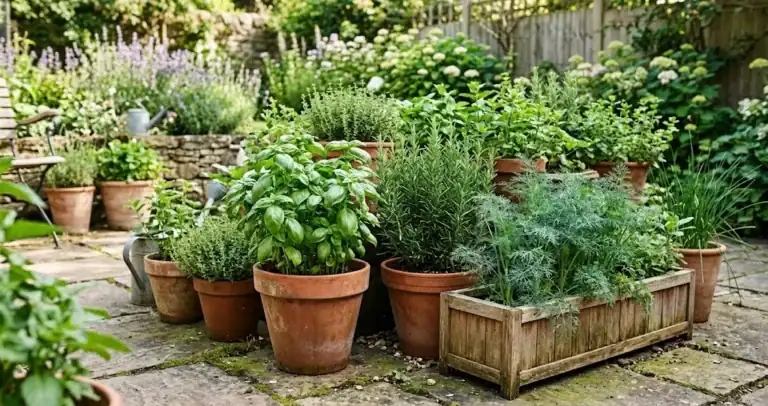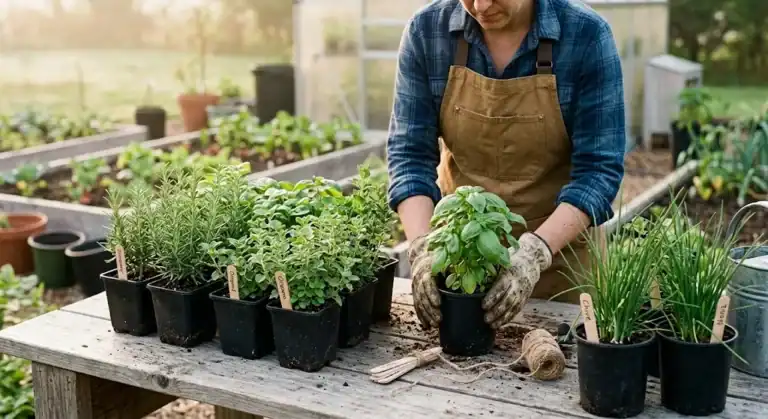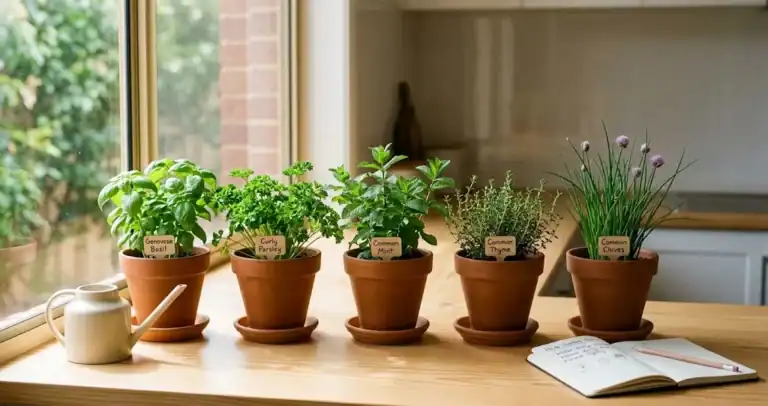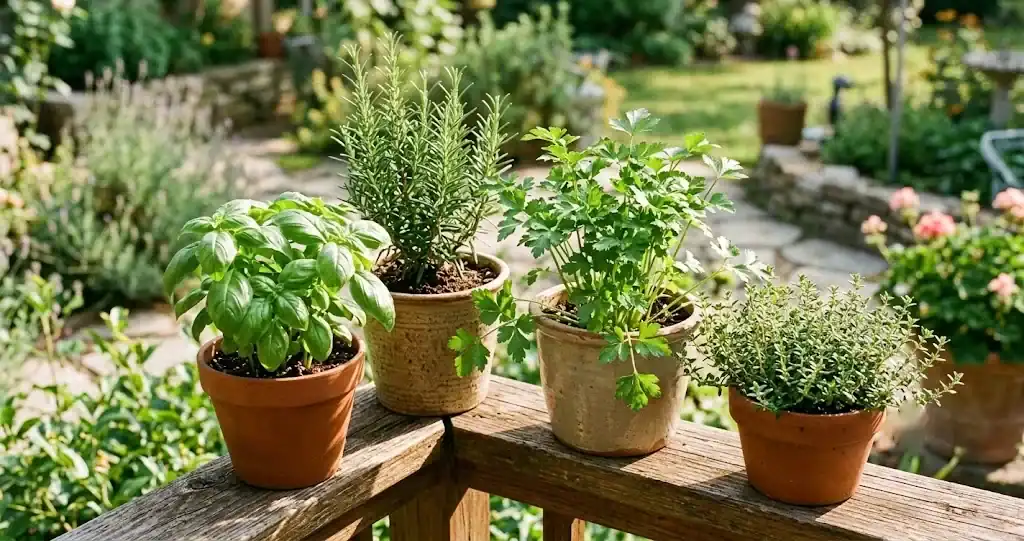
Step outside, snip a few leaves of basil or thyme, and dinner improves in about ten seconds. That is the real appeal of growing herbs in pots: fresh flavor within arm’s reach, no matter how much yard you have. It’s also why so many people grow herbs in containers instead of in the ground, since containers solve problems that stump gardeners working with in-ground beds, from poor native soil to a fast-spreading herb that wants to take over everything nearby.
Fresh herbs on hand, whenever you need them
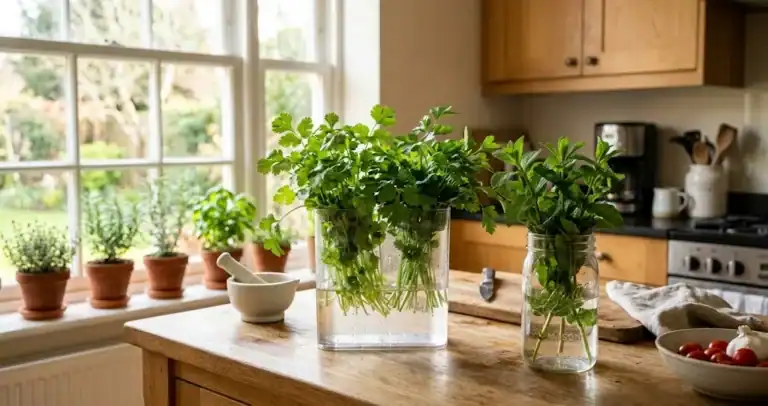
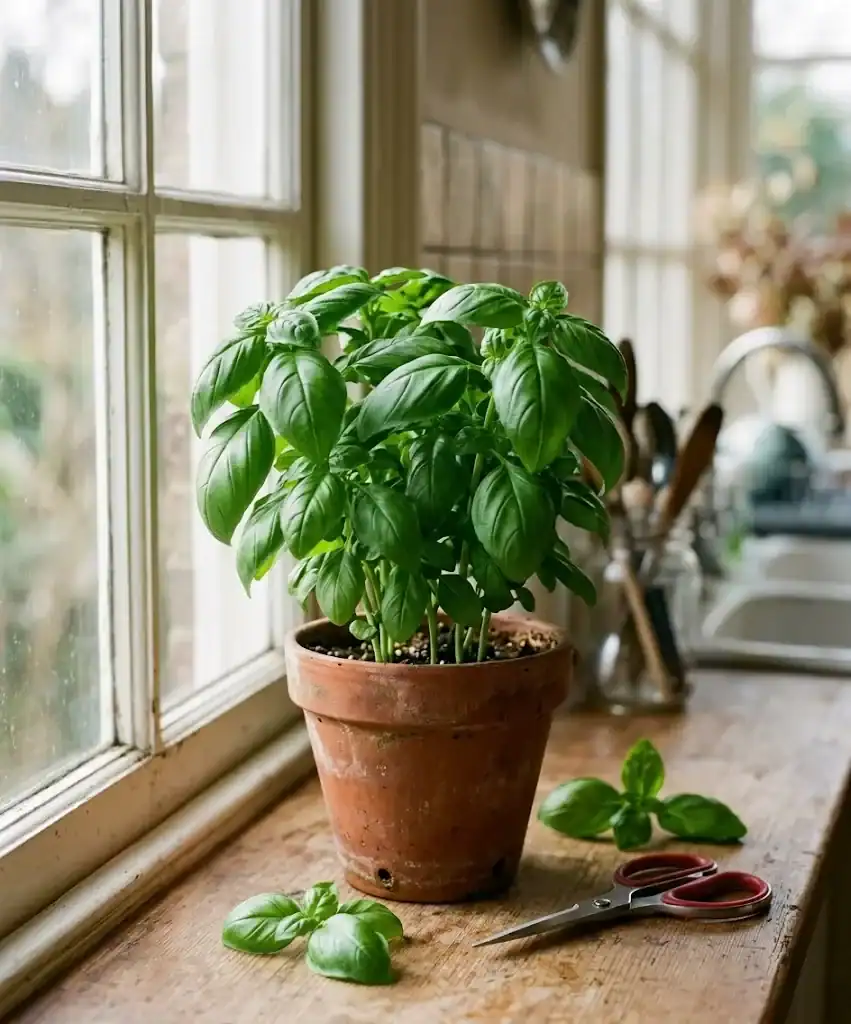
The clearest benefit is convenience: a container on the porch, patio, or a sunny windowsill puts basil, parsley, or chives close enough to snip mid-recipe. That immediacy matters more than it sounds: store-bought herbs wilt within days, while a living plant keeps producing for months. You use exactly what a recipe calls for, and the rest keeps growing instead of turning to mush in a produce drawer. Harvesting often, rather than letting a plant grow untouched, also encourages fuller, bushier growth, so regular snipping benefits the plant as much as your kitchen.
More control over soil and moisture
Herbs like rosemary, thyme, oregano, and sage come from dry, rocky hillsides and want soil that dries out between waterings. Basil, mint, and parsley prefer the opposite: soil that stays lightly moist. Trying to satisfy both in one garden bed is a losing game. A container lets you match soil and watering to each herb instead, which is a level of control ground planting rarely allows, and it gives even a first-time gardener a real shot at keeping every plant happy. The container itself matters here too. Its size, material, and drainage holes affect root health as much as the potting mix does, so it helps to know what actually makes a container work well for herbs before you buy one.
Check the top inch of soil before watering. If it feels dry to the touch, water thoroughly until it drains from the bottom. If it still feels moist, wait a day and check again. Overwatering, not underwatering, kills more container herbs, since soggy soil starves roots of oxygen and can lead to root rot.

Fewer pests and less competition
Herbs planted directly in a garden bed compete with weeds, larger vegetables, and whatever soil-borne pests already live in that ground. A container isolates each plant above the soil line, which makes it harder for slugs and many other ground-dwelling pests to reach. If one plant does get infested, moving it away from the rest of your garden is far easier than treating an entire bed. If you are weighing containers against a full in-ground herb bed, our complete walkthrough of starting an herb garden from scratch covers the fundamentals either way, from siting to soil prep.
Freedom to chase the sun, or bring herbs indoors
Most culinary herbs need six or more hours of direct sun. If your yard only gets strong light in one spot, or the light shifts through the season, a potted herb can move with it. Many herbs, including basil, chives, and parsley, also grow well indoors on a bright windowsill, so you can keep harvesting through a cold winter instead of losing your herb garden to the first frost. Rosemary in particular is often grown in a pot specifically so it can come inside before temperatures drop, since it does not tolerate a hard freeze.
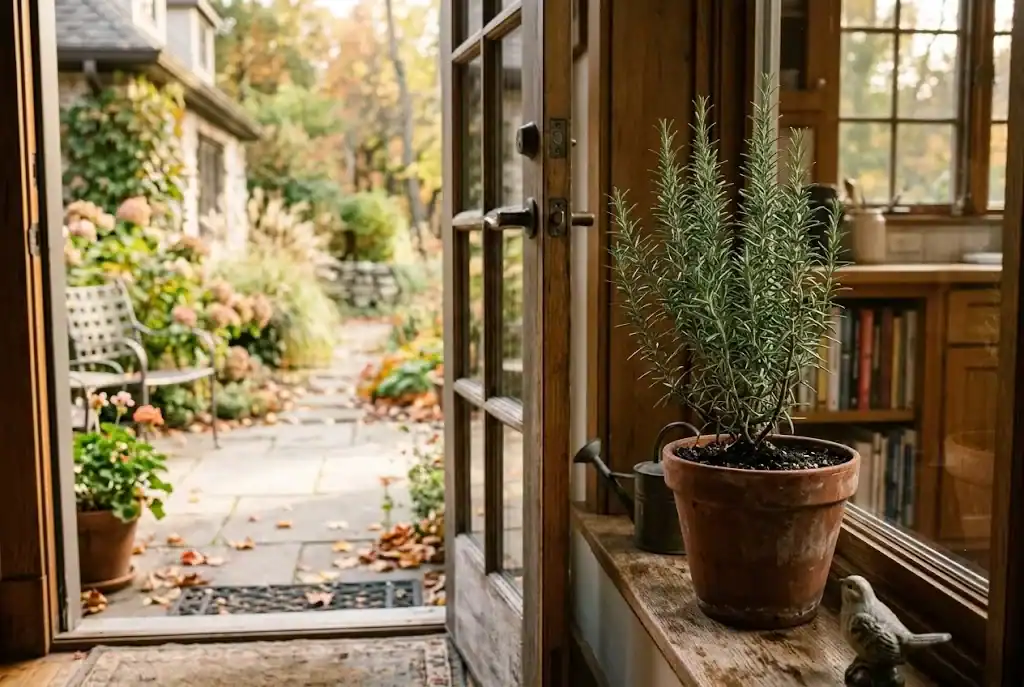
Which herbs thrive best in pots
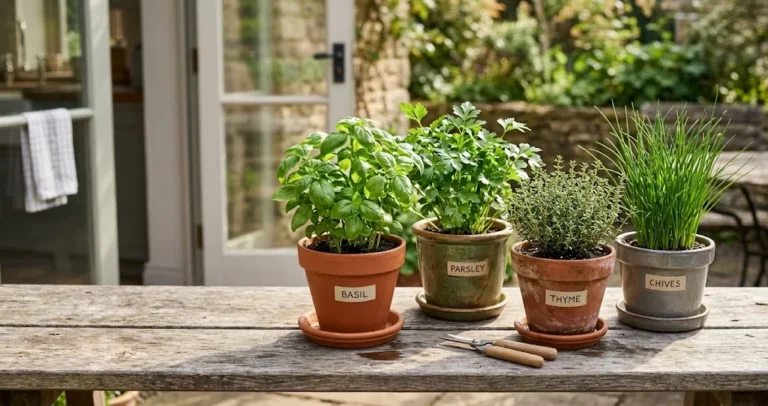
Almost any culinary herb adapts well to container life, but a few are especially reliable for beginners:
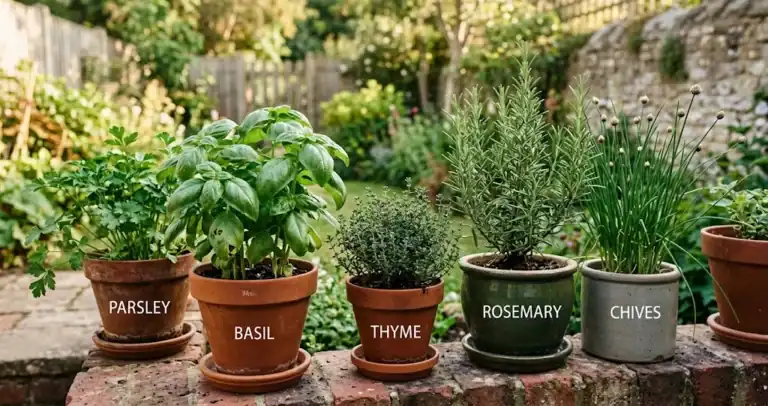
- Basil: fast growing, loves heat and steady moisture.
- Chive: cold hardy, returns year after year in the same container.
- Parsley: tolerates light shade better than most herbs.
- Thyme and oregano: thrive on dry soil and light neglect.
- Mint: grows almost anywhere, which is exactly why it needs a container of its own.
- Cilantro: bolts fast in heat, so shifting it into shade helps it last longer.
Dill and lavender are just as easy, and lemon balm rewards even minimal care with a steady supply of leaves for tea.

One herb, one container, especially for mint
Not every herb makes a good neighbor. Mint spreads through underground runners so aggressively that it crowds out basil, parsley, or nearly anything else sharing its container within a season. Give it a container of its own. Rosemary and cilantro make an awkward pair too: one wants dry soil between waterings, the other wants it consistently moist, so combining them means one plant always suffers. When you do want to share a container, group herbs with matching needs, such as thyme, oregano, and sage, which all prefer the same dry, sunny conditions.

Common mistakes that shorten a potted herb’s life
A handful of habits account for most failed container herbs:
- Choosing a container with no hole in the bottom, which traps water around the roots.
- Using garden soil instead of a bagged potting mix, since garden soil compacts and drains poorly in a container.
- Watering on a fixed schedule instead of checking the soil first.
- Crowding a vigorous grower like basil into a shared container with slower, dry-loving herbs.
- Leaving an herb in a container that is too small, so the roots outgrow the soil and growth stalls.
Is it worth growing your own herbs?
Between the convenience, the control over soil, and the flexibility to move plants indoors, growing herbs in containers offers many benefits. For most home cooks, the payoff is clearly worth it: a single basil plant can replace several store-bought bunches over a season, and many herbs, once established, keep producing with only occasional attention. Even a small windowsill setup pays for itself in flavor and fewer grocery trips, and it puts fresher, more fragrant herbs within reach than most produce sections carry. If you have room for a full garden bed instead of pots, that choice comes with its own tradeoffs worth weighing against container growing before you decide between the two. Ready to plan the rest of the garden, not just the containers? Site selection, watering, and which herbs grow well together are covered in the guide above, for anyone who wants to grow herbs beyond a single windowsill.