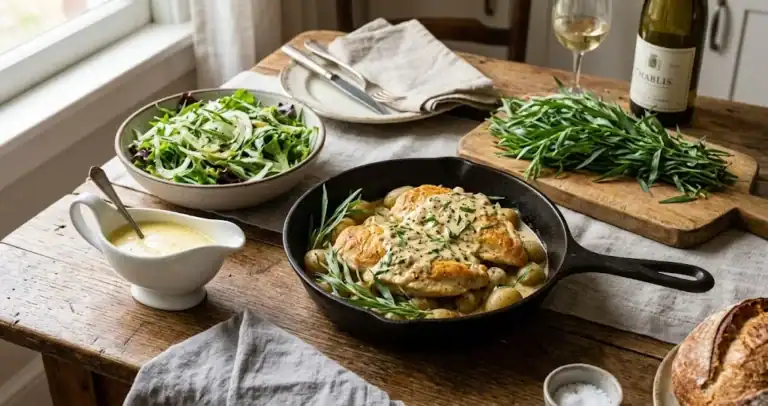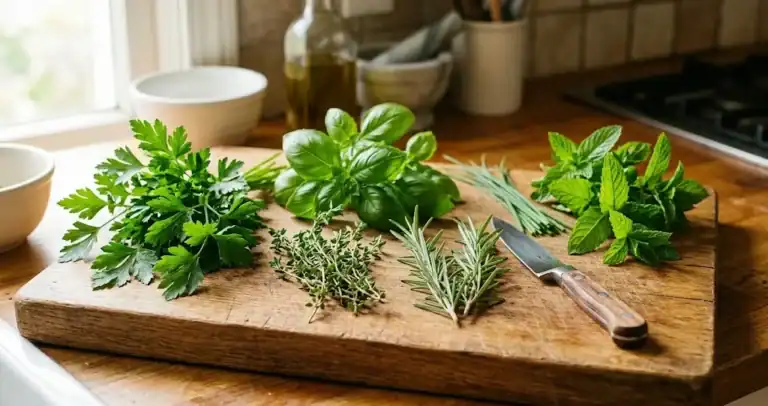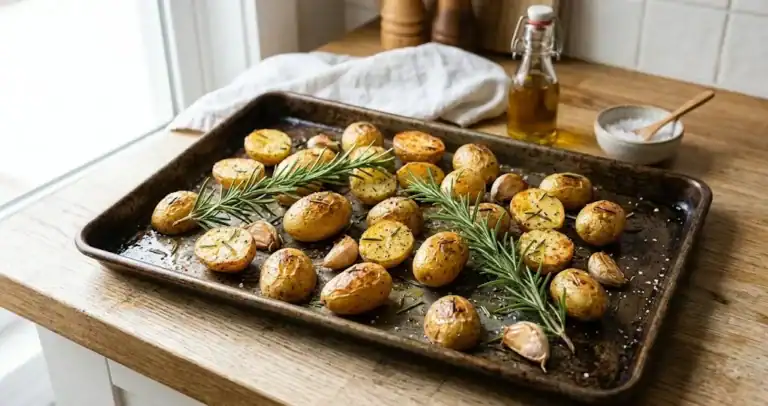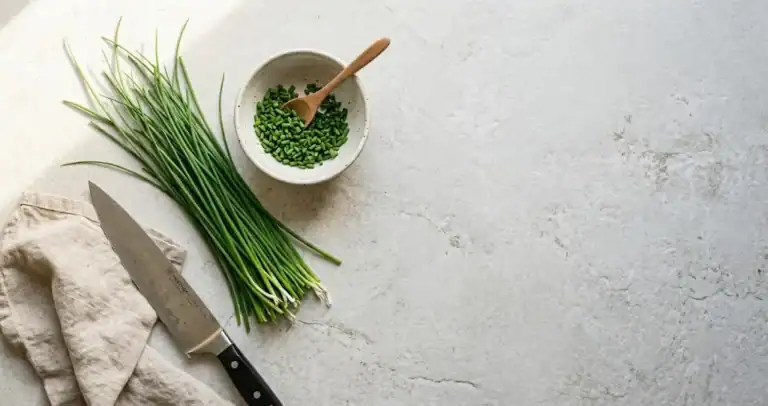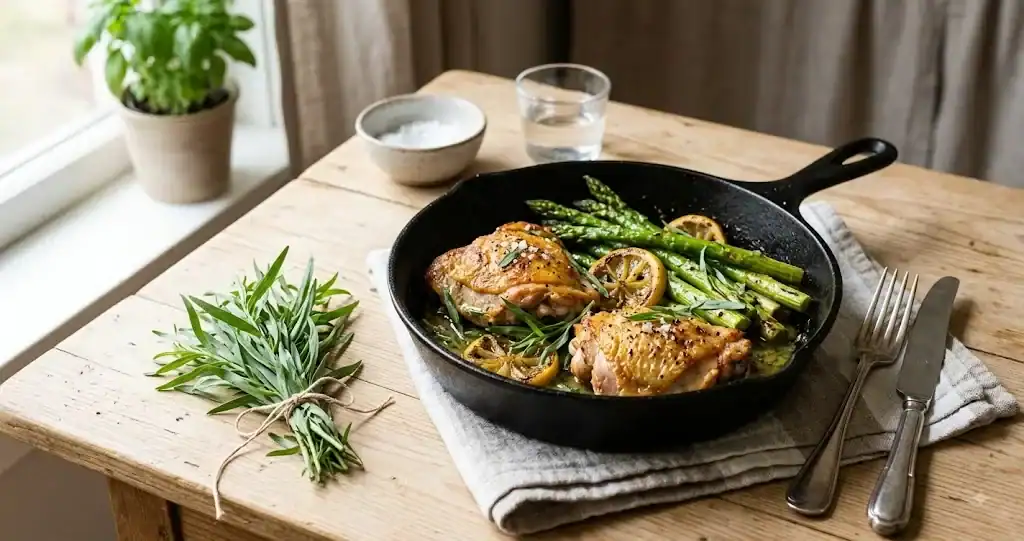
Cooking with tarragon starts with a small decision: give its anise-like aroma room to speak. The narrow leaves bring a sweet, peppery lift to a simple supper, especially when paired with chicken, fish, eggs, or spring vegetables. They are more persuasive than loud, so a little goes a long way.
Use French tarragon for the clearest flavor. Add fresh leaves near the end of cooking, or stir them into a vinaigrette after the rest of the ingredients are combined. Dried tarragon suits a soup or braise, where time can soften its sharper edges.
What tarragon tastes like
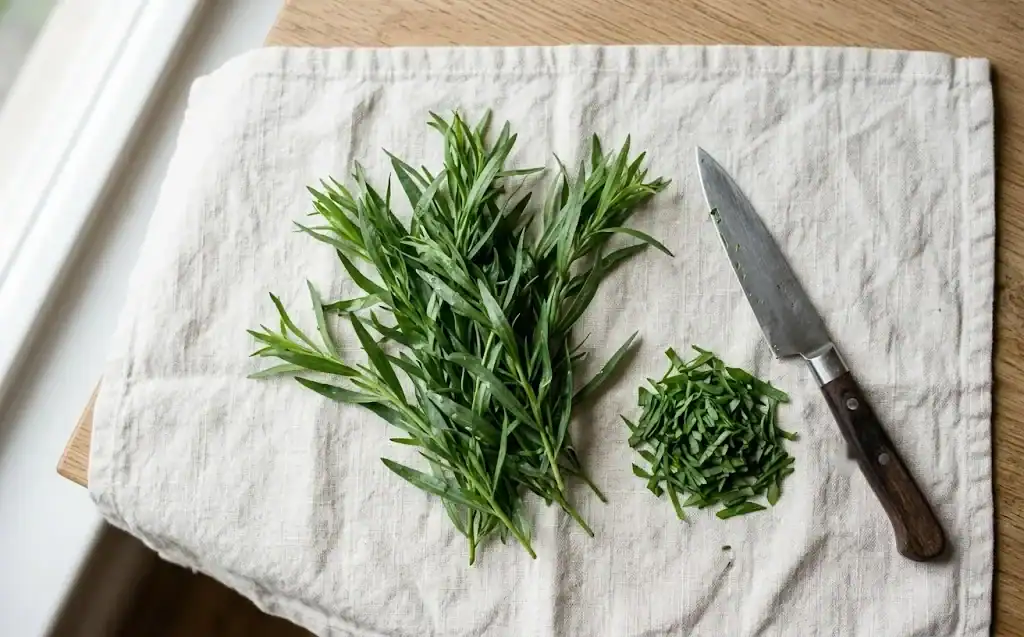
This fragrant herb tastes lightly of anise and licorice, with a mild black-pepper finish. French tarragon is the variety most recipes mean, and it is usually propagated by division or cuttings rather than seed. Russian tarragon grows readily from seed but has a weaker, grassier character. At the farmers market, choose bright green stems that smell aromatic when a leaf is rubbed between your fingers.
It is a perennial worth growing in a sunny herb garden when you use it often. Our culinary herbs guide can help you decide which other leaves and spices belong beside it.
Pair tarragon with mild, rich foods
Tarragon shines beside ingredients that do not crowd it. In French cuisine, it often meets egg yolks and cream. At home, the same idea can be simpler: choose one rich element, then add a bright element such as vinegar.
- Chicken: Sear the breasts, then loosen the browned bits with dry vermouth. Finish with a spoonful of crème fraîche and chopped leaves.
- Fish and shellfish: Salmon, shrimp, scallops, and white fish all welcome a restrained tarragon sauce. Add the leaves after the heat is off.
- Eggs: Fold them into scrambled eggs, an omelet, or egg salad. Tarragon and mustard make a notably good pair.
- Vegetables: Asparagus, peas, green beans, carrots, zucchini, and potato all work well. Olive oil and a squeeze of lemon keep the result fresh.
- Salad: A tarragon vinaigrette can wake up tender greens, chicken salad, or a white-bean salad. Parsley, chives, and garlic fit naturally beside it.
Use fresh tarragon at the end
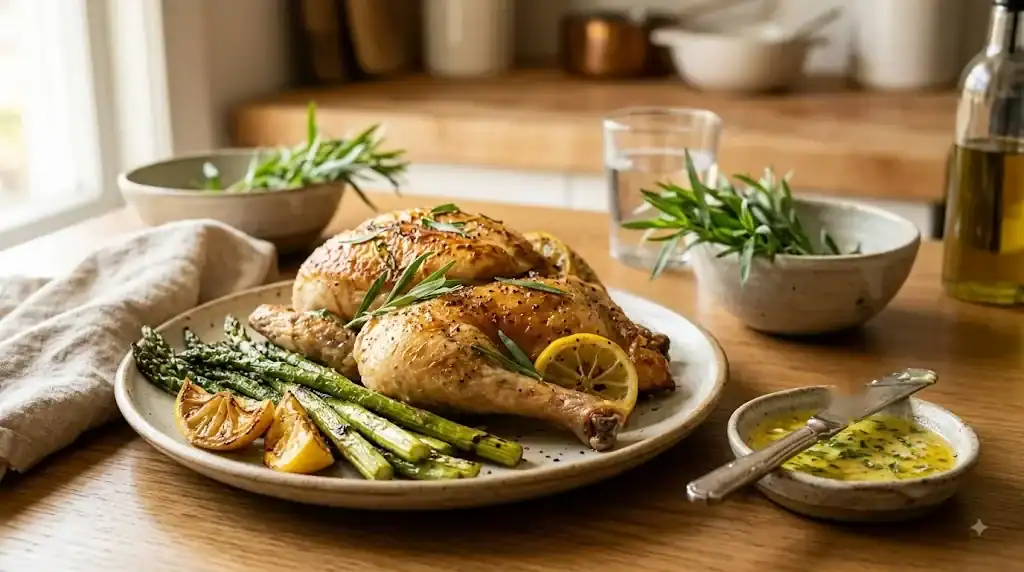
Strip the leaves from firm stems, chop them finely, and add them in the last minute or two. Long heat takes away the aroma. When grilling steak or chicken, scatter the leaves over the food after it comes off the heat.
Make a quick butter
Mash softened butter with finely chopped tarragon, lemon zest, salt, and black pepper. Melt it over green beans, maize, or a grilled chicken breast. This small recipe is a good first lesson in how much the herb can do.
Finish a pan sauce
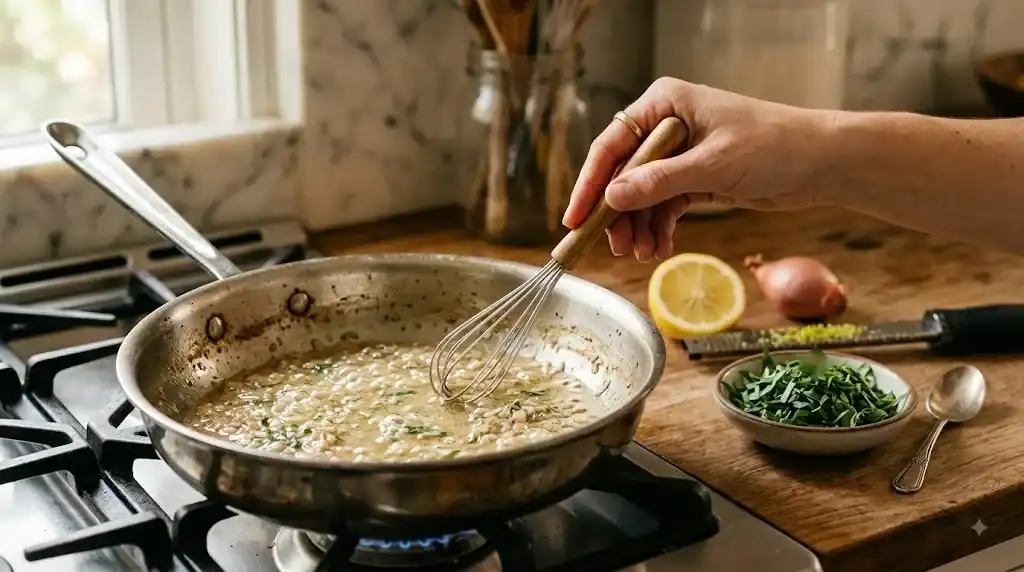
After cooking fish or poultry in a pan, add a splash of wine and scrape up the browned bits. Reduce the liquid, whisk in butter, then stir in the leaves away from the heat. For a classic French béarnaise sauce, use tarragon with shallot, vinegar, egg yolks, and butter.
Use the leaves raw
Tarragon can be eaten raw. Stir it into a creamy dressing, egg salad, or a tuna-and-celery mix, beginning with a teaspoon and tasting as you go. For more dishes centered on this particular ingredient, explore these tarragon recipe ideas.
Fresh versus dried tarragon
Fresh tarragon is best for a vinaigrette, a spoonful of crème fraîche, a cold salad, and a sauce served immediately. Dried tarragon is useful in soups, marinades, and a slow-cooked recipe because it has time to infuse. Start with 1 teaspoon dried for every tablespoon of fresh, then adjust after tasting.
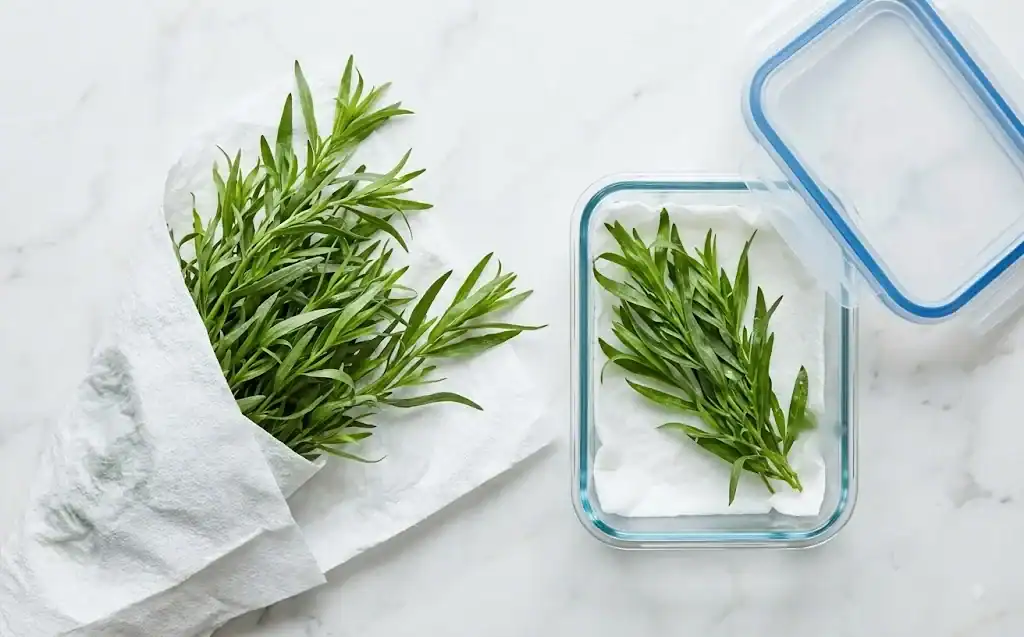
Wrap unused stems in a barely damp paper towel and keep them in the fridge. If your garden has produced more than you can use this week, see how to store tarragon before they lose their fragrance.
Five easy tarragon recipes
- Seared poultry breast: Sear a breast, add Dijon and dry vermouth, then spoon the warm liquid over it.
- Warm potato salad: Toss warm slices with olive oil, vinegar, chopped leaves, and Dijon.
- Spring vegetables: Steam green beans and peas, then toss with fresh tarragon and olive oil.
- Egg toast: Mix finely chopped leaves with eggs, mayo, celery, and Dijon, then spoon onto toast.
- Tarragon vinegar: Cover dry sprigs with white wine vinegar for one to two weeks, then strain for vinaigrette.
Buy, prep, and use up extra leaves
Look for firm stems without blackened tips. Rinse only what you need, then pat them dry before chopping. A sharp knife gives a clean cut and helps the pieces distribute evenly through a dish.
Extra leaves can become a simple mayo for fish, or a light syrup for a cocktail. Freeze chopped leaves in a little olive oil for a future soup or sauce. The texture softens after thawing, but the savory aroma is still useful.
A quick choice at the market
The best bunch has supple stems, a clean anise aroma, and no damp or darkened leaves. If you are growing tarragon, snip only what you need and use it the same day. That small habit makes French cooking at home feel more precise without making it fussy.
Common mistakes when you cook with tarragon
- Adding too much: Start small. You can always add more, but a large handful will dominate a dish.
- Adding it too early: Save fresh leaves for the finish. Add dried tarragon earlier.
- Over-seasoning: Let Dijon or citrus play one supporting role, not three competing ones.
- Buying Russian tarragon by mistake: It rarely has the sweet, distinctive taste a classic French recipe expects.
Frequently asked questions
What meat goes best with tarragon?
Poultry is the classic choice, particularly with a light cream or Dijon finish. Tarragon also works with salmon, shrimp, pork, rabbit, and steak.
Can I use dried tarragon instead of fresh?
Yes. Use less dried tarragon and give it time in a soup, stew, or marinade. Use fresh leaves in a vinaigrette just before serving.
What should I make first?
Start with the leaves on vegetables, a simple poultry dish, or potatoes with vinaigrette. Each lets you notice its aroma without turning dinner into a project.