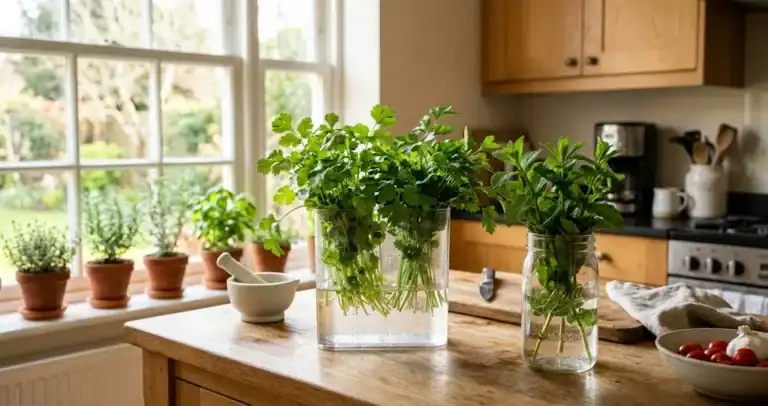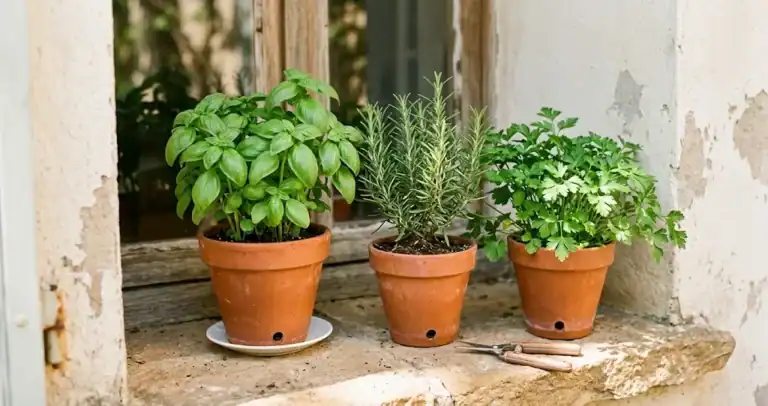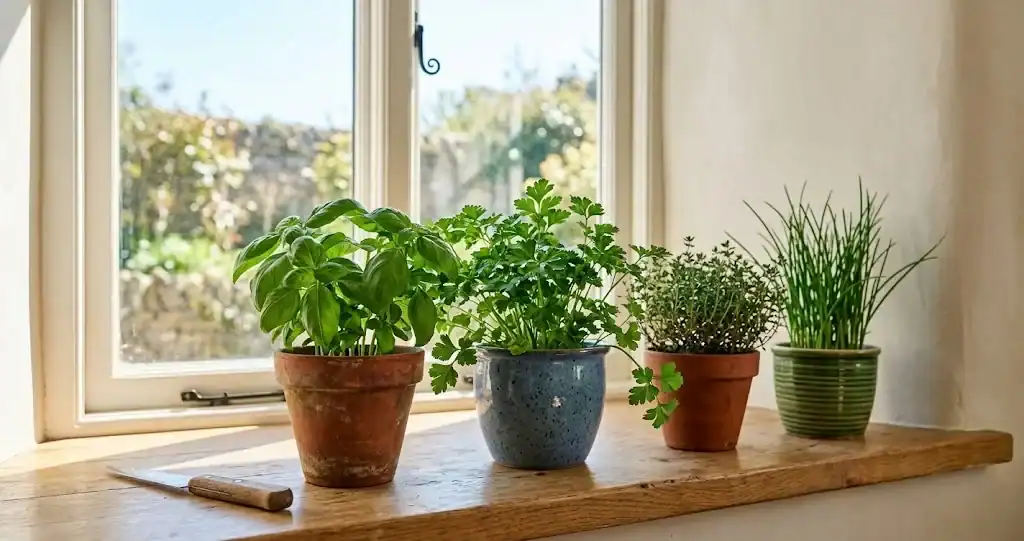
A windowsill, a balcony, or a sunny patio is enough room for a useful herb garden. Containers let you control the soil, the moisture, and the sun each plant receives, which matters more than the square footage you have. You can grow herbs in containers on a fire escape, a kitchen counter, or a back step, and the leaves will taste better than anything you buy in a clamshell because you pick them minutes before you use them.
This guide walks through the choices that actually decide success or failure: which herbs to plant, what kind of planter to use, what to fill it with, how to irrigate it, and where to put it. Each step is small. Put together, they add up to a potted herb garden that produces fresh leaves from spring through late fall, and many herbs indoors through winter too.
Why containers work so well for herbs
Herbs are not fussy, but they do have preferences. Most kitchen herbs evolved on dry, sunny hillsides, so they want a free-draining root run, a steady supply of sun, and a dry-out cycle between soakings. A garden bed can give them that, but only if the bed is on the dry side and the soil drains sharply. A container approach gives you the same result almost anywhere, because you build the soil from scratch and you decide how often each vessel gets a soak.
You also get flexibility. Move a planter of basil out of a cold snap. Tuck parsley into afternoon shade when July turns harsh. Bring rosemary in before the first hard frost. In the ground, a plant stays put. In a container, the plant comes with you.
The easiest herbs to grow in containers
Almost every kitchen herb will grow in a planter if you give it the conditions it likes. Some are more forgiving than others, and a handful make particularly good first choices for a small-space gardener. A short list covers most kitchens: basil, parsley, and chive for fresh leaves; thyme, rosemary, sage, and oregano for slower-growing Mediterranean flavor; cilantro for cool-season cooking; and mint for tea, salads, and cocktails.
- Basil. Sweet and Genovese types both do well. Basil likes heat and steady moisture, and it rewards frequent pinching with bushier growth.
- Thyme. Creeping and upright types thrive on the dry side. A six-inch planter is plenty for one plant.
- Rosemary. Wants a container of its own. It tolerates drought better than wet feet, and a single plant will keep producing for years.
- Parsley. Flat-leaf and curly both take to containers and prefer evenly moist soil and a cooler spot than basil.
- Mint. Mint is so vigorous that it is almost always better confined to a pot than planted in a bed, where its roots run freely. Spearmint, peppermint, and the milder apple mint all grow well.
- Oregano and marjoram. These Mediterranean herbs handle dry conditions and full sun. One plant per planter keeps them tidy.
- Sage. Salvia officinalis, the culinary sage, has soft gray-green leaves and a long productive life. It needs a roomy planter and sharp drainage.
- Chives. A clump in a small planter will give you a fresh cut almost every day through the growing season, and the purple flowers are a bonus in salad.
- Lavender. English lavender grows in containers on a sunny patio and rewards you with both leaves and flowers.
- Cilantro. Prefers cool weather and bolts quickly in heat, so a partially shaded planter is ideal. Sow new seed every few weeks for a steady supply.
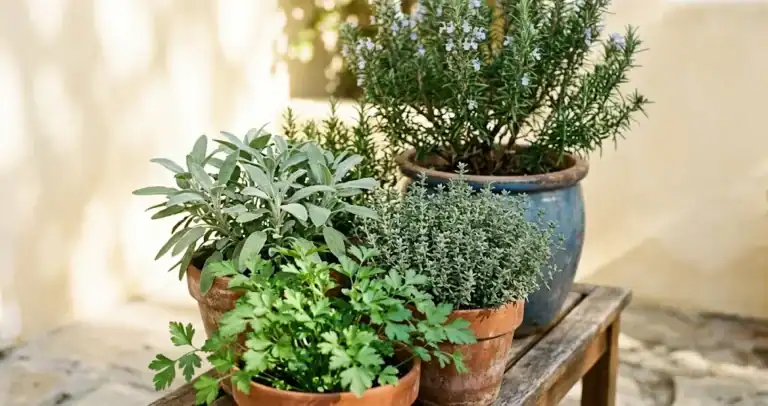
If you only have room for two or three planters, start with basil, parsley, and thyme. They cover most of what a cook reaches for and they grow happily side by side on a sunny kitchen windowsill or back step. Sage, rosemary, and oregano share the same Mediterranean dry-soil preferences and can sit in one large container as an aromatic patio grouping.
Choosing the right container
Most container problems trace back to the planter, not the plant. Two rules matter more than any others. The vessel must have drainage holes so excess moisture can escape, and it must be the right size for the herb you are growing. If you want a fuller breakdown of how to pick an herb container that suits a small-space garden, our guide to choosing herb containers walks through material, depth, and matching size to root habit.
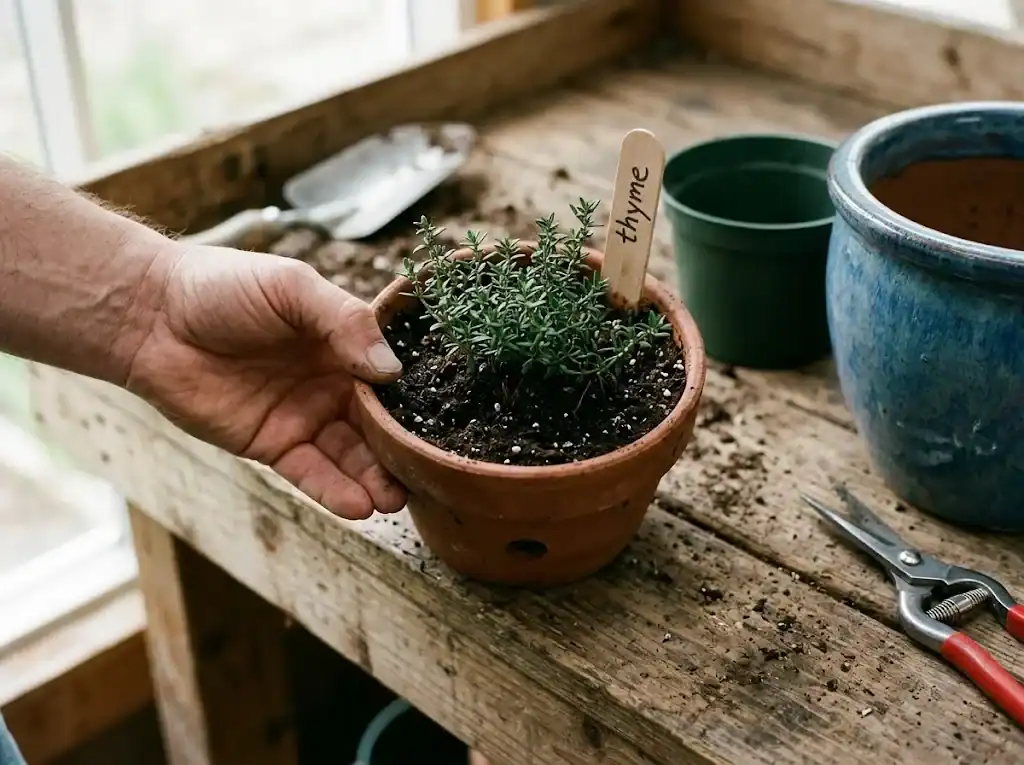
For most leafy herbs, an eight- to twelve-inch planter gives the roots room to spread without staying soggy. Larger herbs like rosemary want a container at least fourteen inches across. Mint is the exception: it will fill any vessel it is given, and keeping this herb in a modest container makes it easier to manage.
Terracotta breathes through its walls and dries out faster than glazed or plastic planters. That suits Mediterranean herbs. Plastic and glazed ceramic vessels hold moisture longer, which the leafy cooking herbs appreciate. Either material works as long as the hole at the bottom is unblocked.
The best soil for herbs in pots
Garden soil is the wrong choice for containers. It compacts in a pot, drains poorly, and brings weed seeds with it. A good potting mix is light, drains sharply, and holds just enough moisture to keep roots happy between soakings. Most off-the-shelf blends will grow herbs successfully.
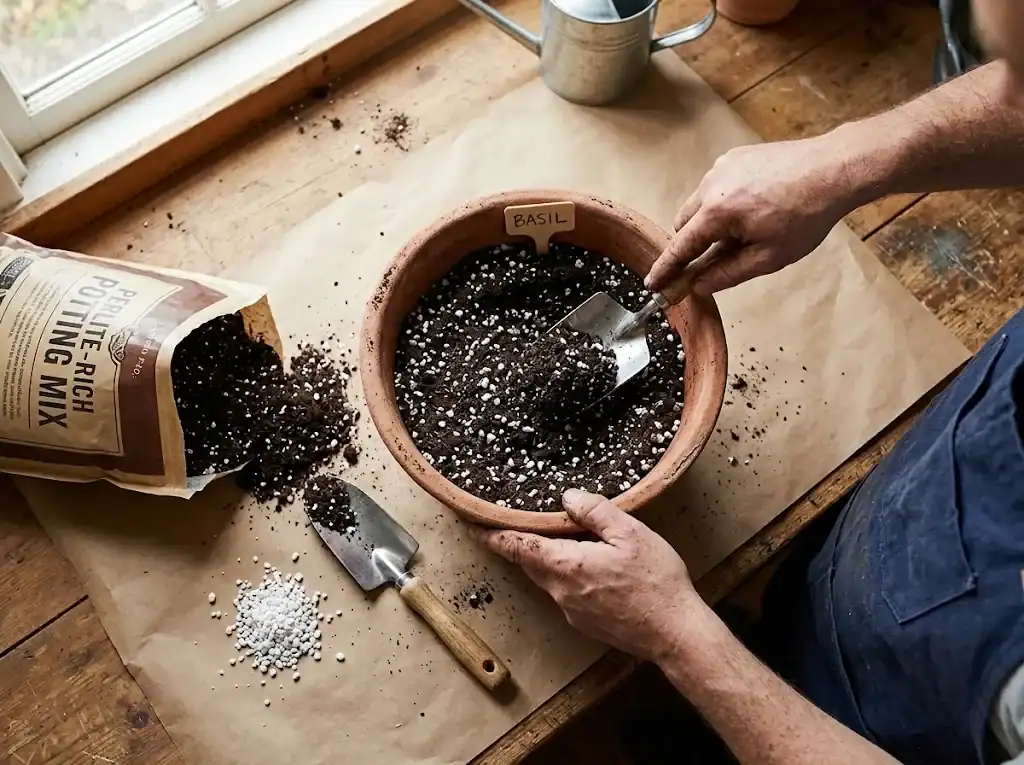
Look for a mix that lists peat or coir, perlite or vermiculite, and some compost. For Mediterranean herbs that prefer the dry side, blend two parts standard mix with one part coarse sand or extra perlite. For moisture-loving herbs, the standard blend is fine on its own. Avoid heavy garden soil, and refresh the top two inches each spring with a thin layer of compost.
Good drainage is not optional. If a decorative vessel has no hole, use it as a cachepot and grow the herb in a slightly smaller plastic pot that fits inside it. Lift the inner pot out before watering so the plant can drain freely, then put it back.
How often to water herbs in containers
Container herbs dry out faster than the same plants in a garden bed, because the planter walls are exposed on all sides and the root zone is small. In summer, a sunny vessel may need a soak every day. In spring and fall, every two or three days is usually enough. In winter, weekly is often right.
The reliable test is to press a finger into the top inch of soil. If that inch feels dry to the touch, irrigate thoroughly until you see runoff from the drainage hole. If it still feels moist, wait another day and check again. Different herbs prefer slightly different timing. Mediterranean varieties like to dry out between soakings. The leafy cooking herbs prefer consistently moist soil and wilt quickly when they get too dry.
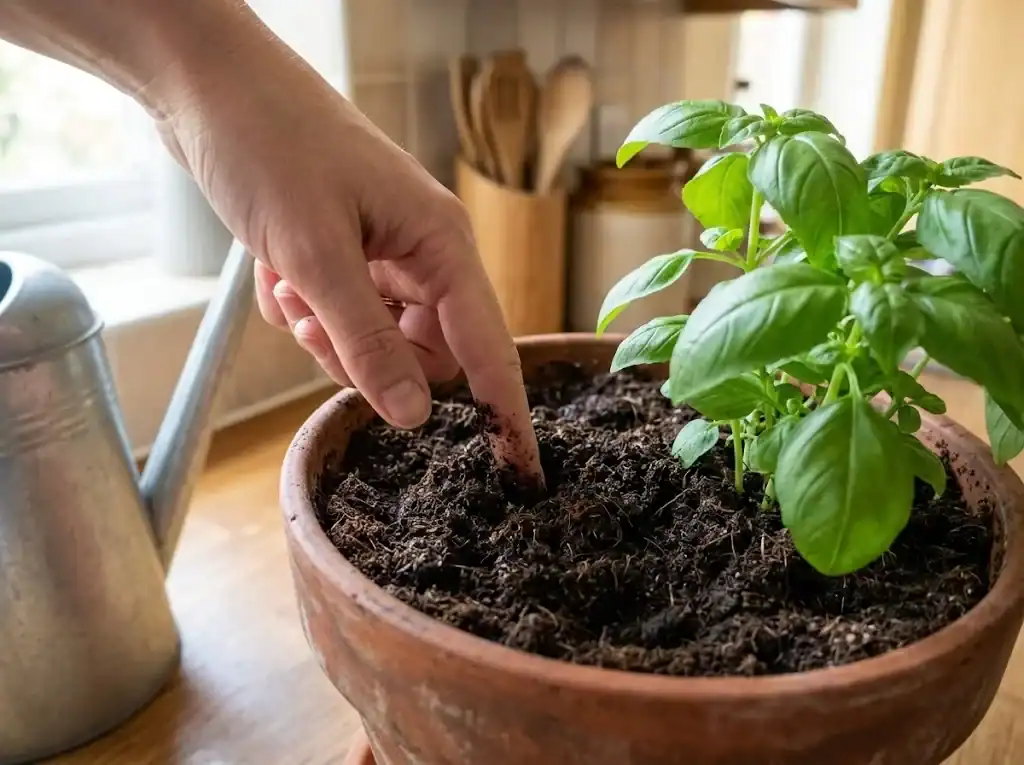
Irrigate in the morning so the foliage dries before evening, which helps prevent fungal problems. Wet the soil, not the leaves, and soak deeply so the whole root ball gets moisture. A shallow daily sprinkle encourages shallow roots and weaker plants.
Sun, light, and placement
Most kitchen herbs want at least six hours of sunlight a day. Sun-loving Mediterranean types grow best in full sun, which means the sunniest spot you can give them. The leafy cooking herbs tolerate partial shade, which makes them good candidates for a north-facing windowsill or a spot that gets afternoon shade in midsummer.
If you are growing herbs inside, a south-facing window gives the strongest light. East and west windows work for the more forgiving varieties. Without enough light, herbs stretch, weaken, and lose flavor. If a windowsill does not give six hours of direct sun, a simple grow light clipped above the planters will keep plants compact and productive through the darker months.
Group vessels by their needs. Put the sun-loving herbs together in one bright spot, and the moisture-loving, partial-shade herbs in another. Both groups are easier to care for when you can irrigate them as a unit.
Planting herbs together in one container
You can plant several herbs in one vessel, and a well-designed planter looks beautiful on a patio. The key is to match herbs with similar moisture and light needs. Mediterranean varieties want the same dry, sunny conditions and grow well together. The leafy cooking herbs share a taste for richer soil and steady moisture, so they make a sensible trio.

Mint should almost always be planted alone. Its roots spread aggressively and will overtake neighbors within a season. If you want mint in a mixed planter, keep it in its own nursery pot and sink that pot into the larger container so the roots stay contained. Treat mint as the boundary of any combination plan.
For a more complete walk-through of which combinations work, which do not, and how to lay out a mixed herb planter, see our guide to growing and maintaining herbs in pots.
Harvesting herbs through the growing season
The more you cut, the more most herbs grow. Regular harvesting keeps the plant bushy and delays flowering, which is when leafy herbs lose their best flavor. Use clean, sharp scissors or pinch with your fingernails just above a pair of leaves, and the plant will branch from below the cut.
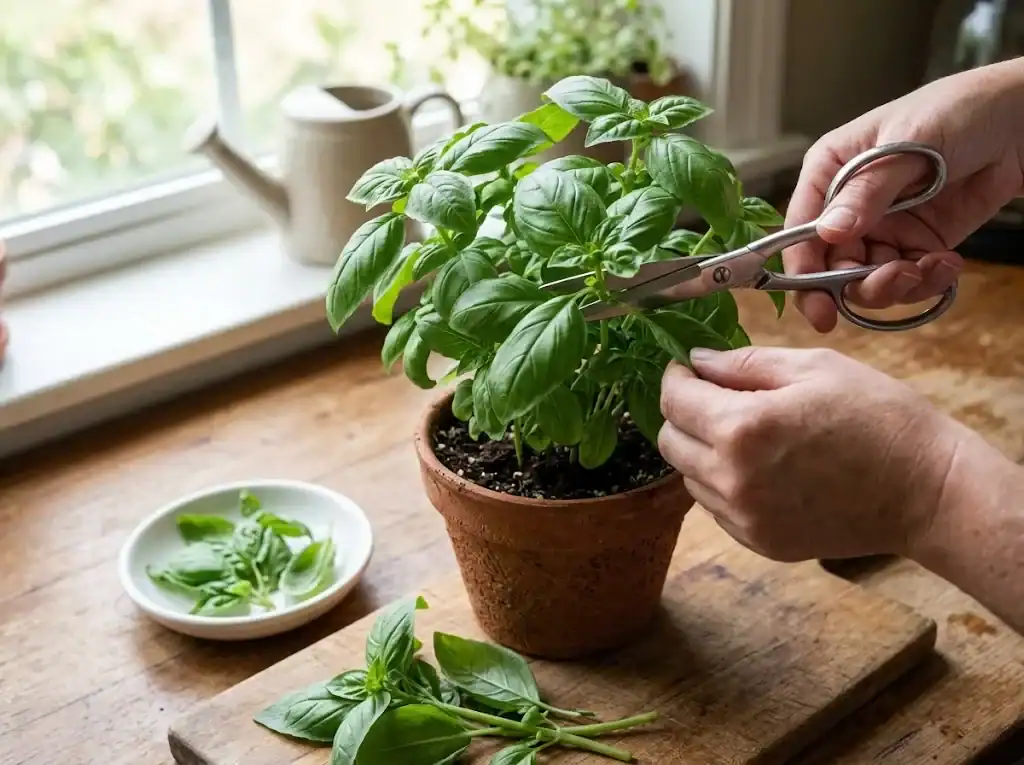
Pick herbs in the morning after the dew has dried but before the midday heat. The essential oils are at their peak then, and the leaves have the strongest flavor. As a general rule, never take more than a third of the plant at one time. That gives the leaves you leave behind enough surface area to keep the plant growing through the rest of the season, and the cut growth comes back bushier within a few weeks. Snip a few stems rather than stripping a whole branch.
Annual herbs will flower and set seed at the end of their growing season. When you see flower buds forming, pinch them off to keep the leaves coming a few more weeks. Perennial herbs will keep going year after year with light shaping in early spring and a harder cut after flowering.
Caring for herbs through the year
Container herbs need a little more attention than the same plants in a bed, because the root zone is small and the soil runs out of nutrients faster. Feed every three or four weeks during the growing season with a diluted liquid fertilizer, or work a slow-release granular fertilizer into the top inch of soil at the start of the season. Stop feeding in late summer so new growth can harden off before cold weather.
Refresh the top two inches of potting mix each spring and top-dress with a thin layer of compost. Every two or three years, repot perennial herbs into fresh mix and, if needed, a slightly larger container. Roots circling the surface or pushing out the drainage hole are the usual signs.
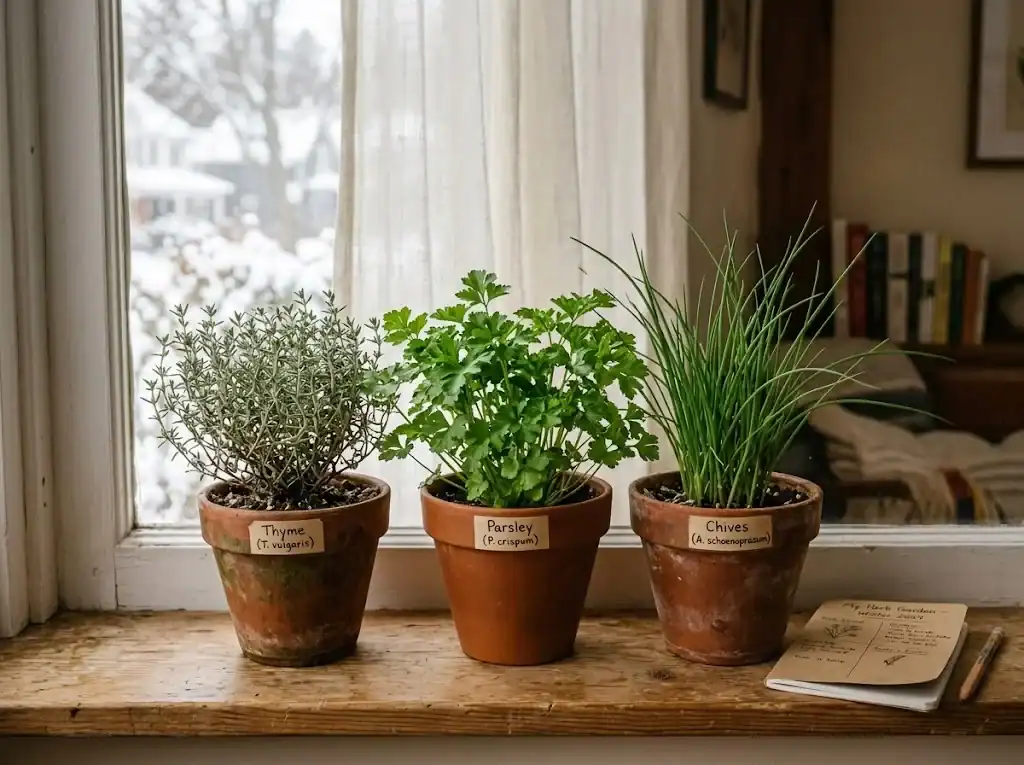
Many herbs grow inside through winter if you bring them in before nights drop below fifty degrees Fahrenheit. Cut each plant back by a third, check for insects, and acclimate the planters gradually over a week. A bright, cool window with reduced watering suits most kitchen herbs through the colder months. Perennial Mediterranean types and the leafy cooking herbs are the easiest to overwinter inside.
Common container herb mistakes to avoid
Most problems with container herbs come down to a handful of recurring issues, and they are easy to prevent once you know what to watch for. Treat these as the basic rules of a healthy potted herb setup.
- No drainage. Waterlogged roots rot quickly, especially for Mediterranean herbs. Always use a vessel with a drainage hole, or keep the plant in a nursery pot inside a decorative cachepot.
- Container too small. A planter that is just big enough for the nursery plant will dry out in hours and stunt the roots. Move up at least two inches in diameter for most leafy herbs.
- Wrong soil. Garden soil compacts in a pot and suffocates the roots. Use a light potting mix and adjust for the herb’s moisture needs.
- Overwatering. Daily shallow irrigation is the usual culprit. Soak deeply, then let the top inch dry before watering again.
- Too little sun. A shady corner looks inviting but rarely grows flavorful herbs. Most need at least six hours of direct light.
- Crowding too many herbs into one planter. Crowded plants compete for moisture and light, and airflow drops, which invites disease. Treat companion plant pairings as a deliberate design choice, not a way to fit more in.
Frequently asked questions about growing herbs in containers
What size pot do herbs need?
For most leafy varieties, an eight- to ten-inch planter is a good starting size. Larger Mediterranean herbs want at least a twelve- to fourteen-inch vessel so their roots have room to spread. The bigger the container, the more forgiving the watering schedule.
Can I grow multiple herbs in one container?
Yes, as long as the herbs share similar moisture and light needs. Mediterranean varieties that prefer dry soil do well together. The leafy cooking herbs form another compatible group. Mint should always be planted alone or kept in its own pot inside a larger planter.
How much sun do container herbs need?
Six hours of direct sunlight a day is the minimum for most kitchen herbs. Sun-loving types want full sun. The leafy cooking herbs tolerate partial shade and appreciate afternoon shade in hot climates.
Do herbs in pots need fertilizer?
Yes, because container soil runs out of nutrients faster than garden soil. Feed every three to four weeks during the growing season with a diluted liquid fertilizer, or apply a slow-release granular fertilizer once in spring.
Can herbs survive winter in containers?
Cold-hardy perennials can stay outdoors in mild climates. In colder regions, group the planters against a sheltered wall, mulch around them, or bring them into a cool, bright room for the winter.
Build from a single pot to a wider garden
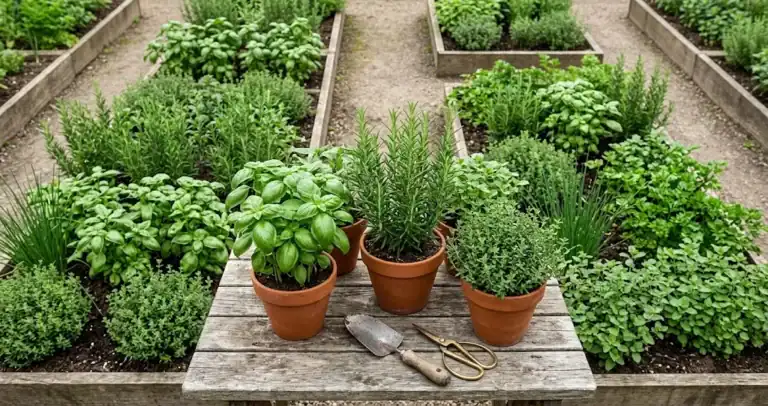
One planter of basil on the kitchen windowsill often turns into a small collection within a season. Once you have a sense of which herbs you cook with most, it is worth thinking about how a few containers fit into a larger growing plan. A patio line-up of planters can supply most of what a cook needs, and a sunny corner of a yard can carry the rest. A small container garden can even be the start of a wider herb setup once you know which herbs repay your attention.
If you are starting to think about expanding beyond containers into a small garden bed or a windowsill-to-yard layout, our beginner’s guide to growing an herb garden lays out the soil, spacing, and sunlight decisions that carry over from pot to plot. Start with one or two containers, see which herbs you actually use, and add more the next season. The harvest, not the equipment, is what makes the garden.