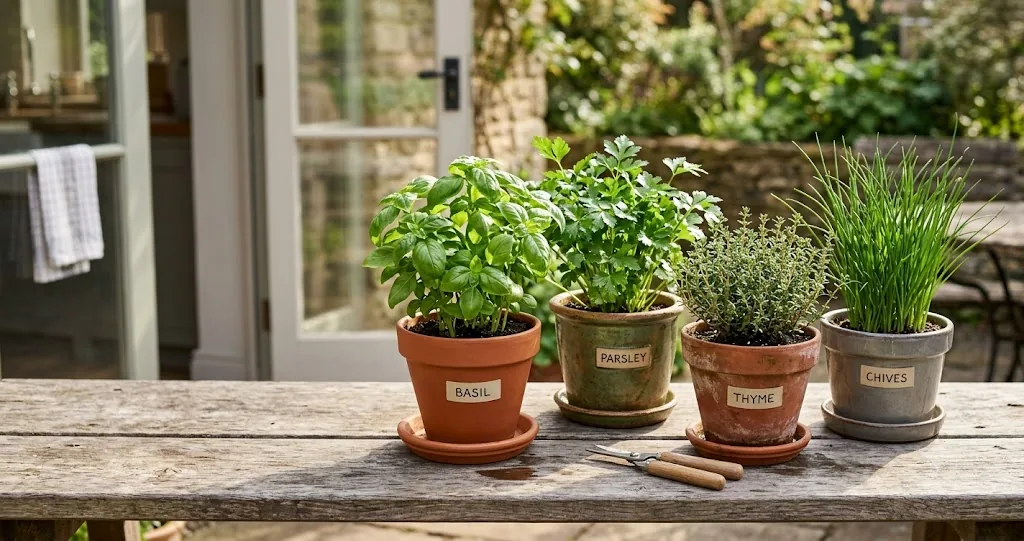
A few clipped leaves can turn a plain meal into something lively, and a potted herb garden puts that small pleasure within reach of a kitchen door, patio, or bright windowsill. Start with good light, a pot that drains, and a short list of herbs you will actually use.
For the broader framework, including where to site a garden and how to plan a first season, see this beginner’s guide to growing an herb garden. This page focuses on the practical choices that make herbs in containers easy to keep healthy.
What you need for a container herb setup
You do not need a large yard or a raised bed. A small garden can be one planter on a balcony or several pots outside a kitchen. Choose a spot with about six hours of direct light for sun-loving herbs. A bright indoor window can work, but light often drops sharply a few feet back from the glass.
- Planters with drainage holes and saucers for indoor use
- Fresh, lightweight potting mix, not dense soil dug from the yard
- Herb plants or seed packets suited to the season
- A small watering can and clean snips for harvest
Drainage matters more than a fancy planter. Excess water needs a way out, or roots stay wet and struggle. If a decorative pot has no drainage holes, use it as a cover pot around a plain nursery pot rather than planting directly into it.
Choose herb containers that match the plant
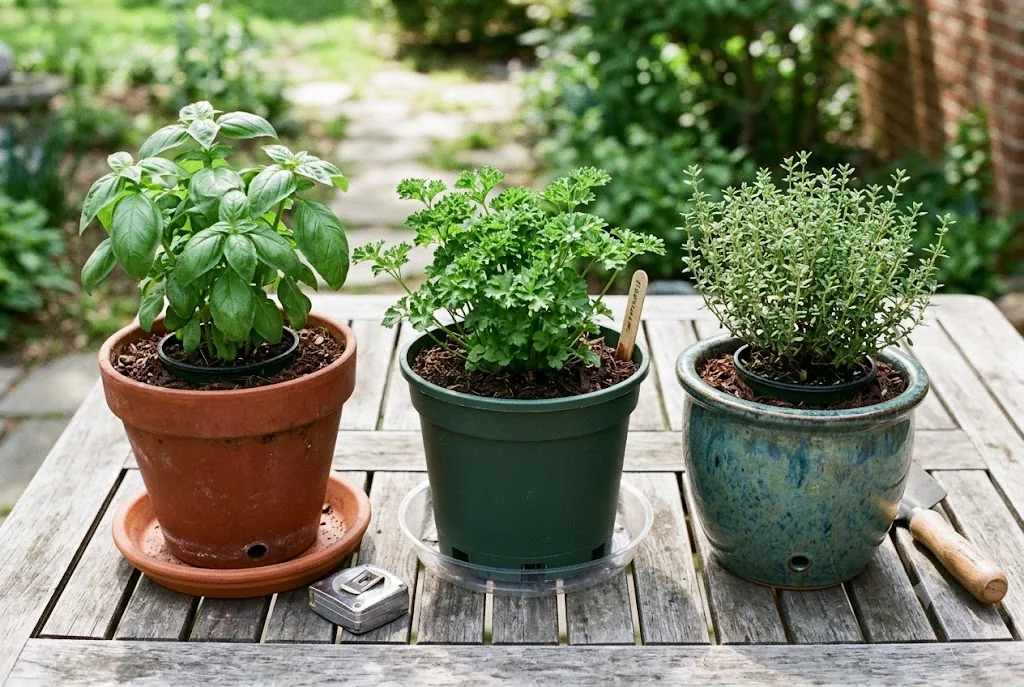
Match the planter to the mature plant, not the tiny starter plant. A shallow bowl can suit chives, while rosemary needs a deeper, steadier container as it becomes woody. One container that is at least 8 to 10 inches across gives a small group room to establish, but avoid squeezing too many plants together.
Material changes how quickly potting mix dries. Terracotta breathes and dries faster, which can help Mediterranean herbs such as thyme, sage, and oregano. Plastic stays moist longer and is lightweight for a patio or balcony. For a closer look at sizes, materials, and drainage, use this guide to herb containers.
Use a well-draining potting mix
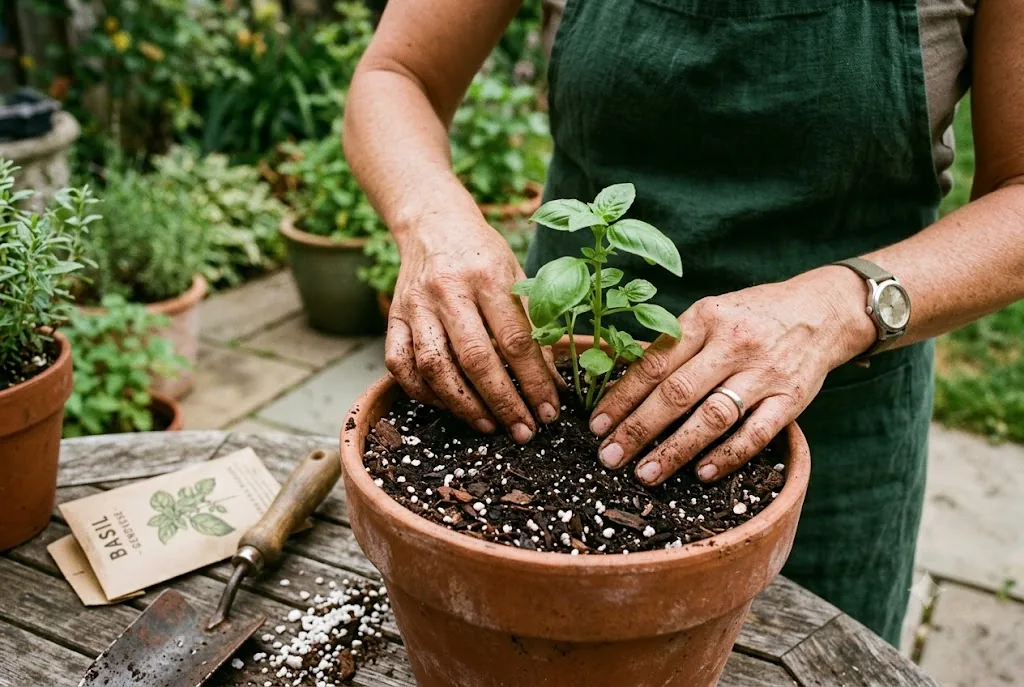
Use a quality potting mix labeled for containers. It holds enough moisture and air for roots without turning compacted. If your mix feels heavy, blend in perlite according to the package directions. Compost can add nutrients, but keep it a modest part of the mix so the pot still drains freely.
Fill the planter to a couple of inches below the rim, set each plant at the same depth it grew in its nursery container, then firm the mix gently. Water until it runs from the drainage holes. Do not add rocks to the bottom. They reduce the volume of mix available to roots and do not create adequate drainage.
Start with herbs that grow well in pots
The easiest herbs to grow are often the ones you cook with most. Basil, parsley, dill, cilantro, and mint are useful annual or tender herbs for frequent picking. Chives are hardy perennials in many climates. Basil and Thai basil enjoy warm weather. Parsley grows through cool weather, while dill is best sown from seed because it dislikes root disturbance.
Thyme, oregano, sage, rosemary, marjoram, and tarragon are perennial herbs in suitable climates. They generally prefer a bright spot and mix that dries a little between waterings. Lavender can work in a planter too, although it needs especially sharp drainage and is less forgiving indoors.
Give mint its own container. Its roots spread quickly and can crowd out gentler herbs. Keep woody, drought-tolerant plants separate from thirstier leafy herbs. This simple grouping makes care much easier than trying to make every plant follow one watering schedule.
Plant your herbs step by step
- Choose a sunny outdoor spot or the brightest available indoor location.
- Fill each container with fresh potting mix and make a planting hole.
- Plant herbs at their nursery depth, leaving space for mature leaves and roots.
- Water deeply once, then let the pot drain completely.
- Label new plants, especially if several types look alike when young.
When you sow herb seeds, follow the depth and spacing on the packet. Tiny seeds often need only a light covering. Keep the surface moist until seedlings emerge, then thin crowded seedlings so the survivors have room to grow. Starting with a variety of nursery plants is faster, but seed is an inexpensive way to grow dill, cilantro, or a second round of basil.
Water and feed without fuss
Check moisture with a finger rather than watering on a fixed calendar. Give leafy herbs a thorough drink when the top inch of mix feels dry. Let drought-tolerant herbs dry farther down before you irrigate again. Pour slowly at the soil surface until moisture runs out, then empty an indoor saucer so the container does not sit in runoff.
Potted plants use up nutrients faster than plants in a garden bed. During the growing season, a diluted balanced fertilizer or a slow-release fertilizer used as directed can help. Do not overfeed. Too much fertilizer can give you soft growth with less concentrated flavor, especially in aromatic Mediterranean herbs.
Give each herb a sunny spot
Most culinary herbs need a bright spot, but their tolerance for heat differs. Basil, rosemary, thyme, a Mediterranean favorite, sage, and lavender are happiest with strong sun. Leafy herbs such as cilantro and mint can appreciate afternoon shade where summers are hot. Watch the plant, not just the clock: pale, stretched stems ask for more light, while scorched leaves may need protection from the fiercest afternoon sun.
Move pots as the season changes. A balcony that is bright in spring may become shaded when nearby trees leaf out, and a patio can become much hotter once summer arrives. A lightweight planter is easier to reposition, but large containers hold moisture longer and are less likely to topple in wind.
Harvest to keep the plants productive
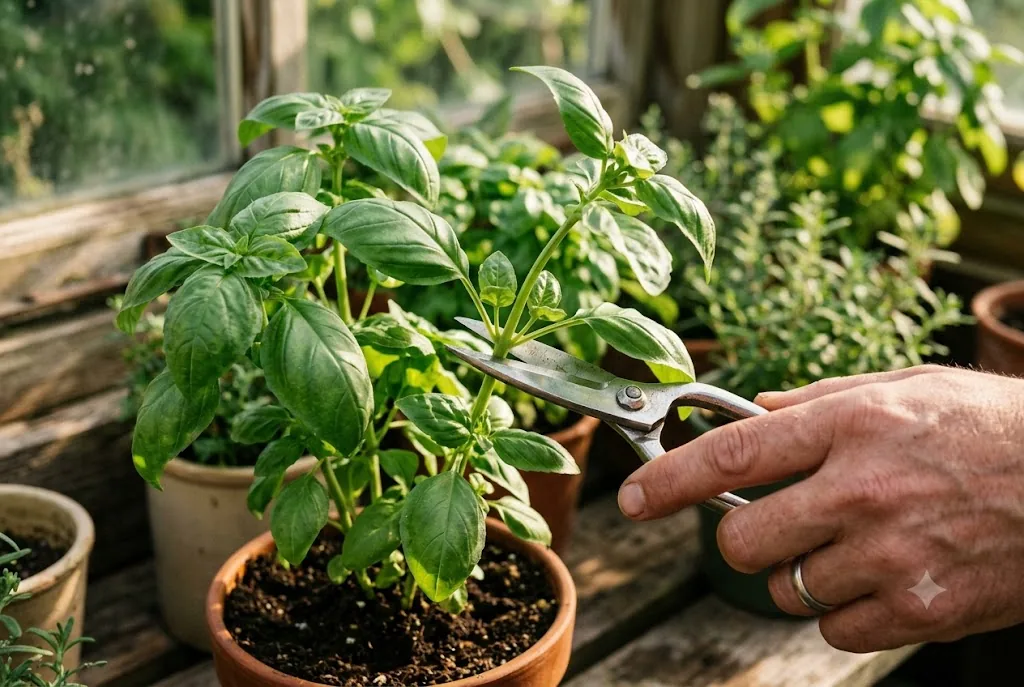
Regular harvest encourages branching. Snip basil stems just above a pair of leaves, and pinch off flower buds if you want to keep the leaves coming. Cut chives a couple of inches above the soil. Take small amounts from several stems instead of cutting a bare section.
Harvest in the morning after dew has dried, when leaves are fresh and firm. Use fresh herbs in a tomato sauce, a vegetable salad, eggs, beans, roasted vegetables, or a lemony dressing. Wash only what you plan to use, then dry it well so the leaves do not become bruised or soggy.
Keep a potted herb garden going through the season
Turn each container a quarter turn every week or two if one side faces the sun, and remove yellow leaves promptly. Move them before a heat wave if they dry too quickly. In cool weather, tender herbs need protection, while hardy perennial herbs may stay outdoors if the container and local winter conditions allow it.
These potted herbs can grow year-round indoors when they receive strong light, but a bright windowsill may not be enough in winter. Keep plants away from cold glass and heating vents, and consider a simple grow light if stems become long and pale. For a practical routine once your plants are established, see these tips for growing herbs in pots.
Troubleshoot common container problems
Yellow leaves and wet mix
Yellow leaves with consistently moist soil often point to too much water or poor drainage. Check that the pot drains, reduce watering, and move the plant into fresh mix if roots are dark or soft.
Dry, crisp leaves
A small pot on a bright patio can dry out in a day. Water thoroughly, add a little shade during intense afternoon heat, and move a root-bound plant to a larger container.
Leggy growth
Long, sparse stems usually mean insufficient sunlight. Move the planter to a brighter location, trim back growth lightly, and avoid crowding. Indoor plants often need more direct light than people expect.
Flowering too soon
Heat and maturity can send basil, cilantro, and dill into flower. Basil can keep producing after you remove early flower stems. Cilantro and dill are best replaced or sown again because their leaf production slows once they bolt.
Frequently asked questions
What herbs grow best in pots?
Many familiar culinary herbs grow well in containers when their light and watering needs are matched. Start with two or three you use regularly instead of a crowded collection.
What herbs should not be potted together?
Keep mint by itself. Also avoid combining thirsty leafy herbs with plants that prefer drier mix. Grouping by moisture needs is more useful than grouping by flavor.
Can I grow herbs indoors?
Yes. Choose compact plants, use containers with drainage, and provide the strongest light you can. A bright south-facing window is a good start in the Northern Hemisphere; a grow light can make indoor growing more reliable year-round.
Do container herbs need fertilizer?
They benefit from modest feeding during active growth because watering gradually washes nutrients from the potting mix. Use a fertilizer labeled for edible plants at the label rate, and pause when growth slows in low light or cool weather.
How do I protect potted herbs from cold weather?
Bring tender herbs indoors before frost. Hardy perennial herbs can sometimes stay outside, but roots in a container are more exposed than roots in a garden bed. Group pots near a sheltered wall, insulate the container if appropriate for your climate, and keep the mix only lightly moist while plants rest.
Start small, then grow your collection
A good first setup may be only two or three favorites in separate containers. Learn how quickly each dries, harvest often, and add a new herb when you have a clear place and use for it. This is a practical way to grow herbs for the kitchen.
