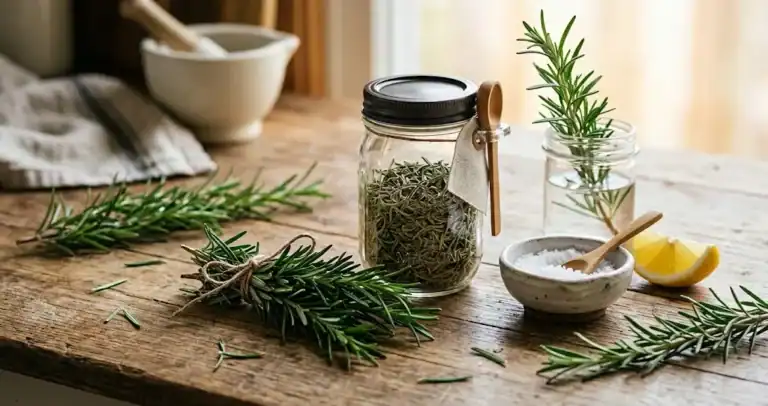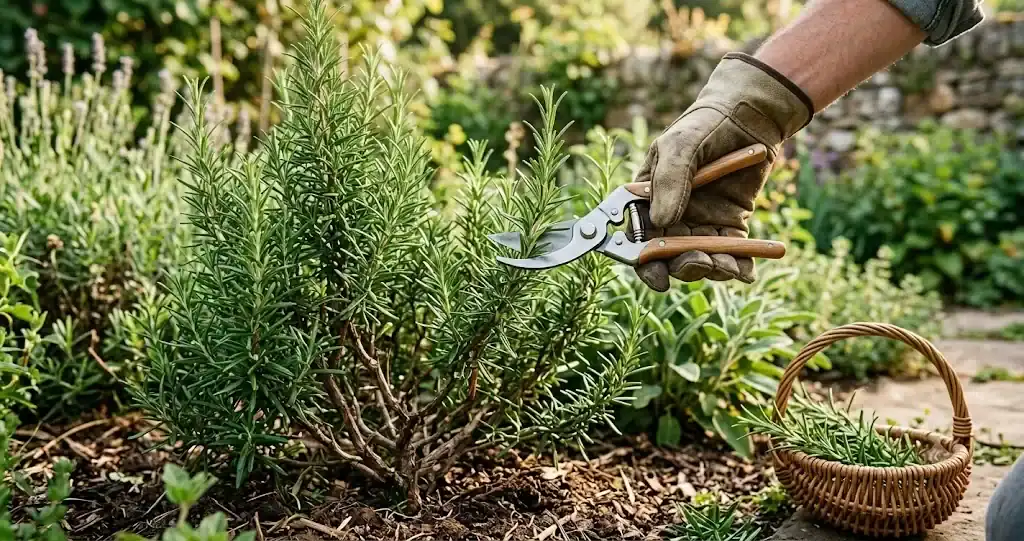
Rosemary rewards a light, regular harvest. Snip tender green tips from several sides of the shrub, leave leaves below every cut, and the plant stays full enough to keep growing. That is how to make a careful cut without leaving a patchy, bare center.
For the broader timing and tool basics that apply to many kitchen plants, see this complete herb harvesting guide. This guide focuses on its firm stems, fragrant leaves, and long-lived evergreen habit.
When to harvest rosemary
Pick fresh rosemary whenever an established plant has enough new growth to spare. The best picking time is after morning dew has evaporated and before afternoon heat. Dry leaves are easier to handle and keep better after you cut them.
Wait for a new plant to become sturdy and leafy before taking much. Small plants need time to build roots and branches. A mature rosemary bush can support a few repeated harvests during spring and summer when the plant is actively growing.
In a cool climate, take a modest final harvest before the first frost if you plan to preserve rosemary for winter. Avoid a hard late-season prune. Soft new growth may not have time to toughen before cold weather arrives.
What you need before you cut
- Clean scissors or pruning shears
- A clean basket, bowl, or cloth for rosemary sprigs
- A few minutes to check the plant
Clean scissors or pruning shears make a clean cut and avoid crushing the stems and leaves. Check for damaged, leggy, or crowded growth before you begin. You can remove a poor stem as part of a gentle tidy-up, but do not turn a routine harvest into a severe pruning session.
How to harvest rosemary without hurting the plant
Choose flexible green tips
Start with leafy stems on the outside and upper sides of the plant. The best cutting is green and flexible near the tip, with firmer wood lower down. Avoid taking a large section from the old, bare center. It does not reliably send new leaves from every piece of old bare stem.
Cut above leaves or a side shoot
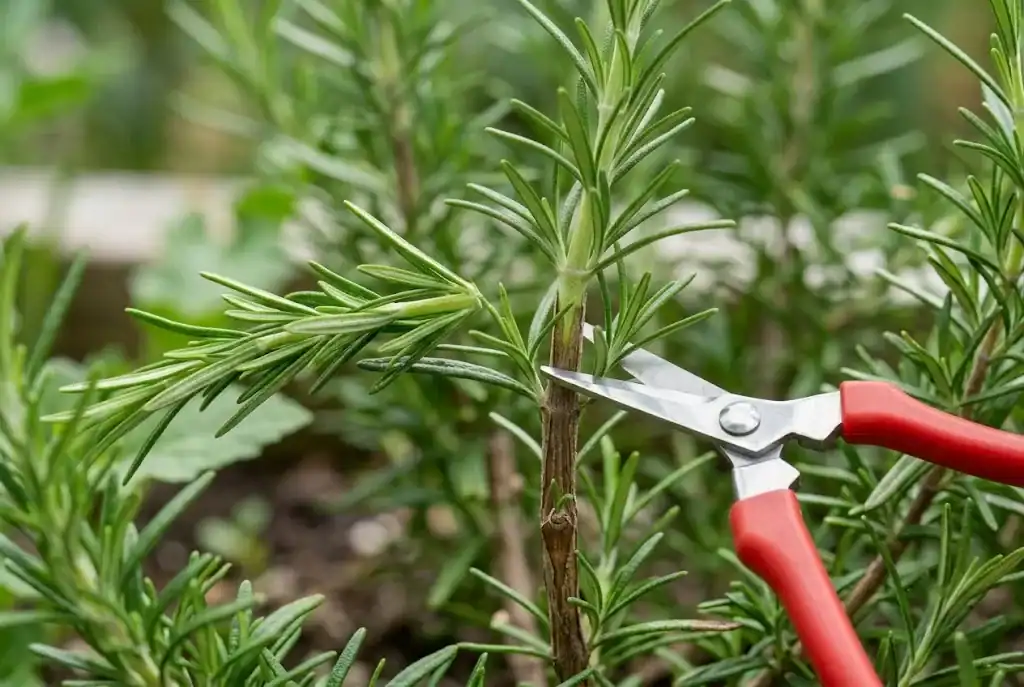
Snip just above a leafy junction or leaf node. The remaining stem has a growing point, which helps the shrub become bushier. A six- to eight-inch sprig of rosemary is useful when you need a handful for drying, while shorter cut stems work well for a single meal.
Take a little from several areas
Move around the rosemary bush rather than cutting from the top alone. Taking a few stems from different sides keeps the plant balanced and lets light reach the inner growth. Leave most of the foliage in place and avoid taking more than about one-third of the plant at a time.
Stop before old bare wood
Do not cut rosemary below the lowest leaves on a stem. If the part of the plant below your proposed cut is leafless, choose a younger shoot. This one habit keeps routine picking easy and safe for the shrub.
Should you pick rosemary from the top or bottom?
Pick tender tips from the outside and upper sides, then spread your cuts around the shrub. Do not strip all the leaves from the bottom of one long stem. It leaves a bare stick and takes more leaf area than you need.
When a stem is long and leafy, cut it back to a leafy side shoot. Keep the stems whole until you are ready to use rosemary. To strip the leaves, hold the top of a stem and pull backward, so the leaves from the stems come away cleanly.
How to prune rosemary as you harvest
Frequent light harvesting can prune rosemary gently. It encourages branching, keeps the plant compact, and makes the next fresh tips easier to reach. A larger shaping prune is different: make it during active growth and always leave green foliage below each cut.
Rosemary is a perennial Mediterranean herb. It is an evergreen in mild conditions, so it does not follow the same yearly pattern as tender annual herbs. If you grow rosemary indoors in a pot, harvest more lightly because indoor growth can be slower. Give the pot bright light, let it dry out between waterings, then water thoroughly.
Preparing a rosemary plant for winter in zones 7 and 8
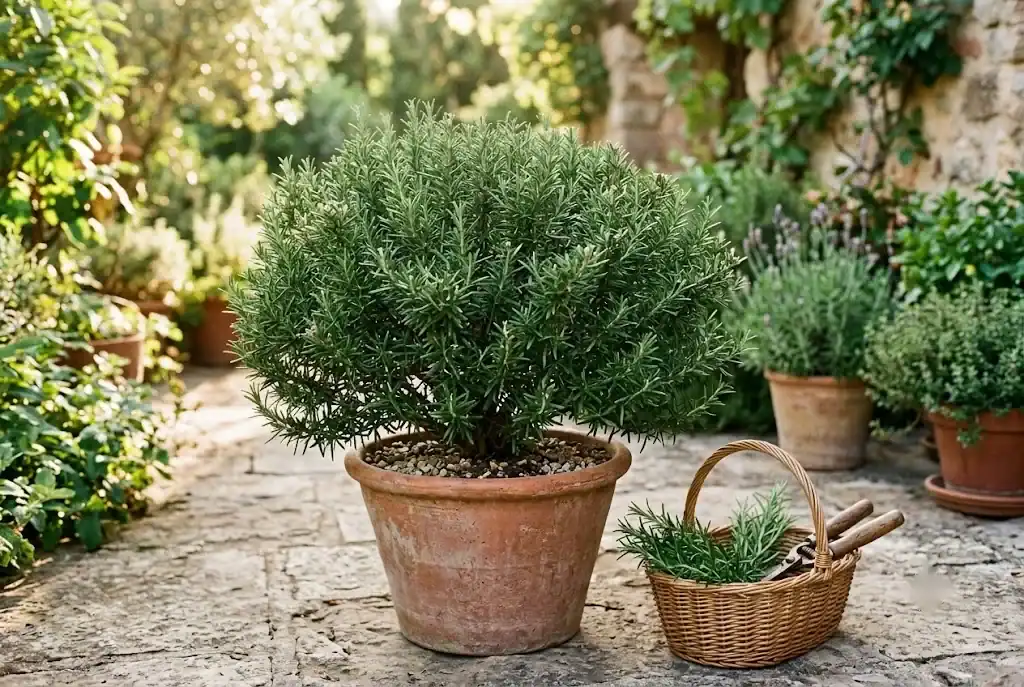
In zones 7 and 8, an established rosemary may overwinter outdoors if its site drains well and it has some winter protection. A terracotta pot on a sheltered patio is useful because you can move it away from severe frost. In colder climates, a container plant can spend winter near a sunny window or under grow lights.
Harvest only a small amount before cold weather. Rosemary is an evergreen, and the remaining foliage helps the plant through winter. Do not keep the soil moist all the time. Damp roots and low temperatures are a tougher combination for rosemary than a brief dry spell.
How to store your cut sprigs
Use the cut leaves soon for their piney, savory flavor. Do not wash a sprig unless it needs cleaning; surface moisture makes it spoil faster. If you rinse it, pat it dry well before refrigerating it.
For short-term refrigeration and longer storage methods, follow these instructions for how to store rosemary. They cover the next step after a healthy harvest without turning this page into a storage guide.
How to dry rosemary or freeze your sprigs
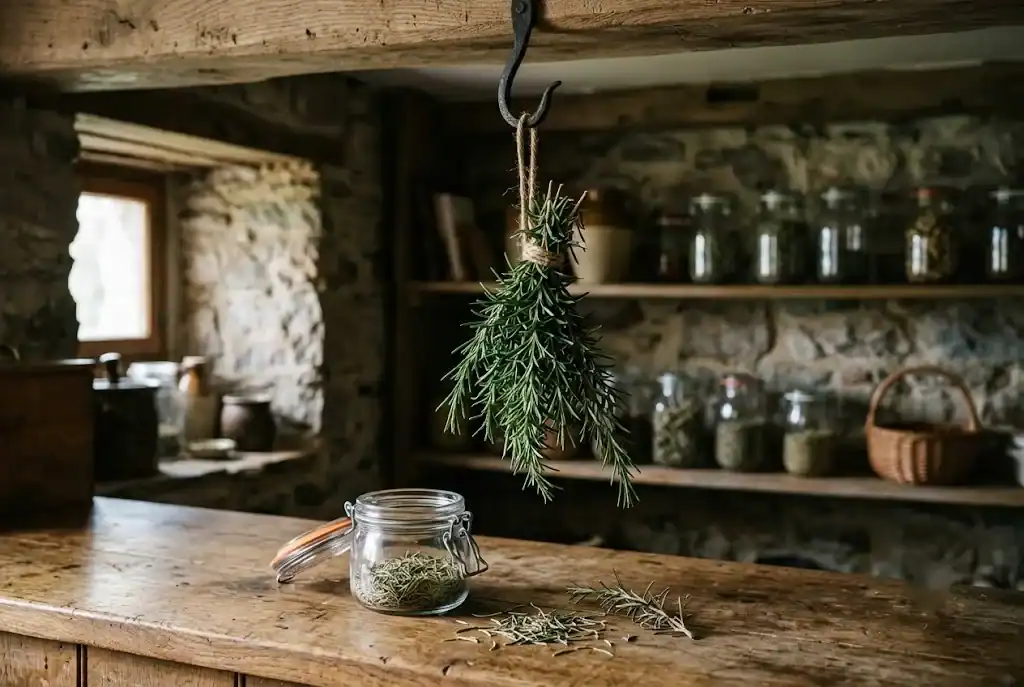
Tie a few dry stems into a loose bundle and hang them upside down in a dim, airy room. Once the leaves feel crisp, strip them into an airtight container. Keep the container away from heat and direct light so the oils in the leaves stay aromatic.
Freezing is another good option if you plan to use your rosemary in soups, beans, roasted vegetables, potatoes, sauces, chicken, or lamb. Lay fully dry leaves or whole sprigs on a tray until firm, then place them in a freezer-safe container. Add frozen leaves directly to a hot dish.
Once your harvest is stored, find more ways to cook with rosemary for practical meal ideas. This herb and thyme both suit roast vegetables, but its firmer leaves and stronger flavor often need a longer cook.
Helping a rosemary plant recover
After cutting, give the shrub the conditions it needs to grow well: sun, fast-draining soil, and air around the stem. Skip fertilizer for a stressed plant in low light or wet soil. First correct drainage and light, then wait for vigorous new growth before cutting again.
Healthy trimmings can go into compost. If you want to propagate rosemary, take a separate softwood cutting from a healthy tip rather than using a spent kitchen cutting. Remove the lower leaves, place the cutting in a light medium, and keep it from drying out while it roots.
Common mistakes when harvesting rosemary
- Taking too much at once: A large harvest slows recovery, especially on small plants.
- Cutting into leafless wood: Choose a green stem with leaves below the cut.
- Using dull tools: Sharp shears make tidier cuts.
- Harvesting a stressed shrub: Let a very dry or recently transplanted plant recover first.
- Packing wet sprigs: Let dew evaporate and dry washed leaves before storing them.
FAQ
Can you eat rosemary right off the plant?
Yes. Rosemary is a culinary herb. Its tough leaves are usually chopped, bruised, or cooked so their flavor spreads through a dish.
How do you harvest rosemary so it keeps growing?
Take flexible green tips from several sides, cut above leaves or a side shoot, and avoid bare woody stems. Light, repeated harvests are easier on the plant than one large cut.
Do you need to dry it before you use it?
No. Use a freshly cut sprig after a quick rinse if needed. Dry it when you want a shelf-stable supply.
Can rosemary be harvested while flowering?
Yes. Take a few sprigs if needed. For a larger picking, wait until a strong flower flush has passed so the plant can put energy into new growth. Its flowers can attract pollinators in the garden.
Keep the harvest light and the plant full
Snip green tips, spread the cuts around the plant, and leave foliage below each cut. That routine keeps flavorful sprigs on hand while helping the shrub stay bushy and productive.