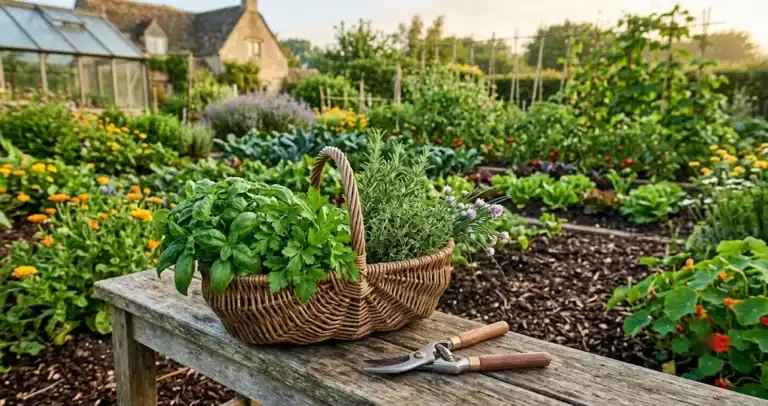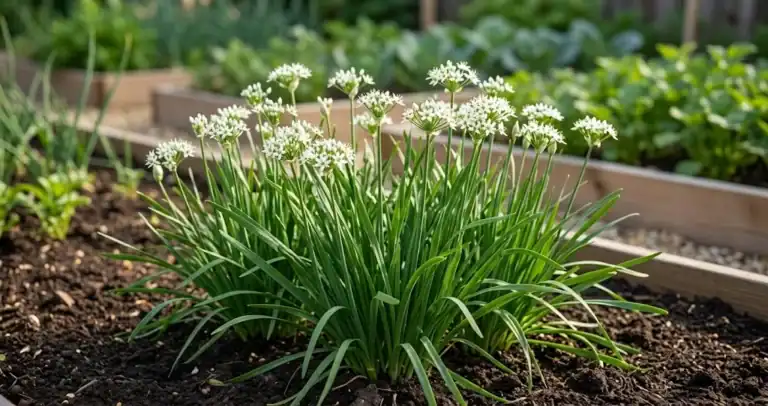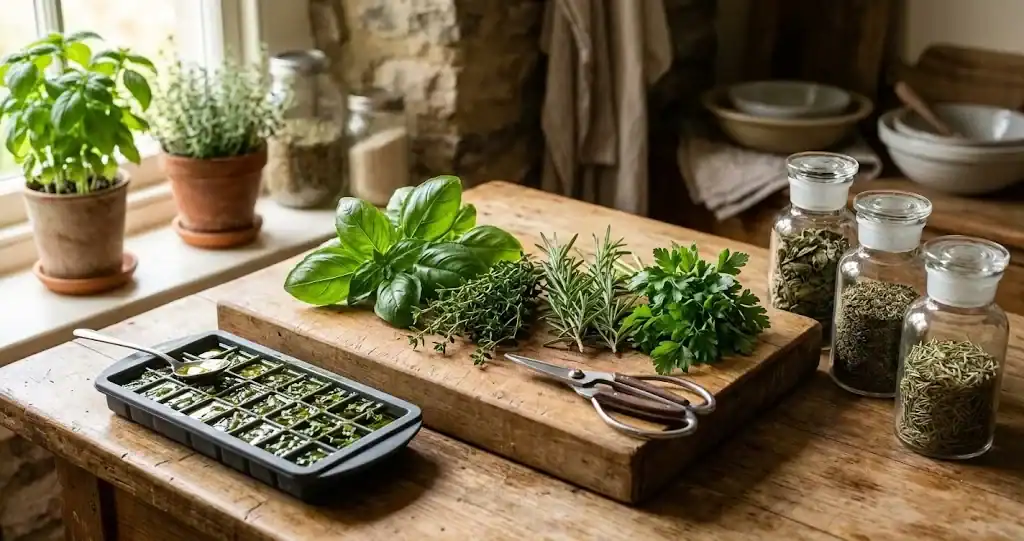
Harvesting fresh herbs from a garden bed or unpacking fragrant bunches of herbs from the market often leaves you with far more greenery than a single dinner can use. When left unprotected in the refrigerator, delicate leaves quickly turn dark and wilt, causing your harvest to go to waste. Learning how to preserve herbs allows home cooks to lock in peak garden aroma, retain vibrant color, and preserve herbs for months of flavorful meals.
The best way to store culinary herbs depends on the natural moisture level and physical structure of each plant. High-moisture tender herbs such as aromatic basil, cilantro and parsley stay fresh longest when frozen in oil, blended into savory pastes, or placed in water glasses on the counter. In contrast, robust woody perennials like rosemary and thyme contain waxy leaves that dry cleanly with minimal loss of essential oils. When gathering homegrown sprigs, knowing how to harvest herbs without setting the plant back ensures that every plant continues producing healthy new growth throughout the growing season.
Tender Versus Woody Herbs: Choosing the Right Preservation Method
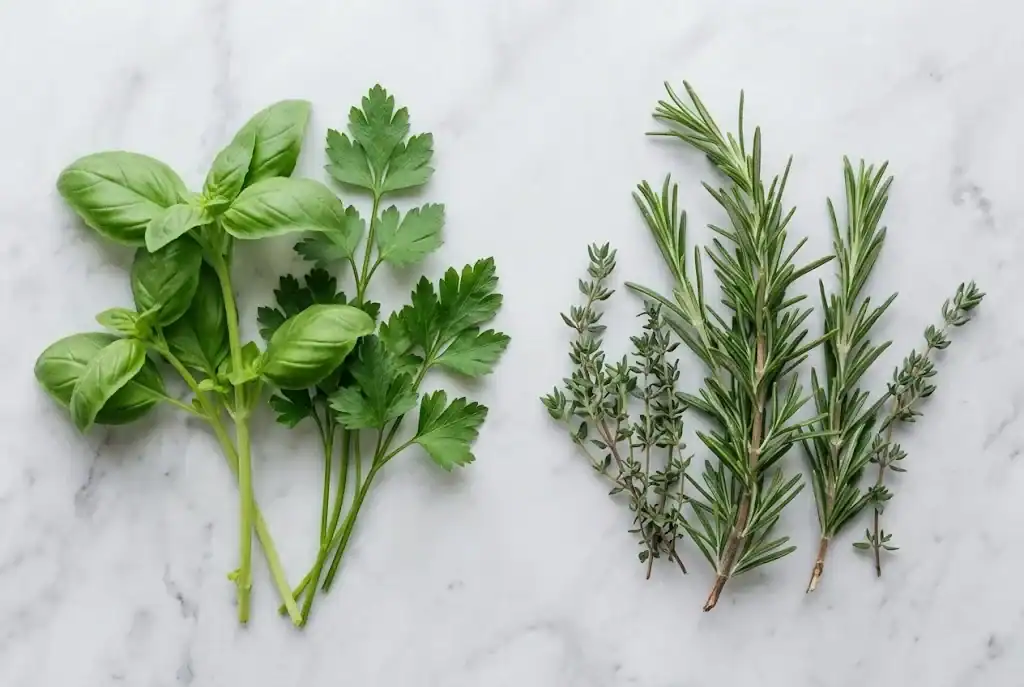
For home cooks and gardeners, culinary herbs are easiest to understand through two practical preservation groups: soft tender leaves and sturdy woody stems. Grouping your harvest this way helps you immediately select the method that best protects flavor, color, and aroma.
Tender leafy varieties: Soft-stemmed plants like flat-leaf parsley, coriander sprigs, chive sprigs, mint, dill, French tarragon, and chervil have high water content and thin, delicate cell walls. Because their leaf tissues are fragile, tender leaves tend to blacken and lose aroma when dried under high heat. Freezing in oil or keeping cut stems in water helps them stay fresh for weeks.
Robust woody perennials: Varieties such as rosemary, garden thyme, winter savory, oregano, and marjoram feature stiff, woody stems and leathery leaves rich in protective terpenes. These Mediterranean selections are naturally suited for air drying and food dehydration because their aromatic oils remain stable even after all water is removed.
Pre-Storage Prep: Harvesting Herbs, Washing Leaves, and Paper Towels
Proper preparation before you preserve your harvest prevents mold growth during drying and stops ice crystals from damaging cell walls during freezing.
Follow these essential prep steps:
- Harvesting herbs at peak potency: Cut in the morning after dew has evaporated, snipping stems just above a leaf or pair of leaves to leave sufficient lower growth for future flushes. Avoid flowering plants when possible, since blooming draws energy away from leaves and can create a bitter taste.
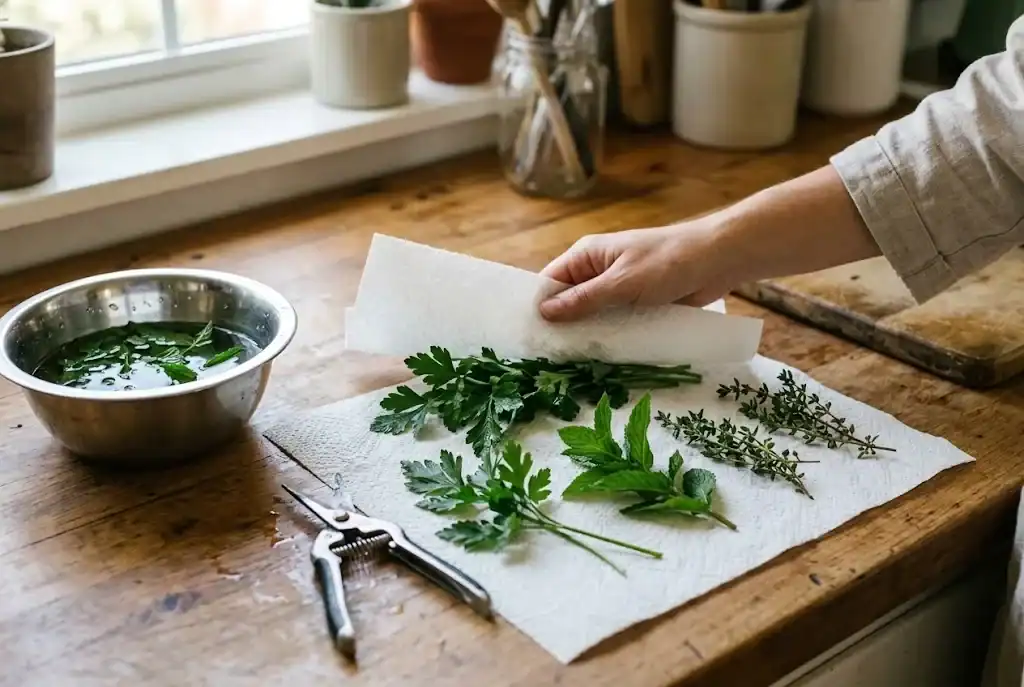
- Wash the herbs thoroughly: Place the fresh cuttings in a large basin of cold water and swish gently to dislodge any garden soil or dust.
- Remove any excess moisture: Moisture encourages mold. Lay clean sprigs between two paper towels and pat them dry, or use a salad spinner to remove surface water.
- Sort the harvest: Pick out yellowed or bruised leaves, and strip the lower leaves from stem bases if you plan to keep cuttings in water.
Short-Term Storage: Glass Mason Jar Bouquets and Stems Wrapped in a Damp Paper Towel
When you want fresh bunches to stay fresh for up to three weeks before cooking, simple refrigeration techniques provide excellent short-term results.
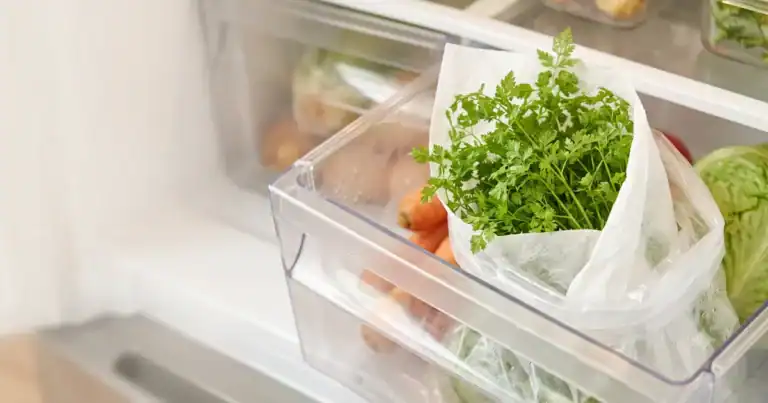
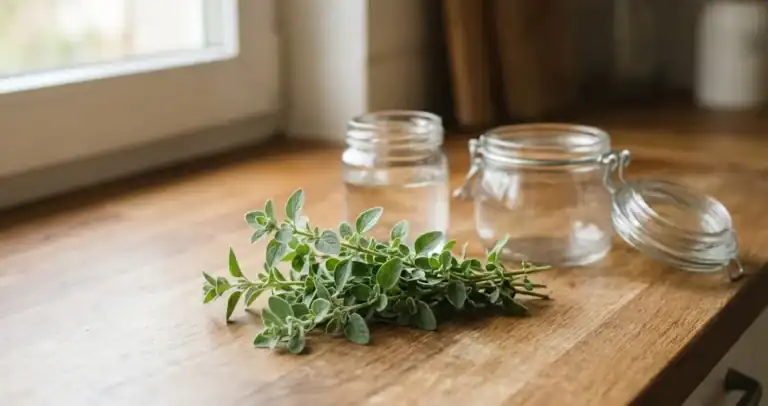
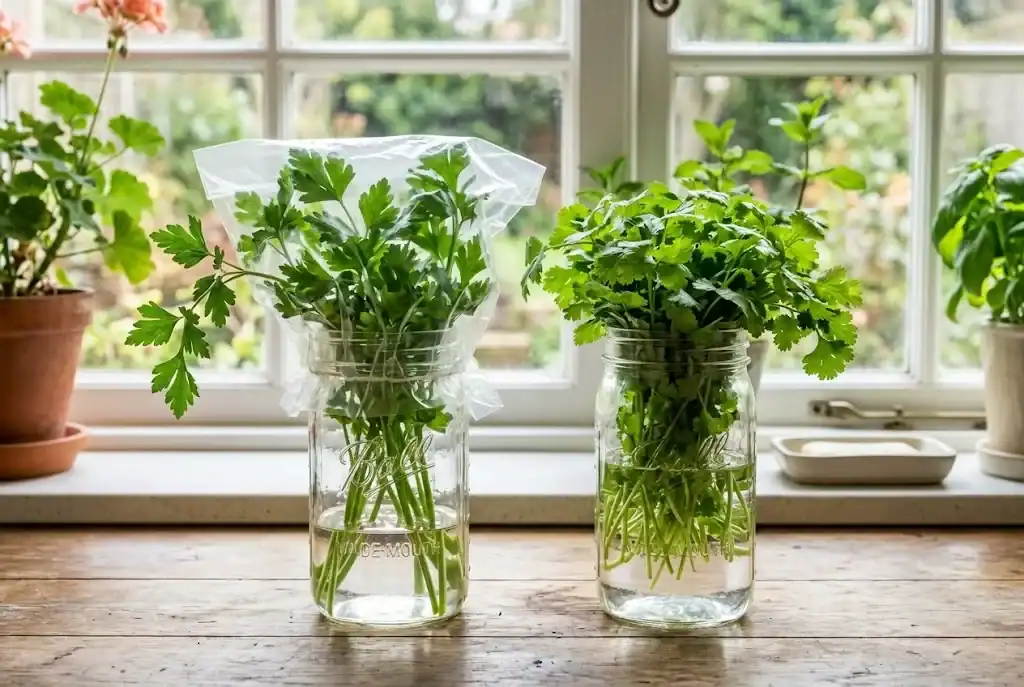
The water glass bouquet method: Trim half an inch off the base of the stems and place cuttings upright in a glass container or mason jar half full of fresh water. Cover the top of the jar with a plastic produce bag to trap humidity. Storing the herbs this way works wonders for a bunch of parsley, coriander sprigs, dill, and mint in the refrigerator. However, sweet basil turns black in chilly air; keep your countertop jar at room temperature on the kitchen counter out of direct sunlight. Refresh the water every few days to keep cuttings fresh for weeks. For delicate cool-season varieties, exploring how to store chervil in the refrigerator provides a helpful reference for handling tender leaves.
Stems wrapped in a damp paper towel: For woody sprigs like rosemary, winter savory, and bay, roll the dry stems loosely inside a damp paper towel. Place the wrapped bundle inside a sealable container or zipper bag. The damp paper towel prevents the leaves from drying out while the sealed container protects against refrigerator air currents.
How to Dry Herbs: Air Drying, Oven Screens, and Food Dehydrators
Dehydrating woody varieties removes moisture so bacteria and molds cannot survive, creating shelf-stable pantry staples that last up to two years.
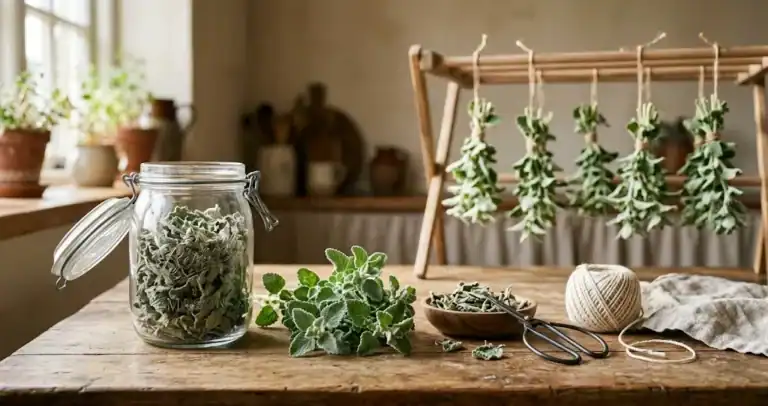
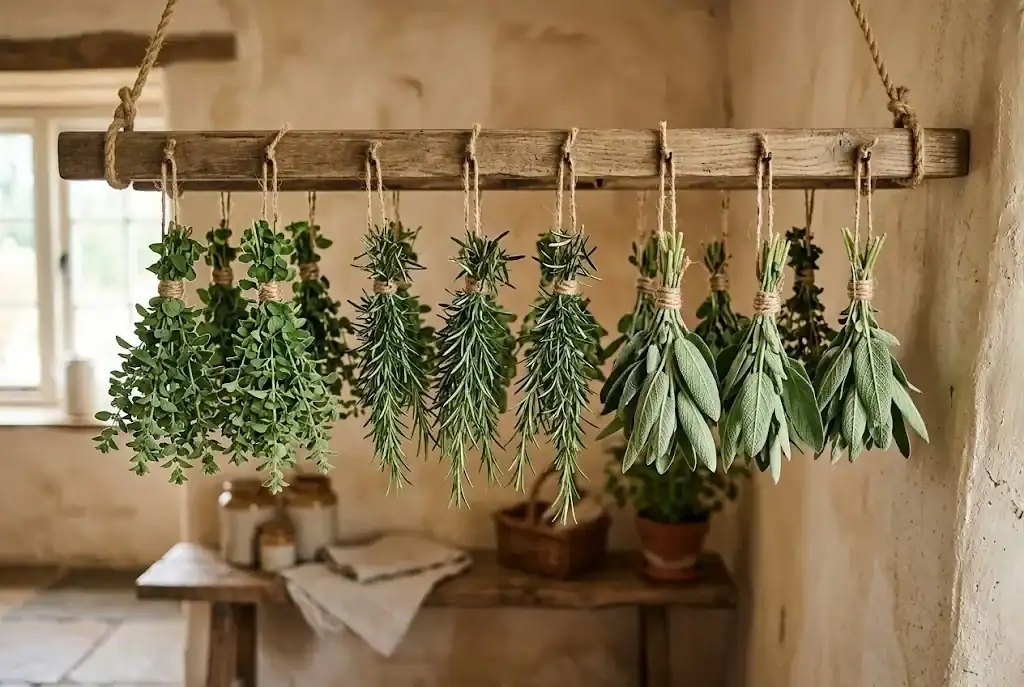
1. Traditional air drying: Gather five to eight sprigs into small clusters and fasten the base with kitchen twine or a rubber band. Slip the cluster inside a brown paper bag with small ventilation holes to catch falling leaves and shield them from dust. Hang the bundles upside down in a warm, dark, well-ventilated room. Clusters usually dry completely within one to two weeks.
2. Food dehydrator: Arrange clean sprigs in a single layer on each dehydrator rack. Set the temperature between 95°F and 115°F (35°C to 46°C). Gentle heat dries leaves without scorching delicate aromatic compounds. Check after two to three hours.
3. Oven drying: Place sprigs on a parchment-lined baking sheet. Heat your oven to its lowest setting (140°F to 170°F) and prop the oven door open with a wooden spoon to let humidity escape. Turn the sprigs every thirty minutes until the leaves crumble crisply.
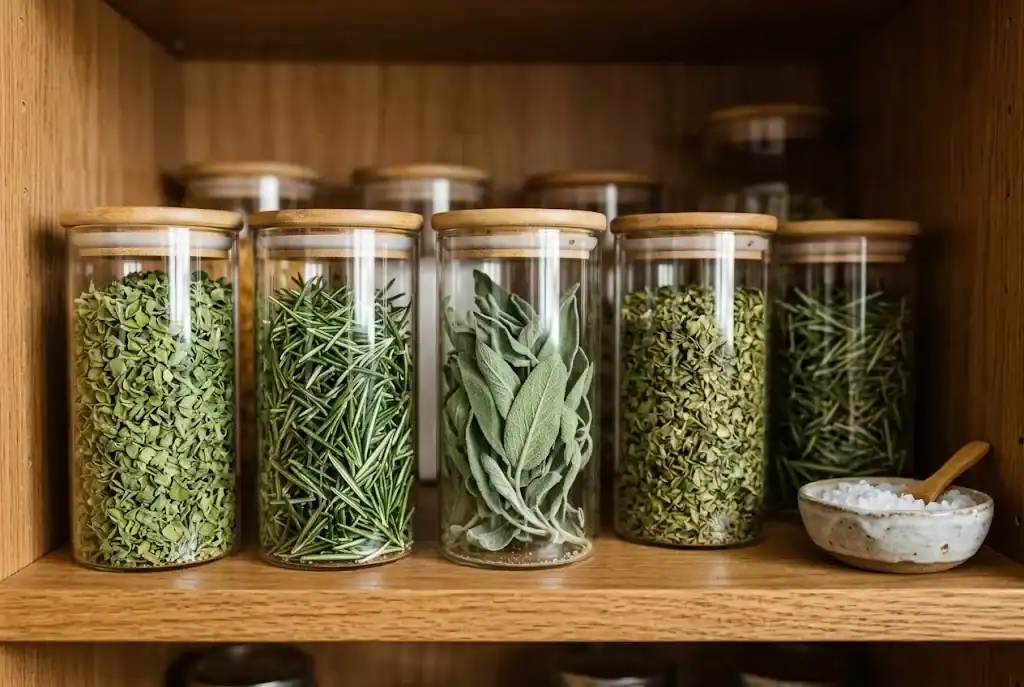
Testing and storing dried seasoning: Dried herbs are ready to use when the leaves crumble easily between your fingers with no bendable moisture remaining. Strip dried leaves from the stems, leaving the leaves whole to lock in the aromatic flavor of the herb. Transfer them into clean glass containers or canning vessels, and keep them stored in an airtight container in a dark, cool cupboard. Crush the dry herbs right before adding them to simmering pots.
Freezing Herbs in a Freezer Mold, Baking Sheet, and Savory Herb Pastes
Freezing herbs is the most effective way to store delicate garden harvests like fresh dill and chives while preserving their bright color and tender texture.
1. Freezing in an ice cube tray with oil or water: This method works well for creating pre-portioned recipe starters.
- Chop leaves finely with a sharp knife or food processor.
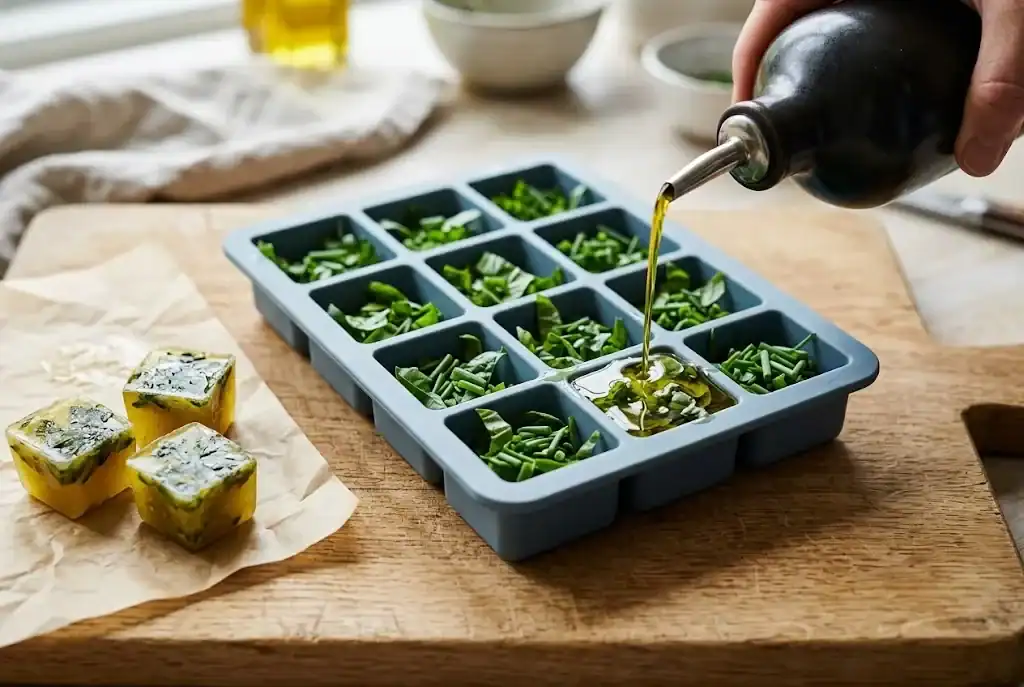
- Fill an ice cube tray half full with chopped leaves (about one to two tablespoons per portion).
- Pour in the olive oil or melted unsalted butter to cover the chopped leaves completely. For soups and stocks, a tray half full of water or vegetable broth also works well.
- Freeze until the cubes are frozen solid. Note that olive oil will not freeze solid like ice, but it hardens into a firm, scoopable block.
- Pop out the frozen portions and store them in a freezer bag. Whenever you cook, take out individual cubes and store remaining batches in the freezer bag, dropping them straight into hot skillets.
2. Flash freezing whole leaves on a baking sheet: Spread dry leaves of larger plants like garden sage and mint flat across a metal baking pan. Freeze for one hour until rigid, then transfer the frozen leaves into an airtight freezer bag. Squeeze out excess air and seal. Frozen herbs in cooked dishes can be measured by the handful without needing to thaw the entire package.
3. Blending savory pastes and homemade pesto: For large harvests of summer basil and other tender leaves, place two cups of clean leaves and half a cup of oil into an electric chopper. Pulse until you make a paste. The oil coats the cut cell edges, which serves to stop enzyme reactions and prevents dark oxidation. Spoon into freezer molds and store in freezer bags for up to six months.
Compound Herb Butters, Infused Finishing Salts, and Herb Vinegars
Infusing fresh culinary herbs into butter, salt, or vinegar creates delicious flavor enhancers for everyday cooking.
Compound herb butter: Soften half a cup of unsalted butter to room temperature. Fold in two to three tablespoons of minced chives and finely grated garlic with a pinch of sea salt. Roll the seasoned butter into a log using parchment paper, twist the ends, and chill. Slice coins of herb butter over roasted meats, steamed vegetables, or crusty warm bread. Compound butter keeps for two weeks in the refrigerator or six months in the freezer.
Herb-infused salts: Combine one cup of coarse sea salt with half a cup of fresh oregano leaves in a food chopper. Spread the fragrant green salt across a baking sheet and let it air dry for twenty-four hours before sealing in glass containers. For Mediterranean seasoning blends, reviewing how to store marjoram alongside aromatic herbs provides useful guidance for crafting long-lasting herb salts.
Crucial Food Safety: Avoiding Botulism When You Store Culinary Herbs in Oil
While preparing homemade herb oils is common in home kitchens, food safety guidelines must be strictly followed to prevent bacterial contamination.
Fresh culinary plants grow near garden soil and can carry microscopic spores of Clostridium botulinum. When you store herbs in oil, the oil creates an oxygen-free (anaerobic), low-acid environment. If you leave fresh herbs in oil at room temperature, these dormant spores can multiply and produce deadly neurotoxins without altering the oil’s color or smell.
Authoritative safety recommendations from the Colorado State University Extension highlight these strict rules:
- Never keep fresh herbs in oil at room temperature: Storing fresh, unacidified oil infusions on the kitchen counter creates an active botulism risk.
- Refrigerate short-term infusions: Fresh oil mixtures must always be stored in the refrigerator and consumed within four days. Discard any remaining oil after four days.
- Freeze for long-term safety: Freezing oil portions in a freezer compartment mold stops bacterial activity completely. Keep frozen portions in a freezer bag for up to six months.
Everyday Cooking Tips for Using Preserved Herbs and Frozen Herb Portions
Knowing how preserved herbs perform in recipes ensures balanced flavor throughout the year:
- Cooking with dried herbs: Because drying concentrates aromatic oils, dried herbs are roughly three times more potent than fresh sprigs. Substitute one teaspoon of dried herbs for every one tablespoon of fresh leaves called for in a recipe. Add dried herbs early during simmering so moisture and heat have time to draw out their deep aroma.
- Cooking with frozen herbs: Frozen herbs can be used directly in hot pots without having to defrost them first. Because freezing softens cellular crispness, use frozen herbs in cooked dishes like marinara sauces, soups, braises, and skillet sautés rather than in fresh raw salads.
Frequently Asked Questions About How to Preserve Fresh Herbs
Can I freeze herbs in Ziploc bags without chopping them first?
Yes. Sturdy leaves such as bay leaves can be frozen whole on their stems in freezer bags. For tender varieties, flash freezing individual leaves on a baking sheet before bagging prevents them from clumping together.
How long do home-dried and frozen seasonings last?
Whole dried herbs stored in glass containers in a cool, dark cabinet maintain great culinary potency for one to two years. Frozen portions and frozen herb pastes maintain fresh flavor for six months in a standard home freezer.
Do herbs need to be blanched before freezing?
Blanching herbs briefly in boiling water and plunging them into ice water stops enzyme reactions that cause browning. However, blanching is optional for most culinary leaves and can wash away delicate aromatic oils. Freezing in olive oil or pureeing with a little oil effectively stops enzyme reactions and prevents discoloration without boiling.
What is the best way to preserve fresh basil without it turning black?
Sweet garden basil blackens easily when exposed to cold air or when bruised. The most reliable method is to puree clean, dry leaves with olive oil in an electric chopper to make a paste, then freeze the mixture in a silicone freezer tray. The oil forms a protective seal against oxygen, preserving its bright emerald green color and rich aroma for months.